





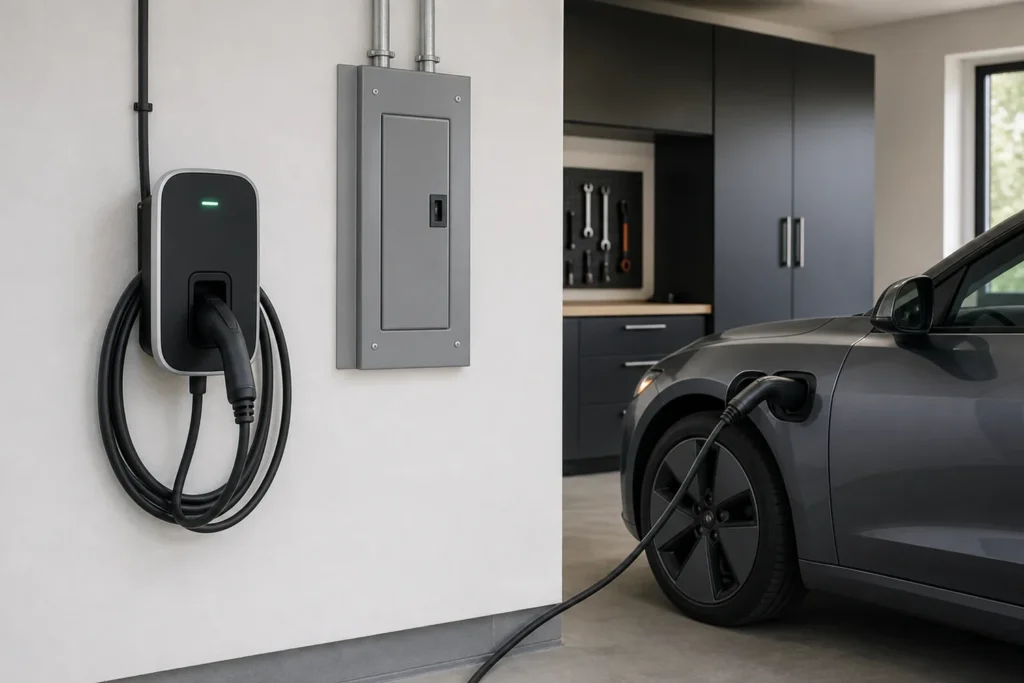
A wall-mounted EV charger is charging equipment secured at a parking space. Most residential examples supply controlled AC, which the vehicle’s onboard charger converts to DC. “Wall-mounted” describes installation; it does not specify the connector, supply phases, charging rate, or whether the unit is tethered, socketed, plug-in, or hardwired.
Choose the connector, electrical supply, current limit, cable arrangement, and required controls before choosing the housing. In North America, AC Level 2 refers to 208/240V charging equipment; it is not a worldwide label for every wallbox.13
Tabla de contenido
- What is a wall-mounted EV charger?
- How is a wall-mounted EV charger different from a portable EV charger?
- What types of wall-mounted EV chargers are available?
- How is a wall-mounted EV charger installed?
- What key features should you look for in a wall-mounted EV charger?
- Where are wall-mounted EV chargers used most often?
- What should buyers check before choosing a wall-mounted EV charger?
- Conclusion: Choosing the right wall-mounted EV charger
- Preguntas frecuentes
- Referencias
What is a wall-mounted EV charger?
A wall-mounted EV charger is a fixed charging device that supplies controlled AC power to an electric vehicle through a charging cable and vehicle connector. It is usually mounted close to a parking space so the driver can plug in without moving equipment around.
In everyday language, many people call this device a "home charger" or "Level 2 charger." Technically, the charger manages safety communication, current delivery, fault protection, and user controls, while the vehicle's onboard charger converts AC power into DC power for the battery. That is why AC wall chargers are different from DC fast chargers, which convert power outside the vehicle.
Wall-mounted chargers are popular because they make charging feel like a normal parking habit. The driver parks, takes the connector from the holder, plugs in, and leaves the vehicle to charge. A fixed location also helps with cable management, trip hazard reduction, weather protection, and repeated use by different drivers.
For readers still comparing the broader charger family, this related guide to tipos de estaciones de carga de VE explains how Level 1, Level 2, AC charging, and DC charging fit together. A wall-mounted charger is usually one form of AC charging station, not a separate charging standard by itself.
How is a wall-mounted EV charger different from a portable EV charger?
A wall-mounted EV charger is fixed in place for regular daily charging, while a portable EV charger is designed to be carried, stored, and plugged into compatible outlets when needed. The best choice depends on how permanent the charging location is.
Wall-mounted chargers usually feel cleaner and more permanent. They can be installed near the parking position, connected to a dedicated circuit, paired with a cable dock, and configured for a known current limit. They are well suited to homes, workplaces, apartment parking, and commercial spaces where the vehicle returns to the same location.
Portable chargers are more flexible. A driver can keep one in the car, use different plug adapters where allowed, or charge in temporary locations. The trade-off is that portable units depend more heavily on the outlet type, socket condition, circuit rating, and user setup each time. If the reader is comparing both formats, the related guide to cargador de VE portátil types covers where portable EVSE products fit best.
For distributors comparing both formats, the adjustable-current portable EV charger buying and test guide adds the sample-level checks for current settings, pilot limits, plug temperature, cable temperature, and fault response.
The two categories can also overlap. Some plug-in wall chargers can be removed from a wall bracket, and some portable chargers come with wall hooks or cable holders. The real distinction is not only the bracket; it is whether the product is intended as a fixed installation or a movable charging accessory.
| Característica | Wall-mounted EV charger | Portable EV charger |
|---|---|---|
| Uso principal | Regular charging at a fixed parking spot | Travel, backup, or flexible charging |
| Instalación | Usually dedicated circuit, wall bracket, and cable route | Compatible outlet and proper circuit required |
| Cable storage | Usually integrated or wall-mounted | Often stored in a bag or separate holder |
| Mejor opción | Home garages, workplaces, apartments, hotels | Drivers needing mobility or emergency charging |
| User effort | Low once installed | Higher because setup changes by location |
What types of wall-mounted EV chargers are available?
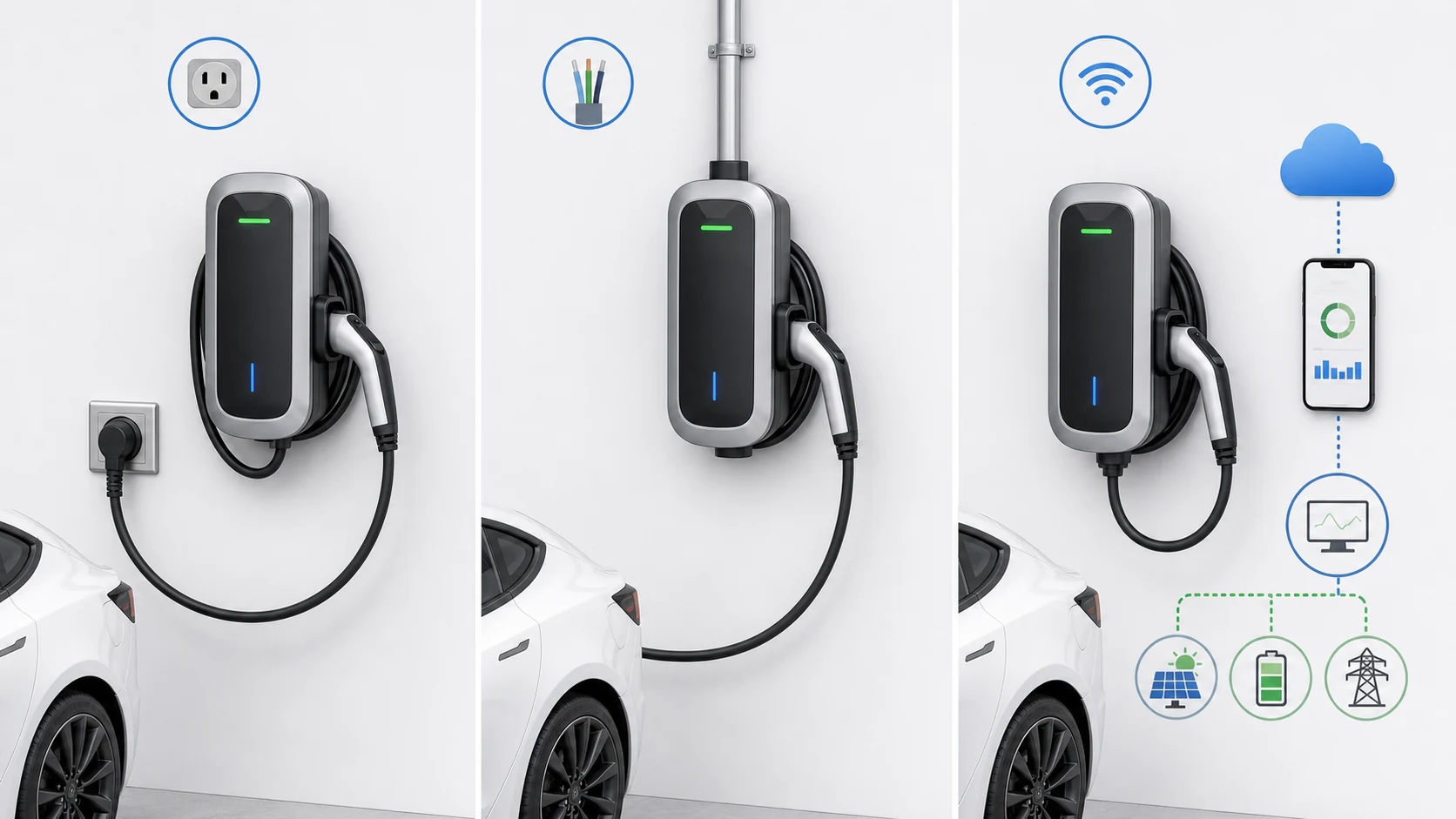
The main wall-mounted EV charger types are plug-in units, hardwired units, smart connected units, and socket-only or tethered designs. Buyers should compare the electrical connection, connector style, current rating, and control features together.
What is a plug-in wall-mounted charger?
A plug-in wall-mounted charger uses a high-power outlet instead of being permanently wired into the circuit. It may be easier to remove or replace, but the outlet, plug, breaker, cable, and charger rating must all match the installation.
Plug-in units are common in markets where approved high-current receptacles are used for EV charging. They can be attractive for homes, rentals, or buyers who want easier replacement. The limitation is that the outlet becomes part of the safety chain. Loose sockets, poor contact, incorrect breaker sizing, or repeated unplugging can create risk.
What is a hardwired wall-mounted charger?
A hardwired wall-mounted charger is permanently connected to the electrical circuit through conduit or fixed wiring. It is often preferred for higher-current installations, outdoor use, commercial locations, and places where the owner wants a more secure fixed setup.
Hardwired installation can reduce plug-and-socket wear and make the system look cleaner. It may also be required or preferred under some local rules, product instructions, or current ratings. The trade-off is that installation and replacement usually require a qualified electrician.
What is a smart wall-mounted charger?
A smart wall-mounted charger adds communication and control features such as app management, scheduling, usage records, Wi-Fi, Bluetooth, Ethernet, OCPP, load management, or solar-aware charging. Smart features are useful when charging needs to be monitored, controlled, shared, or optimized.
Smart does not automatically mean better for every buyer. A simple charger can be the right choice for a private garage where reliability matters more than dashboards. Smart functions become more valuable in multi-user sites, fleet parking, workplaces, and product programs that need remote diagnostics or energy management.
Connector format is another type decision. North American, European, and other regional markets use different connector expectations. The Comparación de cargador EV Tipo 1 vs Tipo 2 helps explain why connector choice should be decided before product sourcing, labeling, cable length, and packaging are finalized.
How is a wall-mounted EV charger installed?
A wall-mounted EV charger is installed by selecting a safe mounting location, confirming electrical capacity, running the correct circuit, mounting the charger, connecting the wiring or plug, and testing the charger before use. In most cases, a qualified electrician should handle the electrical work.
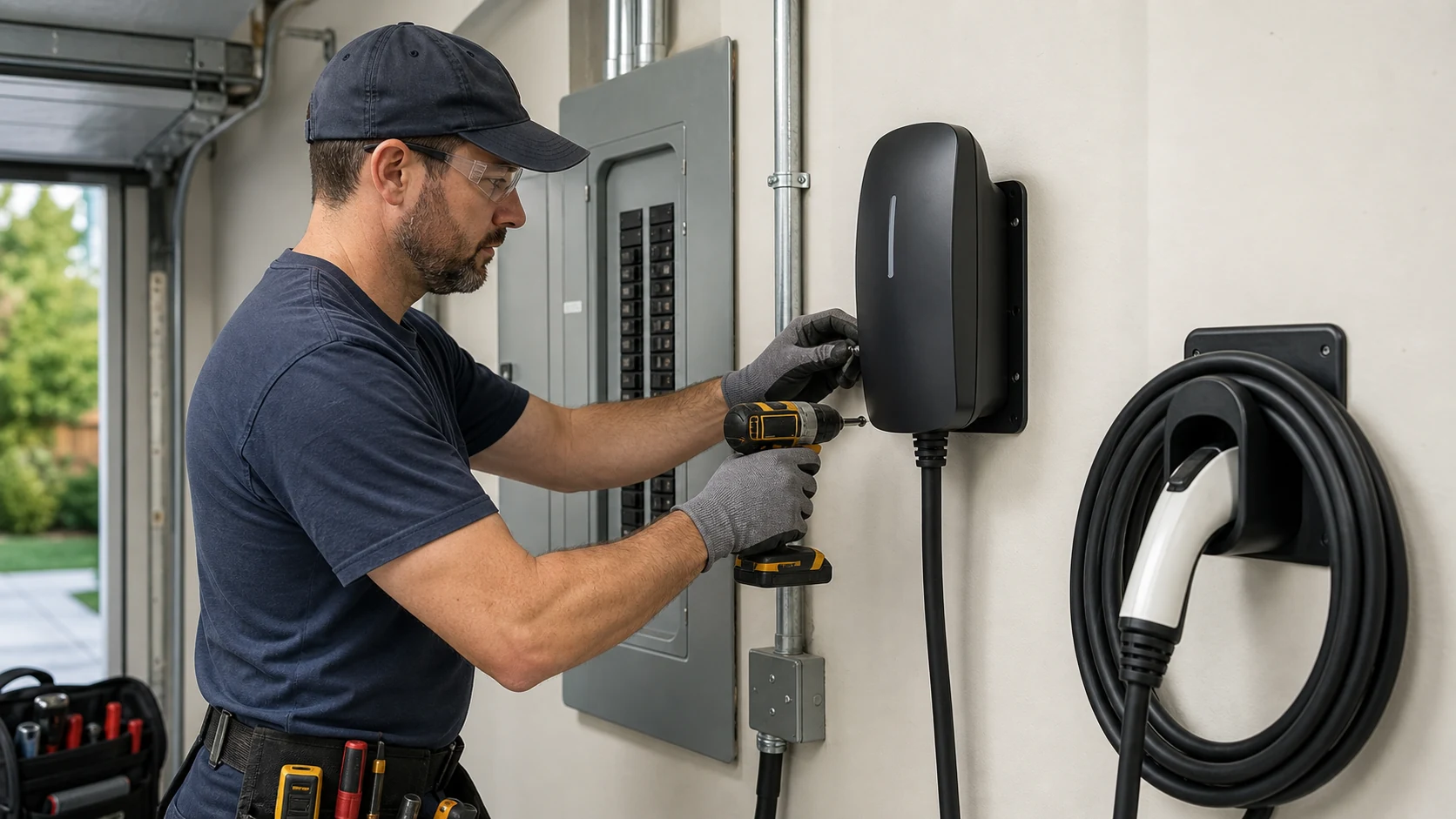
The first question is location. The charger should be close enough for the cable to reach the vehicle inlet comfortably, but not placed where the cable crosses a walkway, garage door path, vehicle tire path, or sharp edge. Outdoor chargers also need suitable enclosure protection and mounting hardware for weather exposure.
The second question is electrical capacity. The installer checks the main panel, available breaker space, circuit rating, wire size, voltage, grounding, and any local code requirements. The U.S. Department of Energy notes that home Level 2 charging generally requires dedicated electrical equipment and may need professional installation 2.
Where spare capacity is limited or a second charger may be added, use an EV charging load management worksheet to define the protected panel, available charging pool, meter location, fallback current, and future charger count before selecting control hardware.
Configure the current limit for the approved circuit and product instructions, then record the final setting. AFDC home-installation guidance identifies EV charging as a continuous load under the NEC and points installers to Article 625; use the locally adopted rules and permitting requirements rather than a generic breaker recipe.2
After installation, the charger should be tested with the vehicle or a suitable tester. A good commissioning check confirms power, grounding, fault response, charging current, connector fit, cable storage, app setup if applicable, and user instructions. For commercial or shared sites, the installer may also confirm user access, billing, network connection, or backend communication.
What key features should you look for in a wall-mounted EV charger?
The most important features are the right current rating, connector type, cable length, safety protection, weather resistance, smart controls, and cable management. A good wall charger should match the vehicle, building, user habits, and market requirements.
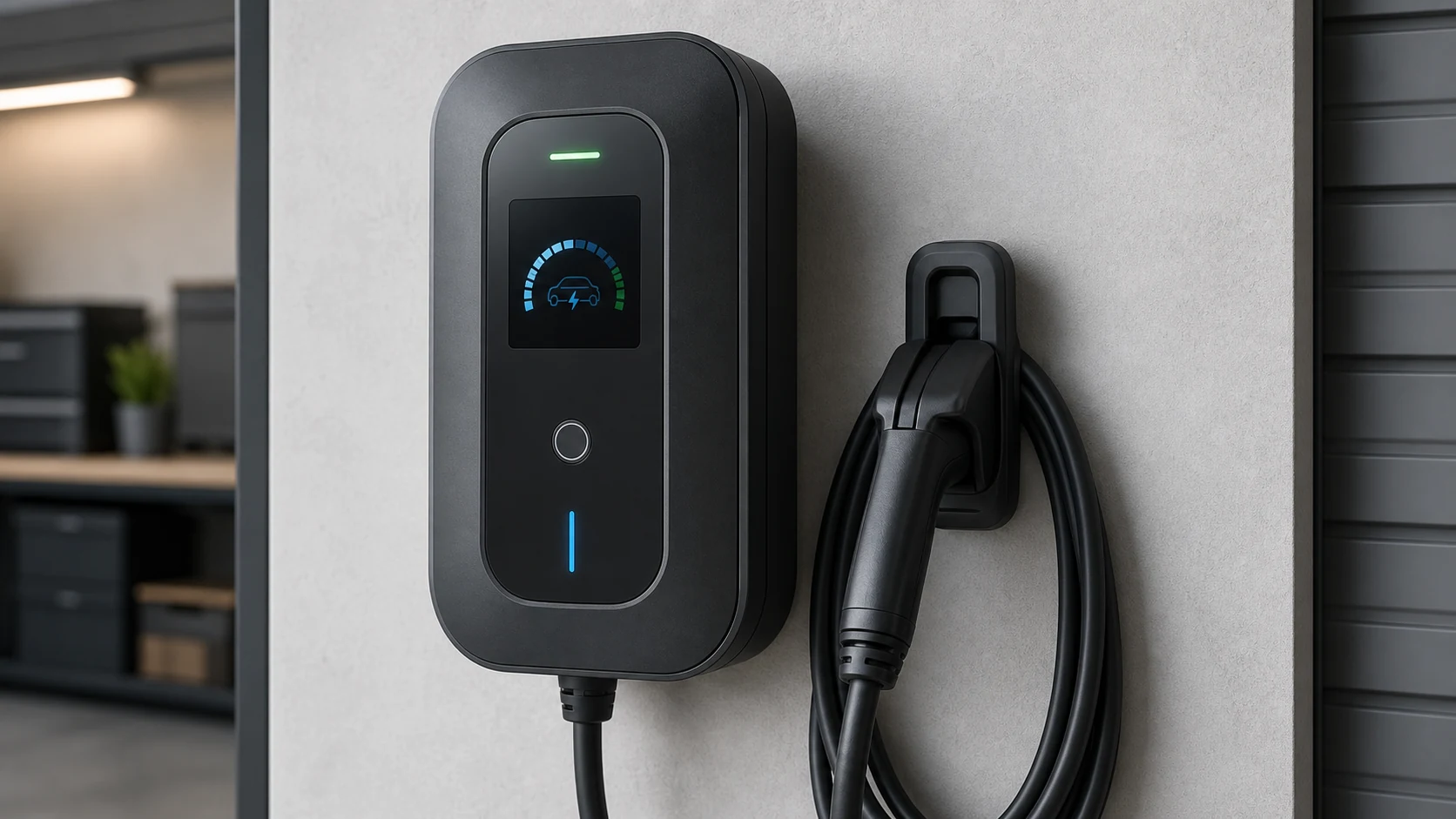
Current rating is often the first feature buyers compare, but bigger is not always better. The charger output must match the circuit, vehicle onboard charger, cable rating, connector rating, and installation rules. Adjustable current is useful because the same product platform can serve different electrical conditions when configured correctly.
Connector type and cable design matter just as much as the wall unit. A charger with the wrong connector is not useful, even if the electronics are excellent. This is where a related guide to EV charging cable connector types fits naturally: connector standard, cable length, cable material, and handling all affect the user experience.
Safety features should be checked in the product documentation, not guessed from appearance. Look for ground fault protection strategy, overcurrent behavior, overtemperature protection, emergency stop or stop control where appropriate, connector temperature monitoring, enclosure rating, and clear installation instructions.
Smart features can be valuable when they solve a real problem. Scheduling helps drivers use off-peak electricity. App control can show charging status. Usage records help shared sites. Network communication helps operators manage chargers remotely. For buildings with limited capacity, equilibrio dinámico de carga en carga de vehículos eléctricos can help chargers adjust output according to available site power.
Cable management is easy to underestimate. A charger with a sturdy holster, proper cable hook, and suitable cable length is safer and easier to use every day. The cable should reach the vehicle inlet without stretching, dragging across the floor unnecessarily, or forcing the driver to park in an awkward position.
Which records should the installer hand over?
| Campo | Handover record |
|---|---|
| Equipment and connection | Model/revision, connector, supply arrangement, plug-in or hardwired configuration |
| Approved installation | Circuit and protective equipment, permits/inspection where applicable, final current setting |
| Parking and exposure | Reach in normal parking, stored cable, mounting, outdoor-use conditions |
| Controls | Schedule, authorization, network and meter configuration actually supplied |
| Gestión de carga | Protected asset, compatible meter if used, group limit and documented fallback |
| Verificación | Charging/fault checks, observed current, user instructions and support details |
App connectivity does not provide whole-building metering by itself. Tesla’s published example separates static, dynamic and group power management; its dynamic feature requires a compatible meter and has generation and configuration limits.5 Require equivalent detail for the actual product rather than assuming every smart wallbox has those features.
Where are wall-mounted EV chargers used most often?
Wall-mounted EV chargers are used most often in private garages, apartment parking areas, workplaces, hotels, service centers, small commercial lots, and fleet parking where vehicles return to predictable spaces. They are strongest when charging is repeated at the same location.
In homes, wall chargers support the normal pattern of overnight or daily charging. The driver plugs in after parking and wakes up with more range. AFDC explains that most EV charging happens at home for drivers who have access to home charging, which is why a reliable home setup matters 1.
In apartments and condominiums, wall-mounted chargers may be installed along parking walls or columns. The main challenge is usually shared electrical capacity and user access. The site may need load balancing, billing, assigned spaces, or rules for how residents use the chargers.
In workplaces and hotels, wall chargers are often part of a customer, employee, or guest service. They may not need DC fast charging speed because vehicles stay parked for hours. Reliability, cable handling, access control, and maintenance become more important than maximum output alone.
For small fleets, wall-mounted AC chargers can be practical when vehicles park overnight or between shifts. Managed charging guidance from the U.S. Department of Energy highlights the role of charging control for fleets, especially when multiple vehicles and site energy limits need to be coordinated 4.
What should buyers check before choosing a wall-mounted EV charger?
Buyers should check electrical compatibility, connector type, installation method, safety certification needs, enclosure rating, cable design, smart functions, documentation, and supplier support. A wall-mounted EV charger is a system choice, not just a box on the wall.
Start with the target market. A charger intended for Europe may need different connector, phase, plug, labeling, and certification expectations from one intended for North America or another region. Importers and distributors should confirm the product configuration before committing to packaging or marketing claims.
Then check the installation environment. Indoor garages, outdoor walls, apartment parking, dusty workshops, coastal areas, and commercial lots create different requirements. Enclosure protection, UV resistance, cable flexibility, mounting hardware, and temperature range may all matter.
Safety documentation should be reviewed early. For portable and light commercial charging accessories, this related guide to estándares de seguridad de cargadores EV portátiles gives useful context on certification thinking, IP ratings, cable durability, and product testing. Wall-mounted products need the same disciplined approach to documentation and market fit.
A practical buyer checklist includes:
- Charging output: Match current rating to the circuit, vehicle, and installation rules.
- Connector and cable: Choose the correct regional connector, cable length, and cable material.
- Mounting method: Confirm wall structure, bracket design, cable holder, and connector dock.
- Electrical connection: Decide between plug-in and hardwired based on use case and local requirements.
- Protection features: Check fault protection, temperature monitoring, enclosure rating, and safe shutdown behavior.
- Smart controls: Decide whether app control, scheduling, OCPP, metering, or load balancing is actually needed.
- Supplier support: Confirm OEM/ODM customization, labels, manuals, packaging, inspection process, and batch consistency.
For branded product programs, the supplier question matters more than it may seem. A wall-mounted charger line may need several current versions, cable lengths, connector variants, enclosure choices, app options, and packaging languages. Those details shape whether the product is easy to sell, install, support, and reorder.
Conclusion: Choosing the right wall-mounted EV charger
A wall-mounted EV charger is one of the most practical ways to make EV charging part of a normal parking routine. It gives drivers a fixed charging point, keeps cables organized, and can deliver faster daily charging than a basic household outlet when installed on a suitable circuit.
The right charger depends on the use case. A private garage may need a simple, reliable Level 2 charger with good cable storage. An apartment or workplace may need smart controls, load management, access rules, and stronger documentation. A distributor or private-label buyer may need connector options, current variants, certification awareness, and packaging support.
Before choosing, look beyond the housing design. Check the electrical connection, connector type, current rating, cable length, enclosure protection, safety behavior, smart features, and supplier support. If the next step is comparing related hardware for a product range, Yirox's gama de accesorios de carga de VE is a useful place to continue.
Preguntas frecuentes
Is a wall-mounted EV charger the same as a Level 2 charger?
“Wall-mounted” describes how equipment is installed. In North America, AC Level 2 describes 208/240V charging; many residential wall units fall into that category. In other markets, wallboxes may use different voltages and single- or three-phase arrangements. Check the supply and equipment specification rather than using the mounting style to infer a charging level.
Can I install a wall-mounted EV charger myself?
The mounting bracket may look simple, but the electrical work should usually be handled by a qualified electrician. The installer needs to confirm circuit capacity, wiring, breaker size, grounding, local code requirements, and product instructions.
Is a hardwired wall charger better than a plug-in wall charger?
Hardwired chargers can be cleaner and more secure for permanent or higher-current installations. Plug-in chargers can be easier to remove or replace, but the outlet and plug become part of the safety system and must be correctly rated.
How long should the cable be on a wall-mounted EV charger?
The cable should comfortably reach the vehicle inlet in normal parking positions without being stretched or creating a trip hazard. Many buyers choose a longer cable for flexibility, but cable storage and handling become more important as length increases.
Can a wall-mounted EV charger be installed outdoors?
Yes, if the charger is rated for outdoor use and installed according to product instructions and local electrical rules. Outdoor installations should consider enclosure rating, weather exposure, cable storage, UV exposure, drainage, and mounting hardware.
Do wall-mounted EV chargers work with all electric cars?
They work only when the connector, charging standard, voltage, and vehicle onboard charger are compatible. Regional connector differences are important, so buyers should confirm vehicle compatibility before choosing a product.
Are smart wall-mounted EV chargers worth it?
Smart chargers are worth it when scheduling, remote status, user records, access control, OCPP, solar coordination, or load balancing solves a real problem. For a simple private garage, a reliable non-networked charger may be enough.
Referencias
[1] U.S. DOE Alternative Fuels Data Center. “Electric Vehicle Charging Stations: equipment and connector types.”
[2] U.S. DOE Alternative Fuels Data Center. “Charging Electric Vehicles at Home.”
[3] U.S. Department of Transportation. “Tipos y velocidades de cargadores.”
[4] U.S. DOE FEMP. “Carga Gestionada y Bidireccional.”
[5] Tesla. “Wall Connector Power Management: static, dynamic and group functions.”







