



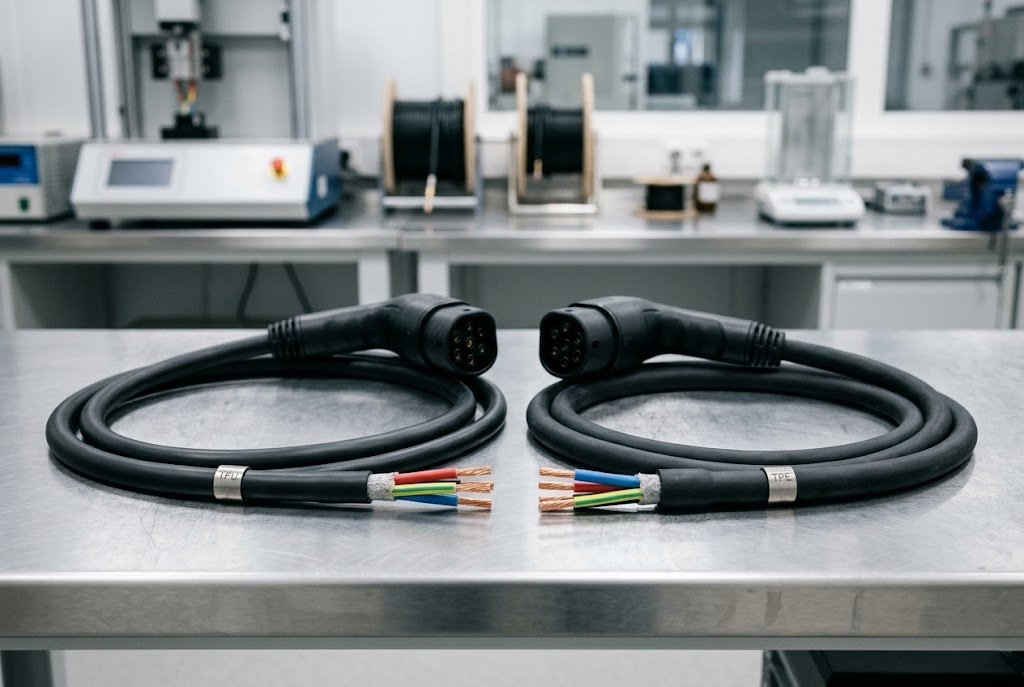
La respuesta corta: Si está buscando cables de carga para vehículos eléctricos para flotas comerciales, estaciones de carga públicas o regiones de clima frío como Escandinavia y Canadá, TPU (Poliuretano Termoplástico) es la opción superior debido a su excepcional resistencia a la abrasión y flexibilidad a bajas temperaturas (-50°C). Si se dirige al mercado residencial de carga doméstica donde la rentabilidad y la flexibilidad cotidiana son las prioridades, TPE (Elastómero Termoplástico) es una alternativa altamente capaz y económica. Para los distribuidores B2B, comprender estas diferencias de materiales es fundamental para construir una cartera de productos rentable y específica para el mercado con Yirox Piezas de Auto.
El mercado global de cables de carga para vehículos eléctricos (VE) está experimentando un crecimiento explosivo, con proyecciones de aumentar desde USD 1.3 mil millones en 2023 hasta USD 3.9 mil millones para 2030, registrando una CAGR de 16.7% [1]. A medida que el mercado madura, la conversación entre los compradores B2B—distribuidores, operadores de puntos de carga (CPOs) y marcas OEM—ha pasado de la compatibilidad básica de conectores a la durabilidad a largo plazo y la ciencia de materiales.
La funda exterior (vaina) de un cable de carga para VE es su primera línea de defensa contra los elementos. Debe soportar radiación UV, temperaturas bajo cero, exposición química y el abuso físico diario de ser arrastrado sobre concreto. En el panorama manufacturero actual, dos materiales dominan la conversación: TPU y TPE.
En esta guía completa, diseccionaremos las diferencias técnicas entre TPU y TPE, presentaremos el estándar europeo premium (XLPO) y proporcionaremos una matriz de toma de decisiones estratégicas para ayudarle a elegir el material adecuado para su mercado objetivo específico.
¿Qué son TPU y TPE? Una visión general de la ciencia de materiales
Antes de profundizar en las métricas de rendimiento, es esencial comprender qué son realmente estos materiales. Ambos pertenecen a la amplia familia de elastómeros termoplásticos—materiales que combinan las ventajas de procesamiento de los plásticos con la flexibilidad del caucho.
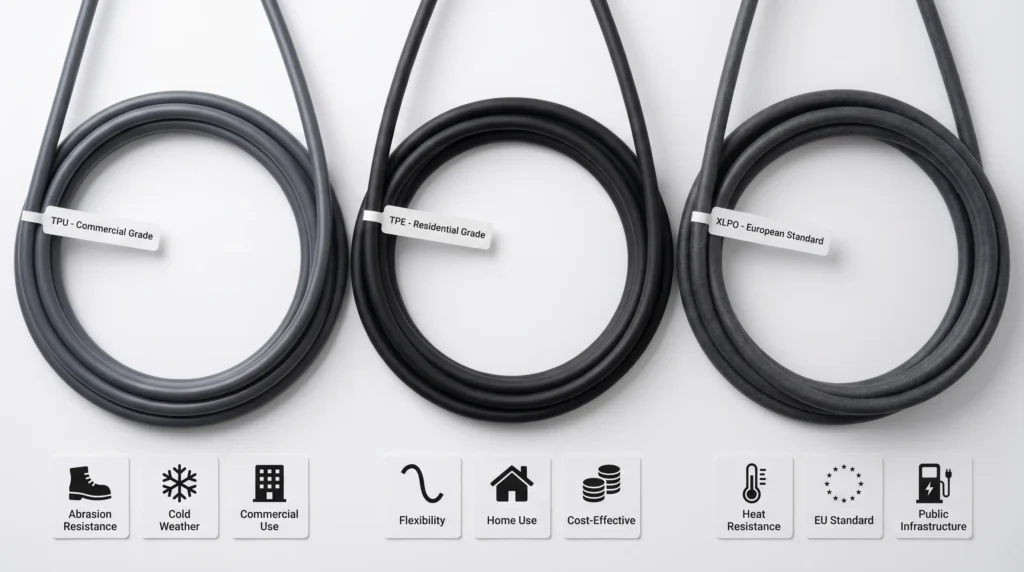
TPE (Elastómero Termoplástico): A menudo denominado caucho termoplástico, el TPE es una mezcla física de polímeros (generalmente un plástico y un caucho). Es altamente versátil, fácil de procesar y ofrece una sensación táctil suave y lisa. El TPE se utiliza ampliamente en electrónica de consumo, interiores de automóviles y cables de carga para VE estándar. Es conocido por ser rentable y altamente reciclable [2].
TPU (Poliuretano Termoplástico): El TPU es un subconjunto específico de alto rendimiento de la familia TPE. Es un copolímero en bloque que consiste en segmentos duros y blandos alternados. Esta estructura molecular única le da al TPU una combinación extraordinaria de alta elasticidad y extrema tenacidad. Para los cables de carga para VE, los fabricantes suelen utilizar TPU basado en poliéter, que ofrece una resistencia superior a la hidrólisis (protección contra la degradación por agua) y flexibilidad a bajas temperaturas en comparación con el TPU de poliéster estándar [3].
Comparación de rendimiento central: TPU vs. TPE
Al evaluar cables de carga para VE para adquisiciones B2B, debe mirar más allá de los folletos de marketing y examinar los datos técnicos brutos. Así es como se comparan el TPU y el TPE en las métricas de rendimiento más críticas.
Resistencia a la abrasión y al desgarro (El factor de durabilidad)
Esta es la métrica más importante para los cables utilizados en entornos públicos o comerciales. Cuando un cable se arrastra repetidamente sobre asfalto rugoso o es atropellado accidentalmente por un vehículo, su resistencia al desgarro determina si los conductores internos quedan peligrosamente expuestos.
- TPU: Considerado el punto de referencia de la industria en cuanto a durabilidad. El TPU tiene una resistencia al desgarro de hasta 80 kN/m y una excepcional resistencia a la abrasión. Es altamente resistente a cortes, perforaciones y desgaste mecánico [3].
- TPE: Ofrece buena resistencia a la abrasión, suficiente para el uso residencial normal, pero su resistencia al desgarro es significativamente menor (típicamente alrededor de 30 kN/m). Bajo uso comercial intenso, una funda de TPE se degradará y deshilachará mucho más rápido que el TPU.
Flexibilidad a bajas temperaturas (El factor del clima frío)
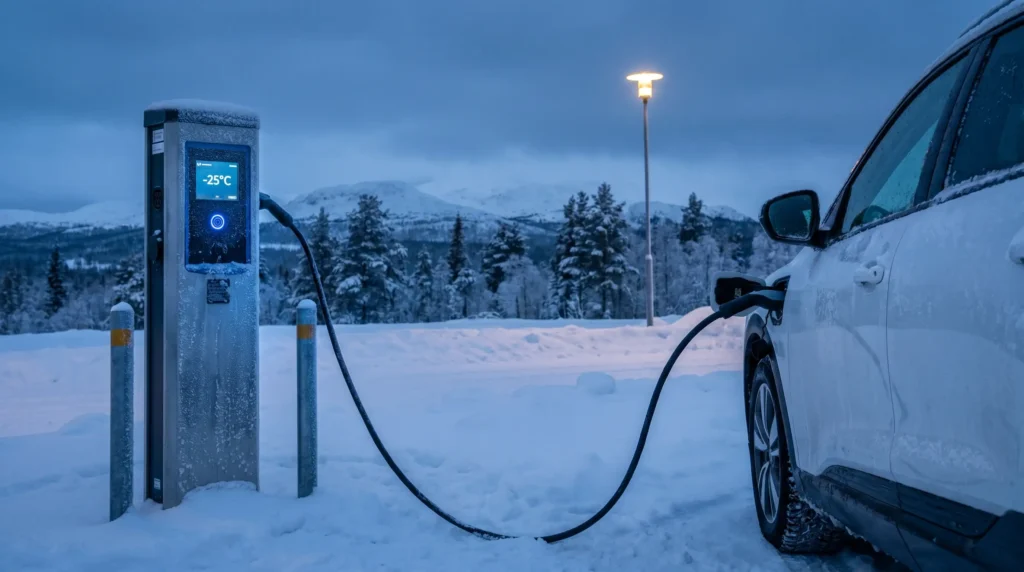
En climas fríos, los plásticos inferiores se vuelven rígidos, quebradizos y propensos a agrietarse cuando se desenrollan.
- TPU: El TPU de poliéter mantiene su flexibilidad e integridad estructural a temperaturas tan bajas como -50 °C, con una temperatura de fragilidad de -70°C [3]. Esto lo convierte en el campeón indiscutible para los mercados nórdico, canadiense y ruso.
- TPE: El TPE de alta calidad funciona bien hasta -40 °C, lo cual es adecuado para la mayoría de las regiones templadas y moderadamente frías, pero se sentirá notablemente más rígido que el TPU en condiciones de congelación extrema.
Resistencia química y al aceite
Los cables para VE están frecuentemente expuestos a fluidos automotrices, sales de carretera y productos químicos de limpieza.
- TPU: Exhibe una excelente resistencia a aceites, grasas y una amplia gama de solventes. No se hincha ni se degrada cuando se expone a productos químicos automotrices comunes.
- TPE: Tiene una resistencia moderada al aceite. La exposición prolongada a productos químicos agresivos o a aceites automotrices acumulados puede hacer que el TPE se ablande o se degrade con el tiempo.
Resistencia a los rayos UV y a la intemperie
Dado que los cables de carga viven al aire libre, la degradación por UV es una causa principal de falla prematura, lo que provoca decoloración y microagrietamiento.
- TPU: Formulado con estabilizadores UV, el TPU ofrece una excelente resistencia a la intemperie a largo plazo. Resiste excepcionalmente bien el envejecimiento superficial y la hidrólisis (daño por agua), asegurando una vida útil de 5 a 10 años incluso en entornos de alta exposición solar.
- TPE: También ofrece buena resistencia a los rayos UV, pero generalmente se degrada más rápido que el TPU bajo exposición solar intensa y prolongada.
La Alternativa Premium: Presentando XLPO
Mientras que el TPU y el TPE dominan la conversación sobre la cubierta exterior, los compradores profesionales B2B también deben conocer el XLPO (Poliolefina Reticulada).
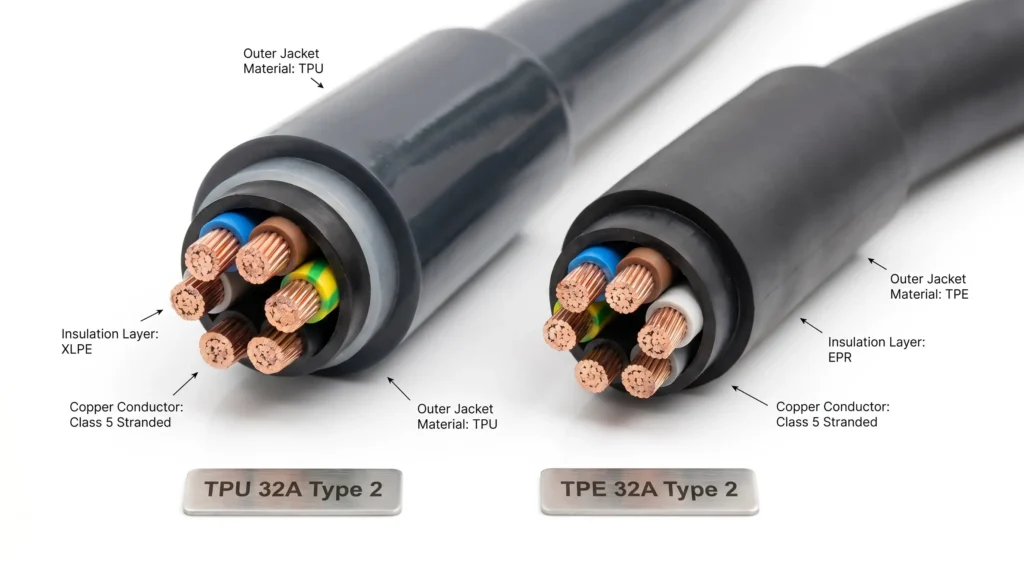
El XLPO se utiliza principalmente como la capa de aislamiento interior que rodea los conductores de cobre, pero a veces se utiliza como cubierta exterior en aplicaciones altamente especializadas. El XLPO se somete a un proceso de reticulación por irradiación que cambia fundamentalmente su estructura molecular, otorgándole una increíble resistencia al calor (hasta 125°C) y excelentes propiedades de aislamiento eléctrico [3].
El Estándar Premium Europeo: En el mercado europeo de alta gama, el estándar de oro para los cables de carga de VE es un enfoque híbrido: XLPO para el aislamiento del conductor interior + TPU para la cubierta exterior. Esta combinación ofrece el equilibrio definitivo entre seguridad eléctrica (XLPO) y durabilidad mecánica (TPU). Al abastecerse Cables de carga de VE Tipo 2 a Tipo 2 para el mercado de la UE, esta es la especificación que debe exigir.
Tabla Comparativa de Datos Técnicos
Para resumir las diferencias técnicas, aquí hay una matriz de datos comparativos basada en estándares de pruebas de la industria [3]:
| Propiedad | Unidad | TPE | TPU Poliéter | XLPO (Aislamiento) |
|---|---|---|---|---|
| Resistencia a la Tracción | MPa | 10–20 | 25–50 | 10–20 |
| Alargamiento a la Rotura | % | 300–700 | 500–800 | 150–300 |
| Resistencia a Bajas Temperaturas | °C | -40 | -50 | -25 |
| Resistencia al Desgarro | kN/m | 30 | 80 | 30 |
| Resistencia a la Abrasión | — | Buena | Excelente | Excelente |
| Resistencia al Aceite | — | Buena | Excelente | Excelente |
| Costo Relativo | — | $$ | $$$ | $$$$ |
Adquisición Estratégica: Adaptación del Material al Mercado
Para distribuidores y marcas OEM, la elección entre TPU y TPE no debe basarse únicamente en qué material es “mejor” en un laboratorio. Debe ser una decisión comercial estratégica basada en su público objetivo, escenario de aplicación y posicionamiento de precio.
Escenario A: El Mercado de Flotas Comerciales e Infraestructura Pública
El Ganador: TPU
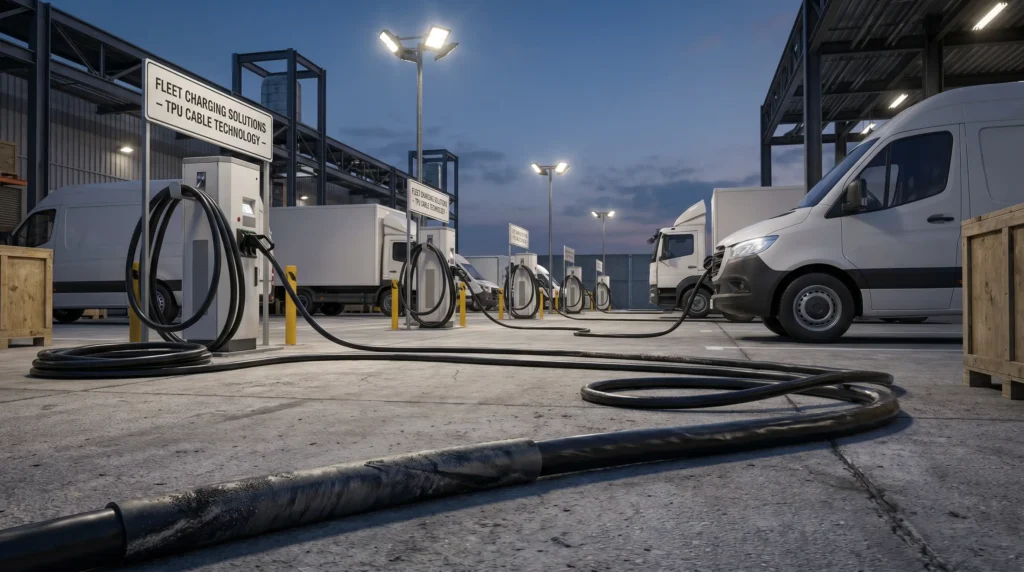
Si está suministrando cables a Operadores de Puntos de Carga (CPOs), flotas logísticas, compañías de taxis o municipios públicos, el TPU es la única opción lógica.
En estos entornos, los cables están sometidos a un uso de alta frecuencia (a menudo más de 10 sesiones de carga por día). Se dejan caer, se arrastran, se pasan por encima y se exponen a condiciones climáticas adversas durante todo el año. La superior resistencia al desgarro y a la abrasión del TPU reduce significativamente la tasa de fallos y la frecuencia de reemplazo. Aunque los cables de TPU cuestan aproximadamente entre un 20% y un 30% más por adelantado que el TPE, su costo total de propiedad (TCO) durante un ciclo de vida comercial de 5 años es enormemente menor.
Escenario B: El Mercado de Carga Residencial en el Hogar
El Ganador: TPE
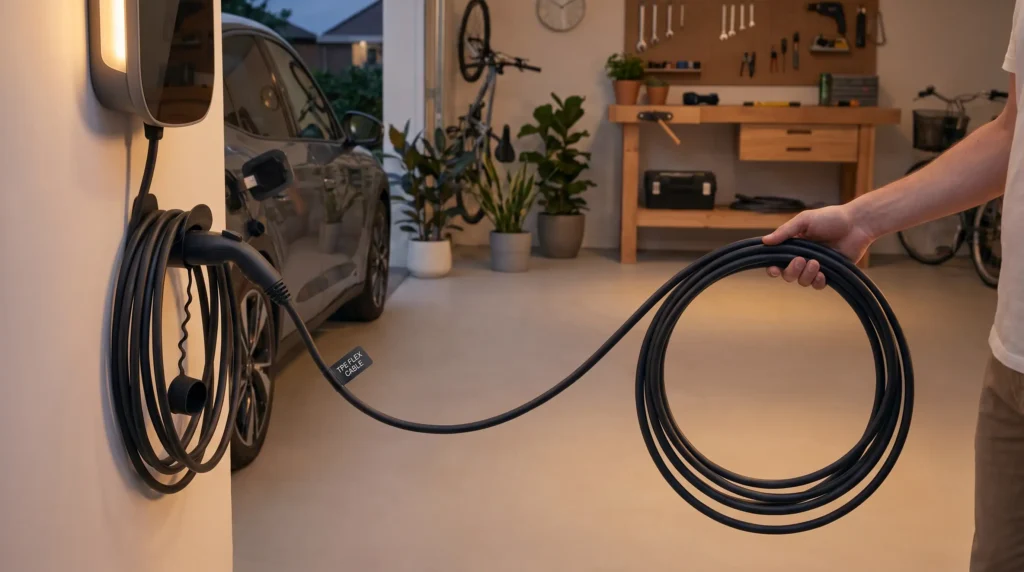
Si sus clientes principales son propietarios individuales de VE que compran un cable secundario para su wallbox doméstico o un cargador de VE portátil para guardar en el maletero, se recomienda encarecidamente el TPE.
Los usuarios domésticos normalmente enchufan sus vehículos una vez al día en un entorno controlado (un garaje o una entrada privada). El cable rara vez se somete a estrés mecánico severo. El TPE proporciona una sensación táctil más suave y premium, es más fácil de enrollar y es significativamente más rentable. Para los distribuidores minoristas, ofrecer un cable de TPE de alta calidad le permite alcanzar un atractivo punto de precio para el consumidor mientras mantiene márgenes de beneficio saludables.
Escenario C: Mercados de Clima Extremadamente Frío (Escandinavia, Canadá, Rusia)
El Ganador: TPU
Si está distribuyendo en regiones donde las temperaturas invernales regularmente descienden por debajo de -20°C, el TPU es obligatorio. La formulación de TPU poliéter mantiene su flexibilidad hasta -50°C. Un cable de TPE en estas condiciones se volverá rígido y difícil de manejar, lo que provocará una mala experiencia de usuario y posibles microfisuras en la cubierta con el tiempo.
El Ángulo de Sostenibilidad: Reciclabilidad e Impacto Ambiental
A medida que la industria de los VE avanza hacia una economía circular, el impacto ambiental de los accesorios de carga está siendo objeto de un mayor escrutinio.
Tanto el TPU como el TPE son termoplásticos, lo que significa que pueden fundirse y reformarse, lo que los hace inherentemente más reciclables que las gomas termoestables (como la silicona o los materiales reticulados). Sin embargo, el TPE generalmente tiene una ligera ventaja en reciclabilidad al final de su vida útil debido a su proceso de mezcla de polímeros más simple, que requiere menos energía para reprocesar [2].
Por el contrario, el TPU ofrece una longevidad superior. Debido a que un cable de TPU puede durar varios años más que un cable de TPE en un entorno hostil, reduce el volumen general de productos manufacturados y desechos electrónicos. Al comercializar sus productos, puede posicionar el TPE como la opción “ecológica, altamente reciclable” y el TPU como la opción de “longevidad sostenible”.
Cómo abastecerse de los cables adecuados con Yirox Auto Parts
Comprender la ciencia de los materiales es solo la mitad de la batalla; encontrar un socio de fabricación capaz de ejecutar estas especificaciones de manera consistente es la otra mitad.
En Yirox Piezas de Auto, nos especializamos en la fabricación OEM y ODM de accesorios de carga EV adaptados a las necesidades específicas de los distribuidores B2B globales. No creemos en un enfoque único para todos. En su lugar, ofrecemos un proceso de fabricación consultivo:
- Selección de Materiales Específicos para el Mercado: Ya sea que necesite cables de TPE rentables para el mercado residencial de América del Norte o cables híbridos XLPO/TPU premium para infraestructura pública europea, obtenemos las materias primas exactas requeridas.
- Cumplimiento Certificado: Todos nuestros materiales de cables se someten a rigurosas pruebas para cumplir con los estándares CE, TUV Rheinland y RoHS. Proporcionamos documentación completa, incluidos informes de pruebas de resistencia de aislamiento e impacto a baja temperatura.
- Marca Personalizada (OEM/ODM): Ofrecemos servicios integrales de OEM/ODM, lo que le permite personalizar el color de la funda del cable, imprimir el logotipo de su marca directamente en los conectores y diseñar empaques listos para la venta.
- MOQs Flexibles: Apoyamos a los distribuidores en cada etapa de crecimiento, ofreciendo MOQs escalonados que le permiten probar diferentes SKUs de materiales en su mercado sin un gran riesgo de capital inicial.
Conclusión
El debate entre TPU y TPE no se trata de qué material es universalmente “mejor”, sino de qué material es adecuado para su modelo de negocio específico y su público objetivo.
TPU es el campeón para trabajos pesados y climas fríos, esencial para infraestructura comercial, operaciones de flotas y climas extremos. Tiene un precio premium pero ofrece una durabilidad inigualable. TPE es el competidor versátil y rentable, perfecto para el mercado residencial donde la sensación táctil y la asequibilidad impulsan las decisiones de compra.
Al segmentar estratégicamente su cartera de productos para incluir ambas opciones, comunicando claramente la propuesta de valor de cada una, puede capturar una mayor participación del mercado de carga de VE.
¿Listo para construir una cartera personalizada de cables de carga de VE con materiales específicos para su marca? Contacte al equipo de Yirox Auto Parts hoy para discutir sus requisitos técnicos y solicitar muestras de materiales.
Preguntas Frecuentes (FAQ)
¿Cuál es la principal diferencia entre los cables de carga para vehículos eléctricos de TPU y TPE?
El TPU (poliuretano termoplástico) es altamente duradero, ofrece una resistencia superior a la abrasión, resistencia al desgarro y flexibilidad en climas extremadamente fríos (-50 °C), lo que lo hace ideal para uso comercial y exterior. El TPE (elastómero termoplástico) es más suave, más flexible a temperatura ambiente y más rentable, lo que lo hace ideal para la carga doméstica residencial.
¿Qué material es mejor para climas fríos como Escandinavia o Canadá?
El TPU es significativamente mejor para climas fríos. El TPU basado en poliéter mantiene su flexibilidad y no se vuelve quebradizo a temperaturas tan bajas como -50°C. El TPE funciona adecuadamente hasta -40°C, pero se sentirá notablemente más rígido que el TPU en condiciones de congelación.
¿Son los cables de TPU más caros que los cables de TPE?
Sí. Debido al complejo proceso de fabricación y a las propiedades superiores de la materia prima, los cables con revestimiento de TPU normalmente cuestan entre 20% y 30% más fabricarlos que los cables de TPE. Sin embargo, para aplicaciones comerciales, el TPU ofrece un menor costo total de propiedad debido a su mayor vida útil.
¿Qué es XLPO y cómo se relaciona con TPU y TPE?
XLPO (poliolefina reticulada) es un material altamente resistente al calor que se utiliza principalmente como capa de aislamiento interior que rodea los conductores de cobre dentro del cable. El estándar premium para los cables de vehículos eléctricos europeos es un aislamiento interior de XLPO combinado con una funda exterior de TPU.
¿Se pueden reciclar los cables de TPE y TPU?
Sí, ambos son termoplásticos, lo que significa que pueden fundirse y reutilizarse. En general, se considera que el TPE es un poco más fácil y energéticamente más eficiente de reciclar al final de su vida útil en comparación con el TPU.
¿Qué material debo elegir para un cargador de VE portátil?
Para un cargador de VE portátil (que a menudo se guarda en el maletero para uso de emergencia o viajes), el TPE suele ser la opción preferida. Es más ligero, más fácil de enrollar firmemente y más rentable para un producto que tiene un uso ocasional en lugar de un uso comercial de alta frecuencia.
¿Ambos materiales cumplen con los estándares de certificación CE y TUV?
Sí. Las formulaciones de alta calidad tanto de TPU como de TPE pueden superar las rigurosas pruebas de seguridad eléctrica, resistencia a los rayos UV y pruebas mecánicas requeridas para las certificaciones CE y TUV Rheinland. La clave está en asegurarse de que su fabricante utilice materias primas de primera calidad en lugar de mezclas baratas y no certificadas.
Referencias
[1] MarketsandMarkets. (2023). Tamaño del mercado de cables de carga para vehículos eléctricos, informe de crecimiento y pronóstico hasta 2030.
[2] Hexpol TPE. (2024). ¿Qué es TPE? | Materiales elastómeros termoplásticos.
[3] NexwayEV. (2026). Ventajas del material de funda de TPU para cables de carga de vehículos eléctricos.
[4] QC Solar. (2026). Guía de compra de cables de carga para vehículos eléctricos: materiales de funda TPE vs. TPU – ¿Cómo elegir?.