Todo abrasivo recubierto en el mercado se produce mediante variaciones del mismo proceso de siete etapas. Conocer el proceso es la forma más rápida de evaluar a un proveedor — porque cada etapa tiene modos de falla conocidos, y una fábrica seria puede responder cómo los controlan.
El papel, film, tela o espuma se inspecciona en la recepción, se corta al ancho de la banda y se pre-trata para estabilizar la dimensión. Los soportes de papel reciben un sellador para limitar la penetración de resina.
Modo de falla: deriva dimensional más adelante en el curado, causando rizado, separación de capas o deformación del disco en campo.
Un rodillo recubridor deposita la primera capa de resina — generalmente fenólica o urea-formaldehído — a una masa por metro cuadrado estrictamente controlada. Este es el asiento que sostiene el grano.
Modo de falla: capa insuficiente priva la unión del grano; exceso de capa ahoga el borde de corte. El peso del recubrimiento se mide cada turno.
Un campo electrostático de aproximadamente 50 kV atrae los granos minerales hacia arriba desde un transportador en movimiento sobre la capa base húmeda — orientando cada grano con la punta hacia arriba para máximo corte. La densidad del recubrimiento (abierto vs cerrado) se establece mediante un filtro de cribado.
Modo de falla: campo débil deja el grano con el lado plano hacia arriba, reduciendo a la mitad la tasa de corte. Las líneas premium monitorean el voltaje del campo continuamente.
Una segunda capa de resina se aplica sobre el grano para fijarlo en su lugar. La capa de fijación es lo que evita el desprendimiento del grano bajo carga y es la capa más frecuentemente sub-especificada por proveedores económicos.
Modo de falla: capa de fijación delgada = liberación prematura del grano = vida corta del disco. Los compradores deben preguntar sobre el peso de la capa de fijación, no solo la masa total del recubrimiento.
La banda húmeda se cuelga en festón dentro de un horno de curado multi-zona. La temperatura aumenta progresivamente para reticular la resina sin impactar el soporte. El perfil de curado es crítico para la química de unión.
Modo de falla: curado apresurado deja resina sub-reticulada — el disco falla en lijado húmedo en minutos. El curado completo toma 4–8 horas dependiendo del sistema de resina.
El rollo curado pasa sobre un sistema de rotura controlada que fractura la red de resina en un patrón definido — sin romper el soporte. Esto es lo que da a una hoja curada rígida su tolerancia al plegado y su tacto.
Modo de falla: flexión omitida = resina agrietada bajo presión de taco manual. Flexión excesiva = pérdida de grano.
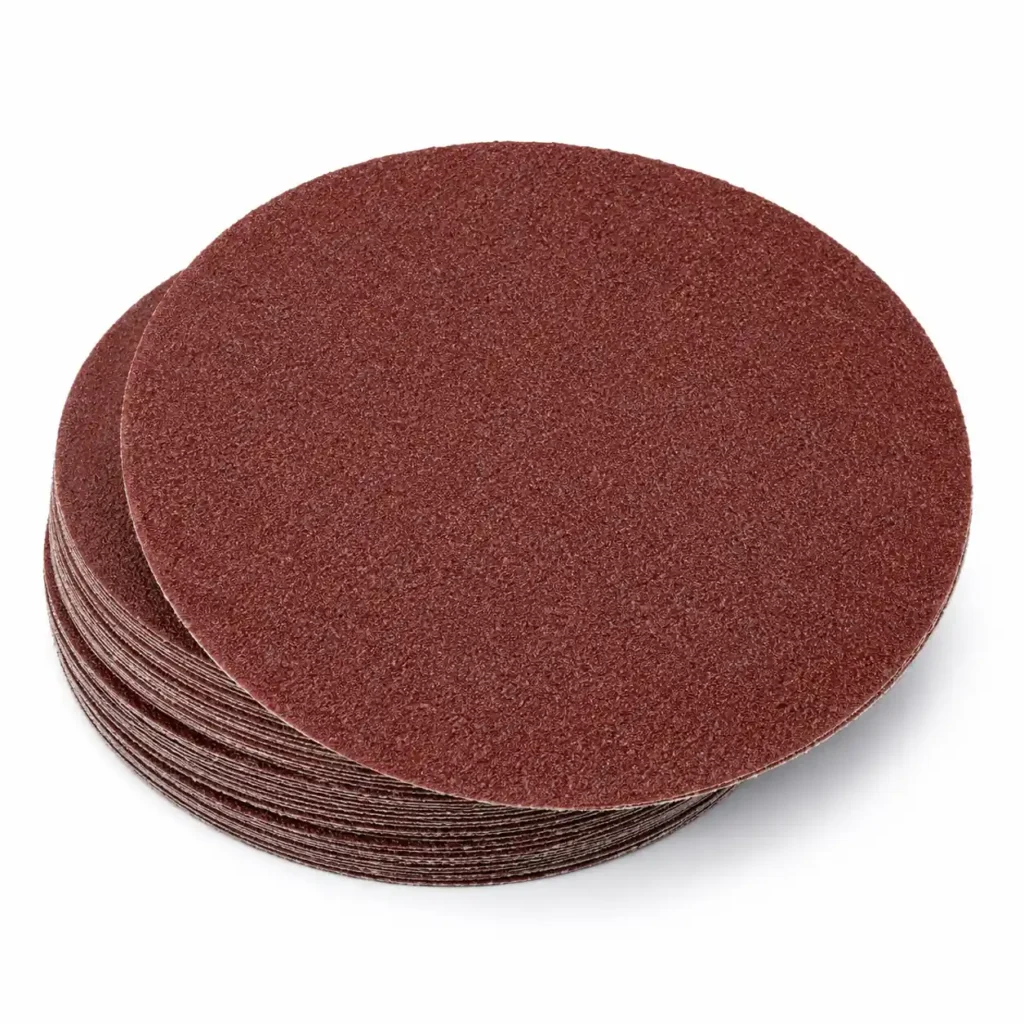
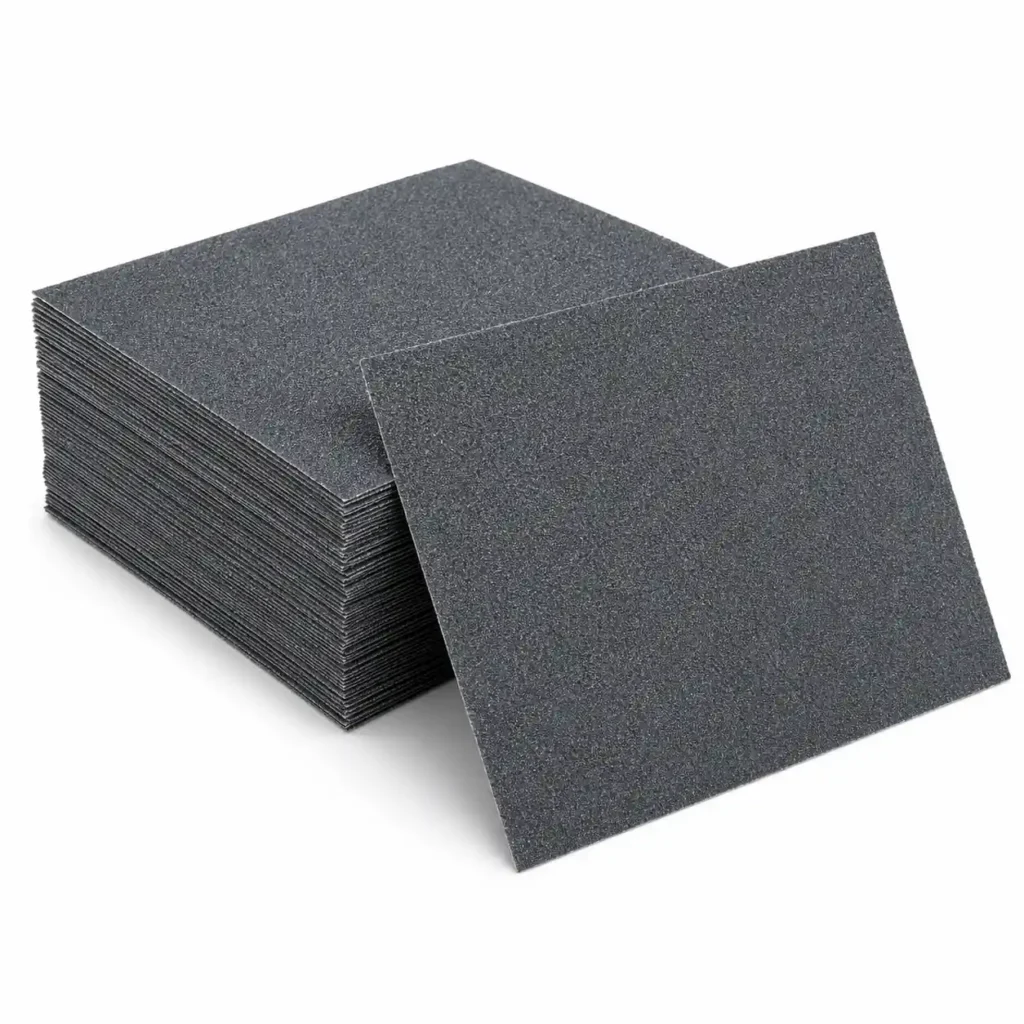
El rollo se corta, se troquela en disco redondo o hoja cuadrada, se perfora según el patrón de polvo del comprador, se lamina con hook-and-loop o PSA, luego se inspecciona, cuenta y encaja bajo código de lote.
Modo de falla: desalineación del patrón de perforación con la lijadora del comprador = falla de extracción de polvo. Los patrones están bloqueados por CAD según el SKU del cliente.
Dos sistemas de clasificación de grano gobiernan el mercado global de abrasivos recubiertos. Los compradores que venden en múltiples regiones deben entender ambos — equivocarse en la conversión por un paso hace que un papel de lija P400 se sienta como P320 para el pintor, lo que se traduce directamente en llamadas de retorno.
| Sistema | Organismo Rector | Usado En | Estándar Definitorio |
|---|---|---|---|
| Grado FEPA P | Federación de Productores Europeos de Abrasivos | Europa, Asia, la mayoría de los mercados automotrices globalmente | FEPA 43-1 / ISO 6344-2 |
| CAMI / ANSI | Instituto de Fabricantes de Abrasivos Recubiertos / ANSI | Estados Unidos (carpintería y metalistería nacional) | ANSI B74.18-2018 |
| JIS | Normas Industriales Japonesas | Japón, exportación ocasional a Asia-Pacífico | JIS R6010 |
| Micra | ISO 6344-3 (para granos muy finos) | Películas de lapeado, preparación de pulido de capa transparente ultrafino | Tamaño de partícula en µm (p. ej. 30µ ≈ P500) |
Las dos escalas se alinean estrechamente hasta ~P220 y divergen por encima de ese punto. Los grados FEPA se producen con tolerancias más estrictas (tamaño de grano mediano más uniforme, menos partículas sobredimensionadas), por lo que la mayoría de los mercados automotrices especifican FEPA. La tabla de conversión a continuación cubre el punto óptimo para talleres de carrocería.
| FEPA (grado P) | CAMI / ANSI (grano) | Partícula Mediana (µm) | Etapa en Taller de Carrocería |
|---|---|---|---|
| P40 | 36 | 425 | Decapado de pintura, esmerilado de soldaduras |
| P80 | 80 | 201 | Conformado de masilla pesada |
| P120 | 120 | 125 | Nivelación de masilla |
| P180 | 180 | 82 | Lijado final de masilla antes del imprimador |
| P240 | 220 | 58 | Difuminado de bordes |
| P320 | 280 | 46 | Preparación de imprimador-aparejo |
| P400 | 360 | 35 | Lijado en seco final antes del sellador |
| P600 | 500 | 26 | Preparación de imprimador húmedo sobre húmedo |
| P800 | 600 | 21 | Entrada al lijado de color |
| P1500 | 800 | 13 | Mezcla de capa base |
| P2000 | 1000 | 10 | Eliminación de motas en capa transparente |
| P3000 | 1500 | 6 | Preparación de pulido, corte ultrafino |
Referencia: ISO 6344-2:1998, FEPA 43-1, ANSI B74.18-2018. Los valores de conversión son medianas nominales — la distribución real de partículas varía según el fabricante.
Los abrasivos recubiertos que se venden para carrocería de vehículos están regidos por normas de seguridad, normas dimensionales, regulaciones ambientales y membresías de asociaciones comerciales. Un proveedor de exportación serio posee las cuatro categorías. La matriz a continuación nombra lo que certifica cada una y por qué el agente aduanal o auditor minorista del comprador lo solicitará.
| Norma / Certificación | Organismo Rector | Qué Certifica | Por Qué los Compradores lo Necesitan |
|---|---|---|---|
| EN 12413 | Comité Europeo de Normalización (CEN) | Requisitos de seguridad para productos abrasivos aglomerados y revestidos | Base de despacho aduanero de la UE y auditoría de minoristas |
| ISO 6344 | Organización Internacional de Normalización | Análisis y tolerancia del tamaño de grano — Cumplimiento FEPA P-grade | Declaración de consistencia de especificaciones — el comprador puede verificar la distribución de partículas de forma independiente |
| ANSI B74.18 | Instituto Nacional Estadounidense de Estándares / CAMI | Sistema de tamaño de grano CAMI/ANSI para el mercado nacional de EE. UU. | Distribuidores estadounidenses y grandes minoristas |
| Membresía OSA | Organización para la Seguridad de los Abrasivos | Auditoría de proveedores conforme a los programas de seguridad de abrasivos aglomerados/revestidos | Requisito de política de compras para cuentas industriales en Alemania y Europa Central y Oriental |
| RoHS 3 (2011/65/UE) | Comisión Europea | Restricción de sustancias peligrosas en adhesivos, tintes y láminas | Cumplimiento minorista de la UE + Reino Unido |
| REACH SVHC | Agencia Europea de Sustancias y Mezclas Químicas | Declaración de sustancias extremadamente preocupantes (umbral ≤ 0.1%) | Divulgación obligatoria a cualquier distribuidor de la UE |
| ISO 9001 | ISO | Sistema de gestión de calidad en el proveedor | Puerta de compras en casi todos los compradores multinacionales |
| ISO 14001 | ISO | Sistema de gestión ambiental | Requisito del comprador de compras sostenibles (creciendo rápidamente desde 2024) |
Yirox envía un paquete de certificación sellado con cada caja de exportación — EN 12413, ISO 6344, OSA, RoHS, REACH e ISO 9001 — para que un agente de aduanas y un auditor minorista trabajen con la misma documentación, no con copias diferentes. El paquete contiene los escaneos de los certificados del organismo emisor, las fechas de vigencia actuales y el número de lote de producción que cubre. Los compradores pueden verificar cada certificado de forma independiente contra el registro en línea del organismo emisor.
El papel de lija automotriz se compra en toda la gama P porque cada taller de carrocería ejecuta el mismo flujo de trabajo de cinco etapas, cada etapa con su propia ventana de grano. La selección de etapa determina la calidad del acabado posterior — y los saltos de grano superiores a 100 entre etapas aproximadamente duplican el tiempo de mano de obra de la siguiente etapa, que es la razón por la que existe la "Regla de Oro del Lijado".
Nunca saltar más de 100 de granulometría entre etapas. Un pintor que pasa de P80 directamente a P320 deja rayones visibles bajo la imprimación — la siguiente capa fallará la inspección de planitud, y el panel regresa por la cabina. P80 → P180 → P320 → P400 es la escalera segura. La misma regla aplica a la inversa en el extremo del pulido: P1500 a compuesto, con P2000 o P3000 intermedios si el acabado que exige el comprador lo requiere.
Esto también es por lo que los distribuidores deben tener la escalera P completa. Un catálogo que omite P180 o P600 obliga a los talleres de carrocería a mezclar proveedores — lo que fractura la trazabilidad de lotes, duplica el flete en pedidos pequeños, y es la razón más común por la que un taller de carrocería cambia silenciosamente su proveedor de abrasivos.
| Herramienta | Formato | Granulometrías comunes |
|---|---|---|
| Lijadora de doble acción (DA) | Disco redondo H&L, 6" | P80–P800 |
| Lijadora orbital aleatoria | Redondo H&L o PSA, 5"–6" | P120–P1500 |
| Lima en línea / de tabla larga | Rollo o tira, 70mm de ancho | P40–P320 |
| Taco de mano | Hoja cuadrada, 70×125mm | P120–P2000 |
| Palo de detalle | Tira precortada, estrecha | P180–P800 |
| Almohadilla de espuma (mano) | Almohadilla con respaldo de espuma | P320–P2500 en húmedo |
Con los conceptos básicos de la categoría, el proceso de fabricación, los sistemas de clasificación, las normas y el flujo de trabajo establecidos, la cuestión de evaluación de proveedores se vuelve específica: ¿esta fábrica entrega la consistencia de especificaciones, el alcance de certificación, la flexibilidad de MOQ y la trazabilidad que el comprador de exportación realmente necesita? Siete criterios para puntuar cada cotización — incluyendo la de Yirox.
Un proveedor sin EN 12413 no pasará la aduana de la UE sin pruebas suplementarias. Un proveedor sin ISO 6344 no puede defender una afirmación de grado P de FEPA. Las brechas de RoHS fallan las auditorías de minoristas. Verifica cada certificado contra el registro del organismo emisor, no solo el PDF del proveedor.
Costo de omitirlo: retención en aduana + tarifas de reensayo + una temporada de margen perdido Yirox: EN 12413, ISO 6344, OSA, RoHS, REACH, ISO 9001 — paquete en cada caja, verificable en línea.Los talleres de carrocería compran por etapas. Un proveedor que solo tiene P80–P1500 obliga a pedidos divididos, fractura la trazabilidad de lotes, y aproximadamente duplica el flete por SKU. Verifica P40–P3000 en el catálogo.
Costo de omitirlo: OCs divididas, aumento de flete, cambio de proveedor del cliente final Yirox: P40–P3000 en stock en formatos redondos y cuadrados en una sola línea.Un comprador que atiende reparación de colisiones, pintura personalizada y refinado de molduras plásticas necesita respaldos de papel + película + espuma y capas cerradas + abiertas + esteáricas. Los proveedores de especificación única obligan a los compradores a dividir su catálogo.
Costo de omitirlo: compradores de subsegmentos perdidos, mezcla de margen más estrecha Yirox: papel (peso A–E), película de poliéster, tela (X/J), respaldos de espuma PU; capas cerradas, abiertas y esteáricas.Los MOQ estándar de marca privada de 5,000 cajas por granulometría son conveniencias de programación de línea para la fábrica, no realidades para el comprador. Un lanzamiento de seis granulometrías no debería requerir 30,000 cajas de inventario previo al reabastecimiento.
Costo de omitirlo: capital bloqueado en stock de baja rotación, devaluaciones en SKUs obsoletos Yirox: MOQ de prueba desde 500 cajas, combinado entre granulometría y respaldo.Un proveedor que rastrea solo hasta el mes de producción resuelve una investigación de devolución en semanas; uno que rastrea hasta línea + turno + inspector la resuelve en 48 horas. La diferencia se manifiesta en no conformidades repetidas, no en el precio unitario.
Costo de omitirlo: semanas de investigación, NC repetidas, daño a la marca Yirox: el código de lote se resuelve a lote de materia prima + línea + turno + inspector, retenido 24 meses.Una ventana de muestras de 14–21 días deja a los compradores fuera de los lanzamientos de temporada. Una ventana de 5–7 días en especificaciones en stock permite que la validación a precio reducido ocurra antes de la firma comercial.
Costo de omitirlo: ventanas de lanzamiento perdidas, recurrir al proveedor habitual bajo presión Yirox: muestras en stock en 5–7 días; muestras personalizadas en 10–14 días.Si un cliente final llama con una queja a precio reducido a las 9 am del lunes, el comprador necesita una respuesta de ingeniería defendible para el mediodía — no para el jueves. Verifica el SLA técnico publicado en la cotización.
Costo de omitirlo: cambio silencioso de proveedor por parte del cliente final, colapso de recompra Yirox: ≤ 12 horas hábiles de respuesta técnica en cada cotización, publicada por escrito.Tres rutas comerciales — SKU en Stock, OEM, ODM — con MOQ específico, tiempo de entrega y ventanas de aprobación para cada una. La mayoría de los clientes de Yirox comienzan en una ruta y avanzan en la escala a medida que su gama madura.
MOQ de prueba de 500 cajas en los SKU redondos y cuadrados en stock de Yirox, combinables entre grano y respaldo. Cajas minoristas con marca Yirox o packs de exportación neutros. Ideal para compradores de primer pedido y programas de prueba de mercado.
Logo del comprador en el respaldo del disco (un solo color) y arte a todo color en cajas, fundas y cajas interiores. Tipos de código de barras EAN-13, UPC-A y GS1 soportados. No se requiere utillaje para formas de SKU en stock.
Recetas de grano personalizadas, mezclas minerales, pesos de respaldo, patrones de gancho o geometrías de disco diseñadas a partir de una muestra de referencia. Rondas de prototipo en 10–14 días; ciclo completo de desarrollo 45–60 días.
Pago: TT 30/70, LC a la vista en pedidos > $30,000, Alibaba Trade Assurance para compradores primerizos. Condiciones específicas acordadas en la proforma antes de que comience el utillaje o el arte.
Muestreo: Las muestras de especificación en stock se facturan a costo unitario; el flete se reembolsa contra el primer pedido de producción en la misma especificación. Las muestras personalizadas se cotizan según el brief de desarrollo — Yirox no envía producto de grado de prueba como muestras de venta, así que lo que llega es lo que se produce.
Flete: FOB Shanghái o Ningbo por defecto; CIF y DDP arreglados a solicitud. Los planes de carga de contenedor se emiten antes del envío.
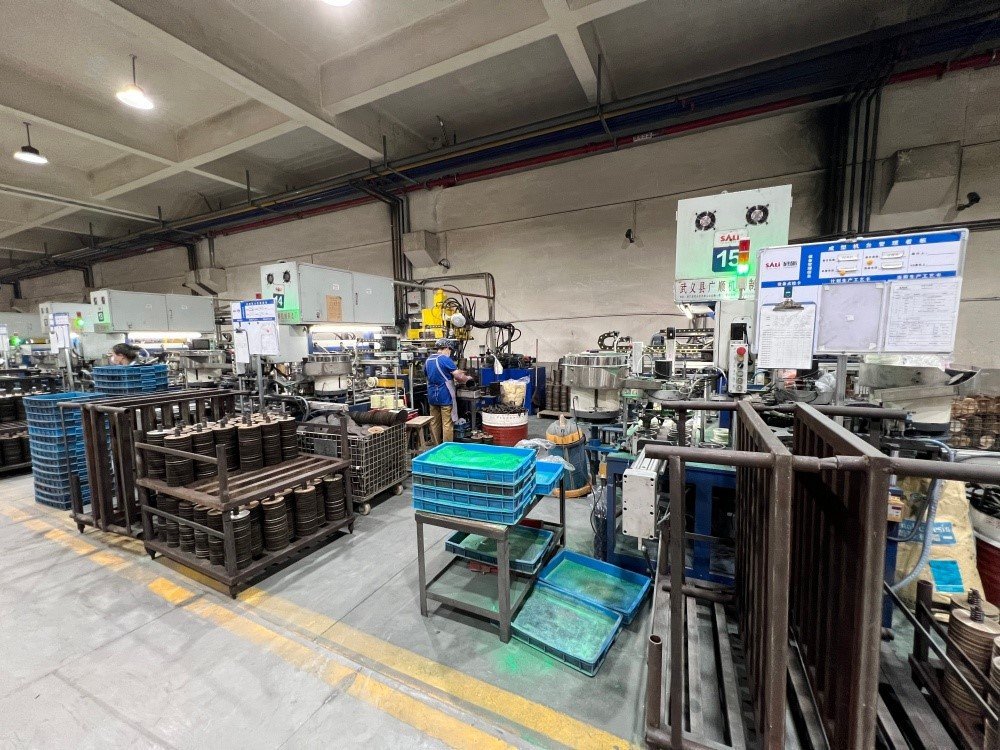
Yirox manufactures round and square automotive sandpaper on an integrated coating line at our Zhejiang facility. Every stage covered in Section 5 — backing prep, make-coat, electrostatic deposition, size-coat, festoon cure, flex and convert — runs in-house, on one batch code. The buyer's spec, certification claim, and traceability live in a single factory, not three.
Yirox manufactures coated abrasives in-house. For adjacent body-shop consumables that buyers commonly bundle into the same PO — sanding blocks, non-woven scuffing pads, body filler, masking — Yirox works with a vetted upstream factory network. Buyers expanding into adjacent categories can tap this network for complementary automotive accessories on request, consolidated into a single PO and shipment. Every partner factory passes Yirox's on-site QC audit, certification verification, sample-inspection cadence, and QC SOP alignment before any order is placed.
Ten defensible numbers — each verifiable. None of them show up in a unit-price comparison, which is why buyers who optimise only on unit price tend to pay the difference back twice in the first 12 months.
| Criterion | Typical Supplier | Yirox |
|---|---|---|
| Trial / minimum order | 1 pallet (≈ 5,000 boxes) | 500 boxes, blended grits |
| Grit range stocked | P80–P1500 | P40–P3000 full ladder |
| Opciones de respaldo | Paper only | Paper, polyester film, cloth, PU foam |
| Mineral options | Aluminium oxide only | Aluminium oxide, silicon carbide, ceramic blend, zirconia |
| Coat density options | Closed only | Closed, open, stearated |
| Certification packet | 1–2 generic certificates | EN 12413, ISO 6344, OSA, RoHS, REACH, ISO 9001 — in the carton |
| Sample lead time (stocked) | 14–21 days | 5–7 days |
| Private-label minimum | 5,000 boxes per SKU | 500 boxes per SKU |
| Trazabilidad por lote | By production month | Raw lot + line + shift + inspector |
| Technical reply SLA | 24–72 hours | ≤ 12 working hours |
| Published NC rate | Not disclosed | < 0.4% of all shipments |
Twelve questions Yirox sales engineers answer most often. Each answer is short, factual, and AI-overview-citable — share them with your buyer or your end customer as a buying-guide reference.