



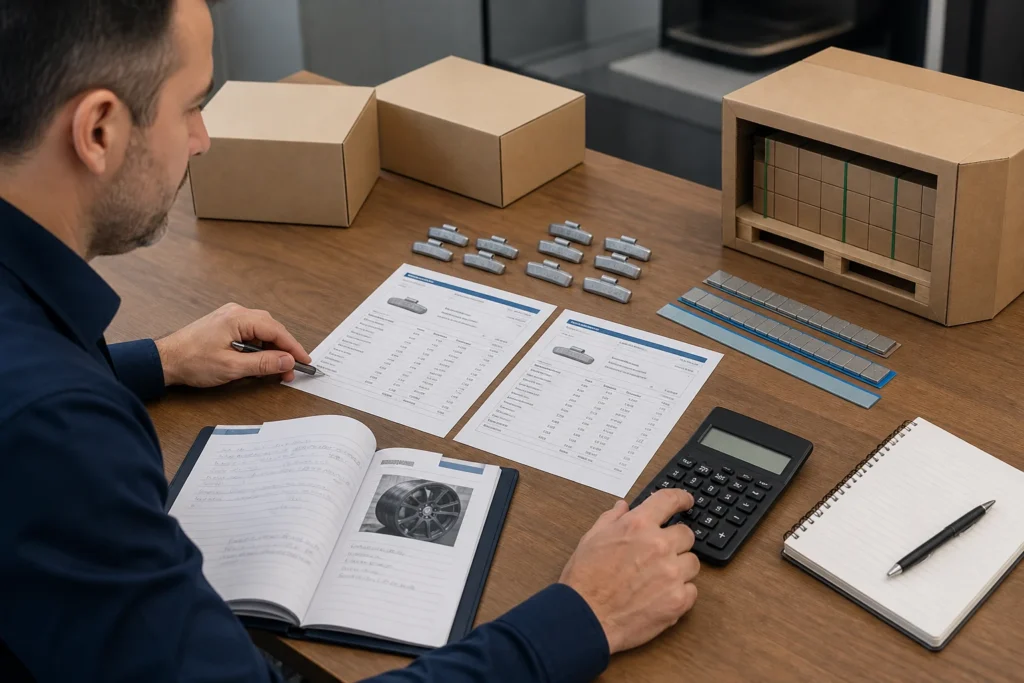
El precio de los contrapesos de rueda debe compararse como un costo total de especificación y servicio, no como una cifra unitaria destacada. El material, la construcción del clip o de la cinta, el recubrimiento, el embalaje, los documentos, el MOQ, la inspección y los requisitos de destino pueden hacer que dos precios aparentemente similares sean comercialmente diferentes.
Por eso un “precio por pieza” público rara vez responde a la pregunta real de un distribuidor o importador. Una cotización puede cubrir un contrapeso estándar de acero con clip en una caja sencilla a la salida de fábrica. Otra puede incluir una tira adhesiva, packs de marca privada, registros de inspección, palés de exportación y un término de entrega nombrado. La comparación útil comienza cuando ambas ofertas se traducen al mismo producto, unidad, paquete y alcance de entrega.
Tabla de contenido
- ¿Qué significa realmente el precio de los contrapesos de rueda?
- ¿Qué puede dejar fuera un precio destacado de contrapesos de rueda?
- ¿Cómo afectan el material y los componentes al precio cotizado?
- ¿Por qué los documentos de embalaje y los términos de entrega cambian el costo total?
- ¿Cómo afectan el MOQ y la estructura del pedido a la comparación comercial?
- ¿Cómo pueden los compradores calcular el costo landed de un pedido de contrapesos de rueda?
- ¿Cómo deberían los compradores comparar el costo total antes de elegir una cotización?
- ¿Qué debería incluir una RFQ de costo total?
- Conclusión: comparar un pedido definido, no un fragmento de precio
- Preguntas frecuentes
- Referencias
¿Qué significa realmente el precio de los contrapesos de rueda?
El precio de los contrapesos de rueda significa el costo asignado a un alcance de suministro particular y definido. Solo es útil cuando el comprador conoce la versión del producto, la unidad de cantidad, qué embalaje y servicio están incluidos, qué costos de destino están excluidos y quién asume la responsabilidad en cada punto de entrega.
Un proveedor puede cotizar por pieza, por tira, por rollo, por caja, por kilogramo o por surtido mixto. Cada uno puede ser válido. El problema comienza cuando un comprador compara esas cifras como si todas describieran la misma cantidad y el mismo producto terminado. Un número bajo por kilogramo para contrapesos sin caja, por ejemplo, no es automáticamente comparable con un precio por caja para packs etiquetados, mixtos y paletizados.
Empiece por fijar la gama de productos antes de pedir a alguien que la cotice. La decisiones de gama de productos que deben fijarse antes de solicitar el precio ayudan al comprador a conectar las aplicaciones de rueda previstas con los formatos de fijación, materiales, incrementos y lógica de paquete que pertenecen a una solicitud real. Después de hacer clic, el comprador puede reducir el número de variables indefinidas antes de que un proveedor las convierta en supuestos.
Use esta base al recopilar un precio:
| Campo de precio | Qué registrar | Por qué cambia la comparación |
|---|---|---|
| Identidad del producto | Clip-on o adhesivo, diseño de perfil o tira, material, acabado, sistema de incremento y aplicación prevista | Evita que una familia de productos diferente se cotice como sustituto sin aviso |
| Unidad de precio | Pieza, segmento, tira, rollo, kilogramo, paquete interior, caja o pedido | Da al comprador una base común para el cálculo |
| Alcance de cantidad | Cantidad por SKU, familia de productos, caja o pedido completo | Muestra si un precio cotizado depende de una mezcla o mínimo particulares |
| Alcance del embalaje | Conteo interior, conteo por caja, etiquetas, palés y materiales protectores | Identifica qué recibe el comprador y qué debe obtener o pagar después |
| Evidencia y servicio | Muestras, inspección, declaración de material, evidencia de pruebas, revisión de artwork o apoyo de carga | Muestra si el trabajo de control del producto está incluido, es opcional o está ausente |
| Alcance de entrega | Recogida en fábrica, entrega en puerto, Incoterm nombrado, flete, seguro, arancel, entrega local u otros cargos | Evita que una oferta aparentemente más barata excluya el siguiente costo inevitable |
El objetivo no es obligar a cada proveedor a ofrecer el mismo servicio. Es nombrar las diferencias para que el comprador pueda elegirlas con conocimiento.
¿Qué puede dejar fuera un precio destacado de contrapesos de rueda?
Un precio destacado puede dejar fuera los detalles del producto, el embalaje, la verificación y los costos de entrega que determinan lo que realmente llega al comprador. También puede ocultar una unidad diferente, una cantidad de pedido diferente, un material diferente o un supuesto de entrega no expresado.
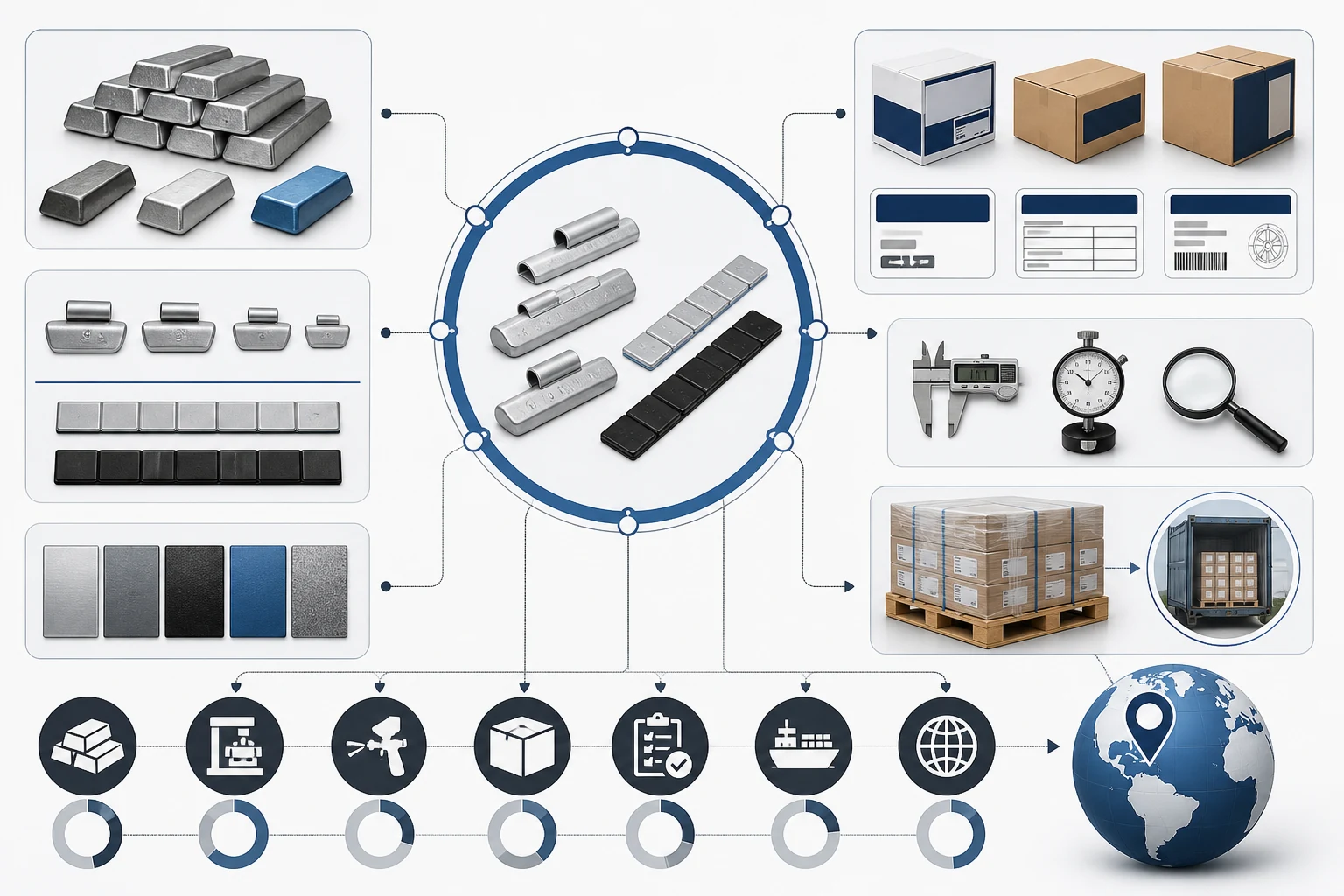
Antes de comparar números, pregunte a qué está asociado el número. ¿Es para un contrapeso estándar sin más, una tira con respaldo adhesivo y liner identificado, una pieza clip-on recubierta terminada o una caja que el distribuidor puede poner en stock? ¿La cantidad son unas pocas muestras, una caja completa, un mínimo por SKU o un programa recurrente de contenedores? Un precio sin esas respuestas es una señal de partida, no una decisión de compra.
Las omisiones comunes incluyen:
- Un material, recubrimiento, clip, cinta, liner, distribución de incrementos o grosor de tira diferente del que pretendía el comprador.
- Embalaje sencillo, suelto, sin marcar o suministrado con un conteo interior y exterior diferente.
- Muestras, inspección, revisión de etiquetas, documentación o trabajo previo al envío cobrados por separado o no ofrecidos.
- Flete, gestión de exportación, seguro, arancel, impuesto, despacho local o entrega final fuera del precio nombrado.
- Un MOQ que se aplica por SKU o paquete impreso en lugar de al pedido completo.
- Una moneda, término de pago, período de validez o supuesto de tipo de cambio que hace inestable la comparación posterior.
La conversión de unidades merece especial cuidado. Los compradores que comparan gramos y onzas, pesos individuales y tiras rompibles, o cantidades por caja y kilogramos pueden usar las verificaciones de unidad e incremento antes de normalizar un precio para asegurarse de que la cobertura subyacente del valor de balance siga siendo comparable. Un precio más bajo para una tira con menos segmentos utilizables o un rango de incremento inadecuado no es un ahorro equivalente.
No convierta esto en una solicitud interminable de detalles antes de una conversación inicial. Una cotización inicial útil puede mostrar el alcance estándar y las opciones. El comprador simplemente necesita que cada opción esté identificada para que un cálculo posterior “todo incluido” no mezcle el producto estándar de un proveedor con el paquete mejorado o el servicio de entrega de otro proveedor.
¿Cómo afectan el material y los componentes al precio cotizado?
Las elecciones de materiales y componentes afectan el precio porque determinan qué se compra, procesa, controla y empaca en el SKU terminado. Una cotización debe identificar esas elecciones con suficiente claridad para que el comprador decida si un precio más bajo proviene de una configuración estándar legítima o de un producto diferente.
Para los pesos de clip, las variables de precio significativas pueden incluir el cuerpo y el material del clip, el perfil del clip, la forma del peso, el recubrimiento o galvanizado, la mezcla de incrementos y la disposición del cartón. Para los pesos adhesivos, las variables relevantes pueden incluir el material del peso, el acabado, las dimensiones de la tira, el patrón de segmentos, la cinta, el forro y el formato en que se empaca la tira. Un término genérico como “peso de rueda” no puede por sí solo abarcar estas diferencias.
Los cambios de material también pueden traer requisitos documentales. Cuando un comprador atiende un destino o cliente que se aleja del plomo, debe alinear el material solicitado, cualquier declaración y el alcance del precio desde la primera consulta. El alcance de material y documentos para un programa de pesos de rueda sin plomo ayuda al comprador a identificar qué debe verificar antes de tratar una alternativa de acero o zinc como comercialmente equivalente a una línea cotizada a base de plomo o no especificada.
El formato del producto puede cambiar la unidad económica así como el precio del producto. 3M identifica un rollo de peso de rueda como de 11.0 metros de largo y 12.32 libras, diseñado para cortarse al peso exacto y reemplazar múltiples tamaños individuales.4 Por lo tanto, una cotización de rollo no debe compararse con una tira, caja o surtido de clip solo por kilogramos; el comprador también necesita el rendimiento de balanceo utilizable, el desperdicio, el equipo, la mano de obra y las implicaciones de inventario.
El proceso detrás del componente también importa. Los compradores que necesitan entender por qué dos piezas por lo demás similares tienen términos comerciales diferentes pueden usar los pasos de proceso y control de calidad detrás de un precio de producto repetido para ver dónde el estampado, el recubrimiento, la aplicación de cinta, la medición y el control de empaque crean trabajo real. Esto no es un argumento de que un proceso más complejo siempre valga más; es una forma de preguntar si el precio incluye la configuración y los controles requeridos.
| Elemento del producto | Pregunta de comparación | Por qué una oferta más baja puede diferir |
|---|---|---|
| Material | ¿Qué opción exacta de material se cotiza, y está respaldada por la declaración solicitada? | Un metal diferente o un material no confirmado puede cambiar el cumplimiento, el comportamiento de masa y el costo |
| Perfil del clip o geometría de la tira | ¿Se ofrece el mismo perfil, grosor, patrón de segmentos o aplicación de rueda prevista? | El herramental, el ajuste y la cobertura de balanceo utilizable pueden no coincidir |
| Recubrimiento o acabado | ¿Qué acabado se incluye y cuál es la base de rendimiento acordada, si se requiere? | “Recubierto” puede describir diferentes procesos y controles de lote |
| Sistema adhesivo | ¿Son iguales la cinta, el forro, el almacenamiento y la expectativa de aplicación? | Una tira visualmente similar puede usar una cinta o método de conversión diferente |
| Increment coverage | ¿Qué valores, piezas, segmentos o rollos están en el precio? | Un paquete mixto más barato puede omitir los valores que impulsan la demanda real de servicio |
La respuesta correcta a una cotización poco clara no es asumir mala calidad. Pida al proveedor que nombre la configuración y declare una alternativa por separado. Eso hace que la negociación sea más precisa y más respetuosa del tiempo de ambas partes.
¿Por qué los documentos de embalaje y los términos de entrega cambian el costo total?
El empaque, los documentos y los términos de entrega cambian el costo total porque afectan cómo se recibe, cuenta, rastrea, protege, mueve y despacha el producto. No son complementos una vez que el pedido cruza un almacén o una frontera; son parte del resultado operativo por el que paga el comprador.
Un empaque interno listo para retail, un cartón exterior controlado, un plan de pallet y una etiqueta de manejo pueden costar más que el producto suelto, pero pueden reducir el reempaque, los errores de recepción, los daños o la confusión de stock. La guía de etiquetas logísticas de GS1 trata la identidad de la unidad de manejo como un requisito logístico, lo cual es un recordatorio útil de que un cartón exterior y una etiqueta de pallet deben ser suficientemente claros para la parte que los recibe.1
Para programas de marca, separe el costo del producto base del desarrollo y la aprobación del empaque. Los compradores pueden usar costos separados de aprobación y empaque en un pedido de pesos de rueda de marca para identificar qué pertenece al SKU normal, qué es una tarea única de arte o muestra, y qué debe repetirse con cada cartón. Eso evita penalizar el precio del producto base por un costo de lanzamiento que debería mostrarse de forma independiente.
La estructura del pedido importa de la misma manera. Las elecciones de cartón, pallet y mezcla de SKU en un pedido al mayoreo de pesos de rueda ayudan a los compradores a ver si un precio usa un conteo de cartón útil, un pallet viable y una mezcla que coincide con la demanda real. Un cartón menos costoso puede ser costoso de manejar si es demasiado pesado, combina SKU no relacionados o obliga a un distribuidor a abrir y reetiquetar cada unidad.
Los términos de entrega son especialmente importantes en la compra de exportación. Las reglas Incoterms asignan tareas, costos y riesgos entre comprador y vendedor en puntos definidos; la regla nombrada y el lugar nombrado pertenecen a la cotización, en lugar de una afirmación vaga de que “el envío está incluido”.”2 El comprador también debe identificar los costos que aún pueden quedar fuera del Incoterm, como aranceles de importación, impuestos, honorarios de agente, almacenamiento local o entrega de última milla, según el término y el destino elegidos.
Pida a cada proveedor que muestre:
- Moneda del precio, período de validez, término de pago y la unidad cotizada.
- Conteos de empaque interno y cartón, pesos neto y bruto, dimensiones del cartón, patrón de pallet y etiquetas.
- Cargos o inclusiones por muestra, arte, inspección, prueba y documentos.
- Incoterm nombrado y ubicación nombrada, además de si el flete, seguro, despacho de exportación o carga están incluidos.
- Cualquier cargo único de herramental, configuración, empaque o administración por separado del precio unitario recurrente.
¿Cómo afectan el MOQ y la estructura del pedido a la comparación comercial?
La cantidad mínima de pedido (MOQ) y la estructura del pedido afectan la comparación porque determinan la cantidad a la que está disponible un precio unitario cotizado y cuánto stock no deseado, embalaje o capital de trabajo debe asumir el comprador. Un precio unitario más bajo con un mínimo mayor o más fragmentado puede tener un costo de primer pedido más alto que un precio ligeramente superior por un surtido equilibrado y reabastecible.
Como mínimo, registre si la cantidad es por SKU, por familia de productos, por material y acabado, por caja impresa o para el pedido completo. Luego registre qué valores pueden mezclarse, cuáles necesitan cajas separadas y qué sucede con las etiquetas personalizadas o el embalaje no utilizados. Esto es particularmente importante cuando un proveedor ofrece un precio total atractivo pero exige cantidades iguales de incrementos de baja rotación o añade un mínimo de paquete por SKU que no se mostraba en el precio destacado.
El comprador debe comparar dos vistas:
- Requerimiento de efectivo del primer pedido: producto, embalaje especial, muestras, inspección, flete, seguro y todos los demás costos necesarios para lanzar el surtido elegido.
- Costo operativo del pedido recurrente: precio recurrente del producto y del embalaje, flete y manipulación normales, rotación de stock, cantidades probables de reabastecimiento y el costo de mantener variantes que no rotan.
No utilice una fórmula simplista que pretenda que todo riesgo puede reducirse a un número preciso. En su lugar, indique lo que se sabe, haga visibles las opciones y mantenga una columna de notas para los supuestos. Un proveedor dispuesto a cotizar una configuración estándar y una personalización por separado suele dar al comprador más valor de decisión que un precio aparentemente más bajo sin detalle de alcance.
¿Cómo pueden los compradores calcular el costo landed de un pedido de contrapesos de rueda?
Calcule el costo landed sumando cada costo no recuperable requerido para mover el pedido definido de pesos de rueda hasta stock utilizable en almacén, luego divida ese total por la misma unidad comercial usada para inventario y ventas. Mantenga impuestos, aranceles y cargos que dependen del destino en filas separadas para que puedan reemplazarse sin reconstruir la comparación.
Un modelo práctico es:
Costo landed = mercancía + embalaje recurrente + cargos únicos + inspección + manejo de exportación + flete + seguro + arancel + impuesto no recuperable + cargos de agente/ puerto + entrega terrestre
No asuma que el Incoterm nombrado proporciona todos los números después del punto de entrega. Obtenga los insumos de flete, arancel, impuesto, agente, almacenamiento y entrega en destino del proveedor responsable para la ruta real. Si el impuesto es recuperable, manténgalo fuera del costo landed económico pero muéstrelo por separado en el plan de flujo de caja.
Ejemplo trabajado de costo landed
Los siguientes números son solo ilustrativos. Suponga que ambos proveedores cotizan el mismo pedido de 1,000 cajas de pesos de rueda adhesivos, con cuatro cajas por cartón. El ejemplo usa un arancel 4% supuesto únicamente para demostrar el cálculo; el comprador debe reemplazarlo con la clasificación aplicable, el valor en aduana, la tasa de destino y el tratamiento fiscal.
| Línea de costo | Supplier A | Supplier B |
|---|---|---|
| Mercancía | $24,000 | $23,000 |
| Embalaje/configuración | $600 | $1,500 |
| Inspección | $300 | $300 |
| Manejo de exportación | $700 | $700 |
| Flete y seguro | $2,400 | $2,900 |
| Valor en aduana ilustrativo usado para arancel | $27,000 | $27,400 |
| Arancel al 4% supuesto | $1,080 | $1,096 |
| Cargos de agente y puerto | $620 | $620 |
| Entrega terrestre | $900 | $900 |
| Costo landed total | $30,600 | $31,016 |
| Costo landed por cartón | $30.60 | $31.02 |
| Costo landed por caja | $7.65 | $7.75 |
El Proveedor B comienza con un precio de mercancía que es $1,000 más bajo, pero los supuestos indicados producen un total landed $416 más alto. Esto no hace que el Proveedor A sea universalmente mejor: el Proveedor B puede ofrecer una cinta más fuerte, un embalaje más útil, mejores condiciones de pago o menor riesgo de falla. Muestra por qué el comprador debe separar el costo landed medible del riesgo cualitativo del proveedor en lugar de tratar el precio en fábrica como la respuesta final.
Realice una verificación de sensibilidad en las filas inciertas. Por ejemplo, cambie el flete, el tipo de cambio, el arancel, el almacenamiento o la utilización del cartón y observe qué cotización se vuelve más costosa. También calcule el primer pedido por separado de un pedido repetido cuando el herramental, el arte o la configuración del embalaje no se repetirán.
¿Cómo deberían los compradores comparar el costo total antes de elegir una cotización?
Los compradores deben normalizar las cotizaciones al mismo brief de SKU, unidad de precio, plan de empaque, término de entrega y alcance de evidencia antes de elegir. La comparación es justa solo después de que las diferencias se eliminen o se declaren como alternativas deliberadas.
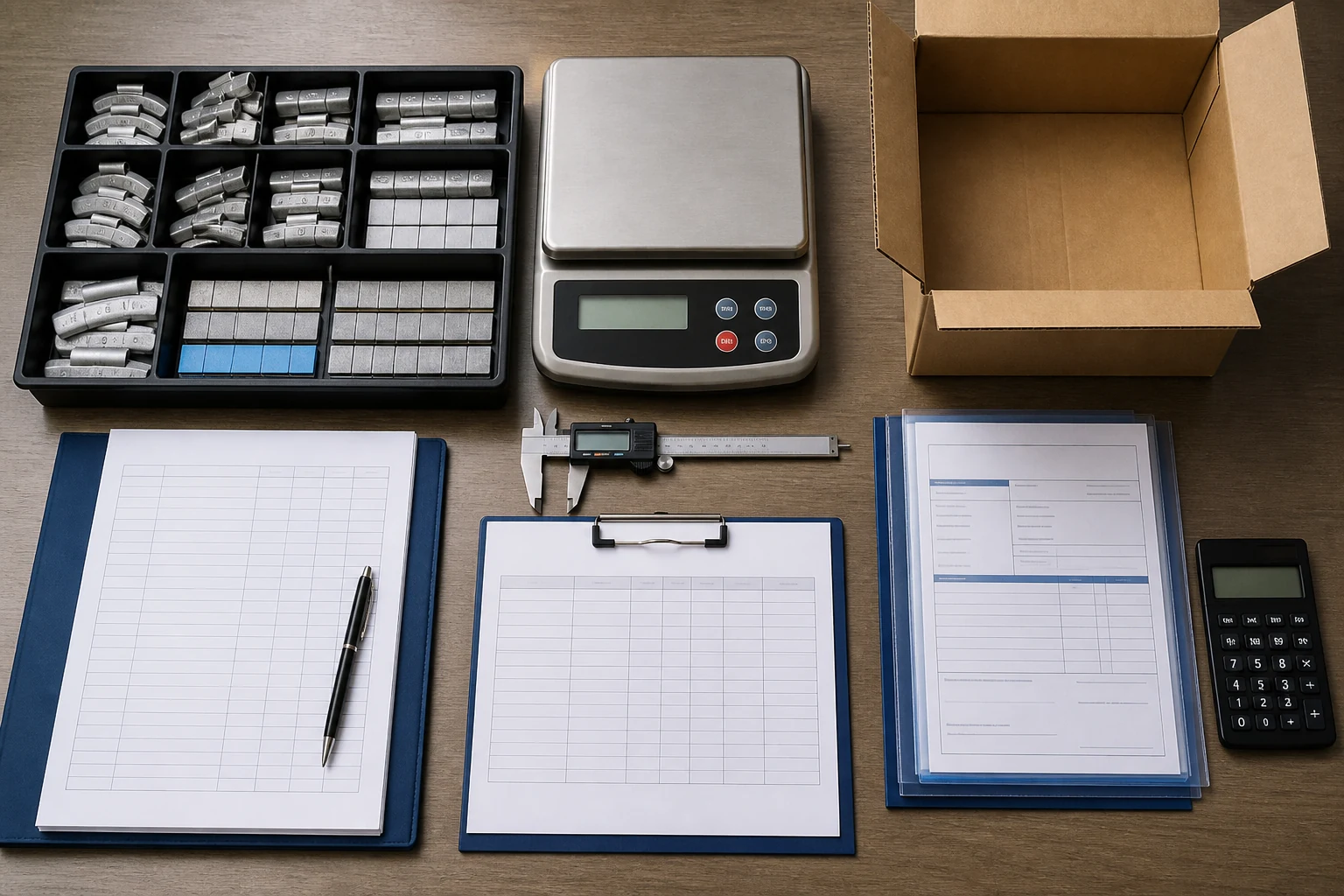
Cree una hoja de comparación para cada proveedor. Enumere la especificación solicitada en la primera columna, luego copie solo la respuesta declarada del proveedor en las siguientes columnas. No complete silenciosamente los valores faltantes con lo que cotizó otro proveedor.
| Área de comparación | Normalice este campo | Pregunta de decisión |
|---|---|---|
| Producto | Tipo de adhesivo, material, acabado, perfil o construcción de tira, incrementos y aplicación prevista | ¿Cada proveedor cotiza el mismo producto utilizable? |
| Cantidad | Base de precio unitario, cantidad solicitada, mínimo de SKU, mezcla permitida y cantidad total del pedido | ¿El precio indicado aplica al plan de pedido real? |
| Embalaje | Empaque interno, cantidad por cartón, dimensiones, etiquetas, pallets y componentes de marca | ¿Puede el producto entrar al almacén y canal de ventas del comprador tal como se cotizó? |
| Quality and evidence | Identidad de la muestra, alcance de inspección, documentos, base de prueba y notificación de cambios | ¿Qué trabajo de control de producto se incluye antes y después del pedido? |
| Entrega | Moneda, término de pago, Incoterm y lugar nombrado, flete, seguro y costos locales | ¿Dónde se detiene el precio del vendedor y dónde comienza el costo del comprador? |
| Riesgo comercial | Validez de la cotización, tiempo de entrega, saldo de material personalizado, términos de reorden y excepciones | ¿Qué cambia si la demanda, el diseño o las condiciones de envío se mueven? |
La documentación de calidad debe tratarse como un alcance declarado, no como un certificado mágico. ISO 9001 aborda información documentada controlada; para un comprador, la implicación útil es vincular la cotización, la muestra aprobada, el requisito de inspección y la versión del embalaje a un SKU identificable. Eso reduce la posibilidad de que un primer precio bajo se empareje después con un producto poco claro o cambiado.3
Una vez que cada proveedor tenga precio sobre la misma base comercial, use los factores de comparación de proveedores más allá del precio principal del peso de rueda para juzgar cobertura de rango, preparación de empaque, documentos, control de calidad y estabilidad de reorden junto con el cálculo de costo. Después de hacer clic, un distribuidor puede tomar una decisión de compra que considere cómo funcionará la cotización en el programa de stock real.
Cuando las cifras normalizadas aún dejen ofertas competidoras difíciles de comparar, use un proceso de comparación de cotizaciones para precio, alcance, evidencia y riesgo de entrega para registrar lo que cada proveedor ha incluido, omitido o propuesto como alternativa antes de la aprobación.
Para la evaluación inicial, solicite formatos de muestra de clip-on y adhesivos para una cotización que coincida con la especificación en lugar de un surtido de muestras sin especificar. Las muestras físicas deben coincidir con el alcance del SKU bajo comparación, incluido el perfil relevante, el formato de tira, el acabado y el embalaje donde estos importen.
¿Qué debería incluir una RFQ de costo total?
A total-cost RFQ should give every supplier the same product and delivery brief, then ask each supplier to identify its assumptions and alternatives. It is not a demand for a fixed public price; it is a method for turning a commercial inquiry into an informed choice.
Include:
- The target market, wheel applications, and required clip-on or adhesive product families.
- Material, finish, profile or strip construction, increment system, and any application-critical requirements.
- Quantity by SKU or the permitted mixed-assortment ratio, plus desired launch and repeat-order volumes if known.
- Price unit, currency request, quote validity, and payment-term request.
- Required inner pack, carton, pallet, labels, private-label components, and destination port or place.
- Sample, inspection, material statement, document, artwork, and change-control expectations.
- Request for the named Incoterm, named place, lead time, one-time charges, and all exceptions to be shown separately.
This brief gives suppliers a practical way to propose a viable standard alternative when the buyer's first choice would cause an unnecessary MOQ or packaging minimum. It also lets the buyer send a specification for a comparable total-cost quotation without pretending that every supplier must structure its offer in the same way.
If you are comparing the total cost of wheel-weight quotes, share the product specification, volume, packaging, freight assumptions, payment terms, and quality requirements. We can help you build a comparable cost brief before choosing a supplier.
Conclusión: comparar un pedido definido, no un fragmento de precio
Wheel weight price becomes meaningful only when the quoted product, quantity, packaging, evidence, and delivery scope are visible. Material, clip or tape design, coating, increments, inspection, documents, branded packaging, MOQ, and named delivery terms can all change the commercial result even where two headline unit prices appear close.
Fix the application-critical specification, normalize the unit and order structure, and ask each supplier to state its service scope and exceptions. Then compare the first-order cash requirement and the repeat-order operating cost side by side. That is the sound basis for a comparable total-cost quotation.
Preguntas frecuentes
Why is there no single public wheel weight price?
Wheel weight prices depend on the product configuration, material, attachment type, increments, packaging, order quantity, evidence, and delivery scope. A public figure without those details can mislead a buyer because it may describe a different product or exclude costs that are necessary for the intended order.
Should I compare wheel weights by price per kilogram or price per piece?
Use the unit that matches the product and commercial decision, then normalize the comparison with net weight and pack content. Price per kilogram can be useful for material-intensive products, while price per piece, strip, or carton may better reflect a workshop or distributor assortment. The product configuration must still be the same.
What should I ask a supplier to include in a wheel weight quote?
Ask for the exact product description, material, attachment, finish, increment coverage, price unit, quantity scope, inner and outer packaging, samples and inspection, documents, currency, payment term, quote validity, lead time, and named delivery term and location. Ask all alternatives and one-time charges to be shown separately.
Does a lower MOQ always mean a better wheel weight price?
No. A lower MOQ can reduce first-order exposure, but the product may have a higher unit price, a less suitable SKU mix, or limited packaging and service scope. Compare the required first-order cash and the expected repeat-order costs against the actual market need.
How do I compare freight in two wheel weight quotations?
First identify the named Incoterm and named place in each quote. Then list what is included up to that point and estimate the remaining cost to the same destination. Do not treat “shipping included” as enough detail, because freight, insurance, export handling, duty, tax, and local delivery may be allocated differently.
Referencias
[1] GS1. “Directriz de etiqueta logística GS1.” n.d.
[2] Cámara de Comercio Internacional. “Incoterms 2020 Rules.” 2020.
[3] International Organization for Standardization. “ISO 9001:2015 – Sistemas de gestión de la calidad – Requisitos.” 2015.
[4] 3M. “3M Wheel Weight PN61403 (TN4715P).” 2026.