






La trazabilidad de los pesos de rueda conecta el producto, la etiqueta del cartón, el registro de lote, la muestra aprobada y los documentos de respaldo para que un comprador pueda identificar lo que se suministró e investigar una inquietud sin depender de la memoria. Los identificadores claros permiten a los importadores gestionar pedidos repetidos, discrepancias en la recepción y quejas de clientes mientras mantienen la evidencia vinculada al SKU y al envío reales.
El objetivo no es crear papeleo por sí mismo. Es hacer que un cartón específico responda preguntas prácticas: ¿Qué peso de rueda contiene? ¿Qué lote lo suministró? ¿Qué muestra y especificación se aprobaron? ¿Qué envío o cliente lo recibió? Una cadena de registros simple y consistente es más útil que una pila de certificados desconectados.
Tabla de contenido
- ¿Qué significa la trazabilidad de los pesos de rueda?
- ¿Qué campos del código de lote y de la etiqueta del cartón importan?
- ¿Qué registros debe conectar una cadena de trazabilidad de pesos de rueda?
- ¿Cuándo ayuda un COA y qué debe cubrir?
- ¿Cómo deben los compradores usar la trazabilidad durante la recepción y las quejas?
- ¿Qué deben preguntar los compradores a los proveedores antes de un pedido repetido?
- ¿Cómo puede un distribuidor establecer un sistema de registros viable?
- Conclusión: Hacer que cada cartón sea respondible
- Preguntas frecuentes
- Referencias
¿Qué significa la trazabilidad de los pesos de rueda?
La trazabilidad de los pesos de rueda significa poder conectar un artículo físico o cartón con los registros de producción, producto, embalaje y envío que lo describen. El nivel útil de detalle depende del riesgo del comprador, el canal de ventas y el proceso de calidad, pero el identificador debe conducir a evidencia en lugar de simplemente parecer oficial.
Un lote es una cantidad definida de producto fabricada bajo condiciones consideradas uniformes; no es automáticamente un número de serie individual.3 Para los pesos de rueda, un lote podría cubrir una corrida de producción o embalaje controlada. El objetivo del comprador suele ser identificar rápidamente el grupo afectado—no asignar un número único a cada segmento de 5 g o pieza de clip-on a menos que un programa específico requiera ese nivel de serialización.
La trazabilidad comienza con un SKU estable. Un cartón no puede rastrearse de manera significativa si su número de parte no distingue adhesivo de clip-on, gramos de onzas, acero de zinc, o un perfil de clip de otro. Los compradores pueden usar las opciones de especificación de pesos de rueda que los registros deben preservar para definir los campos del producto que deben permanecer sin cambios desde la aprobación de la muestra hasta el embalaje y los pedidos repetidos.
El principio es consistente con el marco de trazabilidad de GS1: la identificación del producto puede operar a nivel de clase, lote, o instancia individual, y el nivel correcto depende del objetivo de trazabilidad.1 Un comprador de pesos de rueda debe elegir el nivel más simple que pueda soportar las necesidades de recepción, garantía, quejas y contención similar a un retiro en su canal real.
¿Qué campos del código de lote y de la etiqueta del cartón importan?
Una etiqueta de cartón útil ayuda a un almacén o comprador a identificar el producto y recuperar su registro sin abrir la caja. El código de lote es solo un campo; se vuelve útil cuando se sitúa junto a un SKU inequívoco, una descripción del producto y una configuración de empaque.
Acuerde los campos de la etiqueta antes del primer pedido. Como mínimo, el comprador normalmente necesita un número de parte, una descripción del producto en lenguaje sencillo, el formato de fijación, el material cuando sea relevante, la información de unidad y masa o segmento, la cantidad por cartón y el identificador de lote. Agregue origen, referencia del cliente, código de barras o campos de manejo solo donde el comprador, el mercado o el programa comercial los requiera.
| Campo de etiqueta o registro | Qué identifica | Verificación del comprador |
|---|---|---|
| SKU y descripción del producto | El producto exacto pedido | ¿Distingue el tipo de fijación, el material y el ajuste relevante? |
| Formato de unidad y masa | Cómo se selecciona el peso en servicio | ¿Están claros y consistentes los gramos, las onzas o los segmentos de tira? |
| Código de lote | El grupo controlado de producto o embalaje | ¿Puede recuperar el registro de producción, embalaje o aprobación? |
| Cantidad por cartón y configuración de empaque | Qué se contiene físicamente | ¿Coincide la etiqueta del cartón con los empaques internos y la lista de empaque? |
| Identificador de cartón o pallet | La agregación de envío o almacenamiento | ¿Puede el registro de recepción vincularlo con el envío y la ubicación? |
La legibilidad de la etiqueta importa tanto como la selección de datos. Coloque los campos donde los receptores, recolectores y técnicos puedan verlos sin descifrar una descripción genérica del cartón. Los datos de unidad e incremento en las etiquetas de cartón ayudan a evitar que un cartón de clip-on de 1 oz de aspecto similar se confunda con un programa de tira adhesiva basado en gramos.
Si un comprador utiliza etiquetas logísticas estandarizadas, GS1 describe el SSCC como un identificador para una unidad logística individual y señala que la información de lote puede incluirse cuando sea aplicable.2 Esta es una opción para los programas que la necesitan, no una regla de que cada cartón de pesos de rueda deba llevar un SSCC. El comprador debe decidir quién posee la asignación del número y cómo se conecta con el registro del almacén o ERP antes de agregarlo al arte.
¿Qué registros debe conectar una cadena de trazabilidad de pesos de rueda?
Una cadena de trazabilidad debe conectar el producto aprobado con los registros de lote y embalaje que prueban lo que realmente se entregó. El registro debe permanecer útil a través de las etapas de muestra, producción, envío, recepción y pedido repetido.

Una cadena de registros útil conecta el producto y la especificación aprobados con el lote, el cartón, el COA cuando se requiera, y el envío.
Comience con la muestra aprobada o la especificación acordada. Registre el SKU, el material, el sistema de unidades, el rango de masa, el tipo de fijación, el perfil del clip o los detalles del adhesivo, el recubrimiento o acabado, y la configuración del empaque. Luego conecte ese registro con el lote de producción o embalaje, la etiqueta del cartón, la lista de empaque y la referencia del envío. Si se solicita un COA, una declaración de materiales o un informe de inspección, debe nombrar el producto y el lote que cubre en lugar de hacer una afirmación genérica sobre una amplia gama de productos.
| Registro | Conexión que debe hacer | Uso típico |
|---|---|---|
| Muestra aprobada o especificación | Defines what “correct” means | Compare production and later complaints against the accepted product |
| Batch or packing record | Links products to a controlled run | Narrow a receiving or quality question to the affected group |
| Carton and inner-pack labels | Connect physical stock to the batch and SKU | Receive, pick, rotate, and segregate stock correctly |
| Packing list and shipment reference | Connect cartons to a delivery | Reconcile quantities and identify what a customer received |
| COA or requested evidence | Connects declared results or characteristics to scope | Support a customer or buyer requirement where agreed |
For a mixed range, do not use a single “wheel weights” record as a substitute for SKU-level control. Buyers reviewing adhesive and clip-on product formats on the record should make the product description specific enough to distinguish the parts that a technician can actually install.
The same applies to palletized orders. A pallet number or shipping mark is helpful only if the buyer can link it to the cartons and SKU quantities it contains. When planning carton and pallet structure in a bulk shipment, decide whether the traceability record stops at the carton, extends to the pallet, or needs both.
¿Cuándo ayuda un COA y qué debe cubrir?
A certificate of analysis, or COA, helps when the buyer or customer needs documented results or declared characteristics for a defined product and scope. It should not be requested as a decorative document or treated as a universal substitute for a product specification, material declaration, or inspection plan.
Before asking for a COA, define the question it must answer. It may cover agreed checks such as product identification, batch identification, a specified material declaration, nominal-weight verification approach, appearance or packing confirmation, or another stated acceptance item. The buyer and supplier should agree who issues it, which method or record supports it, and whether it covers a production batch, packing batch, or shipment line.
Do not assume a COA proves every claim a customer may make about a wheel weight. A coating, tape, clip, or material question may require a separate specification, test record, supplier statement, or customer-specific evidence. A useful COA identifies its product code and batch, lists the agreed fields, and carries a date or controlled reference that lets the buyer retrieve the associated evidence.
The important test is relevance: can the recipient tell which goods the document applies to, what was checked or declared, and who is responsible for it? If not, ask for a corrected record rather than attaching an impressive-looking but unconnected certificate to the order file.
¿Cómo deben los compradores usar la trazabilidad durante la recepción y las quejas?
Buyers should use traceability to turn a physical carton into an answerable record at receiving, then use the same chain to isolate a concern if one occurs. The first action is to identify and preserve the evidence, not to assign blame from a photograph or memory.
At receiving, compare the carton label, batch code, SKU, quantity, and visible product condition with the packing list and purchase order. Record the receipt date and storage location, then retain photos of representative labels or any damaged cartons. If a pallet or carton identifier exists, store it with the same receiving transaction so the physical goods and inventory record stay connected.
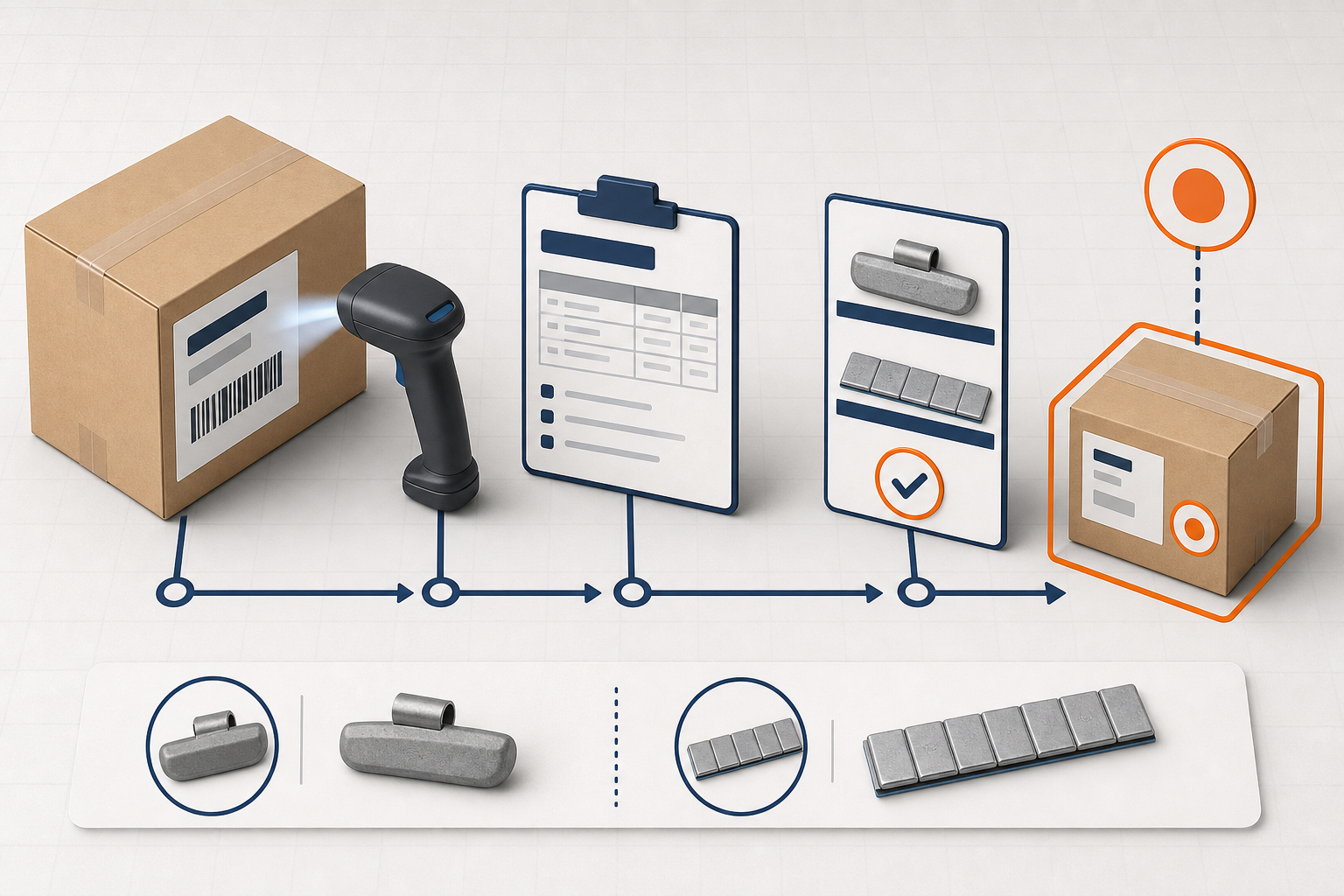
When a concern arises, a carton identifier should lead back to the batch record, approved product, and the affected stock for review.
If a customer reports a wrong size, label inconsistency, coating issue, or adhesive concern, request the carton label, batch code, SKU, quantity, images, installation context where relevant, and the transaction reference. Use those facts to identify the potential batch and isolate only the stock that may be affected. Do not withdraw every product merely because one carton is visually similar.
The quality result that supports this decision should be tied to the production QC evidence for batch, carton, and COA checks, including the inspected SKU, sample plan, acceptance result, and disposition. Traceability identifies the affected stock; the QC record explains what was actually checked.
This is where a traceability system creates commercial value. It limits unnecessary disruption, makes supplier communication factual, and helps the buyer decide whether the case is a pick error, packaging mix-up, storage issue, installation issue, or product deviation. Buyers checking factory controls behind a repeatable record should ask how quickly the supplier can return a batch-to-carton record when this type of question arrives.
¿Qué deben preguntar los compradores a los proveedores antes de un pedido repetido?
Before a repeat order, buyers should confirm that the product and record system remain the same as the approved order. This is especially important after a material, tape, coating, carton, or label revision, because a technically similar product may no longer match the buyer's customer file.
Ask for a sample carton label, batch-code format example, explanation of the batch scope, packaging configuration, and the records the supplier can provide on request. Confirm whether the batch code reflects production, packing, or another controlled event. The exact convention can differ between suppliers; consistency and retrievability matter more than a particular code pattern.
Also agree a change-notification rule. The supplier should notify the buyer before changing material, clip profile, adhesive tape or liner, finish, mass increment, packaging count, artwork, or label fields. The buyer can then decide whether the change needs a new sample, updated specification, COA field, or customer approval.
For commercial programs, traceability belongs alongside price, MOQ, and packaging rather than after them. Buyers evaluating distributor checks before taking branded stock can use batch and carton evidence to compare whether a quoted range will remain manageable after it enters their warehouse.
The record should begin with a documented approval of the representative product, finish, and packaging, not with a batch number created after production. It should carry through carton-label and packing controls that preserve SKU identity and finish with a shipment check that reconciles the batch record to the goods being loaded.
¿Cómo puede un distribuidor establecer un sistema de registros viable?
A distributor can set a workable traceability system by choosing a clear SKU format, storing batch data at receiving, preserving carton identifiers, and connecting exceptions to the same record. It can be a disciplined spreadsheet, ERP workflow, or warehouse-management process; the key is that staff can retrieve the answer quickly.
Define one record for each receiving line: purchase order or shipment reference, supplier, SKU, product description, batch or lot, carton count, quantity, receipt date, storage location, and any supporting document reference. Keep the record linked to the label photos, approved sample or specification, and any customer-specific requirement. If stock is split across locations, record the split rather than losing the connection once a pallet is broken.
Train receiving and warehouse teams to treat unreadable or missing batch labels as an exception. A carton without a usable identity cannot be reliably allocated, rotated, or investigated later. Place it on hold, seek clarification, and correct the record before it is mixed into normal stock.
The same approach applies to returns. When a customer returns unused stock, retain the carton and batch reference if possible. If the carton identity is gone, treat the return as unverified stock rather than quietly pooling it with a known batch. That small discipline keeps a later complaint from becoming an unsolvable mystery.
Conclusión: Hacer que cada cartón sea respondible
Wheel weight traceability works when one carton can be linked to one specific product description, batch record, packaging configuration, and shipment or receiving reference. The system does not have to be complex, but it must be consistent enough to support repeat orders and focused investigations.
For a new program, request batch-label examples and a description of the supplier's traceability records before the first production order. Then retain the approved sample, specification, carton label, and delivery records together. Those practical links give buyers a defensible basis for receiving, stock control, and customer support.
Preguntas frecuentes
Is a batch code the same as a serial number?
No. A batch or lot generally identifies a defined group of products, while a serial number identifies one individual instance. Most wheel weight programs use SKU and batch-level control unless a customer has a specific serialization requirement.
Should every wheel weight order include a COA?
Not necessarily. Request a COA when the buyer, customer, or agreed quality plan needs documented batch-specific results or declarations. Otherwise, a clear specification, carton label, packing record, and batch traceability may be the more relevant controls.
What should a wheel weight carton label include for traceability?
It should identify the SKU and product clearly, show the batch or lot, and state the quantity and format needed to distinguish the carton from similar stock. Add barcode or logistics identifiers when the buyer's system requires them.
What should a buyer do if a carton has no batch label?
Do not merge it into controlled stock. Hold the carton, retain the available shipment evidence, and ask the supplier to confirm its identity or relabel it through an agreed controlled process.
Referencias
[1] GS1. “GS1 Global Traceability Standard.” n.d.
[2] GS1. “Directriz de etiqueta logística GS1.” n.d.
[3] ASQ. “Quality Glossary of Terms, Acronyms & Definitions.” n.d.







