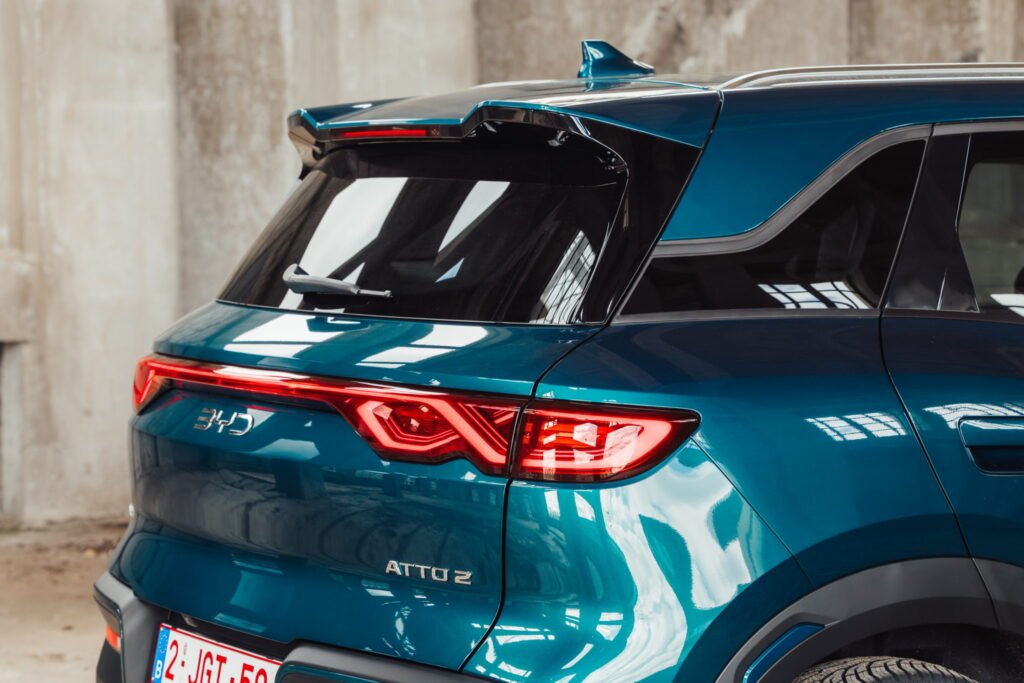
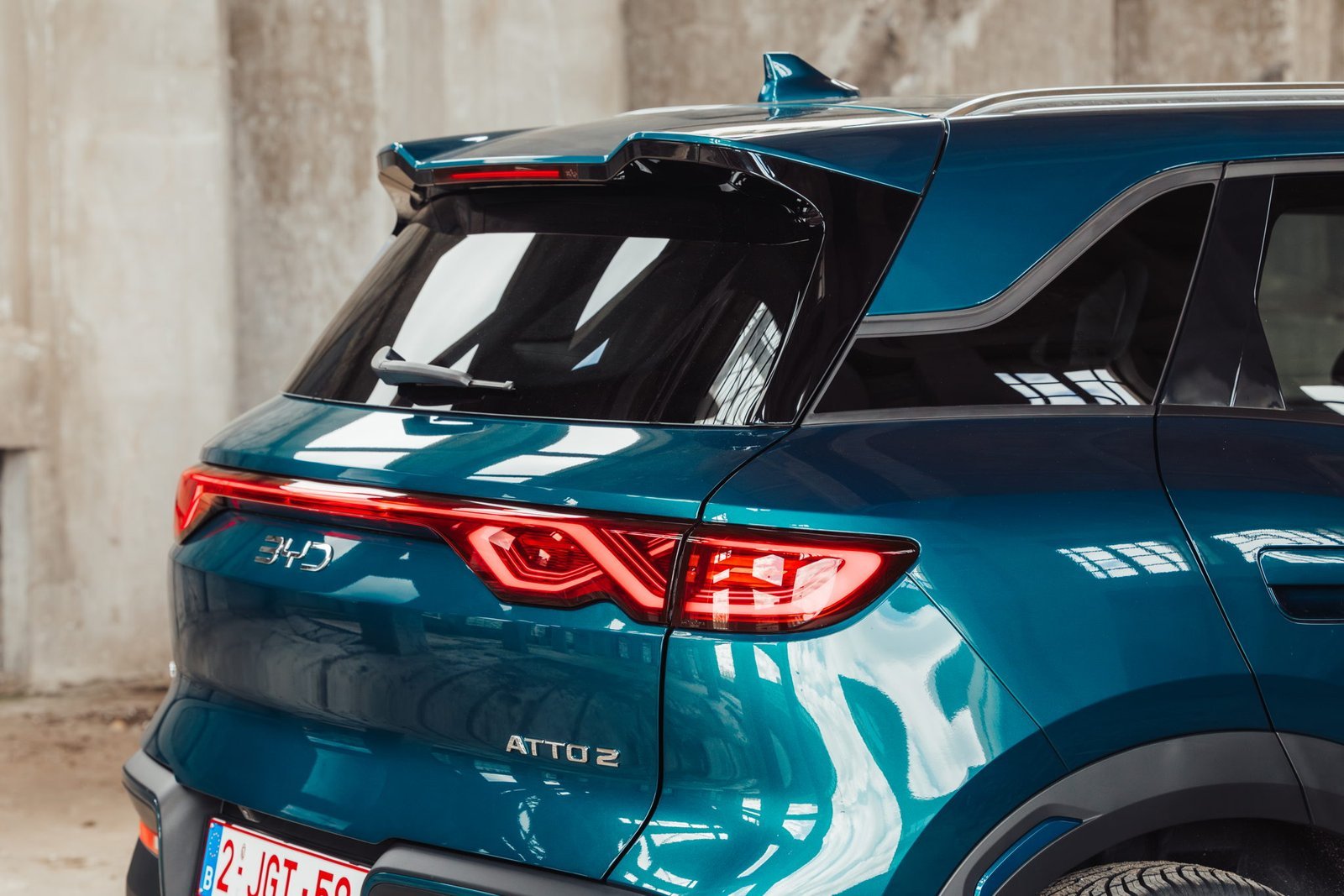
Most new EV owners arrive with the same piece of advice in mind: stop at 80%. So it is perfectly reasonable to look at a new BYD, see the charge target climbing, and wonder whether 100% is doing harm. For many overseas BYD electric vehicles with the Blade Battery, it isn’t. BYD’s Belgium site says the battery can be charged to 100% day after day, and the current ATTO 2 and TANG manuals tell owners to fully charge regularly—at least once a week in those manuals. In other words, the familiar 80% rule is not a universal rule for every BYD.
That still doesn’t mean every BYD should be left full all the time. The right answer depends on what you drive and what the car is about to do. A battery-electric BYD, a DM-i plug-in hybrid, and a car that will sit unused for a week are different situations. The document that counts is the owner’s manual for your exact model, model year and market—not a rule borrowed from another brand or a social-media post from a different country.
If you need the range for tomorrow’s trip, charging to 100% is the sensible thing to do when your manual allows it. If the car is going to be parked, switch your attention to the storage section of that manual instead. The ATTO 2 RHD manual, for example, says to keep the battery at 40–60% when the vehicle will not be operated for more than seven days. The useful distinction is not “100% good” or “100% bad”; it is driving soon versus storing the car.
So, is 100% okay? Yes—but ask the question in context
There are really two questions hiding inside “Can you charge a BYD to 100%?”
The first is whether the car is designed to accept a full indicated charge. For many current Blade Battery BYD EVs, the answer is yes. BYD Belgium is unusually direct on this point: it says owners do not need to stop at 80%. The ATTO 2 RHD owner’s manual e TANG European manual go further, recommending a regular full charge for optimal battery performance.
The second question is how you should use that freedom. A full charge makes sense before a long drive, or when your manual asks for one. It makes far less sense to chase 100% out of habit if you only need a small amount of range and then plan to leave the car parked. Your BYD is already managing its own charging process; the job is simply to match the charge level to the next use.
One small but important point: the percentage on the screen is the vehicle’s managed target, not a cue to override normal charging controls. Use compatible equipment, let the car complete its normal session, and do not improvise around a damaged connector, a warning message or high-voltage hardware.
Let the next journey decide the charge level
You do not need to turn every plug-in session into a battery experiment. Think about the next few days instead.
| Sua situação | What makes sense | Por quê |
|---|---|---|
| You are leaving on a longer trip tomorrow | Charge to 100%, if your manual permits it | You get the range when it is actually useful. |
| You are using the car locally | Charge for the range you need, while following the manual’s regular full-charge guidance | There is no reason to copy a generic limit from another EV brand. |
| The car will be unused for more than a week | Follow the storage SOC instruction for your model | The ATTO 2 RHD manual specifies 40–60% for this situation. |
| The range display is behaving oddly, or the car asks for attention | Check the manual and use the authorised BYD service route if it directs you there | Repeatedly forcing charge cycles is not a diagnosis. |
| You own a DM-i/PHEV | Read the charging and SOC sections for that vehicle | Hybrid settings and charging capability vary by model. |
For a trip, a scheduled overnight charge is often the easy option: you wake up with the range you need instead of standing at a public charger for the final few percent. BYD’s connected services vary by country and model, but the BYD Australia app page shows the kind of information supported cars can display, including charge level, charging status and predicted time to full. Check what your own vehicle and app offer before building a routine around a schedule.
At the other end of the scale, there is no need to run the battery down to almost nothing before charging. That idea can be just as unhelpful as treating 80% as a hard rule. What matters is having enough range for your plans, completing a full charge when your manual calls for it, and treating a long period off the road as its own use case.
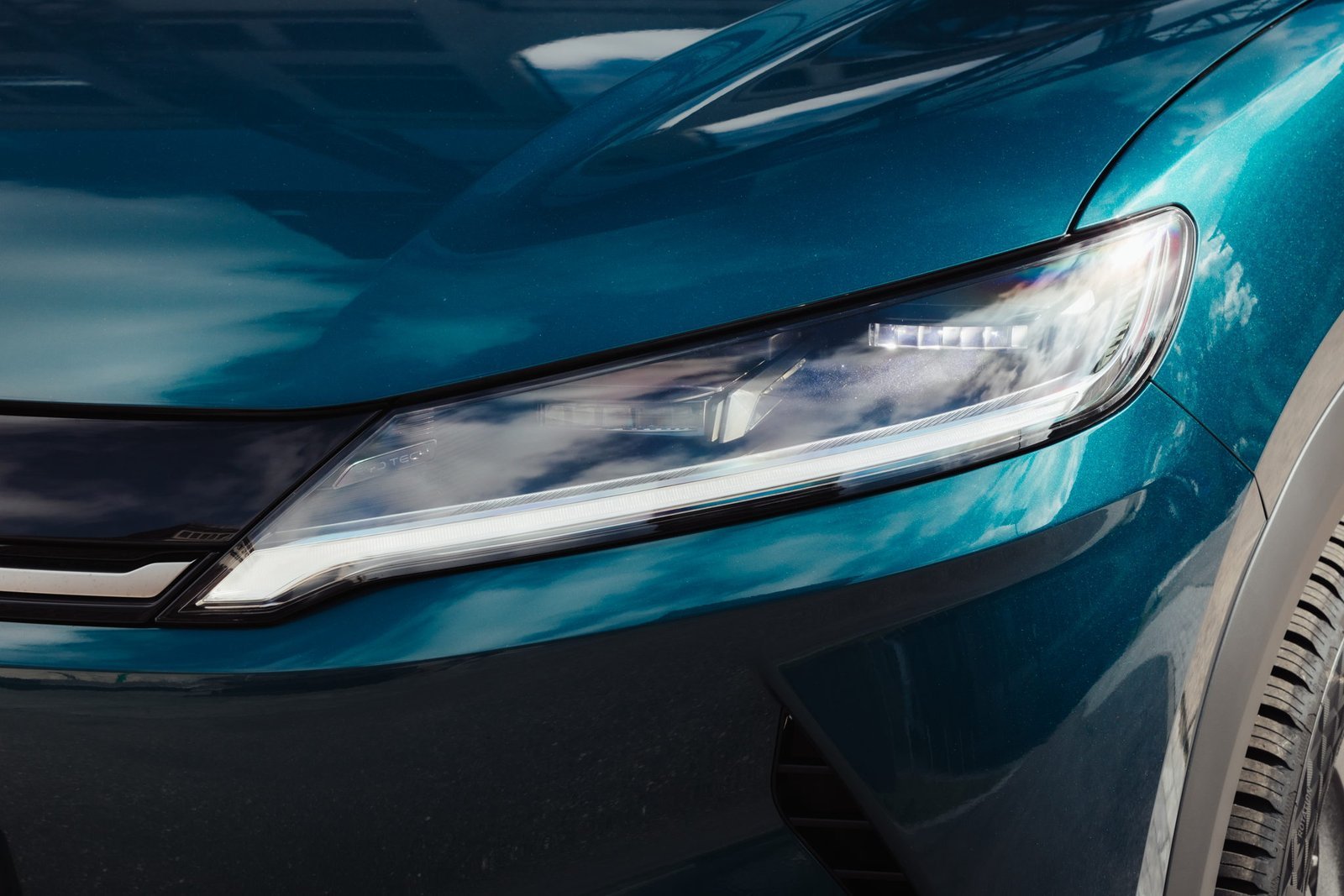
Official BYD ATTO 2 DM-i press image. Actual charging time varies with the vehicle, charger, temperature and starting state of charge.
Why BYD’s advice can sound different from the usual 80% message
The internet often turns EV ownership into one neat rule. BYD’s own material shows why that is too simple. Its Blade Battery page in Belgium says a full charge is fine day after day. The ATTO 2 and TANG manuals cited above also recommend regular full charging. Those are meaningful, first-party instructions for the vehicles and markets they cover.
They are not, however, a reason to assume that every BYD sold worldwide has the same wording. Manuals change with model years, and a vehicle sold in one market can have different charging equipment, software or storage instructions from a similarly named car elsewhere. If a local manual says something different, the local manual wins.
You will also find plenty of owner stories about range estimates, charging that appears to finish early, and the value of occasionally allowing a full session to complete. They can be helpful for spotting a question worth checking, but they cannot identify a fault. One recent r/BYD discussion is a good illustration: owners compare their experiences, but the experiences and conclusions vary. If your SOC changes unexpectedly, a warning appears, or charging repeatedly stops, note the charger type, starting percentage and message on screen, then follow the service advice for your car.
A BYD EV and a BYD DM-i are not the same charging question
This is where many broad “BYD battery” articles become misleading. A BEV uses its traction battery for the whole journey. A BYD DM-i plug-in hybrid combines that battery with an engine and may use a driver-selected SOC setting as part of its hybrid strategy.
BYD Australia’s Super DM technology page describes the engine engaging when battery power falls below a user-set SOC value. It also notes that DC charging availability depends on the particular PHEV model and version. So if you drive a SEAL U DM-i, SEAL 6 DM-i, ATTO 2 DM-i or another regional model, do not simply apply advice written for a BEV.
Start with four straightforward checks: does your manual mention full charging; what do the charging and SOC settings mean on your car; does the model support DC charging; and does the manual give a separate storage instruction? That takes a few minutes, but it is far more useful than treating all BYDs as one battery-and-software package.
Official BYD ATTO 2 DM-i press image. Details such as trim, charging hardware and specifications can vary by model and market.
The charger needs to suit the car, too
The final stretch from 80% to 100% is often where owners start looking at cables, adapters or a home wallbox. That is worth doing carefully. A plug that physically fits does not, on its own, prove that a setup is suitable for your vehicle or electrical supply.
Before choosing a portable charger, wallbox, cable or adapter, work from the car outward: identify the market version and inlet, decide whether you need AC or DC charging, check the vehicle’s onboard AC limit, and then look at supply voltage, phase, circuit capacity and equipment ratings. If a fixed charger is involved, local installation requirements matter just as much as the product specification.
YIROX supplies Acessórios de carregamento de VE and can help narrow the conversation by vehicle market, inlet, AC/DC use and installation conditions. The Guia de compatibilidade de adaptadores de carregamento para VE explains why matching the plug shape alone is not enough. It is a practical place to start before choosing a configuration.
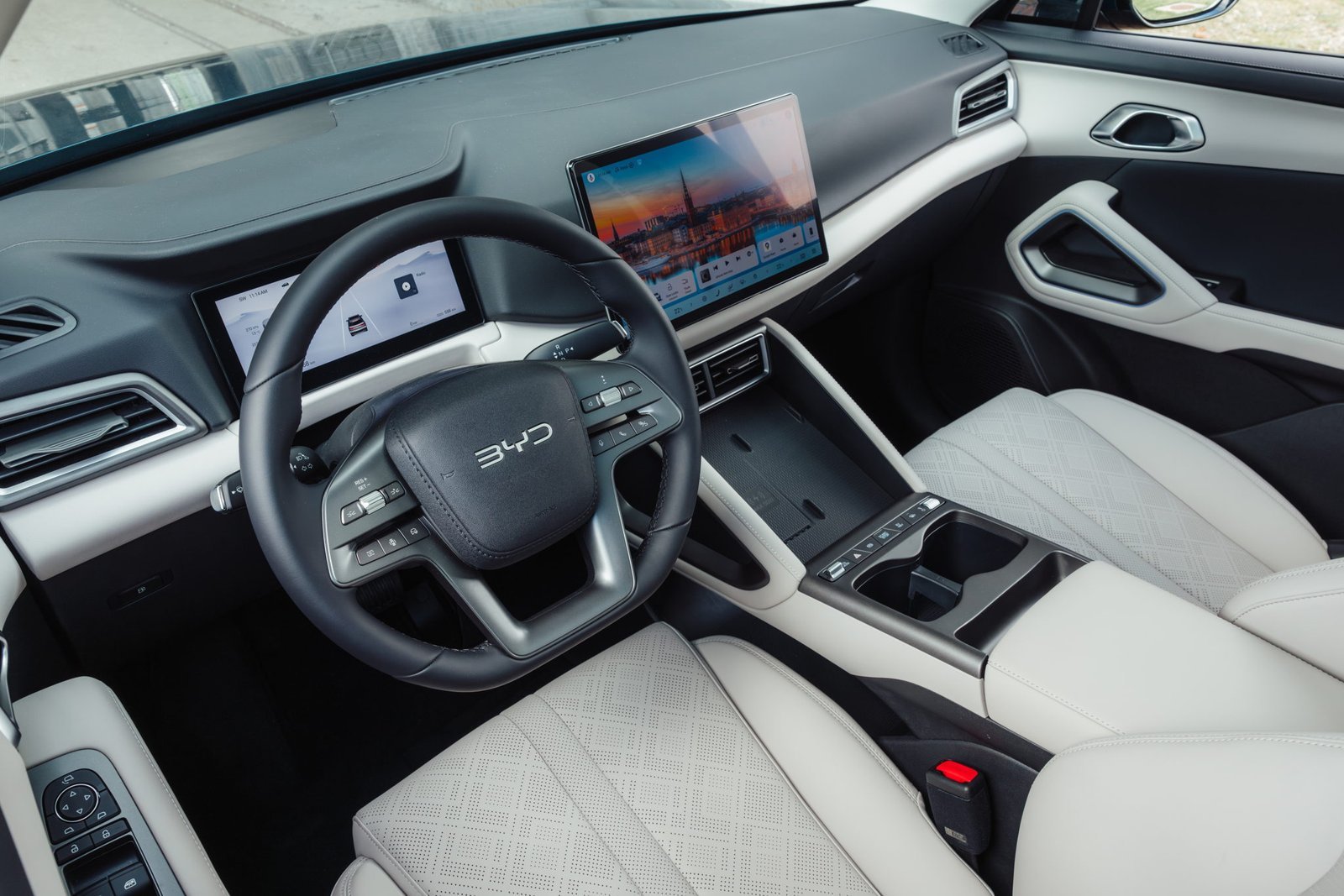
Official BYD ATTO 2 DM-i press image. Use the controls and charging information supplied for the exact vehicle.
Five checks worth making before you plug in
Before setting a full charge, take a moment to check the basics:
- Open the correct manual. Match the model, model year, drive side and market.
- Think about the next journey. A weekend trip, normal commuting and long storage need different charge plans.
- Read the storage section separately. Charging advice is not automatically storage advice.
- Use the car’s normal controls and compatible charging equipment. Do not work around a damaged connector or warning.
- Treat unusual behaviour as a service question. Record the SOC, charger type, warnings and conditions rather than guessing at the cause.
The same model-specific mindset is useful when a BYD needs a repair part or exterior upgrade. YIROX can check the vehicle year, regional version and clear photos before quoting a styling part, exterior replacement component or selected OEM item. You can browse the BYD range, read the guia de instalação de kits de carroceria BYD, or explore BYD replacement parts. Small visual differences—bumper sensors, trim, left- or right-hand-drive versions—matter just as much as they do when you are choosing charging hardware.
FAQ
Is 100% worse than 80% for a BYD?
Not as a universal rule. BYD Belgium says Blade Battery-equipped electric cars can be charged to 100%, and the ATTO 2 and TANG manuals recommend regular full charging. Use the manual for your exact vehicle instead of applying a rule from another EV brand.
Should I leave my BYD at 100% while I am away?
Check the storage section of your manual. The ATTO 2 RHD manual says that, when the vehicle will not be used for more than seven days, SOC should be kept at 40–60%. That is why a full charge before a trip and a charge level for storage are two different decisions.
Can a BYD DM-i charge to 100%?
It may be permitted, but the manual for that PHEV, model year and market is the right source. BYD’s Super DM material makes clear that hybrid SOC settings and DC-charging capability are vehicle-specific.
Does charging to 100% make DC charging faster?
No. Charging speed depends on the vehicle, battery condition, temperature, charger and starting SOC. A full charge gives you more available range; it is not a shortcut to a higher charging rate.
Sources
- BYD Belgium: Blade Battery
- BYD Belgium: Electric and plug-in-hybrid FAQ
- BYD ATTO 2 Owner’s Manual, RHD
- BYD TANG Owner’s Manual, European LHD
- BYD Australia: Super DM plug-in-hybrid technology
- BYD Australia: App support
- BYD ATTO 2 DM-i official Belgian media gallery
This article is general information and does not replace the owner’s manual, authorised service advice or local electrical-installation requirements.