



A certificação de acessórios de carregamento de VE não é uma aprovação universal única. Os compradores devem corresponder o acessório e o SKU exatos à sua função elétrica, conector, mercado pretendido, norma ou regulamento aplicável, âmbito de ensaio, declaração, etiqueta, manual e histórico de revisões. Um logótipo ou certificado genérico não é prova suficiente para aprovação.
Quando um comprador compara guia de compra de acessórios de carregamento de VE recomendações com cotações de fornecedores, o pacote de documentos deve ser tratado como parte da especificação do produto. Ajuda a mostrar o que foi ensaiado, o que foi declarado e o que será efetivamente enviado.
Índice
- Qual é a Diferença Entre uma Certificação, uma Declaração e um Relatório de Ensaio?
- Que Documentos se Aplicam a Cabos, Adaptadores e Acessórios de Suporte?
- Como Devem os Compradores Verificar Alegações de IP e Ambientais?
- Que Documentos Específicos de Cada Mercado São Necessários?
- Como Corresponder um Relatório, uma Etiqueta e um SKU Exato?
- O Que Deve Ser Solicitado Antes da Aprovação?
- Lista de Verificação de Controlo de Documentos de Acessórios de Carregamento de VE
- Conclusão: Aprovar a Cadeia de Evidências, Não o Logótipo
- Perguntas Frequentes
- Referências
Qual é a Diferença Entre uma Certificação, uma Declaração e um Relatório de Ensaio?
Uma certificação normalmente indica que um produto ou família de produtos identificado foi avaliado ao abrigo de um esquema ou norma definidos. Uma declaração é a declaração formal de conformidade do fabricante ou do operador económico responsável. Um relatório de ensaio regista métodos de ensaio, amostras, resultados e limitações. Estes documentos apoiam-se mutuamente, mas não são intercambiáveis.
Certificação ou listagem
Uma certificação, listagem ou aprovação de terceiros normalmente necessita de um organismo de certificação, esquema, norma, família de produtos e âmbito identificáveis. Para equipamento de carregamento de VE, a UL Solutions lista normas que podem ser relevantes para diferentes limites, incluindo fichas, tomadas e acopladores, adaptadores e EVSE completo. Essa distinção é importante: um documento para um conjunto EVSE completo não deve ser automaticamente apresentado como prova para cada conector de substituição, cabo, adaptador, suporte ou componente de montagem. 5
Solicitar ao fornecedor que identifique:
| Campo | O que verificar |
|---|---|
| Emissor | Organismo de certificação, laboratório, organização de listagem ou fabricante |
| Esquema | Certificação, listagem, declaração, inspeção ou ensaio de fábrica |
| Norma | Edição exata da norma, âmbito e cláusulas abrangidas |
| Limite do produto | Cabo, conector, adaptador, EVSE, suporte, tampa, saco, braçadeira ou kit |
| Identificação | Modelo, SKU, família, classificação, revisão e componentes críticos |
| Status | Atual, expirado, retirado, substituído ou condicional |
Declaração de conformidade
Para produtos com marcação CE, a Comissão Europeia explica que o fabricante é responsável pela avaliação da conformidade, pelo dossiê técnico, pela Declaração UE de Conformidade e pela marcação CE. A CE não é uma aprovação de segurança genérica emitida pela UE, e nem todos os produtos são obrigados a ostentar a marca. 1
A declaração deve identificar a empresa responsável, o produto ou modelo, a legislação aplicável, as normas ou documentos normativos relevantes e o signatário ou representante autorizado, quando exigido. Uma declaração com apenas uma categoria de produto e sem modelo exato é evidência fraca para um comprador que aprova um SKU específico.
Relatório de ensaio
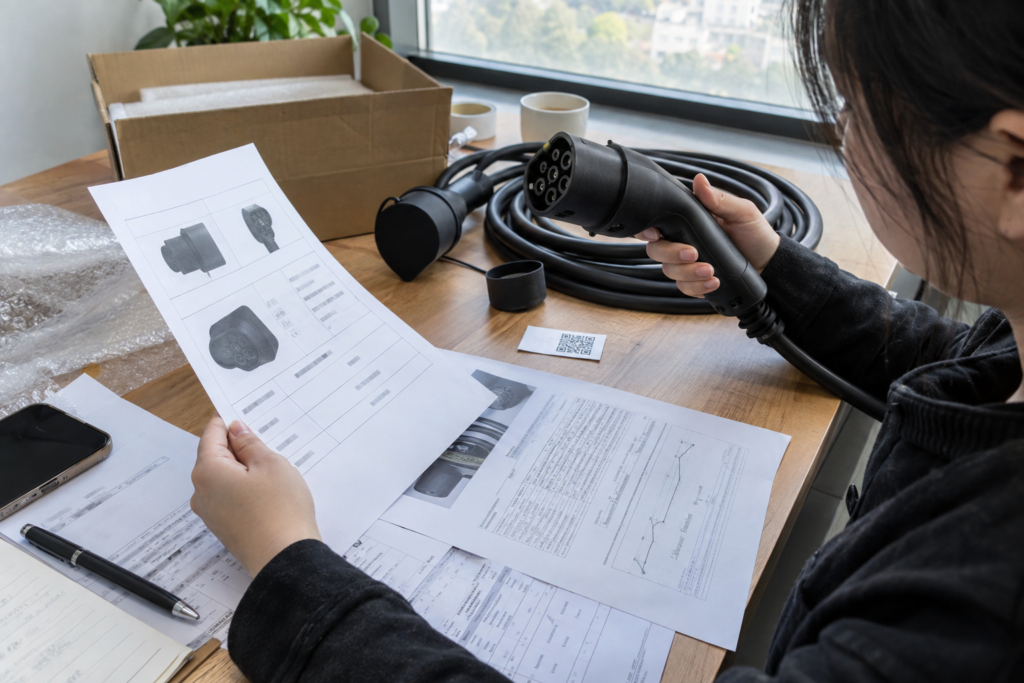
Um relatório de ensaio só é útil quando a amostra de ensaio e o limite de ensaio correspondem ao produto que está a ser cotado. Rever a identidade do laboratório, a declaração de acreditação ou competência quando relevante, o número do relatório, a data, a descrição da amostra, a norma de ensaio, as condições de ensaio, os resultados, os desvios, as fotografias e a conclusão. Um relatório aprovado não abrange automaticamente alterações de design posteriores, um comprimento de cabo diferente, um conjunto de conector diferente ou uma revisão de marca privada.
Que Documentos se Aplicam a Cabos, Adaptadores e Acessórios de Suporte?
Os requisitos documentais seguem a função do acessório e o limite de risco. Um cabo de carregamento ou adaptador ativo necessita de evidência de isolamento elétrico, capacidade de corrente, resistência mecânica, construção do conector, temperatura e modo de carregamento pretendido; um suporte passivo ou saco de armazenamento necessita de um conjunto de evidências diferente, focado em materiais, dimensões, carga, ambiente e alegações declaradas.
Acessórios eletricamente ativos
Para cabos de carregamento, conectores de substituição, componentes de entrada ou saída, adaptadores, caixas de controlo portáteis e acessórios que comutam, protegem, detetam ou comunicam, solicitar um pacote específico do produto que pode incluir:
- ficha técnica com tensão, corrente, fase, temperatura, construção do cabo e configuração do conector;
- lista de normas aplicáveis e edição, com o limite de ensaio indicado;
- certificação, listagem ou registo de avaliação quando o mercado-alvo ou o cliente o exigirem;
- relatório de ensaio completo ou um resumo de relatório aceitável com um número de relatório rastreável;
- declaração de conformidade ou outra declaração específica do mercado, quando aplicável;
- evidência de ensaios de isolamento, dielétrico, continuidade, terra de proteção, elevação de temperatura, mecânicos, de entrada de corpos estranhos e funcionais, conforme relevante para o produto;
- arte da etiqueta, placa de características, informações de aviso, manual e instruções de instalação ou utilização;
- controlo de alterações e rastreabilidade de componentes para contactos, terminais, cabo, invólucro, peças de vedação e eletrónica de controlo.
Não exigir o mesmo conjunto de documentos para cada SKU, mas não aceitar um conjunto reduzido sem registar o motivo. O comprador deve saber quais os requisitos que não são aplicáveis e quem tomou essa determinação.
Acessórios de suporte passivos
Para suportes de parede, ganchos para cabos, coldres, tampas, proteções contra pó, sacos de armazenamento, mangas de proteção, braçadeiras e ferragens de montagem, a evidência principal pode ser diferente:
| Tipo de acessório | Evidência típica a solicitar |
|---|---|
| Suporte de parede ou coldre | Dimensões, classificação de carga, instruções de montagem, material, alegação de UV e corrosão, verificação de ajuste da amostra |
| Gancho ou suporte para cabo | Orientação de carga e raio de curvatura, limites de fixação ou substrato, alegação ambiental, manual de instalação |
| Tampa protetora ou cobertura contra poeira | Ajuste do conector, alegação de vedação ou entrada, compatibilidade de material, faixa de temperatura, teste de retenção |
| Bolsa ou capa de armazenamento | Material, dimensões, alegação de abrasão e temperatura, orientação de limpeza, rotulagem e embalagem |
| Adaptador | Entrada e saída exatas, classificação elétrica, comportamento de travamento, uso pretendido, evidência de segurança, restrições de mercado |
| Cabo ou conector de reposição | Pinagem, tamanho do condutor, método de terminação, classificação, ajuste, limite de teste, rastreabilidade de revisão |
Matriz de Evidências Documentais
Use esta matriz como base de referência do comprador quando uma cotação abrange vários tipos de acessórios. Não é uma determinação legal do que cada mercado exige; ela informa ao fornecedor qual limite de evidência deve ser identificado antes que o comprador possa decidir se um documento é aplicável, ausente ou desnecessário.
| Tipo de acessório | Limite elétrico ou de alegação | Evidência UE/EEE a solicitar | Evidência EUA/Canadá a solicitar | Evidência que deve corresponder ao SKU físico | Portão de liberação |
|---|---|---|---|---|---|
| Cabo de carregamento CA ou cabo de reposição | Transferência de energia, tamanho do condutor, montagem do conector, temperatura, resistência mecânica | Declaração aplicável, norma e escopo de teste, escopo RoHS quando aplicável, ficha técnica, rótulo, manual e evidência de relatório ou listagem | Caminho de certificação ou listagem aplicável, cobertura exata do modelo, relatório de teste ou avaliação, ficha técnica, rótulo e manual | Comprimento do cabo, construção do condutor, extremidades do conector, corrente e tensão, temperatura, contatos, alívio de tensão e revisão | Condicional até que o cabo testado e o SKU cotado sejam idênticos |
| Adaptador | Direção definida de entrada para saída, limite de corrente, travamento, comunicação e combinação de equipamentos aprovada | Declaração ou avaliação aplicável, normas, instruções, restrições de mercado e cobertura exata do modelo | Status de listagem ou avaliação quando exigido, condições de uso, cobertura exata de veículo e estação, avisos e rótulo | Direção do adaptador, geometria do conector, classificações, comportamento de travamento, invólucro, firmware ou peças de controle e revisão | Retido quando o fornecedor comprova apenas o ajuste físico ou fornece um documento genérico de família |
| EVSE portátil ou acessório de controle no cabo | Comutação, proteção, sinalização, monitoramento de temperatura, invólucro e segurança do usuário | Rota de conformidade aplicável, declaração, evidência técnica, escopo ambiental, manual, rótulo e arquivo de teste atual | Certificação ou listagem EVSE aplicável, cobertura do modelo, componentes críticos, condições de aceitabilidade, manual e rótulo | Modelo da caixa de controle, funções de proteção, configuração de cabo e plugue, classificações, firmware ou revisão de componente e amostra de teste | Aprovado somente quando o limite do EVSE e a aprovação de mercado forem explícitos |
| Conector de reposição ou entrada do veículo | Contatos, isolamento, terminação, pinagem, acoplamento, travamento e limite ambiental | Declaração ou avaliação aplicável, evidência de teste dimensional e elétrico, escopo de material ou RoHS, desenho e manual quando relevante | Evidência de certificação ou listagem aplicável, cobertura exata do componente, classificações, instruções de instalação e arquivo de teste | Layout de contatos, codificação, material do terminal, terminação de fio, vedação, trava, dimensões e revisão | Retido se o relatório abrange uma família de conectores, mas não a variante de contato ou terminação cotada |
| Suporte de parede, coldre, gancho ou suporte | Carga passiva, montagem, suporte de cabo, UV, corrosão e alegação de instalação | Ficha técnica, evidência de material e ambiental, teste de carga ou amostra, instruções de montagem e escopo da alegação | Requisitos do cliente ou de instalação, evidência de carga e ambiental, instruções de montagem e escopo da alegação | Dimensões, carga, fixadores, substrato, diâmetro do cabo, raio de curvatura, material e revisão | Condicional até que a superfície de montagem e a alegação para uso externo sejam confirmadas |
| Tampa protetora ou cobertura contra poeira | Ajuste do conector, retenção, vedação ou limite IP, temperatura e compatibilidade de material | Evidência de ajuste, limite de teste IP aplicável, escopo de material ou RoHS quando aplicável, rótulo e instruções | Evidência de ajuste e ambiental, cobertura exata do conector, avisos e rótulo | Interface de acoplamento, retenção, condição de vedação, material, temperatura e revisão | Aprovado apenas para o conector e condição fechada ou acoplada efetivamente testada |
| Bolsa de armazenamento, capa ou acessório de embalagem | Material, dimensões, abrasão, limpeza, temperatura, branding e alegação de bundle | Declaração de material quando aplicável, dimensões, orientações de limpeza, etiqueta, idioma e arquivo de embalagem | Requisitos de material e canal do cliente, dimensões, avisos, código de barras e arquivo de embalagem | Material, tamanho, arte-final, código de barras, conteúdo do bundle, idioma e revisão | Condicional até que a arte-final, o conteúdo do bundle e a rotulagem de mercado sejam aprovados |
A matriz evita um modo de falha comum: tratar cada item de uma família de produtos como se precisasse do mesmo certificado, ou tratar um certificado como se cobrisse todos os itens da família. O comprador deve registrar o responsável pelo documento, a revisão, o status de validade ou vigilância e o gatilho de reteste ao lado de cada linha.
A Linha de produtos acessórios para carregamento de VE deve, portanto, ser organizada por função e necessidades de evidência, não apenas por fotografia do produto. Um suporte passivo não deve herdar as alegações de conformidade do carregador que nele se encontra.
Como Devem os Compradores Verificar Alegações de IP e Ambientais?
Uma alegação de IP descreve um grau definido de proteção fornecido por um invólucro sob o método de teste aplicável; não prova que uma instalação de carregamento completa seja à prova de intempéries em todos os usos. A IEC 60529 é a norma de referência para o Código IP, portanto os compradores devem perguntar qual invólucro, orientação, condição e limite de teste a classificação cobre. 4
Verifique o primeiro e o segundo dígitos de IP
Registre a marcação exata, como IPxx, e identifique o que cada dígito representa. Em seguida, pergunte se a alegação se aplica a:
- apenas o corpo do conector;
- um par de conectores acoplados;
- uma tampa ou cobertura quando fechada;
- um suporte ou conjunto montado na parede;
- o acessório completo em sua posição instalada;
- uma amostra antes ou depois de flexão do cabo, ciclagem do trava, limpeza, exposição a UV ou condicionamento térmico.
Evite reescrever uma alegação de nível de componente como uma promessa de nível de sistema. Um conector pode ter uma alegação de IP apenas quando acoplado ou com tampa, enquanto o cabo exposto, a junção, a caixa de parede ou a superfície de montagem têm um risco diferente.
Verifique o limite ambiental
Peça aos fornecedores que declarem a base de teste ou de engenharia para alegações de uso externo, UV, chuva, poeira, sal, corrosão, produtos químicos de limpeza, óleo, impacto, temperatura e condensação. Uma frase de marketing como “resistente às intempéries” não substitui uma classificação, método de teste, duração, condição da amostra ou limitação de instalação.
Para aprovação B2B, capture o seguinte no RFQ ou registro de amostra:
| Alegação | Pergunta de evidência |
|---|---|
| Uso externo | O acessório completo é destinado ao uso externo ou apenas um componente? |
| Resistência a UV | Qual base de material e exposição sustenta a alegação? |
| Proteção contra água ou poeira | Qual código IP, limite de teste e condição fechada ou acoplada se aplicam? |
| Resistência à corrosão | Quais peças foram testadas, sob qual ambiente e por quanto tempo? |
| Faixa de temperatura | A faixa é para armazenamento, operação, carregamento, flexão ou todos esses? |
| Limpeza | Quais produtos químicos, concentração, tempo de contato e método de limpeza são permitidos? |
Que Documentos Específicos de Cada Mercado São Necessários?
O conjunto de arquivos necessário depende do mercado de destino, função do produto, papel do importador e alegações feitas na listagem ou embalagem. Uma declaração CE para um produto destinado ao EEE não substitui os requisitos de listagem dos EUA, os requisitos canadenses ou as regras de aprovação específicas do cliente; os compradores devem mapear o destino antes de solicitar um certificado.
Espaço Econômico Europeu
Para produtos dentro do escopo da legislação de harmonização aplicável da UE, o fabricante ou a parte responsável deve concluir a avaliação de conformidade exigida e preparar a documentação técnica. A Comissão Europeia observa que a Declaração de Conformidade deve identificar o produto, a legislação, o fabricante ou representante, o organismo notificado, se aplicável, e as normas ou documentos normativos referenciados. 2
A RoHS é uma dimensão separada de conformidade ambiental para equipamentos elétricos e eletrônicos. A Comissão Europeia descreve restrições a substâncias perigosas e observa que o escopo e as isenções precisam ser verificados em vez de presumidos. 3 Solicite a declaração RoHS aplicável, evidência de material ou do fornecedor, base de isenção se relevante, e escopo do produto, em vez de tratar a marca CE como prova de conformidade com a RoHS.
Estados Unidos e Canadá
Compradores norte-americanos podem exigir uma certificação ou listagem reconhecida para o limite específico do equipamento, contexto de instalação e canal do cliente. A marca por si só não é suficiente: solicite o número de listagem, categoria do produto, cobertura de modelos, condições de aceitabilidade, componentes críticos e status atual. Se um fornecedor apresentar UL, ETL, TÜV ou outra marca, verifique a listagem ou certificado por meio do banco de dados do próprio emissor ou rota de confirmação oficial.
Outros mercados de exportação
Para o Reino Unido, Austrália, Nova Zelândia, Japão, Oriente Médio ou outros mercados, solicite a rota de conformidade específica do destino, necessidades locais de marcação ou declaração, requisitos de plugue e tomada, requisitos de idioma, detalhes do importador e qualquer aprovação do cliente ou concessionária. Não copie um conjunto de documentos europeu ou norte-americano para outro mercado sem uma revisão escrita de aplicabilidade.
Compradores que precisam de ajuda para transformar uma lista de mercados em um conjunto de arquivos por SKU podem usar suporte de certificação e conformidade específico do produto como ponto de partida para a solicitação de documentos. O resultado útil não é uma pasta de logotipos; é uma lista de requisitos aplicáveis e evidências faltantes.
Como Corresponder um Relatório, uma Etiqueta e um SKU Exato?
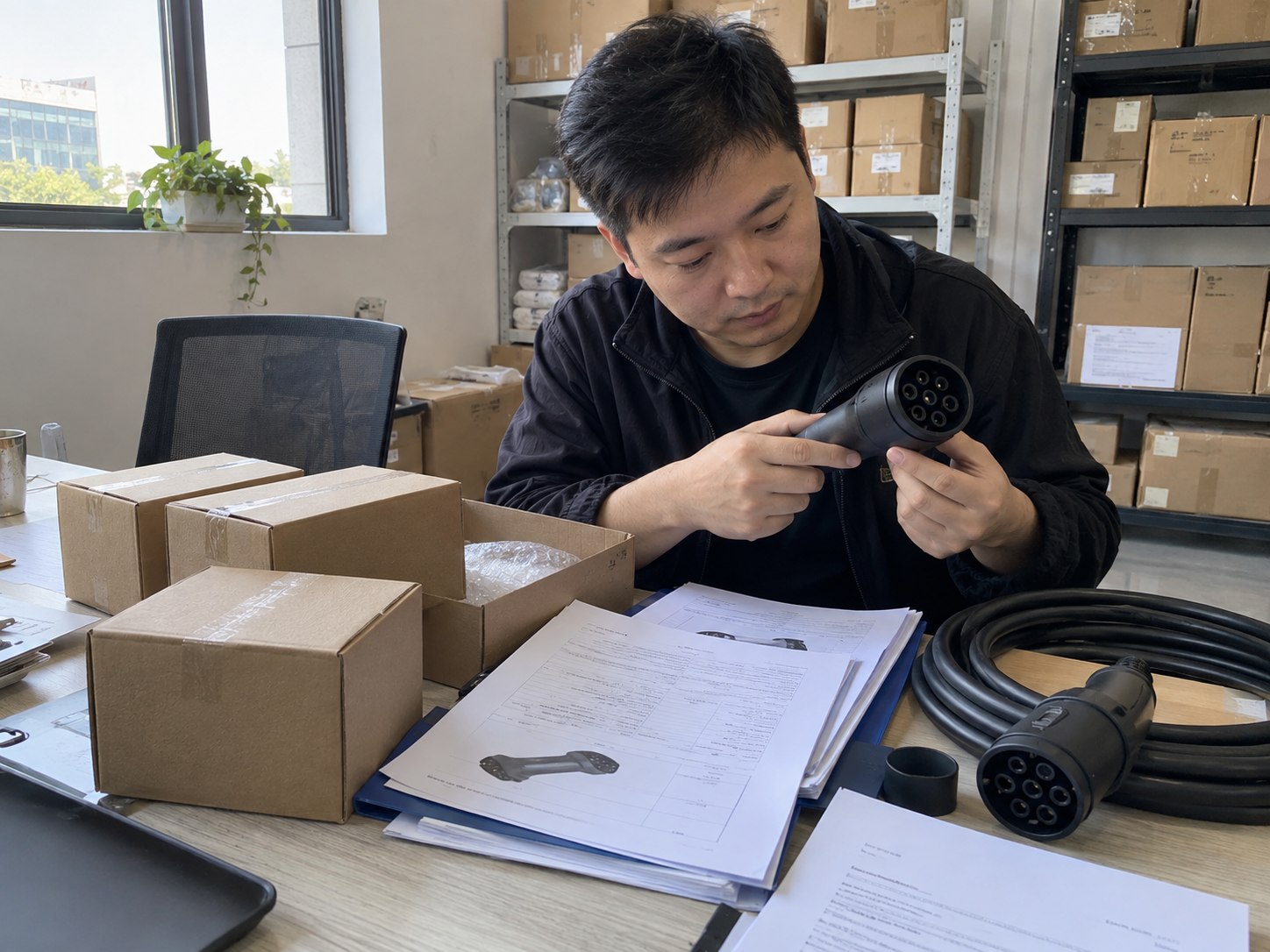
A revisão mais forte fecha o ciclo entre o documento, a amostra testada, o SKU de produção e a etiqueta final. Se qualquer um deles for diferente, marque o item como Retido até que o fornecedor explique a relação e atualize a evidência.
Use uma tabela de rastreabilidade
| Campo de rastreabilidade | Pergunta de aprovação |
|---|---|
| SKU exato | O relatório ou declaração foi emitido para o modelo cotado, e não apenas para uma família similar? |
| Revisão | A revisão do documento corresponde ao desenho, etiqueta, firmware, cabo, conector e amostra? |
| Classificação | Os valores de tensão, corrente, fase, temperatura e IP correspondem à ficha técnica e à etiqueta? |
| Conector | A entrada, saída, contatos, codificação, travamento e pinagem estão idênticos à amostra aprovada? |
| Componentes críticos | O cabo, terminais, peças de vedação, carcaça, dispositivo de proteção e peças de controle estão cobertos? |
| Amostra de teste | O fornecedor consegue identificar quantidade de amostra, lote, data e configuração? |
| Unidade de produção | Existe um registro de inspeção de primeira peça ou de saída vinculado à configuração aprovada? |
| Arquivo de mercado | A declaração, etiqueta, manual e embalagem contêm as informações corretas do mercado de destino? |
Fique atento a atalhos em nível de família
Um certificado de família de produtos pode ser válido, mas o fornecedor deve mostrar quais variantes estão incluídas e quais diferenças são permitidas. Comprimento do cabo, bitola do condutor, fornecedor do conector, revestimento do contato, geometria de vedação, eletrônica de controle, proteção contra sobretemperatura e design do invólucro podem afetar o limite do teste. Um nome de família sem lista de inclusão deixa o comprador fazer uma suposição sem fundamento.
Reconcilie etiquetas e manuais
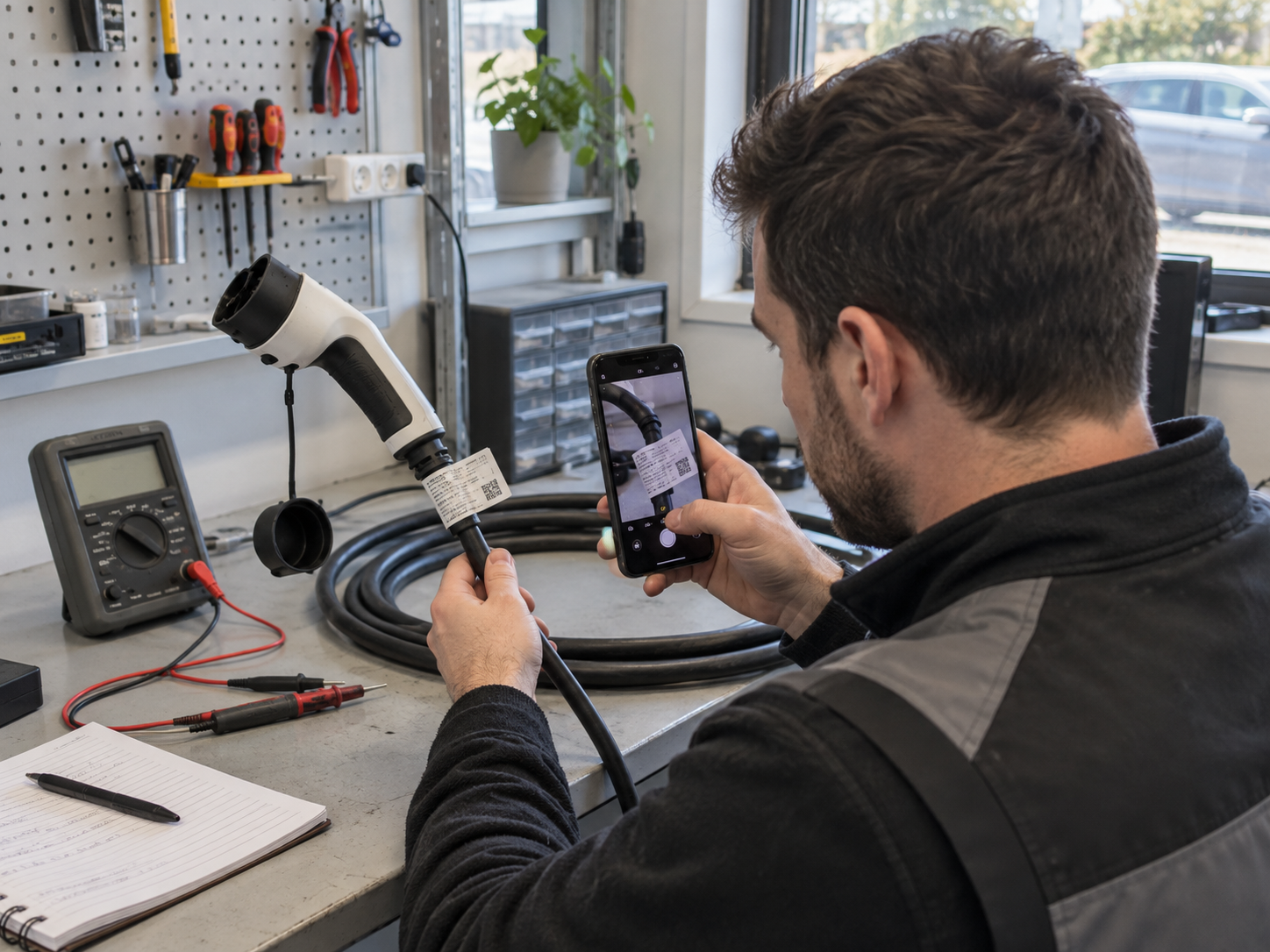
Compare a etiqueta e o manual com o relatório e a declaração linha por linha. Verifique número do modelo, tensão nominal, corrente nominal, frequência ou fase quando aplicável, faixa de temperatura, declaração de IP, avisos, detalhes do fabricante ou importador, marca de certificação e revisão. Um relatório correto anexado à etiqueta errada ainda pode criar um problema de mercado e reclamação de cliente.
O Que Deve Ser Solicitado Antes da Aprovação?
Antes da aprovação, solicite um pacote de documentos controlados e uma tabela de respostas que torne visível a evidência ausente. Os fornecedores devem declarar se cada item está incluído, não aplicável, pendente ou disponível somente após um marco de amostra ou pedido.
Solicitação de documento copiável
| Campo da solicitação | Resposta do fornecedor obrigatória |
|---|---|
| Projeto e caso de uso | País-alvo, canal de mercado, contexto de instalação e função pretendida do acessório |
| Produto exato | SKU, modelo, variante, comprimento do cabo, par de conectores, pacote de acessórios e revisão |
| Limite elétrico | Tensão, corrente, fase, modo CA ou CC, temperatura e funções de proteção |
| Limite mecânico | Dimensões, material, carga, raio de curvatura, superfície de montagem, trava, retenção e condição de acoplamento |
| Requisitos aplicáveis | Normas, regulamentos, especificações do cliente e itens julgados não aplicáveis |
| Certificação ou listagem | Emissor, número de certificado ou listagem, cobertura de modelo, status e condições de uso |
| Relatórios de teste | Número do relatório, laboratório, data, descrição da amostra, métodos, resultados, desvios e conclusão |
| Declarações | Tipo de declaração, signatário, legislação, normas, identificação do produto e data de emissão |
| Evidência ambiental | IP, UV, corrosão, temperatura, limpeza, impacto e base para uso externo |
| Etiquetas e manuais | Arte-final, placa de identificação, avisos, idioma, detalhes do importador, revisão e correspondência da embalagem |
| Rastreabilidade | Código de lote, lista de componentes, processo de controle de alterações, período de retenção e gatilho de reteste |
| Controle comercial | Custo da amostra, quantidade do primeiro pedido, previsão anual, prazo de entrega, garantia e validade da cotação |
Defina portões de aprovação
Use status simples para impedir que um certificado atraente contorne questões não resolvidas:
- Aprovado: produto exato e limite de mercado estão identificados; a evidência exigida está atualizada e consistente.
- Condicional: o produto pode servir, mas um relatório, etiqueta, amostra, tradução ou confirmação de mercado ausente deve ser resolvido antes do envio ou da listagem.
- Em espera: SKU, limite de teste, classificação, status de certificação ou componente crítico não podem ser reconciliados.
- Rejeitar: o fornecedor faz uma alegação universal, fornece documentos não verificáveis ou se recusa a identificar o produto testado e as limitações.
Para comparações de fornecedores, os compradores podem usar uma visão geral do fornecedor de acessórios de carregamento EV OEM para enquadrar a gama de produtos, depois exigir que cada SKU cotado retorne os mesmos campos de evidência. Respostas comparáveis expõem suposições ausentes mais cedo do que uma comparação de preço mais baixo.
Se uma pergunta sobre documento começar com um veículo, conector ou modo de carregamento incerto, retorne ao Lista de verificação de compatibilidade de acessórios de carregamento para VE antes de julgar a evidência. Quando a evidência estiver vinculada a uma amostra de cabo elétrico, use o Inspeção de qualidade do cabo de carregamento de VE processo para conectar o relatório à montagem física. Para a liberação comercial final, encaminhe o pacote de documentos aprovado através do lista de verificação de fornecedores de acessórios para carregamento de VE para que conformidade, rastreabilidade, embalagem e controle de alterações sejam comparados em conjunto.
Lista de Verificação de Controlo de Documentos de Acessórios de Carregamento de VE
Use esta lista de verificação antes da aprovação da amostra, listagem online, primeiro envio e qualquer revisão do produto.
Identidade do produto
- [ ] SKU, modelo, variante e revisão exatos são declarados.
- [ ] A função do acessório e o limite elétrico ou passivo são definidos.
- [ ] Referências de veículo, conector, tomada, cabo, adaptador ou montagem correspondem ao caso de uso aprovado.
- [ ] Componentes críticos e alternativos aprovados são identificados.
Escopo da evidência
- [ ] Leis aplicáveis, normas, requisitos do cliente e exclusões são registrados.
- [ ] Os papéis de certificação, listagem, declaração e relatório de teste são separados.
- [ ] Número do relatório, emissor, laboratório, data e configuração da amostra são rastreáveis.
- [ ] Certificados de família incluem uma lista explícita de cobertura de variantes e componentes.
Classificações e alegações
- [ ] Alegações de tensão, corrente, fase, modo CA ou CC, temperatura e proteção concordam entre os arquivos.
- [ ] Alegações de IP e uso externo identificam o invólucro, a condição acoplada ou com tampa e o limite de teste.
- [ ] Alegações de UV, corrosão, limpeza, impacto e carga têm uma base declarada ou são removidas.
- [ ] Etiqueta, manual, embalagem, página do produto e cotação usam as mesmas alegações.
Mercado e controle de alterações
- [ ] Requisitos de marcação, declaração, idioma, importador e embalagem do mercado de destino são confirmados.
- [ ] Declarações RoHS ou outras declarações ambientais são delimitadas ao produto elétrico real, quando aplicável.
- [ ] Controle de alterações, gatilhos de reteste, rastreabilidade de lote e retenção de documentos são acordados.
- [ ] A aprovação da amostra está vinculada ao SKU de produção e ao plano de inspeção de primeira peça ou de saída.
Liberação comercial
- [ ] Documentos ausentes têm um responsável e uma data limite.
- [ ] Aprovações condicionais não são tratadas como aprovação de envio irrestrita.
- [ ] Garantia, peças de reposição, componentes de substituição e relatório de falhas em campo são definidos.
- [ ] O comprador tem um índice final de documentos com revisão e local de armazenamento.
Conclusão: Aprovar a Cadeia de Evidências, Não o Logótipo
A revisão de certificação de acessórios de carregamento EV funciona melhor como um exercício de rastreabilidade. Comece com a função exata do produto e o mercado de destino, identifique o requisito aplicável, examine o limite de teste, corresponda o relatório à amostra e ao SKU, e reconcilie a declaração, etiqueta, manual e alegação final. Essa abordagem reduz o risco de comprar um produto tecnicamente diferente sob um nome de certificação familiar.
Antes da aprovação da amostra ou listagem, solicite um pacote de documentos específico do produto e marque cada arquivo como Aprovado, Condicional, Em Espera ou Rejeitado. Os compradores podem solicitar um pacote de documentos específico do produto cobrindo certificações, relatórios de teste, declarações, etiquetas, manuais e rastreabilidade, em vez de aceitar uma pasta de conformidade genérica.
Perguntas Frequentes
A certificação CE é o mesmo que uma declaração CE?
Não. A marcação CE é uma marcação de conformidade usada sob as regras aplicáveis da UE, enquanto a Declaração UE de Conformidade é a declaração formal do fabricante, apoiada pela avaliação de conformidade exigida e documentação técnica. Os compradores devem solicitar e corresponder a declaração ao produto exato e à legislação aplicável. 1 2
Um logotipo UL ou ETL prova que um acessório de carregamento EV é aprovado?
Não. Verifique o emissor, o número de listagem ou certificado, a categoria do produto, a cobertura exata do modelo, as condições de aceitabilidade, o status atual e os componentes críticos. Um logotipo copiado para a arte final não é equivalente a uma aprovação pesquisável ou verificável.
Suportes passivos para cabos EV precisam da mesma certificação que os cabos de carregamento?
Geralmente não. Um suporte, gancho, tampa ou bolsa de armazenamento tem um limite de produto diferente e pode precisar de evidência para carga, material, montagem, instalação, ambiente ou alegações declaradas, em vez dos testes elétricos exigidos para um cabo de carregamento energizado. O fornecedor deve documentar o que é aplicável e por quê.
O que um relatório de teste de cabo de carregamento EV deve incluir?
No mínimo, solicite o número do relatório, laboratório, data, descrição exata da amostra, configuração do cabo e conector, condições nominais, métodos de teste, resultados, desvios, fotografias quando disponíveis e conclusão. O relatório deve ser rastreável ao SKU cotado e à revisão.
Uma classificação IP pode ser copiada do conector para o acessório completo?
Não automaticamente. Confirme se a classificação se aplica ao corpo do conector, par acoplado, tampa, suporte, invólucro ou montagem instalada completa. A condição de teste e o limite de exposição devem ser declarados antes que a classificação seja usada em uma listagem ou especificação de compra. 4
Evidência RoHS é exigida para cada acessório de carregamento EV?
O escopo depende de o produto ser elétrico ou eletrônico e de uma exclusão ou isenção se aplicar no mercado de destino. Solicite uma declaração RoHS específica do produto ou evidência de material e registre o escopo, em vez de assumir que uma marca CE o cobre. 3
How long is a certification or test report valid?
There is no single universal validity period. Status may depend on the certification scheme, standard edition, product revision, critical-component changes, market rule, or surveillance process. Ask the issuer or responsible manufacturer how status is maintained and what triggers re-testing.
What should a buyer do when a supplier refuses the full report?
Ask for an acceptable report summary, certificate or listing record, declaration, sample evidence, and a written explanation of restricted information. If the remaining files cannot identify the product boundary, test scope, or current status, keep the item on Hold rather than approving it on price alone.
Referências
[1] European Commission. “CE marking.” 2026.
[2] European Commission. “Conformity assessment.” 2026.
[3] European Commission. “RoHS Directive.” 2026.
[4] International Electrotechnical Commission. “IEC 60529: Graus de proteção fornecidos por invólucros (Código IP).” 2013.
[5] UL Solutions. “Electric Vehicle Charging Infrastructure Services.” 2026.