



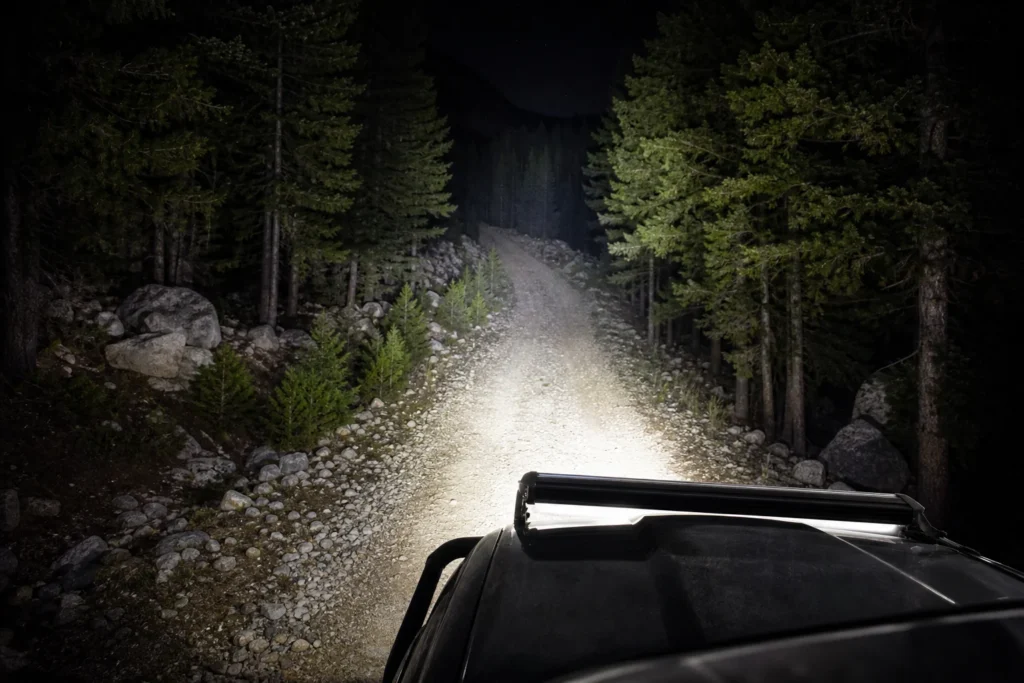
A saída em lúmens do LED é a medida fotométrica do fluxo luminoso visível de uma fonte de luz ou luminária completa; descreve a luz total, não quão fortemente essa luz atinge um ponto específico. Para uma luz off-road, compare a saída medida da luminária com a distribuição do feixe, candela ou lux à distância, e as condições de teste antes de tratar uma alegação de lúmens como útil. 1 2
Um valor alto de lúmens não indica se um feixe alcança uma trilha, preenche os acostamentos ou cria ofuscamento indesejado em primeiro plano. Compare as luminárias na mesma tarefa e configuração de teste. Para uma visão geral mais ampla de equipamentos, consulte barras de luz LED off-road; o foco aqui é como verificar suas alegações de lúmens.
Índice
- O que a Saída em Lúmens do LED Mede?
- Como Lúmens, Candela, Lux e Distância do Feixe São Diferentes?
- Por Que Duas Luzes Off-Road com os Mesmos Lúmens Podem Parecer Diferentes?
- Os Lúmens do Chip LED São os Mesmos que a Saída Medida da Barra de Luz?
- Como Você Deve Ler uma Ficha Técnica de Barra de Luz Off-Road?
- Qual Saída em Lúmens Você Precisa para Condução Off-Road?
- Como Você Pode Comparar Duas Barras de Luz de Forma Justa?
- Contagem de LEDs, Número de Fileiras, Potência e Temperatura de Cor Importam?
- Conclusão: Escolha a Luz pelo Desempenho do Feixe, Não por um Número de Destaque
- Perguntas Frequentes
- Referências
O que a Saída em Lúmens do LED Mede?
Lúmens medem fluxo luminoso: a quantidade fotométrica de luz visível emitida, ponderada para a resposta fotópica padrão da visão humana. A unidade informa sobre a saída total reportada, não a direção na qual a luz viaja ou a quantidade que atinge um marcador de trilha. 1
Para uma barra de luz, a expressão “saída em lúmens” é incompleta a menos que você saiba o que foi medido. Pode se referir à saída nominal dos emissores LED, um valor calculado com base em dados dos componentes, ou uma medição da luminária montada. Essas não são automaticamente alegações de produto intercambiáveis. Peça ao vendedor para identificar o objeto medido e o método antes de comparar valores.
Lúmens não são watts elétricos: watts descrevem potência elétrica, enquanto lúmens descrevem fluxo luminoso visível. Mais potência de entrada não significa automaticamente mais luz útil na estrada porque o driver, os emissores, o gerenciamento térmico e a óptica afetam a luminária final. Da mesma forma, multiplicar o valor de melhor caso da folha de dados de um componente pela contagem de LEDs é apenas uma estimativa, não prova da saída da luminária montada em condições de operação.
Como Lúmens, Candela, Lux e Distância do Feixe São Diferentes?
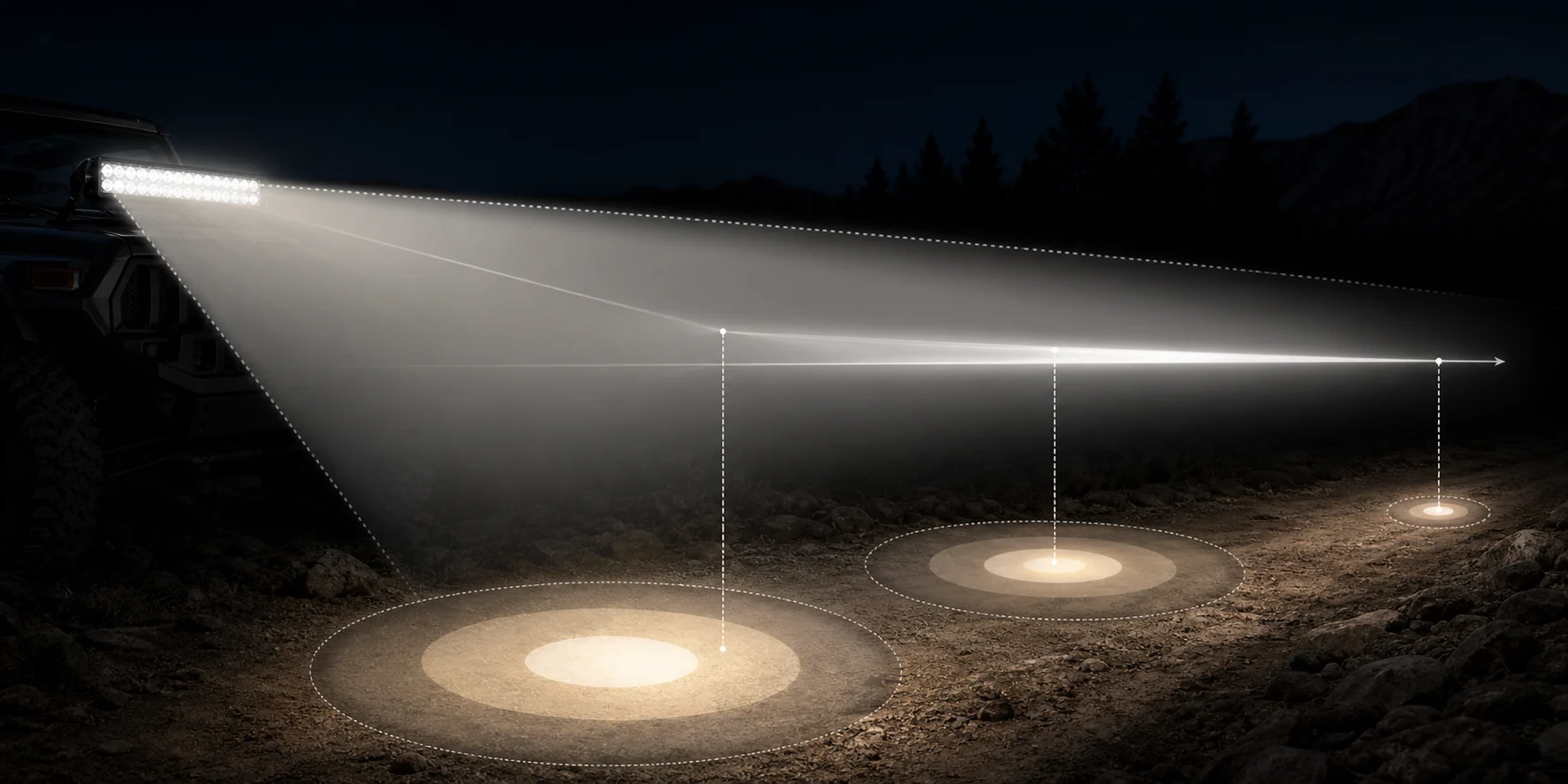
Lúmens, candela e lux descrevem quantidades fotométricas diferentes. Lúmens referem-se ao fluxo luminoso total, candela à intensidade luminosa em uma direção específica, e lux à iluminância em um ponto de uma superfície; distância do feixe é uma alegação de distância vinculada a um critério ou método de teste declarado. 1 2 3
| Termo | What it describes | O que ajuda você a comparar | O que não informa sozinho |
|---|---|---|---|
| Lúmen (lm) | Fluxo luminoso total | Saída visível geral, se medida na mesma base | Para onde o feixe é direcionado ou até onde alcança |
| Candela (cd) | Intensidade em uma direção específica | Quão fortemente o feixe é direcionado a um ponto ou ângulo | Saída total ou a forma completa do feixe |
| Lux (lx) | Iluminância em uma superfície | Luz que atinge um marcador de trilha ou área de trabalho | Saída total da luminária ou uniformidade de campo |
| Distância do feixe | Alcance sob um limite ou método declarado | Alcance frontal, quando o método é divulgado | Brilho ou cobertura de campo completo |
Por exemplo, um flood hipotético de 12.000 lúmens pode cobrir mais área próxima enquanto um spot de 9.000 lúmens pode entregar mais luz em direção a um ponto distante. Sem dados comparáveis de candela, um gráfico de feixe ou leituras de lux no mesmo alvo, os valores de lúmens não mostram qual é mais útil para esse percurso.
Ao verificar a distância do feixe, pergunte como a distância foi determinada. A ANSI/PLATO FL 1-2025 inclui métodos de reporte para saída, intensidade de pico do feixe e distância do feixe para produtos de iluminação portáteis e manuais. Não é uma aprovação geral para toda barra de luz automotiva; se um fornecedor a citar, verifique se o produto testado e a alegação se enquadram no método citado. 3
Por Que Duas Luzes Off-Road com os Mesmos Lúmens Podem Parecer Diferentes?
Duas barras de luz com os mesmos lúmens declarados podem criar visibilidade muito diferente porque o refletor, a lente, a óptica, o padrão do feixe, o ângulo de montagem e as condições de operação controlam onde essa luz incide. A saída total é um insumo para o desempenho, não uma descrição completa do feixe.
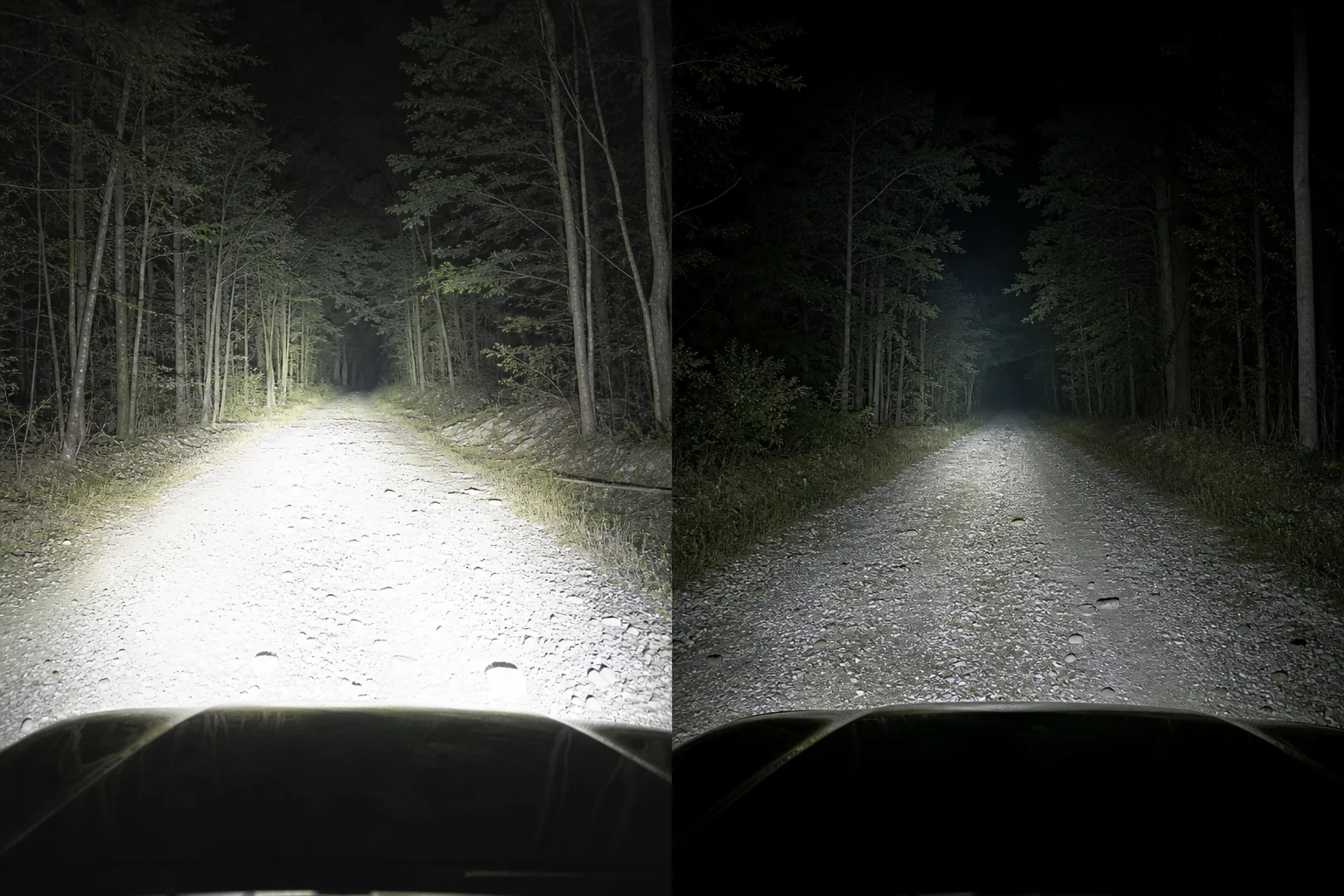
Um refletor ou lente pode concentrar a saída em uma região mais estreita ou distribuí-la pelo campo. Um feixe spot favorece o alcance frontal; um flood favorece a cobertura próxima; um padrão combo busca equilibrá-los. Compare o padrões de feixe spot, flood e combo antes de escolher por lúmens.
A instalação muda o que o motorista vê: uma barra apontada muito alto desperdiça luz acima do percurso, enquanto uma montagem deslocada altera a posição do feixe. Pergunte se a alegação é de saída de pico ou mantida, a tensão de entrada e o momento da medição. Compare ambas as luminárias na mesma altura, mira, potência, modo, distância e condições ambientais. A SAE J575 fornece métodos de teste de laboratório aplicáveis a muitos dispositivos e componentes de iluminação de veículos automotores; pergunte quais métodos se aplicam à luminária auxiliar exata. 4
Os Lúmens do Chip LED São os Mesmos que a Saída Medida da Barra de Luz?
Não necessariamente. Uma folha de dados de pacote LED, uma soma estimada de classificações de emissores e uma medição da barra de luz completa descrevem estágios diferentes do produto. O vendedor deve identificar qual deles aparece na alegação do produto e como foi estabelecido.
“Lúmens brutos” e “lúmens efetivos” não são autoexplicativos. Pergunte se um número é calculado a partir de dados dos emissores, medido da luminária montada, ou vinculado a um método nomeado; não presuma que o rótulo tem o mesmo significado entre marcas. Um registro em nível de luminária deve identificar o modelo e a revisão, a configuração de LED e driver, a tensão de entrada, o modo de operação, a temperatura e o método de teste. Se a luminária tiver um modo boost, solicite esse pico separadamente da saída sustentada e declare o momento da medição.
O método de teste deve ser adequado ao produto. ANSI/PLATO FL 1-2025 abrange o relatório de desempenho para produtos de iluminação portáteis e manuais, como lanternas e lanternas de cabeça. SAE J575 é uma prática recomendada para testes de dispositivos e componentes de iluminação de veículos automotores. Nenhuma das citações deve ser usada como um selo de marketing vago: peça as cláusulas aplicáveis, a configuração testada, a referência do relatório e os dados reais para o modelo que está sendo vendido. 3 4
Se um relatório independente não estiver disponível, solicite um método interno repetível e rotule-o como tal. Registre a revisão da amostra, a entrada na lâmpada, as posições de medição, o período de aquecimento, o instrumento e os critérios de aceitação. Mantenha a amostra aprovada ou o registro de configuração para que alterações posteriores possam ser verificadas.
Como Você Deve Ler uma Ficha Técnica de Barra de Luz Off-Road?
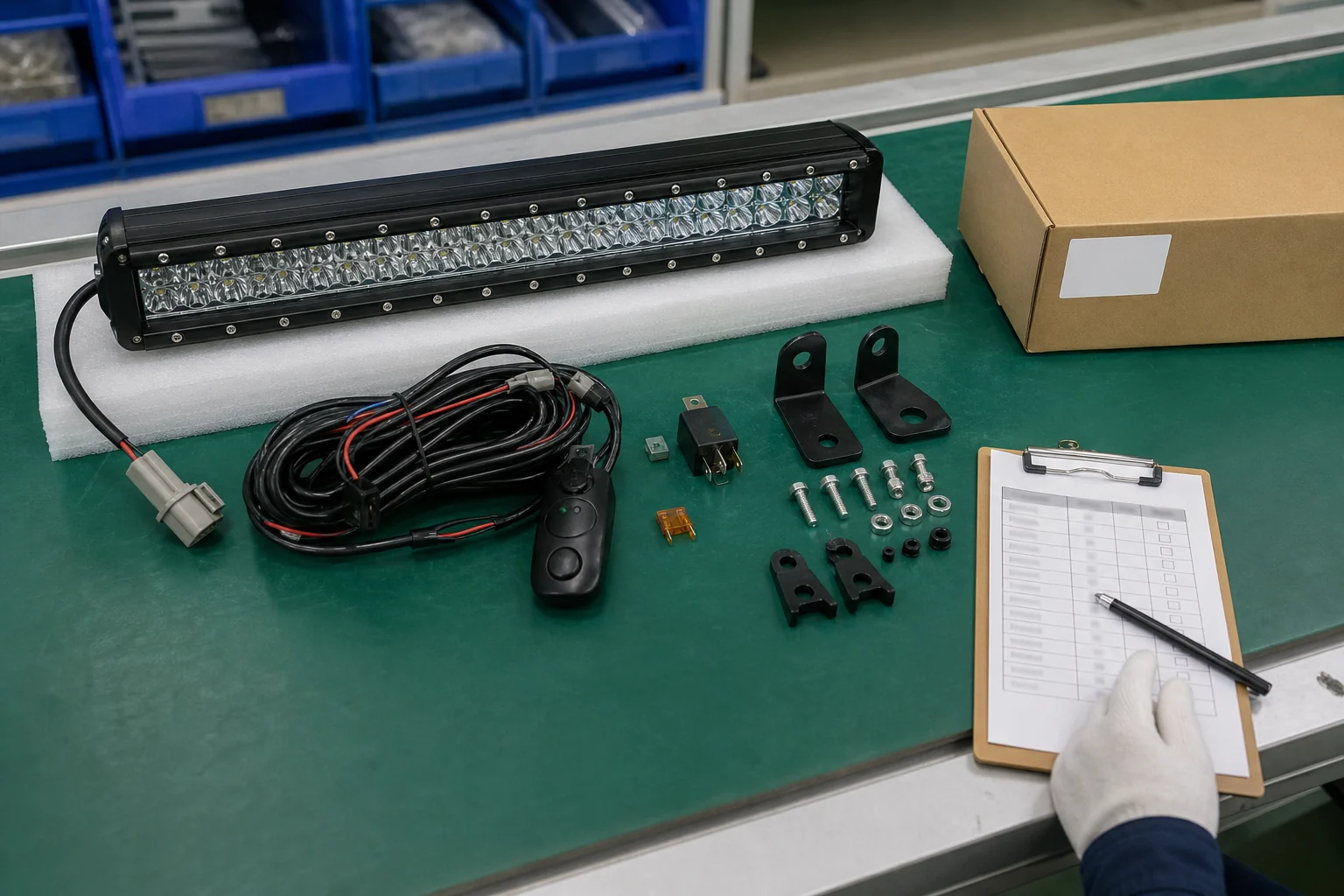
Leia o valor de lúmens junto com a identidade do produto, as condições elétricas, os dados do feixe e a base do teste. Uma especificação só é útil se os valores descreverem a mesma barra de luz completa e o modo de operação que você pode realmente comprar.
| Campo da ficha técnica | O que confirmar | Por que é importante |
|---|---|---|
| Alegação de lúmens | Saída da fonte ou do dispositivo; pico, inicial ou sustentado; método nomeado, se houver | Evita comparar diferentes tipos de alegações como se fossem equivalentes |
| Dados de candela ou feixe | Intensidade de pico, gráfico de feixe, distribuição ou valores medidos em ângulos declarados | Mostra onde a saída está concentrada, não apenas o total |
| Resultados de lux | Distância, pontos-alvo, posições central e fora do eixo, e configuração do teste | Ajuda a avaliar a luz que chega à zona real de trabalho ou de condução |
| Entrada elétrica | Tensão de operação, corrente, potência, modo e qualquer configuração do driver | Permite uma comparação justa em uma condição realista de alimentação do veículo |
| Comportamento térmico | Modo de saída, duração do aquecimento ou do teste e qualquer declaração de derating | Separa um pico breve da saída relevante para uso sustentado |
| Feixe e montagem | Configuração spot/flood/combo, ângulo do suporte, altura de montagem e notas de mira | Afeta cobertura, distância e luz desperdiçada fora do caminho pretendido |
| Configuração exata | Modelo/revisão, emissores, óptica, cabo, conector e amostra testada | Conecta o relatório à lâmpada e ao kit sendo adquirido |
| Alegações ambientais | Classificação IP e limite do teste, estado do conector e limites de instalação | Confirma o que a proteção contra ingressos cobre; não estabelece brilho |
Corresponda o número do modelo na ficha de dados, etiqueta, relatório, caixa e amostra. Para múltiplos modos, identifique qual deles produz os lúmens citados e se é sustentado. Se um emissor, óptica, driver, cabo ou carcaça mudar, confirme que o relatório existente ainda representa o produto revisado.
Use uma linha de comparação por modelo: tipo de alegação de lúmen; tensão e corrente de entrada; padrão de feixe; dados de candela/lux; modo e duração do teste; montagem; conector; relatório; e questões em aberto. Isso expõe produtos cuja grande alegação de lúmen carece das informações direcionais ou elétricas necessárias para o veículo pretendido.
Para um distribuidor comparando uma faixa mais ampla de produtos, use os mesmos campos em todos os tamanhos em vez de aceitar definições diferentes de diferentes fábricas. O faixa de barras de luz LED automotivas é um ponto de partida relevante para comparar configurações de produtos; as especificações ainda devem ser confirmadas para cada modelo e revisão.
Qual Saída em Lúmens Você Precisa para Condução Off-Road?
Não há uma contagem única de lúmens que seja “suficiente” para todos os veículos off-road. A luz certa depende do que deve ser visível, a que distância está, quão amplo é o campo necessário, da posição de montagem do veículo e se a lâmpada é usada para condução lenta em trilha, trabalho ou outra tarefa.
| Caso de uso | Pergunta sobre o feixe a responder primeiro | Evidência de comparação útil |
|---|---|---|
| Trilha lenta e técnica | O motorista consegue ver obstáculos próximos e ambas as bordas da trilha sem um ponto quente brilhante em primeiro plano? | Cobertura ampla ou combo; verificações de lux em pontos próximos e laterais |
| Rota aberta com elementos distantes | Há intensidade direcionada controlada suficiente na distância-alvo? | Candela ou um gráfico de feixe, mais lux na mesma distância entre produtos |
| Trabalho ao redor de um veículo estacionado | A lâmpada cobre a área de trabalho uniformemente em vez de maximizar o alcance? | Cobertura flood e leituras de lux em toda a zona de trabalho |
| Uso misto de trilha e trabalho | O feixe consegue equilibrar alcance frontal com dispersão lateral utilizável? | Padrão combo, gráfico de distribuição e teste noturno lado a lado |
Escolha o alvo e a forma do feixe primeiro, depois compare sob condições correspondentes. Um número maior de lúmens só ajuda se sua saída extra alcançar áreas úteis. O guia para barras de luz de fileira única e fileira dupla explica as compensações da carcaça; a contagem de fileiras por si só não estabelece desempenho.
Confirme montagem, mira e fiação para a entrada declarada do produto em vez de inferir corrente a partir dos lúmens. Veja a chicote de fiação para barra de luz visão geral para conexões do veículo. Um Classificação IP aborda exposição do invólucro, não saída óptica.
Como Você Pode Comparar Duas Barras de Luz de Forma Justa?
Uma comparação justa usa a mesma configuração para ambas as lâmpadas e registra informações suficientes para repeti-la. Fotos sozinhas são evidência fraca porque a exposição e o processamento da câmera podem mudar entre as fotos.
Use esta sequência simples de comparação para amostras ou produtos com relatórios incompletos:
- Defina a tarefa: Anote a distância alvo, a área de campo próximo, a cobertura lateral, a posição de montagem no veículo e o modo de feixe que o motorista usará.
- Combine a instalação: Monte ambas as lâmpadas na mesma altura e ângulo, com óptica desobstruída e o mesmo veículo ou dispositivo de teste.
- Controle a entrada: Use a mesma tensão de alimentação nos terminais da lâmpada, registre a corrente e a potência, e selecione o mesmo modo de operação quando possível.
- Defina um período de operação consistente: Registre se as leituras são feitas na inicialização, após um aquecimento fixo ou em um modo sustentado. Mantenha a duração idêntica para ambas as amostras.
- Meça uma pequena grade de lux: Escolha uma distância com base no caso de uso e meça o centro, os lados esquerdo e direito, além de um ponto de campo próximo. Mantenha a orientação do medidor e a superfície alvo consistentes.
- Registre o resultado completo: Anote o modelo e a revisão da amostra, as condições ambientais, o instrumento, as posições, as leituras, a montagem e qualquer ofuscamento visível ou lacunas escuras.
- Compare o relatório com a amostra: Confirme que a óptica testada, o driver, o cabo e a carcaça correspondem aos itens na cotação e na especificação de produção.
Para um veículo onde obstáculos a cerca de 30 m à frente importam, por exemplo, use essa como a distância de comparação; é uma escolha de aplicação, não um requisito de teste universal. Meça o centro do alvo e os pontos próximos à esquerda/direita, depois verifique a cobertura de perto separadamente. Uma leitura de lux amostra um ponto; não é uma medição completa de lúmens ou um mapa de feixe. 1
Para alegações publicadas ou decisões de engenharia, solicite o relatório de laboratório aplicável ou o arquivo fotométrico e confirme seu escopo. Um teste de campo pode triar amostras, mas não é certificação independente, a menos que tenha sido conduzido e documentado como tal.
Contagem de LEDs, Número de Fileiras, Potência e Temperatura de Cor Importam?
Eles importam como especificações de suporte, mas nenhum substitui a saída medida e as informações do feixe. A contagem de LEDs é um detalhe do componente; a contagem de fileiras descreve o layout da carcaça; a potência e a corrente descrevem a demanda elétrica; a temperatura de cor correlacionada descreve a aparência da luz branca. Esses valores respondem a perguntas diferentes e não devem ser reduzidos a uma única pontuação de “brilho”.
Mais emissores podem aumentar a saída potencial da fonte, mas a saída da luminária também depende da corrente de operação, do driver, do gerenciamento térmico, da óptica e da distribuição do feixe. Uma barra de fileira dupla pode diferir de um modelo de fileira única em tamanho e layout óptico, mas a contagem de fileiras não prova que ela se adequa a todas as rotas. O artigo sobre barras de luz de fileira única e fileira dupla explica essas compensações de empacotamento.
Watts descrevem a demanda elétrica, não lúmens garantidos. Compare a saída medida na entrada declarada e confirme o consumo de corrente, o comportamento térmico, a faixa de tensão, o fusível e as recomendações de chicote. Um rótulo de temperatura de cor descreve a aparência da luz branca, não a saída do feixe. Da mesma forma, um Classificação IP aborda a exposição do invólucro, não o brilho ou o alcance do feixe.
Conclusão: Escolha a Luz pelo Desempenho do Feixe, Não por um Número de Destaque
Lúmens descrevem o fluxo luminoso visível total, enquanto candela e lux ajudam a explicar a direção e a luz que atinge um alvo. Uma comparação confiável de luz off-road começa identificando a tarefa de condução ou trabalho, depois verifica a alegação de saída da lâmpada completa, os dados do feixe, a entrada elétrica, as condições de teste e a mira instalada.
Antes de aprovar um modelo, combine o relatório com a amostra exata e compare os candidatos sob as mesmas condições. Se você está avaliando amostras de barra de luz, solicite uma revisão lado a lado da especificação de luz com o uso do veículo, a distância alvo, o feixe preferido, a tensão de entrada e os dados disponíveis de lúmens ou fotométricos. Essas informações tornam a comparação mais útil do que um único número anunciado.
Perguntas Frequentes
Qual é uma boa saída de lúmens para uma luz off-road?
Não há um número universal. Comece com a distância alvo e a cobertura de feixe que você precisa, depois compare as alegações de lúmens no nível da luminária com candela, lux em pontos relevantes, forma do feixe e condições de medição.
Lúmens mais altos são sempre mais brilhantes na trilha?
Não. Mais lúmens significam mais fluxo luminoso total relatado, mas um feixe amplo pode espalhá-lo enquanto um feixe estreito o concentra. A distribuição do feixe, a mira e a luz real no alvo determinam se a saída adicional ajuda na tarefa.
Qual é a diferença entre lúmens e lúmens efetivos?
Lúmens são uma unidade de fluxo luminoso. “Lúmens efetivos” não é detalhe suficiente por si só para identificar o método de medição, então pergunte se o número é calculado a partir de dados de LED ou medido da lâmpada completa e sob quais condições.
Devo comparar uma barra de luz por lúmens ou lux?
Use ambos para perguntas diferentes. Lúmens descrevem a saída total; lux em um ponto ou distância declarada ajuda a mostrar quanta luz atinge um alvo escolhido. Uma única leitura de lux não substitui um mapa de feixe completo.
Como verifico se um número de lúmens anunciado é crível?
Peça o modelo e a revisão exatos, o método de teste, se o valor é saída da fonte ou da luminária, a tensão de entrada, o modo de operação, o momento da medição e os dados fotométricos de suporte. Confirme que a amostra e a configuração de produção correspondem ao relatório.
Mais potência significa mais lúmens?
Não automaticamente. A potência é energia elétrica, enquanto os lúmens são saída fotométrica. Compare a saída medida da luminária em uma entrada declarada e inclua o consumo de corrente, o comportamento térmico e a distribuição do feixe na decisão.
Referências
[1] International Organization for Standardization. “ISO 4007:2018 Equipamento de proteção individual — Proteção dos olhos e da face — Vocabulário.” 2018.
[2] National Institute of Standards and Technology. “Candela.” s.d.
[3] American National Standards Institute e Portable Lights American Trade Organization. “ANSI/PLATO FL 1-2025 Norma de Desempenho Básico para Lanternas.” 2025.
[4] SAE International. “J575 Testes para Dispositivos e Componentes de Iluminação de Veículos Automotores — Prática Recomendada.” Revisado em 2025.