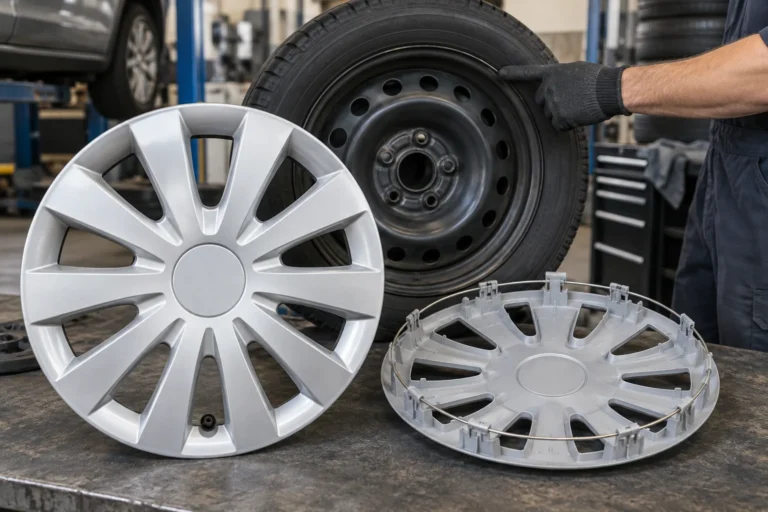




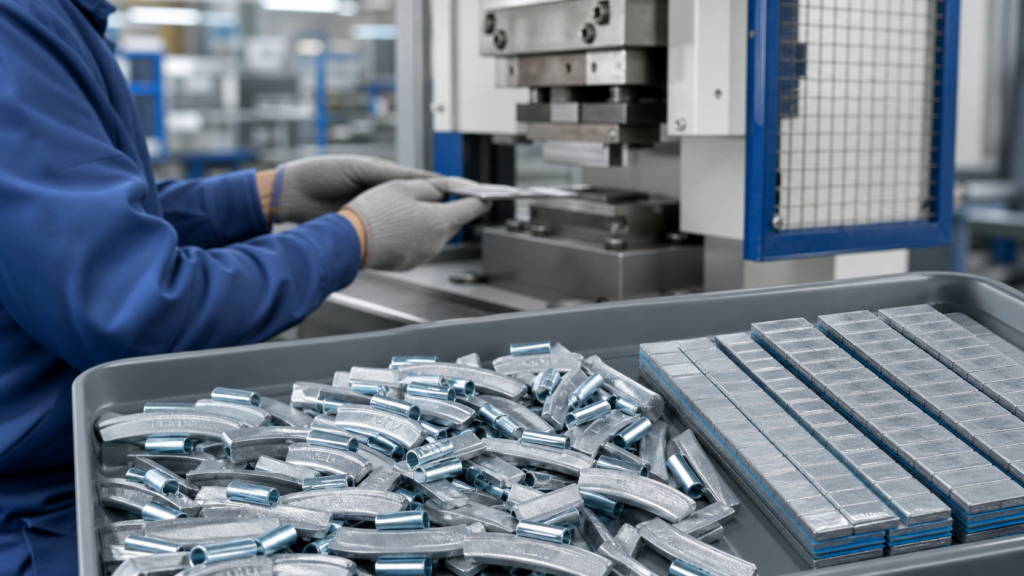
Las pesas de equilibrio de ruedas se fabrican convirtiendo material en piezas de clip o adhesivas de tamaño preciso, y luego controlando la conformación, el acabado, la fijación, la masa y el embalaje. Para los productos de acero, el estampado y el recubrimiento son críticos; para las tiras adhesivas, el rendimiento de la cinta y el protector es igual de importante. La calidad fiable depende de controles documentados a lo largo de la producción, no solo de la inspección visual final.
Para un instalador, una pesa de rueda puede parecer una pieza pequeña y sencilla. Para un distribuidor o importador, es un conjunto compacto que debe equilibrar con precisión, ajustarse a una llanta, resistir la exposición normal del servicio, mantenerse fijado y llegar en condiciones utilizables. Por eso una RFQ significativa pregunta sobre el proceso detrás de la pieza, así como sobre el nombre del material en la caja.
Tabla de contenido
- ¿Por qué importa el detalle de fabricación para las pesas de rueda?
- ¿Qué materiales y componentes componen una pesa de rueda?
- ¿Cómo se estampan y conforman las pesas de rueda de acero?
- ¿Por qué son importantes el recubrimiento y el control de la corrosión?
- ¿Cómo se ensamblan las pesas de rueda adhesivas?
- ¿Qué controles de calidad importan durante la producción?
- ¿Qué deberían pedir los compradores a un proveedor para demostrarlo?
- ¿Cómo protegen el embalaje y la trazabilidad la consistencia del pedido?
- Conclusión: Compre un proceso controlado, no solo un material
- Preguntas frecuentes
- Referencias
¿Por qué importa el detalle de fabricación para las pesas de rueda?
El detalle de fabricación importa porque una pesa de rueda debe entregar una masa especificada y permanecer correctamente fijada después de la instalación. Una pieza puede tener el material nominal correcto pero aún así generar quejas si su perfil de clip, recubrimiento, cinta, dimensiones de segmento o control de embalaje es inconsistente.
El equilibrado de ruedas funciona añadiendo una masa de corrección calculada en una posición definida. Eso hace que la precisión de la masa sea fundamental, pero no es todo el producto. Una pesa de clip necesita un clip conformado que se adapte al borde de llanta objetivo. Una pesa adhesiva necesita un sistema de cinta que pueda adherirse a una superficie de rueda preparada y un protector que los instaladores puedan retirar limpiamente. Ambas necesitan dimensiones que se repitan de un pedido al siguiente.
Las consecuencias de un mal control del proceso se manifiestan lejos de la fábrica. Un borde áspero puede ralentizar la instalación o rayar una llanta. Un clip de tamaño insuficiente puede aflojarse. Un recubrimiento que se agrieta durante la conformación puede exponer el acero subyacente. Una tira adhesiva débil o mal protegida puede levantarse después de la instalación. Recuentos incorrectos en la caja o marcas de unidades mezcladas pueden convertir una buena pieza física en un problema de almacén.
Para los compradores que construyen un surtido de servicio, la gama de pesas de rueda y las decisiones de ajuste deben venir antes de una especificación de fabricación detallada. La decisión de gama identifica qué tipos de rueda y formatos de fijación deben atenderse; la especificación del proceso luego establece cómo se ve una producción consistente para esas piezas.
¿Qué materiales y componentes componen una pesa de rueda?
Las pesas de rueda son conjuntos de una masa de equilibrado y, según el formato, un clip o un sistema adhesivo. Se pueden usar acero, zinc y otros materiales para la masa, pero los componentes de soporte determinan si esa masa puede instalarse y retenerse en la rueda prevista.
Para una pesa de clip de acero, el cuerpo y la característica de retención pueden formarse a partir de componentes de acero diseñados en torno a un perfil de llanta particular. La pieza terminada puede recibir un recubrimiento protector, y su masa puede crearse por su geometría, espesor de material o un diseño conformado definido. La construcción exacta varía según la familia de productos; los compradores deben evitar asumir que cada pesa de clip usa el mismo material o perfil de clip solo porque el cuerpo de la pesa es de acero.
Para una tira adhesiva, los segmentos de pesa se fijan a una cinta adhesiva sensible a la presión y se protegen con un protector antiadherente. La tira puede suministrarse en segmentos regulares, diferentes patrones de incremento o un diseño continuo destinado a cortarse o separarse durante la instalación. Aquí, el tipo de cinta, la estabilidad del soporte, la fuerza de retirada del protector, el espaciado de segmentos y la limpieza de la superficie metálica afectan cómo el instalador experimenta el producto.
| Componente | Pesa de rueda de clip | Pesa de rueda adhesiva | Lo que el comprador debe definir |
|---|---|---|---|
| Masa de equilibrado | Cuerpo de pesa conformado o moldeado. | Piezas metálicas segmentadas o unidades de tira. | Material, masa nominal, sistema de incremento, tolerancia. |
| Método de retención | Clip de enganche a la llanta o característica conformada. | Cinta sensible a la presión sobre una superficie de montaje preparada. | Ajuste a la llanta o requisito de cinta y condiciones de servicio previstas. |
| Acabado protector | Recubrimiento o galvanizado en piezas metálicas expuestas. | Acabado en los segmentos más protección de cinta y protector. | Apariencia del acabado, expectativas de manipulación y criterios de corrosión cuando corresponda. |
| Interfaz de instalación | Forma del clip y área de contacto. | Espaciado de segmentos, protector y cara adhesiva. | Tipo de rueda previsto, método de instalación y condiciones de prueba de muestra. |
| Embalaje | Bandeja, caja o surtido compartimentado. | Tiras, cajas, paquetes internos o formato de dispensador. | Recuento, unidades, formato de etiqueta y protección de almacenamiento. |
La decisión de material, por lo tanto, no está separada de la decisión de producto. Un material de menor densidad puede requerir una geometría diferente para la misma masa de corrección. Un recubrimiento puede influir en cómo se ve una pieza conformada después del clipado. Un sistema de cinta puede necesitar una arquitectura de tira diferente. Los buenos proveedores pueden explicar estas relaciones en términos específicos del producto en lugar de ofrecer solo una declaración genérica de que las pesas son "de acero" o "sin plomo"."
Los controles de proceso comienzan con la ruta del material. Las opciones de material que influyen en la conformación y el acabado ayudan a los compradores a entender por qué el acero, el zinc y las alternativas al plomo no pueden compartir una especificación genérica.
¿Cómo se estampan y conforman las pesas de rueda de acero?
Las pesas de rueda de acero se fabrican comúnmente cortando y dando forma a stock de acero mediante operaciones controladas de estampado o conformación por prensa. El utillaje y la secuencia exactos dependen del estilo de pesa, pero la geometría consistente comienza con un espesor de material controlado, el estado del troquel y las comprobaciones dimensionales.
El proceso a menudo comienza con fleje de acero entrante, bobina o piezas en bruto preparadas. Antes de la primera producción, una fábrica debe confirmar que el material entrante coincide con el grado, espesor, condición superficial e identidad de lote previstos. Esos controles básicos ayudan a evitar que una pieza terminada se desvíe en masa o ajuste simplemente porque el stock inicial cambió.
En la etapa de prensado, el utillaje puede recortar el contorno, formar una función de clip, crear dobleces o dar forma al cuerpo. El utillaje debe sujetar la pieza de manera consistente sin dejar rebabas afiladas, bordes deformados ni un perfil que varíe a lo largo de la producción. El estampado es rápido, pero la velocidad no es la medida de calidad. El desgaste del troquel, la configuración de la prensa, el enfoque de lubricación y la manipulación entre operaciones afectan la repetibilidad.
Para los productos de clip, una inspección útil va más allá de la longitud y el ancho generales. Verifica la abertura, el comportamiento del resorte cuando corresponda, la forma de contacto y la manera en que una muestra se asienta sobre un reborde de llanta representativo. Un calibrador puede confirmar una dimensión, pero solo una prueba de ajuste puede mostrar si la pieza ensamblada sujeta la aplicación prevista sin tambalearse ni asentarse en la ubicación incorrecta.
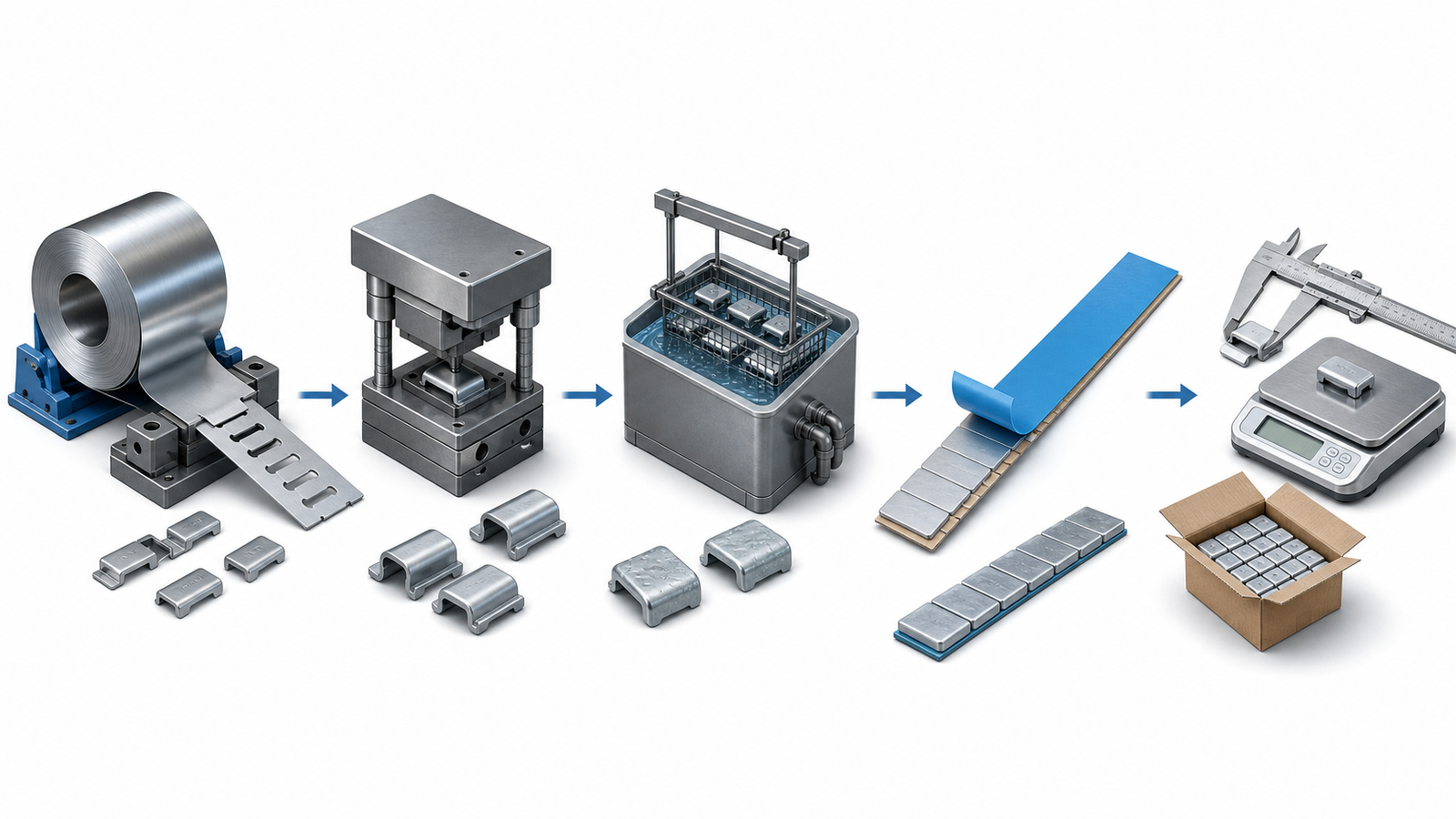
El control de masa debe integrarse en la ruta en lugar de dejarse por completo a la línea final. Las dimensiones de conformación, el espesor del material y el material elegido contribuyen todos a la masa final. Una verificación final en báscula es esencial, pero el muestreo del proceso ayuda a encontrar la fuente de una tendencia antes de que se empaquete una gran cantidad de piezas fuera de objetivo.
¿Por qué son importantes el recubrimiento y el control de la corrosión?
El control de recubrimiento y corrosión es importante porque los componentes de acero pueden estar expuestos a la humedad, la contaminación de la carretera, las condiciones de almacenamiento y los daños por manipulación. El mejor acabado para un producto depende del componente, la ruta de fabricación y el entorno de servicio, por lo que los compradores deben especificar una expectativa de rendimiento en lugar de exigir solo un color.
Un acabado protector puede aplicarse después de la conformación, o un material recubierto puede procesarse a través de una ruta diseñada para preservar el acabado. La secuencia de producción importa. Si una pieza recubierta se dobla o se sujeta con clip después del acabado, la operación puede marcar o agrietar la superficie a menos que el diseño y el proceso lo contemplen. Si el recubrimiento sigue a la conformación, la limpieza y la preparación de la superficie se vuelven fundamentales para la adhesión y la cobertura.
La apariencia visual es una verificación, no el requisito completo. Un acabado uniforme aún puede ser delgado en áreas de difícil acceso o deficiente en un borde. Los controles útiles pueden incluir la limpieza de piezas, los parámetros del baño o del proceso de polvo, las condiciones de curado cuando corresponda, la revisión de cobertura, la protección durante la manipulación y muestras de aceptación definidas. El comprador no necesita prescribir el equipo de una fábrica; el comprador sí necesita declarar qué debe resistir la pieza y qué evidencia se espera.
La prueba de niebla salina a menudo se discute cuando la resistencia a la corrosión es una preocupación, pero debe especificarse con cuidado. ASTM B117 describe cómo operar un aparato de niebla salina; es un método de prueba, no una promesa universal de aprobado/reprobado para cada producto o recubrimiento.[1] Si un cliente necesita una duración particular, un método de clasificación o un requisito de apariencia posterior a la prueba, coloque esa condición en la especificación escrita y confirme que la muestra y la pieza de producción se evalúan sobre la misma base.
Para las tiras adhesivas, el control de corrosión también se conecta con la cinta. Un respaldo limpio y estable y una cara adhesiva protegida ayudan a prevenir daños durante el almacenamiento antes de la instalación. No es útil que un segmento metálico tenga un buen acabado si la cinta se contamina, el liner se libera prematuramente o las tiras se aplastan durante el transporte.
¿Cómo se ensamblan las pesas de rueda adhesivas?
Los contrapesos adhesivos para ruedas se ensamblan disponiendo segmentos metálicos en un patrón controlado y uniéndolos a un sistema de cinta protegido por un liner de liberación. Su calidad depende tanto del segmento metálico como de la construcción adhesiva, por lo que una tira debe evaluarse como un producto instalado y no como contrapesos sueltos por sí solos.
Los segmentos metálicos deben tener masa y espaciado consistentes para que un instalador pueda retirar o cortar el incremento requerido de manera predecible. Los bordes afilados, la mala separación de segmentos o las superficies inferiores irregulares pueden interferir con el contacto de la cinta y la manipulación. Luego, la cinta se aplica bajo una alineación y presión controladas para que la cara adhesiva sea continua, el liner esté colocado correctamente y la tira permanezca lo suficientemente recta para el dispensado y la aplicación.
La selección de la cinta debe coincidir con la aplicación real. Una superficie de rueda limpia y seca, una temperatura de instalación adecuada, una presión suficiente y un área de montaje adecuada afectan la adhesión en campo. La propia construcción de la cinta afecta la adherencia inicial, la sujeción a largo plazo y el comportamiento del liner. Una fábrica no puede garantizar la adhesión sobre una superficie de rueda contaminada desconocida, pero puede suministrar un sistema de cinta definido y ayudar a un comprador a realizar una prueba de muestra bajo condiciones declaradas.
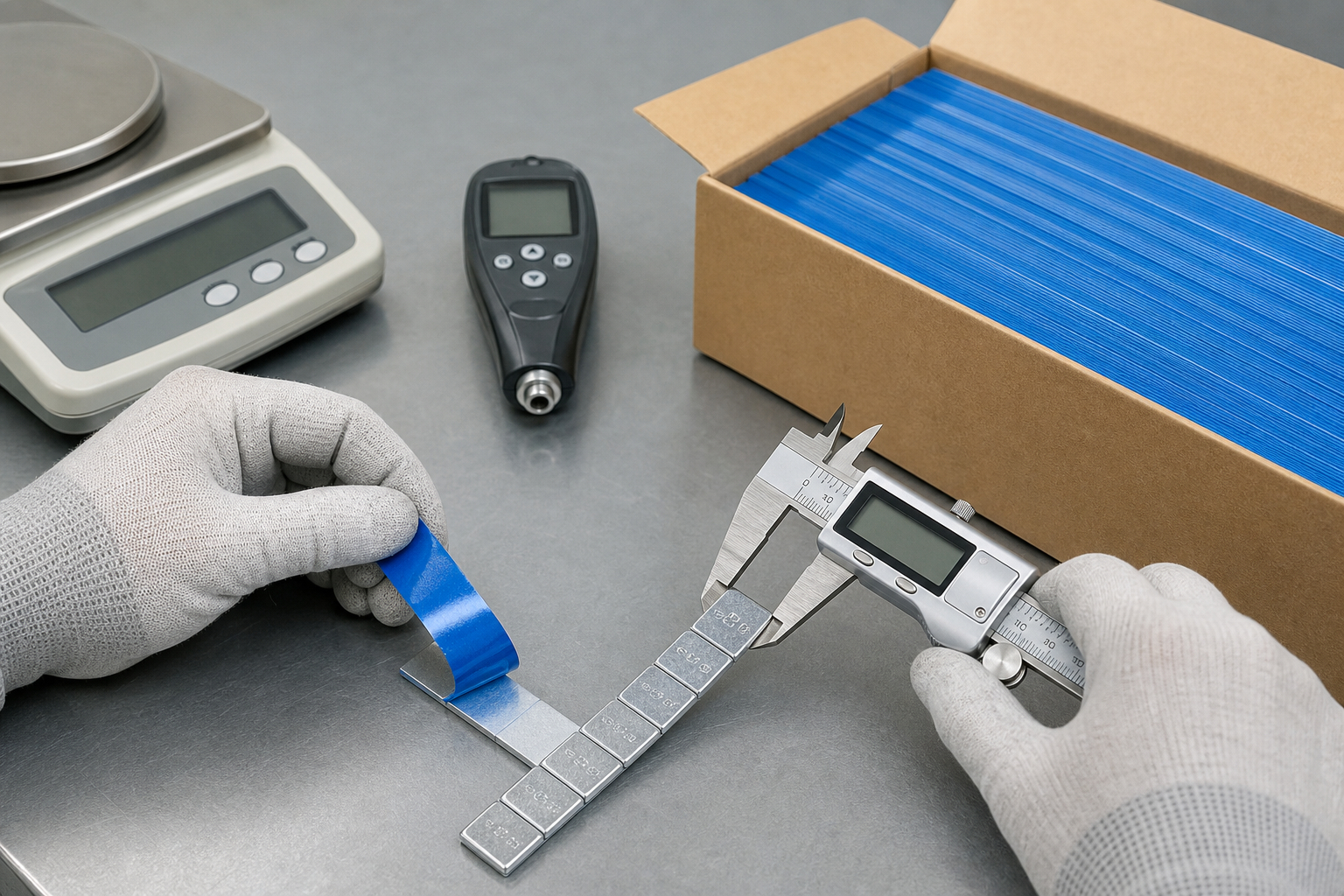
El liner de liberación es fácil de pasar por alto hasta que falla. Los instaladores necesitan que se desprenda sin rasgarse, sin dejar residuo ni levantar el adhesivo del segmento. Las condiciones del almacén también importan: el almacenamiento en caliente, la compresión, el polvo y los cartones dañados pueden afectar las tiras antes de que lleguen siquiera a una rueda. Por esa razón, una prueba de empaque debe incluir abrir un paquete interior real, retirar una tira, desprender el liner y aplicar la muestra a la superficie de prueba especificada.
Para productos adhesivos destinados a ruedas de aleación, requisitos de cinta y segmento para programas adhesivos de ruedas de aleación conectan la discusión de fabricación con las condiciones reales de instalación.
¿Qué controles de calidad importan durante la producción?
Las verificaciones de calidad más útiles son aquellas que detectan las fallas que los clientes pueden experimentar realmente: masa incorrecta, mal ajuste, acabado dañado, cinta poco confiable, cantidad incorrecta en el paquete o identidad de producto mezclada. Un plan de producción debe conectar cada verificación con un riesgo conocido y registrarlo por lote u orden.
Las verificaciones de entrada pueden cubrir la identificación del material, el espesor, la condición de la superficie, el lote de cinta, la condición del liner y los componentes del empaque. Las verificaciones en proceso pueden cubrir dimensiones estampadas, rebabas, consistencia de conformación, apariencia del recubrimiento, alineación de la cinta, espaciado de segmentos y masa neta. Las verificaciones finales pueden verificar la muestra aprobada, la configuración del cartón, las etiquetas, los conteos y la documentación específica de la orden.
Esos puntos de control se convierten en una lista de verificación de QC de producción repetible para tolerancia, retención, acabado y registros de lote de contrapesos para ruedas cuando el comprador agrega el SKU, el plan de muestreo, la regla de aceptación, la evidencia y la disposición para el producto exacto que se está ordenando. La lista de verificación convierte el conocimiento del proceso en una decisión de liberación sin reemplazar la revisión más profunda de fabricación en esta página.
| Verificación | Qué protege | Evidencia práctica |
|---|---|---|
| Masa nominal y tolerancia | Precisión de equilibrado y consistencia del rango. | Muestras de báscula registradas por lote o intervalo de producción. |
| Perfil del clip o ajuste a la llanta | Retención y ubicación de montaje correcta. | Registro dimensional más muestra de ajuste en el perfil de llanta acordado. |
| Inspección de bordes y acabado | Seguridad de instalación, apariencia y exposición a la corrosión. | Estándar visual aprobado y resultados de inspección documentados. |
| Evaluación del recubrimiento | Resistencia al manejo y las condiciones de servicio previstas. | Proceso declarado, resultado de muestra y método de ensayo acordado cuando se requiera. |
| Verificación de cinta y protector | Fiabilidad de aplicación y facilidad de uso para el instalador. | Muestra de aplicación de la tira, revisión del desprendimiento del protector y registro del lote de cinta. |
| Auditoría de embalaje | SKU correcto, cantidad, unidades y trazabilidad. | Muestra de empaque aprobada, conteo de cajas y lote o código de fecha. |
Los sistemas de gestión de calidad como ISO 9001 se centran en procesos controlados, información documentada y acciones correctivas más que en un ritual de inspección único.[2] Para un comprador de contrapesos de rueda, la pregunta útil es concreta: ¿puede el proveedor demostrar cómo se rastrearía un problema desde la caja hasta los registros de material, proceso e inspección? Una respuesta breve pero clara es más valiosa que una larga presentación genérica de calidad.
La inspección de primera pieza es especialmente útil cuando cambian los utillajes, el material, el recubrimiento, la cinta o el embalaje. Proporciona al comprador y al proveedor una referencia aprobada conjuntamente antes de la producción en volumen. Las verificaciones de pedidos repetidos pueden entonces centrarse en las variables con mayor probabilidad de desviarse en lugar de recrear todo el proceso de aprobación cada vez.
¿Qué deberían pedir los compradores a un proveedor para demostrarlo?
Los compradores deben solicitar evidencia que coincida con su aplicación de rueda prevista y su riesgo comercial, no un paquete de documentos único para todos. Una muestra bien definida, un plan de inspección y una aprobación de empaque suelen revelar más sobre la repetibilidad que una amplia afirmación de "alta calidad"."
Comience nombrando el formato y el caso de uso: contrapeso de clip para una familia de pestañas declarada, o tira adhesiva para una superficie de rueda y un entorno de instalación declarados. Luego solicite el sistema de masa nominal, la tolerancia admisible, las dimensiones que afectan el ajuste o la disposición de segmentos, y la descripción relevante del material o recubrimiento. Si el producto se venderá en varios mercados, especifique el idioma requerido en la caja, el sistema de unidades y cualquier declaración de materiales con suficiente antelación para incluirlo en la cotización.
Una vez definidos esos detalles, los compradores pueden solicitar muestras de contrapesos de rueda adaptadas a la aplicación en lugar de depender de una caja de muestras mixtas. La muestra debe incluir el formato de clip o tira propuesto, el acabado, la cinta y el estilo de embalaje, para que los equipos de instalación y almacén puedan aprobar la misma construcción que se pedirá.
Utilice esta breve lista de verificación previa a la producción:
- Plano de producto aprobado o referencia de muestra clara para la geometría del peso, clip o segmento.
- Masa nominal, sistema de incremento y tolerancia admisible.
- Pestaña de llanta prevista, superficie de la rueda o condiciones de instalación.
- Descripción del recubrimiento o acabado y cualquier evaluación de corrosión acordada.
- Descripción de la cinta adhesiva y el protector para productos autoadhesivos.
- Puntos de inspección, frecuencia de muestreo cuando se acuerde y criterios de aceptación.
- Cantidad por empaque interior y por caja, texto de la etiqueta, unidades y trazabilidad del lote.
- Muestra aprobada retenida para comparación en pedidos repetidos.
Esto no se trata de forzar cada pedido a una auditoría costosa. Permite al comprador decidir qué verificaciones son proporcionales a la aplicación. Un pedido de prueba pequeño puede necesitar una muestra de instalación robusta y confirmación de la caja; un programa de marca privada también puede necesitar aprobación de arte, registros de lote y una inspección formal previa al envío.
Cuando el pedido incluya productos de clip, evidencia de ajuste del clip para aplicaciones de ruedas de acero explica por qué un registro dimensional debe combinarse con una prueba real de muestra en la pestaña de la llanta.
¿Cómo protegen el embalaje y la trazabilidad la consistencia del pedido?
El empaque y la trazabilidad protegen la consistencia del pedido al mantener el producto aprobado identificable desde la producción hasta el almacenamiento y la instalación. Importan especialmente para los contrapesos de rueda porque los materiales, incrementos, clips y tiras de aspecto similar pueden mezclarse fácilmente cuando las cajas no están controladas.
Para las tiras adhesivas, el empaque debe proteger el protector y la cara de la cinta contra aplastamiento, polvo, calor excesivo y compresión no controlada. Para los contrapesos de clip, debe evitar el roce excesivo, el daño del recubrimiento y la manipulación de tamaños mezclados. La cantidad del empaque interior debe adaptarse al patrón de servicio del cliente; un empaque de tiras fácil de dispensar tiene necesidades distintas de una caja a granel para un almacén de distribución.
El etiquetado debe hacer que el producto sea comprensible sin abrir la caja. Como mínimo, deben controlarse el código de producto acordado, el formato, la descripción del material cuando corresponda, el sistema de unidades, la cantidad y la convención de lote o fecha. Cuando surge un problema, la trazabilidad del lote ayuda al proveedor a identificar qué material, cinta, lote de recubrimiento, configuración de máquina o corrida de empaque necesita revisión.
Antes de aprobar la producción repetida, compare la nueva caja con la referencia retenida: identidad del producto, conteo, marcado de unidades, apariencia de la tira o del contrapeso, condición del protector y empaque protector. Esta verificación modesta puede detectar los errores frustrantes que ocurren después de que una pieza técnicamente correcta ya salió de la línea de producción.
Para programas de marca privada o pedidos repetidos, requisitos de empaque y trazabilidad OEM para programas repetidos dan a los compradores un siguiente paso relevante después de definir las convenciones de caja y lote.
Conclusión: Compre un proceso controlado, no solo un material
Los contrapesos de balanceo de rueda se fabrican mediante una serie de controles vinculados: preparación del material, conformado, acabado protector, ensamblaje adhesivo cuando se utiliza, inspección y empaque. El mejor producto no se define solo por una palabra de material. Es la pieza cuya masa, ajuste, acabado, cinta y detalles de caja coinciden consistentemente con las aplicaciones de rueda que el comprador pretende atender.
Para un programa nuevo o un cambio en material, cinta, recubrimiento o empaque, solicite muestras adaptadas a la aplicación y un resumen conciso del proceso que cubra los puntos de inspección relevantes. Aprobar esa referencia antes de la producción da a ambas partes una base viable para pedidos repetidos, acciones correctivas y menos sorpresas en la instalación.
Preguntas frecuentes
La calidad de fabricación de los contrapesos de rueda se evalúa mejor mediante verificaciones de masa, ajuste, fijación, acabado y empaque específicas de la aplicación, en lugar de un único certificado genérico.
¿Los contrapesos de balanceo de rueda son fundidos o estampados?
Pueden fabricarse mediante diferentes rutas según el material y el diseño del producto. Los componentes de acero para clip y los contrapesos adhesivos suelen producirse mediante corte, estampado, conformado u otros pasos controlados de trabajo del metal, mientras que otros materiales y diseños pueden usar métodos de conformado diferentes. Pregunte al proveedor sobre la ruta para el producto exacto que planea comprar.
¿Por qué los contrapesos de rueda necesitan un recubrimiento?
Los componentes de acero pueden estar expuestos a la humedad y a los contaminantes de la carretera, por lo que un acabado adecuado ayuda a gestionar la corrosión y la apariencia. La pregunta relevante no es simplemente si existe un recubrimiento, sino si permanece intacto durante el conformado, la instalación, el almacenamiento y el entorno de servicio esperado.
¿Qué debe probarse en la cinta adhesiva de los contrapesos de rueda?
Pruebe una tira representativa de la producción sobre una superficie de rueda debidamente preparada bajo las temperaturas y condiciones de manipulación que importan para la aplicación. Verifique la alineación de los segmentos, el retiro del protector, la colocación inicial y la retención después de la condición de reposo o exposición acordada. Documente la preparación de la superficie y la configuración de la prueba para que los resultados sean comparables.
¿Cómo puede un comprador verificar el ajuste de los contrapesos de rueda de clip?
Use el contrapeso propuesto en pestañas de llanta representativas, no solo en un plano dimensional. Verifique que el clip enganche de forma segura, que el contrapeso se asiente en la ubicación prevista, que la llanta no se dañe durante la instalación normal y que la pieza no interfiera con las características cercanas de la rueda.
¿Es suficiente una inspección final para controlar la calidad de los contrapesos de rueda?
No. La inspección final puede detectar problemas visibles y de empaque, pero no puede reparar de forma fiable un proceso que ya se ha desviado. Las verificaciones de material entrante, las verificaciones dimensionales y de masa en proceso, y las muestras de referencia aprobadas facilitan la detección de problemas antes de completar un pedido completo.
Referencias
[1] ASTM International. “B117 Práctica estándar para el funcionamiento del aparato de niebla salina.” 2019.
[2] Organización Internacional de Normalización. “ISO 9001:2015 Quality management systems – Requirements.” 2015.