



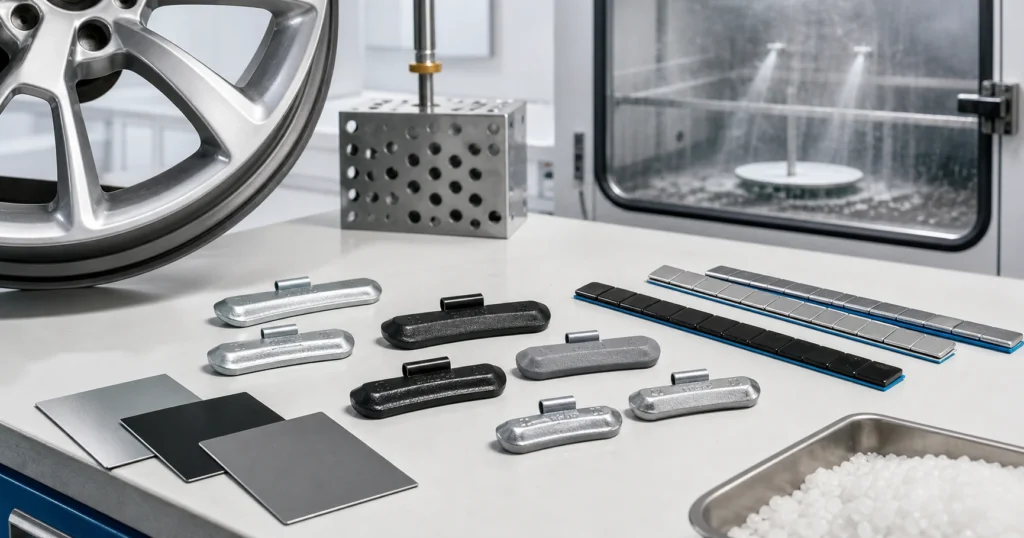
Las pesas de rueda recubiertas son pesas de balanceo con un acabado superficial protector como galvanizado, pintura, e-coat o recubrimiento en polvo. El recubrimiento ayuda a reducir el óxido, mejora la apariencia, protege los cartones durante el almacenamiento y respalda los programas de abastecimiento sin plomo. Los compradores deben comparar el tipo de recubrimiento, las expectativas de niebla salina, la adhesión, la compatibilidad de la cinta y el embalaje antes de aprobar pedidos al por mayor.
Para importadores, distribuidores y marcas de servicio de ruedas, el recubrimiento no es solo una elección de color. Afecta cómo se ven las pesas de rueda de acero o zinc después del almacenamiento en bodega, cuánto roce ocurre dentro de los cartones, si la cinta adhesiva se mantiene limpia y con qué confianza un comprador puede ofrecer alternativas sin plomo en mercados que restringen el uso de plomo. Antes de elegir un acabado, los compradores que planifican un surtido completo pueden usar la marco de planificación de la gama de contrapesos de rueda para conectar las decisiones de recubrimiento con el material, el formato de fijación, la cobertura de tamaños y las aplicaciones de rueda.
Tabla de contenido
- ¿Qué son las pesas de rueda recubiertas?
- ¿Qué decisión de recubrimiento deben tomar primero los compradores?
- ¿En qué se diferencian el galvanizado, la pintura, el e-coat y el recubrimiento en polvo?
- ¿Por qué importa la resistencia a la corrosión en las pesas de rueda?
- ¿Qué deben incluir los compradores en una RFQ de pesas de rueda recubiertas?
- ¿Cómo deben revisarse las muestras antes de la producción en masa?
- ¿Qué pesa de rueda recubierta es adecuada para ruedas de acero, ruedas de aleación o mercados de exportación?
- Conclusión: el recubrimiento es una especificación, no decoración
- Preguntas frecuentes
- Referencias
¿Qué son las pesas de rueda recubiertas?
Las pesas de rueda recubiertas son pesas de balanceo de clip o adhesivas que reciben un acabado protector después del conformado, fundición o estampado. El acabado puede ser metálico, pintado o recubierto en polvo, según el sustrato, el objetivo de apariencia y el requisito de resistencia a la corrosión.
La razón por la que importa el recubrimiento es simple: las pesas de rueda están cerca de la humedad de la carretera, el polvo de freno, la sal, los limpiadores de ruedas y los cambios de temperatura. Incluso antes de la instalación, las pesas pueden pasar semanas o meses en cartones, bodegas, contenedores de flete marítimo y furgonetas de servicio. Un recubrimiento deficiente puede descascararse, mancharse, oxidarse, transferir color o hacer que el producto parezca viejo antes de que un taller lo use.
El recubrimiento es especialmente importante para las pesas de rueda de acero porque el acero es fuerte y rentable, pero necesita protección superficial. Las pesas de rueda de zinc resisten naturalmente mejor la corrosión que el acero desnudo, pero aún pueden usar galvanizado o tratamiento superficial para la apariencia, la consistencia del etiquetado o los requisitos del cliente. Las pesas de rueda de plomo, donde todavía se usan, plantean preocupaciones ambientales y regulatorias separadas, por lo que muchos programas de abastecimiento ahora se centran en alternativas recubiertas de acero o zinc.
Para un comprador, la mejor pregunta no es "¿Qué recubrimiento es mejor?" Es "¿Qué acabado coincide con mi material, tipo de rueda, condiciones de almacenamiento, expectativas visuales y declaración de calidad?" Esa pregunta conduce a una mejor RFQ que elegir negro, gris o plateado solo por apariencia.
¿Qué decisión de recubrimiento deben tomar primero los compradores?
Los compradores deben definir primero el formato del producto, el mercado y el entorno de servicio esperado, y luego elegir el recubrimiento en función de esas condiciones. Un recubrimiento que funciona para tiras adhesivas en caja en un mercado seco puede no ser el mismo acabado necesario para pesas de clip vendidas en regiones con sal de carretera invernal.
| Decisión de compra | Por qué es importante | Redacción práctica para la RFQ |
|---|---|---|
| Material | Las alternativas de acero, zinc y sin plomo necesitan diferentes supuestos de corrosión y costo. | "Material: Fe o Zn, con muestra de recubrimiento y marcado de material confirmados." |
| Tipo de fijación | Las pesas de clip exponen bordes y áreas del clip; las tiras adhesivas deben proteger la superficie de la cinta. | "Especificar recubrimiento para el cuerpo del clip y el clip; el recubrimiento de la tira adhesiva no debe contaminar el forro de la cinta." |
| Apariencia del acabado | Los acabados plateado, gris y negro se adaptan a diferentes estilos de rueda y expectativas minoristas. | "Acabado: galvanizado plateado / pintado negro / recubierto en polvo gris, aprobación de muestra antes de la producción en masa." |
| Expectativa de corrosión | Los compradores necesitan un método de prueba y criterios de aceptación, no una vaga afirmación de "antióxido". | "Requisito de prueba de niebla salina a confirmar por método y horas acordados." |
| Método de embalaje | La vibración a granel puede rozar los recubrimientos, astillar los bordes o marcar los forros adhesivos. | "El embalaje debe pasar la verificación de roce del cartón de muestra después de la simulación de transporte." |
| Documentación | Los compradores de exportación pueden necesitar declaraciones de materiales, declaraciones sin plomo o informes de prueba. | "Proporcionar documentación de material y recubrimiento con el envío de muestras." |
Esta lista de verificación temprana evita un error común: comparar cotizaciones de proveedores solo por tamaño en gramos y precio unitario. Dos tiras adhesivas de 5 g x 12 pueden verse similares en una hoja de cálculo, pero una puede usar un recubrimiento limpio, cinta más fuerte, mejor protección del forro y embalaje más ajustado en el cartón. La diferencia aparece después como menos quejas, instalación más limpia y mejor apariencia en estante.
La elección del material también cambia la conversación sobre el recubrimiento. Si un comprador todavía está comparando opciones de Fe, Zn y Pb heredado, la elección de material detrás de las pesas de rueda recubiertas ayuda a separar consideraciones de densidad, costo, cumplimiento y corrosión antes de finalizar el acabado.
¿En qué se diferencian el galvanizado, la pintura, el e-coat y el recubrimiento en polvo?
El galvanizado, la pintura, el e-coat y el recubrimiento en polvo protegen la pesa de diferentes maneras. El galvanizado proporciona una barrera metálica, mientras que la pintura y el recubrimiento en polvo añaden una capa superficial polimérica que puede mejorar la consistencia del color, la cobertura de bordes y el atractivo visual cuando el proceso está controlado.
| Tipo de recubrimiento | Uso común | Fortalezas | Precauciones de compra |
|---|---|---|---|
| Galvanizado | Pesas de clip de acero plateado, algunas pesas adhesivas de acero | Apariencia metálica, acabado familiar, recubrimiento delgado, bueno para programas estándar plateados | Verificar cobertura de bordes, corrosión blanca, consistencia del galvanizado y roce en el cartón. |
| Pintura | Pesas recubiertas negras o grises, programas sensibles al costo | Elección flexible de color y control sencillo de la apariencia | Verifique la adherencia, los arañazos, el olor, el secado y la transferencia a los forros de cinta o cartones. |
| E-coat | Cobertura pintada más controlada para piezas complejas | Mejor cobertura en recovecos que la pintura en aerosol simple cuando se especifica bien | Confirme la disponibilidad del proceso, el espesor del recubrimiento y el rendimiento de la muestra en clips y esquinas. |
| Recubrimiento en polvo | Acabados negros, grises o texturizados para pesos de acero | Sensación superficial duradera, acabado visual fuerte, útil para una apariencia premium | Verifique la consistencia del espesor, el desportillado de bordes, el ajuste del clip y si el recubrimiento cambia las dimensiones críticas. |
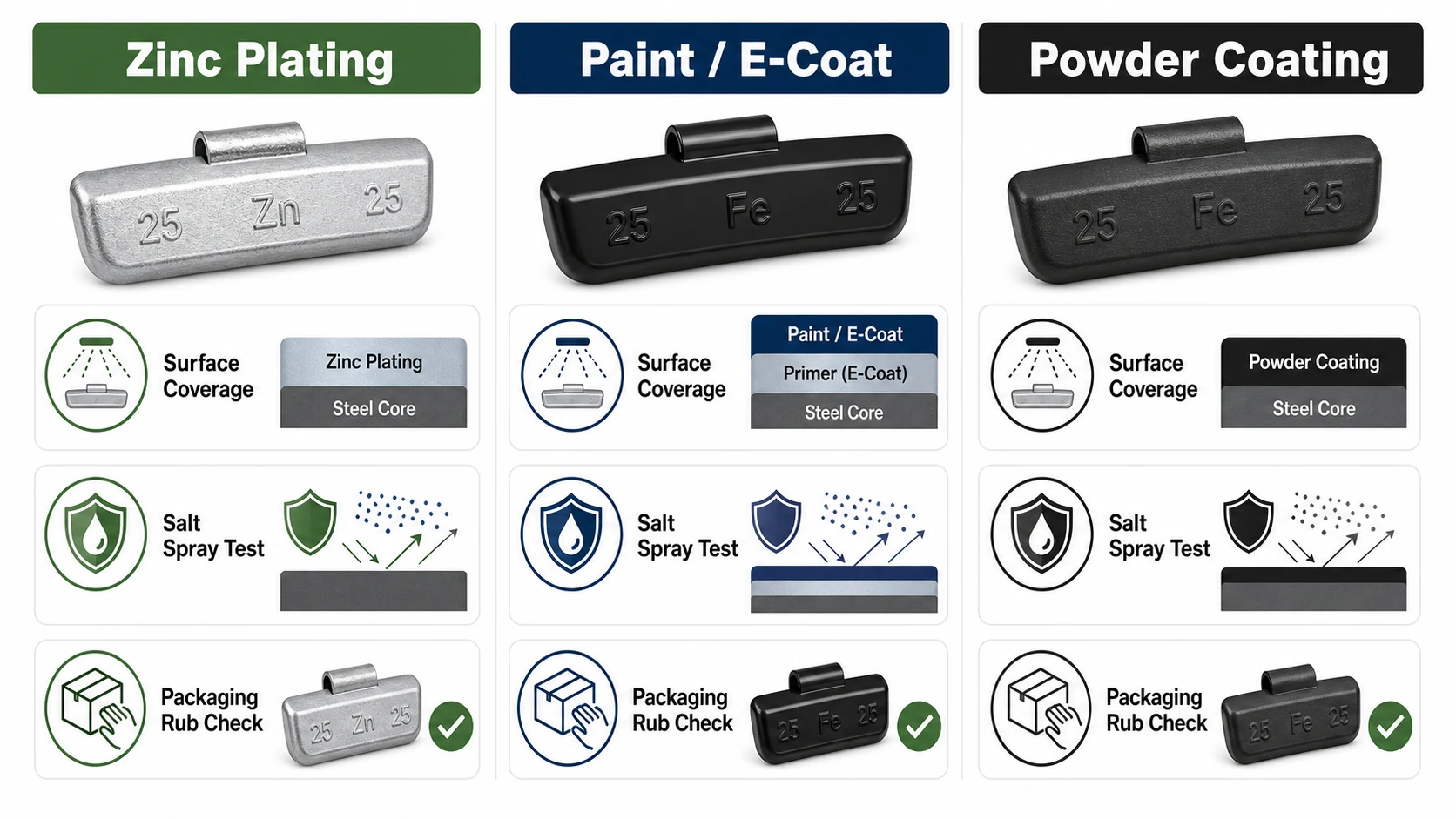
El zincado se usa a menudo cuando los compradores quieren una apariencia brillante y convencional. Puede ser una opción práctica para pesos de acero, pero la cotización debe definir la superficie esperada, no solo decir "zincado". Los compradores deben verificar si la superficie es uniforme en el cuerpo, el borde y el área del clip; si aparece oxidación blanca después del almacenamiento; y si el acabado permanece limpio después de que las piezas se rocen entre sí en el embalaje.
La pintura y el e-coat se eligen a menudo para pesos de rueda negros o grises, especialmente cuando un acabado más oscuro se adapta a las ruedas de aleación o al diseño de surtido minorista. El e-coat puede ayudar a cubrir superficies más complejas, pero los compradores aún deben verificar la pieza real, no confiar solo en el nombre de un proceso. Un recubrimiento que se ve bien en un panel plano puede comportarse de manera diferente en un peso de rueda estampado con esquinas redondeadas, marcas de gramos en relieve, bordes de clip o respaldo adhesivo.
El recubrimiento en polvo puede crear un acabado más grueso y de aspecto más duradero, pero un mayor espesor no es automáticamente mejor. En los pesos de rueda de clip, demasiado recubrimiento alrededor del clip puede afectar el ajuste. En los pesos adhesivos, la textura del recubrimiento y la contaminación superficial no deben interferir con la aplicación de la cinta. Cuando los compradores necesitan entender dónde se sitúa el recubrimiento en todo el proceso de producción, el flujo de trabajo de recubrimiento y control de calidad de pesos de rueda explica cómo se conectan el estampado, el tratamiento superficial, la aplicación de cinta, la inspección y el embalaje.
¿Por qué importa la resistencia a la corrosión en las pesas de rueda?
La resistencia a la corrosión importa porque el óxido o el fallo del recubrimiento reduce la apariencia del producto, genera quejas de los clientes y puede debilitar la confianza en un programa de acero sin plomo. También es una de las áreas más fáciles de sobreestimar por los compradores si la RFQ solo dice "recubrimiento antióxido"."
Las pruebas de niebla salina se usan comúnmente para comparar el comportamiento frente a la corrosión en condiciones de laboratorio controladas. ASTM B117 describe una práctica de aparato de niebla salina, e ISO 9227 cubre ensayos de niebla salina en atmósfera artificial 1 2. Estas pruebas son útiles para comparación, pero los compradores deben evitar tratar cualquier afirmación de horas de niebla salina como una predicción completa de la vida real en carretera. El uso real implica concentración de sal de carretera, ciclos húmedo-seco, polvo de freno, limpiadores de ruedas, impacto de piedras, daños de instalación y condiciones de almacenamiento.
Para los pesos de rueda, el riesgo de corrosión comienza antes de que el producto llegue a la rueda. Los cartones pueden enfrentar humedad durante el flete marítimo. Las piezas embaladas a granel pueden rozarse entre sí. Los clips pueden rayar los pesos adyacentes. Las tiras adhesivas pueden quedar con los forros presionados contra superficies recubiertas. Si el recubrimiento, la cinta y el embalaje no se prueban juntos, una muestra puede pasar una inspección visual en la fábrica pero llegar con marcas, polvo o contaminación del forro.
Por esto los compradores deben solicitar tanto información de pruebas como verificaciones prácticas de muestras. Un informe de niebla salina puede respaldar la afirmación del recubrimiento, mientras que una verificación de roce en cartón, una verificación del forro de cinta y una verificación de instalación de muestra demuestran si el producto terminado funciona tal como se suministra. Para los mercados que abandonan el plomo, el rendimiento frente a la corrosión se convierte en parte de la historia de aceptación sin plomo del comprador. Las verificaciones de exportación de pesos de rueda sin plomo pueden ayudar a los compradores a decidir qué declaraciones de materiales, documentos de cumplimiento y aprobaciones de muestras solicitar antes de enviar a mercados regulados.
¿Qué deben incluir los compradores en una RFQ de pesas de rueda recubiertas?
Una RFQ de pesos de rueda recubiertos debe definir material, tipo de recubrimiento, color, expectativa de prueba, requisito de cinta, rango de tamaño, método de embalaje, aprobación de muestra y documentación. Sin esos detalles, los proveedores pueden cotizar productos visualmente similares que se comportan de manera diferente después del almacenamiento y la instalación.
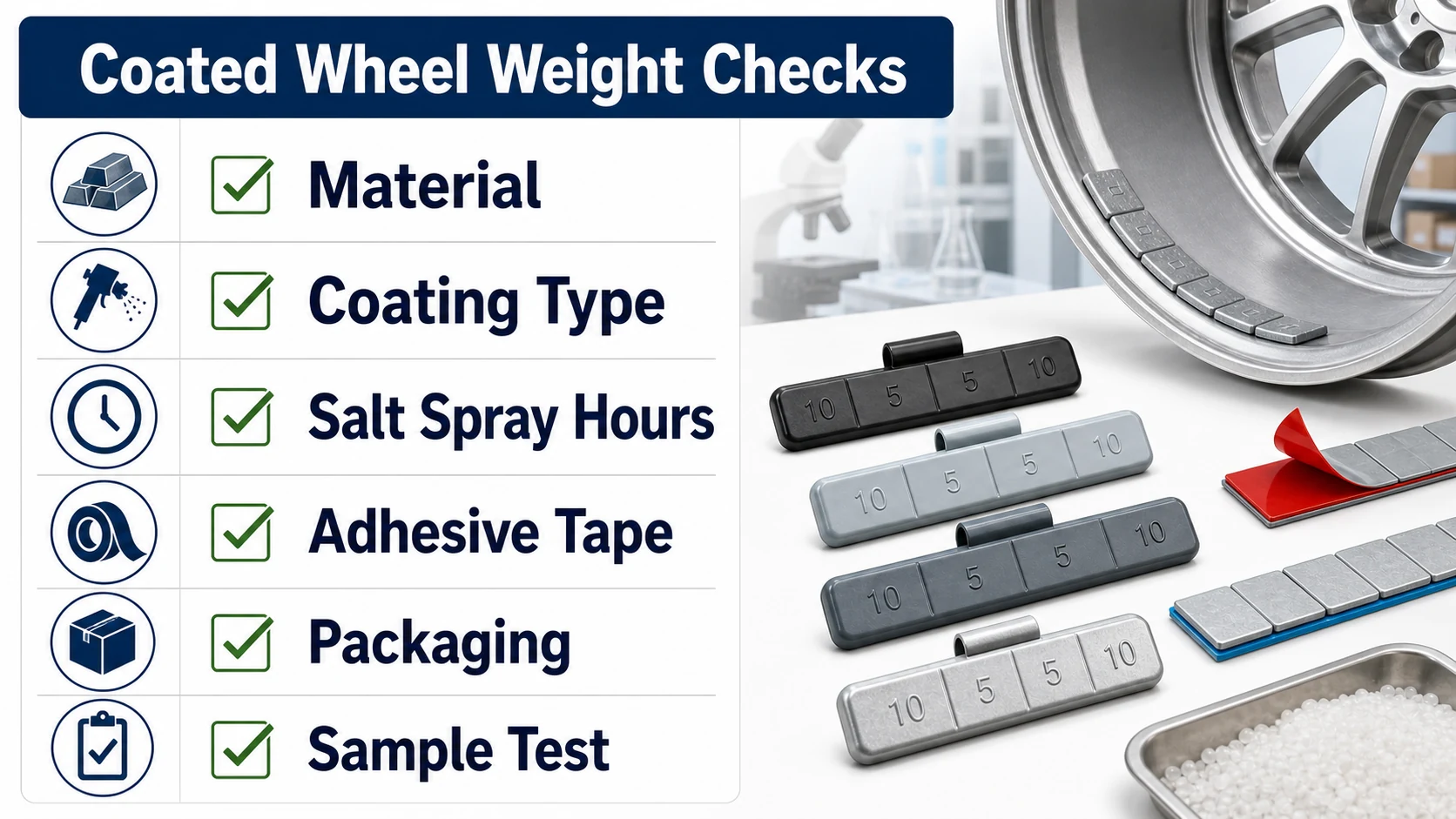
Use la RFQ para eliminar ambigüedad antes de que comience la comparación de precios:
| RFQ item | Qué especificar | Por qué los compradores deberían preocuparse |
|---|---|---|
| Material | Fe, Zn u otro material sin plomo; marcado en gramos u onzas; marcado de material si es necesario | El rendimiento del recubrimiento y el volumen de piezas difieren según el sustrato. |
| Tipo de recubrimiento | Zincado, pintura, e-coat, recubrimiento en polvo o equivalente aprobado por el proveedor | El acabado afecta la apariencia, la resistencia a la corrosión y la manipulación de las piezas. |
| Color y brillo | Plateado, negro, gris, mate, semibrillante o muestra aprobada | La consistencia del color importa para el embalaje minorista y la visibilidad en ruedas de aleación. |
| Prueba de corrosión | Método, horas, cantidad de muestras y criterios de aceptación | Una afirmación vaga de "pasó niebla salina" es difícil de comparar. |
| Cinta | Marca de cinta o grado equivalente, color del forro, espesor de espuma, comportamiento de despegue | Los productos adhesivos necesitan compatibilidad entre recubrimiento y cinta. |
| Embalaje | Piezas por tira, tiras por caja, caja interior, cartón, etiquetas, requisito de palé | El embalaje afecta el roce del recubrimiento, la limpieza del forro y la manipulación en almacén. |
| Aprobación de muestra | Muestras de preproducción, caja de muestra embalada, prueba de instalación | El comprador debe aprobar la pieza terminada, no solo una muestra de color. |
| Documentos | Informe de prueba, declaración de material, declaración sin plomo, fotos de embalaje | La documentación reduce la fricción para la importación, la reventa y las reclamaciones de calidad. |
Para los pesos de rueda adhesivos, la cinta y el recubrimiento deben tratarse como un sistema. La preparación de la superficie afecta el rendimiento del adhesivo, y la guía de cinta VHB de 3M enfatiza superficies de unión limpias, secas y libres de contaminantes 3. Una tira recubierta puede verse aceptable, pero el polvo, la sobropulverización, el aceite o el residuo de polvo cerca del lado de la cinta pueden crear fallos de instalación más adelante.
Los compradores que piden formatos de tira adhesiva también deben conectar el recubrimiento con el tamaño del segmento, el forro de respaldo, el color de la cinta y la disposición de la caja. El formato de tira adhesiva y las opciones de cinta ayudan a los compradores a convertir esos detalles en una especificación más clara antes de comparar cotizaciones al por mayor.
Una vez que el material, el acabado, el objetivo de prueba, la cinta y el embalaje estén claros, los compradores pueden solicitar muestras de contrapesos de rueda de acero recubierto y zinc que coincidan con la RFQ real en lugar de revisar una muestra genérica de sala de exhibición.
¿Cómo deben revisarse las muestras antes de la producción en masa?
Las muestras deben verificarse como producto terminado: recubiertas, marcadas, con cinta si corresponde, empacadas en la caja prevista e inspeccionadas después de la manipulación. Una muestra suelta del mostrador de ventas es útil para una primera impresión, pero no muestra cómo se comporta el recubrimiento en condiciones reales de embalaje e instalación.
Un proceso práctico de aprobación de muestras puede incluir estas verificaciones:
| Verificación de muestra | Qué inspeccionar | Señal de aceptar / rechazar |
|---|---|---|
| Acabado visual | Color, brillo, cobertura, apariencia de bordes, marcas en relieve | El acabado coincide con la muestra aprobada; sin manchas evidentes, burbujas, bordes desnudos ni piel de naranja pronunciada, salvo que se especifique textura. |
| Adhesión del recubrimiento | Rayado ligero, zona de doblez, zona de clip o método de arranque con cinta acordado | El recubrimiento no debe descascararse fácilmente durante la manipulación normal. |
| Ajuste del clip | Perfil del clip, espesor del recubrimiento alrededor del clip, sensación de instalación | El recubrimiento no debe hacer que el clip quede demasiado apretado, demasiado suelto o propenso a astillarse durante la instalación. |
| Condición de la cinta | Limpieza del liner, adherencia de la cinta al contrapeso, espesor de la espuma, retiro del liner | La cinta debe permanecer adherida al contrapeso y desprenderse limpiamente sin polvo de recubrimiento. |
| Roce en el cartón | Caja de muestra empacada después de agitación o simulación de transporte | Las piezas no deben mostrar marcas de roce excesivas, polvo de recubrimiento suelto ni liners dañados. |
| Verificación de almacenamiento | Simulación breve de humedad o almacén cuando sea práctico | Sin óxido temprano, manchas, olor ni transferencia del liner adhesivo. |
Los compradores deben pedir a los proveedores que envíen tanto muestras sueltas como una caja de muestra empacada. Las muestras sueltas revelan el acabado y los detalles dimensionales; las muestras empacadas revelan la calidad de la configuración de envío. Si un producto se venderá bajo marca privada, la muestra también debe incluir la caja interior real, la etiqueta del cartón, el diseño del código de barras y el peso del cartón, porque el embalaje puede afectar tanto la condición del recubrimiento como la percepción del cliente.
Para contrapesos de clip, las áreas de mayor riesgo son los bordes, los clips y los puntos de impacto donde las piezas chocan entre sí. Para contrapesos adhesivos, las áreas de mayor riesgo son la cara recubierta, el borde de la cinta, el liner y cualquier lugar donde el polvo del recubrimiento pueda migrar. Si el proveedor ofrece varias opciones de acabado, pruébelas lado a lado en lugar de aprobar nombres de acabados de un catálogo.
¿Qué pesa de rueda recubierta es adecuada para ruedas de acero, ruedas de aleación o mercados de exportación?
El contrapeso de rueda recubierto adecuado depende del tipo de rueda, el formato de fijación y la expectativa del mercado. Los canales de servicio de ruedas de acero a menudo priorizan el ajuste del clip y la manipulación duradera, mientras que los programas de ruedas de aleación pueden preocuparse más por acabados de baja visibilidad, calidad de la cinta adhesiva y embalaje limpio.
Para ruedas de acero, los contrapesos de clip recubiertos son comunes porque la pieza debe sujetarse firmemente en el reborde de la llanta y sobrevivir a la manipulación del taller. Los compradores deben verificar el perfil del clip, el espesor del recubrimiento alrededor del clip y si la instalación deja astillas evidentes del recubrimiento. Si el producto está destinado a talleres de neumáticos de alto volumen, la durabilidad del cartón y las etiquetas claras de tamaño pueden importar tanto como la apariencia superficial.
Para ruedas de aleación, los contrapesos adhesivos recubiertos suelen preferirse porque pueden instalarse en el barril interior con menor impacto visual. Los acabados negros, grises o de bajo perfil pueden ser útiles donde el contrapeso permanece visible a través de diseños de radios abiertos. El recubrimiento debe verse limpio, pero el sistema de cinta es igual de importante. Si el liner adhesivo está polvoriento, arrugado o contaminado, un recubrimiento hermoso no resuelve el riesgo de instalación.
Para mercados de exportación, las decisiones de recubrimiento van junto a las decisiones de material y cumplimiento. Algunas regiones y clientes restringen los contrapesos de plomo o prefieren programas sin plomo; la guía de mejores prácticas de manejo de la EPA también ha fomentado el abandono de los contrapesos de plomo en los Estados Unidos 4. Los compradores deben verificar las reglas locales, los requisitos del cliente y las expectativas de documentación en lugar de asumir que un requisito global cubre todos los destinos.
La ruta de abastecimiento más limpia es definir primero el programa objetivo:
| Tipo de programa | Dirección del recubrimiento | Verificación adicional de compra |
|---|---|---|
| Gama económica de clip de acero | Acabado cincado o recubrimiento básico | Confirmar ajuste del clip, resistencia a la corrosión y roce en el cartón. |
| Gama premium de clip negro | Acabado negro por e-coat, pintura o recubrimiento en polvo | Confirmar astillado de bordes y consistencia de color. |
| Gama de tiras adhesivas para aleación | Tiras recubiertas en plata, gris o negro con cinta aprobada | Confirmar limpieza del liner de la cinta y prueba de instalación. |
| Gama de exportación sin plomo | Fe o Zn recubierto con documentación | Confirmar declaración de material, informe de recubrimiento y solicitud de cumplimiento específica del mercado. |
| Cajas de venta al por menor de marca privada | Acabado aprobado con caja y etiqueta finales | Confirmar marcas de roce después de la manipulación de la muestra empacada. |
Este enfoque mantiene la conversación práctica. En lugar de pedir "el mejor recubrimiento", el comprador pide el recubrimiento que se ajuste a la aplicación de rueda prevista, el canal de ventas y el requisito de documentación.
Si el rendimiento del recubrimiento es un requisito de compra para su programa de contrapesos de rueda, díganos el material, el acabado, las expectativas de corrosión, la aplicación y la evidencia que necesita. Podemos ayudarle a solicitar muestras y definir las verificaciones de aprobación antes de comparar proveedores.
Conclusión: el recubrimiento es una especificación, no decoración
Las pesas de rueda recubiertas deben especificarse como una parte funcional del producto, no solo como apariencia plateada, negra o gris. La mejor RFQ define el material, el tipo de recubrimiento, la expectativa de prueba de corrosión, la condición de la cinta, el diseño del empaque, la aprobación de la muestra y la documentación antes de que comience la producción en masa.
Para los compradores que comparan proveedores, la calidad del recubrimiento es más fácil de juzgar cuando las muestras coinciden con el pedido final: mismo material, mismo acabado, misma cinta, mismas marcas y misma caja. Una vez que esos detalles estén claros, solicitar muestras de contrapesos de rueda de acero recubierto y zinc es un siguiente paso útil porque la muestra se puede verificar contra el programa real en lugar de una foto genérica del producto.
Preguntas frecuentes
¿Son las pesas de rueda recubiertas mejores que las pesas de rueda sin recubrimiento?
Las pesas de rueda recubiertas suelen ser mejores para la apariencia, la resistencia a la corrosión y la calidad de almacenamiento, especialmente para las pesas de acero. Las pesas sin recubrimiento o con recubrimiento deficiente pueden oxidarse, mancharse o verse envejecidas rápidamente. Los compradores aún deben comparar el método de recubrimiento, el rendimiento de la muestra y la calidad del empaque antes de asumir que un acabado es mejor.
¿Es el zincado lo mismo que una pesa de rueda de zinc?
No. El zincado es un acabado superficial aplicado a otro material, a menudo acero. Una pesa de rueda de zinc está hecha principalmente de aleación de zinc. Los compradores deben confirmar tanto el material base como el recubrimiento o acabado, porque "zinc" puede referirse al material o al zincado.
¿Qué horas de niebla salina deben solicitar los compradores para las pesas de rueda recubiertas?
No hay un número único correcto para cada mercado. Los compradores deben definir el método de prueba, las horas objetivo, la condición de la muestra y los criterios de aceptación con el proveedor. La prueba de niebla salina ayuda a comparar recubrimientos, pero no predice completamente la exposición real en carretera, las condiciones de almacenamiento o el daño por instalación.
¿Necesitan las pesas de rueda adhesivas recubiertas verificaciones especiales de la cinta?
Sí. Las pesas adhesivas necesitan verificaciones de compatibilidad entre el recubrimiento y la cinta. Los compradores deben inspeccionar la limpieza del forro, la adhesión de la cinta, el grosor de la espuma y si el polvo o aceite del recubrimiento puede alcanzar la superficie adhesiva. Un buen recubrimiento no es suficiente si el lado de la cinta está contaminado o mal empaquetado.
¿Qué documentos deben solicitar los importadores para las pesas de rueda recubiertas?
Los importadores comúnmente solicitan declaraciones de materiales, declaraciones libres de plomo cuando corresponda, informes de recubrimiento o niebla salina, registros de aprobación de muestras, fotos de empaque y detalles de etiquetas de cartón. El conjunto exacto de documentos debe coincidir con el mercado de destino, el requisito del cliente y la afirmación del producto.
Referencias
[1] ASTM International. “ASTM B117-19: Práctica estándar para operar el aparato de niebla salina.” 2019.
[2] Organización Internacional de Normalización. “ISO 9227:2022 Ensayos de corrosión en atmósferas artificiales – Ensayos de niebla salina.” 2022.
[3] 3M. “Preparación de superficies para aplicaciones de cinta 3M VHB.” 2019.
[4] Agencia de Protección Ambiental de los Estados Unidos. “Mejores Prácticas de Gestión para Pesos de Rueda de Plomo.” 2015.