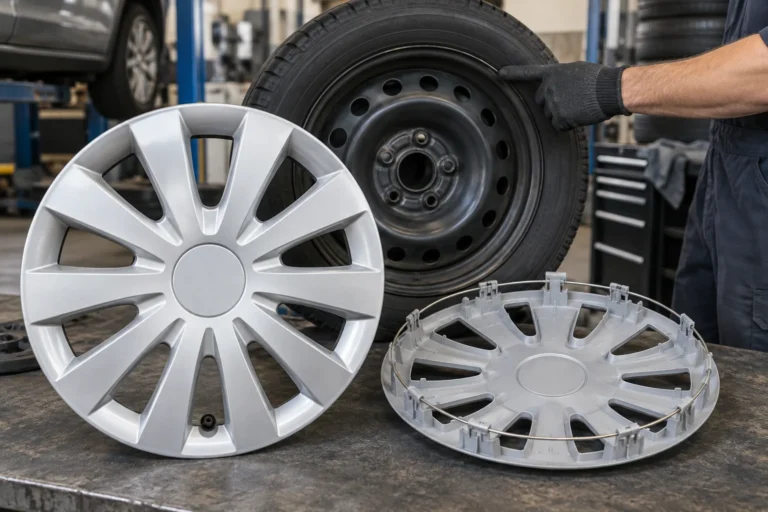




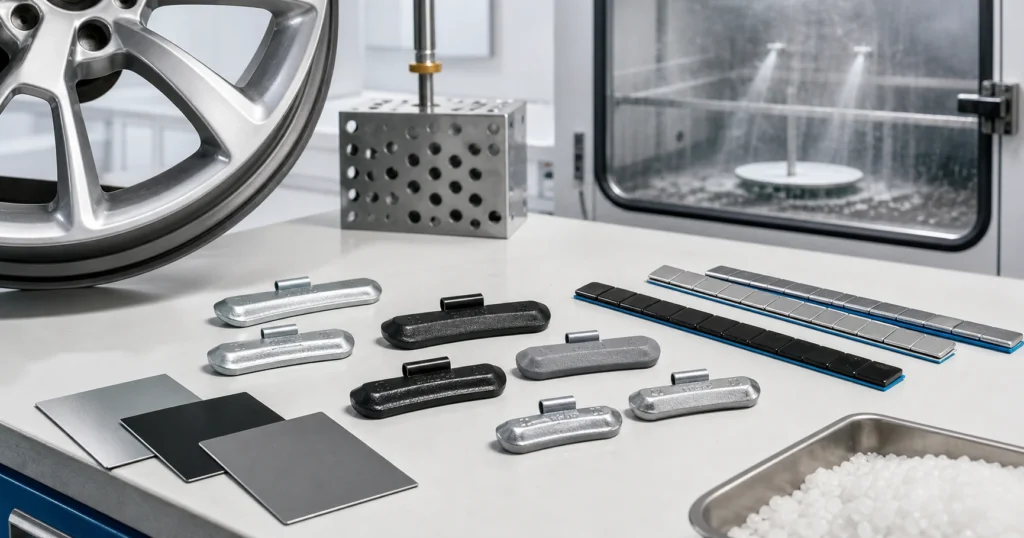
Pesos de roda revestidos são pesos de balanceamento com um acabamento superficial protetor, como zincagem, pintura, e-coat ou pintura a pó. O revestimento ajuda a reduzir ferrugem, melhora a aparência, protege as caixas durante o armazenamento e apoia programas de fornecimento sem chumbo. Os compradores devem comparar tipo de revestimento, expectativas de névoa salina, aderência, compatibilidade com fita e embalagem antes de aprovar pedidos em massa.
Para importadores, distribuidores e marcas de serviços de rodas, o revestimento não é apenas uma escolha de cor. Ele afeta como os pesos de roda de aço ou zinco ficam após o armazenamento em depósito, quanto atrito ocorre dentro das caixas, se a fita adesiva permanece limpa e com quanta confiança um comprador pode oferecer alternativas sem chumbo em mercados que restringem o uso de chumbo. Antes de escolher um acabamento, compradores que planejam uma linha completa podem usar o framework de planejamento de variedade de pesos de roda para conectar decisões de revestimento com material, formato de fixação, cobertura de tamanhos e aplicações de rodas.
Índice
- O que são pesos de roda revestidos?
- Qual decisão de revestimento os compradores devem tomar primeiro?
- Como zincagem, pintura, e-coat e pintura a pó diferem?
- Por que a resistência à corrosão importa para pesos de roda?
- O que os compradores devem incluir em uma RFQ de pesos de roda revestidos?
- Como as amostras devem ser verificadas antes da produção em massa?
- Qual peso de roda revestido se adequa a rodas de aço, rodas de liga leve ou mercados de exportação?
- Conclusão: revestimento é uma especificação, não decoração
- Perguntas Frequentes
- Referências
O que são pesos de roda revestidos?
Pesos de roda revestidos são pesos de balanceamento de encaixe ou adesivos que recebem um acabamento protetor após conformação, fundição ou estampagem. O acabamento pode ser metálico, pintado ou com pintura a pó, dependendo do substrato, do objetivo de aparência e do requisito de resistência à corrosão.
A razão pela qual o revestimento importa é simples: os pesos de roda ficam próximos à umidade da estrada, poeira de freio, sal, produtos de limpeza de rodas e mudanças de temperatura. Mesmo antes da instalação, os pesos podem passar semanas ou meses em caixas, depósitos, contêineres de frete marítimo e vans de serviço. Um revestimento ruim pode lascar, manchar, enferrujar, transferir cor ou fazer o produto parecer velho antes mesmo de uma oficina usá-lo.
O revestimento é especialmente importante para pesos de roda de aço porque o aço é forte e econômico, mas precisa de proteção superficial. Pesos de roda de zinco naturalmente resistem melhor à corrosão do que o aço nu, mas ainda podem usar galvanoplastia ou tratamento superficial para aparência, consistência de rotulagem ou exigências do cliente. Pesos de roda de chumbo, onde ainda são usados, levantam preocupações ambientais e regulatórias separadas, então muitos programas de fornecimento agora focam em alternativas revestidas de aço ou zinco.
Para um comprador, a melhor pergunta não é "Qual revestimento é melhor?" É "Qual acabamento corresponde ao meu material, tipo de roda, condições de armazenamento, expectativas visuais e alegação de qualidade?" Essa pergunta leva a uma RFQ melhor do que escolher preto, cinza ou prata apenas pela aparência.
Qual decisão de revestimento os compradores devem tomar primeiro?
Os compradores devem primeiro definir o formato do produto, o mercado e o ambiente de serviço esperado, e então escolher o revestimento com base nessas condições. Um revestimento que funciona para tiras adesivas em caixa em um mercado seco pode não ser o mesmo acabamento necessário para pesos de encaixe vendidos em regiões com sal de estrada no inverno.
| Decisão de compra | Por que é importante | Redação prática da RFQ |
|---|---|---|
| Vidro traseiro lateral / pilar C | Alternativas de aço, zinco e sem chumbo precisam de diferentes premissas de corrosão e custo. | "Material: Fe ou Zn, com amostra de revestimento e marcação de material confirmadas." |
| Tipo de fixação | Pesos de encaixe expõem bordas e áreas do clipe; tiras adesivas devem proteger a superfície da fita. | "Especificar revestimento para corpo e clipe de encaixe; o revestimento da tira adesiva não deve contaminar o forro da fita." |
| Aparência do acabamento | Acabamentos prata, cinza e preto se adequam a diferentes estilos de roda e expectativas de varejo. | "Acabamento: zincado prata / pintado preto / pintura a pó cinza, aprovação de amostra antes da produção em massa." |
| Expectativa de corrosão | Os compradores precisam de um método de teste e critérios de aceitação, não de uma alegação vaga de "antiferrugem". | "Requisito de teste de névoa salina a ser confirmado por método e horas acordados." |
| Método de embalagem | A vibração a granel pode atritar revestimentos, lascar bordas ou marcar forros adesivos. | "A embalagem deve passar na verificação de atrito da caixa de amostra após simulação de transporte." |
| Documentação | Compradores de exportação podem precisar de declarações de material, declarações sem chumbo ou relatórios de teste. | "Fornecer documentação de material e revestimento com o envio de amostras." |
Esta lista de verificação inicial evita um erro comum: comparar cotações de fornecedores apenas por tamanho em gramas e preço unitário. Duas tiras adesivas de 5 g x 12 podem parecer semelhantes em uma planilha, mas uma pode usar um revestimento limpo, fita mais forte, melhor proteção do forro e embalagem mais compacta na caixa. A diferença aparece depois como menos reclamações, instalação mais limpa e melhor aparência na prateleira.
A escolha do material também muda a conversa sobre revestimento. Se um comprador ainda está comparando opções de Fe, Zn e Pb legado, o escolha de material por trás dos pesos de roda revestidos ajuda a separar considerações de densidade, custo, conformidade e corrosão antes de finalizar o acabamento.
Como zincagem, pintura, e-coat e pintura a pó diferem?
Zincagem, pintura, e-coat e pintura a pó protegem o peso de maneiras diferentes. A galvanoplastia fornece uma barreira metálica, enquanto a pintura e a pintura a pó adicionam uma camada superficial polimérica que pode melhorar a consistência de cor, a cobertura de bordas e o apelo visual quando o processo é controlado.
| Tipo de revestimento | Uso comum | Pontos fortes | Cuidados na compra |
|---|---|---|---|
| Zincagem | Pesos de encaixe de aço prata, alguns pesos adesivos de aço | Aparência metálica, acabamento familiar, revestimento fino, bom para programas padrão prata | Verificar cobertura de bordas, corrosão branca, consistência da galvanoplastia e atrito na caixa. |
| Pintura | Pesos revestidos preto ou cinza, programas sensíveis a custo | Escolha flexível de cor e controle simples da aparência | Verifique adesão, riscos, odor, secagem e transferência para forros de fita ou caixas de papelão. |
| E-coat | Cobertura pintada mais controlada para peças complexas | Melhor cobertura em reentrâncias do que tinta spray simples quando bem especificado | Confirme a disponibilidade do processo, a espessura do revestimento e o desempenho da amostra em clipes e cantos. |
| Pintura a pó | Acabamentos preto, cinza ou texturizado para pesos de aço | Sensação superficial durável, acabamento visual forte, útil para aparência premium | Verifique a consistência da espessura, lascamento nas bordas, encaixe do clipe e se o revestimento altera dimensões críticas. |
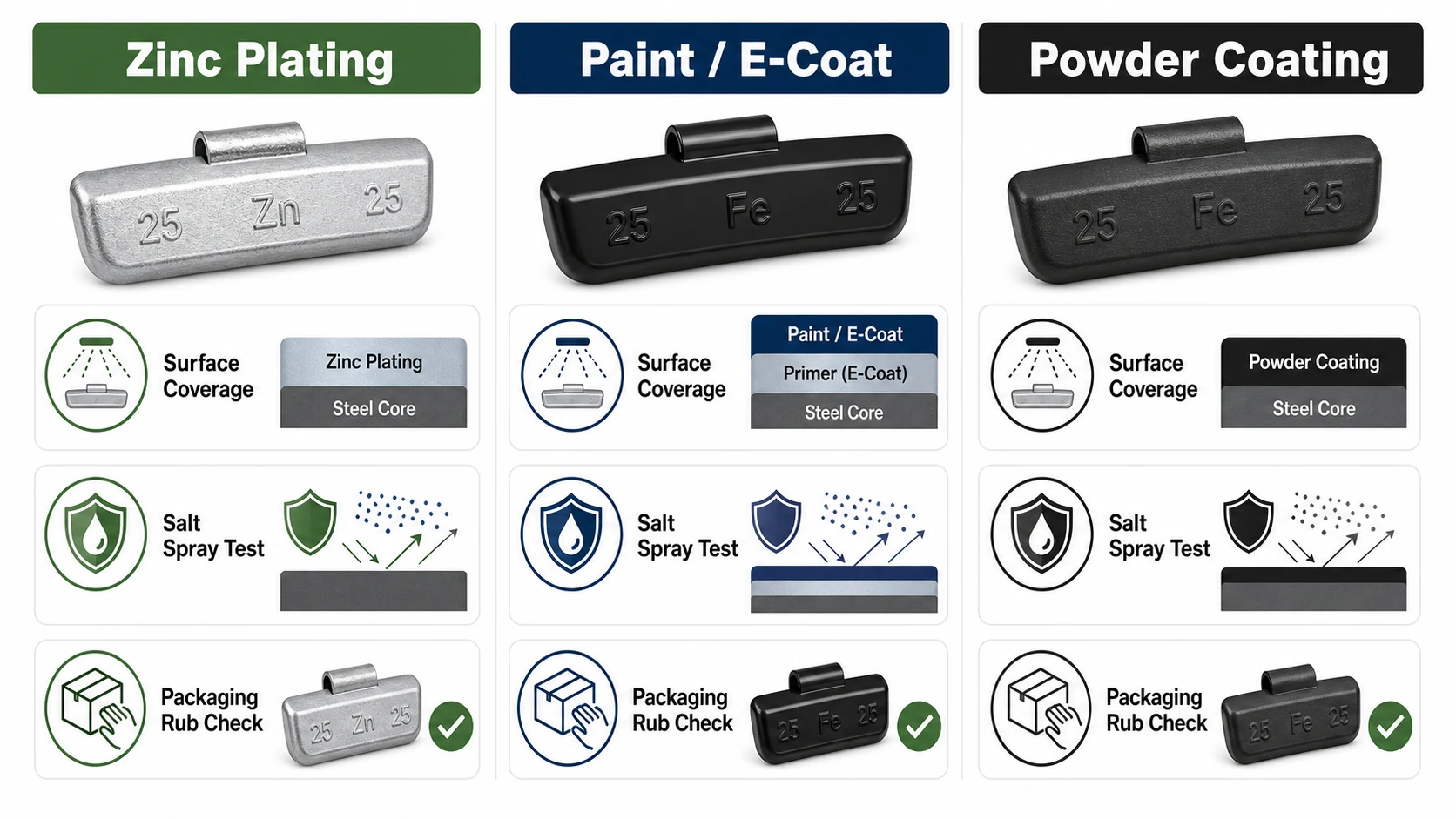
O zincamento é frequentemente usado quando os compradores querem uma aparência brilhante e convencional. Pode ser uma escolha prática para pesos de aço, mas a cotação deve definir a superfície esperada, não apenas dizer "zincado." Os compradores devem verificar se a superfície é uniforme em todo o corpo, borda e área do clipe; se aparece oxidação branca após armazenamento; e se o acabamento permanece limpo após as peças se atritarem durante a embalagem.
Tinta e e-coat são frequentemente escolhidos para pesos de roda pretos ou cinza, especialmente quando um acabamento mais escuro combina com rodas de liga leve ou design de sortimento de varejo. O e-coat pode ajudar a cobrir superfícies mais complexas, mas os compradores ainda devem verificar a peça real, não confiar apenas no nome do processo. Um revestimento que parece bom em um painel plano pode se comportar de maneira diferente em um peso de roda estampado com cantos arredondados, marcações de gramatura em relevo, bordas de clipe ou verso adesivo.
A pintura a pó pode criar um acabamento mais espesso e com aparência mais durável, mas espessura não é automaticamente melhor. Em pesos de roda do tipo clip-on, revestimento demais ao redor do clipe pode afetar o encaixe. Em pesos adesivos, a textura do revestimento e a contaminação da superfície não devem interferir na aplicação da fita. Quando os compradores precisam entender onde o revestimento se situa em todo o processo de produção, o fluxo de trabalho de revestimento e controle de qualidade de pesos de roda explica como estampagem, tratamento de superfície, aplicação de fita, inspeção e embalagem se conectam.
Por que a resistência à corrosão importa para pesos de roda?
A resistência à corrosão importa porque ferrugem ou falha do revestimento reduz a aparência do produto, gera reclamações de clientes e pode enfraquecer a confiança em um programa de aço sem chumbo. É também uma das áreas mais fáceis para os compradores superestimarem se a RFQ apenas diz "revestimento antiferrugem."
O teste de névoa salina é comumente usado para comparar o comportamento de corrosão sob condições controladas de laboratório. A ASTM B117 descreve uma prática de aparelho de névoa salina, e a ISO 9227 cobre testes de névoa salina em atmosfera artificial 1 2. Esses testes são úteis para comparação, mas os compradores devem evitar tratar qualquer alegação de horas de névoa salina como uma previsão completa da vida real na estrada. O uso real envolve concentração de sal de estrada, ciclos de molhagem e secagem, poeira de freio, limpadores de roda, impacto de pedras, danos de instalação e condições de armazenamento.
Para pesos de roda, o risco de corrosão começa antes de o produto chegar à roda. As caixas de papelão podem enfrentar umidade durante o frete marítimo. Peças embaladas a granel podem se atritar. Os clipes podem riscar pesos adjacentes. As tiras adesivas podem ficar com os forros pressionados contra superfícies revestidas. Se revestimento, fita e embalagem não forem testados juntos, uma amostra pode passar na inspeção visual na fábrica mas chegar com marcas, poeira ou contaminação no forro.
É por isso que os compradores devem solicitar tanto informações de teste quanto verificações práticas em amostras. Um relatório de névoa salina pode apoiar a alegação do revestimento, enquanto uma verificação de atrito na caixa, verificação do forro da fita e verificação de instalação da amostra mostram se o produto acabado funciona como fornecido. Para mercados que estão abandonando o chumbo, o desempenho de corrosão torna-se parte da história de aceitação sem chumbo do comprador. O verificações de exportação de pesos de roda sem chumbo pode ajudar os compradores a decidir quais declarações de material, documentos de conformidade e aprovações de amostras solicitar antes de enviar para mercados regulamentados.
O que os compradores devem incluir em uma RFQ de pesos de roda revestidos?
Uma RFQ de peso de roda revestido deve definir material, tipo de revestimento, cor, expectativa de teste, requisito de fita, faixa de tamanho, método de embalagem, aprovação de amostra e documentação. Sem esses detalhes, os fornecedores podem cotar produtos visualmente semelhantes que se comportam de maneira diferente após armazenamento e instalação.
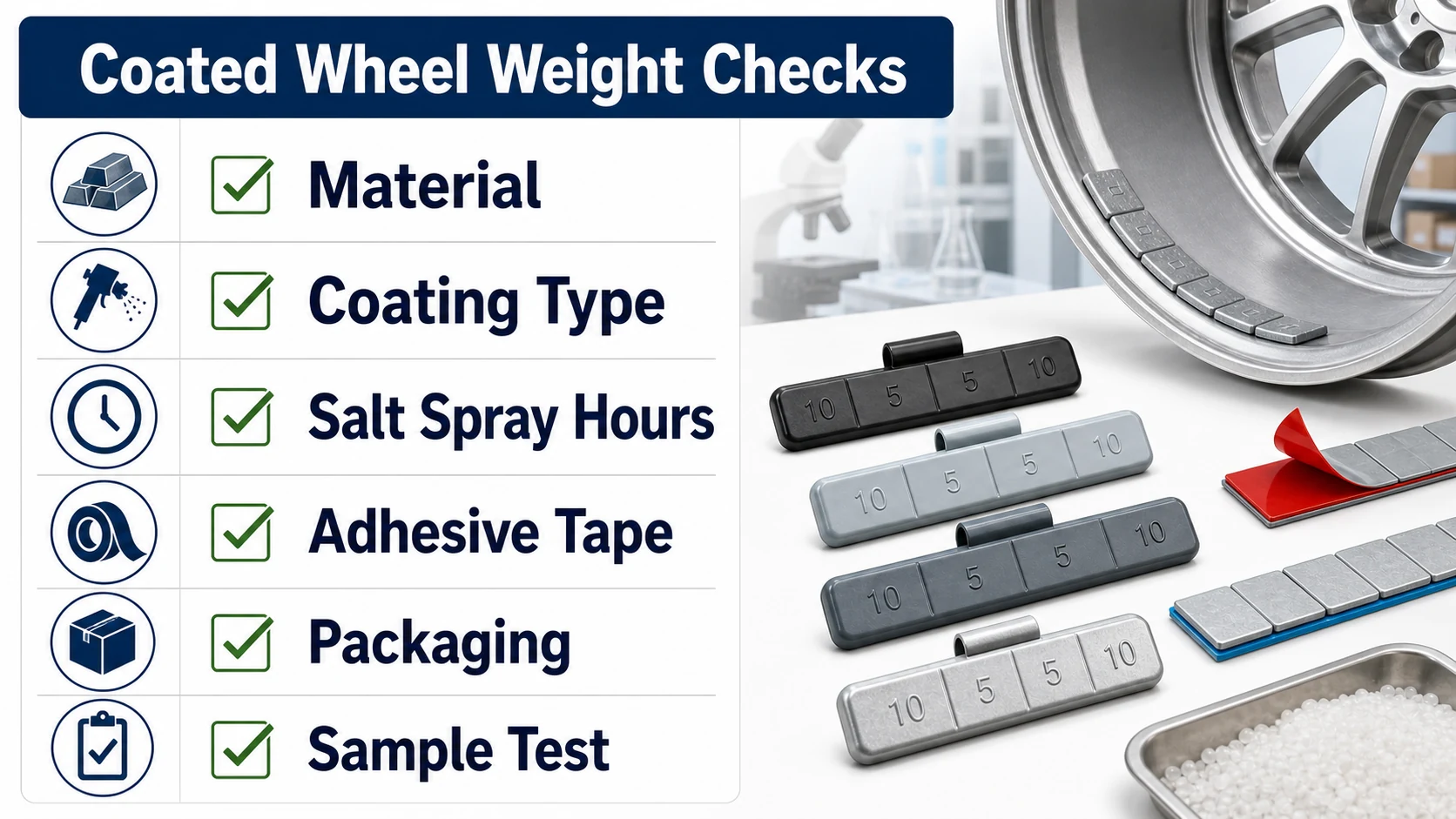
Use a RFQ para remover ambiguidade antes de começar a comparação de preços:
| Item do RFQ | O que especificar | Por que os compradores devem se importar |
|---|---|---|
| Vidro traseiro lateral / pilar C | Fe, Zn ou outro material sem chumbo; marcação em gramas ou onças; marcação de material se necessário | O desempenho do revestimento e o volume da peça diferem por substrato. |
| Tipo de revestimento | Zincamento, tinta, e-coat, pintura a pó ou equivalente aprovado pelo fornecedor | O acabamento afeta a aparência, a resistência à corrosão e o manuseio da peça. |
| Cor e brilho | Prateado, preto, cinza, fosco, semibrilho ou amostra aprovada | A consistência de cor importa para embalagens de varejo e visibilidade em rodas de liga leve. |
| Teste de corrosão | Método, horas, quantidade de amostras e critérios de aceitação | Uma alegação vaga de "passou no teste de névoa salina" é difícil de comparar. |
| Fita | Marca da fita ou grau equivalente, cor do forro, espessura da espuma, comportamento de descolamento | Produtos adesivos precisam de compatibilidade entre revestimento e fita. |
| Embalagem | Peças por tira, tiras por caixa, caixa interna, caixa de papelão, etiquetas, requisito de palete | A embalagem afeta o atrito do revestimento, a limpeza do forro e o manuseio no armazém. |
| Aprovação de amostra | Amostras de pré-produção, caixa de amostra embalada, teste de instalação | O comprador deve aprovar a peça acabada, não apenas um chip de cor. |
| Documentos | Relatório de teste, declaração de material, declaração sem chumbo, fotos de embalagem | A documentação reduz atritos para importação, revenda e reclamações de qualidade. |
Para pesos de roda adesivos, fita e revestimento devem ser tratados como um sistema. A preparação da superfície afeta o desempenho do adesivo, e a orientação da fita VHB da 3M enfatiza superfícies de colagem limpas, secas e livres de contaminantes 3. Uma tira revestida pode parecer aceitável, mas poeira, excesso de spray, óleo ou resíduo de pó próximo ao lado da fita pode criar falhas de instalação mais tarde.
Compradores que encomendam formatos de tira adesiva também devem associar o revestimento ao tamanho do segmento, ao forro de suporte, à cor da fita e ao layout da caixa. O formato de tira adesiva e opções de fita ajudam os compradores a transformar esses detalhes numa especificação mais clara antes de compararem cotações em volume.
Depois que o material, acabamento, alvo de teste, fita e embalagem estiverem claros, os compradores podem solicitar amostras de pesos de roda de aço revestido e zinco que correspondam ao RFQ real em vez de revisar uma amostra genérica de showroom.
Como as amostras devem ser verificadas antes da produção em massa?
As amostras devem ser verificadas como produtos acabados: revestidas, marcadas, com fita se aplicável, embaladas na caixa pretendida e inspecionadas após o manuseio. Uma amostra solta de uma mesa de vendas é útil para a primeira impressão, mas não mostra como o revestimento se comporta em condições reais de embalagem e instalação.
Um processo prático de aprovação de amostras pode incluir estas verificações:
| Verificação por amostra | O que inspecionar | Sinal de aceitar / rejeitar |
|---|---|---|
| Acabamento visual | Cor, brilho, cobertura, aparência das bordas, marcações em relevo | O acabamento corresponde à amostra aprovada; sem manchas óbvias, bolhas, bordas descobertas ou casca de laranja intensa, a menos que a textura seja especificada. |
| Adesão do revestimento | Leve arranhão, área de dobra, área do clipe ou método de teste de fita acordado | O revestimento não deve descascar facilmente durante o manuseio normal. |
| Ajuste do clipe | Perfil do clipe, espessura do revestimento ao redor do clipe, sensação de instalação | O revestimento não deve tornar o clipe muito apertado, muito solto ou propenso a lascar durante a instalação. |
| Condição da fita | Limpeza do forro, adesão da fita ao peso, espessura da espuma, remoção do forro | A fita deve permanecer presa ao peso e descolar limpa, sem poeira de revestimento. |
| Atrito na caixa | Caixa de amostra embalada após agitação ou simulação de transporte | As peças não devem apresentar marcas de atrito excessivas, poeira de revestimento solta ou forros danificados. |
| Verificação de armazenamento | Simulação curta de umidade ou armazém, quando praticável | Sem ferrugem precoce, manchas, odor ou transferência de forro adesivo. |
Os compradores devem solicitar aos fornecedores que enviem tanto amostras soltas quanto uma caixa de amostra embalada. Amostras soltas revelam detalhes de acabamento e dimensionais; amostras embaladas revelam a qualidade da configuração de envio. Se um produto for vendido sob marca própria, a amostra também deve incluir a caixa interna real, etiqueta do cartucho, layout do código de barras e peso do cartucho, porque a embalagem pode afetar tanto a condição do revestimento quanto a percepção do cliente.
Para pesos de encaixe, as áreas de maior risco são bordas, clipes e pontos de impacto onde as peças se chocam entre si. Para pesos adesivos, as áreas de maior risco são a face revestida, a borda da fita, o forro e qualquer local onde a poeira do revestimento possa migrar. Se o fornecedor oferecer várias opções de acabamento, teste-as lado a lado em vez de aprovar nomes de acabamento de um catálogo.
Qual peso de roda revestido se adequa a rodas de aço, rodas de liga leve ou mercados de exportação?
O peso de roda revestido certo depende do tipo de roda, formato de fixação e expectativa do mercado. Os canais de serviço de rodas de aço frequentemente priorizam o ajuste do clipe e o manuseio durável, enquanto programas de rodas de liga leve podem se importar mais com acabamentos de baixa visibilidade, qualidade da fita adesiva e embalagem limpa.
Para rodas de aço, pesos de encaixe revestidos são comuns porque a peça deve se manter firme no flange do aro e sobreviver ao manuseio da oficina. Os compradores devem verificar o perfil do clipe, a espessura do revestimento ao redor do clipe e se a instalação deixa lascas óbvias de revestimento. Se o produto for destinado a lojas de pneus de alto volume, a durabilidade do cartucho e rótulos de tamanho claros podem importar tanto quanto a aparência da superfície.
Para rodas de liga leve, pesos adesivos revestidos são frequentemente preferidos porque podem ser instalados no aro interno com menos impacto visual. Acabamentos preto, cinza ou de baixo perfil podem ser úteis onde o peso permanece visível através de designs de raios abertos. O revestimento deve parecer limpo, mas o sistema de fita é igualmente importante. Se o forro adesivo estiver empoeirado, enrugado ou contaminado, um revestimento bonito não resolve o risco de instalação.
Para mercados de exportação, as decisões de revestimento ficam ao lado das decisões de material e conformidade. Algumas regiões e clientes restringem pesos de roda de chumbo ou preferem programas sem chumbo; as diretrizes de melhores práticas da EPA também incentivaram a abandonar os pesos de roda de chumbo nos Estados Unidos 4. Os compradores devem verificar as regras locais, requisitos dos clientes e expectativas de documentação em vez de assumir que um requisito global cobre todos os destinos.
O caminho de compra mais limpo é definir primeiro o programa-alvo:
| Tipo de programa | Direção do revestimento | Verificação extra de compra |
|---|---|---|
| Linha econômica de encaixe de aço | Acabamento zincado ou com revestimento básico | Confirme o ajuste do clipe, a resistência à ferrugem e o atrito no cartucho. |
| Linha premium de encaixe preto | Acabamento em e-coat preto, pintura ou revestimento em pó | Confirme o lascamento das bordas e a consistência da cor. |
| Linha de tiras adesivas para liga leve | Tiras revestidas em prata, cinza ou preto com fita aprovada | Confirme a limpeza do forro da fita e o teste de instalação. |
| Linha de exportação sem chumbo | Fe ou Zn revestido com documentação | Confirme a declaração de material, relatório de revestimento e solicitação de conformidade específica do mercado. |
| Caixas de varejo com marca própria | Acabamento aprovado com caixa e etiqueta finais | Confirme marcas de atrito após o manuseio da amostra embalada. |
Esta abordagem mantém a conversa prática. Em vez de pedir "o melhor revestimento", o comprador pede o revestimento que se adequa à aplicação pretendida da roda, canal de vendas e requisito de documentação.
Se o desempenho do revestimento for um requisito de compra para o seu programa de pesos de roda, informe-nos o material, acabamento, expectativas de corrosão, aplicação e evidências de que você precisa. Podemos ajudá-lo a solicitar amostras e definir as verificações de aprovação antes de comparar fornecedores.
Conclusão: revestimento é uma especificação, não decoração
Os pesos de roda revestidos devem ser especificados como uma parte funcional do produto, não apenas como aparência prata, preta ou cinza. O melhor RFQ define material, tipo de revestimento, expectativa de teste de corrosão, condição da fita, layout de embalagem, aprovação de amostra e documentação antes do início da produção em massa.
Para compradores que comparam fornecedores, a qualidade do revestimento é mais fácil de avaliar quando as amostras correspondem ao pedido final: mesmo material, mesmo acabamento, mesma fita, mesmas marcações e mesma caixa. Depois que esses detalhes estiverem claros, solicitar amostras de pesos de roda de aço revestido e zinco é um próximo passo útil porque a amostra pode ser verificada em relação ao programa real em vez de uma foto genérica do produto.
Perguntas Frequentes
Pesos de roda revestidos são melhores do que pesos de roda não revestidos?
Pesos de roda revestidos geralmente são melhores para aparência, resistência à corrosão e qualidade de armazenamento, especialmente para pesos de aço. Pesos não revestidos ou mal revestidos podem enferrujar, manchar ou parecer envelhecidos rapidamente. Os compradores ainda devem comparar o método de revestimento, o desempenho da amostra e a qualidade da embalagem antes de assumir que um acabamento é melhor.
Zincagem é o mesmo que peso de roda de zinco?
Não. A zincagem é um acabamento superficial aplicado a outro material, frequentemente aço. Um peso de roda de zinco é feito principalmente de liga de zinco. Os compradores devem confirmar tanto o material de base quanto o revestimento ou acabamento, porque "zinco" pode se referir ao material ou à galvanização.
Quantas horas de névoa salina os compradores devem solicitar para pesos de roda revestidos?
Não há um único número correto para todos os mercados. Os compradores devem definir o método de teste, as horas alvo, a condição da amostra e os critérios de aceitação com o fornecedor. O teste de névoa salina ajuda a comparar revestimentos, mas não prevê totalmente a exposição real à estrada, as condições de armazenamento ou os danos na instalação.
Pesos de roda adesivos revestidos precisam de verificações especiais da fita?
Sim. Pesos adesivos precisam de verificações de compatibilidade entre revestimento e fita. Os compradores devem inspecionar a limpeza do forro, a adesão da fita, a espessura da espuma e se poeira ou óleo do revestimento podem atingir a superfície adesiva. Um bom revestimento não é suficiente se o lado da fita estiver contaminado ou mal embalado.
Quais documentos os importadores devem solicitar para pesos de roda revestidos?
Os importadores comumente solicitam declarações de materiais, declarações de ausência de chumbo quando relevante, relatórios de revestimento ou névoa salina, registros de aprovação de amostras, fotos de embalagem e detalhes do rótulo da caixa. O conjunto exato de documentos deve corresponder ao mercado de destino, à exigência do cliente e à alegação do produto.
Referências
[1] ASTM International. “ASTM B117-19: Prática Padrão para Operação de Aparelho de Nebulização Salina (Névoa).” 2019.
[2] Organização Internacional de Normalização. “ISO 9227:2022 Ensaios de corrosão em atmosferas artificiais – Ensaios de névoa salina.” 2022.
[3] 3M. “Preparação de Superfície para Aplicações de Fita 3M VHB.” 2019.
[4] Agência de Proteção Ambiental dos Estados Unidos. “Melhores Práticas de Gestão para Pesos de Roda de Chumbo.” 2015.