





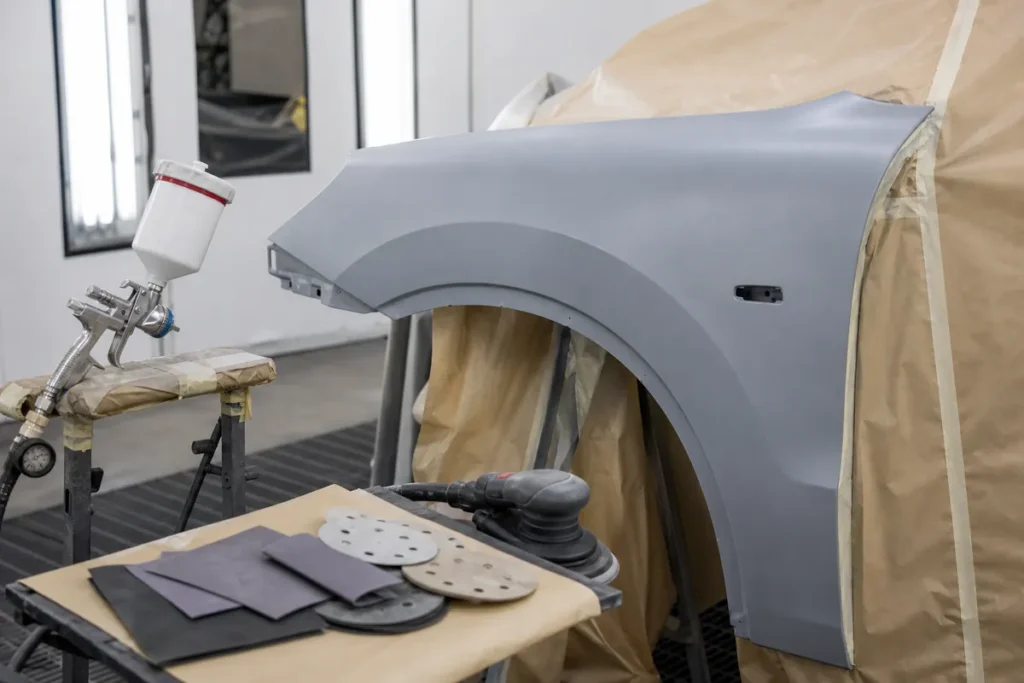
O primer automotivo é um revestimento preparatório aplicado antes da tinta para melhorar a adesão, proteger o metal nu, preencher pequenos defeitos de superfície, selar reparos ou criar uma superfície uniforme para a base coat e o clear coat. O primer correto depende do substrato, da etapa de reparo, do sistema de revestimento e do plano de lixamento.
O primer não é um único produto com uma única função. Epoxy primer, etch primer, primer surfacer, high-build primer e sealer se comportam de maneiras diferentes. Alguns protegem o metal. Alguns nivelam riscos. Alguns selam um reparo para que a cor seja aplicada de forma mais uniforme. Escolher o primer errado ou lixá-lo com a granulometria errada pode causar má adesão, riscos visíveis, encolhimento ou defeitos no acabamento.
Índice
- O que o primer automotivo faz?
- Quais são os principais tipos de primer automotivo?
- Como você aplica o primer automotivo corretamente?
- Qual granulometria de lixa você deve usar antes do primer?
- Qual granulometria você deve usar para lixar o primer antes da tinta?
- O primer deve ser lixado a úmido ou a seco?
- Quais erros causam falha do primer ou riscos visíveis?
- O que os compradores devem verificar antes de adquirir abrasivos para lixamento de primer?
- Conclusão: O primer só funciona quando a superfície e o lixamento estão corretos
- Perguntas Frequentes
- Referências
O que o primer automotivo faz?
O primer automotivo prepara a superfície para a tinta melhorando a adesão, protegendo substratos, nivelando pequenos defeitos ou selando a área de reparo. Ele fica entre a superfície crua ou reparada e o sistema de cor ou clear coating.
O primer pode ajudar a tinta a aderir ao metal, plástico, massa, tinta antiga ou revestimentos anteriores quando o produto correto é usado. Ele também pode preencher riscos de lixamento e pequenas diferenças de textura. O primer surfacer geralmente é lixado após a cura para que o painel fique mais liso antes da pintura.
O primer não deve ser tratado como massa mágica. Ele não pode corrigir por si só um trabalho de funilaria ruim, riscos profundos, contaminação, ferrugem ou uma borda mal esfumada. A superfície sob o primer ainda precisa de lixamento, limpeza e preparação de reparo corretos.
Os fabricantes de revestimentos de repintura publicam dados técnicos porque o desempenho do primer depende da mistura, da espessura do filme, do tempo de flash, do substrato, da temperatura e da janela de lixamento 1. Essas instruções devem orientar o processo final.
Quais são os principais tipos de primer automotivo?
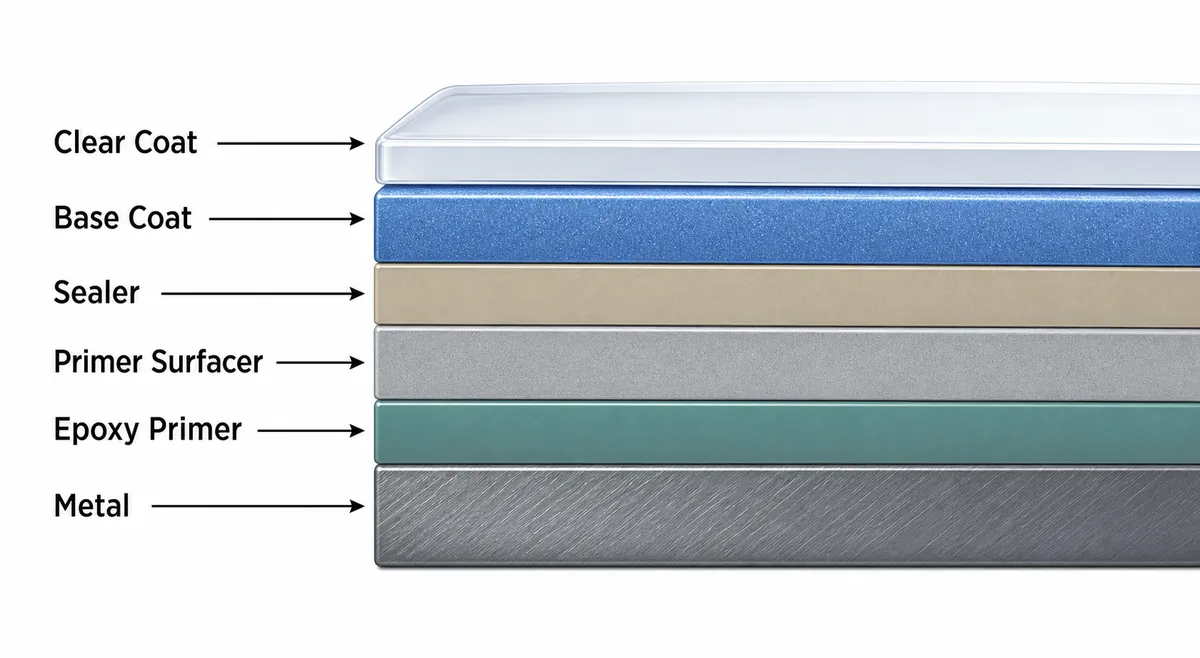
Os principais tipos de primer automotivo são epoxy primer, etch primer, primer surfacer, high-build primer, sealer e primer especial para plástico ou promotor de adesão. Cada um resolve um problema de superfície diferente.
| Tipo de Primer | Finalidade Principal | Uso Comum | Nota sobre Lixamento |
|---|---|---|---|
| Primer epóxi | Adesão e resistência à corrosão | Metal nu e trabalhos de restauração | Pode ser lixado ou receber topcoat dependendo da janela |
| Primer de ataque químico | Ataque químico no metal nu | Pequenas áreas de metal nu | Nem sempre é usado sob todos os sistemas |
| Primer de enchimento | Preenchimento e nivelamento | Áreas de reparo lixadas | Geralmente é lixado com bloco antes da pintura |
| Primer de alta espessura | Maior espessura de filme para blocagem | Painéis ondulados ou reparados | Precisa de cura adequada antes do lixamento |
| Selador | Cor e absorção uniformes | Antes da base coat | Geralmente não é lixado, a menos que necessário |
| Primer para plástico | Adesão em peças plásticas | Para-choques e acabamentos | Requer preparação correta do substrato |
Primer surfacer e high-build primer são os tipos mais intimamente ligados ao lixamento. Eles criam material que pode ser lixado com bloco até ficar plano. Epoxy e etch primers estão mais relacionados à adesão e à proteção do substrato. O sealer geralmente é usado mais tarde para criar uma base uniforme antes da cor.
Como você aplica o primer automotivo corretamente?
O primer automotivo deve ser aplicado sobre uma superfície limpa, devidamente lixada e compatível, usando a proporção de mistura, a técnica de pulverização, o tempo de flash e a espessura de filme corretos. A ficha técnica do produto importa mais do que suposições.
O painel deve ser limpo antes do lixamento e novamente antes da pulverização. Contaminantes como cera, silicone, óleo e poeira podem causar problemas de adesão ou defeitos de superfície. O lixamento deve criar o perfil mecânico correto para o primer sem deixar riscos profundos demais para ele preencher.
Mixing must be accurate. Too much reducer, wrong hardener, poor induction time, or incorrect film build can affect cure and sanding behavior. Apply coats evenly and allow proper flash time between coats. Heavy wet coats may trap solvent and shrink later.
After primer cures, inspect the surface before sanding. If the primer is too soft, it may clog paper and smear. If it is too thin, blocking may break through quickly. Proper application makes the sanding step more predictable.
Which primer instructions must you record before spraying?
Use the exact product technical data sheet, not a general primer name. PPG’s F490X is an example of an epoxy product with sanding and non-sanding application modes; “epoxy” by itself does not determine the next step.1
| TDS field | Decision it controls |
|---|---|
| Approved substrates and undercoats | Whether the exposed metal, existing coating, filler, or plastic preparation is compatible |
| Specified hardener, reducer, ratio, and any induction time | The actual mixture; do not borrow a recipe from another primer |
| Film build, flash, and cure conditions | When another coat or sanding may begin |
| Sanding or non-sanding mode and topcoat window | Whether sanding is required and what happens if the recoat window is missed |
| Topcoat and final abrasive requirements | The final preparation for the selected color system, rather than a universal grit |
If compatibility or the recoat window is unclear, resolve it with the coating manufacturer before applying the next layer. Record the product revision and actual shop conditions with the repair.
Qual granulometria de lixa você deve usar antes do primer?
Before primer, use a grit that gives the primer enough bite while leaving scratches the primer can fill. Common ranges may include P180-P320 depending on substrate, primer type, and coating system.
For body filler, P180-P240 may be used before primer surfacer after rough shaping is complete. For old paint or feathered edges, P240-P320 may be common before primer depending on product requirements. For plastic or sensitive surfaces, the required prep may be different.
O relacionado tabela de granulometria de lixa explains how automotive grit ranges progress from shaping to finishing. The related guia de lixa automotiva explains abrasive formats, backing, wet/dry papers, and how surface stage changes sandpaper choice.
Do not sand too fine before a primer that needs mechanical bite. Do not leave scratches too coarse for the primer build. The best answer is always tied to the primer system, not only a universal grit number.
Qual granulometria você deve usar para lixar o primer antes da tinta?
Primer before paint is often sanded with medium-to-fine grits such as P320-P600, depending on whether the next step is more primer, sealer, single-stage paint, or base coat. The surface should be smooth enough for paint but still compatible with the coating system.
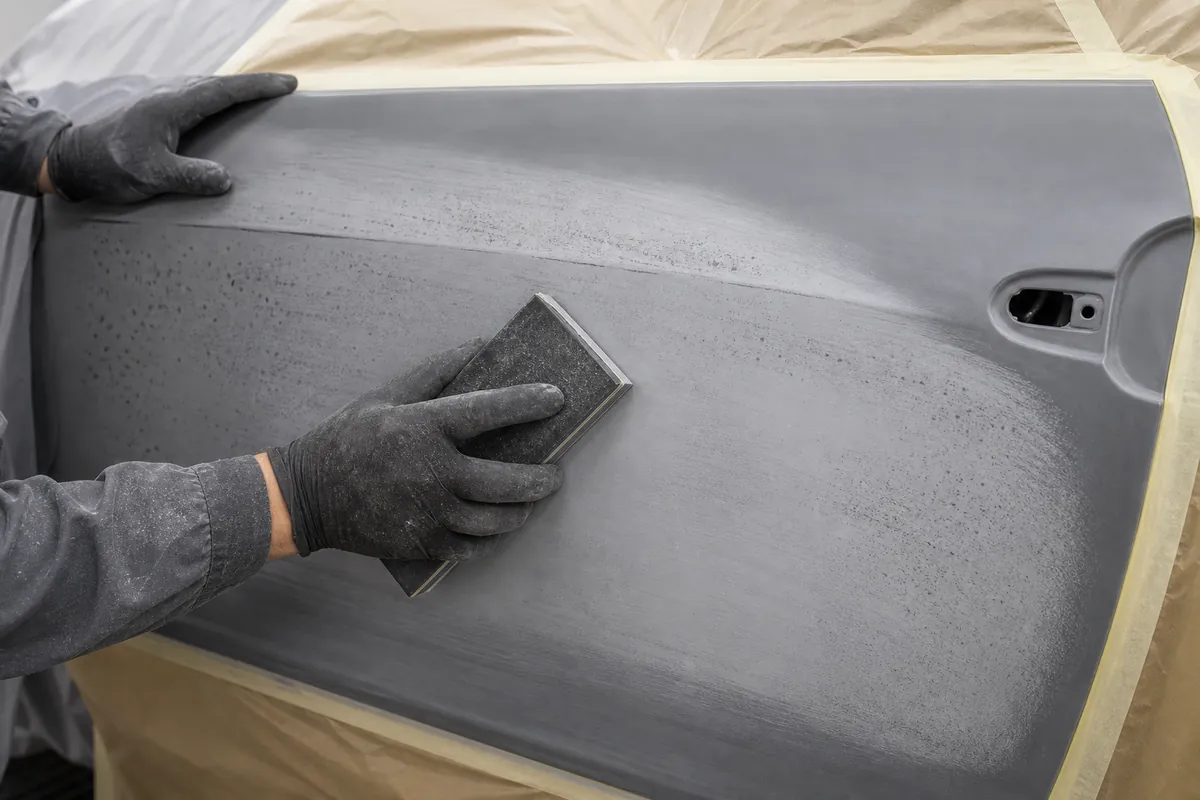
Use guide coat to distinguish remaining scratches from low areas; 3M identifies it as a way to reveal primer imperfections.2 A persistent low is not an instruction to keep removing surrounding primer. Check remaining build and decide whether the surface needs repair or more compatible surfacer before continuing.
O relacionado sanding block guide explains why blocks are important for primer straightness. For machine sanding larger primer areas, the related Guia da lixadeira DA helps explain orbit, pressure, pad choice, and dust extraction.
Final grit depends on paint system guidance. Some base coats require a finer scratch than others. If the surface is too coarse, scratches can show. If it is too fine, adhesion may suffer.
O primer deve ser lixado a úmido ou a seco?
Wet or dry sanding must be permitted by the specific cured primer and abrasive system. Dry blocking is common, but a product’s name does not establish its wet-sanding permission. Check the technical sheet, cure conditions, exposed substrates, and drying requirements before introducing water.
Dry sanding with dust extraction is efficient and keeps the repair easy to inspect. It also avoids water getting into seams, filler, or porous areas when the process is not managed well. However, dry sanding creates dust, so extraction, ventilation, and PPE matter.
Wet sanding reduces airborne dust and can produce a very smooth surface, but slurry can hide scratches or low spots until the panel is cleaned. It also requires careful drying before the next coating step. The related guia de lixamento úmido vs lixamento a seco gives a practical comparison for auto body work.
Major abrasive systems often pair primer sanding discs, sheets, blocks, and dust extraction because primer dust and loaded abrasives can create pigtails, heat, and uneven scratches 2.
Quais erros causam falha do primer ou riscos visíveis?
Primer problems often come from poor cleaning, wrong grit, insufficient cure, excessive film build, skipped grit steps, sanding through edges, or using incompatible products. Many visible paint defects begin before paint is sprayed.
Coarse scratches are a common issue. Primer may look like it filled them, but after cure, sanding, or topcoat shrinkage, the scratches can reappear. A proper grit progression matters.
Contamination is another major problem. Silicone, oil, wax, dust, or water can create fish eyes, adhesion issues, or surface defects. Cleaning should happen before sanding and before spraying.
Safety should not be ignored. Sanding primer and paint can create fine dust, and spraying coatings introduces additional hazards. OSHA’s autobody repair guidance covers sanding and refinishing concerns, including ventilation and respiratory protection 3.
O que os compradores devem verificar antes de adquirir abrasivos para lixamento de primer?
Buyers should check grit consistency, clog resistance, scratch uniformity, backing strength, dust extraction performance, sheet or disc fit, packaging, and batch repeatability. Primer sanding exposes weak abrasives quickly because loaded paper and random deep scratches cause rework.
Sample testing should use real primer surfacer panels. Check how quickly the abrasive loads, whether it cuts cleanly after several passes, whether guide coat scratches are removed evenly, and whether the next grit can refine the surface. Also test wet/dry papers with water if they are marketed for wet sanding.
A categoria de lixas automotivas e abrasivos is the Yirox starting point for sanding discs, sheets, and related abrasive products. Yirox Team sample checks usually focus on cut feel, scratch consistency, backing durability, packaging protection, label clarity, and whether repeat batches match approved samples.
For distributors, clear grit labeling and stable packaging are not small details. Primer sanding often moves through several grits, and a mislabeled abrasive can create scratches that only appear after paint.
Conclusão: O primer só funciona quando a superfície e o lixamento estão corretos
Automotive primer prepares the vehicle for paint, but it does different jobs depending on the product. Epoxy primer protects and bonds, primer surfacer fills and levels, high-build primer helps blocking, sealer creates uniformity, and plastic primer improves adhesion on specific substrates.
The sanding plan matters as much as the primer. Use the right grit before primer, allow proper cure, block or machine sand carefully, and refine the surface enough for the next coating. For buyers, primer sanding abrasives should be consistent, clean-cutting, well packaged, and predictable across batches.
Perguntas Frequentes
Is automotive primer necessary before painting a car?
Primer is usually necessary when painting bare metal, filler, repaired areas, or surfaces that need adhesion, sealing, or leveling. Some existing finishes can be sanded and painted according to the coating system, but repair areas often need primer.
What is the difference between primer and primer surfacer?
Primer is a broad term for prep coatings. Primer surfacer is a type of primer designed to build film and be sanded smooth before paint.
Can you paint directly over primer?
Sometimes, but it depends on the primer type, cure window, surface condition, and paint system. Primer surfacer is usually sanded before paint, while some sealers are designed to be topcoated without sanding.
What grit should primer be sanded with before base coat?
Common final sanding ranges may fall around P400-P600 depending on the paint system. Always follow the coating manufacturer’s technical guidance for the specific product.
Why does primer clog sandpaper?
Primer can clog sandpaper if it is not cured, if the abrasive is too fine for the stage, if pressure is too high, or if dust extraction is poor. Fresh paper, correct grit, and proper cure time help reduce loading.
Referências
[1] PPG. “F490X: HS High Build CF Epoxy Primer.”
[2] 3M. “Dry Guide Coat 05861: product purpose and applications.”
[3] OSHA. “Reparo e Repintura Automotiva: Visão Geral.”







