



Os pesos de roda de zinco são pesos de balanceamento sem chumbo feitos de zinco ou liga de zinco para corrigir o desequilíbrio de pneus e rodas. Eles funcionam melhor quando os compradores precisam de um material sem chumbo claramente identificado, com aparência compacta, boa conformabilidade e encaixe confiável, mas ainda exigem verificações de densidade, revestimento, tipo de roda, faixa de tamanho, fita, embalagem e aceitação no mercado local.
Para importadores, distribuidores e compradores do canal de serviços, o zinco geralmente não é escolhido isoladamente. Ele fica entre três questões práticas: Quais mercados estão abandonando o chumbo? Quais aplicações de rodas precisam de formatos de encaixe ou adesivos? Qual material oferece a melhor combinação de posicionamento de conformidade, custo, controle de corrosão e eficiência de estoque? O framework de planejamento de variedade de pesos de roda ajuda os compradores a conectar o zinco com o restante da linha, em vez de tratar a escolha do material como uma especificação de uma linha.
Índice
- O que são pesos de roda de zinco?
- Quais benefícios tornam os pesos de roda de zinco úteis?
- Quais limites os compradores devem entender antes de escolher o zinco?
- Quando os pesos de roda de zinco se encaixam melhor?
- Como os pesos de zinco se comparam com aço e chumbo?
- O que os compradores devem verificar antes de encomendar pesos de roda de zinco?
- Quais aplicações não são ideais para pesos de roda de zinco?
- Conclusão: escolha o zinco quando o material se adequar ao programa
- Perguntas Frequentes
- Referências
O que são pesos de roda de zinco?
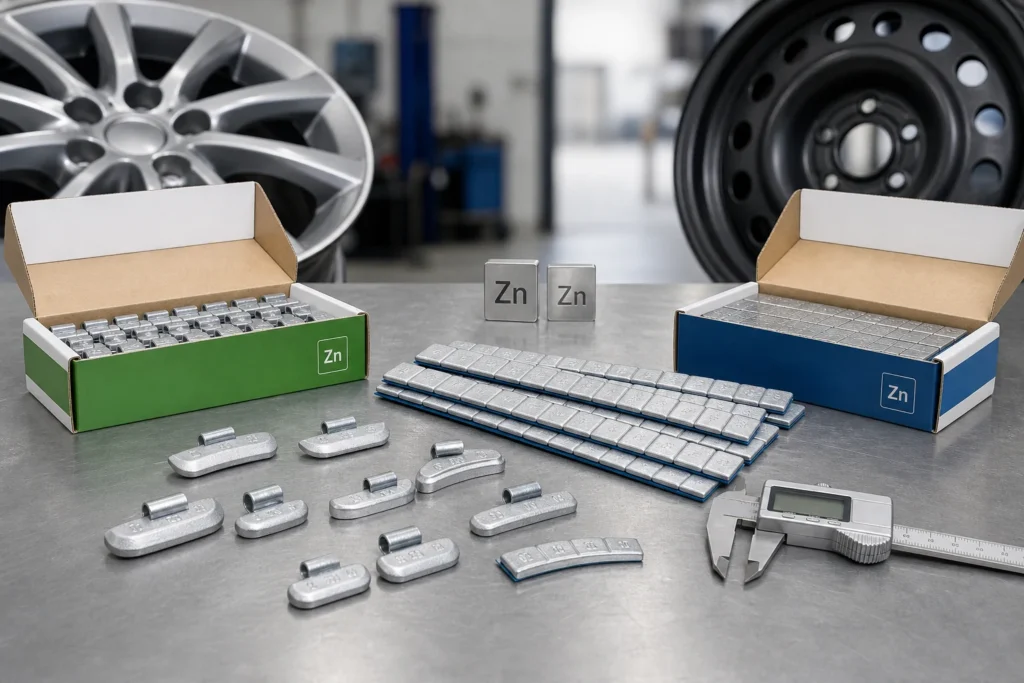
Os pesos de roda de zinco são pesos de balanceamento feitos de material à base de zinco e formados em formatos de encaixe ou adesivos. O zinco é o elemento químico Zn, e os compradores frequentemente usam a marcação Zn para separar pesos de zinco de aço, chumbo ou alternativas de material misto em cotações e rótulos de caixas 1.
Na prática, os pesos de roda de zinco são usados para o mesmo propósito de balanceamento que outros pesos de roda: um técnico adiciona a massa necessária ao conjunto da roda para que o pneu e a roda girem mais suavemente. A diferença é a escolha do material. O zinco oferece aos compradores uma opção sem chumbo que tem sensação metálica e perfil compacto, enquanto ainda exige uma visão clara do estilo de fixação, revestimento e disponibilidade de tamanhos.
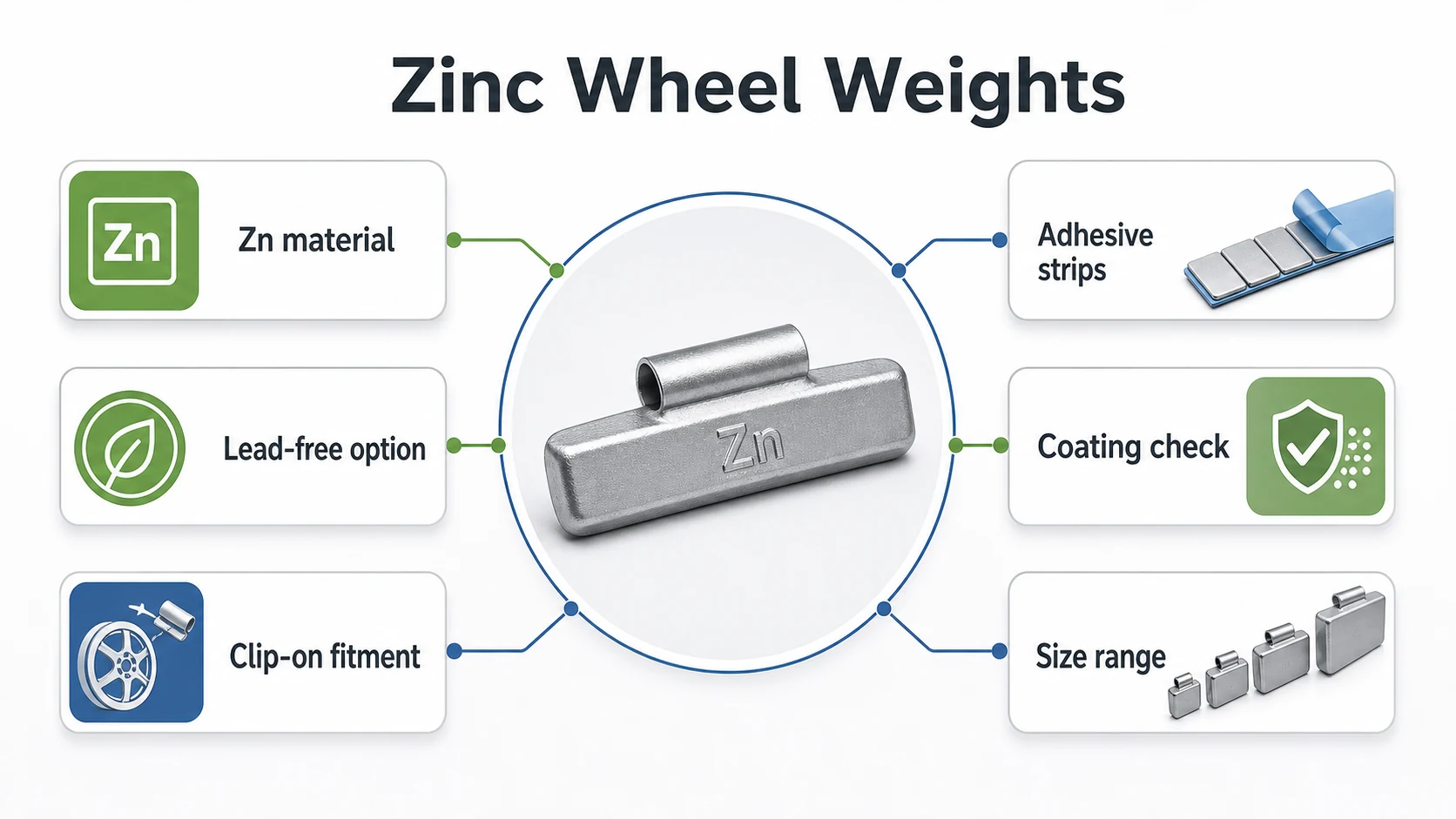
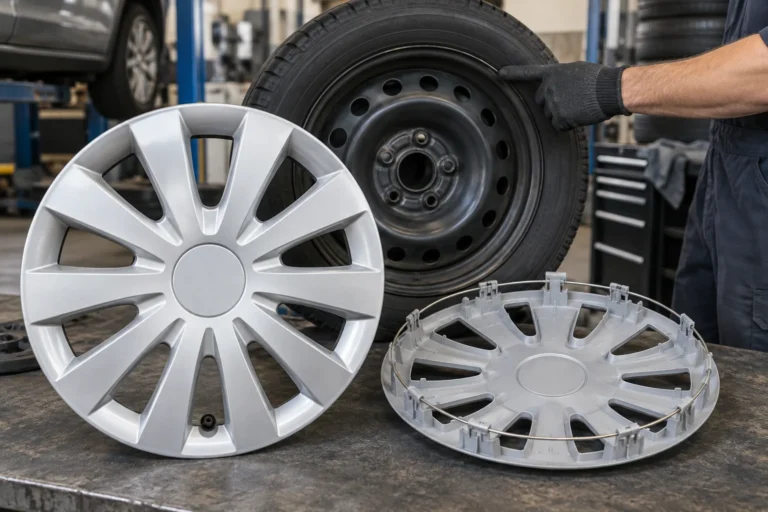
A primeira decisão não é simplesmente "zinco ou não zinco". Os compradores precisam decidir se o programa de zinco cobrirá pesos de encaixe para rodas de aço, pesos de fita adesiva para rodas de liga leve, ou ambos. Eles também precisam saber se os canais de reparo locais esperam tamanhos em gramas, tamanhos em onças, tiras pré-cortadas, formato em rolo, clipes revestidos, acabamento simples ou caixas de marca própria.
| Decisão sobre pesos de roda de zinco | Por que isso importa antes de uma RFQ | O que perguntar ao fornecedor |
|---|---|---|
| Identidade do material | Evita confusão entre Zn, Fe e alegações mistas sem chumbo | Confirme a marcação de zinco ou liga de zinco, declaração e rotulagem de amostra |
| Formato de fixação | Determina a aplicação da roda e o fluxo de instalação | Peça perfis de encaixe, formatos de fita adesiva, ou ambos |
| Faixa de tamanho | Afeta a cobertura de serviço e o planejamento de estoque | Confirme gramas, onças, tamanhos de segmento e quantidade por caixa |
| Acabamento superficial | Influencia a aparência de corrosão e reclamações de clientes | Peça expectativas de revestimento, galvanoplastia, pintura e névoa salina |
| Embalagem | Controla o manuseio do distribuidor, a separação no armazém e a apresentação para revenda | Confirme peso da caixa, caixas internas, rótulos, código de barras e caixa de exportação |
Quais benefícios tornam os pesos de roda de zinco úteis?
Os pesos de roda de zinco são úteis porque oferecem aos compradores uma opção de balanceamento sem chumbo com identidade de material clara e formatos de produto práticos. Eles podem apoiar programas de redução de chumbo, rotulagem limpa de produtos e manuseio familiar de pesos metálicos quando o design selecionado corresponde à aplicação da roda.
O benefício mais óbvio é o posicionamento sem chumbo. Os pesos de roda de chumbo têm sido alvo de programas ambientais porque pesos de chumbo perdidos ou descartados podem entrar no meio ambiente. A orientação de melhores práticas da EPA dos EUA incentivou medidas voluntárias para reduzir o uso de pesos de roda de chumbo e promover alternativas 2. Isso não significa que todo mercado tenha a mesma regra legal, mas explica por que os compradores frequentemente avaliam zinco e aço ao substituir o chumbo. O artigo sobre por que aço e zinco são considerados em programas sem chumbo é útil quando uma equipe de compras está separando a pressão ambiental do ajuste diário do produto.
O zinco também tem uma identidade clara na comunicação com o comprador. Rótulos de caixas, marcas de produtos e cotações podem usar "Zn" para distinguir o material de pesos de aço Fe ou pesos de chumbo Pb. Isso importa quando um distribuidor carrega vários materiais no mesmo armazém. Se a equipe de recebimento, a equipe de vendas e o cliente final usarem o mesmo código de material, ocorrem menos erros na separação, reposição e tratamento de reclamações.
Outro benefício é que o zinco pode parecer mais próximo dos pesos de balanceamento metálicos tradicionais do que alguns compradores esperam de um substituto sem chumbo. Para pesos de encaixe, uma peça de zinco bem feita pode proporcionar uma experiência de instalação familiar quando o perfil do clipe se ajusta à aba do aro. Para pesos adesivos, tiras de zinco podem ser fornecidas em layouts segmentados que se assemelham a outros formatos autoadesivos, facilitando a integração nas rotinas existentes da oficina.
O benefício para o comprador é mais forte quando o zinco é especificado como parte de um programa completo de produtos:
| Benefício | Com o que ajuda | Cuidado do comprador |
|---|---|---|
| Identidade de material sem chumbo | Posicionamento ambiental, requisitos do cliente, rotulagem de material | Confirme o requisito legal real do mercado; não presuma que uma regra se aplica globalmente |
| Marcação Zn reconhecível | Triagem no armazém, cotações, embalagem e comunicação de vendas | Mantenha códigos de material consistentes em produto, caixa, caixa de exportação e fatura |
| Sensação de produto metálico | Manuseio familiar para instaladores acostumados com pesos de roda metálicos | Verifique a forma real, o comportamento da mola do clipe e o desempenho do adesivo |
| Adequado para formatos selecionados | Programas de encaixe e adesivos podem ambos ser desenvolvidos | Não presuma que todo tamanho de zinco está disponível em todo perfil |
| Útil na comparação de materiais | Dá aos compradores outra opção além de chumbo e aço | Compare custo, densidade, revestimento e aceitação de mercado antes de trocar |
Quais limites os compradores devem entender antes de escolher o zinco?
Pesos de roda de zinco têm limites em densidade, custo, disponibilidade de tamanho, aparência de corrosão e preferência de mercado. Eles não são automaticamente melhores que alternativas de aço ou sem chumbo, então os compradores devem tratar o zinco como um material adequado para a finalidade, e não como um substituto universal.
A densidade é a primeira questão prática. O zinco é menos denso que o chumbo, então um peso de zinco normalmente precisa de mais volume que um peso de chumbo equivalente. Isso não torna o zinco inadequado, mas afeta a forma da peça, o comprimento da tira e o espaço disponível atrás dos raios ou ao longo da aba do aro. Em aplicações apertadas, especialmente áreas de rodas de liga com pouca folga, os compradores devem verificar se a altura e o comprimento do peso irão interferir com pinças ou com o estilo da roda.
Custo e estratégia de fornecimento também são importantes. Em muitos programas, pesos de aço são escolhidos porque são amplamente aceitos, econômicos e fáceis de obter em grandes variedades. O zinco pode ser selecionado para certos clientes ou mercados, mas pode ser menos atraente onde o principal objetivo do comprador é baixo custo unitário em uma variedade de alto volume. Quando um projeto é sensível a custo ou precisa de uma faixa de substituição muito ampla, a alternativa de aço Fe ao peso de roda de zinco pode ajudar os compradores a decidir se o material Fe é uma base melhor.
O zinco também precisa de expectativas realistas de corrosão. O zinco em si é comumente associado à proteção contra corrosão em muitos usos industriais, mas um peso de roda ainda é uma peça automotiva em funcionamento exposta à umidade, sal, poeira de freio, abrasão de instalação e condições de armazenamento. Um revestimento ruim, clipe danificado, processo de galvanoplastia fraco ou caixa úmida ainda podem criar reclamações visíveis sobre o acabamento. Os compradores devem perguntar como o fornecedor avalia a consistência do revestimento e se algum teste de névoa salina é usado como método comparativo de controle de qualidade; a ASTM B117 descreve uma prática padrão de aparelho de névoa salina frequentemente referenciada para esse tipo de teste de exposição à corrosão 3.
Por fim, a aceitação de mercado importa. Algumas oficinas estão familiarizadas com pesos de aço, algumas ainda conhecem formatos antigos de chumbo, e alguns clientes solicitam zinco para programas específicos. Se os instaladores não gostarem do perfil do clipe, se as tiras adesivas forem difíceis de remover do forro, ou se as caixas não corresponderem às convenções locais de tamanho, a vantagem do material não salvará o programa.
Quando os pesos de roda de zinco se encaixam melhor?
Pesos de roda de zinco se encaixam melhor quando um comprador precisa de um material sem chumbo, rotulagem clara de Zn, aparência controlada do produto e uma faixa de tamanho gerenciável para um canal de serviço definido. Eles são especialmente adequados quando a equipe de compras pode testar amostras antes de se comprometer com uma variedade completa.
Um programa de zinco forte geralmente começa com uma aplicação definida, em vez de uma promessa ampla de substituição. Por exemplo, um distribuidor pode introduzir tiras adesivas de zinco para serviço de rodas de liga em um mercado onde o posicionamento sem chumbo importa para os varejistas. Uma rede de reparos pode usar pesos de encaixe de zinco para aplicações selecionadas de rodas de aço de carros de passeio onde o perfil e o revestimento já passaram nos testes da oficina. Um importador pode carregar zinco ao lado de pesos de aço Fe para que os clientes possam escolher por requisito de mercado e faixa de preço.
| Aplicação mais adequada | Por que o zinco pode funcionar | O que verificar |
|---|---|---|
| Faixas de serviço de carros de passeio | Tamanhos comuns de balanceamento podem ser cobertos sem complexidade excessiva de variedade | Cobertura em gramas ou onças, incrementos populares e contagem de embalagem |
| Programas de varejo sem chumbo | A rotulagem de Zn apoia uma mensagem clara de material sem chumbo | Expectativas de conformidade local e necessidades de documentação do cliente |
| Tiras adesivas para rodas de liga | O zinco pode ser fornecido em formatos autoadesivos segmentados familiares | Grau da fita, liberação do forro, altura da tira e preparação da superfície |
| Programas selecionados de encaixe para rodas de aço | Peças de encaixe de zinco podem corresponder a perfis comuns de aba de aro quando ferramentadas corretamente | Perfil do clipe, retenção, revestimento e força de instalação |
| Catálogos de materiais mistos de distribuidores | O zinco dá aos clientes uma opção de material ao lado do aço | Nomenclatura de SKU, rótulos de caixa e treinamento de vendas |
O zinco é menos atraente quando o comprador não tem um motivo de mercado definido para ele. Se o único objetivo é substituir o chumbo pelo menor custo total possível, o aço pode vencer. Se a oficina precisa de perfis adesivos extremamente finos atrás de rodas apertadas, o comprador deve comparar a altura real da amostra e a espessura da fita em vez de confiar no nome do material. Se o canal precisa de dezenas de perfis de clipe de nicho, a disponibilidade de zinco pode ser mais estreita que a faixa mais ampla de aço.
Como os pesos de zinco se comparam com aço e chumbo?
O zinco fica entre o chumbo e o aço em muitas discussões de compradores: é sem chumbo como o aço, mais compacto que muitas formas de aço na mesma massa, e mais aceitável que o chumbo onde a redução de chumbo é uma prioridade. A escolha certa depende das regras de mercado, aplicação da roda, meta de preço e capacidade do fornecedor.
O chumbo é denso e fácil de moldar, razão pela qual era historicamente comum. O problema é a pressão ambiental e a atividade regulatória ou voluntária de eliminação gradual em muitos mercados. Compradores que ainda veem chumbo em linhas de produtos mais antigas devem verificar se ele pode ser vendido, instalado, transportado ou promovido em seus mercados-alvo antes de fazer qualquer pedido repetido.
O aço, frequentemente rotulado Fe, tornou-se um material sem chumbo mainstream porque é econômico, amplamente disponível e familiar em programas de substituição de alto volume. Sua densidade menor em comparação com o chumbo pode exigir formas físicas maiores, mas bom design e revestimento podem fazer do aço uma escolha prática para o dia a dia. O zinco oferece outra opção sem chumbo com um perfil diferente de custo, aparência, densidade e posicionamento de mercado.
Para compradores comparando todos os três, a comparação de materiais por trás das escolhas de pesos de roda de zinco ajuda a separar as compensações básicas de materiais antes de uma equipe definir uma estratégia de catálogo. A decisão real não é qual material soa melhor no papel; é qual material pode ser fornecido de forma consistente nos tamanhos, perfis, revestimentos e caixas que seus clientes realmente usarão.
| Vidro traseiro lateral / pilar C | Principal vantagem | Limite principal | Melhor uso pelo comprador |
|---|---|---|---|
| Chumbo | Alta densidade e manuseio tradicional | Pressão ambiental e regulatória em muitos mercados | Apenas comparação legada, a menos que verificada como aceitável |
| Aço / Fe | Substituição sem chumbo econômica com amplo fornecimento | Maior volume para a mesma massa, a qualidade do revestimento importa | Programas sem chumbo de alto volume e sortimentos de serviço amplos |
| Zinco / Zn | Identidade sem chumbo, aparência metálica compacta, marcação clara do material | Custo, disponibilidade e expectativas de revestimento devem ser verificados | Programas sem chumbo definidos onde Zn é solicitado ou preferido |
O que os compradores devem verificar antes de encomendar pesos de roda de zinco?
Os compradores devem verificar a declaração de material, formato de fixação, faixa de tamanho, revestimento, fita, encaixe do clipe, rótulos da caixa e desempenho da amostra antes de encomendar contrapesos de roda de zinco. Um bom RFQ torna esses detalhes visíveis antes da comparação de preços, porque a cotação de zinco mais barata pode não corresponder à aplicação.
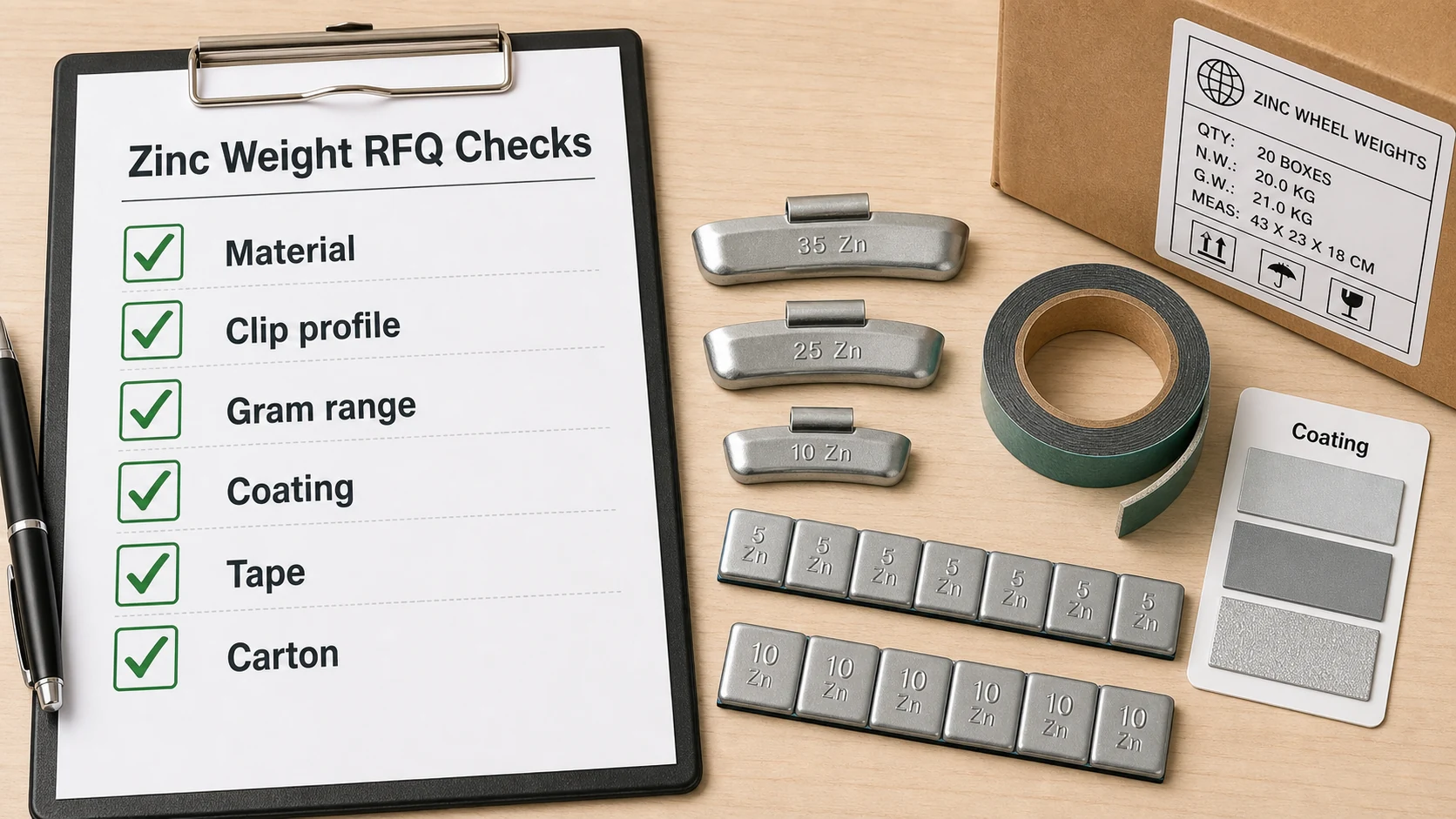
Comece com material e rotulagem. Pergunte se o produto é zinco ou liga de zinco, como é marcado e se o fornecedor pode manter Zn visível em amostras, caixas internas, caixas de exportação e faturas. Se seus clientes comparam opções de Fe e Zn lado a lado, rotulagem inconsistente pode criar reclamações desnecessárias mesmo quando as peças em si estão corretas.
Em seguida, defina o formato de fixação. Para contrapesos de roda de zinco com clipe, solicite o perfil da aba do aro, tipo de roda pretendido, revestimento, material do clipe se separado, expectativas de força de instalação e método de teste de retenção. Para contrapesos de roda de zinco adesivos, solicite o tamanho do segmento, peso total da tira, tipo de fita, comportamento do forro, orientação de vida útil e preparação de superfície recomendada. O desempenho da fita depende fortemente de superfícies limpas, secas e preparadas; a orientação de preparação de superfície da 3M para fitas VHB é um lembrete útil de que a adesão depende da condição da superfície, controle de contaminação e pressão, não apenas da marca da fita 4.
O planejamento de tamanho merece sua própria linha no RFQ. Um comprador montando uma variedade de zinco não deve simplesmente pedir "todos os tamanhos comuns". Em vez disso, liste incrementos em gramas ou onças, layout da tira, peças por caixa, peso da caixa, quantidade por caixa e requisitos de código de barras. O cobertura de tamanhos para programas de contrapeso de roda de zinco pode ajudar uma equipe de compras a conectar incrementos de massa comuns com as aplicações de roda e canais de serviço que pretendem cobrir.
O revestimento também deve ser tratado como um requisito do comprador, não uma promessa vaga. Solicite o tipo de acabamento, cor, padrão visual, meta de teste de corrosão se aplicável e aparência aceitável após armazenamento. Compradores que já recebem reclamações sobre ferrugem, corrosão branca, tinta descascando ou superfícies lascadas podem usar verificações de revestimento e corrosão para contrapesos de roda de zinco para transformar essas reclamações em pontos de inspeção mais claros antes da próxima rodada de amostras.
| Item do RFQ | Pergunta específica sobre zinco | Por que protege o comprador |
|---|---|---|
| Vidro traseiro lateral / pilar C | É Zn ou liga de zinco, e como é declarado? | Evita substituição por material errado e alegações pouco claras |
| Perfil de clipe | Para qual aba de aro ou tipo de roda foi projetado? | Reduz rejeição do instalador e má retenção |
| Fita adesiva | Qual construção de fita e forro são fornecidos? | Ajuda a evitar descolamento, remoção difícil ou má adesão |
| Faixa de tamanho | Quais gramas, onças, comprimentos de tira e contagens por caixa estão disponíveis? | Mantém a variedade prática para estoque real |
| Revestimento | Qual acabamento, cor e expectativa de corrosão são oferecidos? | Reduz reclamações visíveis sobre acabamento |
| Embalagem | Quais caixa interna, caixa de exportação, rótulo e código de barras estão incluídos? | Facilita o manuseio no armazém e na revenda |
| Amostras | As amostras podem ser testadas antes da confirmação do pedido em massa? | Encontra problemas de encaixe e manuseio antes do compromisso de MOQ |
Quais aplicações não são ideais para pesos de roda de zinco?
Contrapesos de roda de zinco não são ideais quando o comprador precisa do menor custo possível, da faixa de commodity mais ampla, de folga extremamente fina ou de um mercado que já prefere aço. Eles também podem ser inadequados quando o fornecedor não consegue documentar material, revestimento, fita e embalagem de forma consistente.
O primeiro encaixe fraco é um programa puramente orientado por preço. Se os clientes do distribuidor compram apenas pelo menor custo por caixa, o zinco pode ser difícil de posicionar, a menos que o mercado solicite especificamente material Zn. Nesse caso, contrapesos de aço frequentemente fornecem uma linha de base sem chumbo mais prática, especialmente para tamanhos de serviço de alto giro.
O segundo encaixe fraco é um canal com aplicações de roda pouco claras. Contrapesos com clipe são sensíveis ao perfil. Se o comprador não consegue identificar a aba do aro, o tipo de roda ou a mistura de veículos-alvo, qualquer material pode falhar em campo. O zinco não elimina a necessidade de testes de encaixe. Ele apenas muda o material e o comportamento do produto.
O terceiro encaixe fraco é a instalação adesiva não controlada. Contrapesos adesivos dependem da limpeza da superfície da roda, temperatura, pressão e qualidade da fita. Uma tira adesiva de zinco com má preparação de superfície ainda pode descolar. Antes de culpar o material, as oficinas devem verificar se as rodas estão limpas e secas, se o forro da fita se solta adequadamente e se o instalador aplica pressão suficiente após a colocação.
O quarto encaixe fraco é um pedido feito sem revisão do fornecedor. Compradores comparando cotações de zinco devem perguntar sobre ferramental, inspeção, aprovação de amostras, controle de embalagem e consistência de lote. Quando uma equipe de compras está qualificando uma nova fonte, o verificações do fabricante antes de comprar contrapesos de roda de zinco fornecem uma maneira útil de avaliar se a fábrica pode suportar remessas repetidas, não apenas uma única amostra atraente.
Se você está avaliando zinco para um programa real de contrapeso de roda, compartilhe seu material-alvo, formato de fixação, faixa de tamanho, revestimento e requisitos de embalagem. Podemos ajudá-lo a transformar essas verificações em uma solicitação de amostra antes de você se comprometer com um pedido.
Conclusão: escolha o zinco quando o material se adequar ao programa
Contrapesos de roda de zinco são uma opção útil sem chumbo quando o comprador tem uma razão clara para especificar Zn, uma aplicação de roda definida e testes de amostra suficientes para confirmar encaixe, revestimento, fita, faixa de tamanho e embalagem. Eles não são uma atualização universal em relação ao aço ou uma substituição simples um-a-um para o chumbo.
Para uma decisão prática de compra, trate o zinco como parte de um programa completo de contrapesos de balanceamento. Compare o material com o aço e as expectativas de chumbo legado, confirme as aplicações de roda pretendidas e solicite amostras antes de finalizar caixas e rótulos. Compradores preparando uma variedade de zinco podem revisar amostras de contrapeso de roda de zinco para verificações de material e encaixe uma vez que o material necessário, faixa de tamanho, formato de fixação, revestimento e detalhes de embalagem estejam claros o suficiente para uma discussão significativa sobre amostras.
Perguntas Frequentes
Os pesos de roda de zinco são sem chumbo?
Os pesos de roda de zinco são geralmente usados como uma alternativa sem chumbo, mas os compradores ainda devem confirmar a declaração exata do material com o fornecedor. Pergunte se o produto é zinco ou liga de zinco, como é marcado e se a declaração do material corresponde aos rótulos das caixas, faturas e qualquer documentação do cliente.
Pesos de roda de zinco são melhores que pesos de roda de aço?
O zinco não é automaticamente melhor que o aço. O zinco pode oferecer uma aparência metálica compacta e identidade clara do material Zn, enquanto o aço frequentemente vence em custo, amplitude de variedade e ampla disponibilidade sem chumbo. A melhor escolha depende dos requisitos de mercado, aplicação da roda, cobertura de tamanhos, qualidade do revestimento e preço-alvo.
Os pesos de roda de zinco podem ser usados em rodas de liga leve?
Sim, os pesos de roda adesivos de zinco podem ser usados em rodas de liga leve quando a altura da fita, o tamanho do segmento, a fita adesiva e o processo de instalação correspondem à aplicação. Os compradores devem testar a folga atrás dos raios e confirmar que os instaladores limpam e preparam a superfície da roda antes de aplicar os pesos adesivos.
Os pesos de roda de zinco podem ser usados em rodas de aço?
Os pesos de roda de zinco com clipe podem encaixar em rodas de aço quando o perfil do clipe corresponde à aba do aro. Os compradores não devem fazer pedidos apenas por material. Eles precisam confirmar o tipo de roda, o estilo da aba do aro, a retenção do clipe, o revestimento e a faixa de tamanho antes de aprovar a produção em massa.
O que deve ser incluído em uma RFQ de pesos de roda de zinco?
Uma RFQ de pesos de roda de zinco deve incluir identidade do material, formato de fixação, faixa em gramas ou onças, perfil do clipe ou detalhes da fita, revestimento, quantidade por caixa, formato do rótulo, requisitos de amostra e quaisquer necessidades de documentação de mercado. RFQs claras reduzem amostras incompatíveis e facilitam a comparação das cotações dos fornecedores.
Referências
[1] Royal Society of Chemistry. “Zinco.” 2026.
[2] Agência de Proteção Ambiental dos Estados Unidos. “Melhores Práticas de Gestão para Pesos de Roda de Chumbo.” 2015.
[3] ASTM International. “ASTM B117-19 Prática Padrão para Operação de Aparelho de Nebulização Salina.” 2019.
[4] 3M. “Boletim Técnico de Preparação de Superfície da Fita 3M VHB.” 2019.