



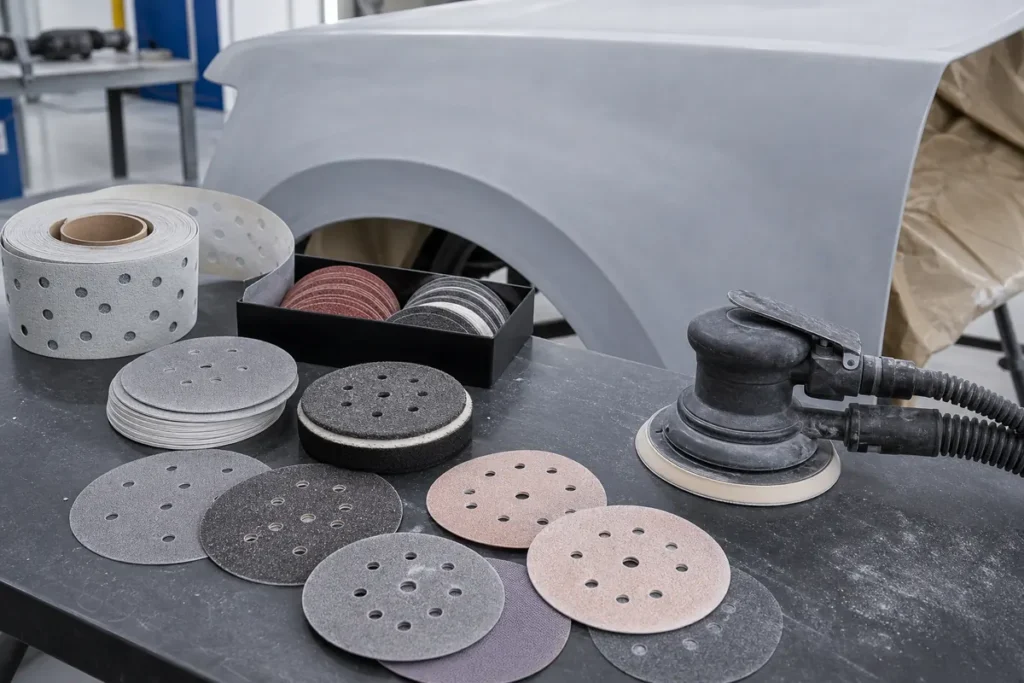
Um disco de lixamento é um produto abrasivo redondo usado com uma lixadeira ou prato de apoio para remover material, modelar massa, nivelar primer, preparar tinta ou refinar a superfície de um veículo. No trabalho automotivo, o disco de lixamento certo é escolhido por grão, tamanho, suporte, estilo de fixação, padrão de furos, grão abrasivo e a superfície a ser lixada.
Os discos de lixamento são populares porque tornam o lixamento de painéis grandes mais rápido e mais consistente do que folhas soltas. No entanto, eles não são todos iguais. Um disco grosso com adesivo para remover tinta se comporta de maneira muito diferente de um disco fino de gancho e laço usado em primer ou de um disco de malha projetado para extração de poeira.
Este guia explica os tipos de discos de lixamento, tamanhos comuns, como usá-los em carros e o que os compradores devem verificar antes de adicionar discos de lixamento automotivos a uma linha de reparo ou repintura.
Índice
- O que um disco de lixamento faz no trabalho de funilaria automotiva?
- Quais são os principais tipos de discos de lixamento?
- Quais tamanhos de disco de lixamento são comuns para carros?
- Como você escolhe o grão certo para um disco de lixamento?
- Como você deve usar discos de lixamento em carros sem causar danos?
- Quais erros causam marcas de porco, marcas de redemoinho e lixamento irregular?
- O que os compradores devem verificar antes de adquirir discos de lixamento?
- Conclusão: Um disco de lixamento faz parte de um sistema completo de lixamento
- Perguntas Frequentes
- Referências
O que um disco de lixamento faz no trabalho de funilaria automotiva?
Um disco de lixamento corta a superfície com grãos abrasivos enquanto a ferramenta e o prato controlam o movimento, a pressão e a área de contato. Em carros, os discos são comumente usados para remoção de tinta, modelagem de massa, nivelamento de primer, preparação de tinta antiga e acabamento fino.
Comparados com folhas de lixamento manuais, os discos são mais rápidos em painéis largos e mais repetíveis quando usados com uma lixadeira roto-orbital. Eles ajudam a manter os padrões de riscos mais uniformes, especialmente quando o disco, o prato e o grão são combinados com o trabalho. Para leitores que desejam o contexto mais amplo do produto, o relacionado guia de lixa automotiva explica folhas, rolos, discos, lixa úmida/seca, suporte e seleção de grão.
Um disco não substitui o julgamento. Ele pode remover muito material rapidamente, especialmente em bordas, linhas de carroceria, para-choques de plástico e verniz fino. O técnico ainda precisa escolher o grão correto, manter a ferramenta plana e limpar a superfície entre as etapas.
Quais são os principais tipos de discos de lixamento?
Os principais tipos de discos de lixamento automotivos são discos de gancho e laço, discos com adesivo PSA, discos de filme, discos de papel, discos com suporte de espuma, discos de rede ou malha e discos de extração de poeira. Cada tipo altera a sensação de corte, a vida útil do disco, o controle de poeira e a rapidez com que o disco pode ser trocado.
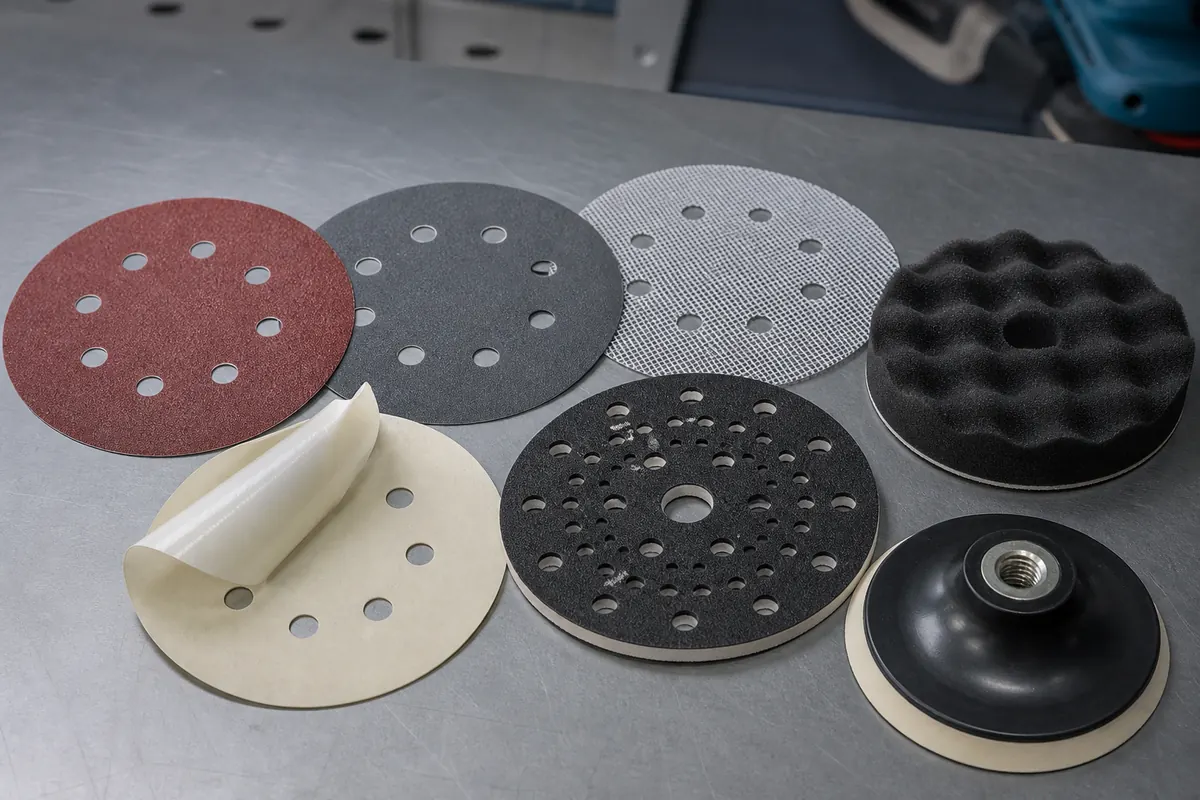
Os discos de gancho e laço se fixam a um prato de apoio correspondente e são fáceis de trocar. Eles são comuns em oficinas de funilaria porque os técnicos passam por vários grãos com frequência. Os discos PSA usam um adesivo sensível à pressão e podem parecer muito estáveis, mas o prato deve estar limpo e o disco é menos conveniente de remover e reutilizar.
Discos com suporte de filme frequentemente proporcionam uma superfície muito consistente e forte resistência ao rasgo. Discos com suporte de papel são comuns e econômicos, mas a resistência do suporte varia. Discos com suporte de espuma são úteis para trabalho de contorno e acabamento fino porque suavizam o contato. Abrasivos de rede ou malha permitem que a poeira passe por uma estrutura ampla e aberta, o que pode melhorar a extração de poeira quando combinados com o prato e o sistema de vácuo corretos.
As principais marcas de abrasivos separam os sistemas de discos de lixamento por suporte, padrão de furos, grão abrasivo e aplicação porque a extração de poeira e a consistência dos riscos são questões de sistema, não apenas de disco 1.
Quais tamanhos de disco de lixamento são comuns para carros?
Os tamanhos comuns de discos de lixamento automotivos incluem 3 polegadas, 5 polegadas, 6 polegadas e, às vezes, 7 polegadas ou discos maiores. O melhor tamanho depende do formato do painel, do tipo de ferramenta, da área de reparo e de quanto controle o técnico precisa.
| Tamanho do Disco | Uso Automotivo Comum | Principal Vantagem | Principal Cuidado |
|---|---|---|---|
| 3 polegadas | Reparos pontuais, bordas, áreas apertadas | Controle em pequenas zonas | Fácil de lixar demais se inclinado |
| 5 polegadas | Reparo geral, lixadeiras roto-orbitais menores | Bom controle e velocidade | Menos cobertura que 6 polegadas |
| 6 polegadas | Primer de funilaria e preparação de tinta | Eficiente em painéis largos | Precisa de bom controle do prato |
| 7 polegadas+ | Remoção pesada ou grandes áreas planas | Cobertura rápida | Mais agressivo e menos tolerante |
Discos de seis polegadas são comuns em reparo de colisão porque cobrem uma área útil sem se tornarem difíceis demais de controlar. Discos de três polegadas são excelentes para pequenos reparos, mas podem cavar a superfície se o operador usar a borda do prato.
O tamanho do disco deve corresponder ao prato de apoio. Um disco incompatível pode ultrapassar, rasgar, bloquear os furos de poeira ou criar um padrão de riscos instável. O padrão de furos também importa: um disco multi-furos precisa do prato correto e do caminho de extração para funcionar como pretendido.
Como você escolhe o grão certo para um disco de lixamento?
Escolha o grão do disco de lixamento começando pela etapa de reparo. Grãos grossos removem material, grãos médios modelam e nivelam, grãos finos preparam primer e tinta, e grãos ultrafinos refinam tinta ou verniz.
Para remoção pesada ou modelagem de massa áspera, uma oficina pode usar discos grossos como P40-P80. Para refinamento de massa, P120-P180 é comum. Primer surfacer e preparação de tinta antiga frequentemente usam P220-P400, enquanto a preparação final da tinta pode usar P400-P600 dependendo do sistema de tinta. O acabamento fino pode avançar para P800-P3000 ou mais.
O relacionado tabela de granulometria de lixa fornece uma progressão de grão mais completa. O ponto importante é não pular tão longe que o próximo disco não consiga remover o risco anterior. Um disco fino pode fazer riscos profundos parecerem opacos, mas pode não apagá-los.
Como você deve usar discos de lixamento em carros sem causar danos?
Use discos de lixamento em carros com um prato plano, superfície limpa, pressão controlada, velocidade correta e uma sequência de grãos que corresponda ao reparo. A ferramenta deve fazer o corte; forçar o disco geralmente cria calor, marcas de porco e riscos irregulares.
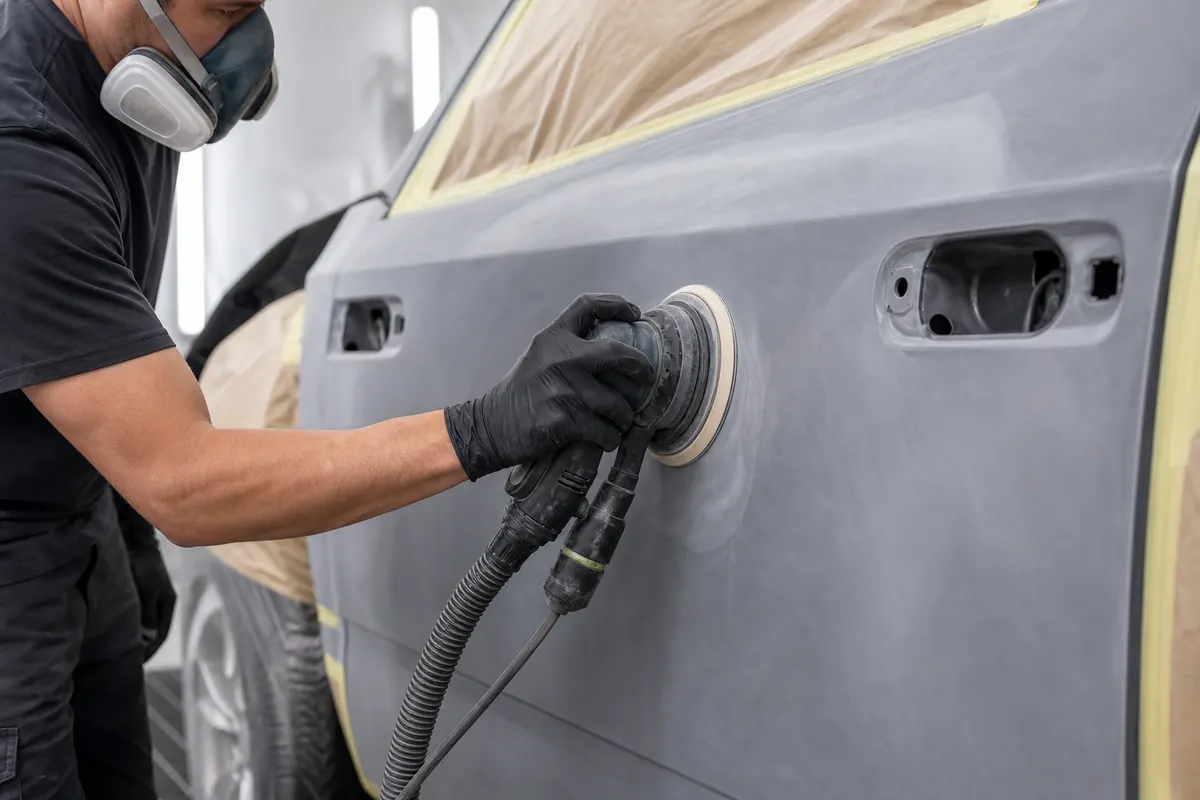
Mantenha o disco limpo e troque-o antes que pare de cortar. Um disco carregado esfrega em vez de cortar, o que pode aquecer a superfície e criar riscos aleatórios. Use extração de poeira ao lixar a seco massa ou primer. As diretrizes de reparo automotivo da OSHA tratam a poeira de lixamento, a ventilação e a proteção respiratória como tópicos importantes de segurança na oficina 4.
Trabalhe em passagens sobrepostas em vez de pular de um lado para o outro do painel. Um padrão simples de hachura cruzada ajuda o técnico a ver se o disco está cortando uniformemente e evita que uma pequena área seja lixada muito profundamente. No primer surfacer, muitas oficinas usam camada-guia para revelar pontos baixos, riscos e pressão irregular. Se a camada-guia desaparecer imediatamente em uma linha de carroceria mas permanecer no centro do reparo, o ângulo da ferramenta ou a escolha da almofada provavelmente precisa de correção.
Use discos mais macios ou discos de interface em curvas, mas use blocos firmes ou discos firmes quando a planicidade for importante. Em bordas e linhas de carroceria, reduza a pressão e evite permanecer no mesmo lugar. Para escolha de método, o relacionado guia de lixamento úmido vs lixamento a seco explica quando água, lama, extração de poeira e feedback de guia seco importam.
Quais erros causam marcas de porco, marcas de redemoinho e lixamento irregular?
Pigtails e marcas de redemoinho geralmente vêm de contaminação, discos entupidos, pressão excessiva, extração de poeira deficiente, um disco danificado ou pular etapas de granulometria. Lixamento irregular geralmente vem de inclinar a lixadeira ou usar um disco macio onde a planicidade é necessária.
Uma partícula grossa sob um disco fino pode cortar um arranhão circular profundo. Poeira presa entre o disco e o painel pode fazer o mesmo. Limpe ou sopre o painel entre granulometrias, mantenha os discos limpos e verifique o disco de apoio quanto a desgaste.
Outro erro comum é usar a borda do disco como ferramenta de corte. Isso pode escavar o primer, arredondar linhas de carroceria ou queimar o verniz. Um disco de lixamento funciona melhor com contato equilibrado em todo o disco.
O que os compradores devem verificar antes de adquirir discos de lixamento?
Os compradores devem verificar a consistência da granulometria, a planicidade do disco, a força de fixação, a durabilidade do suporte, o alinhamento dos furos, o desempenho de extração de poeira, a embalagem, a clareza do rótulo e a repetibilidade do lote. Um disco de lixamento que parece bom em um catálogo pode falhar rapidamente em uma oficina real.
O teste de amostra deve incluir o disco e a ferramenta pretendidos. Um disco de velcro deve fixar firmemente sem oscilar. Um disco PSA deve descascar limpo e segurar com segurança. Discos multi-furos devem alinhar com discos comuns. Discos de malha devem extrair poeira bem e resistir a rasgos.
A embalagem também merece atenção. Os discos devem permanecer planos, secos, limpos e fáceis de identificar por granulometria e padrão de furos. Embalagens ruins podem entortar discos, contaminar a superfície abrasiva ou tornar granulometrias misturadas difíceis de controlar em uma oficina movimentada. Para distribuidores, rótulos claros e proteção consistente da caixa reduzem erros de separação e protegem o produto antes mesmo de chegar ao técnico.
Se o próximo passo é construir uma linha de abrasivos automotivos, o categoria de lixas automotivas e abrasivos é um ponto de partida útil. Para uso específico de ferramenta, o relacionado Guia da lixadeira DA explica por que órbita, tamanho do disco e controle do operador importam.
As verificações de amostra da equipe Yirox geralmente se concentram na sensação de corte, consistência do arranhão, precisão do padrão de furos, estabilidade de fixação, embalagem e se os lotes entregues correspondem às amostras aprovadas. Esses detalhes reduzem devoluções porque os instaladores notam discos ruins imediatamente.
Conclusão: Um disco de lixamento faz parte de um sistema completo de lixamento
Um disco de lixamento não é apenas um pedaço redondo de lixa. É parte de um sistema composto de grão abrasivo, suporte, granulometria, disco, estilo de fixação, padrão de furos, movimento da ferramenta, extração de poeira e técnica do operador.
O disco de lixamento certo acelera o trabalho de funilaria automotiva e deixa um padrão de arranhão que a próxima etapa pode lidar. O disco errado desperdiça tempo, entope, cria pigtails ou danifica bordas. Escolha o disco de acordo com a etapa de reparo, ferramenta, forma do painel e requisito de acabamento.
Perguntas Frequentes
Qual disco de lixamento é melhor para funilaria automotiva?
Para funilaria automotiva geral, discos de velcro em tamanhos de 5 polegadas ou 6 polegadas são comuns porque são fáceis de trocar e funcionam bem com lixadeiras DA. A melhor granulometria depende se o trabalho é modelagem de massa, lixamento de primer, preparação de pintura ou acabamento.
Posso usar discos de lixamento para marcenaria em um carro?
É melhor usar discos de lixamento automotivos. Discos para marcenaria podem entupir, cortar irregularmente ou deixar padrões de arranhão que não são adequados para primer, pintura ou verniz.
Qual tamanho de disco de lixamento devo usar em uma lixadeira DA?
A maioria das lixadeiras DA automotivas usa discos de 5 polegadas ou 6 polegadas, enquanto ferramentas menores podem usar discos de 3 polegadas para reparos pontuais. Sempre combine o disco com o disco de apoio da ferramenta.
Por que os discos de lixamento têm furos?
Os furos ajudam a poeira a passar pelo disco e pelo apoio para um sistema de extração. Melhor controle de poeira pode reduzir entupimento, calor, poeira no ar e arranhões aleatórios.
Com que frequência os discos de lixamento devem ser trocados?
Troque um disco de lixamento quando ele parar de cortar limpo, entupir, rasgar, perder fixação ou começar a criar arranhões aleatórios. Esperar demais geralmente custa mais tempo do que usar um disco novo.
Referências
[1] 3M. (2026). *Discos de Lixamento Automotivos e Sistemas Abrasivos*.
[2] Mirka. (2026). *Lixamento Automotivo e Sistemas Abrasivos Sem Poeira*.
[3] Norton Abrasives. (2026). *Orientação sobre Discos de Lixamento e Granulometria Abrasiva*.
[4] OSHA. (2026). *Tópicos de Segurança e Saúde em Reparação e Repintura Automotiva*.