



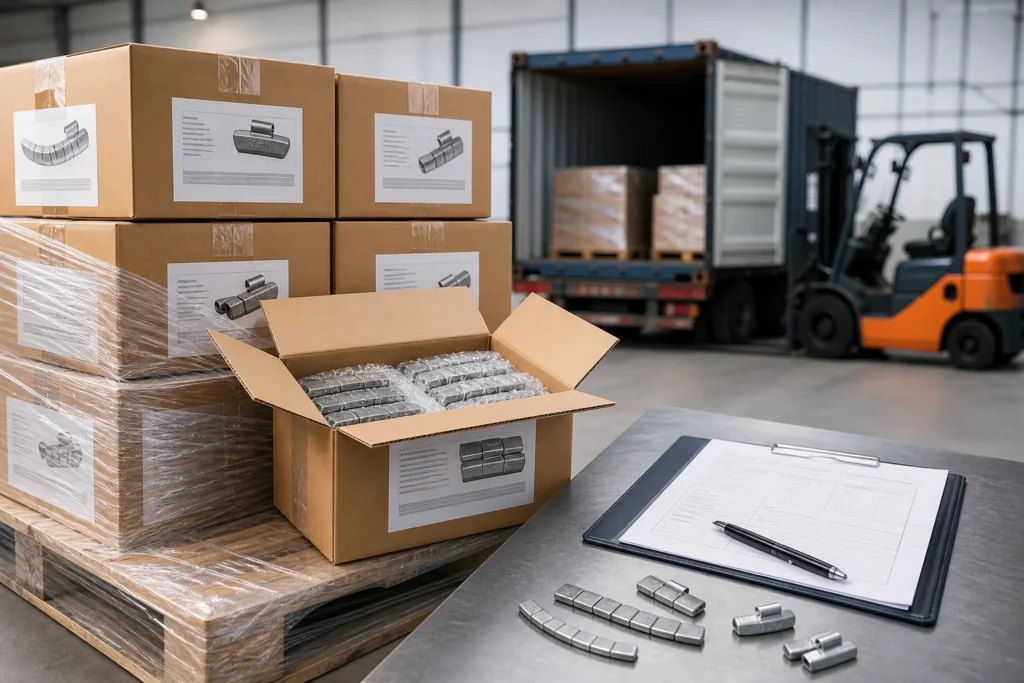
O envio de pesos de roda deve ser planejado a partir do SKU confirmado, caixa de papelão, palete, destino, Incoterms, documentos, ponto de inspeção e processo de recebimento. Os compradores precisam esclarecer a responsabilidade pelo frete, seguro, formalidades de exportação e desembaraço de importação com o fornecedor escolhido, em vez de presumir que uma cotação cobre todos os custos ou riscos de envio.
Índice
- O que um plano de envio de pesos de roda deve definir?
- Como os compradores devem definir o escopo de envio antes de um PO?
- Como os compradores devem adequar os Incoterms à responsabilidade?
- Quais dados de caixa de papelão e palete os compradores devem verificar?
- Quais documentos devem ser preparados antes do envio?
- Como os compradores devem planejar a inspeção e o recebimento?
- Conclusão: incluir o plano de transferência e recebimento como parte do pedido
- Perguntas Frequentes
- Referências
O que um plano de envio de pesos de roda deve definir?
Um plano de envio de pesos de roda define as mercadorias, a embalagem, o ponto de transferência, os documentos e o fluxo de destino antes da emissão do PO. Ele deve informar a todas as partes o que está sendo movimentado, como é identificado, como é protegido, quem organiza cada etapa, quais registros o acompanham e o que a equipe de recebimento verificará quando ele chegar.
O plano começa com as mesmas escolhas de produto e embalagem que precisam sobreviver ao plano de envio que moldam o próprio pedido: formato adesivo ou de encaixe, material, perfil/incremento ou faixa de segmento, revestimento/fita, embalagem interna, caixa master, etiquetas e plano de palete. Uma descrição genérica como "pesos de roda, embalagem de exportação incluída" não fornece ao importador informações suficientes para reservar frete, preparar um armazém ou comparar o escopo de entrega entre fornecedores.
Também precisa distinguir pronto de fábrica de entrega. Os marcos que separam o status de pronto de fábrica do recebimento no destino são úteis para esse propósito. Uma data de pronto de fábrica significa que as mercadorias aprovadas estão prontas para uma liberação definida; isso não significa, por si só, que a carga foi entregue a uma transportadora, partiu, foi desembaraçada no destino ou foi recebida no inventário do comprador.
| Campo do plano de envio | Decisão a confirmar | Por que o comprador precisa disso |
|---|---|---|
| Descrição das mercadorias | SKU do comprador, tipo de produto, material, unidades, contagem por embalagem, quantidade | Mantém PO, etiqueta da caixa, lista de embalagem, fatura e registro de recebimento alinhados |
| Hierarquia de embalagem | Embalagem interna, caixa master, palete, filme e proteção | Permite o planejamento de frete e protege forros adesivos, revestimentos, etiquetas e SKUs separados |
| Termo de entrega | Versão dos Incoterms, local/porto nomeado e ponto de transferência contratual | Esclarece o ponto que as partes entendem como entrega no contrato |
| Escopo de transporte | Coleta, processo de exportação, transporte principal, seguro, manuseio no destino | Evita suposições sobre quem está reservando ou pagando por uma etapa |
| Documentação | Fatura, lista de embalagem, registros de produto/material, dados de transporte, itens solicitados pelo destino | Permite que o importador e o despachante revisem os requisitos antes que as mercadorias se movam |
| Liberação e recebimento | Ponto de inspeção, evidência de transferência de carga, verificações de armazém, procedimento de exceção | Conecta o pedido aprovado às caixas que realmente chegam |
Este é um planejamento operacional, não aconselhamento jurídico ou aduaneiro. Classificação de importação, impostos, licenças, tratamento de origem, requisitos de substâncias restritas e procedimento de desembaraço variam por jurisdição e produto. Confirme as obrigações atuais do destino e o termo comercial apropriado com o despachante aduaneiro do importador, agente de carga e consultores qualificados antes do envio.
Como os compradores devem definir o escopo de envio antes de um PO?
Defina o escopo de envio com o mesmo detalhe do escopo do produto. O comprador e o vendedor devem saber o local ou porto nomeado, o modo de transporte pretendido, quem organiza a coleta, quem lida com as formalidades de exportação, quem contrata o transporte principal, se o seguro é exigido e por quem, quem lida com o desembaraço de importação e onde o comprador deseja que o envio seja considerado completo para fins de planejamento.
Não confie em abreviações como "envio marítimo incluído" ou "entrega na porta". Essas frases não revelam o ponto de entrega, a transferência de risco, a responsabilidade aduaneira, o arranjo da transportadora, as taxas de terminal, o seguro ou a atividade final de descarga/armazém. Registre o termo comercial exato e a versão, se acordado, juntamente com o local ou porto nomeado e quaisquer instruções logísticas adicionais.
| Pergunta de escopo | Exemplo da clareza necessária |
|---|---|
| Ponto de entrega | Declare a fábrica nomeada, o local de transferência da transportadora, o porto, o terminal ou o ponto de destino em vez de apenas o nome do país |
| Arranjo de transporte | Identifique se o comprador, o vendedor ou um provedor de logística nomeado é responsável por reservar cada etapa |
| Processo de exportação | Declare qual parte prepara/organiza as formalidades de exportação e quais documentos a outra parte deve fornecer |
| Transporte principal e seguro | Declare quem contrata/paga, qual cobertura é solicitada, se houver, e quais evidências de transferência serão compartilhadas |
| Importação e destino | Declare quem nomeia o despachante, lida com o desembaraço de importação, paga as taxas de destino e recebe as mercadorias |
| Evidência de entrega | Defina o registro da transportadora, a referência de transporte, o recibo e a rota de notificação de reclamação necessária ao comprador |
Peça a cada fornecedor que responda a estes campos relativamente ao mesmo SKU e packout. Esta é a única forma fiável de comparar uma oferta de preço de fábrica com uma entrega no porto, uma entrega no terminal ou uma proposta de entrega no destino. O custo total e o risco de entrega podem variar mesmo quando o preço do produto se mantém inalterado.
O pagamento deve ser planeado com a mesma disciplina: use marcos de pagamento que correspondam à aprovação, inspeção e evidência de expedição para que os depósitos, o pagamento do saldo, a libertação e os registos de expedição correspondam a eventos que o comprador pode efetivamente verificar.
Como os compradores devem adequar os Incoterms à responsabilidade?
Os compradores só devem usar uma regra Incoterms depois de compreenderem a responsabilidade operacional que ela atribui e o local nomeado exato em que se aplica. A regra ajuda a estruturar as tarefas, os custos e o risco do vendedor e do comprador; não define automaticamente a especificação do produto, os termos de pagamento, a titularidade, a duração do trânsito, a adequação do seguro ou todas as obrigações aduaneiras locais.
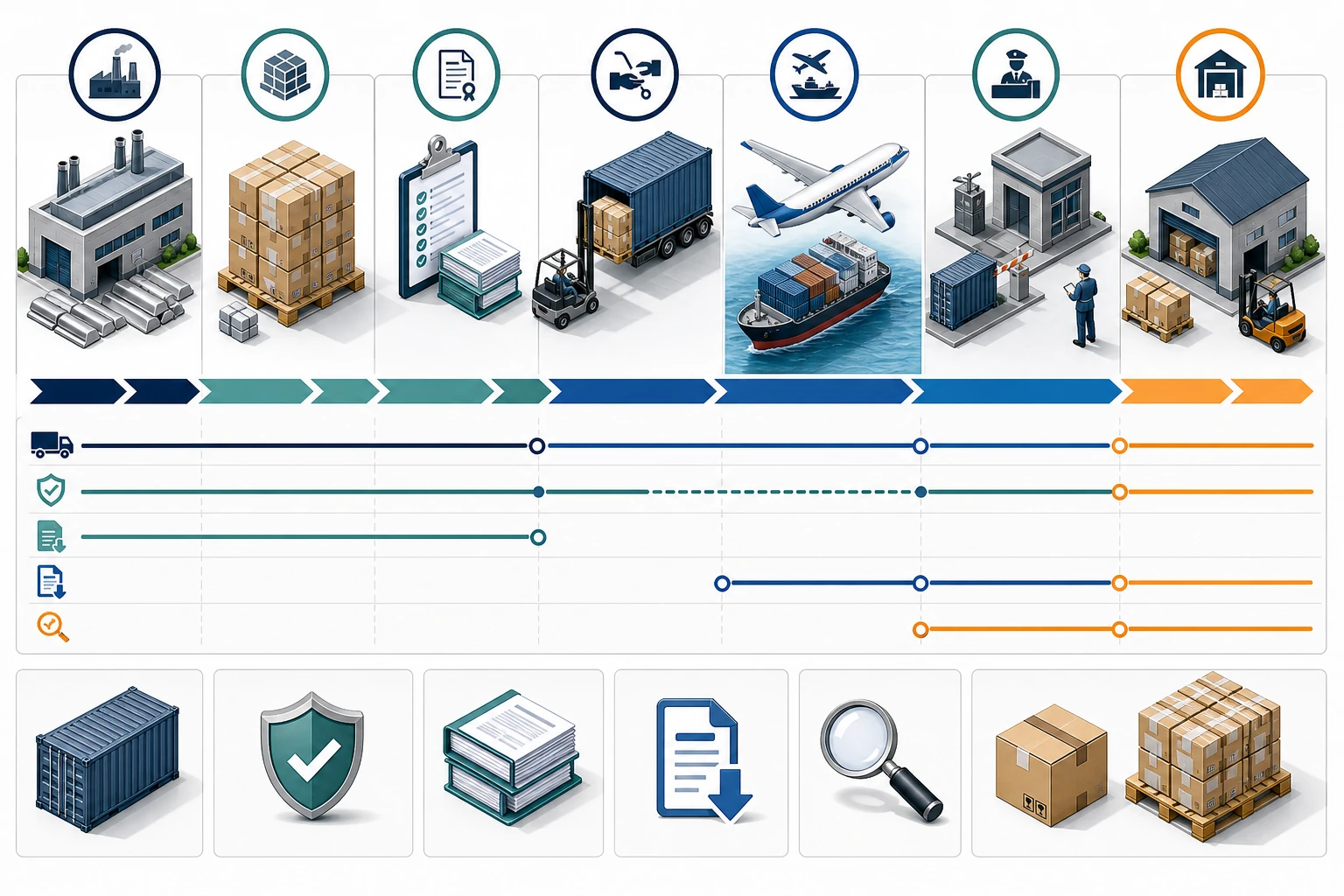
Um termo de entrega só funciona quando o local nomeado e as responsabilidades operacionais de cada parte estão escritos no plano de encomenda.
A ICC explica que a palavra "delivery" no contexto dos Incoterms está ligada a um ponto definido de transferência de risco e pode não significar o mesmo que a chegada física ao armazém do comprador. 1 Esta distinção é central para o planeamento da importação de pesos de balanceamento: a carga pode ser entregue ao abrigo do contrato num ponto enquanto o comprador ainda tem trabalho de transporte, importação ou armazém pela frente.
Use uma matriz de responsabilidades com o transitário e o vendedor em vez de uma comparação genérica de termos:
| Área de responsabilidade | Questões a resolver no plano de encomenda |
|---|---|
| Embalagem e marcas | Quem fornece o plano de caixas/paletes e as marcas exigidas pelo comprador? Quem aprova a evidência de etiquetagem? |
| Recolha e entrega | Onde exatamente é que o transportador assume o controlo, e quem reserva a recolha? |
| Processo de exportação | Quem trata das formalidades de exportação e fornece os dados ao transitário? |
| Transporte principal | Quem seleciona e paga o transportador/rota, e quem recebe as atualizações dos marcos? |
| Seguro | O seguro é exigido por contrato ou pela política do comprador, e quem o contrata? |
| Desalfandegamento de importação | Quem nomeia o despachante, fornece os documentos, confirma a classificação e paga os encargos aplicáveis? |
| Receção final | Quem organiza a entrega local, a descarga, a notificação de danos e o recibo de armazém? |
A lista de verificação dos Incoterms da ICC destaca que as regras atribuem custos e riscos e exigem um termo/local preciso escolhido no acordo de venda. 2 Use esse quadro com um prestador qualificado. Um termo que é prático para uma rota, disposição de contentor ou importador pode ser inadequado para outro.
Quais dados de caixa de papelão e palete os compradores devem verificar?
Os compradores devem verificar os dados das caixas e dos paletes como parte da especificação do produto, porque os pesos de balanceamento são densos, frequentemente fornecidos em múltiplos SKUs de aspeto semelhante, e podem incluir películas adesivas ou superfícies revestidas que necessitam de proteção. O plano de expedição deve mostrar como as mercadorias se mantêm separadas, identificáveis e estáveis desde a fábrica até ao processo de receção do comprador.
Para o detalhe ao nível do produto, use detalhes de caixas e paletes a granel por trás de uma encomenda pronta para importação. Ajuda os compradores a ligar o packout físico à mistura de SKUs e ao plano de manuseamento do armazém, em vez de pedirem apenas uma contagem de caixas.
| Nível de embalagem | Dados a solicitar | Risco do peso de balanceamento que controla |
|---|---|---|
| Produto/embalagem interior | SKU, material/unidade, incremento/perfil ou disposição dos segmentos, peças, proteção/orientação | Evita que produtos adjacentes sejam misturados e protege tiras, películas ou acabamento |
| Caixa master | Contagem da embalagem interior, peso bruto/líquido, dimensões, lista de SKUs do comprador, marca da caixa, campo de lote se acordado | Apoia a cotação de frete, o manuseamento, a receção e a investigação de reclamações |
| Palete | Caixas por camada/palete, dimensões, peso bruto, proteção com filme/cantos, posição da etiqueta | Apoia o plano de carregamento, o espaço de armazém e a estabilidade do manuseamento |
| Marca de expedição | Campos do consignatário/PO, identidade da caixa/palete, informações de manuseamento, dados de destino conforme necessário | Liga as mercadorias físicas aos documentos de expedição e às instruções de receção |
Cálculo ilustrativo de caixas e paletes
Os valores seguintes são um exemplo de planeamento, não dados de embalagem Yirox ou uma cotação de frete. Assuma que uma encomenda contém 480 caixas master. Cada caixa embalada é reportada como 20,5 kg brutos e 38 x 28 x 16 cm. O comprador planeia 40 caixas por palete e usa 12 paletes com 22 kg cada, com um envelope de palete carregado de 1,20 x 1,00 x 0,80 m.
| Dados de expedição | Cálculo | Resultado do exemplo |
|---|---|---|
| Peso bruto do cartão | 480 cartões x 20,5 kg | 840 kg |
| Volume de cartão solto | 480 x 0,38 m x 0,28 m x 0,16 m | 8,17 m3 |
| Contagem de paletes | 480 cartões / 40 cartões por palete | 12 paletes |
| Peso de tara do palete | 12 paletes x 22 kg | 264 kg |
| Peso bruto paletizado | 840 kg + 264 kg | 104 kg |
| Volume de envelope paletizado | 12 x 1,20 m x 1,00 m x 0,80 m | 11,52 m3 |
| Peso bruto por palete carregado | 40 cartões x 20,5 kg + 22 kg | 842 kg |
Os cartões soltos ocupam cerca de 8,17 m3, enquanto o envio paletizado utiliza um envelope de carregamento de 11,52 m3. Uma solicitação de frete que cota apenas o volume do cartão subestima o espaço utilizado pela configuração de palete planejada. Por outro lado, os pesos de roda são densos, portanto, os limites de peso bruto e de manuseio de paletes podem controlar o plano de transporte ou armazém, mesmo quando o volume parece modesto.
Peça ao fornecedor para fornecer dados de cartão solto e de palete final, e depois peça ao transitário para determinar como a rota será avaliada. Confirme os limites de carregamento no piso, a capacidade de paletes e empilhadeiras, as restrições da transportadora e a capacidade de descarga no destino, em vez de assumir que cada palete de 842 kg é aceitável. Para um pedido de SKU misto, reconcilie os 480 cartões por SKU antes de calcular os totais, para que um peso de envio correto não esconda uma variedade incorreta.
Peça para ver uma amostra embalada, desenho do cartão ou fotos da embalagem final antes de um primeiro envio a granel. As tiras adesivas devem permanecer planas o suficiente para a instalação pretendida e ter as bordas do forro protegidas contra poeira, esmagamento e exposição prematura. Os pesos de clipe devem permanecer classificados por perfil e incremento, com o acabamento superficial protegido contra atrito ou danos por água.
Se paletes de madeira bruta, material de estiva ou outro material de embalagem de madeira acompanhar a carga, verifique os requisitos de destino com o corretor e o provedor de logística. A estrutura ISPM 15 da IPPC aborda os riscos fitossanitários associados ao material de embalagem de madeira no comércio internacional e utiliza uma marca internacionalmente reconhecida para material tratado. 3 Se um determinado envio precisa de embalagem de madeira, o tratamento/marca aplicável ou uma alternativa deve ser confirmado para o destino; não inferir conformidade pela aparência de um palete.
Quais documentos devem ser preparados antes do envio?
Prepare os documentos enquanto as mercadorias estão sendo embaladas, não depois que a transportadora chegar. O conjunto exato depende do contrato, termo de entrega, destino, produto e requisito do comprador/cliente. O princípio de trabalho é a consistência: o pedido de compra, descrição do produto, etiquetas, lista de embalagem, fatura comercial, dados de transporte e quaisquer registros de produto de suporte devem descrever o mesmo envio.
Usar documentos de produto e de envio a preparar antes da entrega da carga para criar o arquivo específico do produto. É mais útil quando o comprador conhece o SKU pretendido, destino, termo de envio e requisitos do consignatário; não pode substituir o aconselhamento do importador/corretor sobre as regras aduaneiras nacionais atuais.
| Registro | Verificação do comprador antes da entrega da carga |
|---|---|
| Pedido de compra e ficha de SKU aprovada | Material, formato/perfil, incrementos, contagem de embalagem, etiquetas e revisão correspondem ao pedido final |
| Fatura comercial | Detalhes do vendedor/comprador, descrição do produto acordada, base de quantidade/valor e termos de venda estão corretos |
| Lista de embalagem | Contagem de cartões/paletes, quantidades de SKU, pesos, dimensões e marcas reconciliam com as mercadorias embaladas |
| Dados de transporte/reserva | Ponto de entrega nomeado, detalhes do consignatário/notificar, referência de recolha ou reserva e detalhes da rota estão corretos |
| Registro de produto/material ou solicitado pelo cliente | O escopo cobre o SKU encomendado e usa a descrição do produto acordada |
| Registros específicos de origem, seguro ou destino, se necessário | O comprador/corretor confirmou se são necessários e quem fornece cada item |
Para identificação de armazém e logística, a orientação da GS1 distingue etiquetas de item comercial em cartões/caixas externas das etiquetas usadas para unidades logísticas e explica como os identificadores podem conectar o movimento físico com registros eletrónicos. 4 Um importador de pesos de roda não precisa de aplicar todas as opções da GS1. Deve decidir quais identificadores de código de barras, SKU, lote, quantidade e palete os seus sistemas de receção e de cliente realmente exigem, e depois testá-los na amostra embalada.
Como os compradores devem planejar a inspeção e o recebimento?
Planeie a inspeção e a receção como dois controlos conectados: o primeiro confirma que as mercadorias prontas para envio correspondem ao registro de aprovação; o segundo confirma que as mercadorias recebidas correspondem ao envio esperado e chegaram em condições aceitáveis. Nenhum substitui o outro. Uma amostra pré-envio limpa não prova que uma transportadora ou terminal não danificou um cartão, e um palete intacto não prova que o fornecedor usou a configuração de produto aprovada.
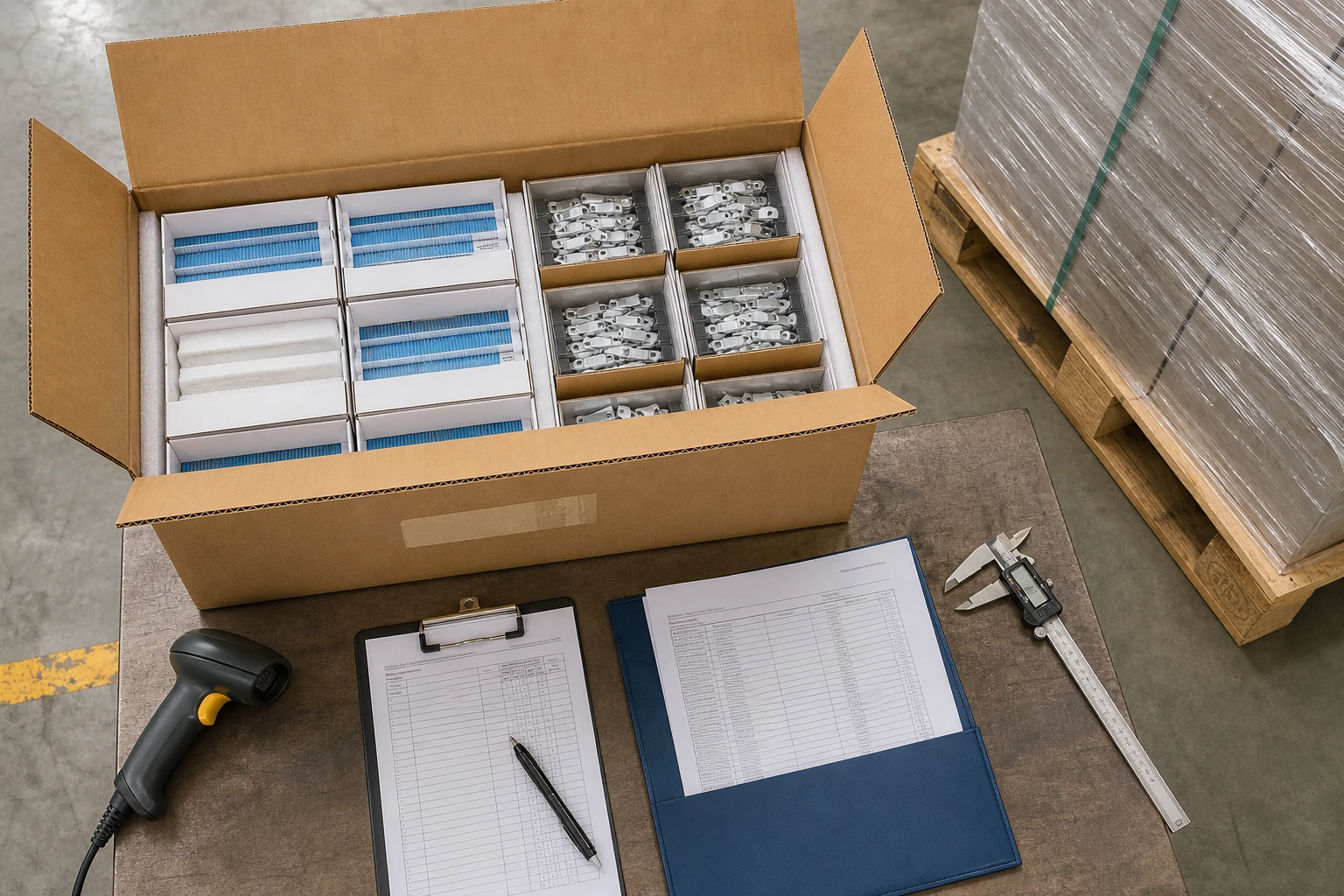
Os controlos de receção devem conectar os cartões e paletes que chegam com o SKU, quantidade, lote e documentos que foram aprovados.
Usar verificações pré-envio que conectam produtos aprovados a cartões carregados para definir a liberação do lado da fábrica. Em seguida, prepare uma lista de verificação de receção para o importador ou armazém:
- Compare a referência de entrega, contagem de paletes/cartões e marcas visíveis com os registos de transporte e embalagem.
- Fotografe embalagens danificadas, cartões molhados ou esmagados, selos quebrados ou etiquetas incorretas antes que as mercadorias sejam redistribuídas.
- Verifique uma amostra sensata de embalagens internas quanto a SKU, unidade, quantidade, orientação do produto, condição do forro/acabamento e campo de lote, quando usado.
- Digitalize dados de código de barras/etiqueta onde o programa os utiliza e reconcilie-os com o SKU esperado e a contagem de embalagens.
- Isolar variações, preservar a identidade relacionada da caixa/palete e notificar o vendedor, transportador, segurador, corretor ou contato do armazém apropriado dentro do processo acordado.
O ponto de inspeção correto depende do risco e do contrato. Um primeiro pedido, lançamento de marca própria, palete com SKUs mistos ou produto adesivo sensível a danos no forro/embalagem pode justificar uma inspeção mais detalhada do que um pedido recorrente estável. Decida o escopo antes do embarque e certifique-se de que ele se encaixa na entrega ao transportador e em qualquer requisito de notificação de reclamação.
Se você está planejando um pedido importado de peso de roda, compartilhe o destino, a preferência de Incoterm, os detalhes da caixa, as necessidades de documentação e a janela de entrega necessária. Podemos ajudá-lo a alinhar o produto, a embalagem, a entrega e o briefing de recebimento antes da cotação.
Conclusão: incluir o plano de transferência e recebimento como parte do pedido
O envio de peso de roda funciona melhor quando as mercadorias, a embalagem, a entrega, os documentos e o processo de recebimento são aprovados como um único plano de pedido. Declare o SKU e a hierarquia de embalagem claramente, use um termo/versão de entrega preciso e um local nomeado, confirme as responsabilidades com o despachante e consultores qualificados, e mantenha o pacote de documentos alinhado com as caixas e paletes.
O objetivo não é memorizar rótulos de Incoterms. É tornar a próxima entrega e evento de recebimento inequívoco para as pessoas que devem embalar, reservar, desembaraçar, descarregar e reconciliar o embarque. Solicite dados de embalagem e embarque para o pedido planejado assim que o comprador tiver uma lista de SKUs confirmada, destino, base de entrega e requisitos de recebimento.
Perguntas Frequentes
Uma regra de Incoterms inclui todos os custos e responsabilidades de envio?
Não. Uma regra de Incoterms aloca responsabilidades definidas de entrega, custo, risco e tarefas entre vendedor e comprador, mas o contrato de venda e o plano logístico ainda precisam de um local nomeado preciso, requisitos de produto/embalagem, termos de pagamento, decisões de seguro e arranjos aduaneiros específicos do destino. Confirme a interpretação atual com consultores qualificados e o despachante.
Quais informações devem estar em uma etiqueta de caixa master de peso de roda?
A etiqueta deve conter os campos necessários para o armazém do comprador e os clientes identificarem o produto, como SKU do comprador, descrição do produto, material ou unidade quando relevante, formato de perfil/incremento ou tira, quantidade, identidade da caixa e campo de lote se usado. Confirme código de barras, idioma e campos de destino antes de imprimir.
Os envios de peso de roda precisam de paletes de madeira?
Nem sempre. O transportador, armazém, destino, plano de carga e requisitos de manuseio do comprador determinam se os paletes são usados. Se material de embalagem de madeira for usado, confirme os requisitos atuais do destino, expectativas de tratamento/marcação e alternativas aceitáveis com o corretor e o provedor de logística.
Quando os documentos de importação devem ser revisados?
Revise as informações necessárias antes da produção e novamente enquanto a embalagem está em andamento, não após a entrega da carga. Isso dá ao fornecedor, comprador, corretor e despachante tempo para corrigir descrições de produtos, contagens de caixas, informações do consignatário e solicitações específicas do destino antes que as mercadorias se movam.
Como um comprador pode reduzir danos e disputas de recebimento?
Aprove uma amostra embalada, defina dados de caixa/palete/etiqueta, fotografe a condição pré-embarque, registre a referência de entrega, inspecione a condição do embarque na chegada e isole/documente qualquer variação antes que o estoque seja misturado ao armazém. Esses controles preservam as evidências necessárias para uma discussão prática de reclamação.
Referências
[1] Câmara de Comércio Internacional. “Local de Entrega e Transferência de Risco em Contratos de Comércio Internacional.” 2025.
[2] Câmara de Comércio Internacional. “Lista de Verificação e Fluxogramas dos Incoterms 2020.” 2024.
[3] Convenção Internacional de Proteção Fitossanitária. “Guia para Regulamentação de Material de Embalagem de Madeira.” 2023.
[4] GS1. “Diretriz de Etiqueta Logística GS1.” 2026.