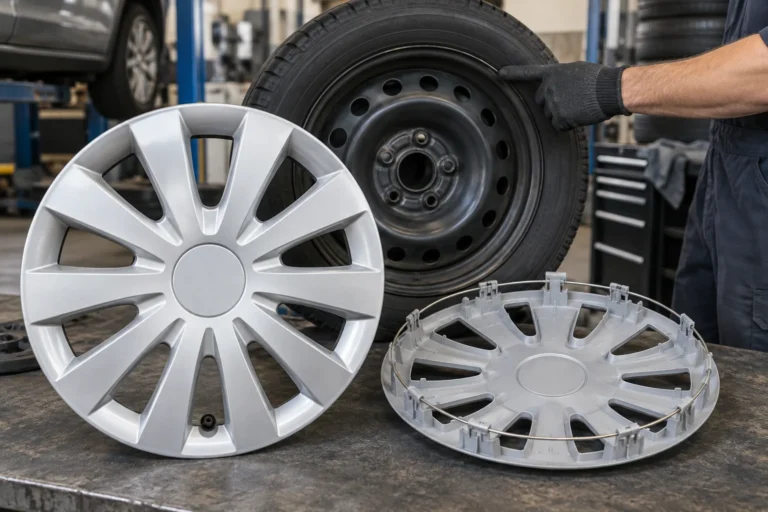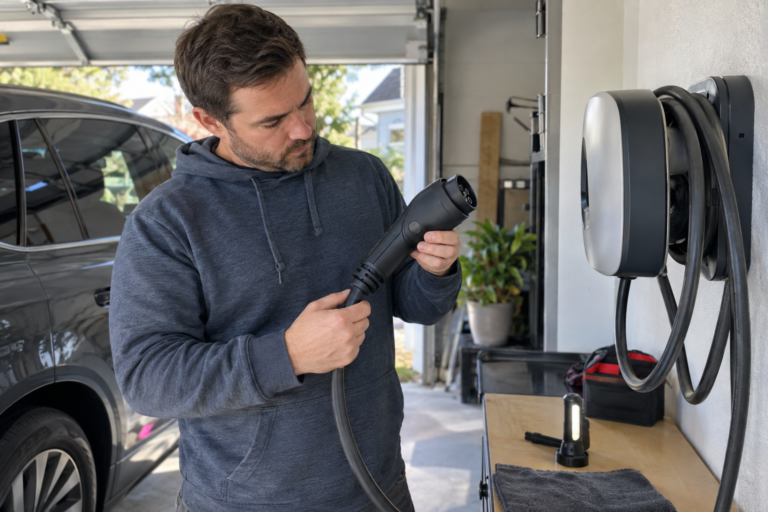




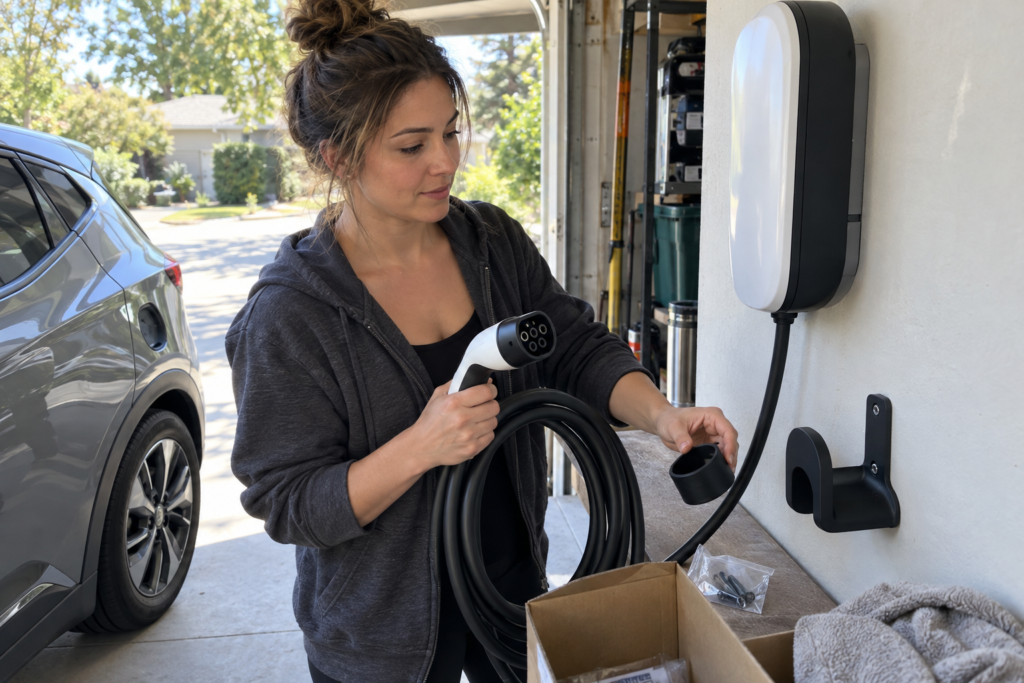
EV charging accessories are supporting products that help users connect, protect, store, mount, inspect, and manage charging equipment. The right choice depends on the vehicle inlet, charger connector, AC or DC use, current and voltage limits, site environment, target market, and evidence for the exact product configuration—not on connector shape alone.
Inicie a comparação de equipamentos confirmando o que é uma estação de carregamento de VE e qual caminho de carregamento se adequa ao veículo, ao local e ao tempo de estacionamento.
Choosing an accessory can look simple until a cable does not fit the vehicle, an adapter connects mechanically but is not approved for the intended charging mode, or a holder is installed without considering cable weight and bend radius. Home users, fleet operators, installers, distributors, and private-label buyers may all need EV charging accessories, but they do not need the same shortlist.
This guide gives you a practical sequence for choosing the right accessory, checking compatibility, reviewing documents, comparing site requirements, approving samples, and preparing a supplier request. It covers everyday home charging as well as fleet, workplace, installer, dealer, and B2B procurement decisions.
Índice
- What Are EV Charging Accessories? Start With the Charging Setup
- How Do You Build an EV Charging Accessories Shortlist?
- What Is the Five-Gate EV Charging Accessory Buying Model?
- How Do You Verify Compatibility Before You Buy?
- What Ratings, Certifications, and Documents Should You Verify?
- Which Accessories Fit Home, Fleet, Installer, and Dealer Use?
- What Should B2B Buyers Verify Before Ordering?
- How Should You Plan Samples, Bundles, MOQ, Lead Time, and Replacements?
- What Should an EV Charging Accessories RFQ Include?
- A Step-by-Step EV Charging Accessories Buying Workflow
- Conclusion: How to Choose EV Charging Accessories With Fewer Surprises
- Perguntas Frequentes
- Referências
What Are EV Charging Accessories? Start With the Charging Setup
Os acessórios de carregamento de VE são os produtos de apoio em torno de uma conexão de carregamento. Podem transportar energia, adaptar uma conexão, proteger um conector desconectado, armazenar um cabo, fixar equipamentos ou ajudar um comprador a inspecionar e gerir um programa de produtos. Um ponto de partida útil é compreender onde cada acessório se situa na configuração de carregamento. Para comparar produtos pela função que desempenham antes de elaborar uma lista restrita, consulte o guia de acessórios de carregamento de VE por função, que agrupa os acessórios em torno de conectar, proteger, armazenar, montar e manter equipamentos de carregamento.
Vehicle inlet and charger connection
A entrada do veículo é a interface no automóvel. O carregador ou a estação de carregamento pode ter um cabo fixo, uma tomada ou uma conexão de cabo separada. Um acessório pode situar-se entre estes pontos, apoiá-los ou protegê-los quando não estão em uso. Confundir a entrada do veículo com a tomada do lado da estação é uma das formas mais rápidas de encomendar o cabo ou adaptador errado. Se ainda está a separar as categorias de equipamento, o guia de cabo de carregamento de VE vs. carregador vs. estação de carregamento explica como o cabo, o equipamento de carregamento e a estação se integram no caminho de conexão.
The U.S. Department of Energy Alternative Fuels Data Center distinguishes a charging port from the connector that plugs into the vehicle. It also explains that charging time depends on the vehicle, its internal charger, the charging equipment, power output, and electrical service—not simply on the name of a connector.1 That distinction matters when a buyer is comparing cable or adapter options.
Five practical accessory groups
| Accessory group | Common examples | Primary job |
|---|---|---|
| Connection | Charging cables, adapters, connector assemblies | Connect compatible equipment |
| Protection | Plug caps, inlet covers, dust covers | Protect disconnected interfaces |
| Storage | Cable holders, holsters, hangers, docks | Support safe and organized handling |
| Instalação | Mounting plates, brackets, cable glands, support hardware | Secure and route charging equipment |
| Operações | Inspection tools, spare parts, bundles, packaging | Support maintenance and repeat supply |
Connection accessories deserve the most careful technical review because they may carry electrical current or affect communication and locking behavior. Passive products still require fitment and environmental review. A holder that cannot support the cable or a cap that does not retain correctly can create handling problems even though neither product supplies power.
For a visual overview of available product types, buyers can start with the EV charging accessories product range, then return to the decision steps below before requesting a quote or sample.
Do you need a charger or an accessory?
This guide focuses on accessories, not on designing an electrical installation or replacing a charger. A mounting bracket does not replace a charger, a cable holder does not increase charging power, and a protective cap does not make every wet or contaminated charging condition safe. If the installation itself needs electrical design, a qualified installer should define that part of the project.
How Do You Build an EV Charging Accessories Shortlist?
Build the shortlist from the charging problem and the operating environment, not from a product photo. A good shortlist identifies the problem, names the accessory class, records the compatibility boundary, and states what evidence must be checked before purchase.
Match the problem to the accessory
| Charging or handling problem | Possible accessory direction | Questions to ask |
|---|---|---|
| The vehicle and charger connections do not match | Adapter or alternative cable | Are the connectors, charging mode, ratings, communication, and approved use compatible? |
| The cable is difficult to store | Holder, holster, hanger, or wall mount | What are the cable diameter, weight, bend radius, and mounting surface? |
| The connector is exposed when disconnected | Plug cap or vehicle-inlet cover | Is the fit exact, and what protection is actually supported? |
| The charging unit needs installation support | Mounting plate, bracket, post mount, cable gland | Does the hardware fit the charger model and site structure? |
| A fleet handles cables repeatedly | Protection, storage, inspection, and replacement accessories | What is the duty cycle, environment, and spare-stock policy? |
| A dealer wants a retail-ready offer | Compatible accessory bundle and private-label packaging | What belongs in the bundle, and how will it be labeled and replenished? |
| A procurement team needs comparable quotations | Specification brief, samples, QC evidence, and RFQ | Can suppliers quote the same scope and acceptance criteria? |
Start with a minimum viable shortlist
For a home user, the first shortlist may contain one compatible cable or adapter, one storage solution, and one protection solution. For a fleet, it may contain multiple cable variants, a standardized holder, connector covers, inspection supplies, and replacement stock. For a distributor, the shortlist may be a product family with a controlled connector mix rather than a single SKU.
Avoid adding every possible accessory before the use case is clear. More SKUs do not automatically create a better program. A broad range can create slow-moving inventory, labeling confusion, and compatibility returns if the buyer cannot explain which product fits which vehicle, charger, or market.
Record the decision in a product brief
Before asking for prices, write down:
- Vehicle or charger reference
- Vehicle-side and infrastructure-side connectors
- AC or DC charging use
- Current and voltage requirements
- Cable length, diameter, and weight where relevant
- Indoor or outdoor exposure
- Mounting surface or installation condition
- Target country or market
- Sample quantity and test conditions
- Packaging, language, barcode, and branding needs
- Initial quantity and expected reorder quantity
This short brief reduces clarification cycles. It also gives multiple suppliers the same information, which makes quotations easier to compare.
What Is the Five-Gate EV Charging Accessory Buying Model?
The five-gate model turns an accessory shortlist into a controlled approval sequence: Fitment → Electrical and communication limits → Evidence → Operations → Supply. A product should move to the next gate only when the previous assumptions are recorded. This keeps a low price or attractive product photo from hiding a compatibility, safety, handling, or replenishment problem.
| Porta | Decisão a tomar | Registo mínimo | Hold the decision when |
|---|---|---|---|
| 1. Fitment | Does the accessory connect to the intended vehicle, charger, or mounting point? | Vehicle or charger reference, both connector ends, product direction, and key dimensions | The buyer knows only the connector name or product photo, but not the exact equipment combination |
| 2. Electrical and communication limits | Can the configuration operate within its intended AC/DC mode, voltage, current, phase, signaling, and locking boundaries? | Rated values, charging mode, communication requirements, temperature limits, and approved-use statement | The product fits mechanically but the exact electrical or communication boundary is unclear |
| 3. Evidence | Do the documents support this exact SKU, revision, configuration, claim, and destination market? | Datasheet, label, manual, declaration, certificate or listing, test report, and revision record | The supplier provides generic documents that do not identify the shipped product or test scope |
| 4. Operations | Can users install, handle, store, inspect, clean, and replace the accessory in the real environment? | Cable weight and bend radius, mounting surface, exposure, duty cycle, inspection points, and replacement trigger | The accessory works in a test but creates a handling, storage, service, or maintenance problem |
| 5. Supply | Can the approved configuration be sampled, produced, packaged, traced, and reordered consistently? | Approved sample, MOQ, lead-time stages, packaging, traceability, change notice, spare SKU, and reorder plan | The supplier cannot separate sample approval from production or cannot control revisions and replacements |
Use the model as a Pass / Hold / Clarify worksheet. A home buyer may complete it in one page. A fleet or dealer should complete one row for each vehicle group, charger combination, or bundle variant. The model does not replace electrical installation design or local compliance review; it makes the assumptions visible before money and inventory are committed.
How Do You Verify Compatibility Before You Buy?
Compatibility is the first two gates of the buying model: confirm fitment, then confirm electrical and communication limits. The remaining gates—evidence, operations, and supply—determine whether a technically compatible accessory is actually ready for use or purchase. A connector that fits physically is only the first gate, not the final approval.
1. Confirm the vehicle inlet
Start with the vehicle’s actual inlet, not a generic model name or an online image. Confirm the connector family, the vehicle model and model year when relevant, and whether the inlet is intended for AC charging, DC charging, or both through different portions of the interface.
For a mixed fleet, record the inlet for every vehicle group. A fleet that includes several connector families may need a controlled adapter or cable assortment, while a single-model fleet may benefit from standardization. The U.S. Department of Energy advises consumers to ask the vehicle manufacturer about charger compatibility and lists different connector patterns by charging level and use case.2
2. Confirm the charger-side connection
Next, identify what the accessory connects to on the infrastructure side:
- A fixed charging cable
- A socket-outlet on a wallbox
- A portable EVSE unit
- A workplace or depot charging station
- A standard household or industrial outlet
The same vehicle may require different accessories in different environments. A cable used with a dedicated AC charging station is not automatically interchangeable with a portable unit connected to a household outlet. The equipment-side connection, current limit, and control function all matter.
3. Check mechanical fit
Mechanical fit includes more than the pin arrangement. Check:
- Mating geometry
- Keying and orientation
- Locking mechanism
- Connector housing clearance
- Cable exit direction
- Strain-relief shape
- Insertion and removal behavior
- Holder or cap retention
For holders and mounts, mechanical fit also includes the cable’s outside diameter, connector weight, bend radius, and the available mounting space. A wall holder that is technically the right shape may still be unsuitable if the cable pulls downward, twists at the connector, or cannot be removed without excessive force.
4. Check electrical fit
O acessório deve ser adequado às condições elétricas pretendidas. Registe a tensão nominal, a corrente nominal, a fase, o modo de carregamento, a construção do cabo e as limitações de temperatura ou ambientais. Não assuma que um número aparentemente mais elevado é automaticamente mais seguro ou melhor. A configuração completa do produto e as condições de instalação determinam se a classificação é apropriada. Para interpretar os valores elétricos num cabo ou acessório, amperes, volts e quilowatts de carregamento de VE explicados esclarece como a corrente, a tensão, a fase e a potência se relacionam — sem tratar os kW como substituto da corrente nominal.
For an adapter, ask what it changes and what it does not change. An adapter may alter the physical connection while leaving the vehicle, charger, cable, current limit, communication protocol, and safety behavior unchanged. It cannot turn an incompatible charging mode into a compatible one simply because both ends can be connected.
When an adapter is the proposed solution, the adapter direction and safe-use guide helps separate physical mating from approved AC or DC use, ratings, locking, communication, and manufacturer limitations. That is the right next check when a supplier answers “yes, it fits” but has not defined the complete connection path.
5. Check communication and locking behavior
Algumas interfaces de carregamento de VE utilizam sinalização e comportamento de controlo que devem permanecer compatíveis entre o veículo, o equipamento de carregamento e o cabo ou adaptador. Os compradores devem perguntar se o produto está aprovado para a combinação pretendida e se o bloqueio, a libertação, a monitorização de temperatura ou outras funções de controlo são afetados. Se o comportamento de bloqueio ou libertação faz parte da questão de compatibilidade, como funcionam os mecanismos de bloqueio do conector de carregamento de VE explica as funções de retenção e controlo que os compradores devem distinguir.
The IEC 62196 family covers plugs, socket-outlets, vehicle connectors, vehicle inlets, and cable assemblies for conductive EV charging systems.3 That standard scope shows why a connector should be evaluated as part of a charging system rather than as an isolated shape. For adapters, the buyer should also identify whether the relevant technical requirements apply to the exact adapter type. IEC TS 62196-7:2026, for example, addresses specified DC vehicle adapters and explicitly distinguishes them from other adapter categories.4
6. Check the target market and product revision
A product may be suitable for one market, label set, or configuration and not for another. Add these fields to the compatibility record:
- Destination country or region
- Applicable connector and plug convention
- SKU do produto
- Product revision
- Label and marking
- Manual language
- Limite do teste
- Manufacturer or vehicle approval where required
- Packaging and import requirements
Never describe an accessory as “universal” unless the supplier can define exactly what universal means and provide product-level evidence. A safer statement identifies the supported vehicle, connector, charging mode, electrical range, and exclusion conditions.
A practical compatibility gate
Before ordering, every connection accessory should pass this sequence:
- Vehicle inlet confirmed.
- Charger or outlet confirmed.
- Connector ends matched.
- AC or DC use confirmed.
- Voltage, current, and phase confirmed.
- Communication and locking behavior reviewed.
- Environmental and installation conditions reviewed.
- Exact SKU, revision, label, and documents matched.
- Sample tested under intended conditions.
If one of these fields is unknown, the product is not ready for final approval. It may be suitable for an initial inquiry, but it should not be treated as an approved fitment.
Your next step: build the fitment record
If the vehicle inlet, charger-side connection, or market variant is still uncertain, move from a broad shortlist to a row-by-row fitment review. The vehicle-to-accessory fitment checklist gives buyers a practical record for vehicle groups, connector ends, AC or DC use, electrical limits, communication, locking, evidence, and Pass/Hold/Clarify decisions. Complete that row before comparing price or approving a sample.
What Ratings, Certifications, and Documents Should You Verify?
The right question is not “Does this product have a certificate?” It is “Does the available evidence match this product, this configuration, this claim, and this destination market?” Certification, declaration, test report, label, datasheet, and manual serve different purposes.
Once the product scope is fixed, use the lista de verificação da ficha de especificação do produto de acessórios de carregamento de VE to verify product identity, revision, fitment, ratings, dimensions, documents, packaging, and traceability.
Product ratings and operating limits
Para cabos e adaptadores, solicite as classificações declaradas e utilize o Marcações dos cabos de carregamento de VE explicadas guia para interpretar etiquetas e abreviaturas de fichas técnicas:
- Rated voltage
- Rated current
- Charging mode or intended use
- Cable length and construction
- Operating temperature range
- Environmental or ingress claim, when applicable
- Connector and housing specification
- Storage and handling limitations
For holders, mounts, and support hardware, also request:
Para programas de marca privada, o private-label EV charging accessories document pack checklist maps labels, manuals, declarations, test reports, barcodes, and release ownership to the exact SKU and revision.
- Rated or tested load
- Suitable cable diameter
- Suitable connector weight
- Superfície de montagem
- Hardware included or excluded
- Corrosion or outdoor-use information
- Clearance and service-access requirements
Não transfira uma classificação de uma configuração para outra. O comprimento do cabo, a caixa do conector, a disposição de arrefecimento, a carcaça do adaptador ou o sistema de montagem podem alterar o limite do produto. Quando um fornecedor faz uma alegação de IP, o que significa uma classificação IP de carregamento de VE ajuda a distinguir um código de proteção contra ingressos de alegações mais amplas sobre clima, corrosão ou adequação ao local.
Certification, declaration, and test report
These terms should not be treated as interchangeable:
| Evidência | What it generally helps establish | What the buyer still needs to check |
|---|---|---|
| Certificação ou listagem | A product or family was evaluated under a defined scheme | Exact product, variant, conditions, and current validity |
| Declaração de conformidade | A parte responsável declara a conformidade com requisitos nomeados | Legislação aplicável, identidade do produto, revisão e ficheiro de suporte |
| Relatório de ensaio | Uma amostra ou configuração definida foi testada | Laboratório, âmbito do teste, identidade da amostra, data e conclusões |
| Ficha Técnica | Características do produto e limites declarados | Se o SKU enviado corresponde à ficha |
| Label and marking | Identidade do produto, classificações e informações exigidas | Legibilidade, revisão, idioma e consistência com os documentos |
| Manual | Uso pretendido, avisos, instalação e limitações | Se o manual abrange o produto e o mercado exatos |
Para vendas na União Europeia, a marcação CE não é um logótipo universal de qualidade. O Your Europe explica que a marcação CE é exigida apenas para produtos abrangidos por regras harmonizadas da UE que a impõem especificamente, e que o fabricante é responsável por cumprir os requisitos aplicáveis e manter a documentação de suporte.5 Um comprador deve, portanto, identificar quais regras de produto da UE se aplicam ao acessório exato, em vez de solicitar “CE” como uma caixa de verificação isolada.
Produtos elétricos versus acessórios passivos
Os produtos de conexão elétrica podem exigir evidências mais detalhadas sobre corrente, tensão, isolamento, continuidade, temperatura e comportamento funcional. Tampa, coberturas, suportes e braçadeiras passivos podem exigir um conjunto de evidências diferente, focado em material, dimensões, retenção, carga, exposição ambiental e instalação.
Esta distinção é comercialmente útil. Um fornecedor que envia o mesmo certificado genérico para todos os acessórios não respondeu necessariamente à pergunta do comprador. Um pacote documental mais robusto mapeia cada SKU para o seu uso pretendido, alegações, limite de teste, etiqueta, manual e revisão.
Para uma revisão específica de mercado, os compradores podem comparar os suporte de certificação e conformidade específico do produto disponíveis de um fornecedor com os requisitos do seu próprio mercado-alvo. O pedido de documentos deve ainda nomear o produto e o destino exatos, em vez de depender de uma declaração geral da empresa.
A lista de verificação de controlo de documentos
Antes da aprovação da amostra, solicite um pacote controlado contendo, quando relevante:
- Ficha de especificação do produto
- Informações sobre conector e encaixe
- Parâmetros elétricos nominais
- Limites ambientais e de instalação
- Certificado ou listagem aplicável
- Declaração de conformidade
- Relatório de teste ou resumo de teste
- Etiqueta do produto e arte de marcação
- Manual do usuário ou de instalação
- Arte da embalagem e informações de código de barras
- Revisão do produto e histórico de alterações
- Informações de rastreabilidade ou lote
Mantenha o pacote aprovado com a amostra aprovada. Se o fornecedor alterar posteriormente a caixa do conector, a construção do cabo, a etiqueta, o manual, a embalagem ou o limite de teste, solicite um aviso de alteração e decida se a amostra ou os documentos precisam de revalidação.
Seu próximo passo: testar a cadeia de evidências
Quando um fornecedor envia um certificado, declaração ou relatório de teste, a lista de verificação de evidências documentais ajuda você a corresponder o emissor, escopo, SKU exato, revisão do produto, etiqueta, manual, alegação ambiental e mercado de destino. Use essa revisão antes de tratar um logotipo ou certificado genérico de família como aprovação para o item que você realmente comprará.
Which Accessories Fit Home, Fleet, Installer, and Dealer Use?
O melhor acessório depende da frequência com que é manuseado, onde é instalado, quem o utiliza e o que acontece quando ele falha. Usuários domésticos normalmente priorizam simplicidade e organização; operadores de frota priorizam repetibilidade, inspeção, substituição e tempo de atividade; revendedores priorizam lógica de sortimento e embalagem. O guia de acessórios de carregamento de VE por local de estacionamento compara como condições domésticas, de local de trabalho, públicas e de depósito alteram as prioridades para armazenamento, proteção, inspeção e substituição.
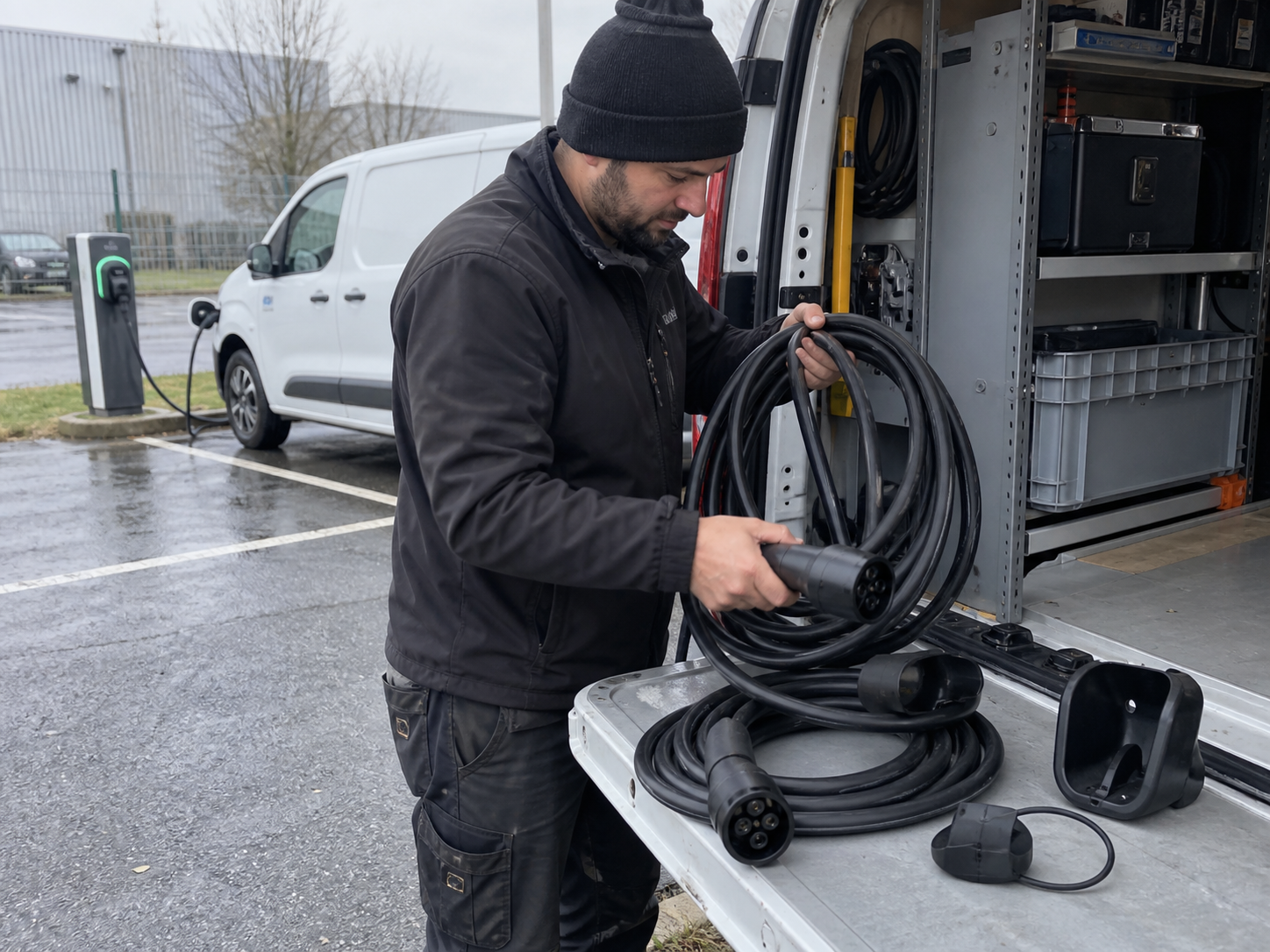
Carregamento doméstico
Compradores domésticos devem começar pela conexão do veículo e do carregador, depois decidir como o cabo será armazenado entre as sessões. Um cabo curto e leve usado em uma garagem seca pode precisar apenas de um suporte simples e proteção do conector. Um cabo mais pesado usado em uma entrada de garagem ou carport pode exigir uma montagem mais resistente, melhor roteamento e um local que impeça o conector de repousar no chão.
Perguntas de seleção doméstica incluem:
- O cabo encaixa na entrada do veículo e no carregador?
- O usuário consegue alcançar o veículo sem esticar o cabo?
- Onde o conector ficará quando desconectado?
- O suporte é adequado para o peso do cabo?
- Chuva, luz solar, poeira ou lavagem afetarão o local de armazenamento?
- O usuário consegue remover o conector sem torcer o cabo?
- A superfície de montagem é resistente e adequada para o hardware?
A solução boa mais simples geralmente é melhor do que um conjunto complexo que adiciona adaptadores não utilizados. Se o usuário trocar de veículo ou equipamento de carregamento, o registro de compatibilidade deve ser atualizado antes de comprar acessórios de reposição.
Se o principal problema é onde estacionar o cabo após o carregamento, use o guia de seleção de local para suporte e montagem na parede para comparar um coldre, gancho, dock ou montagem fixa por peso do cabo, raio de curvatura, superfície de montagem, exposição climática e frequência de manuseio. Isso transforma “preciso de um suporte de parede” em uma escolha específica para o local.
Carregamento de frota e no local de trabalho
Acessórios de frota apoiam um processo operacional repetido. A questão não é apenas se um cabo funciona no primeiro dia; é se os usuários conseguem manusear, armazenar, inspecionar, limpar, substituir e reencomendar o acessório de forma consistente em muitos pontos de carregamento. Como a rotina operacional inclui limpeza, o guia de limpeza e cuidados de acessórios de carregamento de VE ajuda a definir métodos seguros de limpeza, intervalos de inspeção e práticas a evitar para cada tipo de acessório.
Uma lista reduzida de frota pode incluir:
- Cabos de carregamento padronizados por grupo de veículos
- Suportes ou docks que mantêm os conectores fora do chão
- Tampas protetoras para conectores desconectados
- Hardware de montagem e roteamento de cabos
- Pontos de inspeção diária ou semanal
- Cabos sobressalentes e peças de reposição de alto desgaste
- Gatilhos de reencomenda com base em danos ou uso
- Embalagem que identifica o SKU de reposição correto
Registre ciclo de trabalho, clima, rotatividade de veículos, layout do depósito, espaçamento dos pontos de carregamento e responsabilidade pela manutenção. Uma frota que opera ao ar livre no inverno precisa de um plano de proteção e inspeção diferente de uma garagem de local de trabalho com baixo manuseio diário. O comprador também deve considerar como uma reposição é identificada: por grupo de veículos, tipo de conector, estação, comprimento do cabo ou SKU interno.
Seu próximo passo: converter necessidades de frota em um padrão operacional
Para uma operação com vários boxes ou vários turnos, o guia de estocagem e reposição de frota ajuda a transformar essas suposições em pontos de inspeção diária, regras de limpeza, categorias de peças sobressalentes, lógica de estoque mínimo/máximo e gatilhos de reposição. Use-o quando a decisão de compra precisar proteger o tempo de atividade após a instalação, não apenas selecionar o primeiro acessório.
Locais de frota também podem precisar de proteção específica para conectores. Se tampas ou coberturas fazem parte da configuração padrão do box, o guia de proteção e manutenção de tampas de conector ajuda a definir o encaixe do lado do plugue versus o lado da entrada, retenção, limpeza, drenagem e condições de substituição antes que o SKU sobressalente seja aprovado.
Instaladores e operadores de local
Instaladores precisam de informações de encaixe que possam ser usadas em um local real. A descrição de um produto deve mostrar em qual carregador ou invólucro ele se encaixa, quais superfícies de montagem são aceitáveis, qual hardware está incluído, como a entrada do cabo é suportada e quanto espaço livre é necessário para manutenção.
Perguntas importantes incluem:
- O suporte foi projetado para este modelo de carregador ou invólucro?
- A carga é suportada por alvenaria, metal, um poste ou outra estrutura?
- O prensa-cabo ou componente de entrada corresponde ao diâmetro do cabo?
- O alívio de tensão é fornecido onde o cabo muda de direção?
- A água, a exposição a UV, o sal ou os produtos químicos de limpeza afetam a instalação?
- Um técnico pode remover o carregador ou o cabo sem desmontar todo o sistema de suporte?
- Estão disponíveis desenhos, furos de montagem, fixadores e instruções?
O hardware de montagem não deve ser apresentado como substituto do projeto de instalação elétrica. O acessório pode suportar o equipamento, mas a proteção elétrica do local, o projeto do circuito e os requisitos de instalação local precisam de sua própria revisão qualificada.
Quando o local exige uma placa, suporte, montagem em poste, prensa-cabo ou ponto de apoio, o guia de montagem de estação e acessórios de instalação fornece a próxima camada de especificação: compatibilidade com o modelo de carregador, padrão de furos, substrato, fixadores, entrada de cabo, exposição à corrosão, espaço de manutenção e documentos de entrega. Esse é o caminho útil para um instalador que já conhece o carregador, mas não o hardware de suporte.
Revendedores e marcas próprias
Os revendedores precisam de uma oferta coerente, e não de uma lista aleatória de peças. Um pacote pode agrupar um cabo, adaptador, tampa de conector, suporte, estojo de armazenamento ou acessório de instalação em torno de um caso de uso definido. Cada item do pacote deve ser compatível com o veículo, carregador, mercado e conteúdo da embalagem declarados.
Antes de aprovar um pacote de revendedor, confirme:
- O cliente-alvo e o caso de uso
- A combinação de veículos e conectores
- O conteúdo exato e as exclusões
- A quantidade de amostras e o processo de aprovação
- Os requisitos de logotipo, cor, caixa, código de barras e etiqueta
- Os requisitos de idioma do manual e de advertências
- O MOQ para cada componente e para o pacote montado
- A lógica de substituição e recompra
A embalagem de marca própria não deve ocultar limites técnicos. Se um adaptador funciona apenas com um modo de carregamento ou família de produtos especificada, as instruções e a embalagem devem dizer isso claramente. Limites claros reduzem devoluções e protegem a equipe de vendas do revendedor de fazer alegações universais.
Seu próximo passo: projetar um pacote de revendedor controlado
Para um varejista ou marca própria, o guia de pacotes de revendedor e marcas próprias ajuda a transformar esta lista curta em um SKU mestre com conteúdos de componentes definidos, variantes de conectores, embalagem, código de barras, idioma do manual, MOQ, aprovação de amostras e controles de recompra. Use esse caminho quando a questão comercial não for mais “qual acessório?”, mas “qual conjunto compatível podemos vender e reabastecer sem confusões?”
Os revendedores também precisam de um processo de lançamento. O checklist de integração de distribuidores de acessórios de carregamento de VE conecta o catálogo a arquivos de compatibilidade, amostras, preços, MOQ, treinamento, garantia e contatos de fornecedores.
What Should B2B Buyers Verify Before Ordering?
Os compradores B2B devem avaliar um programa de produtos em quatro camadas: compatibilidade, evidências, execução de fornecimento e suporte pós-venda. Um preço unitário baixo não compensa uma combinação errada de conectores, documentos ausentes, revisões descontroladas ou um processo de substituição que não consegue identificar o SKU correto.
Se a decisão depende da consistência de produção e não de uma alegação do fornecedor, o lista de verificação de auditoria de fábrica de acessórios para carregamento de VE ajuda os compradores a revisar materiais recebidos, testes, capacidade, rastreabilidade e ações corretivas.
Fitment and product scope
Peça ao fornecedor que declare o limite do produto por escrito:
- Qual interface de veículo ou carregador é suportada?
- Qual é a combinação de conectores?
- O produto é para CA, CC ou apenas para um uso definido?
- Quais limites de corrente, tensão, fase e temperatura se aplicam?
- Quais dimensões de comprimento de cabo, diâmetro, carcaça e montagem estão incluídas?
- O que está excluído da cotação?
Se a solicitação contiver várias famílias de conectores, peça uma matriz em vez de um parágrafo. Uma matriz torna visíveis as combinações ausentes e ajuda o comprador a comparar fornecedores na mesma base.
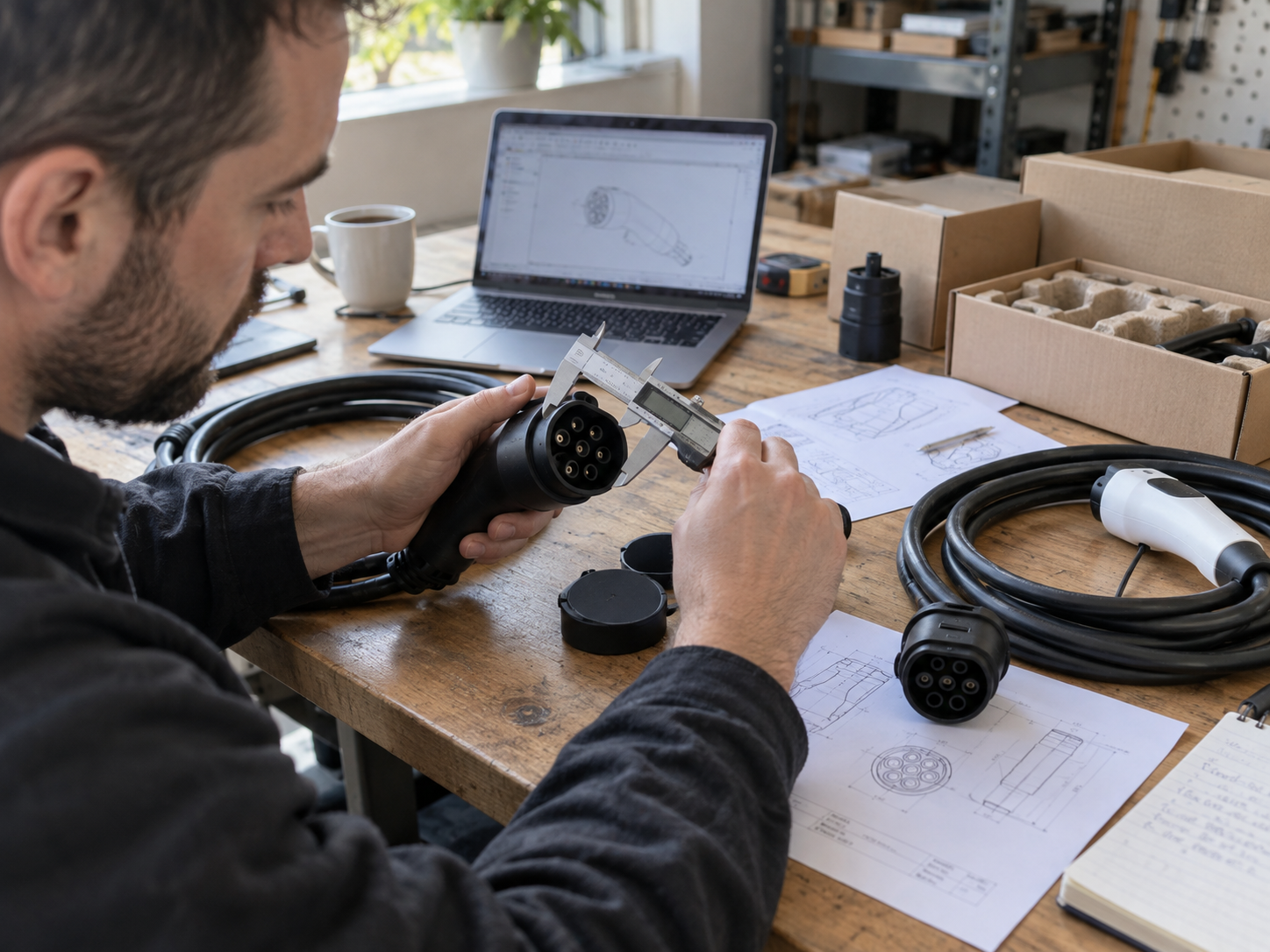
Validação de amostras
A amostra aprovada deve ser uma referência controlada, não uma fotografia informal. Registre:
- SKU and revision
- Data da amostra
- Resultado de conector e compatibilidade
- Dimensões e peso quando relevante
- Condição visual e acabamento
- Condição da capa do cabo, alívio de tensão e terminal
- Marcações e etiquetas
- Packaging and manual
- Test conditions and acceptance criteria
- Responsável pela aprovação e data de aprovação
Para um cabo ou adaptador, as verificações de compatibilidade e funcionais devem ser realizadas na combinação de equipamentos pretendida. Para um suporte ou montagem, confirme carga, superfície de instalação, retenção e comportamento de remoção. Para uma tampa ou cobertura, confirme ajuste, retenção, limpeza e a alegação ambiental exata.
Seu próximo passo: definir a aprovação de amostras
Se o primeiro pedido depende do desempenho do cabo ou de uma aprovação de amostra repetível, continue com a lista de verificação de aprovação de amostras de cabos. Ele separa identidade, compatibilidade do conector, terminais, capa, flexibilidade, alívio de tensão, marcações, documentos, embalagem, amostras de controle retidas, inspeção de recebimento e liberação pré-embarque para que “amostra aprovada” tenha um significado reproduzível.
Como é uma matriz simples de comprador?
Use uma linha para cada combinação real em vez de marcar uma família inteira de produtos como compatível. O exemplo a seguir é intencionalmente simples; substitua os campos entre colchetes pelas informações verificadas do comprador.
| Caso de uso | Lado do veículo ou equipamento | Acessório e limite operacional | Evidence required | Verificação operacional | Decisão de fornecimento |
|---|---|---|---|---|---|
| Início | [modelo/ano do veículo + entrada] e [modelo do wallbox + conector] | [modo CA], [corrente/tensão], [comprimento do cabo]; cabo, suporte e tampa | Datasheet exato do SKU, declaração de compatibilidade, manual, etiqueta e limites ambientais | Peso do cabo, raio de curvatura, material da parede, exposição externa, retenção do conector | Aprovar uma amostra; registrar SKU de substituição e embalagem |
| Frota | [grupo de veículos A/B + entrada] e [tipo de estação] | [modo CA ou CC], [classificação]; cabo padronizado, suporte, tampa e sobressalente | Matriz veículo-para-acessório, registro de teste, revisão, critérios de inspeção e rastreabilidade | Manuseio diário, limpeza, clima, layout do depósito, gatilho de dano e localização de sobressalentes | Aprovar amostras representativas por grupo de veículos; definir gatilho de recompra |
| Revendedor ou marca própria | [família de conectores suportada] e [uso definido no lado do carregador] | [modo e classificação definidos]; conteúdo do pacote e exclusões | Pacote do produto, etiquetas, manuais, declarações, arte da embalagem e matriz de variantes | Manuseio no varejo, leitura de código de barras, idioma, proteção da caixa e identificação de devolução | Confirmar MOQ por componente, MOQ do pacote, etapas de prazo de entrega e aviso de alteração |
Se uma célula não puder ser preenchida, marque a linha Retido ou Clarify. Isso é mais útil do que forçar uma alegação prematura de “universal”.
Quality and traceability
Solicite uma explicação concisa sobre controle de material recebido, inspeção em processo, inspeção final e rastreabilidade de lote. Pergunte quais verificações são realizadas em cada unidade e quais são realizadas por amostragem. Se um fornecedor usar testes de terceiros, confirme que o relatório identifica o produto ou a configuração testada.
O objetivo não é exigir o documento de qualidade mais longo possível. O objetivo é provar que o produto entregue pode ser comparado com uma especificação e amostra aprovadas. Um relatório curto e específico do produto costuma ser mais útil do que uma apresentação genérica cheia de slogans de qualidade.
Prontidão de embalagem e canal
A embalagem afeta mais do que a aparência. Ela protege conectores e cabos, comunica o uso correto, identifica o SKU, apoia o manuseio no armazém e ajuda o revendedor a vender a variante correta. Confirme dimensões da caixa, proteção interna, código de barras, idioma, manual, marcas, paletização e se a embalagem é padrão ou personalizada.
Para distribuidores e marcas próprias, pergunte como o fornecedor controla revisões de embalagem. Uma etiqueta, instrução, código de barras ou aviso alterado pode criar uma incompatibilidade entre o produto físico e o canal de vendas mesmo quando o hardware em si não mudou.
Um acessório aprovado ainda pode criar risco se um fornecedor alterar um conector, material, etiqueta ou manual sem aprovação. Use o EV charging accessories change-control guide para definir notificação, revalidação, transição de estoque e liberação de documentos.
Capacidade e serviço do fornecedor
Peça evidências de:
- Cobertura relevante de produtos
- Suporte de engenharia ou especificação
- Manuseio de amostras
- Controle de documentos
- Rastreabilidade de lote ou embarque
- MOQ realista e separação de prazos de entrega
- Disponibilidade de peças de reposição
- Processo de garantia e reclamações
- Notificação de alteração
- Suporte de exportação e embalagem
Compradores que avaliam um programa de produto automotivo mais amplo também podem consultar o visão geral do fornecedor de acessórios de carregamento EV OEM, mas a decisão final deve permanecer vinculada ao produto exato, mercado-alvo, pacote de evidências e critérios de aceitação.
Seu próximo passo: qualificar o fornecedor, não apenas o produto
Quando vários fornecedores podem cotar um cabo, adaptador, suporte ou kit similar, use a lista de verificação de qualificação de fornecedores e RFQ para comparar cobertura de produto, evidências de compatibilidade, amostras, QC e rastreabilidade, documentos de conformidade, embalagem OEM/marca própria, MOQ, estágios de prazo de entrega, peças de reposição, garantia e controle de alterações. O objetivo é identificar quem pode reproduzir a configuração aprovada no próximo pedido.
How Should You Plan Samples, Bundles, MOQ, Lead Time, and Replacements?
Amostras, personalização, embalagem, produção, envio e reabastecimento são estágios separados. Tratá-los como um único “prazo de entrega” vago dificulta o planejamento de um lançamento ou a comparação de cotações.
Se o projeto inclui logotipo, embalagem, cor, ferramental ou alterações de engenharia, o custom EV charging accessories OEM and private-label brief ajuda a separar personalização cosmética de aprovação de engenharia.
Defina o estágio da amostra
Indique se a amostra é para:
- Connector fitment
- Avaliação funcional ou de carregamento
- Aprovação visual e de acabamento
- Revisão de embalagem
- Teste de instalação
- Teste de manuseio em frota
- Revisão de documentos e etiquetas
Se várias variantes estiverem envolvidas, solicite amostras suficientes para representar a faixa real. Uma única amostra de conector não prova que todos os conectores, comprimentos de cabo, carcaças ou configurações de adaptador se comportarão da mesma forma.
Para um pedido de amostra, defina quantidade e variantes antes de pedir o preço. O Lista de verificação de pedido de amostra de acessórios de carregamento de VE ajuda a registrar compatibilidade, função, aparência, embalagem, evidências e resultados de aprovação.
Separe fornecimento padrão e personalizado
Produtos padrão podem precisar apenas de seleção, amostragem e revisão de embalagem. Produtos personalizados podem adicionar arte, cor, comprimento de cabo, alterações de carcaça, ferramental, testes, revisão de documentos e novas etapas de aprovação. Peça ao fornecedor para separar esses estágios na cotação em vez de combiná-los em uma única promessa de entrega.
Peça um detalhamento do prazo de entrega
Um cronograma útil separa:
- Revisão de especificação
- Preparação de amostra
- Envio de amostra
- Teste e aprovação do comprador
- Aprovação de arte ou documento
- Preparação de material
- Produção
- Final inspection
- Embalagem
- Envio
O tempo varia conforme produto, quantidade, personalização, mercado e cronograma do fornecedor. O ponto não é exigir um número universal; é tornar as premissas visíveis.
Planeje kits e reabastecimento
Para um kit, calcule a lógica de MOQ e reabastecimento de cada componente. Se uma tampa ou adaptador tiver um prazo de entrega maior que o cabo, ele pode se tornar a restrição do pacote completo. Se um revendedor vende várias variantes de conector, o pacote deve identificar cada versão com clareza suficiente para que as equipes de armazém e atendimento ao cliente evitem trocas.
MOQ e prazo de entrega devem começar após os eventos reais de aprovação serem conhecidos. O guia de planejamento de MOQ e prazo de entrega para acessórios de carregamento de VE separa amostras, ferramental, produção, embalagem, envio e timing de recompra.
Para uma frota, defina gatilhos de substituição, como carcaça danificada, travamento não confiável, danos na capa do cabo, tampa ausente, falha em inspeção ou mudança no grupo de veículos. O gatilho deve identificar o SKU de substituição e o responsável, não apenas dizer “substituir quando desgastado”.”
O planejamento de substituição fica incompleto sem termos de serviço. O EV charging accessories warranty and after-sales requirements guia ajuda a definir exclusões, evidências de reclamação, tempo de resposta, suporte de peças de reposição e responsabilidades de marca própria.
What Should an EV Charging Accessories RFQ Include?
Uma RFQ eficaz fornece a todos os fornecedores as mesmas informações técnicas, comerciais e de mercado. Ela deve permitir que um fornecedor diga o que está incluído, o que está excluído, quais evidências estão disponíveis e quais premissas afetam o preço ou o prazo de entrega.
Para transformar esses requisitos em uma solicitação pronta para fornecedores, use o Modelo de RFQ para acessórios de carregamento de VE para que cada fornecedor receba os mesmos campos de compatibilidade, elétricos, de documentos, quantidade, embalagem e controle de alterações.
| Campo da RFQ | Informações a fornecer |
|---|---|
| Caso de uso | Residencial, frota, local de trabalho, instalador, revendedor ou marca própria |
| Vehicle or charger reference | Modelo de veículo, entrada, modelo de carregador, tomada ou referência de estação |
| Tipo de produto | Cabo, adaptador, suporte, tampa, montagem, pacote ou peça de reposição |
| Detalhes do conector | Requisitos do conector do lado do veículo e do lado da infraestrutura |
| Electrical details | CA ou CC, corrente, tensão, fase, modo de carregamento e comprimento do cabo |
| Ambiente | Ambiente interno, externo, UV, chuva, poeira, corrosão, temperatura ou exposição à limpeza |
| Mechanical details | Diâmetro do cabo, peso do conector, superfície de montagem, carga, raio de curvatura e folga |
| Documentos | Ficha técnica, manual, declaração, certificado, relatório de ensaio, etiqueta e necessidades de rastreabilidade |
| Quantidade | Quantidade de amostra, primeiro pedido, previsão anual e expectativa de recompra |
| Embalagem | Caixa de varejo, caixa a granel, código de barras, idioma, palete e marcas de caixa |
| 2 Peças | Logotipo, cor, comprimento do cabo, combinação de conectores, conteúdo do pacote ou arte gráfica |
| Commercial terms | MOQ, custo de amostra, ferramental, etapas de prazo de entrega, garantia, peças de reposição e premissas de envio |
Modelo de RFQ copiável
Os compradores podem copiar os campos a seguir em um e-mail ou formulário de cotação. Pedir aos fornecedores que retornem a mesma estrutura torna as cotações comparáveis e expõe premissas ausentes antecipadamente.
| Campo da RFQ | Entrada do comprador ou resposta do fornecedor |
|---|---|
| Projeto / caso de uso | Residencial, frota, local de trabalho, instalador, revendedor, marca própria ou OEM |
| Target country or market | País de destino, região e canal de vendas |
| Grupos de veículos e referências de entrada | Modelo ou grupo de veículo, ano do modelo quando relevante e tipo de entrada |
| Referências do carregador, tomada ou lado da estação | Modelo do carregador, tipo de tomada, referência da estação ou detalhes do cabo fixo |
| Tipo de acessório e função pretendida | Cabo, adaptador, tampa, suporte, montagem, pacote ou peça de reposição; declare a função que deve desempenhar |
| Modo de carregamento CA ou CC | Modo de carregamento e uso definido; não deixe isso como “universal” |
| Requisitos elétricos | Tensão, corrente, fase, comprimento do cabo, modo de carregamento e faixa de temperatura |
| Requisitos mecânicos | Dimensões do conector, diâmetro do cabo, peso, raio de curvatura, carga, folga e superfície de montagem |
| Ambiente | Uso interno ou externo, UV, chuva, poeira, corrosão, limpeza e exposição à temperatura |
| Documentos necessários | Ficha técnica, etiqueta, manual, declaração, certificado ou listagem, relatório de ensaio, revisão e rastreabilidade |
| Plano de amostra e teste | Quantidade de amostra, combinação de equipamentos, condições de teste, critérios de aceitação e responsável pela aprovação |
| Quantidade e previsão | Quantidade do primeiro pedido, previsão anual, expectativa de recompra e requisito de estoque de peças sobressalentes |
| Conteúdo da embalagem e do pacote | Código de barras, idioma, marca, caixa, palete, conteúdo do pacote, exclusões e rotulagem |
| 2 Peças | Logotipo, cor, comprimento do cabo, combinação de conectores, ferramental, arte gráfica ou alterações de documentos |
| Resposta do fornecedor obrigatória | SKU exato, inclusões e exclusões, MOQ, custo de amostra, etapas de prazo de entrega, garantia, peças de reposição, processo de controle de alterações e validade da cotação |
Não peça apenas o “melhor preço”. Peça aos fornecedores que cotem o mesmo escopo e declarem as premissas comerciais. Se um produto ainda não estiver totalmente especificado, solicite duas ou três opções claramente separadas em vez de permitir que o fornecedor escolha uma configuração não declarada.
Os compradores também podem usar o Yirox soluções de sourcing de produtos automotivos para organizar referências de veículos ou conectores, requisitos elétricos, contagens de amostras, documentos de mercado, embalagens e necessidades de cotação antes de contatar um fornecedor.
A Step-by-Step EV Charging Accessories Buying Workflow
Use este fluxo de trabalho de sete etapas para uma compra residencial, programa de frota, pacote de revendedor ou solicitação OEM.
Etapa 1: Defina o caso de uso
Declare quem usará o produto, onde ele será usado, com que frequência será manuseado e qual seria o custo de uma falha. Uma garagem residencial, depósito de frota, projeto de instalador e pacote de varejo não devem começar com a mesma premissa.
Etapa 2: Identifique ambos os lados da conexão
Registre a entrada do veículo e a conexão do carregador, tomada ou lado da estação. Adicione a referência real do veículo ou equipamento e a revisão do produto quando disponível.
Etapa 3: Confirme os limites elétricos e de comunicação
Confirme CA ou CC, corrente, tensão, fase, comprimento do cabo, modo de carregamento, comunicação, travamento e limites de temperatura. Se um adaptador estiver envolvido, defina exatamente o que ele adapta e o que ele não altera.
Etapa 4: Corresponder o local e o ambiente de manuseio
Escolha armazenamento, proteção e montagem com base no peso do cabo, raio de curvatura, superfície de montagem, exposição interna ou externa, limpeza, corrosão, acesso para manutenção e frequência de manuseio. Para decisões de roteamento e suporte de cabos, o Guia de raio de curvatura e alívio de tensão para cabos de carregamento de VE explica por que os limites aprovados de curvatura e terminação são importantes ao escolher um ponto de armazenamento ou montagem.
Etapa 5: Solicitar evidências específicas do produto
Solicite a ficha técnica, etiqueta, manual, declaração, certificado ou listagem, relatório de ensaio, revisão, arquivos de embalagem e informações de rastreabilidade que se aplicam ao produto exato e ao mercado de destino.
Etapa 6: Aprovar amostras representativas
Teste a configuração real nas condições previstas. Registre ajuste, função, aparência, embalagem, documentos e critérios de aceitação. Mantenha a amostra aprovada ou um registro controlado para comparação de produção. Durante a revisão de amostras e a inspeção de rotina, use o Guia de sinais de alerta para acessórios de carregamento de VE para definir quando calor, danos, umidade ou mau ajuste devem acionar uma decisão de retenção ou interrupção de uso.
Etapa 7: Liberar o pedido com premissas visíveis
Separe prazos de amostra, prazos de aprovação, produção, embalagem, envio, MOQ, garantia, peças de reposição e requisitos de controle de alterações. Um pedido claro é mais fácil de produzir, inspecionar, receber e repetir.
Conclusion: How to Choose EV Charging Accessories With Fewer Surprises
O melhor acessório de carregamento de VE não é simplesmente aquele com mais conectores, a classificação aparentemente mais alta ou o menor preço unitário. Aplique os cinco portões na ordem: Instalação, Limites elétricos e de comunicação, Evidência, Operações, e Fornecimento. O produto aprovado é aquele que passa por todos os cinco para o veículo, local, mercado e plano de reposição pretendidos.
Para usuários domésticos, comece por ajuste, manuseio, armazenamento e proteção. Para frotas, adicione ciclo de trabalho, inspeção, substituição e planejamento de reposição. Para instaladores, confirme montagem, entrada de cabo, acesso para manutenção e condições do local. Para revendedores e compradores B2B, adicione amostras, controle de documentos, embalagem, MOQ, prazo de entrega e capacidade do fornecedor.
Se você está preparando uma lista restrita ou RFQ de acessórios para VE, solicite uma análise de acessórios para VE específica do comprador com a referência do veículo ou carregador, detalhes do conector, mercado-alvo, quantidade de amostras, necessidades de embalagem e volume esperado. Essas informações dão ao fornecedor contexto suficiente para discutir ajuste, documentos, amostras e premissas de cotação antes de um pedido ser liberado.
Perguntas Frequentes
Quais são os acessórios de carregamento de VE mais importantes para uso doméstico?
A maioria dos usuários domésticos deve primeiro confirmar o cabo ou adaptador correto, depois considerar um suporte de cabo e proteção do conector. A lista restrita exata depende da entrada do veículo, carregador ou tomada, peso do cabo, local de armazenamento, exposição interna ou externa e da distância em que o veículo está estacionado do ponto de carregamento.
O que é o modelo de compra de acessórios de carregamento de VE de cinco portões?
É uma sequência de aprovação reutilizável: Fitment → Electrical and communication limits → Evidence → Operations → Supply. Os compradores primeiro confirmam a combinação exata de equipamentos, depois verificam limites operacionais, documentos do produto, manuseio no mundo real e condições de fornecimento repetíveis. Se qualquer portão for desconhecido, a linha deve ser retida ou esclarecida antes da aprovação final.
Os acessórios de carregamento de VE servem em todos os veículos elétricos?
Não. A compatibilidade depende da entrada do veículo, conector do lado do carregador, modo de carregamento, limites de corrente e tensão, comportamento de comunicação ou travamento, requisitos de mercado e revisão do produto. Um conector que se encaixa fisicamente não é evidência suficiente de que um acessório é aprovado ou adequado para todos os veículos.
Como verifico a compatibilidade do cabo de carregamento de VE?
Registre a entrada do veículo, carregador ou tomada, uso CA ou CC, corrente, tensão, fase, comprimento do cabo e mercado-alvo. Depois compare esses detalhes com a ficha técnica exata do produto, etiqueta, manual e evidências do fornecedor. Para frotas mistas, crie uma matriz de ajuste veículo-para-cabo antes de fazer o pedido.
Um adaptador de carregamento de VE pode transformar carregamento CA em carregamento CC?
Um adaptador geralmente altera uma conexão física entre equipamentos compatíveis definidos; ele não converte automaticamente energia CA em CC nem cria compatibilidade que o veículo, carregador, cabo ou sistema de comunicação não suporta. Confirme o tipo exato de adaptador, modo de carregamento, classificações, uso aprovado e documentação.
Quais documentos devo solicitar de um fornecedor de acessórios de carregamento de VE?
Solicite uma ficha de especificação do produto, detalhes do conector e ajuste, classificações elétricas e ambientais, certificação ou listagem aplicável, declaração, relatório de ensaio, etiqueta do produto, manual, informações de revisão, arquivos de embalagem e informações de rastreabilidade. Os documentos devem identificar o SKU e a configuração exatos, e não apenas a família de produtos do fornecedor.
As tampas de conector tornam o carregamento de VE seguro em condições úmidas?
Tampas e coberturas podem ajudar a proteger superfícies desconectadas do plugue ou da entrada contra poeira, sujeira, umidade e danos de manuseio. Elas não provam automaticamente que o carregamento é seguro em todas as condições úmidas ou contaminadas. Selecione o ajuste correto e use apenas as alegações ambientais apoiadas pelas evidências específicas do produto.
Quais acessórios as frotas de VE precisam?
Programas de frota geralmente precisam de cabos ou adaptadores padronizados, suportes ou docks, proteção de conector, suporte de montagem, pontos de inspeção, peças de reposição, SKUs de substituição e regras de reposição. A combinação certa depende do ciclo de trabalho, grupos de veículos, layout do depósito, clima, limpeza, comportamento de manuseio e processo de manutenção do operador.
O que deve ser incluído em um pacote de acessórios de carregamento de VE?
Um pacote deve agrupar produtos compatíveis em torno de um caso de uso definido, como carregamento doméstico, viagem, carregamento no trabalho ou manutenção de frota. Defina o ajuste do veículo e conector, conteúdo exato do pacote, etiquetas, idiomas do manual, embalagem, MOQ, aprovação de amostra, lógica de substituição e exclusões antes de aprovar o pacote.
O que devo incluir em um RFQ de acessórios de carregamento de VE?
Inclua o caso de uso, referência do veículo ou carregador, combinação de conectores, uso CA ou CC, corrente e tensão, dimensões do cabo ou da montagem, condições ambientais, documentos, quantidade de amostras, primeiro pedido, previsão, embalagem, personalização, MOQ, prazo de entrega, garantia, peças de reposição e requisitos do mercado-alvo. Um RFQ completo torna as cotações dos fornecedores comparáveis.
Referências
[1] Centro de Dados de Combustíveis Alternativos do Departamento de Energia dos EUA. “Electric Vehicle Charging Stations.” 2026.
[2] Centro de Dados de Combustíveis Alternativos do Departamento de Energia dos EUA. “Electric Vehicles for Consumers.” 2026.
[3] International Electrotechnical Commission. “IEC 62196-1:2022 Plugues, Tomadas, Conectores de Veículos e Entradas de Veículos.” 2022.
[4] International Electrotechnical Commission. “IEC TS 62196-7:2026 Adaptadores de Veículos.” 2026.
[5] União Europeia Your Europe. “Marcação CE – Obtenção do Certificado e Requisitos da UE.” 2026.