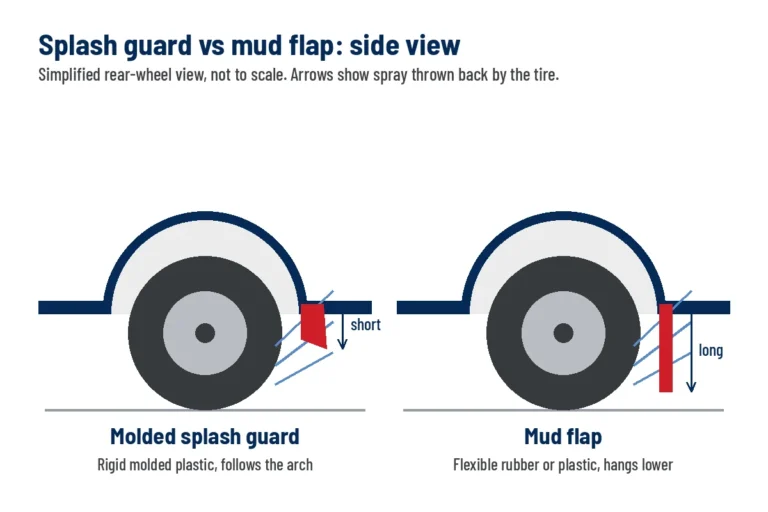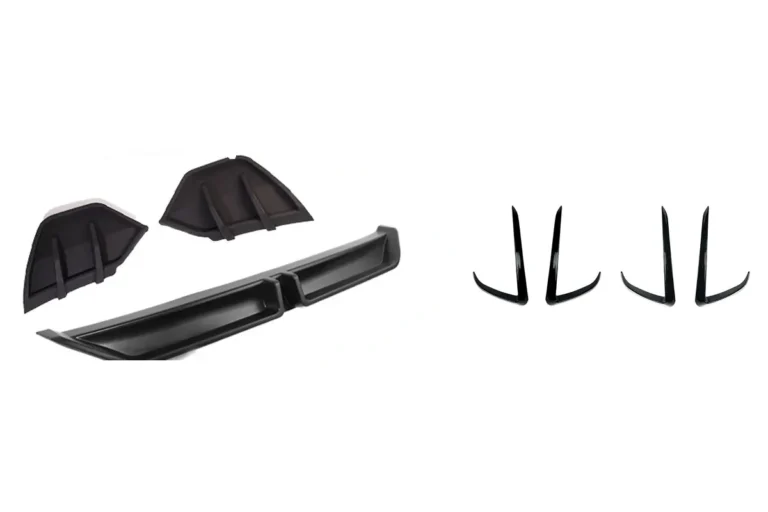




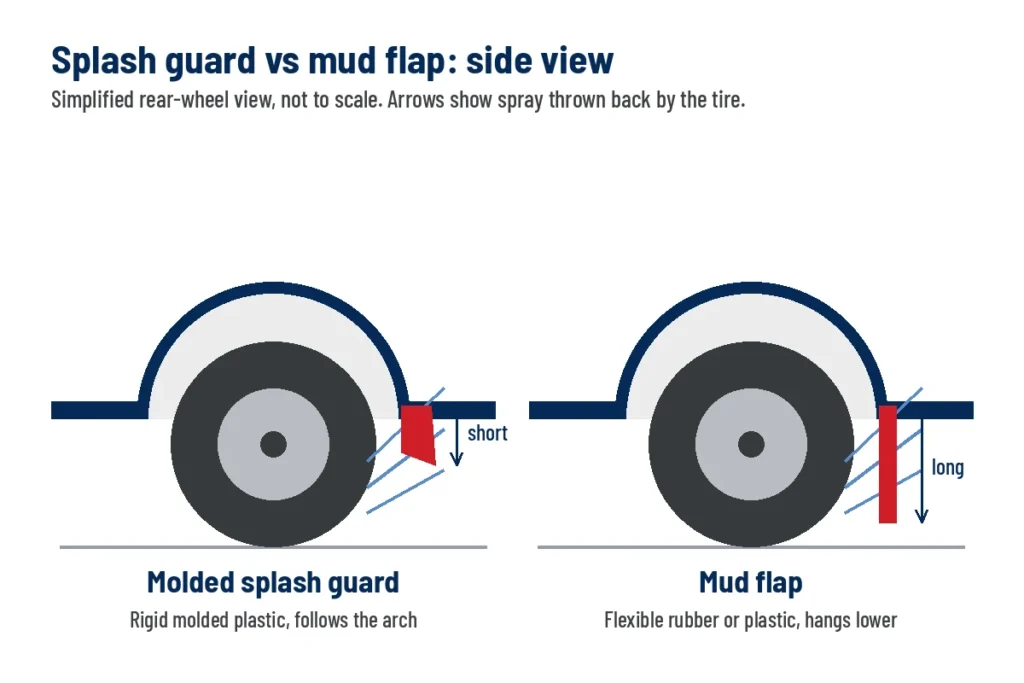
La diferencia entre faldillas y protectores contra salpicaduras se reduce al tamaño, el material y el ajuste: los protectores contra salpicaduras suelen ser piezas de plástico moldeado rígido pequeñas, con forma para un vehículo específico, mientras que las faldillas son láminas de goma o plástico más grandes y flexibles que cuelgan más abajo detrás del neumático. Ambos evitan que los neumáticos lancen barro, agua, sal y piedras sobre la carrocería y otros usuarios de la vía.
Alcance: esta guía compara los dos tipos de piezas y explica cómo elegirlas para automóviles, pickups y vehículos eléctricos, incluidas las normas que se aplican a los camiones. Para otros accesorios de pickup, consulte Estribos vs barras Nerf vs escalones eléctricos; para piezas del Model Y en general, consulte Accesorios para Tesla Model Y.
¿Cuál es la diferencia entre faldillas y protectores contra salpicaduras?
La respuesta corta: un protector contra salpicaduras es una pieza compacta y contorneada que sigue la forma del paso de rueda, y una faldilla es una lámina más larga, más plana y normalmente más flexible que cuelga más cerca de la carretera. En el uso cotidiano los dos nombres se solapan, y muchas marcas venden el mismo producto con ambos. Aun así, los compradores que buscan cada término suelen esperar cosas diferentes.
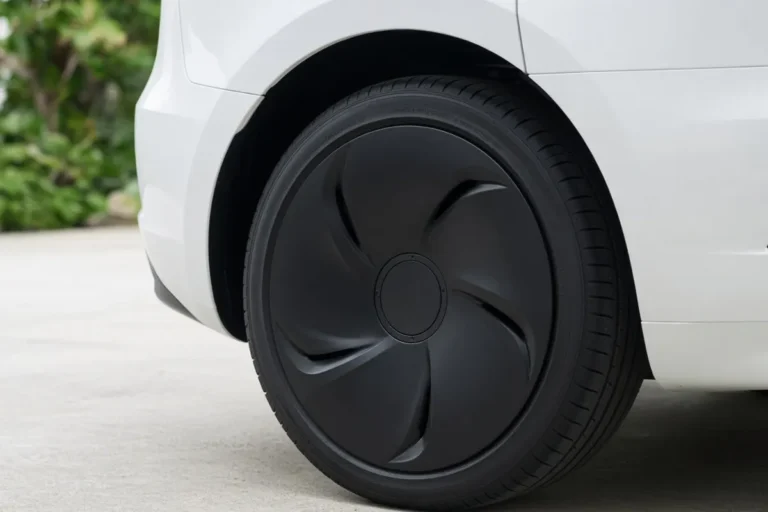
Los protectores contra salpicaduras son lo que la mayoría de los fabricantes de automóviles ofrecen como accesorio de fábrica para sedanes, hatchbacks, crossovers y vehículos eléctricos. Suelen estar moldeados por inyección en plástico, con color o textura a juego con la parte inferior de la carrocería, y se atornillan en los orificios existentes del revestimiento del paso de rueda o del parachoques. Como son cortos, protegen el faldón lateral y las puertas inferiores de la gravilla sin cambiar mucho el aspecto del automóvil.
Las faldillas son la opción clásica para pickups, vehículos elevados, remolques y camiones comerciales. Normalmente se cortan o moldean a partir de goma o un plástico similar a la goma, cuelgan más abajo y están diseñadas para flexionarse cuando golpean un bordillo, un surco o nieve profunda. Su función es más amplia: protegen el vehículo y también a los vehículos que van detrás de las salpicaduras y las piedras lanzadas.
| Característica | Protector contra salpicaduras (moldeado) | Faldilla (plana o semimoldeada) |
|---|---|---|
| Tamaño típico | Corto; sigue el borde del paso de rueda | Más largo; cuelga más cerca de la carretera |
| Material típico | Plástico moldeado rígido o semirrígido | Goma, TPE o lámina de plástico flexible |
| Ajuste | Forma específica para el vehículo | Específica para el vehículo o universal (cortada a medida) |
| Protección principal | Pintura de los faldones laterales y las puertas inferiores | Carrocería, remolque, tráfico que va detrás |
| Común en | Automóviles, crossovers, vehículos eléctricos | Pickups, camiones elevados, remolques, camiones comerciales |
| Apariencia | Cercano al estilo de fábrica | Aspecto más visible y utilitario |
¿Son lo mismo los guardabarros, las faldillas y los protectores contra salpicaduras?
No del todo. En inglés británico y de la Commonwealth, un guardabarros a menudo significa el guardabarros o el paso de rueda en sí, el panel curvo sobre la rueda. La legislación europea de homologación de tipo usa una idea similar: el Reglamento (UE) n.º 1009/2010 exige que los automóviles de turismo tengan un “protector de rueda” sobre cada rueda, que puede formar parte de la carrocería o ser un guardabarros separado, para proteger a otros usuarios de la vía de piedras, barro, hielo, nieve y agua lanzados 1. Esa norma se refiere al guardabarros, no a una faldilla adicional.
Para camiones y remolques, la UE usa el término dispositivo de supresión de salpicaduras. El Reglamento (UE) n.º 109/2011 establece faldillas antilluvia, faldones exteriores y otras piezas para determinados vehículos de mercancías y remolques 2. En la legislación estatal de EE. UU. las palabras varían de nuevo. El estatuto de Arizona habla de “protectores contra salpicaduras del guardabarros trasero” 3, mientras que el personal legislativo de Colorado describe su norma de protectores contra salpicaduras como aplicable a lo que la gente llama faldillas 4.
Así que cuando redacte una ficha de producto o una solicitud de cotización, describa la pieza por su forma, material y posición de montaje en lugar de confiar solo en el nombre. “Protectores contra salpicaduras moldeados delanteros y traseros, juego de cuatro” es más claro que “guardabarros”.
¿Qué tipos de faldillas y protectores contra salpicaduras existen?
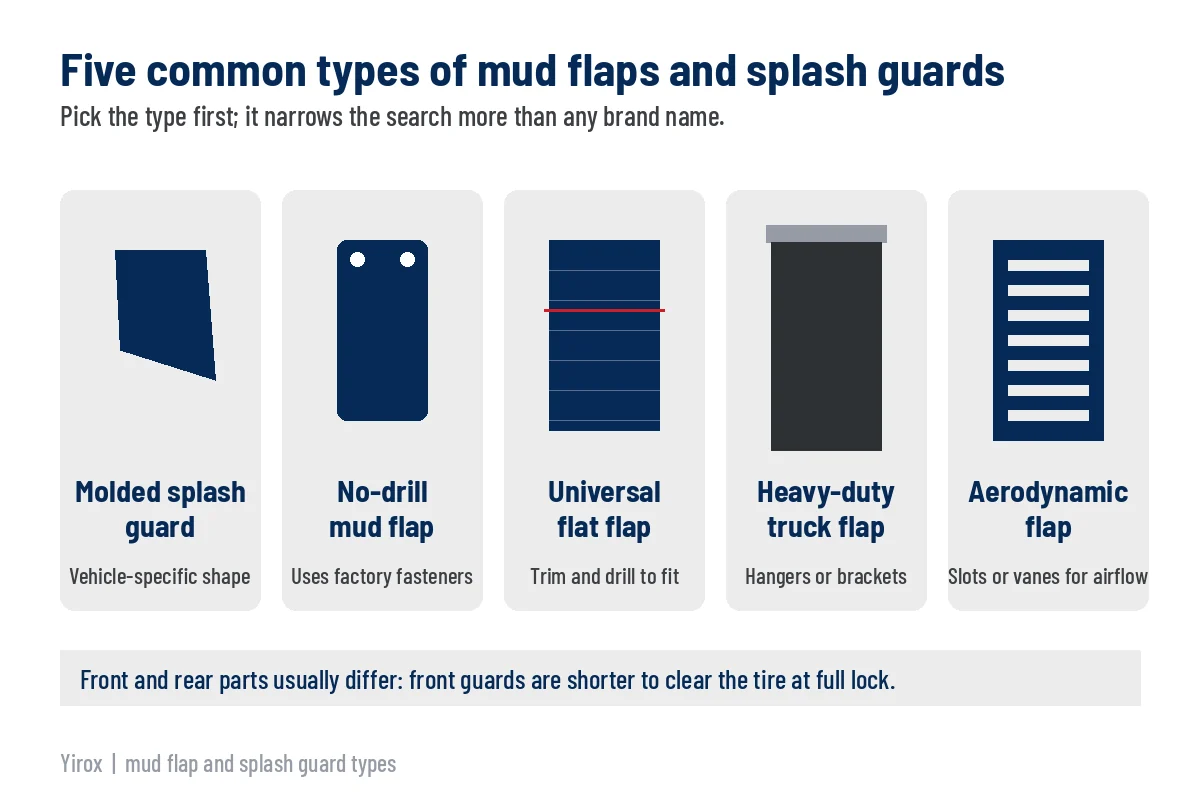
La mayoría de los productos del mercado se dividen en cinco grupos. Saber qué grupo necesita un comprador reduce la búsqueda más que cualquier nombre de marca.
- Protectores contra salpicaduras moldeados y específicos para el vehículo. Con forma para el paso de rueda y el parachoques de un modelo. A menudo reutilizan los puntos de tornillo de fábrica, por lo que no es necesario taladrar.
- Faldillas sin taladrar. Flat or gently shaped flaps that bolt to existing fasteners on a given model. Common for pickups and crossovers.
- Universal flat mud flaps. Sheets in standard widths and lengths that are trimmed and drilled to fit. Cheaper to stock, more work to install.
- Heavy-duty truck and trailer flaps. Thick rubber or plastic flaps with hangers or brackets, built to meet state or national rules for commercial vehicles.
- Aerodynamic or louvered flaps. Flaps with slots or vanes that let air through while still catching spray. These are mainly used on long-haul trucks and trailers.
Front and rear parts are usually different. Front guards are often shorter so they do not touch the tire at full steering lock, while rear guards can be longer. Some vehicles only get front guards from the factory; Tesla’s own mud flap kit for the current Model Y, for example, contains two front flaps and installation hardware 5.
¿Qué material es mejor: goma, TPE o plástico moldeado?
There is no single best material. The right choice depends on how much the part needs to bend, how cold it gets, and how close it must match the body styling. The table below summarizes typical trade-offs that buyers and product managers weigh. It is a general guide, not test data for any specific product.
| Material | Typical form | Fortalezas | Watch-outs |
|---|---|---|---|
| Natural or synthetic rubber | Flat or semi-molded flaps | Very flexible, absorbs hits, quiet | Heavier; can sag at speed if not braced; may crack with age and ozone |
| TPE / TPO (rubber-like plastics) | Molded flaps, no-drill kits | Flexible but holds a shape; can be injection-molded with texture | Grade choice matters for cold flexibility and UV stability |
| Polypropylene (PP) | Molded splash guards | Tough, low density, good chemical resistance | Stiffer; needs a design that tolerates curb strikes |
| ABS or ASA | Painted or gloss black splash guards | Crisp shape and good surface finish; ASA adds weathering resistance | Rigid; can crack on impact if too thin |
For EVs and modern crossovers, molded plastic splash guards are common because they keep the factory look and can carry the same texture or gloss as nearby trim. For pickups that see gravel, snow or off-road use, a thicker flexible flap usually lasts longer because it bends instead of breaking.
Whatever the material, ask the supplier how it handles sun and cold. A part that turns chalky or brittle after a few seasons is the most common complaint in reviews. For molded exterior parts, a weathering test report is a reasonable document to request before a large order.
For molded splash guards, the plastic grade matters as much as the shape: it has to flex on impact, resist stone chips and keep its color outdoors. These are the same demands placed on bumpers. Our guide to PP and TPO for exterior parts explains why these olefin grades are the usual choice.
¿Cuál debería elegir para un automóvil, una pickup o un vehículo eléctrico?
Match the part to how the vehicle is used. The comparison below is our own buyer guide based on the part types above; it does not replace the vehicle maker’s accessory list or local rules.
| Vehicle and use | Usual best fit | Por qué | Check before buying |
|---|---|---|---|
| Sedan, hatchback, crossover (daily driving) | Molded splash guards, front and rear | Protects rocker paint, keeps factory look | Exact model years and bumper version |
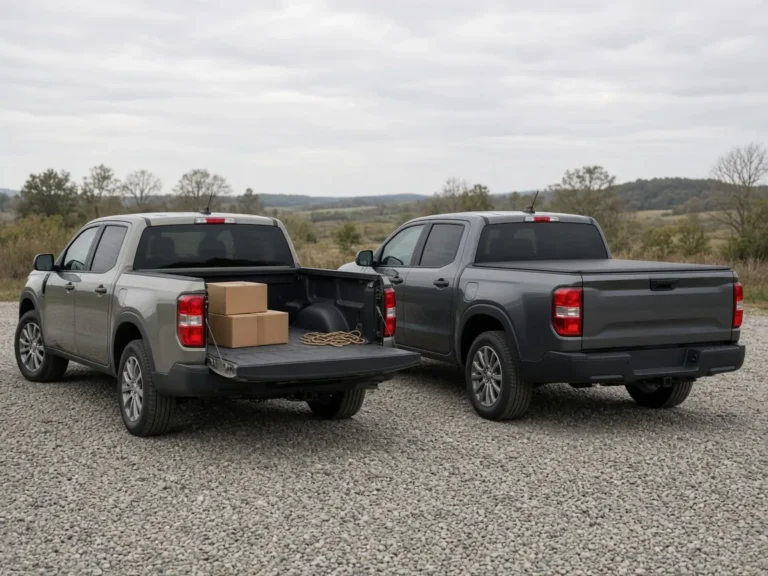
| Stock pickup (road and some gravel) | No-drill molded or semi-flexible mud flaps | Covers a wider tire, simple install | Fender flares, running boards, step clearance |
| Lifted pickup or larger tires | Longer flexible mud flaps, often with brackets | Tires throw debris higher and farther | Local laws for raised vehicles; tire width coverage |
| Pickup that tows | Rear mud flaps sized for the tire tread | Protects the trailer and its tongue area | Clearance to the hitch and the trailer coupler |
| EV or electric crossover | Vehicle-specific molded guards or flaps | Fits tight arch shapes, keeps underbody airflow tidy | Sensors, aero wheel covers, version changes |
| Commercial truck or trailer | Heavy-duty or aerodynamic flaps with hangers | Required in many places; reduces spray | State or national height and width rules |
EVs deserve a closer look. Many electric models have smooth underbodies and carefully shaped wheel arches, and some body versions change during a model’s life. Tesla, for instance, lists its current Model Y mud flaps as compatible only with Model Y built from February 24, 2025 onward 5. A flap made for an earlier car may not line up with the new arch liner. For sellers, that means separate listings by build date, not just by model name.
¿Merecen la pena las faldillas y consumen combustible o autonomía?
For most drivers who see rain, snow, salted roads or gravel, yes. The main payoff is fewer stone chips and less salt build-up on the rocker panels, lower doors and rear bumper, which are the areas where corrosion and paint damage usually start. Tesla describes its Model Y flaps simply as protection from snow, salt, sand and small debris 5. For pickups that tow, rear flaps also protect the trailer.
The cost is drag. Any part that hangs into the airflow behind a wheel adds some resistance. The best public data comes from heavy trucks. The US EPA’s SmartWay program has a category for verified aerodynamic splash guards, also called tire mud flaps 6. In one verification letter, EPA rated a slotted aerodynamic flap in its 1% fuel-saving category (1% to 3.9%) when it replaced conventional solid 24 x 28 inch splash guards on a 53-foot trailer, based on SAE J2978 coastdown testing 7.
Two points follow from that. First, conventional flaps on a large truck create enough drag that redesigning them can save measurable fuel. Second, that result is for long-haul trailers at highway speed, so it cannot be copied over to a sedan or an EV. We found no public, independent figure for passenger cars. Short molded splash guards that sit inside the body outline will usually matter far less than large flat flaps, but if range is a selling point for an EV accessory, ask for the supplier’s own test data rather than quoting a number.
¿Son obligatorias por ley las faldillas?
For private passenger cars in the US, generally no. The rules focus on trucks, trailers and sometimes lifted pickups, and they are set by each state. The National Truck Equipment Association’s guide notes that there is no federal mud flap requirement in the US or Canada, and that most states have their own rule 8. Here is how two state laws look in practice.
| Rule | Who it covers | Key requirements |
|---|---|---|
| Arizona, ARS 28-958.01 | Trucks, trailers, semitrailers and buses | Rear splash guards no more than 8 inches from the ground, wide enough to cover the full tread, may be flexible rubberized material. Pickups with a GVWR of 10,000 lb or less are exempt, unless modified to raise the center of gravity 3. |
| Colorado, CRS 42-4-1407.5 | Large trucks on Colorado highways | Flaps must be fitted and working at all times; torn or damaged flaps must be replaced at the first reasonable and safe opportunity 4. |
| EU, Regulation (EU) No 109/2011 | Certain goods vehicles and trailers | Spray-suppression systems, including rain flaps that cover at least the tire tread width and sit within set distances of the road and the tire 2. |
The Arizona text shows a pattern that appears in several states: a lifted pickup can lose the exemption that a stock pickup has. If you sell lift kits or larger tires, it is worth reminding buyers to check their state’s rule. Always read the current statute of the state where the vehicle is registered and driven, because limits on height and coverage differ.
¿Cómo se instalan las faldillas?
Most vehicle-specific kits install with hand tools in under an hour, but the method depends on the product. A typical no-drill install goes like this:
- Clean and check. Wash the wheel arch and confirm the kit matches the vehicle version, side and position (front or rear).
- Turn or lift for access. For front flaps, turn the steering to open space behind the tire; for rear flaps, some installers remove the wheel.
- Remove the factory fasteners at the points shown in the kit’s guide, usually screws or clips in the arch liner.
- Offer up the flap and line it up with the existing holes. Do not force it; a part that needs bending to fit is likely the wrong version.
- Fit the supplied hardware and tighten evenly. Over-tightening can crack molded plastic.
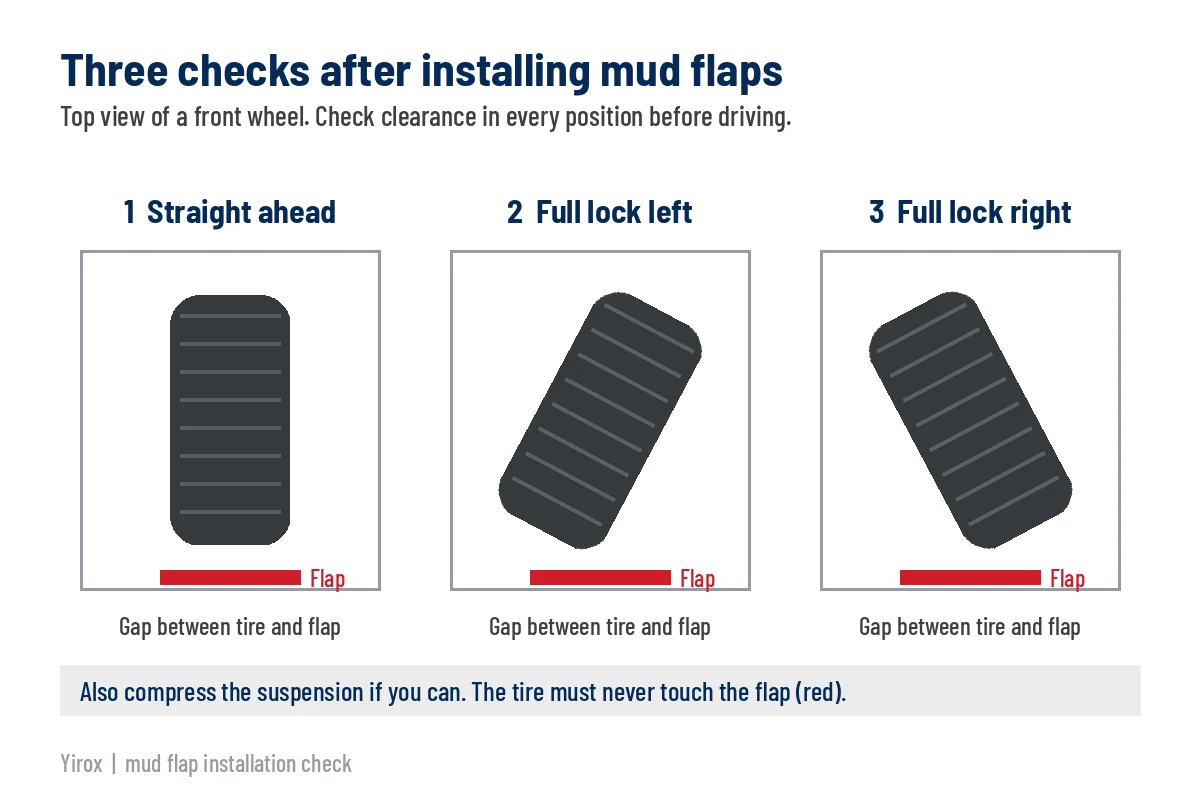
- Verifica el espacio libre. Turn the wheel to full lock both ways and, if possible, compress the suspension to make sure the tire never touches the flap.
Universal flaps need more work: marking, trimming, drilling and sometimes brackets. Any drilled hole in metal should be sealed or treated to prevent rust. Tesla, for example, links an installation guide for its Model Y flaps from the product page 5; sellers should supply clear instructions with every kit as well.
¿Cuáles son los riesgos y las excepciones?
- Tire contact. A flap that is too long or mounted too close can rub at full steering lock or under load. This wears the flap and can damage the tire.
- Curbs, ramps and deep snow. Rigid splash guards can crack on curb strikes. Low flexible flaps can fold under and tear in deep ruts.
- Trapped dirt. Grit and salt can collect behind a flap. Rinse the area during winter washes.
- Drilling. Drilled holes in body metal can rust if left untreated, and some owners prefer not to drill at all.
- Version changes. Facelifts and redesigns can move fasteners. A kit for an older body may not fit, as with Model Y build-date compatibility 5.
- Legal limits. Commercial and lifted vehicles may need flaps of a set height and width, and some states require replacement of damaged flaps 34.
For most cars, crossovers and stock pickups, these risks are small and are handled by choosing a vehicle-specific part and checking clearance once after installation.
Some designs use a stiff mounting area with a flexible lower edge. If your range needs that kind of part, our guide to combining a rigid base with a soft TPE section through two-shot molding explains how the two materials are joined in one part.
¿Qué debe incluir una solicitud de cotización (RFQ) de faldillas?
For distributors, wholesalers and online stores, the details that cause returns are fit and finish. A clear request for quote saves sampling rounds. Incluya:
- Vehicle make, model, body version and build-date range, plus front, rear or both
- Part type: molded splash guard, no-drill flap or universal flat flap
- Material and finish: texture, matte or gloss black, or paint-ready primer
- Target market and climate, so the material grade suits heat, cold and UV
- Hardware and instructions required in each set
- Packaging: retail box, polybag or bulk, and labels or barcodes
- Documents needed: weathering test reports, recycled-content statements or PPAP for programs that require them
- Annual volume, first-order quantity and sample needs
Ask for a fitted sample on the actual vehicle before mass production, and photograph clearance at full steering lock. That one check prevents most complaints.
Cómo lo elaboramos
The comparison, material and vehicle tables in this article are our own summaries. We based them on the legal texts and EPA documents listed in the references, Tesla’s accessory listing, and the typical part types used in the aftermarket. They are buyer guides, not test results. Laws change, so check the current text before relying on any limit.
Conclusión
Splash guards and mud flaps do the same basic job. The difference is in the shape and the material: splash guards are short, molded and styled to the car, and mud flaps are longer, more flexible and built for tougher use. The best choice follows the vehicle and how it is driven, from molded guards for cars and EVs to longer flexible flaps for lifted, towing and commercial trucks.
Before buying, confirm the exact vehicle version, check tire clearance, and pick a material that suits the climate. For commercial vehicles, and lifted pickups in some states, the law sets the height and coverage, so read the local rule first.
Siguiente paso
Yirox makes Tesla Model Y-specific mud flaps and injection-molds exterior parts at its Wuxi factory, so we can quote vehicle-specific guards and flaps with the documents your program needs. Browse our accesorios exteriores para autos y Accesorios exteriores para vehículos eléctricos, or use the Asesor de abastecimiento to send your vehicle list and target market.
Frequently asked questions
¿Son necesarios los protectores contra salpicaduras en un coche?
No, son opcionales en los coches privados en la mayoría de los lugares. Merece la pena instalarlos si conduces por carreteras de grava, saladas o mojadas, porque reducen los desconchones por piedras y la acumulación de sal en la parte inferior de la carrocería.
¿Cuál es la diferencia entre un guardabarros y un guardafango?
En inglés británico, un mudguard generalmente se refiere al guardabarros o al paso de rueda en sí. Un faldón antialgas es la lámina adicional que cuelga detrás del neumático para atrapar salpicaduras y residuos.
¿Los guardabarros afectan el rendimiento del combustible?
Añaden algo de resistencia. Los datos de la EPA para remolques de larga distancia muestran que los faldones aerodinámicos pueden ahorrar combustible en comparación con los faldones sólidos, pero no hay una cifra pública para los turismos, donde los protectores moldeados cortos tienen un efecto mucho menor.
Why don’t most new cars come with mud flaps?
Los coches modernos tienen pasos de rueda y revestimientos que ya contienen gran parte del spray, y los fabricantes ofrecen protectores contra salpicaduras como accesorios opcionales en lugar de piezas de serie.
¿Se requieren guardabarros en las camionetas pickup?
Depende del estado. Muchas normas estatales se dirigen a camiones y remolques. Arizona, por ejemplo, exime a las camionetas con un GVWR de 10,000 lb o menos, a menos que hayan sido modificadas para elevar el centro de gravedad.
¿Puedo instalar guardabarros sin taladrar?
Sí, si compras un kit sin taladrar específico para tu vehículo que utilice los puntos de sujeción de fábrica. Los faldones universales normalmente requieren taladrar y recortar.
Referencias
[1] EUR-Lex. “Commission Regulation (EU) No 1009/2010 concerning type-approval requirements for wheel guards of certain motor vehicles.” Wheel guard requirements for passenger cars.
[2] EUR-Lex. “Commission Regulation (EU) No 109/2011 concerning type-approval requirements for certain categories of motor vehicles and their trailers as regards spray-suppression systems.” Rain flap and valance requirements.
[3] Arizona State Legislature. “ARS 28-958.01 Rear fender splash guards.” Height, coverage and pickup exemption.
[4] Colorado General Assembly. “Mud Flap Laws.” Summary of the splash guard requirement for large trucks.
[5] Tesla Shop. “Model Y Mud Flaps.” Contents, purpose and build-date compatibility.
[6] U.S. EPA. “Learn About SmartWay Verified Aerodynamic Devices.” Device categories, including aerodynamic splash guards.
[7] U.S. EPA. “SmartWay verification letter for Eco Flaps (October 2016).” Test method, baseline guard and fuel-saving category.
[8] National Truck Equipment Association. “U.S./Canada Mud Flap Requirements Guide.” Overview of state and provincial rules.