Exterior Styling Accessories
Leverage our advanced manufacturing facility and robust supply chain to scale your brand. Whether it’s custom molding or your own private-label part designs, we provide flexible production capacities and rapid prototyping to keep you ahead of the competition.
ISO/TS16949 Certified
Competitive Price
Fast & Reliable
7/24 Customer Service
Tell us your vehicle and the part you need. We develop OEM/ODM molds in-house and can source other parts through vetted partner factories.
Send an InquirySend your vehicle, part list or drawing. Our team checks fitment and replies within one business day.
Buying Guide
Alloy wheels are bought on looks but returned on fitment. Before you add a design to your range, check the five numbers that decide whether a wheel bolts on safely: diameter and width, bolt pattern (PCD), offset, center bore and load rating. Then choose the construction and finish that suit your customers and climate.
A size such as 17×7.5J means a 17-inch diameter and a 7.5-inch rim width; the J describes the bead seat profile used on most passenger cars.
Going up one inch in diameter usually means a lower-profile tire to keep the overall rolling diameter the same, so the speedometer and ride height stay close to stock.
Wider rims need wider tires. Every tire maker lists an approved rim-width range for each tire size, and the wheel should sit inside it.
PCD (bolt pattern), such as 5×114.3 or 5×112, is the number of studs and the diameter of the circle they sit on. It must match the hub exactly.
Offset (ET) is the distance in millimeters from the rim centerline to the mounting face. A higher offset tucks the wheel in; a lower offset pushes it out toward the fender. Stay within about 5 mm of stock unless the car has been checked.
Center bore should equal the hub or be larger with a hub-centric ring to fill the gap. A bore smaller than the hub will not seat and must not be fitted.
The load rating per wheel must be at least half of the heaviest axle rating on the door label. SUVs, pickups and towing vehicles need the most headroom. Ask for the rating and the test standard, such as JWL or VIA.
Cast wheels are the most common and affordable, flow-formed wheels have a thinner, stronger barrel, and forged wheels are the lightest and most expensive. Construction alone does not prove strength, so compare certified ratings.
Finishes: painted and powder-coated wheels are the easiest to live with; machined or diamond-cut faces look sharp but need clear coat care in salted winters.
Specs
| Spec | Example | What It Controls | How to Check It |
|---|---|---|---|
| Diameter x width | 17×7.5J | Tire size, brake clearance and stance | Stamped inside the spokes; match it to the tire sidewall size |
| PCD / bolt pattern | 5×114.3, 5×112, 5×120 | Whether the wheel bolts to the hub | Count the studs and measure across them, or use the vehicle spec sheet |
| Offset (ET) | ET35, ET45 | How far in or out the wheel sits | Marked as ET on the wheel; compare to the original wheel |
| Center bore | 60.1 mm, 66.1 mm, 73.1 mm | Centering on the hub and vibration | Measure the hub lip; add a hub-centric ring if the bore is larger |
| Load rating | Listed in kg or lb per wheel | Safe weight each wheel can carry | At least half of the max axle rating on the door label |
| Lug seat | 60° conical, ball, flat | Whether nuts or bolts clamp correctly | Use lug hardware matching the seat of the new wheel, not the old one |
| TPMS | Valve-stem or band sensors | Whether tire pressure warnings still work | Confirm the valve hole and sensor clearance before mounting |
| Option | Weight | Strength and Durability | Cost | Typical Buyer |
|---|---|---|---|---|
| Cast alloy | Medium | Reliable for daily driving when rated correctly | Lowest | Retail replacement and style upgrade ranges |
| Flow-formed alloy | Lower | Denser, stronger barrel than standard casting | Medium | Performance and enthusiast lines |
| Forged alloy | Lowest | Highest strength-to-weight ratio | Highest | Premium and motorsport programs |
| Painted or powder coat | — | Chip resistant, easy to touch up | Low | Black, silver and bronze everyday finishes |
| Machined or diamond-cut face | — | Bright face; clear coat needs care in salt | Medium | Two-tone styling ranges |
Each wheel listing shows its diameter and design; PCD, offset, center bore and load rating are confirmed on the spec sheet with every quote. Tell us your target vehicles and we will check the combination before you order.
How to Fit
A checklist for workshops and retailers. Always follow the vehicle maker’s torque values and the instructions supplied with the wheels.
Why Yirox
From 14-inch compact car rims to 21-inch SUV designs, so one supplier can cover entry and premium price points.
PCD, offset, center bore and load rating are shared before ordering, so you can check fitment against your vehicle list.
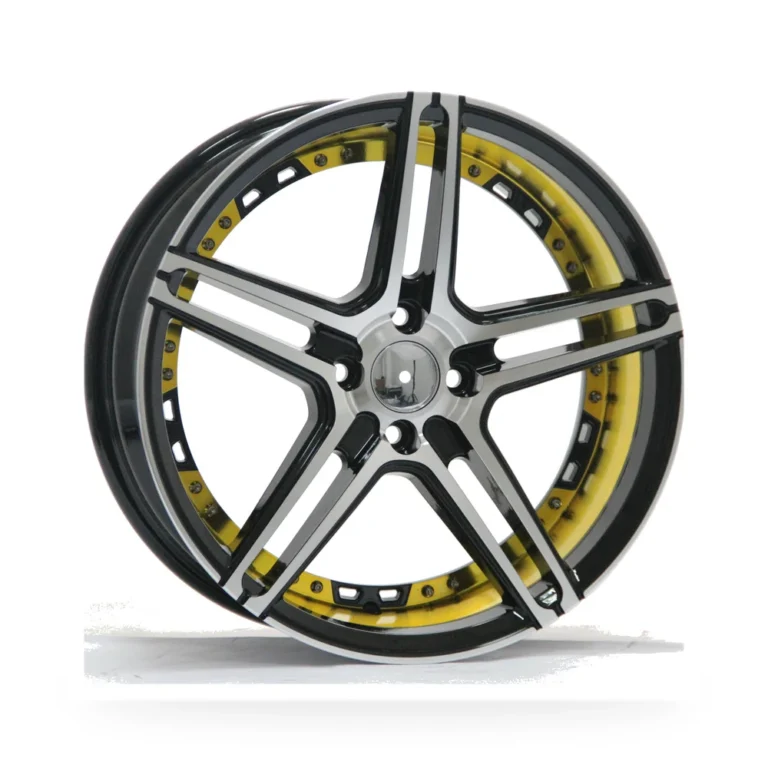
Five-spoke, multi-spoke, split-spoke, deep concave and beadlock-style off-road designs in black, silver, machined and bronze.
Custom colors, center cap logos and branded cartons for private-label wheel lines.
Wholesale and OEM
Wheels are a high-value, high-return-risk item, so the details of each program are agreed up front. Yirox has served aftermarket buyers since 2010 and brings 10+ years of experience to sourcing, inspection and export. Alongside our own approximately 20,000 m² injection-molding factory, we work with vetted partner factories, under a quality system certified to ISO 9001 and IATF 16949, for a team of around 180 staff and buyers in 40+ countries.
We help you choose the diameters, bolt patterns and offsets that cover the most vehicles in your market with the fewest SKUs.
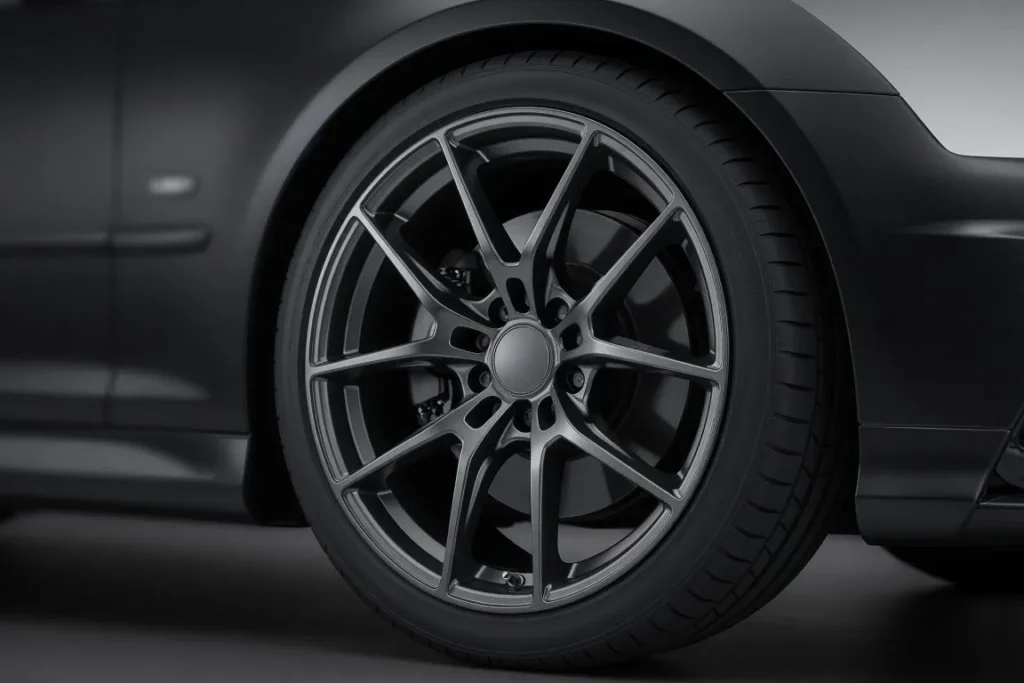
Gloss black, matte black, silver, gunmetal, bronze or machined faces, with your logo on the center cap.
Wheels are checked for finish defects and packed with face protectors and reinforced cartons to prevent transit damage.
Low MOQ on selected items. Mixed sizes can share one order, and lead time is confirmed with the quote.
FAQ
Alloy wheels are cast or forged from aluminum alloy. They are lighter than most steel wheels, dissipate brake heat better and offer far more design choice. Steel wheels are cheaper and tougher on rough roads, which is why they are common on base trims and winter setups.
Pros: less unsprung weight, sharper handling, better brake cooling and many more styles and finishes. Cons: a higher price than steel, and a cast rim can crack rather than bend after a hard pothole hit.
Almost always, yes. Car alloy wheels are aluminum alloyed with small amounts of silicon, magnesium or other elements for strength. Magnesium alloy wheels exist but are rare and costly.
The bolt pattern and offset are usually stamped on the back of the original wheel or listed in the owner’s manual and vehicle spec databases. Bolt pattern is shown as studs x circle diameter, such as 5×114.3; offset is shown as ET plus a number in millimeters.
Yes, if the wheel bore is larger than the hub and you add the correct hub-centric ring. A bore that is smaller than the hub cannot be fitted.
Divide the heaviest axle rating on the door label by two. Each wheel’s rating should be at least that figure, with extra margin for SUVs, pickups and towing.
Forging gives a better strength-to-weight ratio, but the certified load rating is what counts. A well-rated cast wheel is fine for most daily drivers.
A larger diameter with a lower-profile tire sharpens steering but makes the ride firmer and the rims more exposed to potholes. Keep the overall tire diameter close to stock.
Most do. Check that the valve hole suits your sensor type and that the sensor clears the barrel, then relearn the sensors after fitting.
Powder-coated and painted finishes are the most resistant to chips and road salt. Machined and diamond-cut faces look brighter but need gentle cleaning and intact clear coat.
Rinse off grit, then use a pH-neutral wheel cleaner and a soft brush on cool wheels. Avoid acid cleaners and harsh scrub pads, which damage clear coat and machined faces. Curb rash on the rim edge should be repaired by a wheel specialist.
Yes. The range includes beadlock-style and rugged off-road designs. Beadlock-style wheels are for looks; they do not clamp the tire bead like a true beadlock.
Yes. We support custom finishes, center cap branding and private-label packaging. Send your target sizes and finish samples to start.
Low MOQ on selected items. Sizes and designs can be combined in one order, and we confirm the MOQ per design with the quote.
Each wheel is packed with a face protector and edge inserts in its own carton, and cartons are palletized for export to buyers in 40+ countries.
Keep Browsing
Tell us your vehicle model, year and the parts you need.
Yirox supports single-piece orders, wholesale, OEM/ODM and custom sourcing for any auto parts.