yirox auto parts

Wheel Balancing Weights Manufacturer

car wheel weights For Wholesale

Fe adhesive, zinc clip-on, lead-free variants — full product range, custom branding, and batch-traceable quality control. 10+ years supplying distributors across 6 global regions.

Certificates of car wheel balancing weights

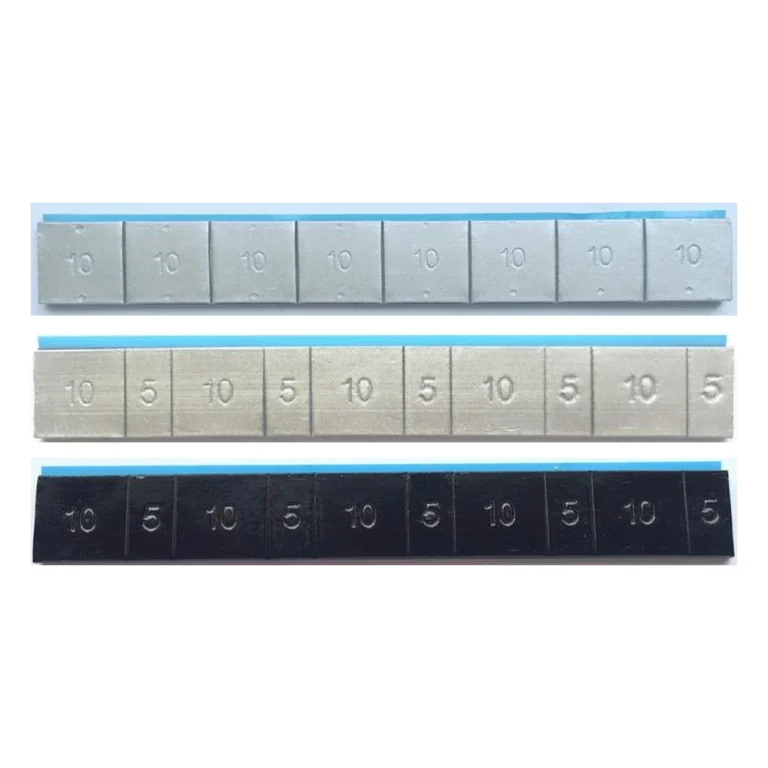
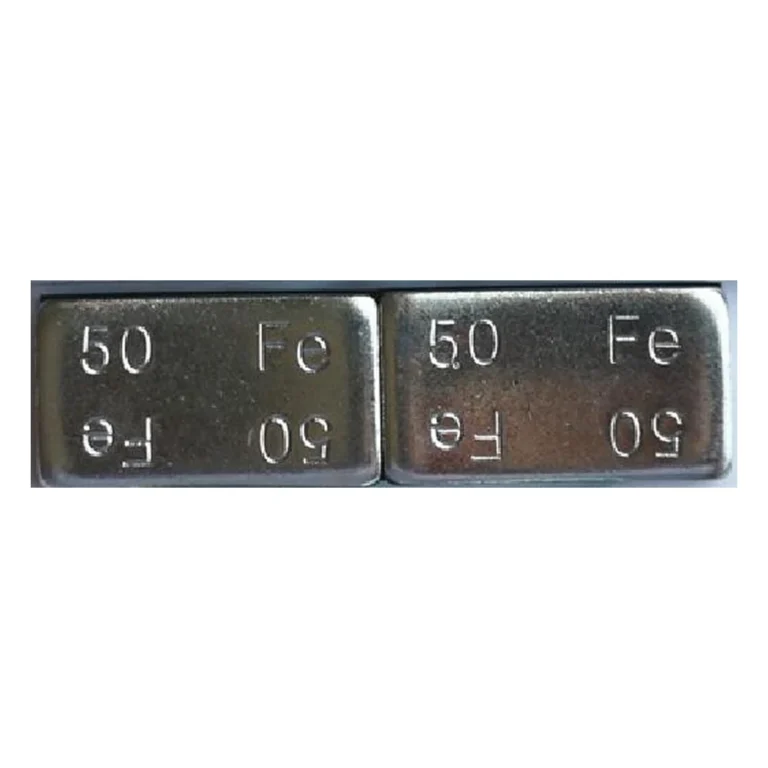
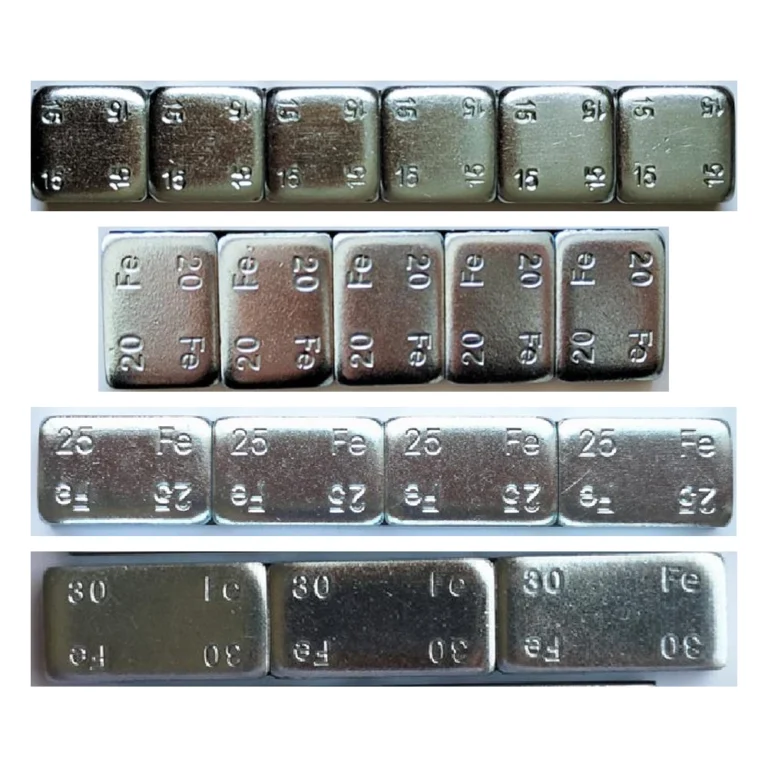
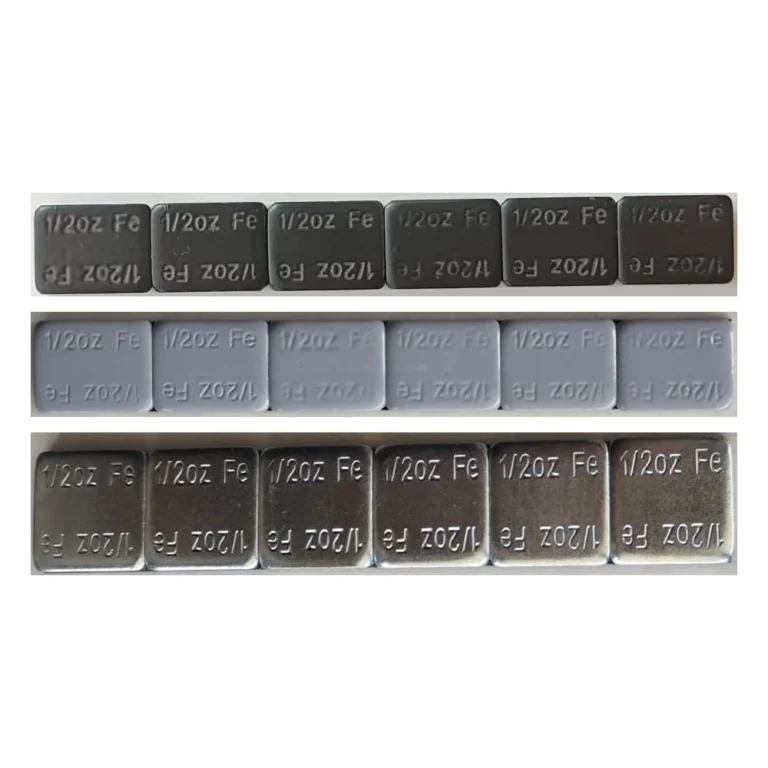
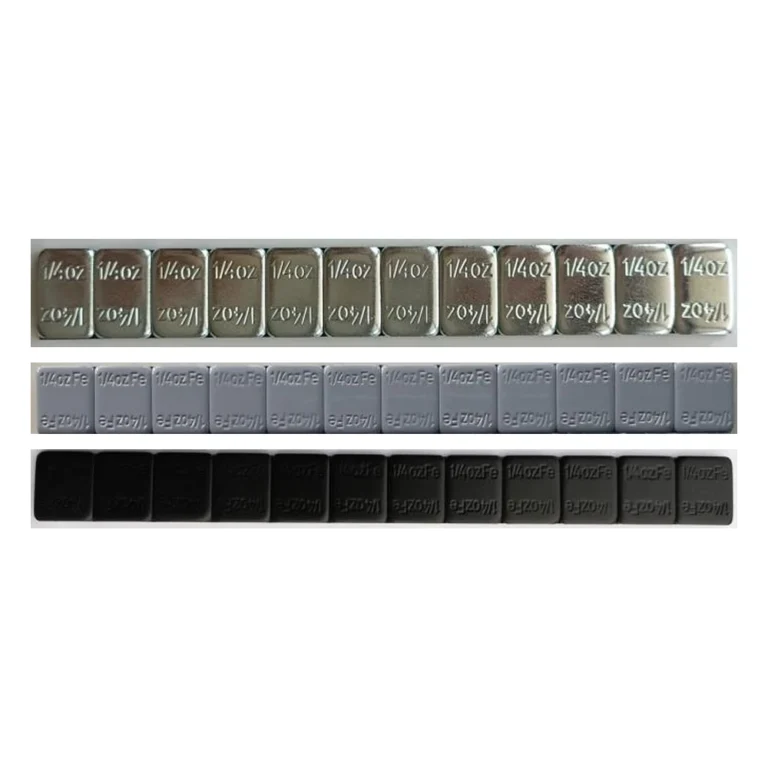
(Steel) Fe Wheel Balance Weights

Most widely used lead-free alternative. Zinc-plated surface prevents rust. Ideal for passenger cars, SUVs, and trucks on both steel and alloy rims.

Material

Low-carbon steel

Surface

Zinc plated / Dacromet

Salt spray

72h min (no rust)

Formats

Adhesive & Clip-on

Weight range

5g – 60g

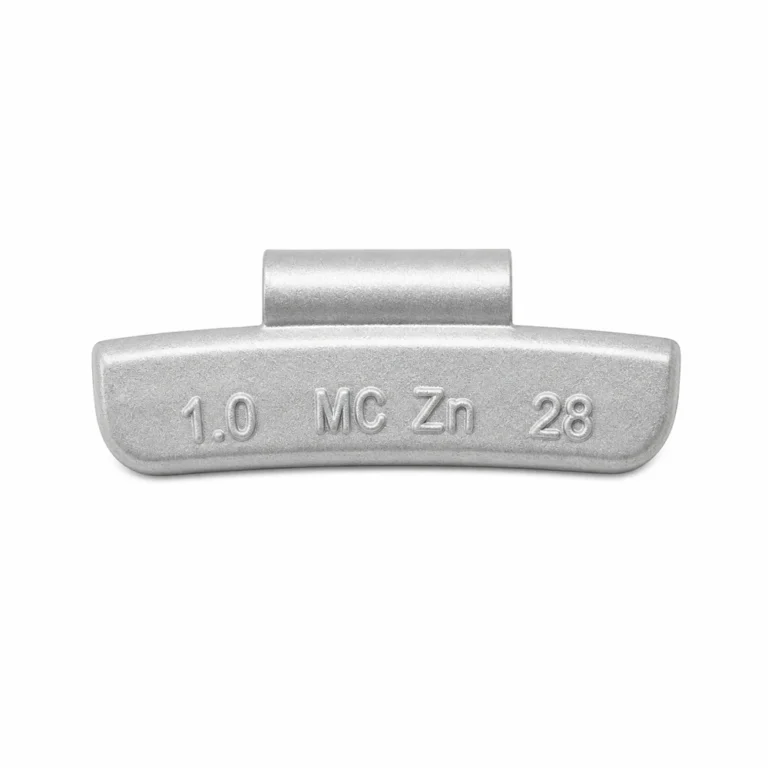
Zinc Wheel Balancing Weights

Higher density than steel, superior corrosion resistance. The preferred choice for coastal markets, tropical climates, and premium alloy wheel applications.

Material

Die-cast zinc alloy

Surface

Powder coated or bare

Salt spray

vs. Fe: ~3× corrosion resistance

Formats

Adhesive & Clip-on

Weight range

RoHS · ELV · Lead-free

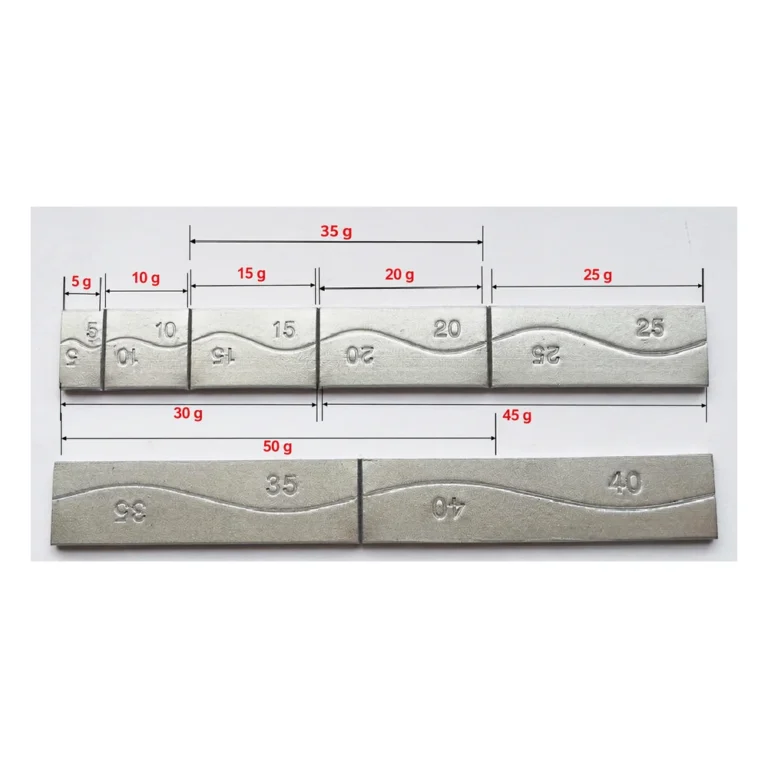
Adhesive Wheel Balancing Weights

Ideal for modern alloy wheels where rim appearance and surface protection matter. Strong automotive-grade adhesive backing ensures secure installation without damaging the wheel edge. Commonly used in passenger cars, EVs, SUVs, and premium aftermarket wheels.

Mounting

Adhesive tape backing

Advantages

Clean appearance · Rim protection

Weight range

5g – 60g

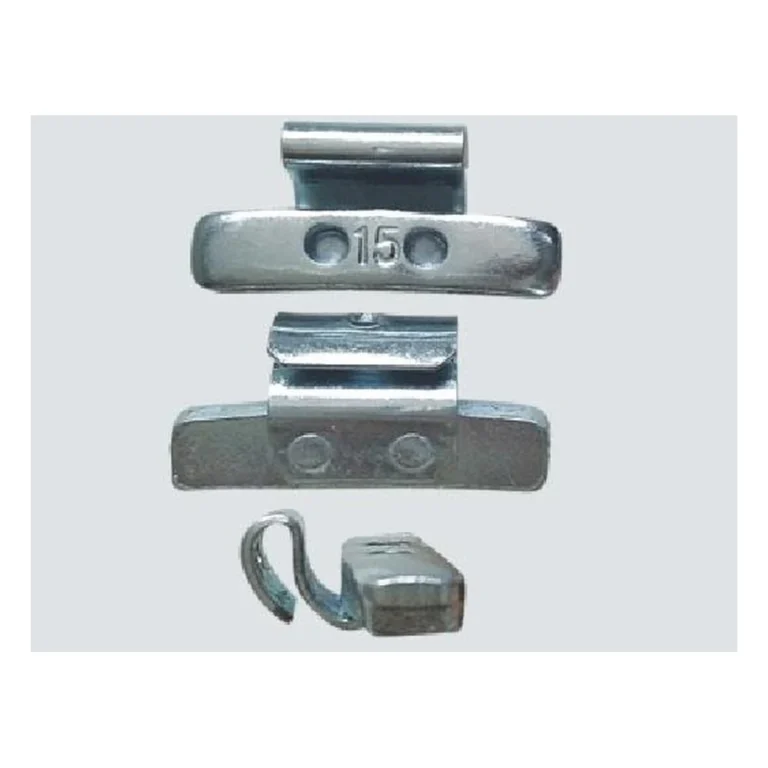
Clip-On Wheel Balancing Weights

Designed for fast and reliable attachment to wheel flanges. Widely used on steel wheels and selected alloy wheel profiles. Available in multiple clip types to match different rim standards and ensure secure retention under demanding driving conditions.

Mounting

Steel clip attachment

Advantages

Fast fitting · Strong retention

Weight range

5g – 60g

Get A Instant Quote Now

Contact Form Demo

Wheel Weight Tensile Test

For every production batch of wheel balance weights, Yirox selects samples for tensile testing according to quality control requirements. The test helps verify adhesive strength, product consistency, and batch reliability before shipment.

Every Weight. Every Batch. Documented & Verified.

Adhesive wheel weights have one job: stay in place, hold their weight, and never corrode. Yirox builds that guarantee into the manufacturing process — not just the sales pitch. Here’s exactly how.

± 0.5g Weight Accuracy

Every production batch is verified on calibrated scales. Deviation beyond ±0.5g per segment fails QC and is rejected.

72h+ Salt Spray Test

Zinc-plated Fe weights tested to 72-hour salt spray per ISO 9227. Zero rust or delamination required to pass.

-40°C Low-Temp Tape Bond

Adhesive tape performance tested from -40°C to +80°C. Strips do not delaminate or lose bond at extreme temperatures.

100% Lead-Free Material

No lead. No cadmium. No mercury. RoHS and ELV compliance documentation included with every shipment — no request needed.

OEM Wheel Weight Service

Yirox supports OEM wheel weight programs for distributors, wholesalers, and aftermarket brands. From product marking to structure and adhesive backing, we help you build wheel weights that match your brand and sales channel.

1. Logo Customization
Add your brand logo or weight mark directly on the wheel weight surface.

2. Block Customization
Customize block shape, weight size, clamp structure, and product dimensions based on your market needs.

3. Tape Customization
Choose from regular tape, easy-peel tape, paper tape, red tape, blue tape, white tape, 3M tape, Norton tape, or Rohmann tape.

Tape Options of Wheel balancing weights— Match Any Market Standard

OEM programs can specify tape type per SKU. All tapes are pre-applied at the factory — no assembly required in the warehouse. Tell us your demands , we offer more options.

Blue Film

Standard grade, most popular globally

3M Tape

Premium adhesion. Industry-trusted brand. Required by some OEM specs.

Norton Tape

High-performance adhesive film. Excellent for extreme-temp markets.

White Tape

Clean aesthetic. Popular in European workshop & OEM applications.

Black Tape

Low-visibility profile. Preferred for alloy wheel premium fitment

What Are Wheel Balancing Weights?

Definition, function, history, and why they matter to ride quality and tyre life.

wheel balancing weight is a precisely measured metallic counterweight attached to a vehicle’s wheel rim to offset mass irregularities in the tyre-wheel assembly. Because no tyre or rim is manufactured to perfect geometric uniformity, small differences in mass distribution cause the assembly to develop a heavy spot. When that spot rotates at speed, it generates centrifugal force in one direction, producing vibration — commonly felt as steering-wheel shake above 60–80 km/h.

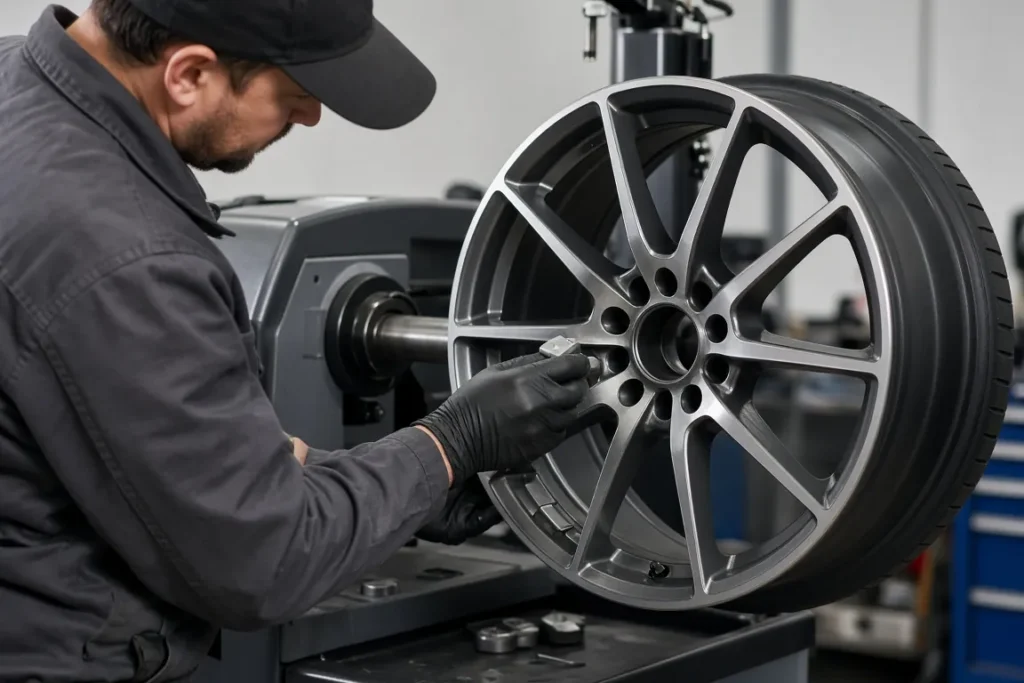
Wheel balancing weights correct this by adding an equivalent mass on the opposite side of the rim, returning the assembly to rotational balance. The process is performed on a spin balancer (wheel balancing machine), which measures the magnitude and angular position of the imbalance and instructs the technician exactly where to place each weight.

The component is also known as: tyre balancing weight, rim balancing weight, wheel weight, tire weight, and in trade notation: Fe weight, Zn weight, Pb weight (after the chemical symbols for iron, zinc, and lead respectively).

Brief History

The clip-on wheel weight was patented in the 1930s as steel wheels became standard on passenger vehicles. Adhesive (stick-on) weights emerged in the 1970s alongside the growth of cast aluminium alloy wheels, whose smooth inner barrel was better suited to tape-bonded counterweights than to flange clips. The major inflection point of the past two decades has been the global phase-out of lead (Pb) — driven by the EU's End-of-Life Vehicle (ELV) Directive (2000/53/EC) and subsequent national legislation — which shifted mainstream production to steel and zinc alloys.

How Wheel Balancing Weights are Made

Understanding the production process helps buyers evaluate supplier capability, quality controls, and why specification consistency matters more than price alone.

Steel (Fe) Clip-On Weights — Production Flow

01

Steel Coil Selection

Cold-rolled steel coil (Q235 or ST12 grade) is received and batch-tested for tensile strength and chemical composition


02

Stamping & Die Forming

Automated progressive dies stamp and form the weight body and spring clip in a single pass — clip radius is calibrated to match each rim profile series


03

Deburring & Trimming

Manual and vibratory finishing removes stamping burrs from the four corners; weight uniformity is checked by sampling at 30-piece intervals


04

Electroplating / Powder Coat

Parts pass through electro-zinc plating bath (8–12 µm zinc layer) then electrostatic powder-coat gun with epoxy resin — dual-layer corrosion barrier


05

QC, Weighing & Packing

100% gravimetric check on calibrated balance (±0.5 g tolerance); batch documentation; packing by weight class into boxes or trays


Zinc Die-Cast Weights — Key Differences

Zinc weights are produced by hot-chamber die-casting rather than stamping. Zinc alloy ingot (ZA-8 or Zamak-3 grade) is melted at approximately 420 °C and injected under pressure into a precision steel mould. Cycle times are 8–15 seconds per cavity, enabling high-volume production with tight dimensional tolerances (±0.1 mm on flange fit). After de-gating and trimming, die-cast weights undergo the same plating and powder-coat process as steel weights.

Adhesive Weight Strip Production

Adhesive strip weights add a lamination stage to the clip-on process. After the individual weight segments are stamped, plated, and coated, they are loaded onto a tape lamination machine that applies pressure-sensitive acrylic foam tape (typically 3M 467MP or equivalent) to the back face, followed by a protective release liner. Segments are then loaded onto a carrier reel in standard strip counts (4-, 6-, or 12-segment strips) and wound for retail or bulk packing.

How to Choose the Right Wheel Balance Weight

Six selection criteria every tyre shop buyer, distributor, and OEM purchaser should work through before specifying a weight range.

① Wheel Type

Steel rims → clip-on (P series, FN series). Alloy rims → adhesive for outer plane, coated clip-on (AW, MC series) for inner flange if needed. Never use a bare-steel clip-on on a visible alloy flange — scratching voids rim warranty and triggers dealer complaints.

② Vehicle Class

Passenger car (5–60 g); SUV / light truck (5–100 g); heavy truck / commercial (50–500 g). Overshooting the mass range wastes material; undershooting forces technicians to stack multiple weights, which is unstable. Match the weight range to your dominant vehicle mix.

③ Market Regulation

If selling into EU, California, or any lead-restricted market, you must specify lead-free weights only. Mixing lead and lead-free stock is an audit risk. Choose a supplier who provides per-shipment RoHS declarations and material test reports (MTR) — not just a one-time certificate.

④ Material Grade

Steel (Fe) for cost-driven markets or steel-wheel fleets. Zinc for alloy-wheel premium programs, coastal/salt-belt markets, or OEM supply chains demanding a clean finish. Zinc’s natural corrosion resistance reduces field returns in high-humidity environments.

⑤ Increment System

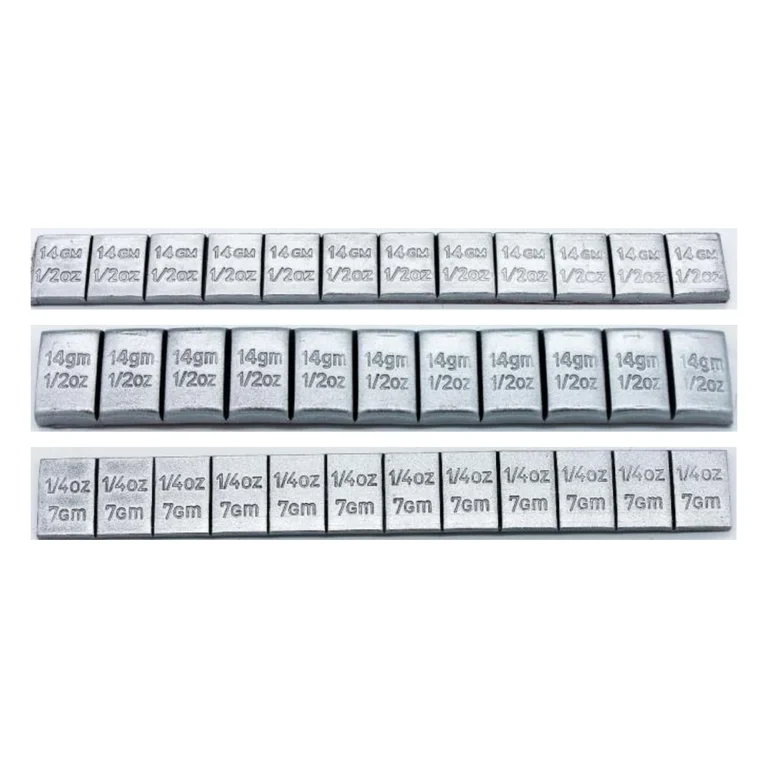
Confirm whether your market’s balancing machines are calibrated in grams or ounces — stocking the wrong increment leads to approximation errors in the shop and repeat vibration complaints. Many high-volume shops in North America still use ounce-increment weights; European and Asian OEM supply is uniformly metric.

⑥ Tape Grade (Adhesive Weights)

Budget tape fails in cold climates (below −10 °C) and in high-temperature wheel environments (near performance brakes). Specify 3M 467 or verified acrylic foam equivalent rated to −40 °C / +120 °C. Request independent peel-strength test data. A weight that falls off generates a warranty return — tape quality is the most expensive variable to get wrong.

Frequently Asked Questions

Wheel Balancing Weights —
Sourcing & Technical FAQ

Common questions from tire dealers, automotive distributors, and workshop chains sourcing wheel balancing weights at scale.

What is the difference between clip-on and adhesive (stick-on) wheel weights?
Clip-on weights clamp onto the rim flange and are the standard for steel wheels and traditional alloy rims. They come in two main profiles: the P-style (passenger car) and the MC-style for motorcycles and smaller rims. Adhesive (stick-on) weights use double-sided tape to bond to the inside of the rim barrel and are required for low-profile alloy and chrome rims where a clip would damage the finish or cannot grip the flange geometry. Most workshops stock both types — clip-on as the primary SKU and adhesive as the secondary for cosmetic-rim fitments.
Lead, zinc, or steel — which material should I source, and why does it matter?
Lead (Pb) has been the traditional material due to its high density and easy casting, but it is now restricted or banned in the EU (End-of-Life Vehicles Directive 2000/53/EC), most US states (California AB 2495 and similar), Canada, and Australia. Zinc (Zn) is the most widely adopted lead-free alternative — density is lower (~7.1 g/cm³ vs Pb's ~11.3 g/cm³), so zinc weights are physically larger for the same gram value, but they are fully RoHS compliant. Steel (Fe) adhesive weights are the budget-tier option — iron with zinc-phosphate or zinc-plated coating for corrosion resistance. For new programmes in regulated markets, source zinc clip-on and Fe/Zn adhesive as standard; only source lead if the destination market explicitly permits it and you have confirmed compliance.
What weight increments and packaging formats are available for bulk orders?
Clip-on weights are typically available in 5 g increments from 5 g to 100 g (metric markets) or in ¼ oz increments from ¼ oz to 4 oz (US/imperial markets). Adhesive weights are sold in individual pieces, pre-cut sheets (e.g. 60 g sheets in 5 g × 12 segments), and continuous roll packing (1,000 g or 2,000 g per roll) — roll packing is the preferred format for high-volume workshops using weight dispensers. Yirox offers both box/bag packing for counter retail and bulk pallet packing for distributor warehousing. Confirm whether your end customers work in grams or ounces before specifying: a product line mixed between the two systems generates significant counter-level picking errors.
How do I verify the adhesive tape quality on stick-on weights?
The adhesive is typically 3M 9448 or an equivalent acrylic foam double-sided tape — this is the de facto industry standard and should be specified by name in your purchase order rather than simply "high-quality adhesive." Key tests to request or run on samples: (1) 90° peel strength ≥ 15 N/25 mm on a clean aluminium substrate at 23 °C; (2) shear resistance ≥ 72 hours at 70 °C under rated load without slipping; (3) cold-temperature adhesion — weights should pass a drop test at −20 °C without debonding. Reject any supplier that cannot provide a tape brand name and a peel test data sheet. Delamination on installed weights is a liability issue and a returns driver that will damage your workshop customer relationships.
Are zinc-coated steel (Fe) adhesive weights the same as solid zinc weights?
No — these are different products often confused in supplier catalogues. Solid zinc weights are cast from zinc alloy (Zn content typically ≥ 95%), are lead-free by composition, and comply fully with EU ELV, RoHS, and REACH. Zinc-coated steel weights are iron/steel bodies with a zinc phosphate or electro-zinc surface treatment for corrosion resistance — the core material is steel (Fe), not zinc. Zinc-coated Fe weights are also lead-free and RoHS compliant, and they are lower cost than solid zinc. When ordering, always request the material declaration or RoHS test report to confirm the core composition. Mixing up these two product descriptions in a purchase order is a common sourcing error.
What certifications and compliance documents should I request?
For EU/UK market entry: RoHS 3 (Directive 2011/65/EU) test report confirming absence of lead, mercury, cadmium, and other restricted substances; REACH SVHC declaration; and an ELV material declaration for OEM supply chains. For US market: California Prop 65 compliance statement and — if selling into states with lead wheel weight bans — a material certification confirming lead-free composition. For general quality assurance: ISO 9001 factory certification, dimensional inspection reports, and weight accuracy (typically ± 1 g or ± 0.05 oz). Yirox provides full documentation packages with orders, including third-party test reports from SGS or equivalent laboratories on request.
What is the minimum order quantity for Yirox wheel balancing weights?
Yirox supports trial orders from approximately 100–200 kg per SKU for adhesive weights and 200–500 kg per SKU for clip-on weights, allowing distributors to test product quality and market fit before committing to full container loads. Full OEM programme MOQs — with custom packaging, private label, and bespoke weight increments — typically start at 1,000 kg per SKU. Mixed-SKU trial orders (e.g. a clip-on assortment box covering multiple gram increments in a single carton run) are available at lower individual SKU volumes. Contact Yirox with your target market, required increments, and annual volume estimate for a programme-specific MOQ discussion.
Can Yirox supply private-label or OEM wheel balancing weights?
Yes. Yirox's OEM programme covers custom packaging (bags, boxes, display cartons, pallet configurations), private-label printing, weight increment customisation, coating or surface finish selection (natural zinc, black zinc, silver, painted), and full compliance documentation under the buyer's brand name. Because die-casting is in-house, custom weight profiles and flange geometries for non-standard rim types can be tooled without external supplier coordination. Typical OEM lead time for a new SKU with custom tooling is 45–60 days from drawing approval; repeat production runs ship within standard lead times.

Tell us your packaging needs — our team will respond quickly with tailored solutions and competitive pricing.

Contact Form Demo

Get Your Custom Quote