





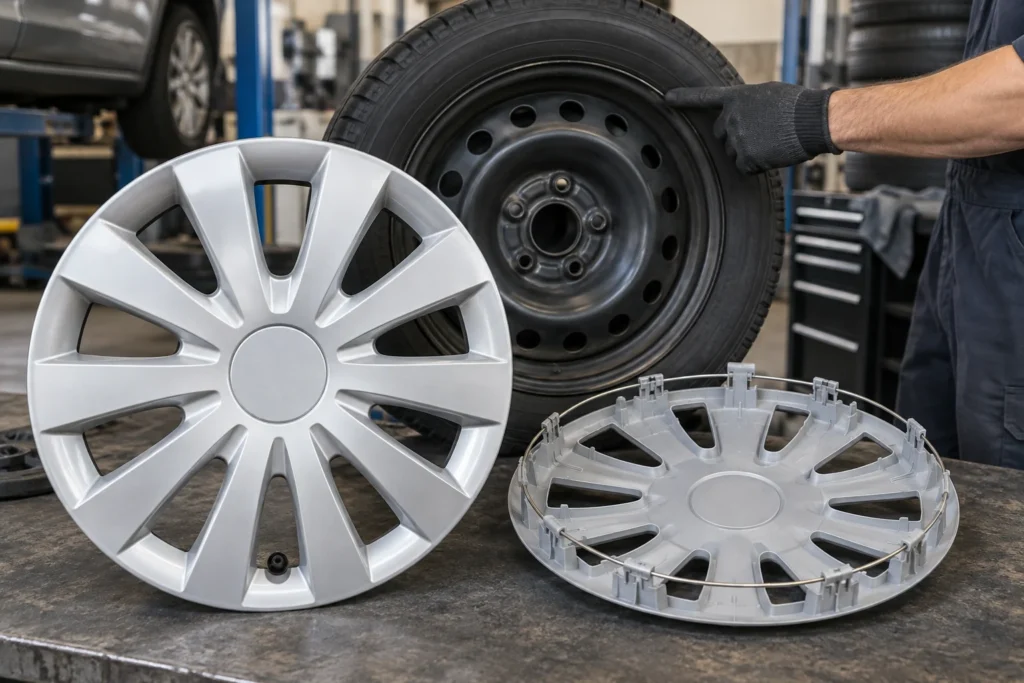
Choose a wheel cover or hubcap by matching the actual wheel, nominal rim diameter, rim shape, and attachment system—not the tire-size number alone. Check where the clips or fasteners engage, leave room for the valve stem and nearby hardware, and test the cover's seating. For a single replacement, compare the old cover's rear markings and retention design before matching its appearance.
A cover that rattles or keeps falling off needs an attachment check before a replacement purchase. For bulk orders, review the recorded sample results and what was retested after a design change.
Table of Contents
- Which Wheel Cover Decision Are You Making?
- How Do You Confirm That a Wheel Cover Fits?
- How Can You Check That a Cover Will Stay Secure?
- What Should a Wheel-Cover Fitment Sample Prove Before a Bulk Order?
- How Do You Replace One Missing Hubcap?
- Which Material, Finish, and Design Suit Your Use?
- What Evidence Should You Check Before Buying?
- What Should Shops and Distributors Verify Before Ordering?
- Conclusion: What Is the Next Step for Your Wheel Cover Decision?
- Frequently Asked Questions
- References
Which Wheel Cover Decision Are You Making?
Start with the job you need the cover to do. A single missing piece calls for a close match to the remaining three; a full set gives you more freedom on appearance. A loose or rattling cover calls for inspection before another purchase. For a product range, the first decision is which wheels and vehicles each SKU can actually serve.
| Your situation | Check first | Useful next action |
|---|---|---|
| Replace one missing cover | Photograph a remaining cover front and back; record any molded number, wheel size, and attachment details. | Seek the same part or a verified visual and mechanical match; confirm whether it is sold singly. |
| Change the look of all four wheels | Identify each wheel's type, nominal diameter, rim edge, and existing hardware. | Compare full-set options only after checking fit and pack quantity. |
| Stop a cover rattling or falling off | Look for a broken clip, missing or displaced ring, poor seating, or contact with the valve stem or another component. | Remove the suspect cover and diagnose the cause before driving with it reinstalled. |
| Stock or source covers | Define target vehicles, wheel variants, sales markets, single-piece and set demand, and return reasons. | Ask for an application matrix and physical samples before agreeing a range. |
The names on listings are loose. A full wheel cover generally hides much of the wheel face; “hubcap” is often used for that same product, although it can also mean a smaller center piece. A center cap covers the center area rather than the whole wheel. “Wheel trim” is common wording in some markets for a decorative wheel cover or rim trim. The seller's front and rear photographs, dimensions, and attachment details tell you more than the name. A full-face snap-on example is Yirox's BYD Seagull snap-on wheel-cover product; its stated vehicle application should not be extended to other wheels without verification.
How Do You Confirm That a Wheel Cover Fits?
Read the tire marking to find the wheel's nominal diameter, then inspect the wheel itself and compare it with the cover's stated application and retention hardware. In a marking such as 205/55R16, the “R” describes radial construction and “16” is the tire-and-wheel diameter in inches. It does not tell you the shape of the wheel lip or where a cover can grip.1
Use this order of checks:
- Confirm the actual wheel size. Record the complete tire marking and verify that the installed wheel matches it. An earlier owner may have changed wheels, so a model-year listing is not enough on its own.
- Identify the wheel and the product scope. Is it a steel wheel meant to accept a rim-edge snap-on cover, or a particular alloy-wheel design with its own cover or center cap? A steel-wheel cover and an alloy-wheel overlay are different applications even if both are described as “16 inch.”
- Compare the rim edge and wheel face. Look at the lip depth, flange profile, curvature, openings, and how far the wheel face stands proud. Ask the seller for rear photos and a supported-wheel or vehicle list. An exclusion list is as valuable as a fit list.
- Match the attachment system. A wire-ring-and-clip cover needs the correct contact points around the wheel edge; a vehicle-specific cover may depend on special clips or fasteners. Do not assume one system can replace another.
- Check the space around the valve stem and hardware. The cover's opening must line up without pushing the valve stem. Check clearance around lug nuts, existing balance weights, any special fastener, and the cover's outer edge. If something touches or prevents even seating, stop the test fit.
- Compare front and rear wheels where relevant. Some vehicles use different wheel designs or tire dimensions by axle. Verify each position rather than assuming one successful fit proves a four-piece set.
| Example | Diameter check | What decides the outcome |
|---|---|---|
| Candidate cover says 16 inch; tire says 205/55R16; steel wheel has the specified rim-edge profile and clear valve opening. | Passes the first filter. | Potential fit only after the seller's application details and a physical seating check agree. |
| Candidate cover says 16 inch; tire says 205/55R16; wheel is an alloy with no specified attachment points for that cover. | Passes the number check. | Do not assume fit. The advertised steel-wheel retention system has nowhere verified to engage. |
| Correct diameter and wheel type, but the cover presses a valve stem or hits a weight. | Passes two filters. | Not an acceptable fit until a different verified cover or installation arrangement resolves the interference. |
These examples are decision rules, not a claim that a particular SKU fits every wheel described. Photograph the uncovered wheel straight on and from the side, including its rim edge and valve-stem area. If the seller cannot confirm an application from those views and the part details, keep looking. For plastic wheel covers, do not substitute alloy-wheel specifications such as PCD, offset, or load rating for this attachment check; those describe different wheel-selection questions.
How Can You Check That a Cover Will Stay Secure?
A secure cover has intact retention parts, an appropriate wheel edge or mounting point, and even seating all the way around. Follow the instructions for the specific cover and vehicle. For example, Tire Rack's wire-ring procedure requires aligning the ring's indent and the cover opening with the valve stem, then checking whether the cover can be removed too easily by hand.2 Tesla's Model 3 procedure uses a different clip arrangement and directs owners to check each spoke after seating it.3
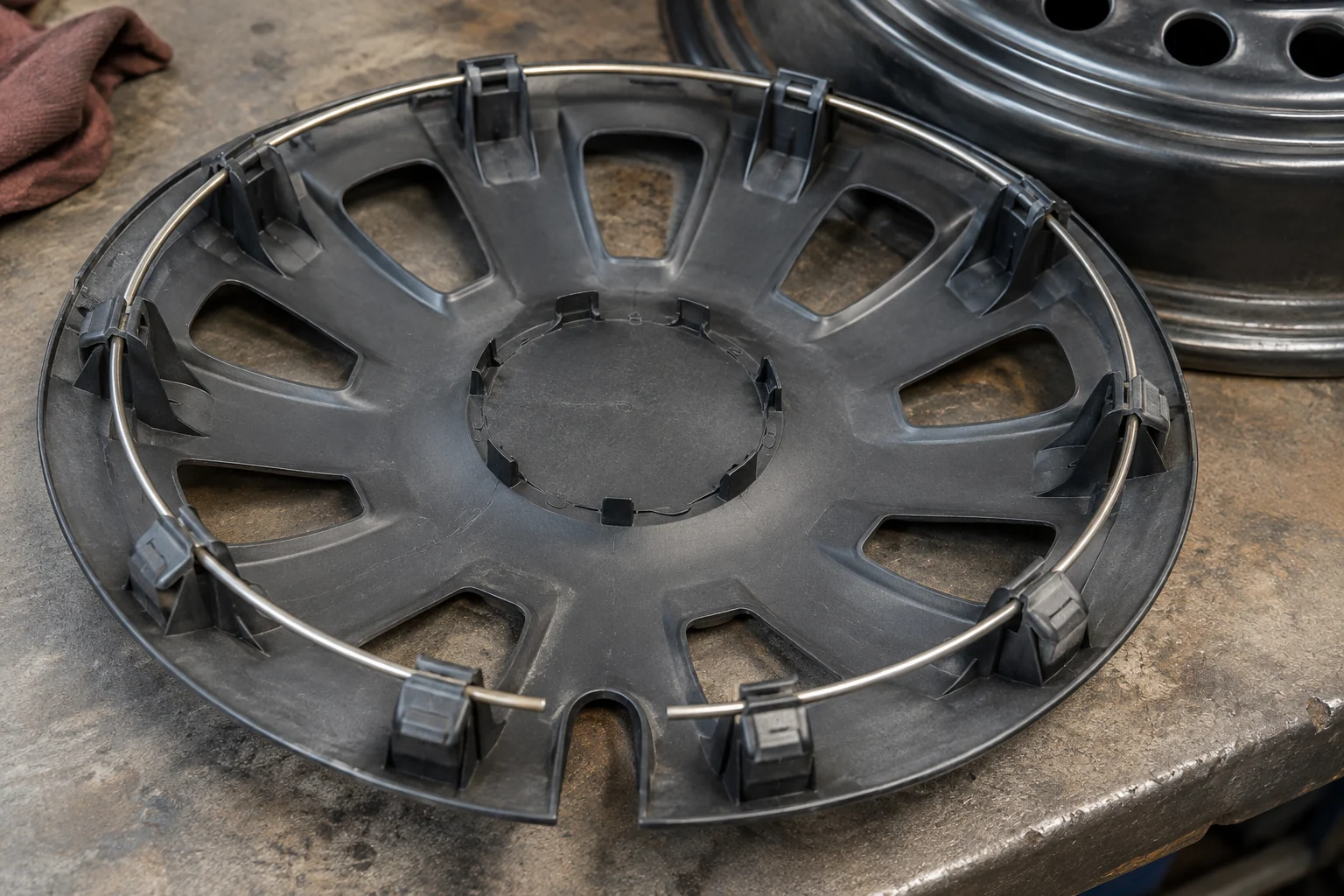
Before fitting a snap-on cover, inspect the clips for cracks, missing pieces, or obvious distortion. If the design uses a metal ring, confirm it is present and seated as its instructions show. Clean dirt from the wheel's contact edge, position the valve opening, and press at the points the product or vehicle procedure specifies. Look around the full circumference afterward: one proud section usually means the cover is not completely engaged. Do not use extra force to make an apparently wrong part sit flat. Some designs are retained partly by lug nuts; Dorman's instructions for one such application direct users to the vehicle service procedure and a qualified technician when the work is beyond their skill.4
| What you notice | First check | What to do |
|---|---|---|
| One edge stands away from the wheel | Valve opening, clip position, rim lip, or a contact point behind that section | Remove and inspect; do not hammer a misaligned edge flush. |
| Cover moves easily by hand | Missing ring, broken clip, wrong wheel profile, or incomplete seating | Follow the model's adjustment instructions if provided; otherwise replace or confirm fit. |
| Rattle starts after tire service | Whether the cover was refitted evenly and the valve cutout is aligned | Remove, inspect all retention points, and refit only if the parts are sound. |
| Same position repeatedly loses covers | Wheel-edge condition, incorrect cover design, or hidden interference | Have the wheel and hardware checked rather than repeatedly buying the same cover. |
| Cracks, a bent ring, or contact with the valve stem | Damage or interference | Stop using that cover until the cause is corrected. |
Take a loose cover off before it can separate on the road. A cover problem can also reveal a damaged wheel edge or another service issue, so ask a tire technician to inspect anything that looks deformed or unfamiliar. No retention design should be described as “never falls off” without product-specific evidence and clearly stated conditions.
What Should a Wheel-Cover Fitment Sample Prove Before a Bulk Order?
The installation sources referenced above show the checks that matter at the wheel: align the valve-stem opening, seat the retaining ring or clips around the wheel, inspect the edge after fitting, and use the prescribed removal method.234 For a catalog or bulk-order decision, the same checks need measured results on the actual wheel: valve clearance, edge gap, pull-off force, repeated removal and refit, road noise, temperature change, and the result after any clip or mold revision.
Yirox checked two Sealion 7 wheel-cover options: Standard snap-on YRX-SL7-STD-20 and Premium rotary-lock YRX-SL7-PRM-20, sample batch 2026-BR01. Each version had four covers, one for each wheel position, installed on a separate test vehicle.
The first Standard sample seated evenly at rest, but testing found three practical problems: the valve opening was about 3 mm out of position and left 0.5 mm clearance; the cover rattled on the rough-road section; and the lower edge gap reached 1.9 mm at 42°C.
Yirox moved the valve opening 3 mm, increased the clip-root thickness by 0.3 mm, and changed the Standard sample from ABS to an ABS+PC blend. After the revision, valve clearance was 3.5 mm and the 42°C lower edge gap was 1.4 mm. No rattle, visible movement, or scratching was recorded during the 170 km targeted retest: 70 km rough road, 50 km city road, and 50 km highway. The revised Standard sample was not put through another full 520 km route. The Premium sample completed its separate 520 km route without a reported fit, lock, or noise issue.
| Sample acceptance check | Standard snap-on | Premium rotary-lock |
|---|---|---|
| Sample count and wheel positions | Four covers; left/right front and rear | Four covers; left/right front and rear |
| Fitting time on this sample vehicle | About 20 seconds per wheel | About 30 seconds per wheel, including lock check |
| Largest room-temperature perimeter gap | 1.5 mm | 1.0 mm |
| Edge pull-off force, three readings on each of four covers | 185 N mean | 326 N mean |
| Internal minimum set before testing | 150 N | 250 N |
| Five remove/refit cycles | No visible clip damage or loss of function recorded | No visible lock damage or loss of function recorded |
| Temperature cycling | 15 cycles from −5°C to 42°C; initial lower gap reached 1.9 mm at 42°C | 15 cycles from −5°C to 42°C; no fit issue reported |
| Initial road route | 520 km; rough-road rattle recorded | 520 km; no fit, lock, or noise issue recorded |
| After-revision check | 198 N mean; 3.5 mm valve clearance; 1.4 mm lower edge gap at 42°C; no reported issue during 170 km targeted retest | No design revision in this record |
| Approval note for this sample | Static and targeted-road checks passed; the original 500 km no-rattle criterion still needs a full post-revision run | The reported 520 km route and stated sample checks passed |
Each vehicle's 520 km route comprised 200 km of city roads, 250 km of highway, and 70 km of rough roads. The edge-pull means came from three readings on each of the four covers: 185.1 N for Standard and 325.7 N for Premium, rounded to 185 N and 326 N above. These are static removal-force results under this test method.
Testing showed that the first sample looked acceptable at rest, but the valve opening, rough-road noise, and high-temperature gap still needed correction. After these changes, the measured clearance, gap, pull-off force, and targeted-road result gave the buyer a clearer basis for approval than appearance alone.
For a buyer, the record to request is the exact vehicle and wheel, SKU and batch, measured clearance and gap, retention readings from each wheel position, repeated fitting results, route conditions, any problem found, the engineering change, and the distance covered after that change. This makes the approved sample comparable with the next batch or another vehicle program.
If you have a wheel-cover purchasing requirement, contact Yirox. We can arrange the matching sample, fitment checks, and testing needed to meet a high-quality approval standard before production or bulk ordering.
What should you record on the next wheel-cover sample?
Use this sample acceptance card for the next wheel design, batch, or clip revision. Fill in the results from the actual vehicle and retain the supporting photos and road log.
| Record before approval | Enter the actual result |
|---|---|
| Market, model year, trim, original wheel identification, tire size, and wheel photos | ____________________ |
| Cover SKU, revision, batch, four-piece contents, and retention hardware | ____________________ |
| Installer, vehicle/wheel positions, installation method, and date | ____________________ |
| Each wheel fully seated? Largest perimeter gap (limit for this Yirox trial: ≤2.0 mm) | LF ___ / RF ___ / LR ___ / RR ___ mm |
| Valve-stem access and clearance; no contact through normal service access | ____________________ |
| Edge pull-off force: three readings and mean per wheel; compare with the agreed SKU limit | LF ___/___/___ (mean ___); RF ___/___/___ (mean ___); LR ___/___/___ (mean ___); RR ___/___/___ (mean ___) N |
| Five removal/refit cycles: clips or locks intact and still functioning? | ____________________ |
| Road route, distance, speed segment, rattle, visible shift, scratches, or loss | ____________________ |
| Hot/cold cycle conditions and largest post-cycle edge gap, if required for this order | ____________________ |
| Adjustment made, exact revision retested, and distance covered after the adjustment | ____________________ |
| Approval status and remaining test, if any; reviewer and record/photo IDs | ____________________ |
The gap and pull-off limits above are Yirox's acceptance limits for this recorded trial, not universal wheel-cover standards. For a new wheel design or revised clip, agree the limits and the post-change retest distance before production approval.
How Do You Replace One Missing Hubcap?
Buy one cover when you can verify a mechanical and visual match; buy a set when the exact piece is unavailable, the other covers are worn, or a consistent new look matters more. Check the back of a surviving cover before searching by vehicle name. A molded number, fastening pattern, wire-ring shape, color code, or maker's marking can narrow the search far more than a front photo alone.
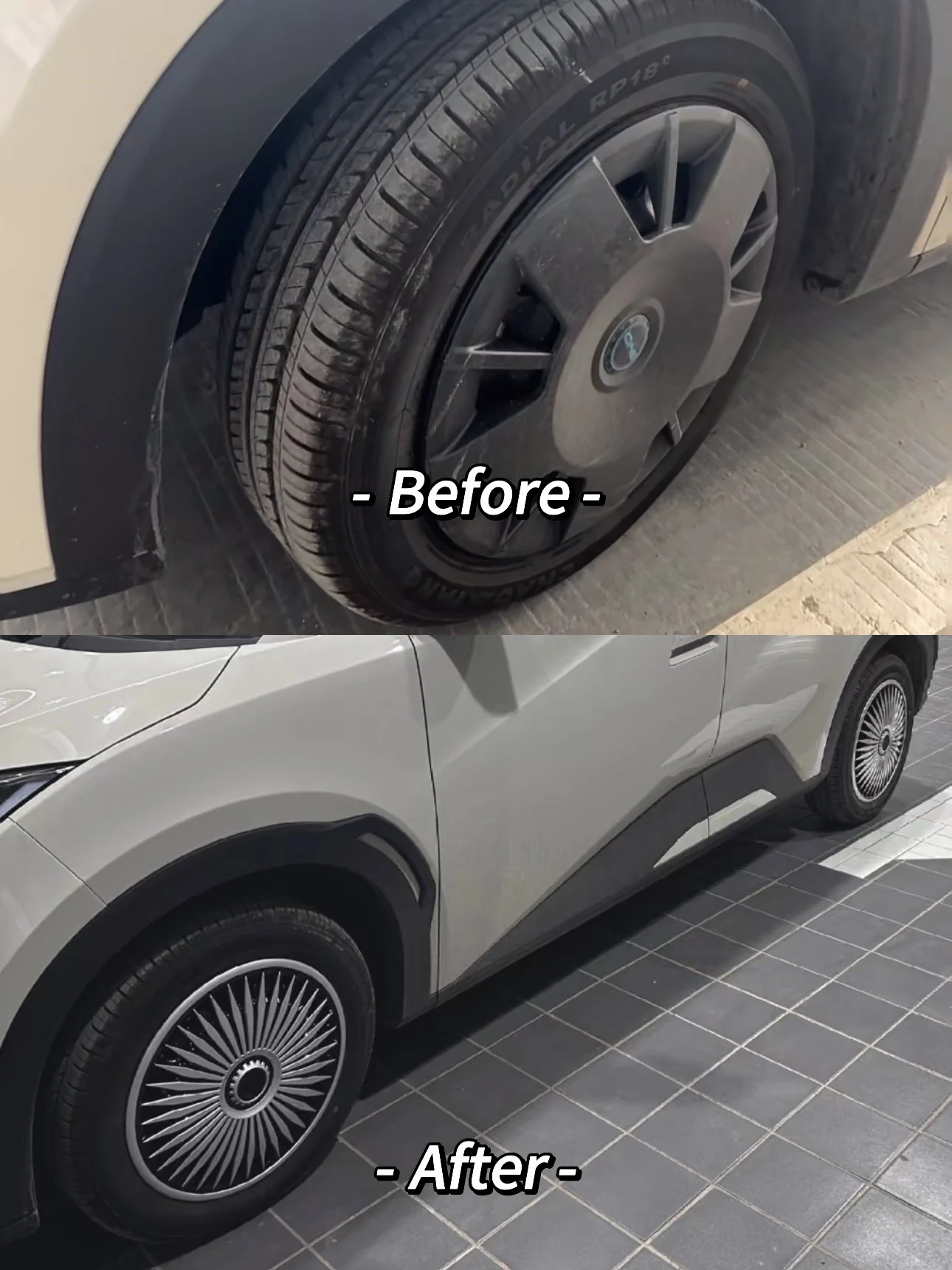
Make a short evidence bundle: front and back photos of an existing cover; close-ups of all clips or fasteners; the tire marking and uncovered wheel; vehicle model, year, trim, and sales market; and any number printed on the original cover. Tell the seller whether the missing piece is a full cover or center cap. A similar-looking cap can have a different rear profile, and a single replacement can differ visibly in gloss or aging from the other three.
| Option | When it makes sense | What to confirm before paying |
|---|---|---|
| One verified matching cover | Only one is missing and the others are sound | Same attachment, size, face design, finish, and single-piece availability. |
| Four-piece aftermarket set | Exact match is unavailable or you want a consistent change | Fit on all four actual wheels, pack contents, retention parts, and return terms. |
| Genuine original part | You need a manufacturer-specified replacement | Original part number, vehicle and market application, and whether it includes the required hardware. |
| Used original cover | An older design is no longer sold new | Rear clips, ring or fasteners, cracks, finish condition, and seller's return policy. |
“OE-style” and “aftermarket” describe appearance or supply position, not proof that a product is a genuine original part. Ask for the original part number when that distinction matters. If an existing cover has fallen off because its clips were damaged, replacing only the missing piece may leave the same problem on the remaining wheels.
Which Material, Finish, and Design Suit Your Use?
Once fit and retention are verified, compare appearance, surface finish, cleaning needs, and the condition of the attachment parts. For an everyday car, a design that is easy to inspect and clean may be more useful than one chosen solely from a polished front-facing photo. For an older vehicle, matching the remaining three covers may outweigh a new pattern.
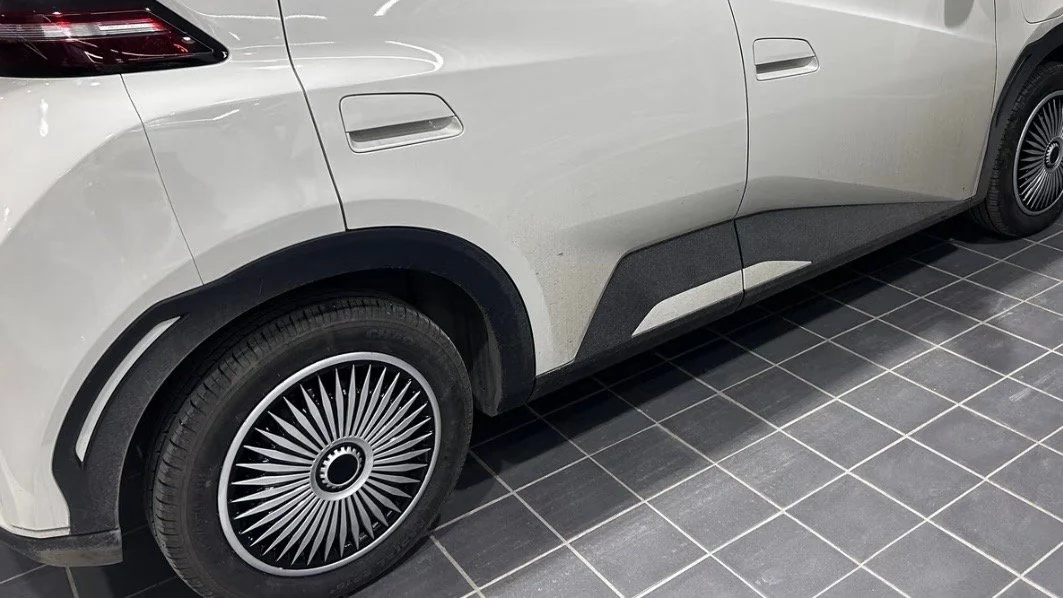
Ask what the face and clips are made from, whether the finish is painted or molded in color, and what cleaning method the seller recommends. Judge clip condition from a rear photograph, not from a broad claim such as “durable plastic.” A finish claim is meaningful only when it belongs to the actual SKU and has a stated test or inspection basis. If appearance is your main goal, view an installed example in similar lighting and compare the cover's center, spoke openings, and edge coverage with the wheel beneath it.
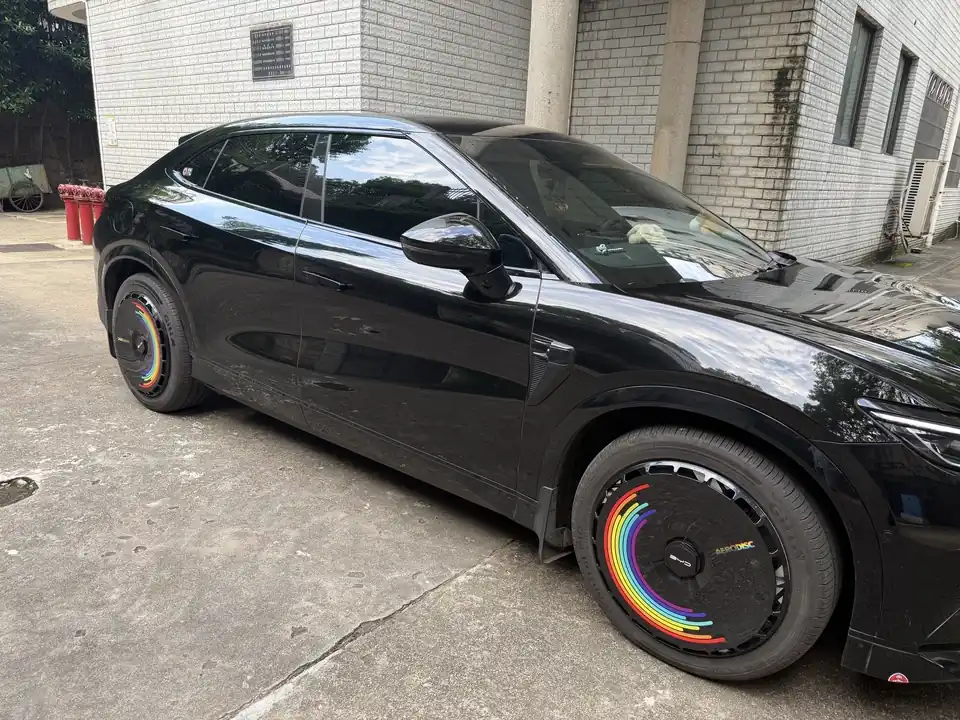
Yirox's BYD Sealion 7 wheel-cover styles illustrate why a named model is still only a starting point: the selected style, actual wheel design, size, market, and year must be checked together. The Seagull product above describes a snap-on cover for an original steel wheel; do not transfer its ring-and-clip description to a different vehicle's alloy-wheel overlay.
An EV aero cover may have a different design goal and a vehicle-specific mounting method. Do not infer an efficiency improvement from a generic full cover or an image of an aerodynamic-looking face. Likewise, wheel-balancing weights are separate parts; they matter here only if their position interferes with the cover or its retention hardware.
What Evidence Should You Check Before Buying?
A usable listing lets you rule out a wrong cover before opening the package. It should show what the item is, which wheels it is meant for, how it stays on, what comes in the box, and where it will not fit. If those fields are missing, request them before ordering instead of treating “universal” as a fit guarantee.
Copy this checklist into a message to a seller:
- Product identity: front and rear images of the exact version, SKU or part number, and whether it is a full cover, center cap, or trim ring.
- Fit scope: nominal diameter; specified wheel or vehicle applications; year, trim, and market where applicable; and explicit exclusions.
- Retention: photos of clips, ring, or special fasteners; whether all necessary pieces are supplied; and a model-specific installation instruction.
- Clearance: a visible valve-stem opening and any known limits near lug nuts, weights, or the wheel face.
- Order unit: one piece, pair, or four-piece set; color and finish; and whether rear hardware is included with replacements.
- After-sales terms: damage on arrival, fitment returns, and availability of the same version for later single-piece replacement.
For example, “16-inch universal hubcap, four pieces” is not enough information to approve an order. “16-inch steel-wheel cover, rear retention photo, compatible-wheel list, excluded rim profiles, valve-stem detail, four pieces with rings, and return terms” gives you something to verify. Neither description overrides a failed test fit. Keep screenshots of the listing and photographs of the original wheel until the covers have been installed and checked.
What Should Shops and Distributors Verify Before Ordering?
Professional buyers need the same fit decision as a car owner, repeated reliably across SKUs, cartons, and replenishment orders. Ask for an application record and a physical sample before turning a product photo into a catalog fit claim. Yirox's sourcing process is one route for discussing samples and project-specific documentation; the available evidence, minimum quantity, and lead time still need confirmation for the selected wheel-cover item.
Which fitment fields belong in a product record?
At minimum, record the SKU and revision, cover type, nominal diameter, wheel type, supported vehicle and wheel identifiers when verified, excluded applications, retention components, valve position, and pack quantity. Keep front, rear, installed, and packaging images with that record. “Fits R16” should not be the only application field. An exclusion such as an incompatible rim lip or different factory wheel design can prevent a costly return more effectively than another generic compatibility phrase.
When possible, pair each supported application with a source: the actual wheel identifier, a test-fit photo, or a signed sample review. Mark untested combinations as unconfirmed. If the supplier changes a clip, ring, mold, or finish, the application record needs a new review rather than silently inheriting the earlier approval.
What should a sample inspection cover?
Compare the received sample with the approved rear and front images. Count and inspect clips; check the ring or special fasteners; inspect edge flash, cracks, finish consistency, and valve opening. Test fit on the intended wheel, confirm even seating, and remove it using the prescribed method to see whether the retention parts remain sound. Record the wheel used, the sample version, the person who inspected it, photographs, and any failure. Do not turn one successful test fit into a claim about every wheel of the same nominal diameter.
Check a packed sample as well. A single-piece replacement needs protection and identification that will keep its finish and rear hardware intact in transit; a four-piece set needs a clear contents count and version match. The right packaging standard depends on how the product will travel and be sold, so request carton photos or a transport sample rather than accepting “export packaging” as a complete specification.
How do you make quotes and reorders comparable?
Put the same information in every request: target market; vehicle and wheel photos or identifiers; nominal sizes; desired style and finish; single-piece versus four-piece mix; estimated quantities; branding and carton requirements; sample needs; inspection points; delivery destination; and proposed order timing. Ask each supplier to identify assumptions and exclusions in its response, including which retention components are included.
Before reordering, compare the latest sample and catalog data with the approved SKU revision. Confirm whether the same clips, ring, finish, pack configuration, and application list still apply. This prevents a familiar product name from hiding a changed part. Availability, manufacturer identity, test reports, minimum order quantity, and lead time should all be confirmed for the actual project rather than assumed from company-wide capabilities.
Conclusion: What Is the Next Step for Your Wheel Cover Decision?
For a personal purchase, write down the tire marking, inspect the actual wheel, and photograph the uncovered rim and any surviving cover from both sides. Shortlist a product only when its wheel scope and retention design agree; then check its pack contents and return terms. For a loose cover, deal with the attachment problem before choosing a replacement style.
For a shop or distributor, assemble those same wheel photos with the target vehicle and market, expected quantity, single-piece or set mix, and packaging needs. You can send Yirox the fitment and order details to request a product-specific fit review, sample plan, and comparable quote. Approve the sample on the intended wheel before making broad catalog claims or a bulk commitment.
Frequently Asked Questions
Can I put a 16-inch hubcap on any car with R16 tires?
No. “R16” identifies radial tire construction and a 16-inch nominal wheel diameter; it does not establish the wheel's rim profile or the cover's attachment points.1 Check the actual wheel type, the product's supported applications, rear hardware, and clearance before buying.
Is a center cap the same as a full wheel cover?
No. A center cap covers the hub area, while a full wheel cover spans most of the visible wheel face. Listings may call either a hubcap, so compare front and back images and dimensions rather than relying on the title.
Why do my hubcaps keep falling off?
Check the wheel application, every clip, any retaining ring, and even seating before buying another cover. Remove a rattling or loosely fitted cover first. For wire-ring designs, confirm the ring position and valve-stem alignment against the product’s instructions; Tire Rack’s procedure includes a hand-removal check after fitting.2
If the same wheel repeatedly loses covers, have its mounting edge and any interfering hardware inspected. A matching diameter or similar face design does not establish that the rear clips fit. Replace damaged retention parts as specified, and refit only when the cover is secure.
Can I buy one replacement instead of a set of four?
Yes, if the seller offers one and you can match its size, rear part details, attachment method, appearance, and finish closely enough. If the original part is unavailable or the other covers are worn, a verified four-piece set may be the simpler way to keep a consistent look.
Does “OE-style” mean the cover is a genuine original part?
No. Treat “OE-style” as a design description unless the seller supplies an original manufacturer part number and confirms the item's genuine status. An aftermarket part may be a suitable replacement, but it still needs its own fit and retention check.
References
[1] Tire Rack. “How Do I Read My Tire Size On My Sidewall?”
[2] Tire Rack. “How Do I Install Wheel Covers / Hub Caps?”
[3] Tesla. “Removing and Installing Wheel Covers.”
[4] Dorman Products. “Tech Notes Installation 910-115: How to Install Wheel Caps.” 2018.







