



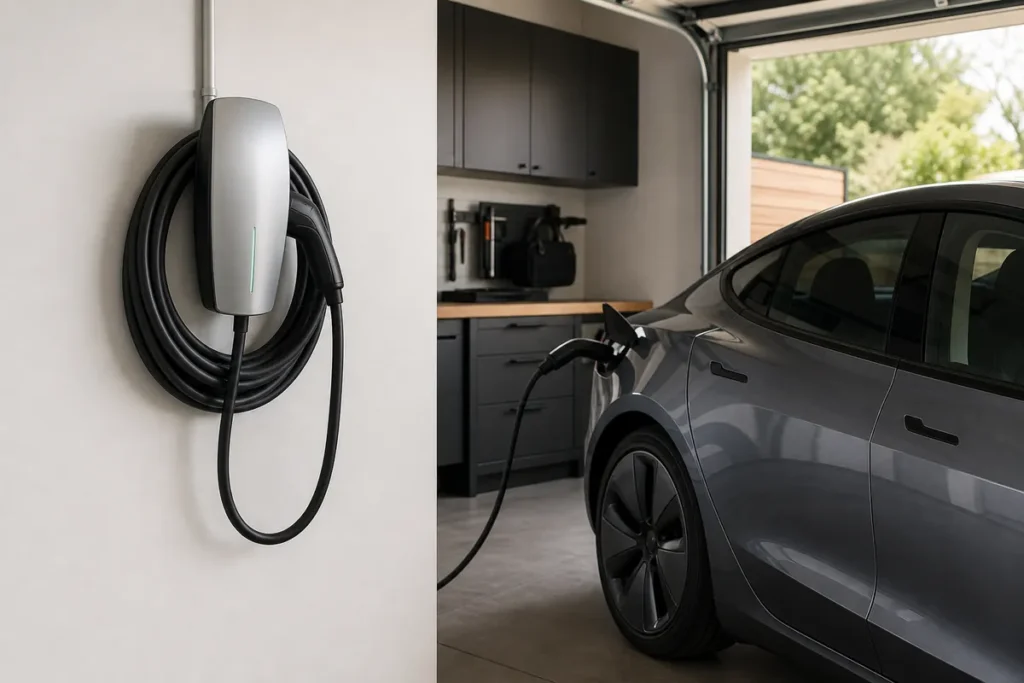
Um Tesla Wall Connector é equipamento de carregamento AC fixo para carregamento em casa, no local de trabalho ou no destino. Fornece energia ao carregador de bordo do veículo; não é um Supercharger DC. Escolha a versão exata do mercado, o conector, a corrente configurada, o alcance do cabo e o plano de instalação antes de o comparar com um Mobile Connector portátil.13
The Wall Connector is not the same as a portable charging cord. It is meant to stay in one place, manage a dedicated charging circuit, and make plugging in at home easy. A Mobile Connector is more flexible for travel or backup charging, but it is not as tidy or permanent for everyday home use.
Índice
- What does a Tesla Wall Connector do?
- What types of Tesla Wall Connector are available?
- How is a Tesla Wall Connector installed?
- How fast does a Tesla Wall Connector charge?
- How does a Wall Connector compare with a Mobile Connector?
- Can non-Tesla EVs use a Tesla Wall Connector?
- What mistakes should owners avoid with home charging?
- What should buyers check before sourcing wall connector accessories?
- Conclusion: Choose a Wall Connector for daily home charging
- Perguntas Frequentes
- Referências
What does a Tesla Wall Connector do?
A Tesla Wall Connector supplies AC power to an EV through a fixed charging unit, letting the vehicle’s onboard charger convert that AC power into battery charging. It is commonly used in garages, driveways, apartment parking, fleets, and destination charging sites.
Because it is mounted and wired for charging, it is more convenient than unpacking a portable cord every day. The cable stays managed, the handle has a dock, and the installation can be sized to the electrical capacity available.
Tesla’s own Wall Connector support describes the product as a home charging solution and provides installation resources for qualified installers 1. The exact product, connector type, amperage, and compatibility may vary by market and generation.
For readers comparing charger categories, the related guia de carregamento EV AC vs DC explains why home charging is usually AC Level 2 while fast charging is a different DC charging category.
What types of Tesla Wall Connector are available?
Tesla Wall Connector types vary by generation, market, connector, and compatibility. In North America, Tesla has offered NACS-style Wall Connectors and Universal Wall Connector options; other markets may use different connector standards.
The key difference is connector compatibility. A Tesla-only connector may be perfect for a Tesla household, while a universal or adapter-based setup can be better for mixed-EV homes. Product availability changes by market, so buyers should confirm the current Tesla shop and installation documentation before ordering.
Some Wall Connector versions support power sharing or connected features for multiple chargers, depending on generation and setup. That matters for homes with more than one EV or commercial parking areas. The related EV charging load management guide explains why power sharing becomes important when several chargers use one electrical service.
Connector terms can be confusing. The related EV charging cable connector guide explains NACS, Type 1, Type 2, CCS, and other connector language in a broader EV context.
Que detalhes do Wall Connector têm de corresponder ao seu veículo e ao local?
| Identificar | Confirmar antes da compra |
|---|---|
| Mercado e geração | O manual exato do produto e os requisitos de instalação, não uma fotografia de outro país |
| Conector e configuração de acesso | A entrada do carro, o adaptador aprovado quando aplicável e a permissão para os veículos pretendidos |
| Corrente de carregamento | O limite AC do veículo e o limite comissionado pelo instalador; a classificação do disjuntor não é o mesmo que a corrente de carregamento |
| Colocação | Alcance do cabo até cada posição de estacionamento pretendida sem tensão ou obstrução de uma rota de circulação |
| Carregamento partilhado | Unidades compatíveis, o modo de gestão de energia e qualquer equipamento de medição exigido separadamente |
Mantenha o número de peça do carregador, a configuração do veículo e o registo de comissionamento juntos. Resolva a compatibilidade ou a capacidade disponível antes de escolher acessórios de montagem ou de assumir que a potência máxima listada estará disponível.
How is a Tesla Wall Connector installed?
A Tesla Wall Connector should be installed according to Tesla’s installation manual, local electrical code, and the available electrical service. In many places, that means using a licensed electrician and the correct circuit, breaker, wire, grounding, and permitting process.
Installation is not only mounting a box on a wall. The installer needs to evaluate panel capacity, circuit size, wire route, indoor or outdoor exposure, mounting height, cable reach, and local code requirements. Tesla publishes installation manuals and setup guidance that should be followed for the exact product version 2.
Location matters. The charger should be easy to reach from the charge port without stretching the cable across a walkway. Cable storage should keep the connector off the ground. Outdoor installations need weather-appropriate mounting and code-compliant protection.
Faça verificar a instalação e a corrente comissionada em relação ao manual exato da Tesla e aos requisitos locais aplicáveis. Se a capacidade disponível for limitada, determine a configuração de gestão de energia suportada e o hardware necessário em vez de selecionar uma definição de corrente mais elevada por tentativa e erro.25
A partilha de energia é o mesmo que monitorizar a casa inteira?
Não. A Tesla distingue um limite estático configurado, o ajuste dinâmico usando um medidor aprovado pela Tesla e a gestão de energia de grupo entre unidades compatíveis. Uma ligação Wi-Fi por si só não mede outras cargas domésticas.5
Pergunte ao instalador que modo a geração exata suporta, se o design é para uma unidade ou para um grupo, que medidor é necessário e qual será o limite configurado. Mantenha as instruções de compatibilidade e comissionamento com a instalação; não combine funções separadas numa única alegação genérica de “carregamento inteligente”.
How fast does a Tesla Wall Connector charge?
Wall Connector charging speed depends on the circuit amperage, vehicle onboard charger limit, connector setup, battery temperature, state of charge, and software settings. The Wall Connector can support faster home charging than many portable setups when installed on a suitable circuit, but the vehicle determines the final accepted power.
It is better to think in overnight charging convenience rather than one universal miles-per-hour number. A driver who parks at home for eight to ten hours may not need the maximum possible amperage. A high-mileage household, shared EV, or fleet use case may benefit from a higher-power installation.
The U.S. Department of Energy explains that Level 2 AC charging is commonly used for home and workplace charging, while DC fast charging is used for faster public charging 4. That distinction helps set expectations: a Wall Connector is not a Supercharger, but it can be excellent for routine charging.
If charging accessories are part of a wider product range, the EV charging accessories category is a natural Yirox reference for cables, portable chargers, adapters, and supporting products.
How does a Wall Connector compare with a Mobile Connector?
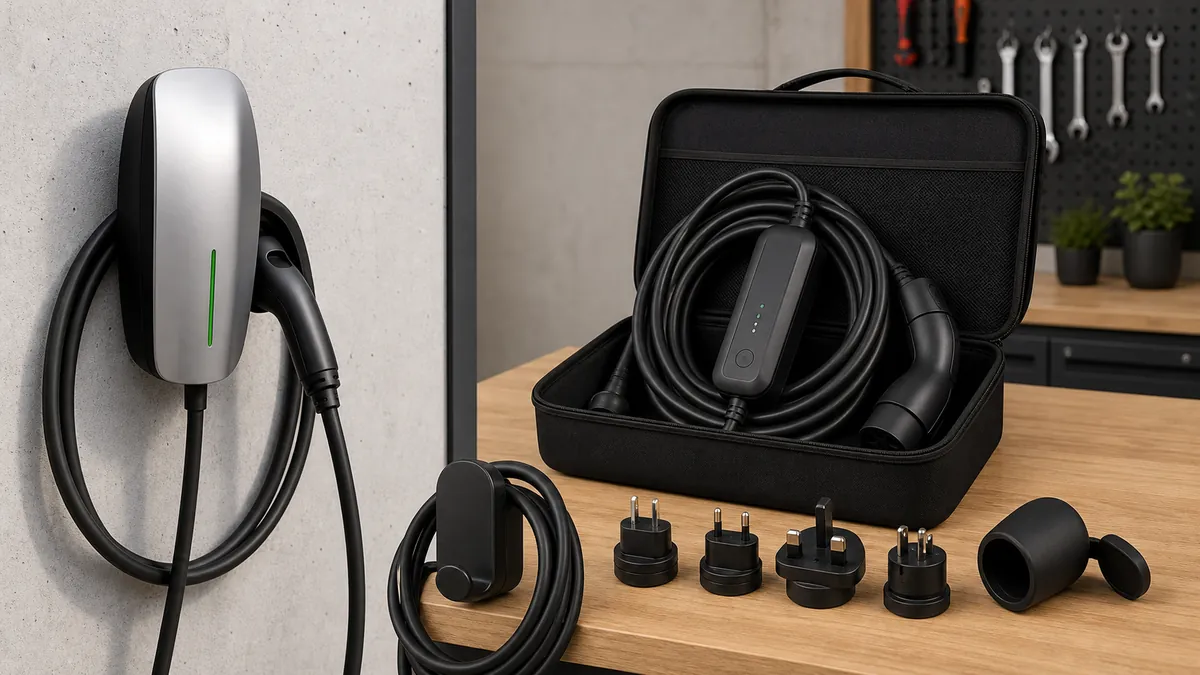
A Wall Connector is better for daily installed home charging, while a Mobile Connector is better for portability, travel, and backup charging. Many owners benefit from both, but they serve different jobs.
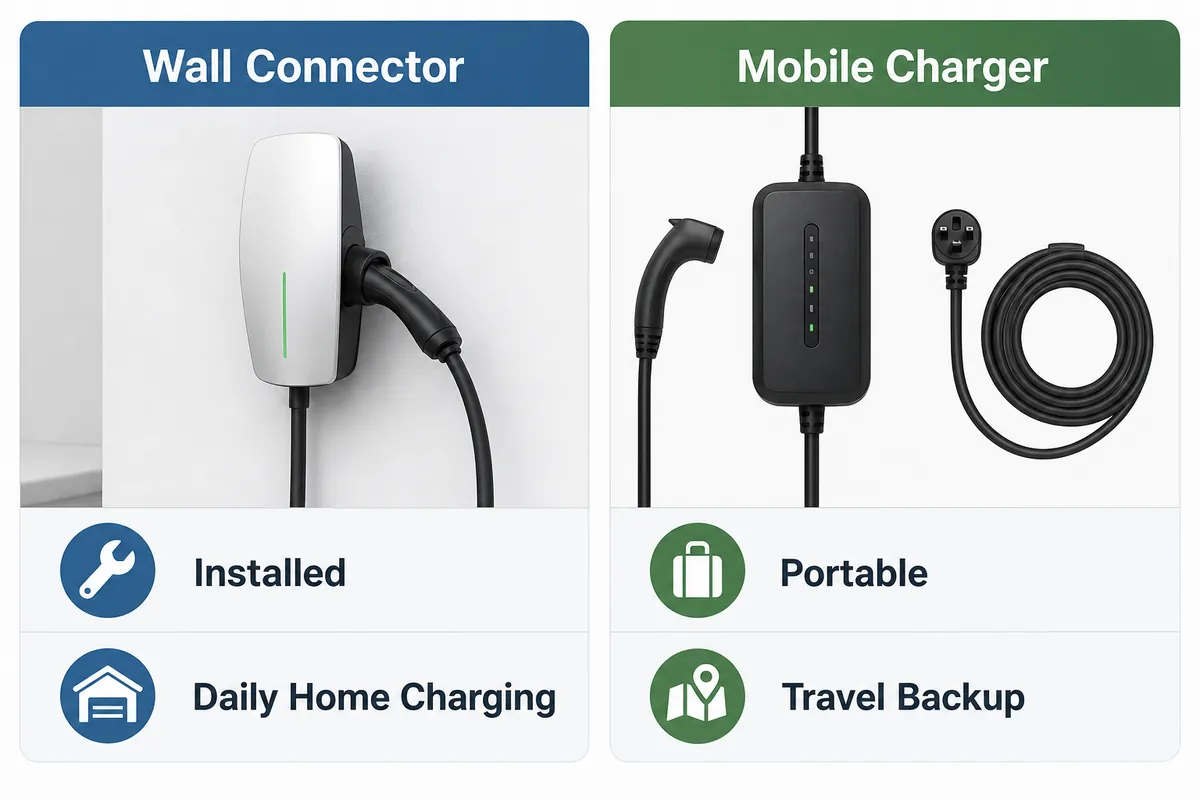
| Característica | Wall Connector | Mobile Connector |
|---|---|---|
| Melhor uso | Daily home or destination charging | Travel, backup, occasional charging |
| Instalação | Fixed, usually electrician-installed | Plug-in with compatible outlet and adapter |
| Armazenamento do cabo | Mounted and tidy | Stored in bag or vehicle |
| Power potential | Often higher when circuit supports it | Limited by outlet and adapter |
| Portability | Stays installed | Easy to carry |
Tesla’s Mobile Connector support covers portable charging use, adapters, and practical setup guidance 3. For readers comparing portable EVSE products more broadly, the related guia de carregador portátil de VE explains pros, cons, and best uses.
Can non-Tesla EVs use a Tesla Wall Connector?
Some non-Tesla EVs can use certain Tesla Wall Connector products or adapters, but compatibility depends on connector type, market, vehicle inlet, and product version. Owners should confirm the exact charger and vehicle before buying.
In North America, NACS adoption has changed the charging conversation, and Tesla’s Universal Wall Connector is designed to support more mixed-EV situations. In other markets, Type 2 or other connector standards may be more relevant. The current product page and local regulations matter.
Even when the connector fits, charging power may still depend on the vehicle’s onboard charger and settings. A charger cannot force a vehicle to accept more AC power than the vehicle supports.
For multi-brand homes or workplaces, a universal charging plan may be better than buying around one vehicle. Think about the next EV, not only the current one.
What mistakes should owners avoid with home charging?
Owners should avoid undersized wiring, unapproved adapters, loose outlets, extension cords, poor cable storage, blocked ventilation, and buying a charger before checking electrical capacity. Home charging should be convenient, but it should also be boringly safe.
A common mistake is focusing only on maximum amperage. Faster is not always necessary, and a higher-power installation may require panel upgrades. Another mistake is placing the charger where the cable barely reaches, which can stress the cable and create a trip hazard.
Do not use random adapters to make plugs fit. Charging equipment should be rated for the load and used as intended. Heat at plugs, outlets, or adapters is a warning sign that should be handled seriously.
Cable management matters too. A clean cable holder keeps the connector off the floor and reduces wear. Outdoor users should also think about connector caps, rain exposure, and where the cable sits when not in use.
What should buyers check before sourcing wall connector accessories?
Buyers should check connector compatibility, current rating, cable flexibility, weather resistance, mounting hardware, labeling, packaging, installation instructions, and certification requirements for the target market. Charging accessories are not just convenience products; they interact with high-power equipment.
Accessory products around a Wall Connector may include cable holders, connector docks, plug caps, adapter cases, mounting plates, protective covers, and storage bags. Each should fit the charger version and cable diameter without stressing the cable or blocking normal use.
Verifique os acessórios em relação à doca de conector exata, às dimensões do cabo, à superfície de montagem e às condições de exposição. Retenha a configuração aprovada e as instruções de instalação para que as substituições não obstruam o arrefecimento, forcem o cabo ou impeçam o uso normal da pega.
Conclusion: Choose a Wall Connector for daily home charging
A Tesla Wall Connector is the cleaner, more permanent choice for daily home charging. It keeps the cable organized, supports a dedicated installation, and can offer strong Level 2 charging performance when the home electrical system is suitable.
A Mobile Connector still has a place. It is useful for travel, backup charging, and situations where portability matters more than a fixed charging station. The best setup for many owners is a properly installed Wall Connector at home and a well-stored portable charging kit for backup.
Before buying, confirm connector compatibility, electrical capacity, local code requirements, and whether the charger needs to serve only Tesla vehicles or mixed EVs.
Perguntas Frequentes
Is a Tesla Wall Connector worth it?
It is usually worth it for owners who charge at home regularly. It is cleaner and more convenient than unpacking a mobile charger every day.
Can I install a Tesla Wall Connector myself?
Installation rules depend on location, but a qualified electrician is strongly recommended and often required. EV charging circuits must match local electrical code and Tesla’s installation manual.
Is a Wall Connector faster than a Mobile Connector?
It can be faster when installed on a suitable circuit, but charging speed also depends on the vehicle’s onboard charger and settings. A Mobile Connector is usually more limited by the outlet and adapter.
Can a Tesla Wall Connector charge non-Tesla cars?
Some versions or adapter setups can support non-Tesla EVs, depending on connector type and market. Always confirm compatibility with the exact vehicle and charger version.
Do I still need a Mobile Connector if I have a Wall Connector?
Many owners keep a Mobile Connector as backup or travel equipment. The Wall Connector is for daily installed charging, while the Mobile Connector is for portability.
Referências
[1] Tesla. “Wall Connector.”
[2] Tesla. “Instalar um Wall Connector.”
[3] Tesla. “Mobile Connector.”
[4] US EPA. “Plug-in Electric Vehicle Charging: The Basics.”
[5] Tesla. “Gestão de energia do Wall Connector.”