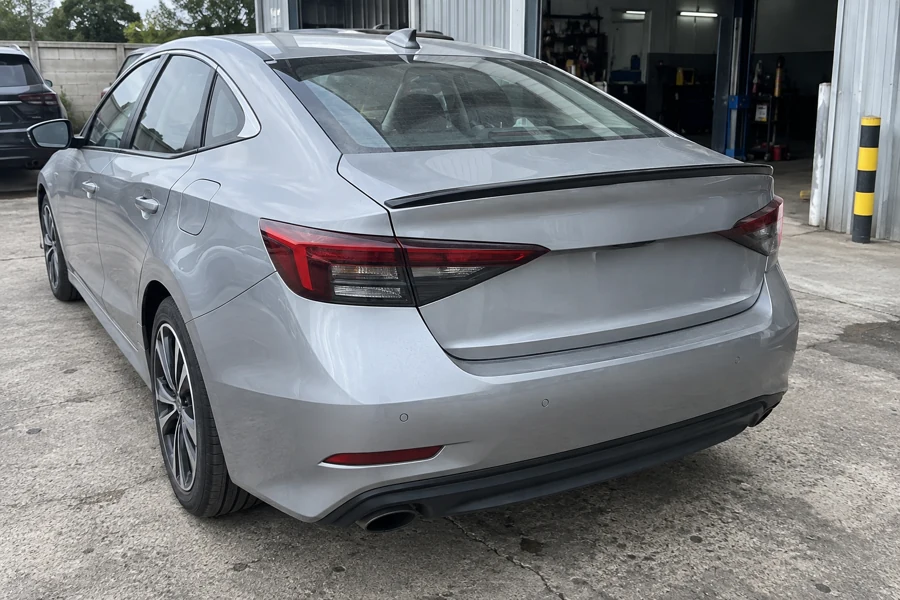
A customer asks, “What is a rear spoiler actually for?” Your supplier calls one part a spoiler, another a wing, and both listings promise a sportier car. Before adding either to your catalogue, you need to know what you are selling.
The wrong choice can mean more than an awkward appearance. A mismatched mounting surface creates installation problems, while unsupported performance claims leave customers expecting benefits the part has never been tested to deliver.
A rear spoiler is a body-mounted feature that changes airflow at the back of a vehicle. It may reduce rear lift or influence drag when engineered for that vehicle; many aftermarket versions are bought primarily for styling. Choose by intended use, verified fitment and mounting requirements, then compare materials and finish.
What Is a Rear Spoiler, and Where Does It Sit?
On a sedan, a rear spoiler commonly follows the trailing edge of the trunk lid. On a hatchback or SUV, it often sits near the rear roof edge above the back window. Some vehicles also have active spoilers that move under factory control.
The name comes from “spoiling,” or disrupting, an existing airflow pattern. This does not mean randomly blocking air. A functional design deliberately changes how air moves around and separates from the body.
Position matters when describing products. A trunk spoiler, roof spoiler and front bumper lip are different parts. For buyers building a wider exterior range, the BYD body kit guide explains where spoilers sit alongside lips, side skirts and rear diffusers.
What Does a Rear Spoiler Do to Airflow?
As a car moves, air flows over, around and underneath it. The resulting pressure distribution can produce lift, while drag resists forward motion. The shape of the rear body and the way airflow leaves it help determine those forces.
A suitably designed spoiler changes this flow and pressure distribution. Reducing rear lift means reducing the upward aerodynamic force at the rear; it does not automatically mean the whole vehicle generates net downforce. Drag may also change, depending on the design and vehicle.
Porsche’s account of the original 911 ducktail describes development through wind-tunnel testing. It demonstrates why a result belongs to a tested vehicle and part combination. It cannot establish the benefit of a similar-looking accessory on another car.
For distributors, the useful distinction is between a documented aerodynamic component and an exterior styling product. Ask for testing tied to the actual application before repeating handling, fuel-economy or EV-range claims. There is no single speed at which every spoiler becomes effective, and a taller design is not automatically better.
Rear Spoiler vs. Rear Wing: A Quick Comparison
A spoiler generally meets or extends the body surface. A rear wing usually has a raised aerodynamic element with space for airflow above and below it. However, retail names overlap: a product called a “spoiler wing” may describe its appearance rather than a validated aerodynamic function.
| Feature | Body-mounted spoiler | Raised rear wing |
|---|---|---|
| Typical layout | Follows a trunk or roof edge | Element supported above the body |
| Function to verify | Changes local airflow and separation | Can generate downforce when properly designed |
| Buying checks | Contact surface, contour, mounting method | Supports, fixing points and load requirements |
| Everyday considerations | Finish, opening clearance, secure attachment | Added height, visibility and mounting demands |
Porsche’s 718 aerodynamic documentation shows spoilers and wings working within complete vehicle packages. For a street styling range, prioritise fit and appearance. For track customers, seek application-specific performance evidence and mounting instructions.
Main Types of Rear Spoilers
Lip spoilers are low additions along a trunk edge. They suit customers seeking a subtle change, but still need to follow the panel’s width and curvature.
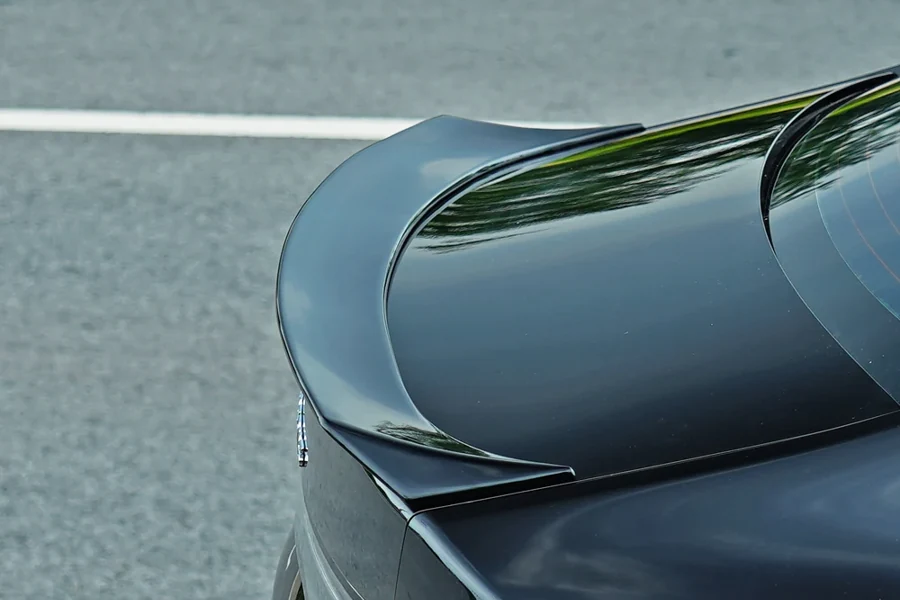
Ducktail spoilers have a more pronounced upward sweep. Compare side-profile photographs as well as rear views: height and contour can look very different once fitted.
Roof spoilers sit near the upper rear edge. Check tailgate movement, rear wiper clearance, lights and cameras. An extension attached to an existing spoiler is different from a complete replacement.
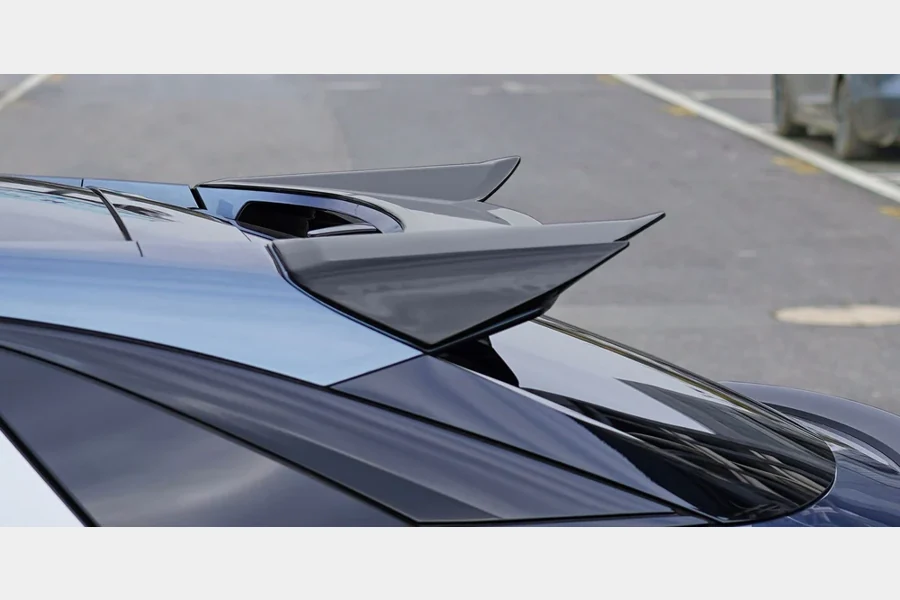
Pedestal designs use supports to raise the part. “Pedestal” describes the mounting arrangement, so inspect the actual structure rather than assuming every raised product has the same function.
Materials: Check the Construction Behind the Name
ABS, other suitable plastics, fiberglass and carbon-fiber constructions appear in the aftermarket. Material choice affects manufacturing, finishing and repair options, but the name alone does not tell you the finished weight or durability.
With carbon-fiber products, distinguish a composite structure from a carbon-fiber surface layer and a carbon-look finish. Ask what the full part is made from, including its mounting areas. Request finish-care information and product-specific weight if those details matter to your customers.
For repeat orders, approve a sample covering visible surfaces, edge quality, dimensions and finish. Record that specification so later batches have a clear reference. A consistent painted plastic part may suit your programme better than a more expensive construction with unclear specifications.
Confirm Rear Spoiler Fitment Before Ordering
“Universal” does not mean every car. A similar width cannot compensate for the wrong trunk curve, unsuitable supports or incompatible existing holes. The OEM versus aftermarket exterior accessories guide provides broader context for comparing replacement and styling routes.
Send the supplier:
- Vehicle model, year, generation, body style and sales market.
- Trim details and photographs of the existing spoiler.
- Rear and side views, plus close-ups of the mounting surface.
- Existing hole locations and any aftermarket changes.
- Details of cameras, lights, wipers and opening clearances.
Trial-fit the sample before adhesive backing is removed or holes are drilled. It should sit naturally without forced bending. For importers, this sample check is also an opportunity to verify packaging protection and the installation information supplied to retailers.
Installation and Cost: Plan the Whole Job
Use the attachment method specified for the kit. A tape-on part requires suitable surface preparation and bonding conditions; a bolt-on design requires the correct fixings and any specified support, sealing and corrosion protection. Tape is not a general substitute for wing hardware.
The BYD body kit installation guide offers a model-focused planning reference. Follow the individual kit’s instructions for cure times and tightening requirements. Drilling, wiring, paint repair or active-spoiler work should go to a qualified installer when the task exceeds the owner’s skills.
Budget for the part, freight, paint, old-part removal, fitting and any hole repairs. Compare quotes using the same scope. A low purchase price can lose its advantage when finishing or installation work is omitted.
Sourcing Rear Spoilers for a Wholesale Range
Yirox is an automotive parts manufacturer and supplier in Wuxi, China, supporting vehicle-specific exterior parts, body kits and rear spoilers. Its manufacturing capabilities and specialist supply partners support existing-product sourcing and custom development.
Explore the spoilers and wings range around your target vehicles, then confirm each item’s application. Yirox can discuss samples, bulk supply, tooling, finishes, branding and packaging according to the project. Agree the sample approval criteria before scaling the order.
Frequently Asked Questions
Why do cars have rear spoilers?
They may be part of the factory aerodynamic design, a styling feature, or both. The purpose depends on the exact vehicle and component.
Does a rear spoiler make a car faster?
An accessory does not automatically increase speed. Any performance claim needs evidence for the actual part and vehicle combination.
Can a rear spoiler fit any car?
No. Panel shape, mounting points and operating clearances must be checked, even when a product is described as universal.
Is a rear spoiler worth adding to a product range?
It can suit customers seeking a clear styling change. Start with verified vehicle applications, approved samples and installation information you can pass to buyers.
Discuss Samples, Bulk Supply or a Custom Spoiler
Send Yirox your sourcing brief with target vehicles, preferred designs, destination market, expected quantities and packaging needs. Ask for sample options and an application review before committing to a wholesale or private-label programme.
References
- The ducktail: development of the 911 Carrera RS 2.7 rear spoiler — Porsche Newsroom.
- 718 Spyder and Cayman GT4 aerodynamics — Porsche Newsroom.