



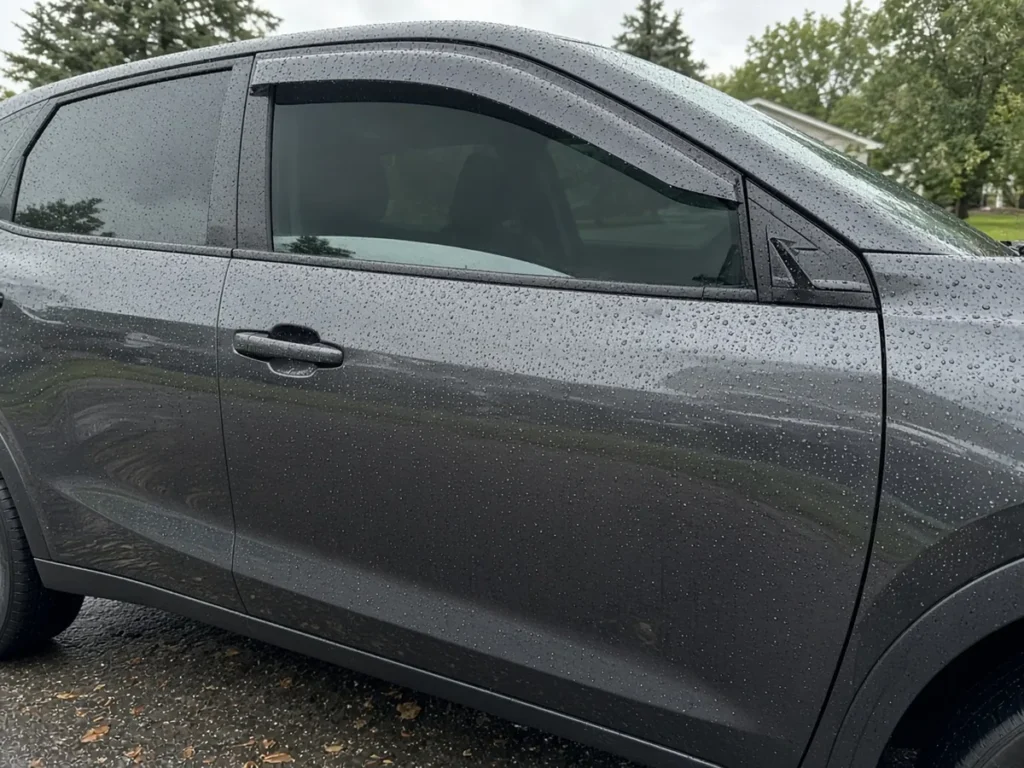
Los deflectores de lluvia, también vendidos como viseras de ventana o deflectores de ventana, son los paneles delgados tintados que se colocan a lo largo de la parte superior de una ventana lateral para que puedas entreabrir el cristal bajo la lluvia. Esta guía explica en qué se diferencian los montajes en canal y con cinta adhesiva, y cómo instalar y elegir un juego.
Alcance: este artículo trata sobre los deflectores de lluvia para ventanas laterales de automóviles —la misma pieza que se vende como viseras de ventana, deflectores de ventana o viseras de ventilación— y la elección entre montajes en canal y con cinta adhesiva. No trata sobre protectores de canaletas de lluvia ni protectores de hojas para el techo de una casa, viseras solares interiores, deflectores para aires acondicionados de ventana ni ventilaciones de ventana para acampar. El trabajo de apariencia en molduras cromadas se cubre en la guía para eliminar el cromo.
¿Qué son los deflectores de lluvia, las viseras de ventana y los deflectores de ventana?
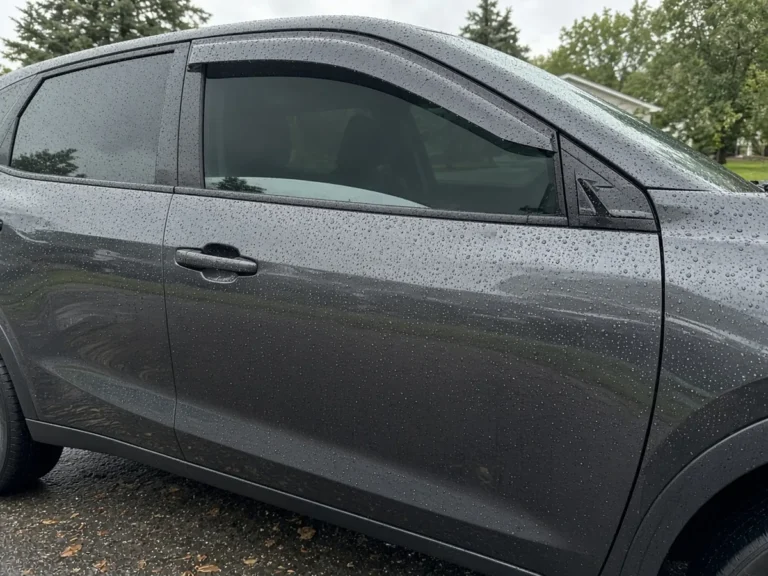
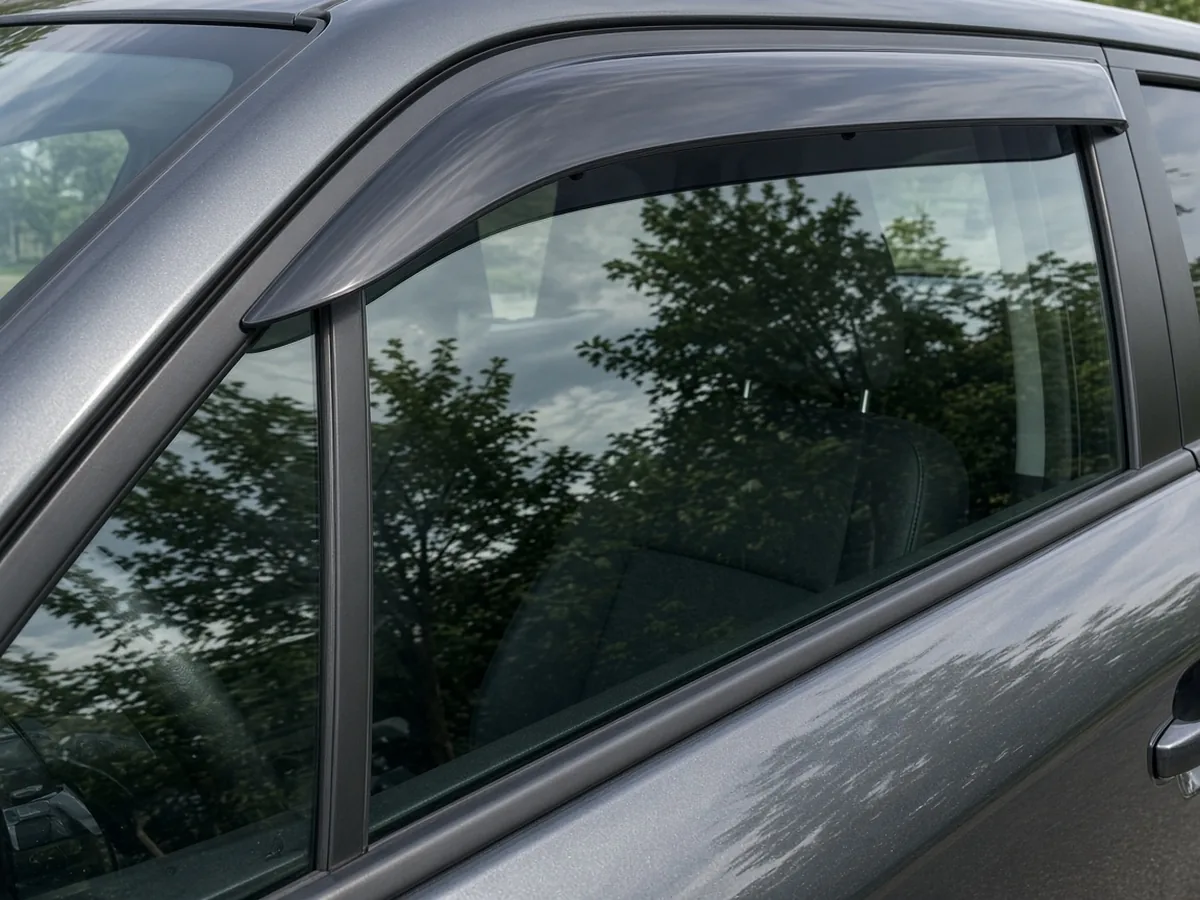
Los deflectores de lluvia, las viseras de ventana y los deflectores de ventana son el mismo accesorio para ventanas laterales, también vendido como viseras de ventilación o viseras de lluvia.
Cada pieza es un panel delgado, generalmente tintado en tono humo, que sigue el borde superior de una ventana lateral delantera o trasera. Sobresale ligeramente del cristal para que la lluvia y las salpicaduras se desvíen mientras la ventana aún puede dejarse un poco abierta.
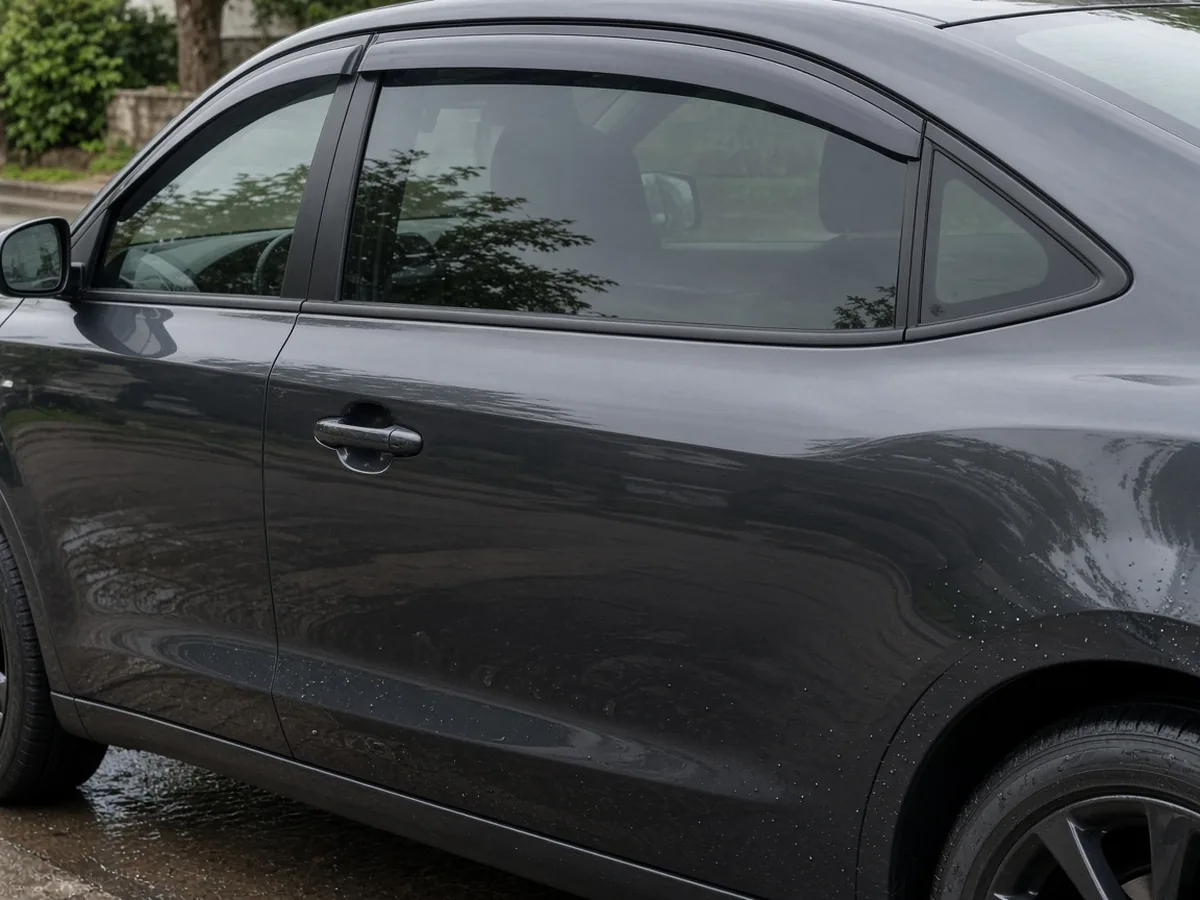
La pieza casi siempre es específica para cada vehículo. Un juego está diseñado para un año, marca, modelo y estilo de carrocería, incluida la cabina y el número de puertas en una camioneta o SUV. Un kit de dos piezas generalmente cubre solo las ventanas delanteras; un kit de cuatro piezas añade las traseras. Comprar la cabina o el número de puertas incorrecto es uno de los errores de ajuste más comunes, y se cubre en la sección de elección a continuación.
La mayoría de las viseras de venta al por menor son de acrílico tintado o de un plástico rígido similar. Las fábricas de esta categoría generalmente conforman o cortan la pieza en bruto, recortan el borde y aplican cinta sensible a la presión o moldean una brida delgada que se asentará en el canal de la ventana. El tono humo es el acabado habitual. También se venden viseras pintadas a juego o igualadas al color, con una especificación superior, cuando el comprador quiere la pieza más cercana al color de la carrocería.
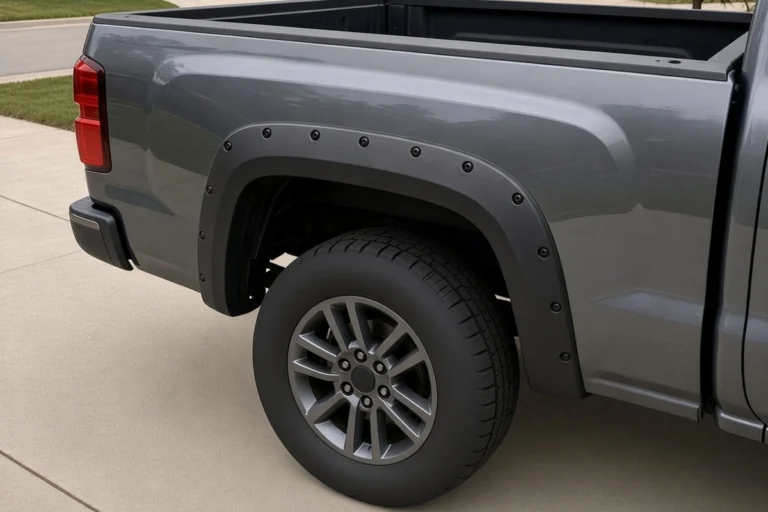
Estos paneles pertenecen a las molduras adicionales exteriores, no a las viseras solares interiores ni a las piezas de carrocería que modifican el paso de rueda. Si estás buscando un conjunto más amplio de piezas exteriores, empieza por accesorios de molduras exteriores para automóviles. Las piezas que amplían la abertura de la rueda son una decisión diferente, cubierta en qué son los ensanchamientos de guardabarros.
Tampoco son capós ni protectores contra insectos, deflectores de techo solar ni persianas para ventanas laterales. Esas son piezas separadas con sus propias reglas de ajuste.
¿Qué hacen realmente los deflectores de lluvia?
Te permiten dejar una ventana lateral ligeramente abierta bajo la lluvia o las salpicaduras, para que el aire pueda circular por la cabina sin que entre tanta agua.
Ese es el trabajo que la mayoría de los compradores realmente quiere. En un trayecto lluvioso, una parada corta o un día húmedo, una pequeña abertura bajo la visera puede ventilar el aire viciado y reducir el empañamiento sin bajar el cristal del todo. La visera también desvía algo de lluvia, salpicaduras de la carretera y residuos ligeros que de otro modo entrarían directamente por esa abertura.
No sellan el hueco como lo hace una ventana completamente cerrada. Una abertura amplia, la lluvia impulsada por el viento desde un ángulo desfavorable o una visera que no sigue la puerta aún pueden dejar entrar agua. Considera “mantiene la lluvia fuera” como una reducción útil, no como una afirmación de estanqueidad.
¿Vale la pena? Para muchos conductores el valor está en la comodidad: poder ventilar la cabina con mal tiempo y reducir parte de las turbulencias que provoca una ventana entreabierta a velocidad. Ese es un beneficio real y cotidiano.
No es una mejora de economía de combustible. No hay ninguna prueba principal en las fuentes de este artículo que respalde una cifra de MPG o de resistencia aerodinámica, por lo que esta guía no inventa ninguna.
Una visera también puede reducir algo del deslumbramiento en la parte superior del cristal, pero eso es un efecto secundario del acrílico tintado, no un sustituto de una visera solar interior. Si el único problema que intentas resolver es el sol en los ojos del conductor, esta es la pieza equivocada.
¿Cuál es la diferencia entre las viseras de ventana en canal y con cinta adhesiva?
La verdadera elección es dónde se fija la visera: dentro del canal superior de la ventana, o en el marco de la puerta por encima del cristal con cinta adhesiva.
Los nombres “viseras de ventana vs deflectores de lluvia” generalmente describen la misma pieza. En canal versus con cinta adhesiva —también llamado adhesivo o de montaje exterior— es la comparación que cambia el ajuste, el riesgo para la pintura y cómo se cierra la ventana.
Una visera en canal utiliza una brida delgada que se asienta en la guía superior del cristal, con el labio visible fuera del cristal. El adhesivo suele estar en esa brida, por lo que no se pega a la chapa pintada de la puerta. Como la brida queda en la trayectoria del cristal, la ventana debe subirse con cuidado durante la instalación, y el cierre automático de un toque puede invertirse si detecta resistencia adicional.

Un visor adhesivo o de montaje exterior se adhiere al marco de la puerta por encima del cristal y queda fuera del canal de la ventana. Eso mantiene la pestaña fuera de la guía del cristal, por lo que este montaje suele ser el que funciona en puertas sin marco, pero también coloca el adhesivo sobre metal pintado, así que la limpieza y el ajuste en seco importan más.
Some in-channel kits also include windowsill or channel clips. WeatherTech’s Side Window Deflector sheets, for example, show clips used with the in-channel visor on certain applications 2. Treat those clips as part of that kit, not as a third universal mount. The install temperature and the window-closed wait still come from the same maker’s sheet.
Neither mount is automatically “better.” In-channel is usually the quieter look and keeps tape off the door skin. Tape-on avoids putting a flange in the channel and is often the only practical option when there is no frame for the glass to run in. The next two sections turn that into an install sequence and a choose-if list.
Finish is a separate decision from the mount. Smoke-tinted acrylic is the common stock look. Paint-matched or color-matched visors cost more to specify and have to follow the same mount and fitment rules as a smoke set. A chrome-accent visor is an appearance option, not a different way of attaching the part.
¿Cómo se instalan los deflectores de lluvia y cuánto tiempo deben permanecer subidas las ventanas?
Follow the instruction sheet in the box, including that kit’s window-closed cure time and minimum temperature. Those figures are not the same from every maker.
AVS’s in-channel Ventvisor sheet tells the installer to leave the window up for 72 hours and not to install below 50°F / 10°C 1. WeatherTech’s Side Window Deflector sheets tell the installer to leave the windows fully closed for 48 hours, and they note that the deflector may take longer to acclimate below 60°F / 16°C 2.
Use the number printed for the set you have. Do not average them, and do not borrow a single 3M application temperature from a page that is not in the box.
Shared prep is straightforward. Wash the vehicle so dirt is not trapped under the part. Confirm left and right, front and rear, against the markings on the visors.
Dry-fit each piece before you peel any liner. Then clean only the surface the sheet names — the window channel and felt for an in-channel set, or the painted door frame for a tape-on set — and let it dry.
Install checklist for an in-channel set:
- Dry-fit the visor and confirm it follows the opening without forcing the ends.
- Roll the window down. If the sheet calls for it, scuff the inside felt and clean the channel; the AVS Ventvisor sheet uses a pad on the felt, then alcohol 1.
- Seat the flange in the upper channel, often front end first, as that sheet shows, and press along the flange edges.
- Pull the remaining tape liner only after the visor is positioned, if the instructions use a staged liner.
- Raise the glass slowly, without one-touch auto-up, and keep the flange seated in the channel as the window closes 1 2.
- If the window reverses, stop and use the reset steps in the visor sheet or the vehicle owner’s manual. WeatherTech prints a short reset sequence on its sheet 2.
- Leave the window fully up for the cure time and temperature on that sheet before you cycle the glass in normal use.
Install checklist for a tape-on, or outside-mount, set:
- Dry-fit on the door frame (or the roof-rail area, on a frameless door if that is where the kit mounts) and mark the position if the sheet asks you to.
- Clean and dry the painted surface the tape will touch. Any wax, dressing or moisture under the tape is a common reason a visor later lifts.
- Peel the liner in the sequence the instructions give, set the visor on your marks, and press firmly along the full length.
- Follow that kit’s wait time, temperature and window position. Do not reuse the 72-hour or 48-hour in-channel figures unless they are printed on this sheet.
- Confirm the visor is secure before you drive.
Removal, if you need it later, is usually a slow peel, sometimes with gentle heat, then a residue cleaner that is safe for the paint or the channel. Do not pry against the glass run or scrape the door skin. If a rear visor has already loosened, find out why — wrong cab, incomplete seating, or a missed cure — before you stick the same part back on.
¿Cómo elegir entre montaje en canal y con cinta adhesiva para tu vehículo?
Start with the vehicle, then choose the mount that door can actually use. A well-made visor for the wrong generation, cab or door count will not become the right part because the tint looks correct.
Write down the year, make, model and body style, then the cab and the door count. A regular-cab, extended-cab and crew-cab truck can each need a different rear visor, or no rear visor at all. Two-door and four-door bodies are not interchangeable. Decide whether you need a two-piece front set or a four-piece set that includes the rears.
Look at the door itself. If the side glass is frameless, an in-channel flange often has nowhere to seat, and a tape-on or roof-rail mount is usually the practical choice. If the door has a conventional framed channel, both mounts may be offered, and the decision is about paint, profile and auto-up behavior rather than about whether the part can physically go on.
Choose in-channel if all of the following are true:
- The door has a framed upper channel and a vehicle-specific in-channel set exists for that body.
- You want the slimmer look, and you would rather keep adhesive off the painted door skin.
- You can leave the windows up for the cure time on the sheet, and you are prepared to seat the glass slowly, without auto-up, during install.
Choose tape-on, or outside-mount, if any of the following are true:
- The side glass is frameless, or no in-channel kit is listed for that year, make and model.
- You want the visor out of the window channel, including on a vehicle with sensitive one-touch auto-up.
- The painted door frame is sound, and you can clean it well enough for the tape to hold.
Whether the set is a factory accessory or an aftermarket piece, the mount and the body style still have to match. The broader comparison in OEM vs aftermarket exterior accessories is useful for that sourcing decision, but it does not replace the year, cab and door-count check.
¿Qué riesgos y excepciones debes tener en cuenta?
Most problems come from a poor fit, a rushed cure, or a visor that fights the window as it closes. None of these is a reason to skip the part, but each one should be checked before you drive.
One-touch auto-up is the issue that shows up most often on in-channel sets. While the glass is being seated, the flange adds resistance in the channel. Many vehicles will stop and reverse if that resistance feels like an obstruction.
That behavior exists because power-operated windows on passenger cars, multipurpose passenger vehicles, and trucks at or below 4,536 kg GVWR must, as manufactured, stop and reverse before contacting a test rod or before exerting a squeezing force of 100 N, under Federal Motor Vehicle Safety Standard 118 3.
An aftermarket visor is not certified to FMVSS 118. The standard applies to the vehicle’s window system as built, not to the accessory. The practical point is simpler: raise the glass in small steps without auto-up during install, and if the window bounces back, use the reset steps in the visor sheet or the owner’s manual. Do not keep forcing auto-up against a visor that is not yet seated.
Legal questions are often asked as “in what states are side window deflectors illegal?” There is no federal ban on these visors, and the statutes reviewed for this article do not name side-window rain guards as a prohibited part. That is not the same as a 50-state clearance list, and this guide does not invent one.
What the codes do address is the driver’s view and, in some cases, material on the glass.
California Vehicle Code § 26708 says a person shall not drive with an object or material on the windshield or side or rear windows, or that obstructs or reduces the driver’s clear view through the windshield or side windows, with listed exceptions. Those exceptions include interior sun visors mounted forward of the side windows, and side windows to the rear of the driver 4.
Texas Transportation Code § 547.613 makes it an offense to operate a vehicle with an object or material on the windshield or a side or rear window that obstructs or reduces the operator’s clear view, or to attach transparent material that alters color or reduces light transmission, again with listed exceptions, including a side window to the rear of the operator 5.
Those are view and window-material rules to check for the state where the vehicle is registered and driven. A low-profile visor on the door frame is not automatically unlawful under those sections, and a heavily tinted or poorly placed visor on a front side window is not automatically lawful either. Check the local code rather than relying on a forum list of “illegal states.”
Car-wash and loosening problems are more straightforward. The AVS Ventvisor sheet says not to use automatic “brush-style” car washes, and to wash only with mild soap and a clean cloth 1. A brush that catches a visor edge can lift or break it. Touchless or hand washing is the safer default unless the sheet for your set says otherwise.
WeatherTech’s sheets also warn that accessories that are not properly fitted can be dangerous, and that the instructions should be read and followed before installation 2. A visor that was forced onto the wrong cab, left short of the channel, or driven before the adhesive cured can shift, whistle, or come off. Rear visors are the ones that most often show a loose end when the cab or door count was wrong.
There is no general rule, in the sources for this article, that a rain guard voids an insurance policy. If that is a concern, ask the insurer rather than treating a forum claim as a policy term.
¿Qué deben incluir los distribuidores y talleres en una solicitud de cotización de deflectores de lluvia?
Specify the vehicle and the mount first, then the finish, the window system, and the inspection checks. A rain-guard buy that only says “smoke visors, four-piece” leaves too much room for the wrong tool to be run.
Put the following in the request:
- Year, make, model and body style, plus cab type and door count, and whether the order is a two-piece or four-piece set.
- Mount: in-channel, tape-on / outside-mount, or a named kit that includes channel clips, and whether both mounts are even offered for that body.
- Whether the vehicle park includes frameless side glass or one-touch auto-up windows, so the supplier can flag a mount that will fight the glass.
- Finish: smoke tint, paint-matched or color-matched, or another agreed appearance, with a sample or color code if a match is required.
- The install-sheet language that will ship in the box, including cure hours and minimum or reduced-temperature notes, rather than a single generic wait time.
- What the carton should contain: left/right and front/rear marks, tape or clips, and any seating tool the design needs.
Incoming inspection should look at more than the tint. Check that each visor is marked for side and position, that the flange or tape face matches the mount you ordered, and that the edges are free of warp, cracks, sharp flash and obvious sink.
Compare the curve to a sample door or to the approved sample. Confirm the printed install sheet matches the part, including the window-closed time and the temperature note. Packaging should protect the long edges and keep left and right pieces from scuffing each other in transit.
Do not ask the supplier to certify the visor to FMVSS 118. That standard applies to the vehicle’s power-window system. What you can require is a part that seats on the intended door, a sheet the installer can actually follow, and a mount that will not be forced onto a cab it was not tooled for.
Conclusión
Rain guards and window visors are the same side-window part. The decision that actually changes the install is whether you use an in-channel flange or a tape-on mount on the door frame, and whether that mount exists for the cab and door count in front of you.
In-channel visors keep the adhesive off the painted skin and usually sit closer to the body, but they occupy the glass run and need a slow, window-up cure. Tape-on visors stay out of the channel and are often the practical choice on frameless doors, provided the painted frame is prepared correctly. The hours and temperatures on the sheet in the box are brand-specific; AVS and WeatherTech do not publish the same wait.
Fit the set to the vehicle first, then install it as written, and treat auto-up reversal, brush-style washes, and view rules in states such as California and Texas as checks, not as afterthoughts. A visor that is worth fitting is one that vents the cabin in the rain without fighting the window or loosening on the wrong door.
Siguiente paso
Write down the year, make, model, cab and door count, and whether you need an in-channel or tape-on set, before you request rain guards. Yirox can supply vehicle-specific window visors in this product family; send those fitment notes through the página de contacto, o comienza desde el accesorios de molduras exteriores para automóviles categoría.
Preguntas frecuentes
¿Son los protectores de lluvia lo mismo que los visores de ventana o los deflectores de ventana?
Sí. Los protectores de lluvia, visores de ventana, deflectores de ventana y visores de ventilación son nombres para el mismo panel delgado que se coloca a lo largo de la parte superior de una ventana lateral. La comparación que cambia la pieza que compras es en el canal versus con cinta adhesiva, no el nombre en la caja.
¿Cuál es la diferencia entre los deflectores de lluvia de canal y los de cinta adhesiva?
Un deflector en el canal coloca una brida delgada en el canal superior de la ventana, por lo que el adhesivo normalmente queda fuera de la chapa pintada de la puerta. Un deflector adhesivo, o de montaje exterior, se adhiere al marco de la puerta por encima del cristal y se mantiene fuera del canal, lo que suele ser la opción práctica en puertas sin marco.
¿Los deflectores de lluvia evitan que entre la lluvia si la ventana está entreabierta?
Reducen la cantidad de lluvia y salpicaduras que entran por una ventanilla lateral ligeramente abierta, y por eso la gente las instala. No sellan la abertura como lo hace una ventana cerrada, por lo que una grieta ancha o la lluvia impulsada por el viento aún pueden dejar entrar agua.
¿Los deflectores de canal detendrán el cierre de las ventanas con subida automática?
They can, especially while the flange is being seated, because the extra resistance may trigger the window’s reversal system. Raise the glass slowly without auto-up during install, and if it bounces back, use the reset steps in the visor sheet or the owner’s manual 2 3.
¿Puedes pasar por un lavado de autos con los protectores de lluvia instalados?
Not every wash is a good idea. AVS’s Ventvisor instructions say not to use automatic brush-style car washes, and to wash with mild soap and a clean cloth 1. A brush can catch a visor edge; follow the sheet for the set you have.
¿Son ilegales los deflectores de ventanilla en algunos estados de EE. UU.?
There is no federal ban, and the statutes reviewed here do not name side-window deflectors as a prohibited part. California Vehicle Code section 26708 and Texas Transportation Code section 547.613 are view and window-material rules to check, not a nationwide illegal-state list 4 5.
Referencias
- AVS / Lund Ventvisor Deflector installation instructions, I-Sheet VV139 Rev.B (Quadratec-hosted PDF for in-channel Ventvisors). Leave the window up for 72 hours; 50°F / 10°C minimum; do not use automatic “brush-style” car washes; wash with mild soap and a clean cloth; confirm the visor is secured before driving. These figures apply to this product family, not to every rain guard.
- WeatherTech Side Window Deflector instruction sheet 67SWDIM006 (and corroborating 67SWDIM007). Raise the glass slowly without auto-up; if safety reversal occurs, use the sheet’s reset steps; leave windows closed 48 hours; the deflector may take longer to acclimate below 60°F / 16°C; accessories that are not properly fitted can be dangerous. Some applications include windowsill clips.
- 49 CFR 571.118 (FMVSS 118), S1–S2 and S5. The standard specifies requirements for power-operated window, partition, and roof panel systems on passenger cars, multipurpose passenger vehicles, and trucks with a GVWR of 4,536 kilograms or less. S5 requires automatic reversal, while closing, before contact with a test rod or before a squeezing force of 100 N. It applies to the vehicle as manufactured, not as an aftermarket-visor certification.
- California Vehicle Code § 26708. A person shall not drive with an object or material placed on the windshield or side or rear windows, or that obstructs or reduces the driver’s clear view through the windshield or side windows, with the exceptions stated in the section, including adjustable interior sun visors mounted forward of the side windows and side windows to the rear of the driver. Official California LegInfo URL. The LegInfo HTML request from this host returned 403; the section text was checked against a FindLaw reprint marked current as of 1 January 2026.
- Texas Transportation Code § 547.613. It is an offense to operate a motor vehicle with an object or material on the windshield or a side or rear window that obstructs or reduces the operator’s clear view, or to attach transparent material that alters color or reduces light transmission, with the exceptions stated in the section, including a side window to the rear of the operator. Official Texas statute site returned a JavaScript shell without section text from this research host; this working full-text copy was used to verify the wording.