Wholesale Adhesive & Clip-On Wheel Weights for Automotive Service Supply

Wheel Balancing Weights Manufacturer for
OEM & Private Label Programs

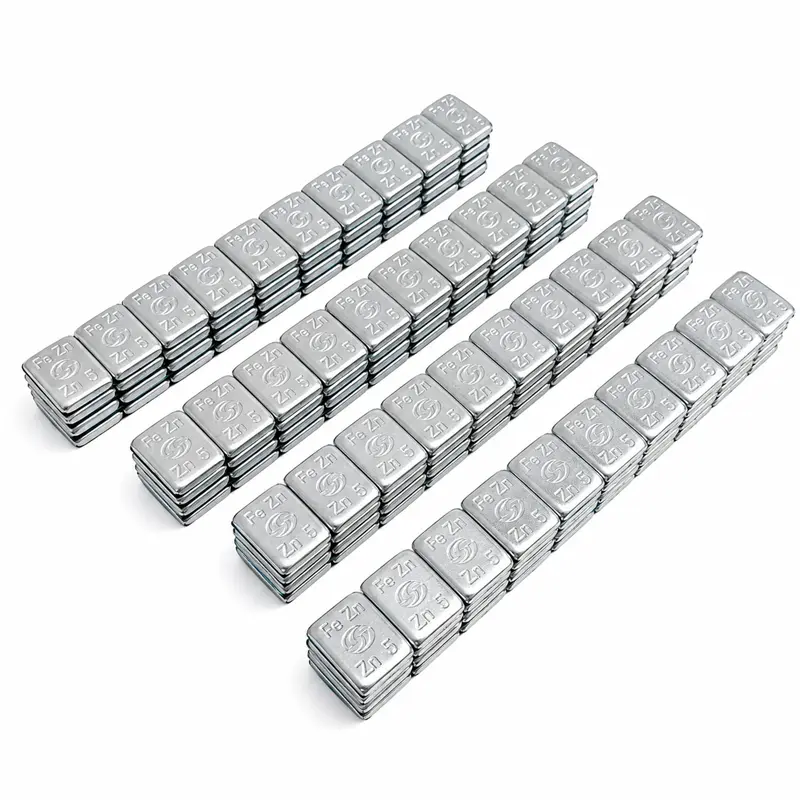
Yirox supplies wheel balancing weights for tire service chains, automotive distributors, wholesalers, and private-label brands — covering adhesive wheel weights, clip-on wheel weights, steel weights, zinc weights, and market-specific balancing solutions for passenger cars, SUVs, pickups, and commercial vehicles.

Our wheel weight programs support specification control across material, weight range, coating, segment design, adhesive backing, clip fitment, packaging, and export documentation — helping wholesale buyers build stable, scalable, and compliant supply programs for different target markets.

(Steel) Fe Wheel Balance Weights

Most widely used lead-free alternative. Zinc-plated surface prevents rust. Ideal for passenger cars, SUVs, and trucks on both steel and alloy rims.

Material

Low-carbon steel

Surface

Zinc plated / Dacromet

Salt spray

72h min (no rust)

Formats

Adhesive & Clip-on

Weight range

5g – 60g

Zinc Wheel Balancing Weights

Higher density than steel, superior corrosion resistance. The preferred choice for coastal markets, tropical climates, and premium alloy wheel applications.

Material

Die-cast zinc alloy

Surface

Powder coated or bare

Salt spray

vs. Fe: ~3× corrosion resistance

Formats

Adhesive & Clip-on

Weight range

RoHS · ELV · Lead-free

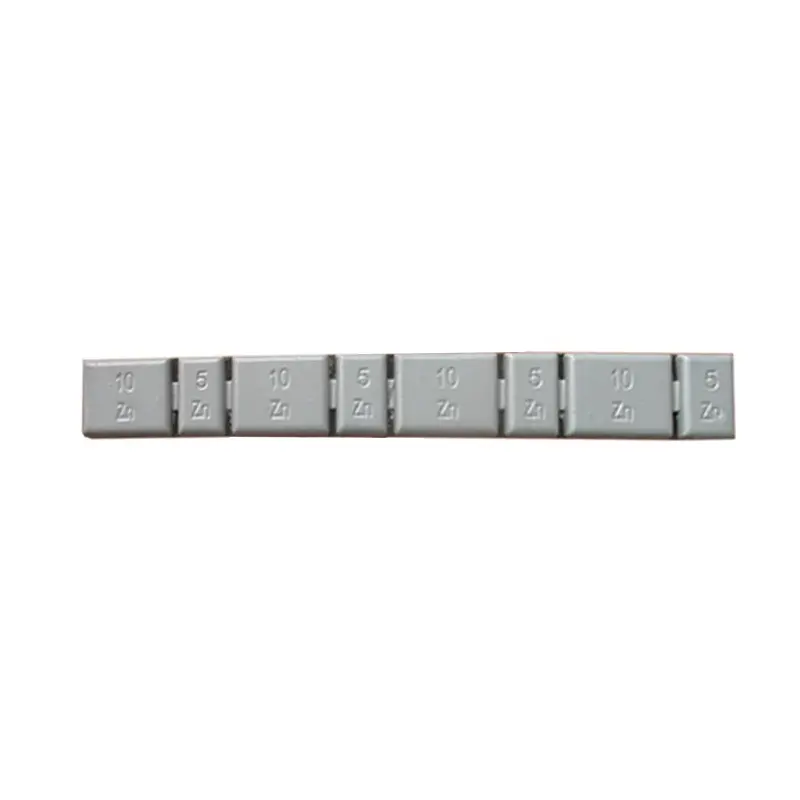
Adhesive Wheel Balancing Weights

Ideal for modern alloy wheels where rim appearance and surface protection matter. Strong automotive-grade adhesive backing ensures secure installation without damaging the wheel edge. Commonly used in passenger cars, EVs, SUVs, and premium aftermarket wheels.

Mounting

Adhesive tape backing

Advantages

Clean appearance · Rim protection

Weight range

5g – 60g

Clip-On Wheel Balancing Weights

Designed for fast and reliable attachment to wheel flanges. Widely used on steel wheels and selected alloy wheel profiles. Available in multiple clip types to match different rim standards and ensure secure retention under demanding driving conditions.

Mounting

Steel clip attachment

Advantages

Fast fitting · Strong retention

Weight range

5g – 60g

Compare Wheel Balancing Weights Before You Source

Different wheel types, target markets, and sales channels require different wheel weight materials, formats, and packaging. Use the comparison tables below to choose the right wheel balancing weight program before requesting a quotation.

Adhesive vs Clip-On Wheel Weights

Use adhesive wheel weights for alloy wheels, EVs, and visible-rim applications where appearance and rim protection matter. Use clip-on wheel weights for steel wheels, fast workshop installation, and high-volume tire service.

FactorAdhesive Wheel WeightsClip-On Wheel Weights
Best ForAlloy wheels, EVs, chrome wheels, premium rimsSteel wheels, standard tire shops, fleet service
InstallationBonded to the inner rim barrel with adhesive tapeClamped to the wheel flange with a metal clip
Main BenefitClean appearance and no visible rim damageFast fitting and strong mechanical retention
Main RiskLow-grade tape may fail in cold, heat, or dirty surfacesWrong clip profile may scratch rims or loosen
Common BuyersTire shop chains, EV service centers, aftermarket brandsTire shops, distributors, fleet maintenance buyers
Recommended OptionsSteel adhesive strips, zinc adhesive strips, roll packingSteel clip-on, zinc clip-on, mixed weight assortments

Steel vs Zinc Wheel Balancing Weights

Steel wheel weights are usually selected for cost-sensitive, high-volume programs. Zinc wheel weights are better for premium, coastal, or corrosion-sensitive markets where finish and durability matter more.

FactorSteel / Fe Wheel WeightsZinc Wheel Weights
MaterialLow-carbon steel with zinc plating, Dacromet, or coated finishDie-cast zinc alloy
Cost LevelLowerHigher
Corrosion ResistanceDepends on coating quality and salt spray performanceBetter natural corrosion resistance
DensityLower than zinc and leadHigher than steel, lower than lead
Best ForCost-driven distributors, steel-wheel fleets, high-volume workshopsCoastal markets, alloy wheels, premium aftermarket, OEM-style programs
ComplianceLead-free when supported by RoHS / ELV documentsLead-free when supported by RoHS / ELV documents
Key Buying RiskPoor plating can cause rust and customer complaintsHigher unit price requires stronger market fit

Lead-Free Wheel Weight Compliance by Market

Many markets restrict or ban lead wheel weights. For regulated markets, buyers should request lead-free material declarations and shipment-level compliance documents, not only a one-time certificate.

Target MarketLead-Free RequirementRecommended MaterialDocuments to Request
EU / UKLead-free required for mainstream automotive supplySteel or zincRoHS, REACH, ELV declaration
California / Selected US StatesLead wheel weights are restricted or banned in many state-level programsSteel or zincLead-free declaration, Prop 65 statement if required
Canada / AustraliaLead-restricted or strongly lead-free orientedSteel or zincMaterial declaration, RoHS-style test report
Middle East / Africa / Latin AmericaDepends on buyer policy and local regulationSteel, zinc, or approved market-specific optionMaterial report, inspection report, buyer-required documents
OEM / Brand ProgramsUsually lead-free required by brand policySteel or zincRoHS, REACH, ELV, MTR, batch inspection report
Note: Compliance requirements vary by country, buyer policy, and application. Always confirm the latest local requirements and required documents before placing a bulk order.

Wheel Weight Packaging Options for Different Buyers

Packaging affects warehouse handling, retail presentation, workshop efficiency, and MOQ. Choose packing based on your sales channel, not only on unit price.

Buyer TypeCommon PackagingTypical NeedRecommended Program
Tire ShopsRolls, boxes, clip-on assortmentsFast dispensing and easy restockingAdhesive rolls plus common clip-on sizes
DistributorsBulk cartons, pallets, mixed SKU cartonsBroad SKU coverage and stable marginsSteel adhesive strips, zinc clip-on, mixed carton programs
Aftermarket BrandsBranded boxes, bags, display cartonsRetail-ready presentation and private labelCustom logo, color tape, branded packaging
OEM / Program BuyersCustom labels, controlled cartons, pallet specsRepeat consistency and documentationSKU-specific production with batch QC records
Trial OrdersSmall mixed cartons or sample packsQuality validation before bulk orderMixed sample set by material, format, and weight range

Need help choosing the right wheel weight program?

Send us your target market, required weight range, packaging preference, and estimated order quantity. Yirox will recommend a suitable material, format, MOQ, and compliance document package.

Get MOQ, Lead Time & Bulk Price

Get A Instant Quote Now

Tell Us About Your Sourcing Project

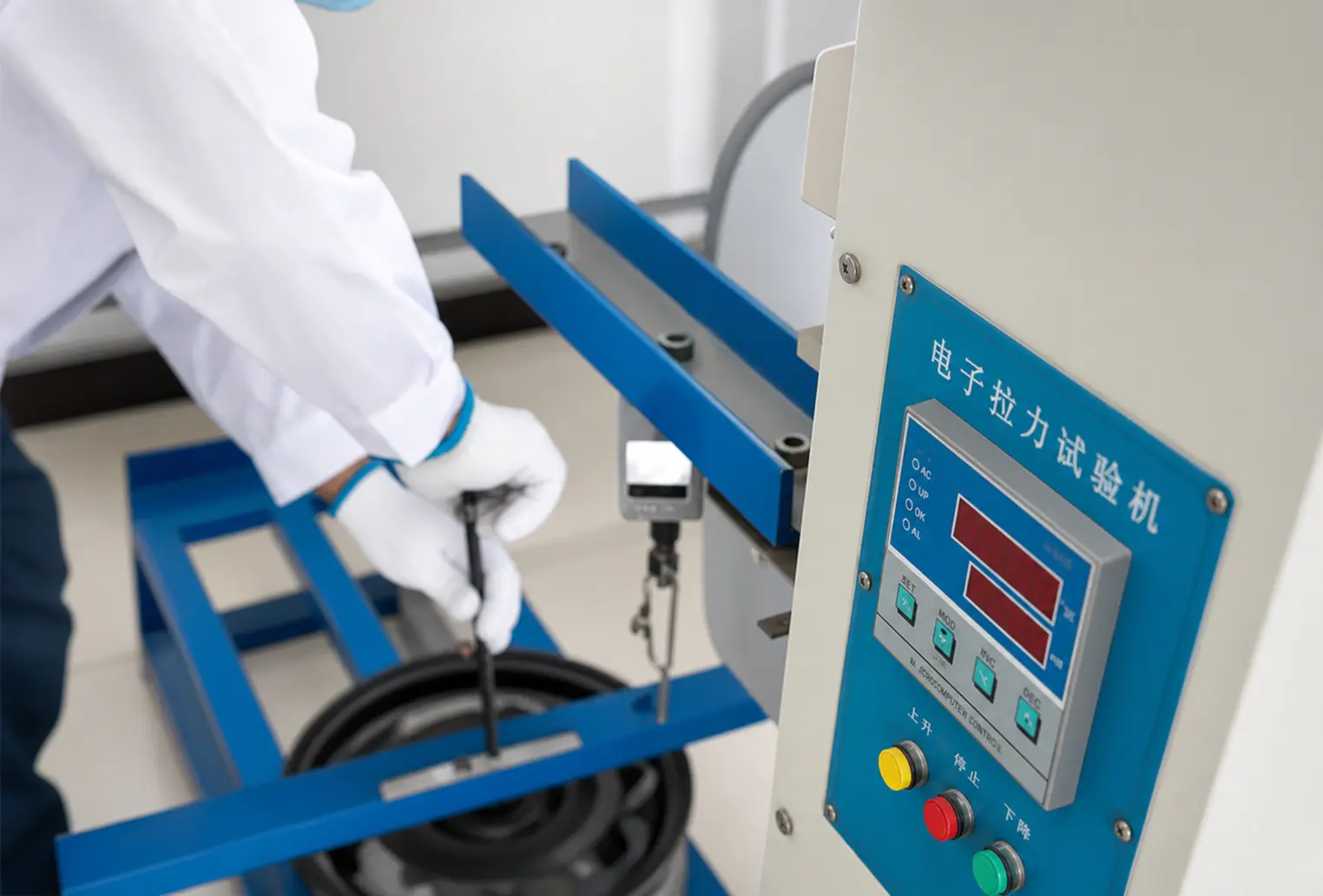
Wheel Weight Tensile Test

For every production batch of wheel balance weights, Yirox selects samples for tensile testing according to quality control requirements. The test helps verify adhesive strength, product consistency, and batch reliability before shipment.

Batch-Level Quality Control for Wheel Balancing Weights

For distributors and OEM buyers, the real cost of wheel weights is not only the unit price. It includes tape failure, rust, wrong SKU packing, missing compliance documents, and field returns. Yirox controls each batch from material selection to final packing inspection.

± 0.5g Weight Accuracy

Every production batch is verified on calibrated scales. Deviation beyond ±0.5g per segment fails QC and is rejected.

72h+ Salt Spray Test

Zinc-plated Fe weights tested to 72-hour salt spray per ISO 9227. Zero rust or delamination required to pass.

-40°C Low-Temp Tape Bond

Adhesive tape performance tested from -40°C to +80°C. Strips do not delaminate or lose bond at extreme temperatures.

100% Lead-Free Material

No lead. No cadmium. No mercury. RoHS and ELV compliance documentation included with every shipment — no request needed.

OEM Wheel Weight Programs

OEM Wheel Balancing Weights & Private Label Programs

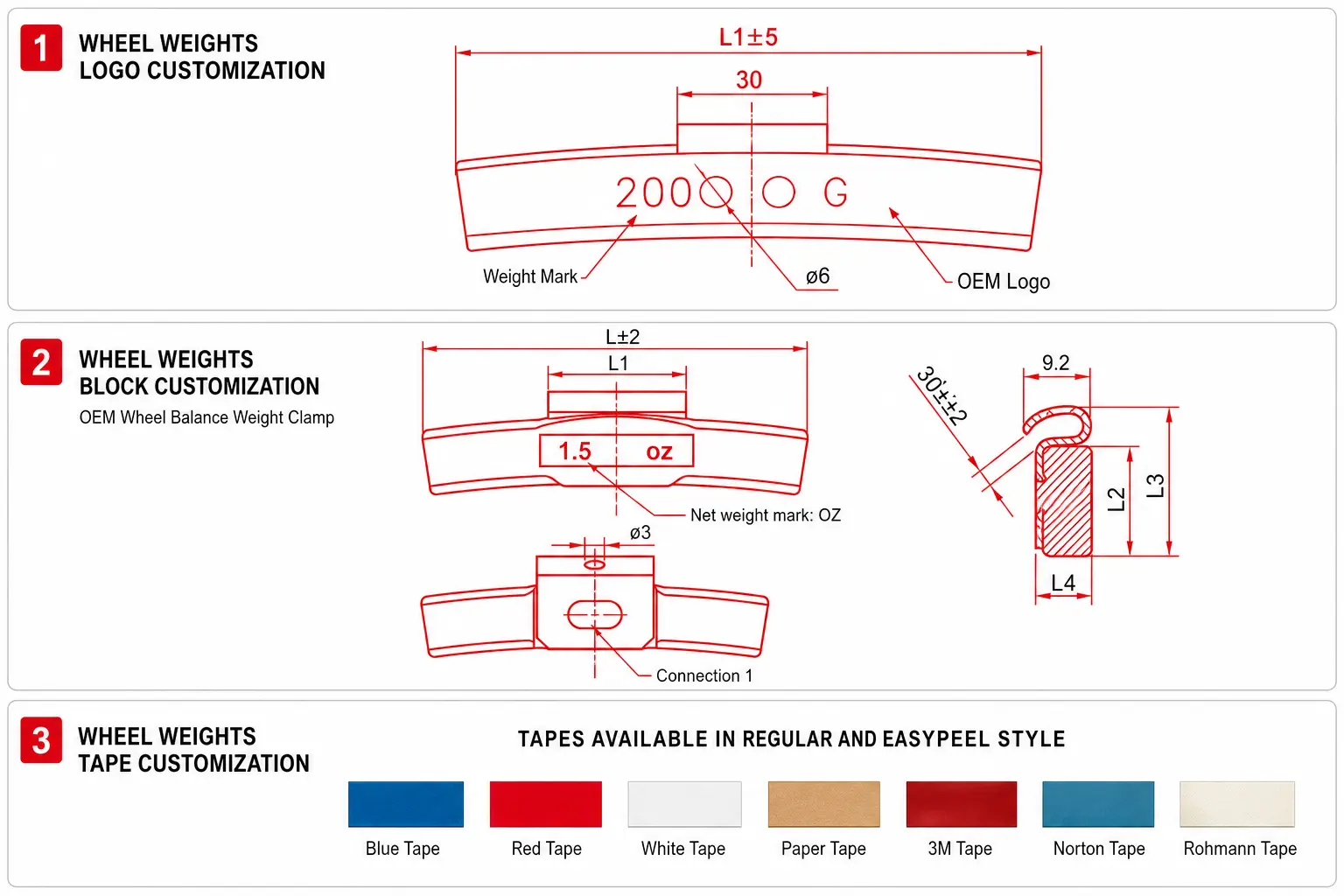
Yirox supports custom wheel balancing weight programs for distributors, aftermarket brands, tire shop chains, and OEM buyers. Options include logo marking, weight marking, adhesive tape selection, coating, private label packaging, carton labels, pallet packing, and compliance documents.

Yirox OEM wheel balancing weights private label program for distributors and tire shop chains

Who Uses Yirox OEM Wheel Weight Programs?

Different buyers need different OEM support. Use this section to match your sales channel with the right custom wheel weight program.

Distributors

Custom carton labels, SKU systems, wholesale packing, mixed product programs, and stable repeat supply.

Aftermarket Brands

Private label boxes, branded tape liner, logo marking, color options, and retail-ready presentation.

Tire Shop Chains

Standardized fast-moving SKUs, easy dispensing, practical packing, and repeat-order consistency across branches.

OEM Buyers

Drawing review, sample approval, material documents, compliance support, and batch-level quality control.

Custom Options for Wheel Balancing Weights

Yirox can customize the product, packing, and document package based on your target market and sales channel.

Custom AreaAvailable OptionsBuyer Benefit
Logo / MarkingBrand logo, weight marking, mold marking, private moldBuilds brand recognition and keeps SKU identification consistent
MaterialSteel / Fe, zinc, lead-free material optionsMatches cost, corrosion resistance, and compliance requirements
Adhesive TapeStandard tape, easy-peel tape, selected market-specific tape optionsReduces tape failure risk and improves installer experience
Coating / FinishZinc plated, Dacromet, black, silver, powder-coated finishImproves corrosion resistance and shelf appearance
PackagingBags, boxes, display cartons, bulk cartons, pallet packingFits wholesale, retail, or workshop distribution needs
DocumentsRoHS, REACH, ELV, material report, batch inspection reportSupports buyer audits and regulated-market sales

How an OEM Wheel Weight Project Works

The project workflow helps buyers confirm product details, samples, packaging, quality checks, and shipping documents before bulk production.

Requirement Confirmation

We confirm target market, buyer type, product format, weight range, packaging method, quantity, and compliance needs.

Product & Material Selection

Yirox recommends suitable steel, zinc, adhesive, or clip-on wheel weight options based on your market requirements.

Design & Packaging Review

Logo, marking, tape liner, color, box artwork, carton label, and shipping mark details are confirmed before sampling.

Sample Production & Approval

Samples can be prepared for fit, tape performance, appearance, packing, and document review before bulk order.

Bulk Production with Batch QC

Each batch is checked for weight accuracy, surface finish, tape bonding, packing details, and required documents.

Shipment & Repeat Support

Final packing photos, carton labels, and shipment details can be confirmed before delivery for easier repeat purchasing.

Information Needed for an Accurate OEM Quote

Sending the right information helps Yirox recommend the suitable material, format, MOQ, lead time, and document package faster.

Required InfoExampleWhy It Matters
Target MarketEU, UK, North America, Middle East, AustraliaDetermines compliance documents, material choice, and packaging style
Product TypeAdhesive strip, adhesive roll, clip-on weight, assortment kitAffects tooling, packing, MOQ, and production planning
MaterialSteel / Fe, zinc, lead-free requirementControls cost, corrosion resistance, and market compliance
Weight RangeGram sizes, ounce sizes, clip-on sizes, custom rangeHelps confirm SKU list, mold needs, and packing plan
PackagingBulk carton, small box, branded retail box, pallet packingImpacts MOQ, artwork, carton size, and warehouse handling
Logo / ArtworkAI, PDF, CDR, or high-resolution logo fileNeeded for private label packaging, marking, and sample approval

Samples and Documents Available for OEM Buyers

Documentation and sample approval reduce quality, compliance, and packaging risk before bulk delivery.

ItemPurposeBest For
Product SamplesCheck size, weight, finish, clip fit, and tape performanceNew SKU approval and material comparison
Packaging MockupConfirm box, label, logo, barcode, and carton markPrivate label and retail-ready programs
Material DeclarationSupport market compliance and buyer auditLead-free wheel weight sourcing
RoHS / REACH / ELV DocumentsSupport restricted substance and automotive compliance needsEU, UK, OEM, and brand programs
Batch Inspection ReportConfirm production quality before shipmentDistributors and repeat-order buyers
Pre-Shipment PhotosConfirm packing, labels, cartons, and pallet detailsWarehouse receiving and SKU management

Start Your OEM Wheel Weight Program

Send your target market, product type, material preference, weight range, packaging requirement, logo file, and estimated quantity. Yirox will recommend a suitable OEM plan with MOQ, lead time, sample options, and available quality documents.

Get MOQ & Lead Time

Tape Options of Wheel balancing weights— Match Any Market Standard

OEM programs can specify tape type per SKU. All tapes are pre-applied at the factory — no assembly required in the warehouse. Tell us your demands , we offer more options.

Blue Film

Standard grade, most popular globally

3M Tape

Premium adhesion. Industry-trusted brand. Required by some OEM specs.

Norton Tape

High-performance adhesive film. Excellent for extreme-temp markets.

White Tape

Clean aesthetic. Popular in European workshop & OEM applications.

Black Tape

Low-visibility profile. Preferred for alloy wheel premium fitment

What Are Wheel Balancing Weights?

Definition, function, history, and why they matter to ride quality and tyre life.

wheel balancing weight is a precisely measured metallic counterweight attached to a vehicle’s wheel rim to offset mass irregularities in the tyre-wheel assembly. Because no tyre or rim is manufactured to perfect geometric uniformity, small differences in mass distribution cause the assembly to develop a heavy spot. When that spot rotates at speed, it generates centrifugal force in one direction, producing vibration — commonly felt as steering-wheel shake above 60–80 km/h.

Wheel balancing weights correct this by adding an equivalent mass on the opposite side of the rim, returning the assembly to rotational balance. The process is performed on a spin balancer (wheel balancing machine), which measures the magnitude and angular position of the imbalance and instructs the technician exactly where to place each weight.

The component is also known as: tyre balancing weight, rim balancing weight, wheel weight, tire weight, and in trade notation: Fe weight, Zn weight, Pb weight (after the chemical symbols for iron, zinc, and lead respectively).

Brief History

The clip-on wheel weight was patented in the 1930s as steel wheels became standard on passenger vehicles. Adhesive (stick-on) weights emerged in the 1970s alongside the growth of cast aluminium alloy wheels, whose smooth inner barrel was better suited to tape-bonded counterweights than to flange clips. The major inflection point of the past two decades has been the global phase-out of lead (Pb) — driven by the EU's End-of-Life Vehicle (ELV) Directive (2000/53/EC) and subsequent national legislation — which shifted mainstream production to steel and zinc alloys.

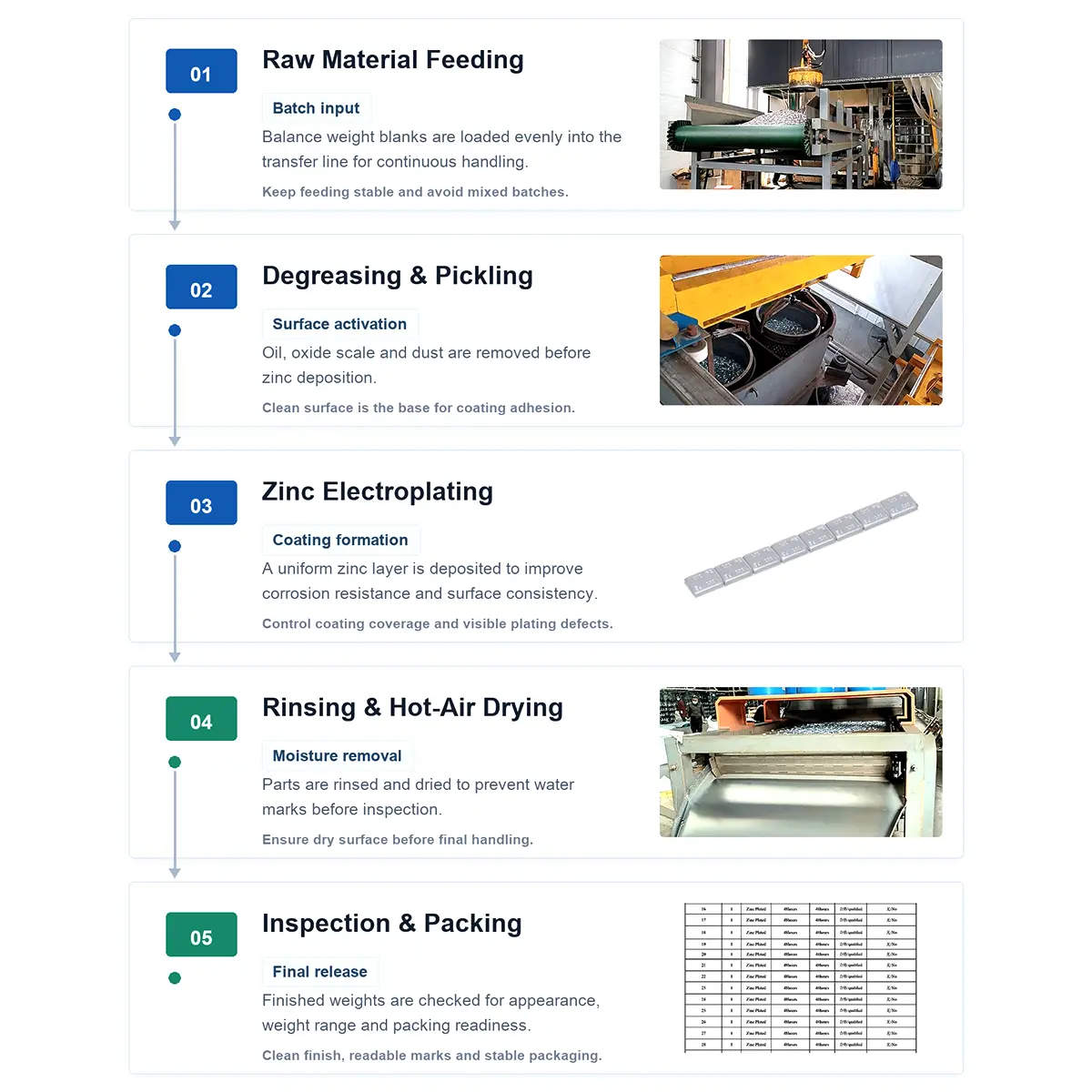
How Wheel Balancing Weights are Made

Understanding the production process helps buyers evaluate supplier capability, quality controls, and why specification consistency matters more than price alone.

Steel (Fe) Clip-On Weights — Production Flow

01

Steel Coil Selection

Cold-rolled steel coil (Q235 or ST12 grade) is received and batch-tested for tensile strength and chemical composition


02

Stamping & Die Forming

Automated progressive dies stamp and form the weight body and spring clip in a single pass — clip radius is calibrated to match each rim profile series


03

Deburring & Trimming

Manual and vibratory finishing removes stamping burrs from the four corners; weight uniformity is checked by sampling at 30-piece intervals


04

Electroplating / Powder Coat

Parts pass through electro-zinc plating bath (8–12 µm zinc layer) then electrostatic powder-coat gun with epoxy resin — dual-layer corrosion barrier


05

QC, Weighing & Packing

100% gravimetric check on calibrated balance (±0.5 g tolerance); batch documentation; packing by weight class into boxes or trays


Zinc Die-Cast Weights — Key Differences

Zinc weights are produced by hot-chamber die-casting rather than stamping. Zinc alloy ingot (ZA-8 or Zamak-3 grade) is melted at approximately 420 °C and injected under pressure into a precision steel mould. Cycle times are 8–15 seconds per cavity, enabling high-volume production with tight dimensional tolerances (±0.1 mm on flange fit). After de-gating and trimming, die-cast weights undergo the same plating and powder-coat process as steel weights.

Adhesive Weight Strip Production

Adhesive strip weights add a lamination stage to the clip-on process. After the individual weight segments are stamped, plated, and coated, they are loaded onto a tape lamination machine that applies pressure-sensitive acrylic foam tape (typically 3M 467MP or equivalent) to the back face, followed by a protective release liner. Segments are then loaded onto a carrier reel in standard strip counts (4-, 6-, or 12-segment strips) and wound for retail or bulk packing.

How to Choose the Right Wheel Balance Weight

Six selection criteria every tyre shop buyer, distributor, and OEM purchaser should work through before specifying a weight range.

① Wheel Type

Steel rims → clip-on (P series, FN series). Alloy rims → adhesive for outer plane, coated clip-on (AW, MC series) for inner flange if needed. Never use a bare-steel clip-on on a visible alloy flange — scratching voids rim warranty and triggers dealer complaints.

② Vehicle Class

Passenger car (5–60 g); SUV / light truck (5–100 g); heavy truck / commercial (50–500 g). Overshooting the mass range wastes material; undershooting forces technicians to stack multiple weights, which is unstable. Match the weight range to your dominant vehicle mix.

③ Market Regulation

If selling into EU, California, or any lead-restricted market, you must specify lead-free weights only. Mixing lead and lead-free stock is an audit risk. Choose a supplier who provides per-shipment RoHS declarations and material test reports (MTR) — not just a one-time certificate.

④ Material Grade

Steel (Fe) for cost-driven markets or steel-wheel fleets. Zinc for alloy-wheel premium programs, coastal/salt-belt markets, or OEM supply chains demanding a clean finish. Zinc’s natural corrosion resistance reduces field returns in high-humidity environments.

⑤ Increment System

Confirm whether your market’s balancing machines are calibrated in grams or ounces — stocking the wrong increment leads to approximation errors in the shop and repeat vibration complaints. Many high-volume shops in North America still use ounce-increment weights; European and Asian OEM supply is uniformly metric.

⑥ Tape Grade (Adhesive Weights)

Budget tape fails in cold climates (below −10 °C) and in high-temperature wheel environments (near performance brakes). Specify 3M 467 or verified acrylic foam equivalent rated to −40 °C / +120 °C. Request independent peel-strength test data. A weight that falls off generates a warranty return — tape quality is the most expensive variable to get wrong.

Frequently Asked Questions

Wheel Balancing Weights —
Sourcing & Technical FAQ

Practical answers for tire dealers, automotive distributors, workshop chains, and private-label buyers sourcing lead-free wheel balancing weights in bulk.

What are the best wheel weights for alloy wheels?
For most alloy wheels, adhesive wheel weights are the preferred choice because they attach inside the rim barrel without damaging the visible wheel surface. They are especially suitable for painted, chrome, machined, low-profile, and premium alloy rims where clip-on weights may scratch the flange or look visually intrusive.

For distributors, the best stocking strategy is usually to carry adhesive Fe or Zn weights as the main alloy-wheel option, while keeping selected clip-on profiles for steel wheels and traditional rim designs. For premium workshops, tape quality, segment flexibility, coating finish, and clean packaging are often more important than only comparing unit price.
Are adhesive wheel weights better than clip-on wheel weights?
Adhesive wheel weights are better for alloy and cosmetic wheels, while clip-on wheel weights are often better for steel wheels, fleet service, and fast workshop installation. Neither type is universally better; the right choice depends on rim design, workshop habits, appearance requirements, and the target vehicle segment.

Adhesive weights are installed on the inner rim surface and provide a cleaner appearance. Clip-on weights clamp onto the rim flange and are faster to apply when the wheel design allows it. Most tire dealers and distributors stock both types to cover passenger cars, SUVs, pickups, motorcycles, and workshop replacement demand.
What is the difference between clip-on and adhesive wheel weights?
Clip-on wheel weights use a spring clip to attach to the rim flange, while adhesive wheel weights use double-sided tape to bond to the inner wheel surface. Clip-on weights are common for steel wheels and some traditional alloy rims; adhesive weights are widely used for modern alloy wheels and visible-finish rims.

Clip-on weights require the correct rim profile, such as passenger car, light truck, or motorcycle applications. Adhesive weights require proper surface cleaning, compatible tape, and stable pressure during installation. When building a product range, distributors should confirm vehicle types, rim materials, gram or ounce increments, and workshop installation habits before ordering.
What is the difference between steel and zinc wheel weights?
Steel wheel weights use an iron or steel body, usually with zinc coating or surface treatment, while zinc wheel weights are made from zinc alloy as the core material. Both are lead-free options, but they differ in density, cost, corrosion resistance, forming process, and preferred product format.

Zinc weights are commonly used for clip-on applications because they are easier to cast into precise shapes and rim profiles. Steel weights are widely used for adhesive strip weights because they are cost-effective, stable, and suitable for segmented production. Buyers should not confuse zinc-coated steel weights with solid zinc weights; the material declaration should clearly state Fe or Zn as the core material.
Can steel wheel weights replace lead wheel weights?
Yes, steel wheel weights can replace lead wheel weights in many adhesive weight applications, especially when the target market requires lead-free balancing products. Steel is less dense than lead, so the same balancing value may require a slightly larger physical size, but it is widely accepted for modern replacement and workshop use.

For regulated markets, steel and zinc are the two main lead-free alternatives. Steel is commonly selected for adhesive strips because it offers competitive pricing and stable production. Zinc is often selected for clip-on weights because it supports more accurate rim-profile shapes. Before replacing lead, confirm local regulations, weight size tolerance, coating requirements, and customer acceptance.
What tape is best for adhesive wheel weights?
Acrylic foam double-sided tape is generally preferred for adhesive wheel weights because it provides stronger bonding, better temperature resistance, and more stable long-term adhesion than basic rubber-based tape. For professional supply programmes, buyers should specify the tape type, tape thickness, peel strength, and temperature performance in the purchase requirement.

Common sourcing checks include peel strength, shear resistance, low-temperature adhesion, liner quality, and whether the tape performs well on cleaned aluminium wheel surfaces. For distributors, poor tape is one of the biggest causes of returns. It is better to approve tape quality during sampling instead of discovering adhesion failure after products reach workshops.
What causes adhesive wheel weights to fall off?
Adhesive wheel weights usually fall off because of poor surface preparation, low-quality tape, moisture, dust, oil residue, cold installation conditions, or insufficient pressure during application. In many cases, the problem is not only the weight itself, but also the combination of tape quality and workshop installation process.

Before installation, the rim surface should be clean, dry, and free from brake dust, wax, silicone, oil, and tyre lubricant. Workshops should apply firm pressure after positioning the weight and avoid installing on wet or extremely cold surfaces. For wholesale supply, buyers should request sample testing for tape adhesion, coating stability, and carton storage conditions.
What documents are required for lead-free wheel weights in the EU?
For EU lead-free wheel weight supply, buyers usually request RoHS test reports, REACH SVHC declarations, material composition declarations, and factory quality documentation such as ISO 9001. For OEM or large distributor programmes, additional inspection reports, batch traceability records, and weight accuracy reports may also be required.

Documentation should confirm that the product is lead-free and suitable for the intended market. For adhesive weights, buyers may also request tape performance data and coating corrosion-resistance information. For private-label supply, the document package should match the product material, packaging label, destination market, and buyer compliance requirements.
How should distributors choose gram vs ounce wheel weights?
Distributors should choose gram or ounce wheel weights based on the measurement system used by their local workshops, tire service equipment, and retail packaging standards. Gram weights are common in metric markets, while ounce weights are mainly used in the United States and other imperial-format service environments.

Mixing gram and ounce product lines in the same warehouse can create picking errors and customer confusion. Before placing an order, confirm whether your market requires 5 g increments, 10 g increments, 1/4 oz increments, or mixed assortment kits. Packaging labels, barcodes, carton marks, and shelf displays should all follow the same measurement system.
What weight increments and packaging formats are available for bulk orders?
Wheel balancing weights are usually supplied in gram or ounce increments, with packaging options designed for workshops, distributors, or retail counter sales. Adhesive weights are commonly supplied as strips, sheets, rolls, or boxed segments, while clip-on weights are usually packed by profile, material, and individual weight value.

Common adhesive formats include 5 g × 12 segment strips, 60 g strips, 1000 g rolls, 2000 g rolls, dispenser boxes, and bulk cartons. Clip-on weights can be packed in bags, inner boxes, master cartons, or assortment kits. Yirox can support distributor warehousing, workshop supply, and private-label retail packaging according to order requirements.
Can Yirox provide custom packaging for wheel balancing weights?
Yes, Yirox can provide custom packaging for wheel balancing weights, including private-label boxes, bags, dispenser packaging, carton labels, pallet configurations, and market-specific product information. Custom packaging is suitable for distributors, wholesalers, workshop chains, and automotive brands that need a consistent branded product line.

Packaging can be adjusted by material, weight increment, language, barcode, carton mark, inner quantity, and outer carton structure. For private-label programmes, buyers should prepare logo files, label requirements, target market information, and any compliance wording needed on the package. Yirox can also support mixed-SKU packing plans for broader distributor ranges.
What is the minimum order quantity for Yirox wheel balancing weights?
Yirox supports both trial orders and larger OEM or private-label supply programmes, with MOQ depending on material, weight type, packaging method, and customization level. Standard adhesive weights usually allow more flexible trial quantities, while custom clip-on profiles, branded packaging, or special finishes may require higher production volumes.

For initial distributor testing, buyers can discuss mixed-SKU trial orders covering popular gram or ounce increments. For private-label packaging, OEM cartons, custom colors, or non-standard specifications, MOQ should be confirmed based on artwork, tooling, production planning, and annual purchase forecast.
What information is needed to get an accurate quotation?
To quote accurately, please provide target market, material preference, adhesive or clip-on format, weight increments, packing method, estimated order quantity, and whether private label packaging is required. This information helps Yirox recommend the correct product specification, compliance documents, packaging structure, and cost level for your market.

Helpful quotation details include Fe or Zn material, gram or ounce system, tape requirement, surface finish, carton quantity, barcode needs, logo packaging, destination port, and expected annual volume. If you are replacing an existing supplier, you can also share photos, product drawings, carton labels, or current SKU specifications for faster matching.


Tell us your packaging needs — our team will respond quickly with tailored solutions and competitive pricing.

Tell Us About Your Sourcing Project

Get Your Custom Quote