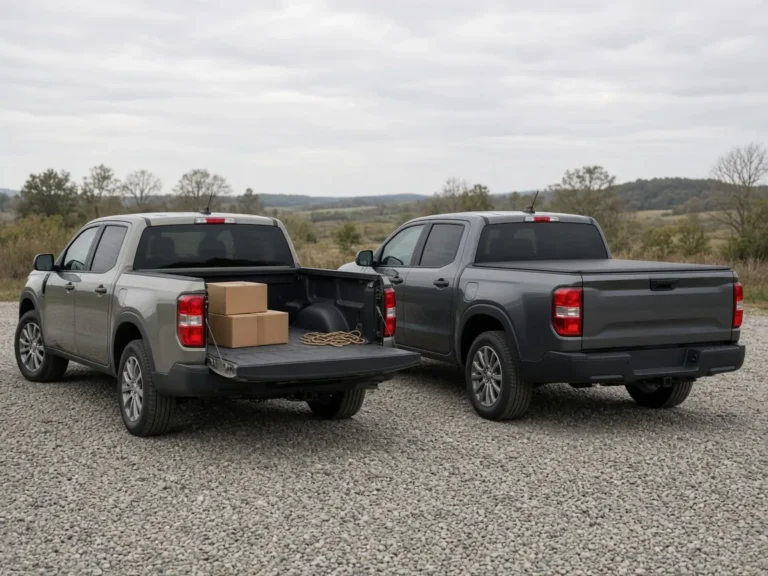




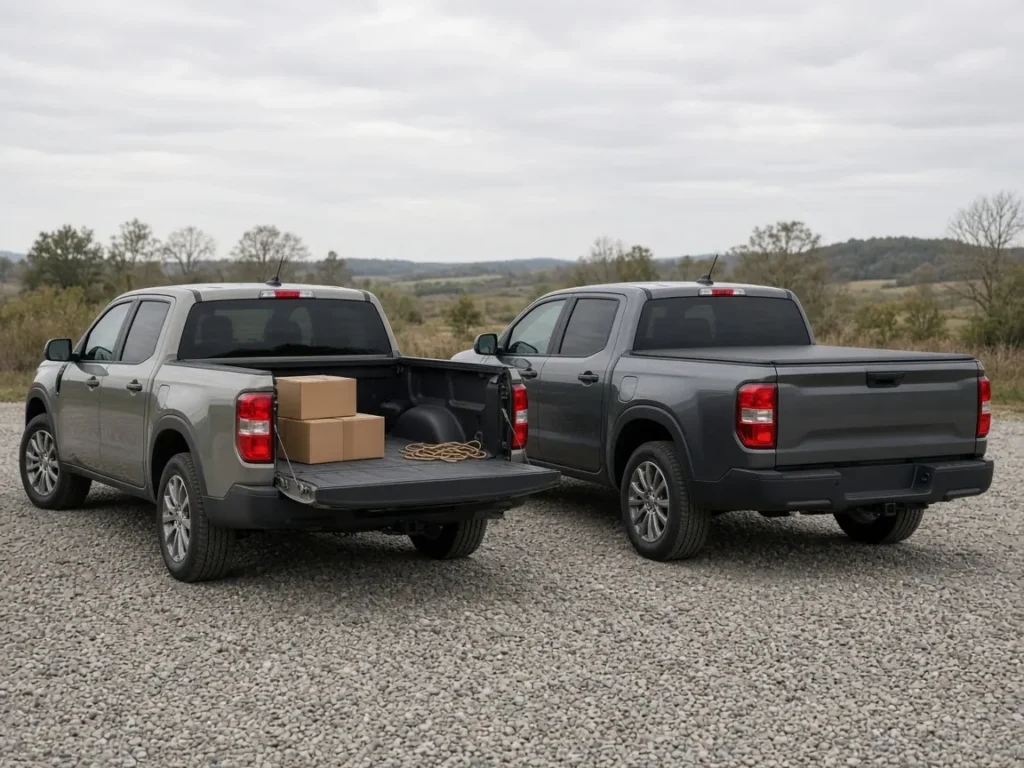
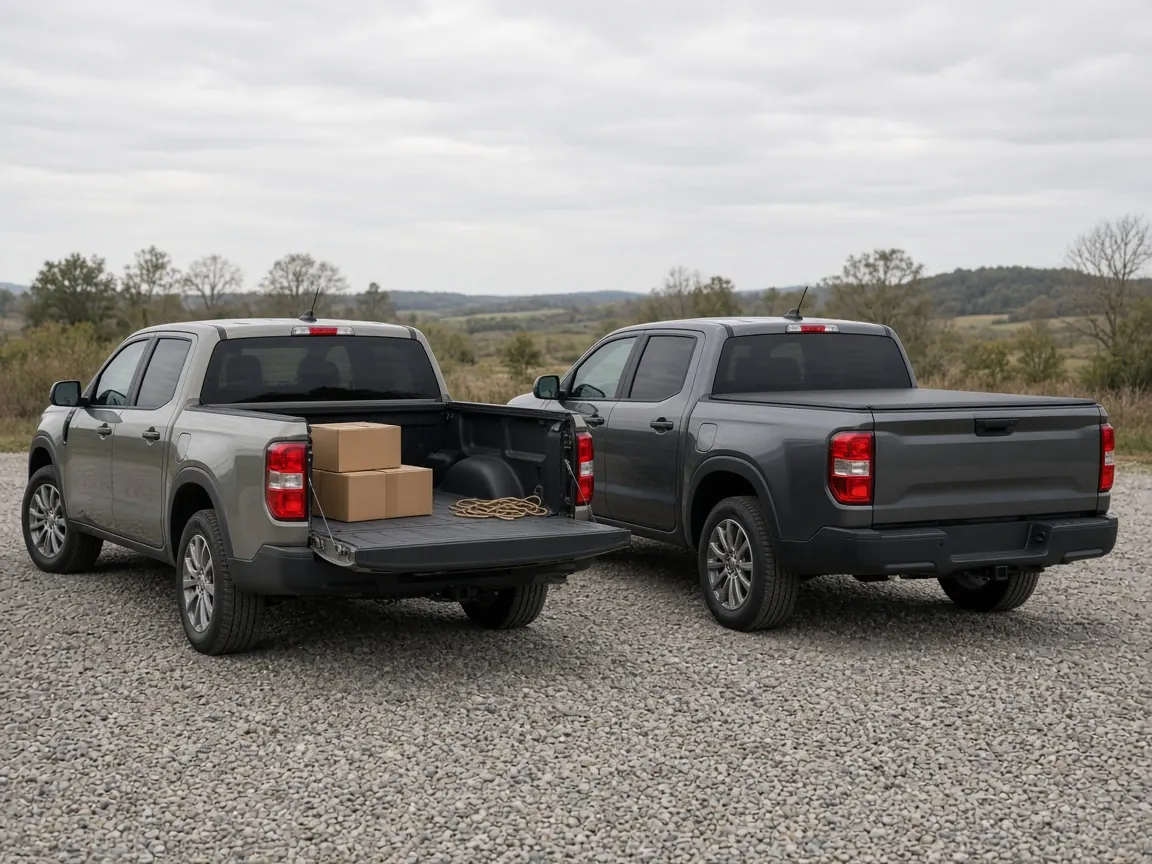
An open pickup bed is easy to load. It’s also easy to soak, and anybody walking past can see what you left in there.
Put a tonneau cover on if you usually carry tools, luggage, or camping gear and you want less sun, less rain, and less of that stuff on display. Leave the bed open if the load sticks up past the rails, or if you need the whole bed empty most days. If you need a bigger closed space, or a bed that stays dry in every storm, look at something else. Water can still get into a covered bed.
When a cover fits the way you use the truck
Most people end up in one of these three spots.
| Fits | Often does not | Look at something else |
|---|---|---|
| You usually haul tools, luggage, or camping gear, and you want it out of the sun, the rain, and plain sight. | The load is taller than the bed rails, or you need the whole bed clear most days. | You need a bigger enclosed space, or the bed has to stay dry in every storm. |
Think about the last month, not the one trip you wish the truck did. Weekend bags that sit under the rails all week are a good match. So is a toolbox that lives in the bed and a couple of duffels on top of it. Sheet goods every morning are not. If you empty the bed at every stop, you’ll spend the week taking the cover off and putting it back.
What you gain and what you give up
The useful version of this choice is pretty concrete. You’re trading an open floor for a lid.
| You gain | You give up |
|---|---|
| Bags, tools, and camping gear sit out of a sidewalk glance. | A soft vinyl lid can still be cut. |
| Sun and a normal shower stay off the load. | Water can still come in at the tailgate corners and at the front of the bed. |
| Light cargo is less likely to lift once you’re on the highway. | Anything taller than the rails doesn’t fit while the cover is on. |
| A roll-up or retractable cover can open again when you need the floor. | A tri-fold stack, or the canister on a retractable cover, takes some of that floor when the cover is open. |
None of that is a reason to buy every style in the catalog. It’s a reason to look at what actually sits in your bed. If the gains are the things you complain about now, a cover is worth it. If the things in the right column are your normal week, it isn’t.
What a cover does not do
Three limits settle a lot of bad purchases.
It isn’t a dry trunk. The tailgate still has gaps, and the front of the bed still meets the cab at a seam. A hard lid doesn’t close those. People buy one expecting a trunk and then find a wet patch after rain. If a bone-dry bed is the whole point, this is the wrong product.
It isn’t for loads that stand above the rails. A sheet of plywood, a fridge, a bike that sticks up, any of that means the cover comes off for the trip. If those trips are most of your driving, you’ll be taking the cover off just to load the truck. Leave the bed open.
It isn’t a gas-mileage purchase. Some shop pages say a cover will improve gas mileage. A cover can change how air moves over the bed, and that isn’t the same as a fuel result you can count on. Anything we’d stand behind on fuel is already in whether a tonneau cover improves gas mileage. Buy the cover because of what you carry.
Will the bed stay dry?
A cover will block some rain. It won’t keep the bed dry every time. Water still finds the tailgate, the bed caps, the rails, the hinges, the seals, and sometimes a drain. Retractable covers often have that drain, because water pools by the canister up front.
The top of the cover isn’t the whole story. If a soft cover isn’t pulled tight, rain sits in the middle and runs to a low edge. Dirt in a hinge keeps the seal from closing. Leaves in a retractable drain plug it. So a cover that looks fine the first week can start dripping later. People also ask if a soft cover can go through a car wash. High-pressure water looks for the same loose edge a heavy rain does.
People usually find the leak after they’ve bought the cover. On a Ford Maverick forum, a driver with a hard tri-fold asked if it was supposed to be leak-proof. They said that was the main reason they got it. On a Ram forum, an owner opened the tailgate and found water in the bed after a hard tri-fold went on. He could see where it came in. Look at the tailgate corners, and at the front of the bed where it meets the cab.
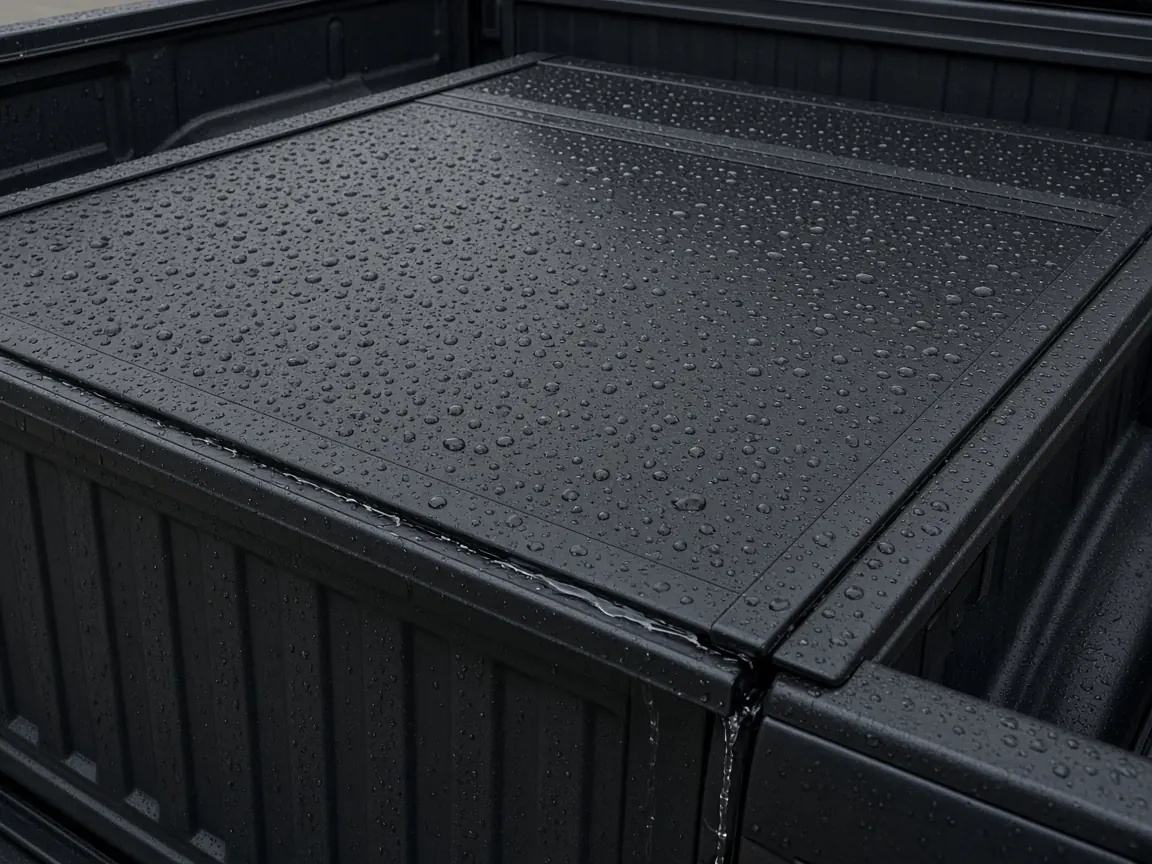
What you haul decides whether that drip matters. Cardboard, sleeping bags, and anything that can’t live in a closed bin get ruined. Tools that are already in a box can handle a wet corner. Groceries in a cooler are fine. A paper sack of dog food on the bare floor is not. If you can live with a damp spot after a hard rain, a cover can still hide the load and keep ordinary weather off it.
Which structure still matches that use?
The style doesn’t fix the water. It changes whether you can still get at the bed, and how easy the cover is to cut. Pick from the way you used the truck last month, not from a photo of a closed lid.
| Structure | What it is | When it still matches | When it gets in the way |
|---|---|---|---|
| Soft roll-up | Light vinyl that rolls toward the cab. | You want the bed open from the tailgate, and you’re not leaving valuables in it. | Someone can cut the vinyl, or you wanted a harder lid. |
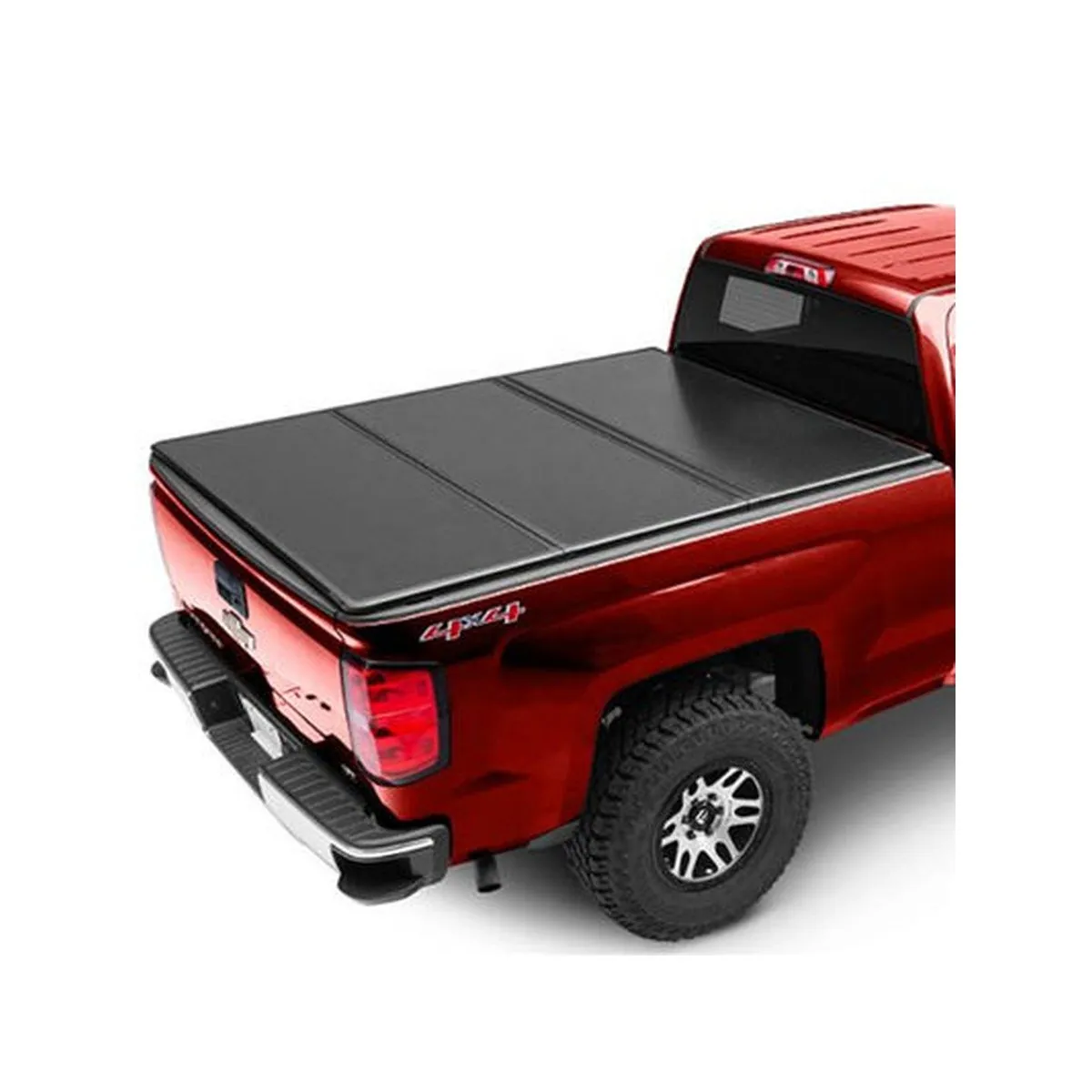
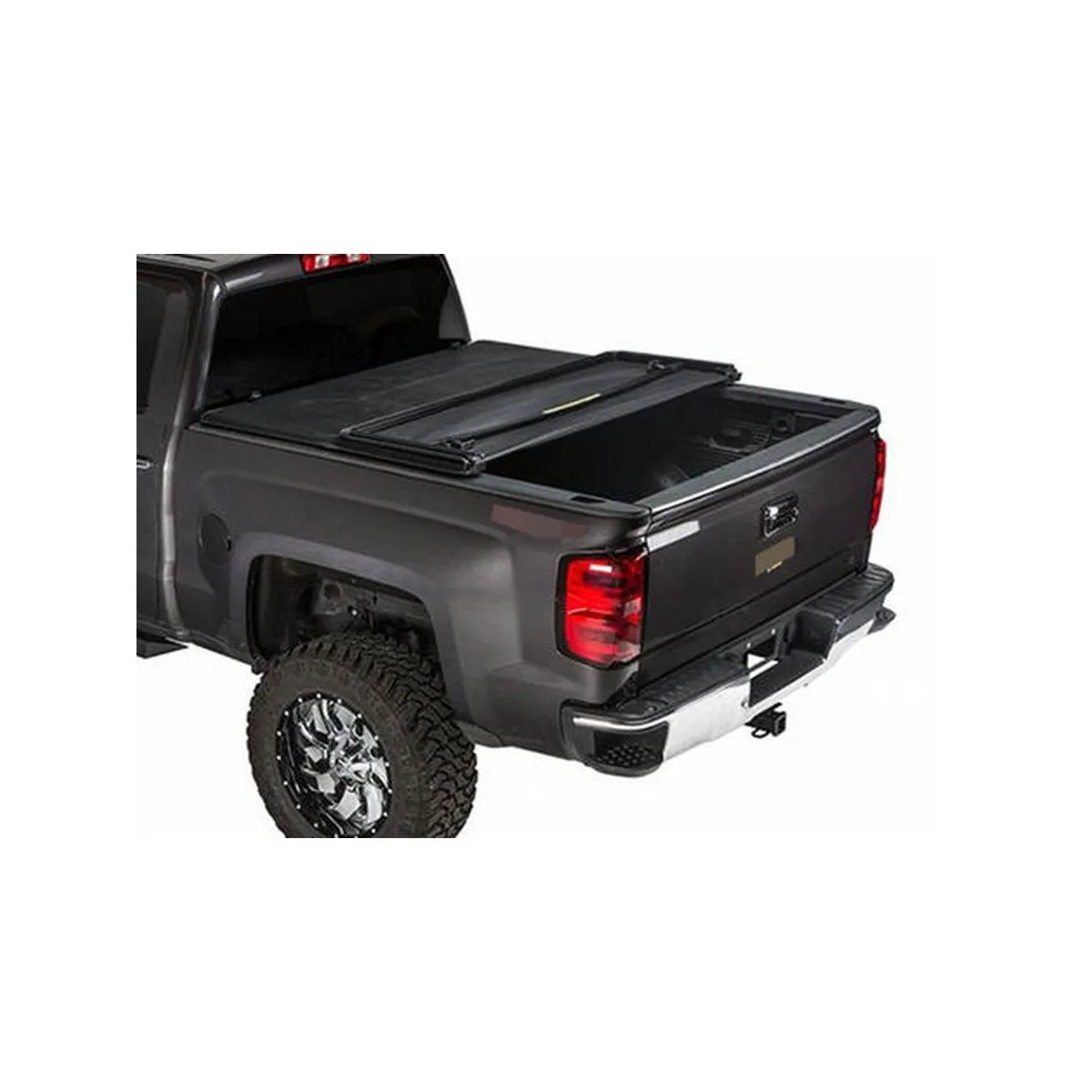
| Hard tri-fold | Rigid panels that fold toward the cab. | The bed stays closed most of the time, and you want it hidden. | You need the whole floor several times a week. The stack covers part of the bed. |
| Hard roll-up | Slats that roll up from the tailgate. | You want roll-up access and a top that’s harder to cut than fabric. | You still expect a sealed trunk. Water can get in at the seams. |
| Retractable | A cover that pulls into a canister at the front of the bed. | You open as much of the bed as the load needs. | The bed is already short. The canister takes some of that room. |
If the bed mostly stays shut between weekends, the tri-fold stack is a small trade for a harder lid. You fold it when you actually need the floor, and the rest of the time the bed looks closed. If you’re in the bed most days, that stack gets old. A roll-up or a retractable cover gives you the floor back without a pile of panels against the cab. A retractable one is the easier daily open, and you pay for that with the canister eating length at the front. On a short bed, that lost length is the thing you’ll notice when a cooler no longer fits.
Hard or soft?
Hard and soft are the surface, not the way the cover opens. A tri-fold can be either. So can a roll-up. Soft is the lighter one. It’s easier to live with if you’re rolling it open all the time and you’re not leaving anything in the bed that you can’t replace. Hard is what people pick when the bed holds tools they don’t want walking off. The vinyl on a soft cover can be cut. A rigid panel or a run of slats is harder to slice.
That’s the decision. Materials, weight, and the longer side-by-side are already written up in hard vs soft tonneau covers. You don’t need that page to know which way you lean. You need it if you’re comparing how they’re built.
Will it fit your bed?
The cover has to match the bed, not the badge on the tailgate. The same truck name comes with more than one bed. Cover & Cargo lists these.
| Truck | Beds they list |
|---|---|
| F-150 | Roughly 5.5, 6.5, and 8 feet |
| Ram 1500 | 5 feet 7 inches and 6 feet 4 inches |
| Tacoma | 5-foot and 6-foot |
They put the gap between a 5.5-foot cover and a 6.5-foot cover at about eleven inches. You can’t clamp that shut. A cover cut for the short bed stops before the long bed’s tailgate. A cover cut for the long bed won’t sit down on the short one.
Before you buy, check:
- Measure inside the bed, on the floor, from the bulkhead to the inside of the closed tailgate.
- Match the cover to that length, not to the name on the tailgate.
- Look for a toolbox, a drop-in liner over the rail, or a sports bar. Any of those can block the cover.
- A RamBox narrows the rails and needs a different part.
If the length is wrong, that cover doesn’t belong on that truck. Fit is part of the yes. A cover that can’t go on the bed you have is a no, even when the rest of the use test says yes.
Leave the bed open, or get a cap?
Leaving the bed open is a real answer, not a failure. It’s the right one when the load is tall, dirty, or you want the floor clear for the way you actually work. You hose it out, you slide a sheet of plywood in, you don’t fight a lid. You also live with rain and with everybody seeing what’s back there.
A cap or a shell goes the other way. It sits up over the rails and gives you a closed space you can stand in. A tonneau cover never does that. It’s a low lid. If you need room for a dog, a cot, or gear that has to stay upright, the cap is the product that matches, and a flat cover will keep disappointing you. If you’re choosing between those two shapes, the truck bed cover guide separates them. For a flat cover, you’re still on the test at the top of this page: does the load live under the rails, and can you live with a bed that isn’t fully dry?
Common questions
Is a tonneau cover worth it?
It’s worth it when the bed usually holds tools, luggage, or camping gear you want out of the weather and out of sight. It isn’t worth it when the load is taller than the rails, or you need the whole floor most days. And it isn’t worth it if the only thing you want is a dry trunk. The cover hides the load and blocks some rain. That’s the job. If that job matches your month, get one. If it doesn’t, don’t.
Are tonneau covers waterproof?
No. They block a normal rain, and water still gets in. Owners with hard tri-folds have opened the tailgate and found the bed wet, including people who bought the cover because they thought it would be leak-proof. The usual spots are the tailgate corners and the seam at the front of the bed. If your cargo can’t get damp, don’t count on the cover. If a damp corner is fine, the cover can still do the rest.
Will a tonneau cover improve gas mileage?
Don’t buy it for that. A cover can change airflow over the open bed, and shop pages sometimes turn that into a mileage promise. There isn’t a fuel number on this page, because a result depends on the truck, the speed, and the cover. Carry the cargo you actually carry. Treat any change at the pump as something you’d have to see on your own truck, not as the reason for the purchase.
Will it keep people from seeing or taking my stuff?
A closed cover hides the bed from a casual look, which is most of what people want when they leave bags in a parking lot. It doesn’t make the bed a locked trunk. Soft vinyl can be cut with a knife. A hard panel or a slat cover is harder to slice, so it’s the better pick if the bed holds tools you can’t shrug off. Either way, don’t leave something in the bed that you couldn’t stand to lose.
References
- Cover & Cargo. “Tonneau Covers by Truck and Bed Length.” https://coverandcargo.com/trucks. Bed lengths for the F-150, Ram 1500, and Tacoma, and the RamBox note used above.
- r/FordMaverickTruck. “Leaky bed cover- normal?” https://www.reddit.com/r/FordMaverickTruck/comments/1eve8qs/leaky_bed_cover_normal/. The original post asks whether a hard tri-fold is supposed to be leak-proof.
- 5thgenrams.com. “Water getting in bed with Tonneau Cover.” https://5thgenrams.com/community/threads/water-getting-in-bed-with-tonneau-cover.16031/. An owner found water in the bed after a hard tri-fold was installed.