



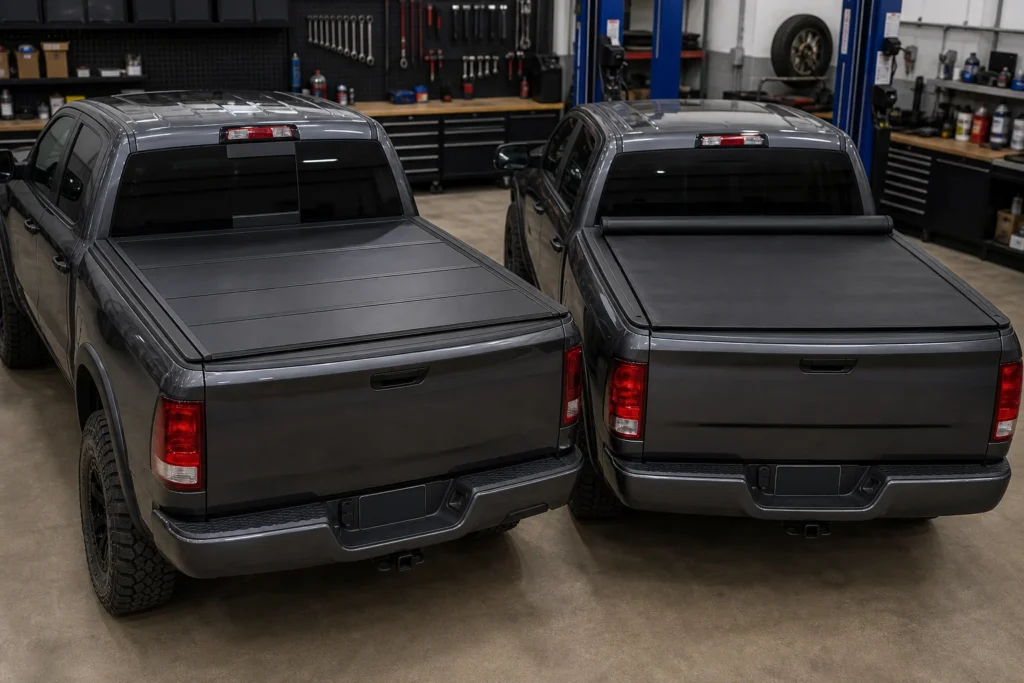
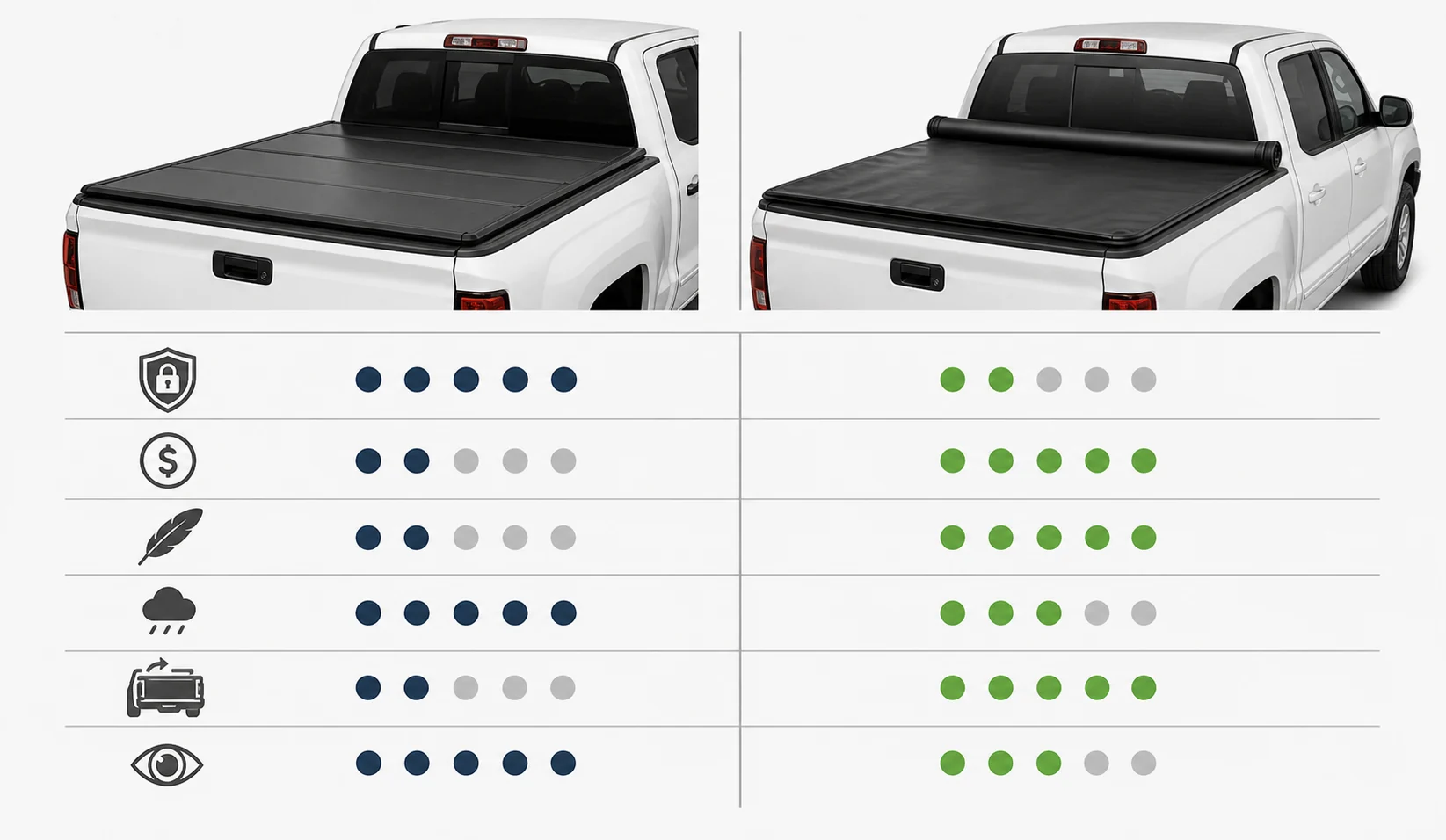
A hard tonneau cover uses rigid panels, slats, or a one-piece shell, while a soft tonneau cover uses flexible vinyl or fabric over a frame. Hard covers are usually better for security and durability, while soft covers are usually better for price, weight, and simple bed access.
Neither choice is automatically better for every truck. A driver who carries tools overnight may need a hard folding or retractable cover. A driver who wants a clean look and fast access at a lower price may be happier with a soft roll-up or soft tri-fold.
Table of Contents
- What is the difference between a hard and soft tonneau cover?
- What types of hard and soft covers are available?
- Which is better for security and weather protection?
- Which is easier to install and use every day?
- Which tonneau cover is better for different users?
- What should buyers check before ordering hard or soft covers?
- Conclusion: Better depends on the truck owner's real priority
- Frequently Asked Questions
- References
What is the difference between a hard and soft tonneau cover?
The main difference is material and structure. A hard tonneau cover uses rigid aluminum, composite, fiberglass, or hard rolling slats. A soft tonneau cover uses flexible vinyl or fabric material stretched over rails, bows, or folding frames.
For readers who want the construction behind those labels, the tonneau cover material comparison breaks each option into outer skin, core, rails, seals, opening style, and the quality checks that matter before approval.
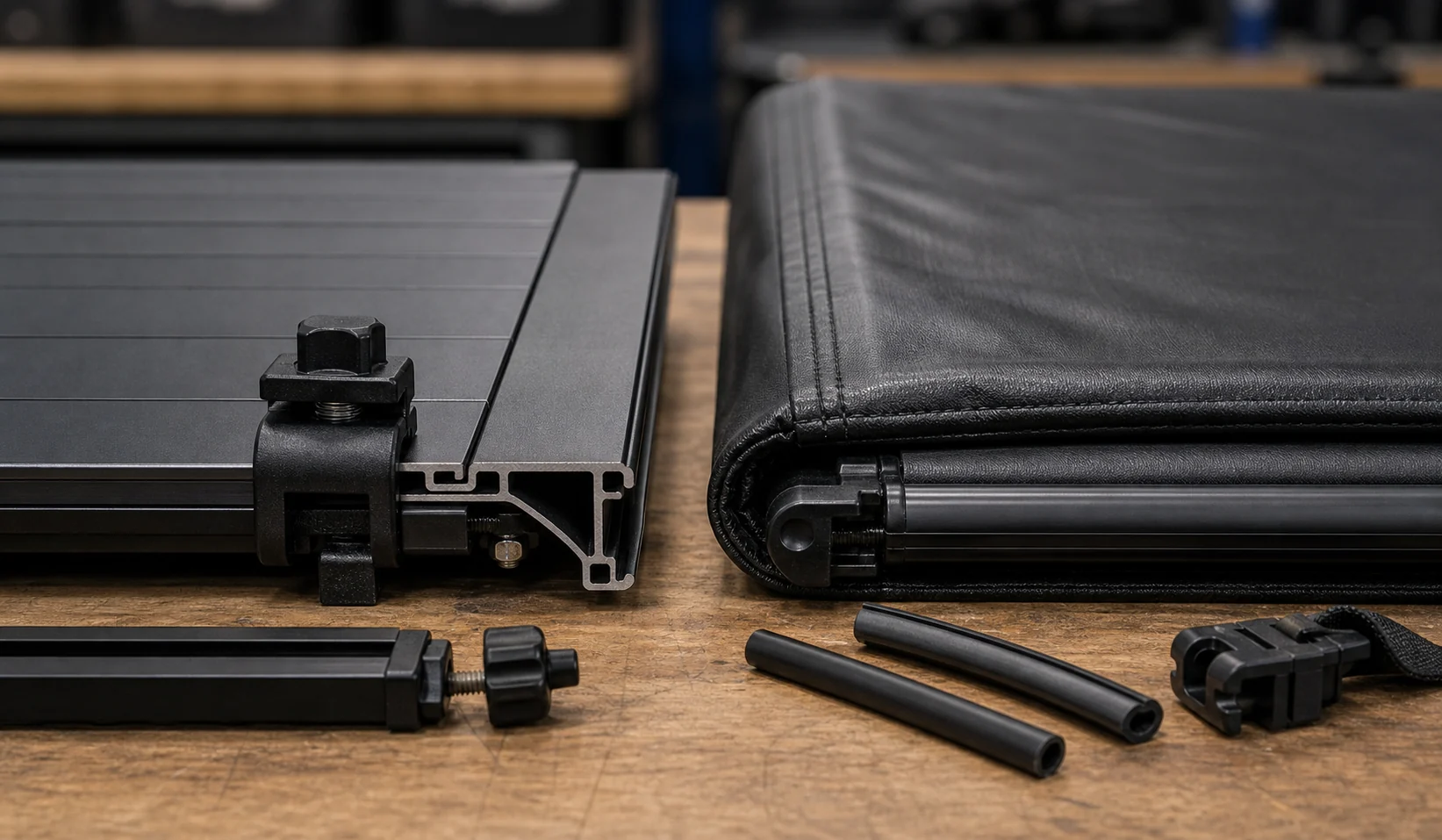
Hard covers feel more solid. They resist casual cutting better, can look more premium, and often pair well with a locking tailgate. Soft covers are lighter, easier to handle, usually less expensive, and often easier to remove or roll open.
For readers still comparing all cover families, the complete tonneau cover guide explains construction and opening mechanism as two separate dimensions, then compares bed access, security, weather resistance, installation, weight, rack compatibility, and price.
What types of hard and soft covers are available?
Hard and soft covers both come in several forms. The label "hard" or "soft" tells you the material category, but the opening style still matters.
| Cover type | Hard or soft | Best use | Main caution |
|---|---|---|---|
| Soft roll-up | Soft | Low cost and full bed access | Lower theft deterrence |
| Soft tri-fold | Soft | Quick install and simple folding | Takes space when folded |
| Hard tri-fold | Hard | Everyday security and strength | Heavier and higher cost |
| Hard roll-up | Hard | Low profile with better security | More moving joints |
| Retractable | Usually hard | Premium sliding access | Canister uses bed length |
| Hinged one-piece | Hard | Smooth sealed appearance | Limited tall cargo access |
If folding access is the main interest, the related tri-fold tonneau cover guide goes deeper into panel operation, pros, and limits. If premium sliding access is more important, the related retractable tonneau cover guide explains rails, slats, canisters, and drain tubes.
Which is better for security and weather protection?
A hard tonneau cover is usually better for security because rigid panels are harder to cut and often work better with a locking tailgate. Weather protection depends less on hard versus soft alone and more on seals, rail fit, tailgate gaps, drain paths, and installation quality.
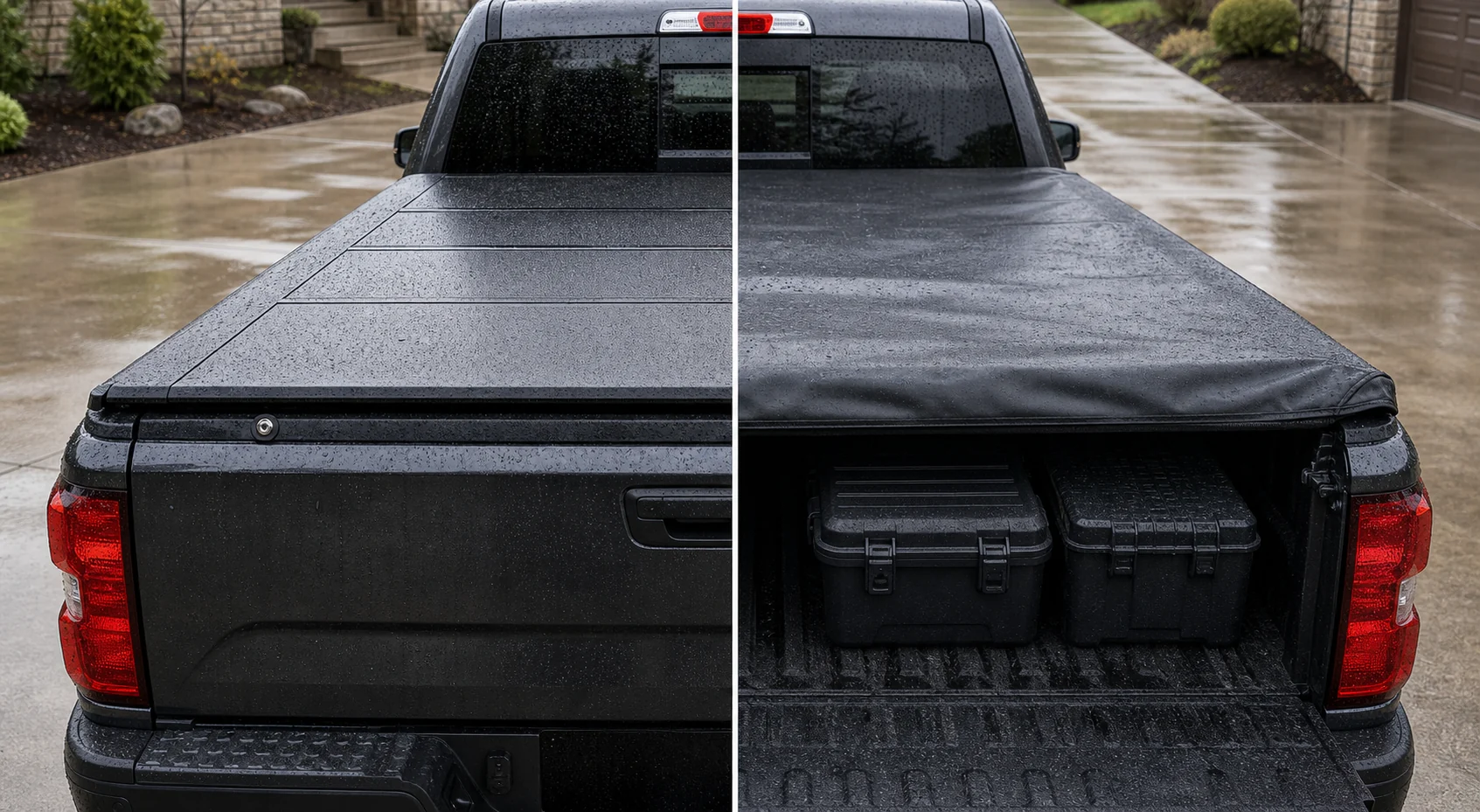
Hard covers help hide and protect cargo, but they are not safes. A determined thief can still defeat many truck accessories. The practical benefit is theft deterrence: cargo is less visible, the bed is less inviting, and access takes more effort.
Soft covers still provide privacy and weather resistance, but a blade can damage the material more easily. That is why soft covers work best for drivers who want protection from casual exposure, not high-security storage.
For weather, avoid promising "waterproof" unless the design and installation can truly support that claim. Pickup beds have tailgate gaps, rail joints, stake pockets, bed caps, and accessories that can let water in. Access Cover's care guidance also points to the importance of cleaning and maintaining the cover material and seals 3.
The weather comparison also changes with climate. In hot sunny markets, soft vinyl quality, stitching, and UV resistance become more important. In cold markets, soft covers may become stiffer and harder to tension, while hard covers may feel easier to clear of snow. In dusty markets, both cover types need seals that reduce fine dust entry around the tailgate and rails.
Which is easier to install and use every day?
Soft tonneau covers are usually easier to install, remove, and handle because they are lighter. Hard covers may take more time, especially folding, retractable, or one-piece designs, but they can feel more stable and secure after installation.
A soft roll-up cover is often the simplest daily option. Open the tailgate, release the latch, roll it forward, and secure it near the cab. It gives strong bed access without a heavy panel.
A hard folding cover is also easy to use, but the folded panels may block part of the bed or rear window depending on the design. A retractable cover slides smoothly but needs space for the canister. A one-piece hinged cover can look clean but is awkward for tall cargo.
For product buyers, the user experience should be checked with real hands, not only product photos. Latches should be easy to reach. Rails should align. Panels should not pinch seals. Soft covers should tension evenly.
Weight matters in daily use. A hard cover can feel more secure, but if it is too heavy for the owner to fold or remove comfortably, the truck becomes less flexible. A soft cover can feel less premium, but its light weight makes it easier for one person to open, roll, clean, or remove when carrying large cargo.
Which tonneau cover is better for different users?
The better cover depends on the buyer's priority. Hard covers are better for security and premium feel; soft covers are better for budget, weight, and simple access.
| Buyer priority | Better common choice | Why |
|---|---|---|
| Lowest cost | Soft roll-up | Simple material and lighter frame |
| Better security | Hard folding or retractable | Rigid panels plus locking tailgate |
| Frequent tall cargo | Soft roll-up or retractable | Opens without stacking bulky panels |
| Premium look | Hard folding, retractable, or hinged | Cleaner structure and lower flex |
| Easy removal | Soft tri-fold or soft roll-up | Lighter and simpler |
| Work tools | Hard cover | Better deterrence and durability |
NHTSA reminds drivers to secure loads properly 1. That matters for both cover types. A tonneau cover can hide cargo and reduce exposure, but heavy or loose items still need proper restraint.
What should buyers check before ordering hard or soft covers?
Buyers should check fitment, bed length, bed liner compatibility, rail design, clamp quality, seal design, latch position, instructions, carton protection, and replacement parts before ordering hard or soft covers.
For Yirox Team sample checks, the difference is practical. On hard covers, panel alignment, hinge strength, surface finish, latch action, and packaging protection are critical. On soft covers, fabric tension, stitching, edge sealing, bow strength, and UV-resistant surface quality matter more.
Packaging should match the material. Hard panels need corner protection and spacing to prevent scratches. Soft covers need support so rails do not bend and fabric does not crease badly during shipping.
The best supplier conversation is specific: which truck models, which bed lengths, which installation method, which carton drop risk, which warranty parts, and which customer complaint is most expensive to solve?
For retail packaging, the hard-versus-soft decision also affects freight. Hard covers usually need stronger cartons, better corner protection, and more careful stacking rules. Soft covers can still be damaged if rails bend or fabric creases, but they are usually less vulnerable to panel dents. A product that saves cost at the factory can lose that savings if it creates oversize shipping damage.
Quality inspection should include repeated open-close cycles. A hard cover should not rattle, scrape, or show uneven panel gaps. A soft cover should not wrinkle badly, pull loose at the seams, or lose tension after several openings. The difference between a good cover and a cheap-looking cover often appears after the tenth use, not the first photo.
Conclusion: Better depends on the truck owner's real priority
Hard tonneau covers are generally better for security, durability, and premium appearance. Soft tonneau covers are generally better for price, weight, simple installation, and easy full-bed access. Both can be good choices when matched to the truck and use case.
The mistake is buying by category alone. A cheap hard cover can fit poorly, and a well-made soft cover can be excellent for daily use. The better cover is the one that fits the truck, protects the cargo, opens the way the driver needs, and arrives without shipping damage.
If the next step is comparing options for a product range or pickup accessory program, start with related pickup tonneau covers and compare material, opening style, fitment, hardware, packaging, and after-sales support together.
Frequently Asked Questions
Is a hard tonneau cover worth it?
Yes, if the buyer wants better theft deterrence, a more solid feel, and a premium appearance. It may not be worth the extra cost if the main goal is low price and simple access.
Are soft tonneau covers waterproof?
Soft covers are usually water-resistant, not fully waterproof. Seal design, rail fit, tailgate gaps, and installation quality affect how much water enters the bed.
Which lasts longer, hard or soft tonneau covers?
Hard covers often last longer under rough use, but lifespan depends on materials, hinges, seals, hardware, UV exposure, and maintenance. A well-made soft cover can still last well with proper care.
Can a soft tonneau cover protect tools?
It can hide tools from view and reduce weather exposure, but it is not the best theft-deterrent option. For tools left in the bed often, a hard cover is usually the safer choice.
Which cover is easier to remove?
Soft roll-up and soft tri-fold covers are usually easier to remove because they are lighter. Hard covers may require more careful handling or a second person.
References
[1] NHTSA. *[Securing Your Load](https://www.nhtsa.gov/road-safety/securing-your-load)*.
[2] RealTruck. *[Hard vs Soft Tonneau Covers](https://realtruck.com/blog/hard-vs-soft-tonneau-covers/)*.
[3] Access Cover. *[Tonneau Cover Care and Maintenance](https://www.accesscover.com/support/care-maintenance/)*.
[4] Consumer Reports. *[Pickup Truck Buying Guide](https://www.consumerreports.org/cars/pickup-trucks/buying-guide/)*.