
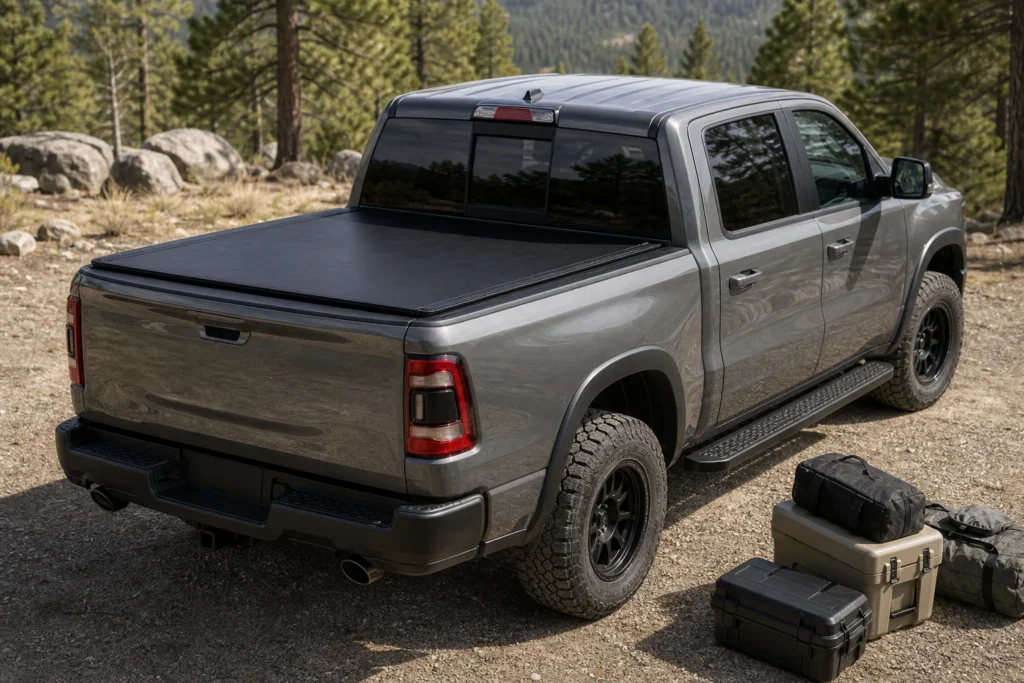
A tonneau cover is a pickup bed cover that sits over the cargo box to protect items, improve privacy, and give the truck a cleaner finished look. It can be soft or hard, folding or rolling, retractable or hinged, and the best choice depends on how the truck is used.
Many buyers start with one simple question: “Which cover is best?” The more useful question is: “What do I need the cover to do most of the time?” A contractor, family road-trip driver, overland customer, fleet buyer, and weekend DIY owner may all choose different covers for good reasons.
Table of Contents
- What is a tonneau cover?
- What are the main types of tonneau covers?
- What are the benefits of a tonneau cover?
- Are tonneau covers waterproof?
- How do you choose the right tonneau cover?
- What should buyers check before ordering tonneau covers?
- Conclusion: Choose the cover around the way the truck is used
- Frequently Asked Questions
- References
What is a tonneau cover?
A tonneau cover is an accessory that covers the open pickup bed. It can be made from vinyl, aluminum, fiberglass, composite panels, fabric over a frame, or interlocking slats depending on the cover style.
The cover usually mounts to the bed rails with clamps, rails, seals, hinges, latches, or a canister system. Some covers sit on top of the bed rails. Others install with a lower-profile flush fit. Most are designed to be opened when the driver needs cargo access and closed when the bed should be protected.
The name can sound technical, but the purpose is practical. A tonneau cover helps hide cargo from view, reduce direct exposure to sun and rain, keep light cargo from blowing around, and make the truck look more complete.
What are the main types of tonneau covers?
The six common tonneau cover types are soft roll-up, hard roll-up, soft tri-fold, hard tri-fold, retractable, and hinged one-piece covers. Snap covers and toolbox-compatible covers are also common in some markets, but most buyer comparisons start with those six.
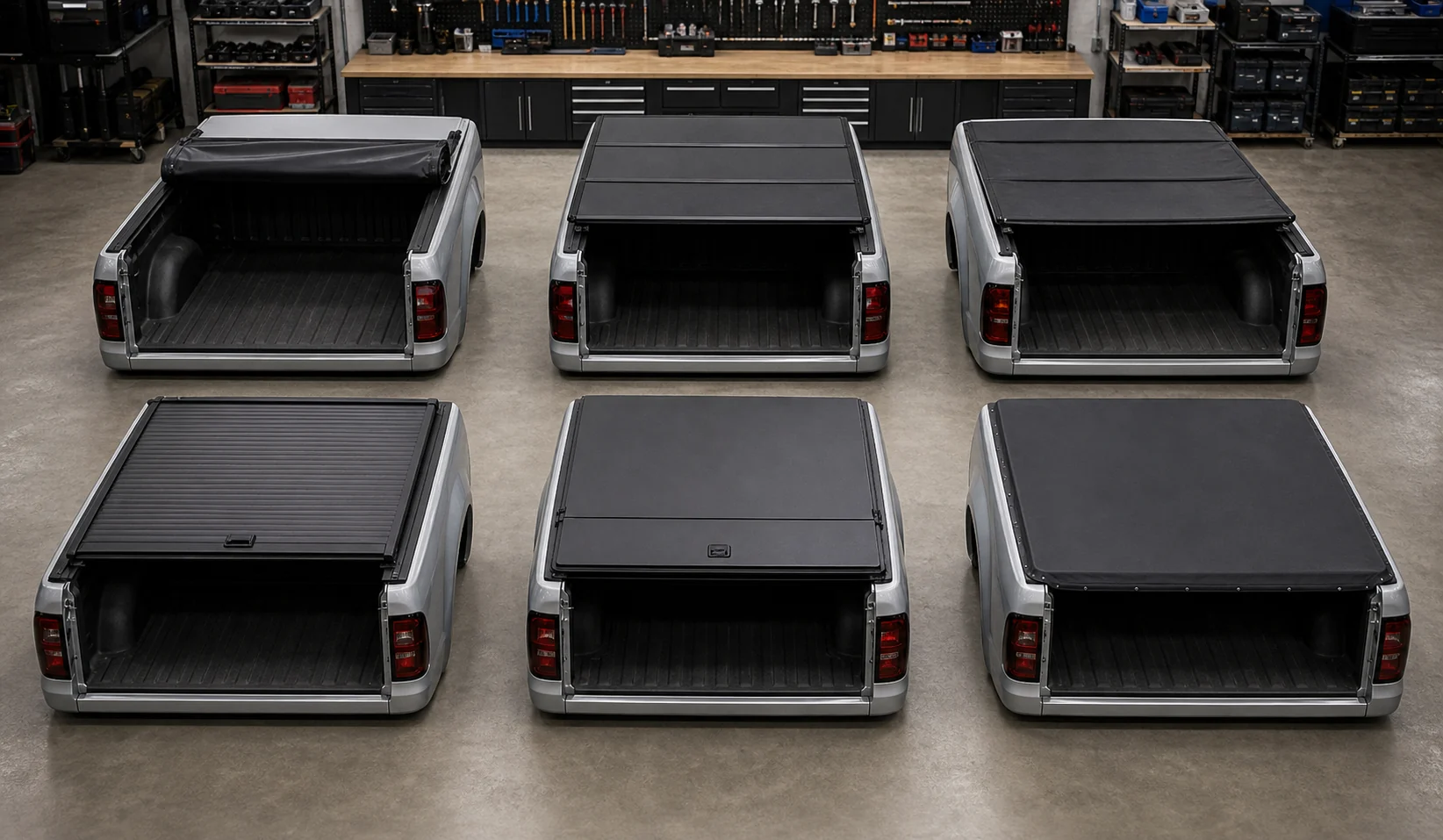
| Type | Best for | Main advantage | Main trade-off |
|---|---|---|---|
| Soft roll-up | Budget, simple access | Lightweight and easy to roll open | Less security than hard covers |
| Hard roll-up | Low profile with better security | Rolls open but uses harder panels | Usually costs more |
| Soft tri-fold | Easy install and moderate price | Opens quickly in sections | Blocks part of bed when folded |
| Hard tri-fold | Security and everyday use | Stronger panels and clean look | Heavier than soft covers |
| Retractable | Premium access and appearance | Slides into a canister smoothly | Canister uses bed space |
| Hinged one-piece | Smooth painted look | Strong and weather resistant | Limited full-bed access |
If the buyer is deciding mainly between material categories, the related hard vs soft tonneau cover comparison is the natural next step. For buyers who want a practical folding design, the related tri-fold tonneau cover guide explains why that style is so common.
What are the benefits of a tonneau cover?
A tonneau cover can improve cargo privacy, weather protection, truck appearance, cargo organization, and day-to-day bed usability. It does not turn the pickup bed into a sealed trunk, but it can make the bed much more useful.
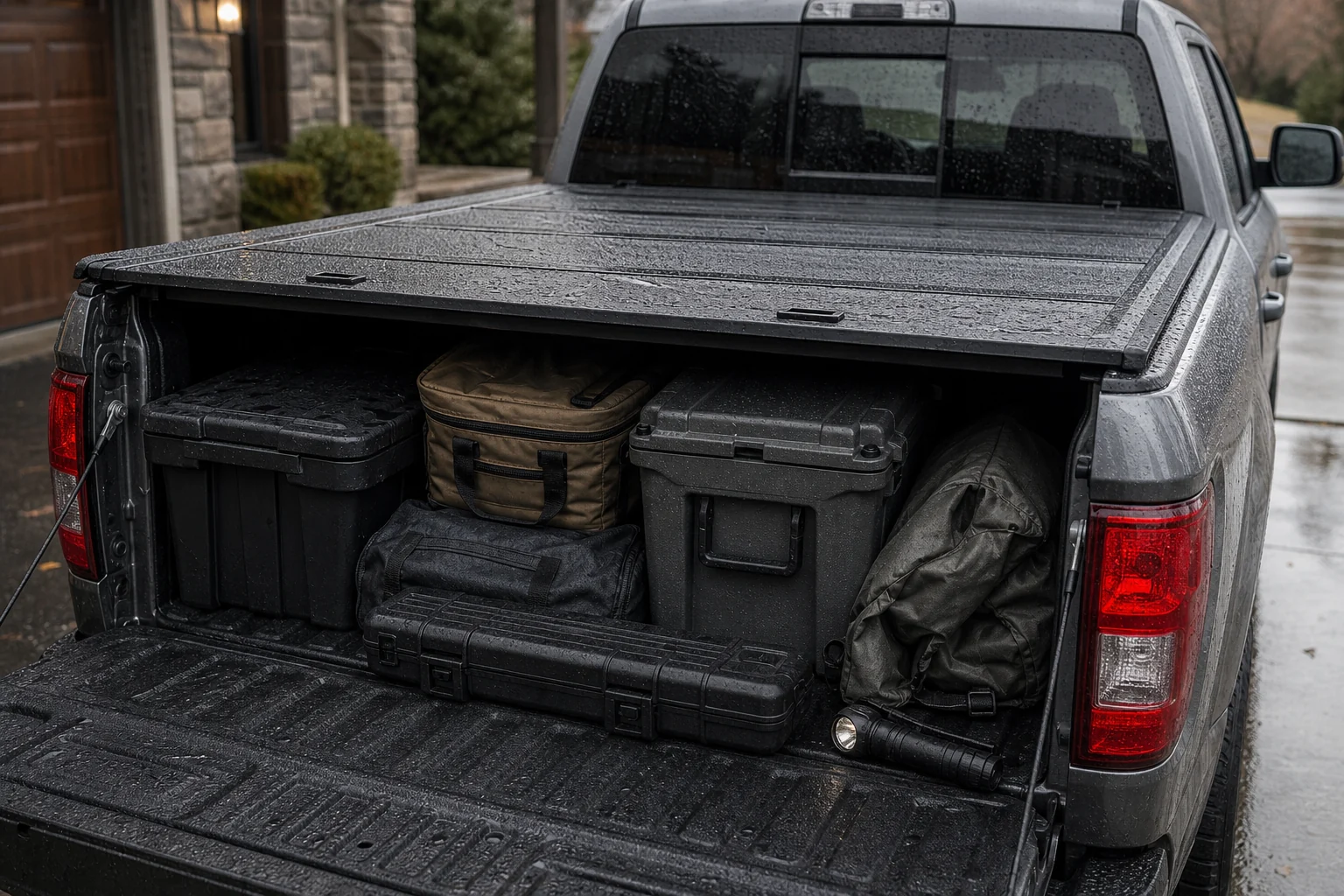
The privacy benefit is immediate. Tools, luggage, recovery gear, sports equipment, and groceries are less visible when the cover is closed. A hard cover paired with a locking tailgate adds a stronger theft-deterrent layer than a soft vinyl cover, though no tonneau cover should be described as theft-proof.
Weather protection is another major reason buyers choose a cover. A good cover helps reduce exposure to rain, snow, dust, leaves, and sun. It also helps keep cargo from bouncing or blowing around in the open bed. NHTSA’s load-securing advice is a useful reminder that cargo still needs to be secured properly; a cover should not be treated as the only restraint for loose items 1.
Appearance matters too. Many truck owners like the clean horizontal line a cover gives the bed. For retail programs, that visual difference is often what makes a customer stop and compare options.
Are tonneau covers waterproof?
Most tonneau covers are water-resistant, not completely waterproof. They can reduce water entry during normal rain, but water may still enter around tailgates, bed caps, stake pockets, rails, hinges, seals, or drain paths.
This is where product wording matters. “Waterproof” creates expectations that are hard to satisfy on a pickup bed because the truck bed itself has gaps and moving panels. “Weather resistant” or “helps keep cargo protected from rain” is usually more accurate.
Retractable covers often use drains because water can collect near the canister. Folding covers rely on hinge seals and side rail seals. Roll-up covers depend heavily on tension, side seals, and correct installation. Hinged covers may seal well around the perimeter, but access and fitment still matter.
For buyers, the useful check is not only the cover surface. Look at the tailgate seal, rail contact, clamp pressure, drain routing, and whether the bed liner or bed caps affect fit.
Maintenance also affects water resistance. Soft covers need the right tension so water does not pool in the middle. Folding covers need hinge areas kept clean so grit does not damage seals. Retractable covers need rails and drain paths checked because leaves, dust, and ice can slow the mechanism. A cover that performs well when new can start leaking or rubbing if the owner never cleans the contact points.
How do you choose the right tonneau cover?
Choose a tonneau cover by matching the cover type to the truck’s normal use: budget, security, weather exposure, bed access, cargo height, appearance, and installation preference.
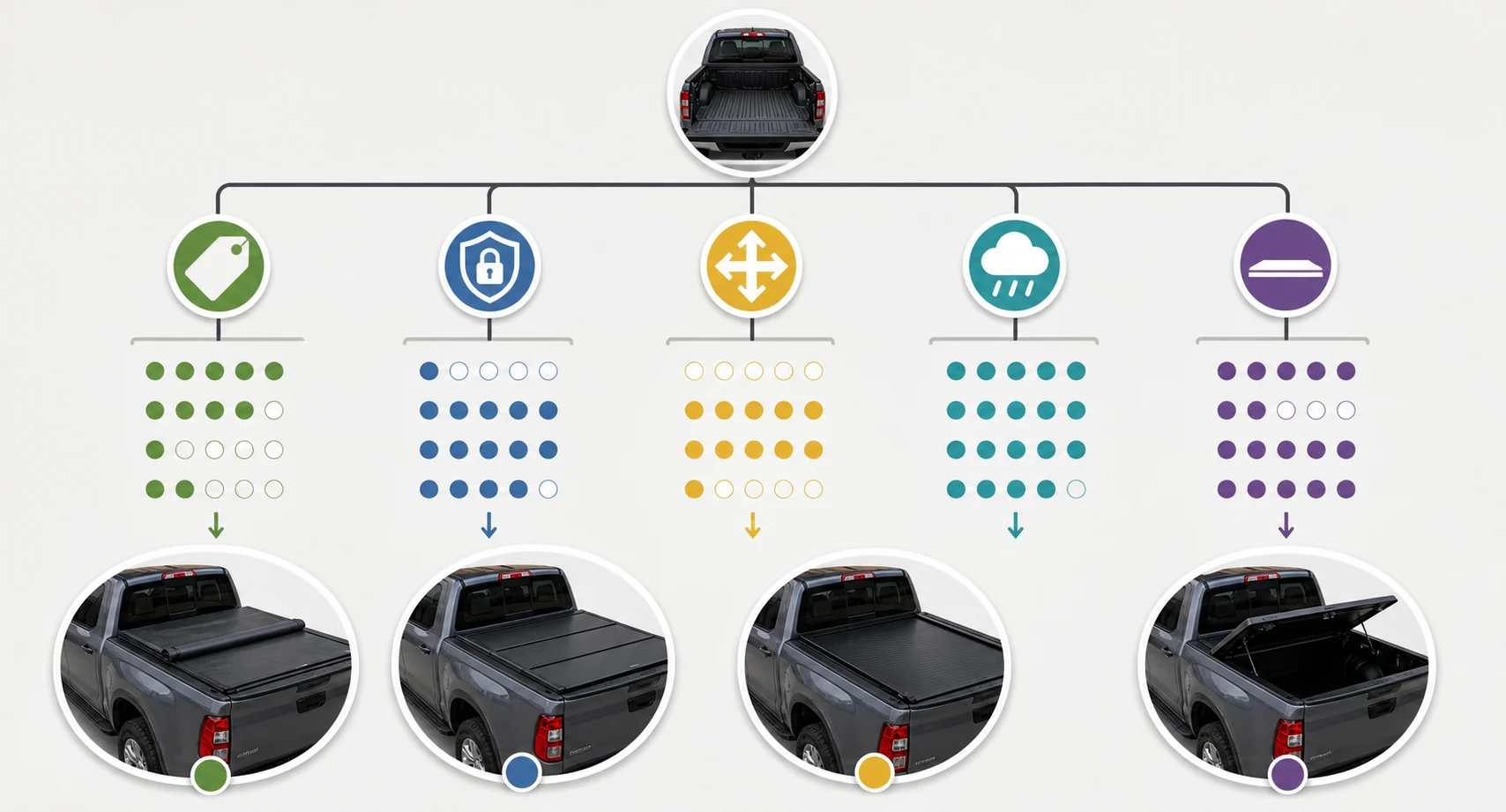
Start with cargo. If the driver often carries tall items, a roll-up or retractable cover may be better than a folding cover that rests near the cab. If the driver carries tools and wants better security, a hard folding or retractable cover may be worth the higher cost.
Then check the truck. Bed length, rail shape, bed liner, utility track, sports bar, toolbox, rack, tailgate shape, and cargo management system can all affect fitment. A cover that works well on one pickup may be awkward on another if the clamp or rail system conflicts with factory accessories.
For premium bed access, the related retractable tonneau cover guide explains the canister, rail, and drain-tube trade-offs.
Budget should be read together with use frequency. A low-cost soft cover may be perfect for a driver who only needs occasional cargo privacy. A more expensive hard folding or retractable cover may make sense for a truck used every day for tools, outdoor gear, delivery work, or family travel. Paying for strength that the user does not need wastes money, but underbuying can create returns, water complaints, or early replacement.
What should buyers check before ordering tonneau covers?
Buyers should check fitment data, material, frame strength, seals, clamps, latch design, installation instructions, carton protection, and after-sales parts before ordering tonneau covers.
For the Yirox Team, sample review starts with fitment and installation. Do the rails sit straight? Do the clamps hold without damaging the bed? Does the tailgate close cleanly? Does the cover open and close without rubbing? Are the instructions clear enough for a normal installer?
Material consistency also matters. Soft covers should have even stitching, clean tension, UV-resistant surface quality, and stable edges. Hard panels should feel rigid, align evenly, and resist obvious warping. Retractable slats should slide smoothly without binding.
Packaging is easy to overlook. Long rails, panels, and hinges can be damaged in shipping if foam, corner protection, and hardware bags are not designed well. A cover that looks good in a sample room can still create returns if the box allows panels to rub.
For wholesale or private-label programs, consistency is just as important as the first sample. Check whether the production batch uses the same fabric grain, panel thickness, clamp shape, seal profile, label placement, and instruction sheet as the approved sample. Small changes can create fitment problems that only appear after customers install the cover.
After-sales parts should be planned before launch. Common service items include clamps, latches, hinge seals, drain tubes, tension adjusters, rail end caps, and hardware bags. A retailer can often save a customer relationship by sending a small part quickly instead of replacing a whole cover.
Conclusion: Choose the cover around the way the truck is used
A tonneau cover is one of the most practical pickup accessories because it changes how the bed works every day. The best cover is not always the strongest, cheapest, or most expensive one. It is the one that matches the cargo, climate, security need, installation skill, and truck fitment.
Soft roll-up covers are affordable and simple. Hard folding covers are a strong everyday choice. Retractable covers feel premium and clean. Tri-fold covers balance price and function. Hinged covers give a smooth one-piece look. Each style is right for a different buyer.
If the next step is comparing product options, the related pickup tonneau covers category is the practical place to review styles, materials, fitment, packaging, and sourcing expectations together.
Frequently Asked Questions
What is the purpose of a tonneau cover?
A tonneau cover protects the pickup bed, hides cargo from view, improves appearance, and makes the bed more useful in daily driving. It can also reduce casual exposure to rain, dust, sun, and leaves.
Which tonneau cover type is best?
There is no single best type. Soft roll-up covers are budget-friendly, hard folding covers are strong daily choices, retractable covers feel premium, and tri-fold covers are popular because they balance access and simplicity.
Are tonneau covers waterproof?
Most are water-resistant rather than fully waterproof. Good seals and installation reduce water entry, but pickup beds have gaps around the tailgate, rails, and accessories.
Can you drive with a tonneau cover open?
Many covers can be driven open only when they are secured according to the instructions. Loose panels, rolled fabric, or unsecured sections can be damaged or become unsafe.
Do tonneau covers fit all pickup trucks?
No. Fit depends on make, model, year, bed length, rail shape, bed liner, accessories, and cargo management system. Always confirm fitment before ordering.
References
[1] NHTSA. *Securing Your Load*.
[2] RealTruck. *Types of Tonneau Covers*.
[3] Access Cover. *Tonneau Cover Care and Maintenance*.
[4] Consumer Reports. *Pickup Truck Buying Guide*.