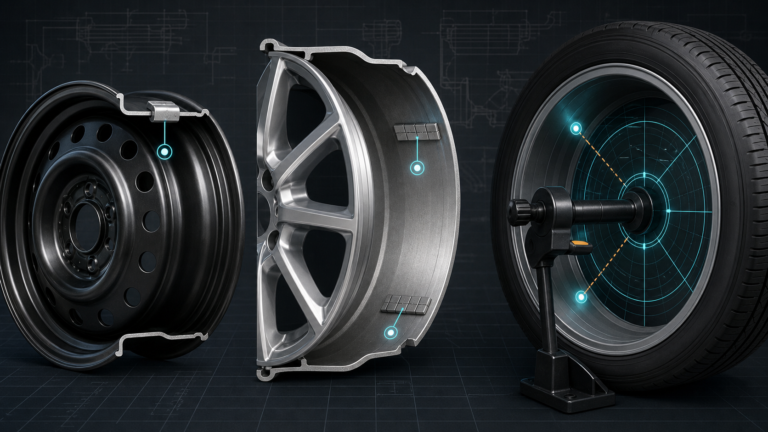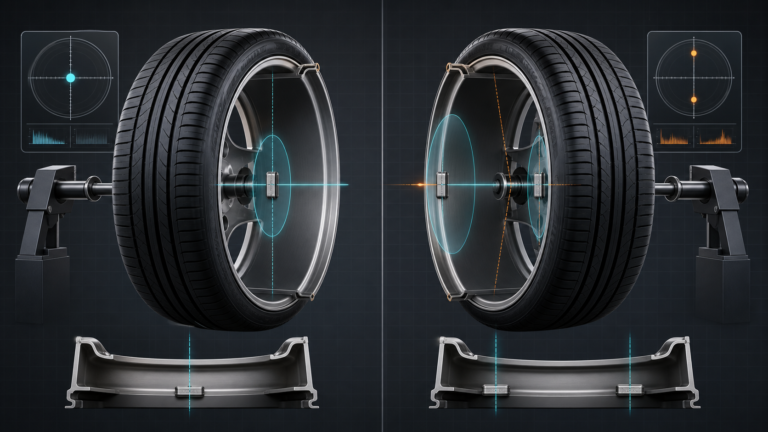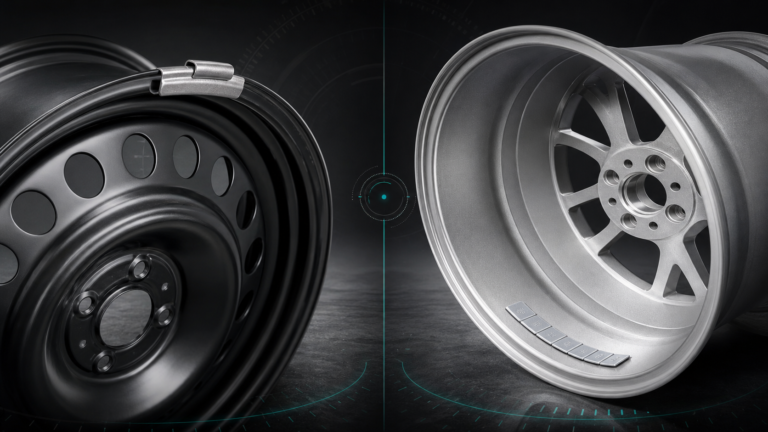

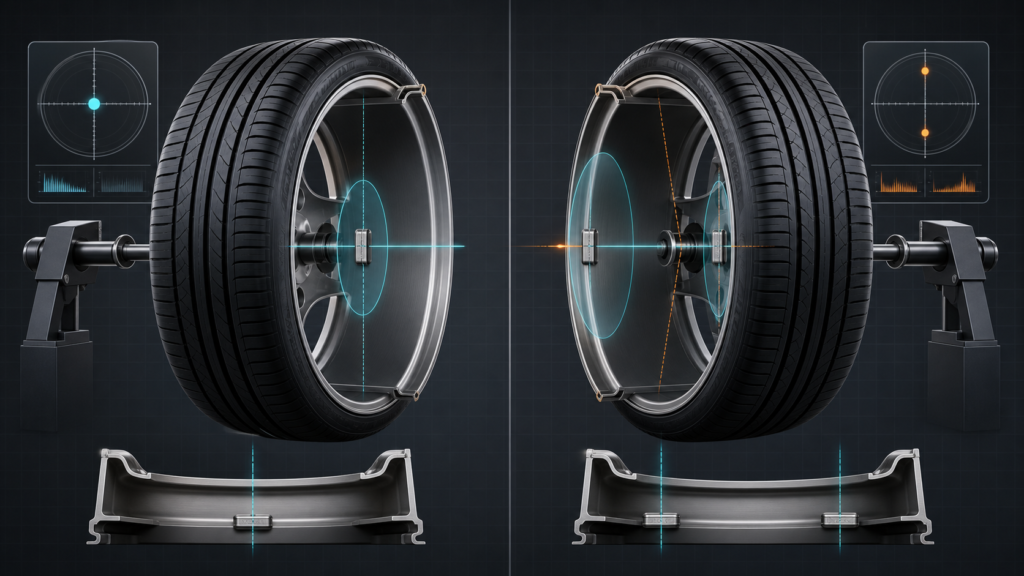
Static wheel balancing corrects uneven mass in one plane of a rotating tire-and-wheel assembly. Dynamic wheel balancing corrects imbalance across two planes, usually near the inner and outer sides of the rim. Because the method changes the correction planes, it changes where a balancing machine asks the technician to place weights and which attachment format the wheel can accept.
The essential point is that the machine's indicated location comes before the weight format. A clip-on weight, an adhesive strip, or another approved correction format only works when it can be installed at the plane and angle requested for that actual wheel. The wheel-weight selection framework helps buyers connect this service decision with rim type, material, increments, and stock planning.
Table of Contents
- What is static wheel balancing?
- What is dynamic wheel balancing?
- How does weight placement change?
- Why does the balancing program matter?
- Which wheels need one plane or two planes?
- How should shops select the weight format?
- What should buyers stock for different balancing work?
- Conclusion: Follow the plane before choosing the weight
- Frequently Asked Questions
- References
What is static wheel balancing?
Static wheel balancing corrects a heavy spot around the wheel's circumference in a single correction plane. It addresses a tendency for the assembly to move up and down as it rotates, and the correction weight is placed at the location and plane identified by the selected static procedure.
In a simple static approach, the goal is to bring the assembly's mass distribution back toward the rotational axis. Traditional static methods can identify the heavy side without the full two-plane measurement used by modern dynamic balancing. Michelin describes static balancing as a center-rim correction that addresses the vertical axis 2.
Static correction does not mean that every wheel always receives one visible weight in the exact geometric center. The wheel design, balancer program, and allowed mounting surfaces determine the real placement. The key concept is one correction plane rather than separate inner and outer corrections.
What is dynamic wheel balancing?
Dynamic wheel balancing measures imbalance across two planes of the wheel assembly and can correct side-to-side couple effects as well as radial mass imbalance. It normally requires the balancer to calculate separate correction positions on the inner and outer sides of the rim.
Wheel width makes this important. A tire-and-wheel assembly may appear acceptably balanced from a single center plane while unequal mass on opposite sides still creates a wobbling tendency during rotation. A two-plane measurement can identify that condition and specify a correction for each plane. Continental explains that a dynamic procedure uses a spinning computer balancer and can direct weights to both inner and outer rim locations 1.
Dynamic balancing is not merely “more weights.” It is a different measurement and correction model. Depending on the result, the machine may call for two weights, one weight in one plane, or no correction in a particular plane. The technician should follow the actual readout, not pre-decide the number of weights.
How does weight placement change?
Static balancing uses one correction plane, whereas dynamic balancing works with two distinct planes. That difference changes the available rim surfaces and makes wheel geometry central to the final weight choice.
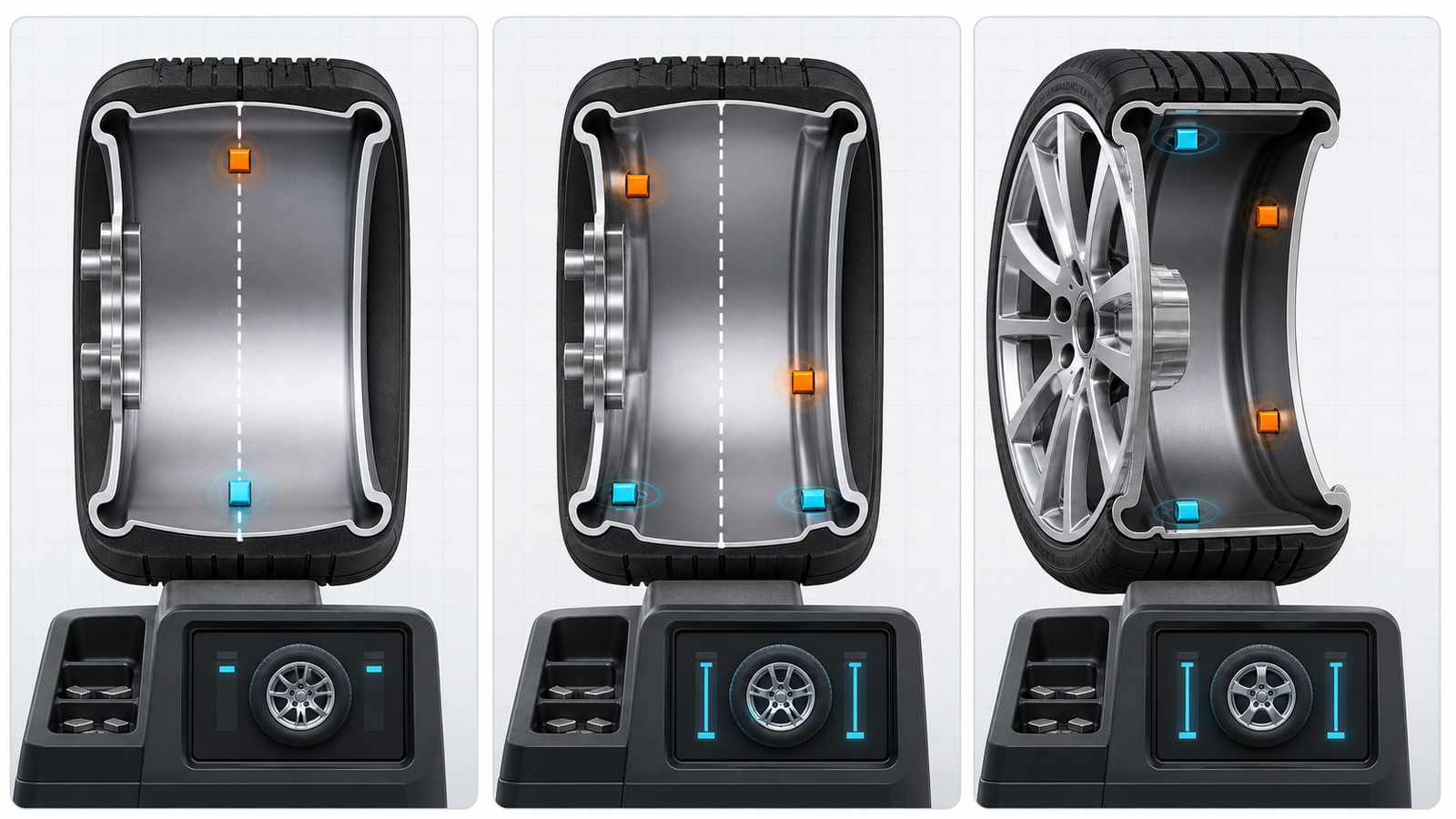
A center-plane static correction and a two-plane dynamic correction are not interchangeable instructions; each calls for weight placement at the location the selected program defines.
| Balancing approach | What the machine is correcting | Typical placement logic | Main service implication |
|---|---|---|---|
| Static / one plane | Circumferential heavy spot in one plane | One approved plane on the rim, often selected by the balancing mode | The available surface must support the requested single-plane location. |
| Dynamic / two plane | Radial imbalance plus side-to-side couple effects | Separate inner and outer planes at machine-indicated angles | Both planes must be reachable and compatible with the wheel's finish and clearance. |
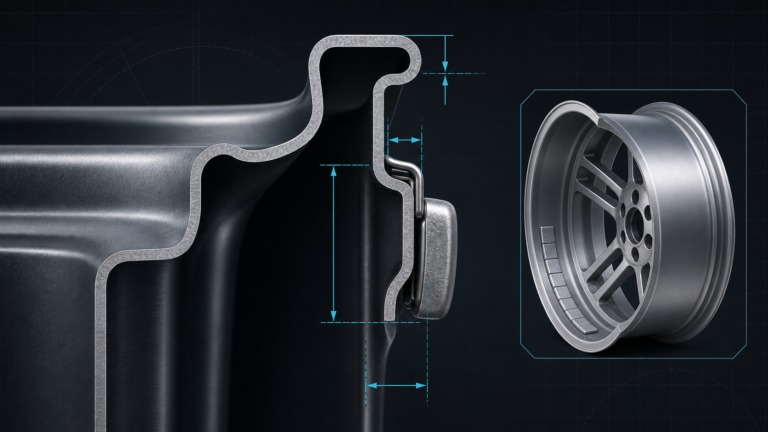
| Alloy-style hidden placement | A two-plane result adapted to approved inner-barrel locations | Adhesive weights may be placed at two inner locations rather than on the visible outer flange | The selected balancer program and wheel guidance determine the exact positions. |
Do not move a requested weight to a more convenient location just because it looks cleaner. On a dynamic job, combining or shifting weights without using an approved balancing mode can alter the correction. A balancer can sometimes guide an approved hidden or split-weight placement, but the technician must use the program designed for that wheel and recheck the result.
Why does the balancing program matter?
The balancing program tells the machine which correction planes and weight locations are available on the rim. Standard, static, and alloy-wheel programs can therefore produce different placement instructions even when the same physical assembly is on the spindle.
The program is not a cosmetic preference. It translates the wheel geometry into locations the operator can actually use. A conventional steel wheel may allow a clip-on weight on a flange; a styled alloy wheel may require two hidden adhesive locations inside the barrel. Modern balancers provide placement guidance that is tied to the wheel configuration and measured assembly 3.
Before choosing a program, the operator needs accurate wheel dimensions and an understanding of the wheel's approved weight surfaces. Before buying weights, a service manager needs to know which programs and rim types dominate the workshop's work. The service process and correction product distinction makes this sequence clear: balancing is the measurement-and-correction process; wheel weights are the products installed to carry out its result.
Which wheels need one plane or two planes?
The balancing method should be selected from the wheel, tire, balancer capability, and service procedure—not from a broad claim that one vehicle type always needs static or dynamic balancing. Dynamic balancing is widely used for passenger vehicles because it can address the two-plane effects of a wider wheel-and-tire assembly, while static modes remain useful where the wheel design and service procedure call for one-plane correction.
Narrower wheels, simple wheel designs, and some service contexts may use a one-plane method. Wider passenger, SUV, and alloy-wheel applications often make two-plane correction more relevant because inner and outer placement can differ significantly. But these are practical tendencies, not a substitute for the balancer's measurement and the wheel manufacturer's guidance.
The same wheel can also receive different approved placement instructions when a shop selects a different mode. A wheel with no usable visible flange may still be dynamically balanced with two adhesive locations inside the barrel if the balancer program and wheel design support it. Conversely, a wheel that accepts a clip-on weight on one side may need a different format on the other plane.
How should shops select the weight format?
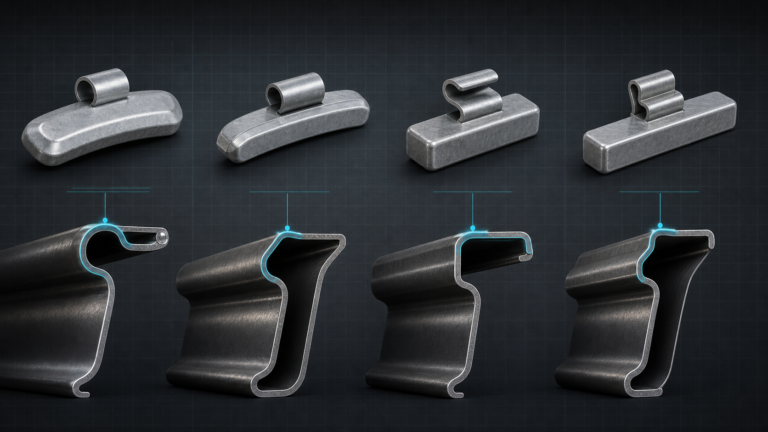
Shops should select the weight format after the balancing method and approved placement planes are established. The machine determines the required mass and location; rim geometry, finish, and clearance determine whether that location can use a clip-on or adhesive weight.
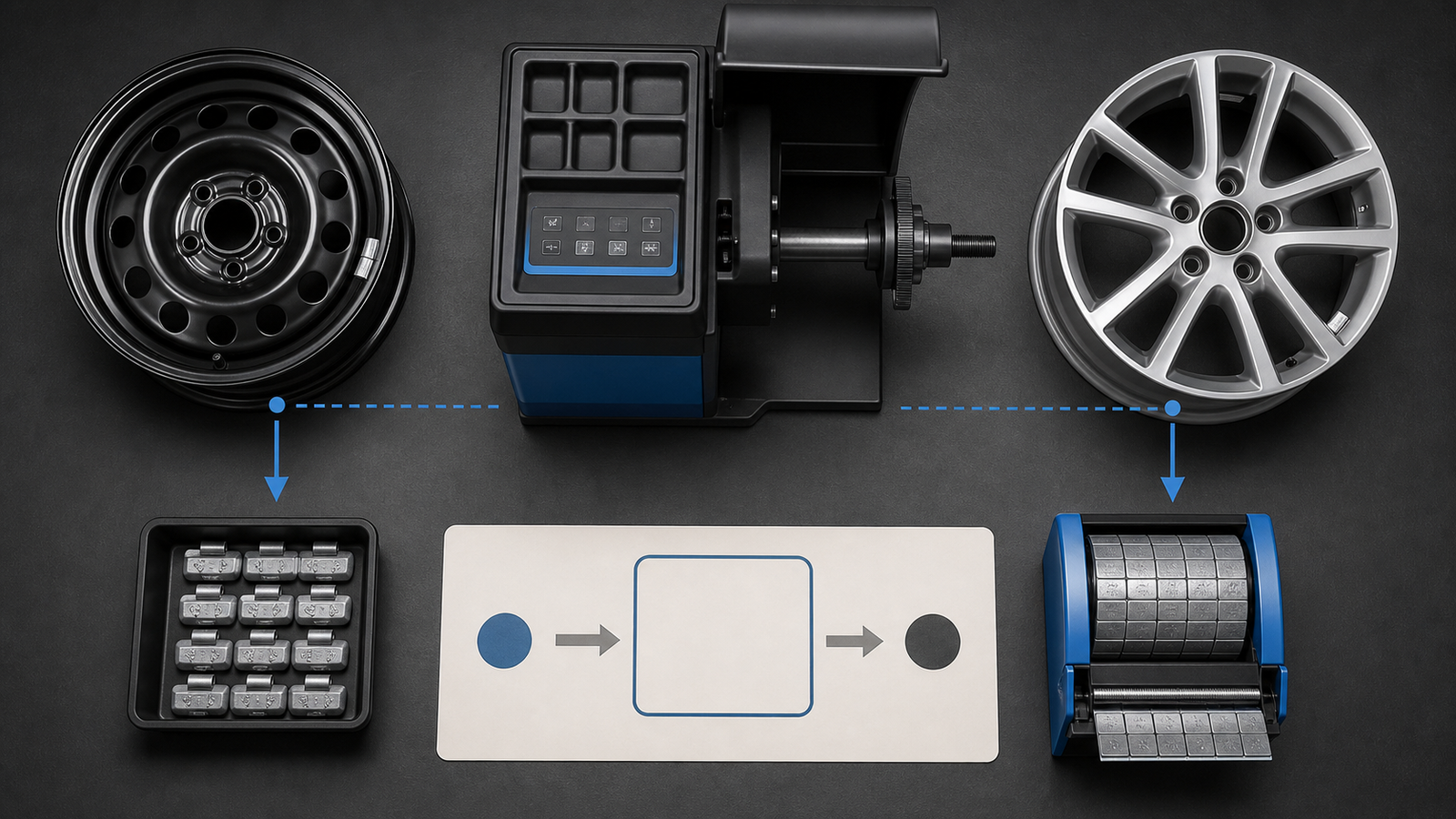
Steel and alloy wheels may call for different weight formats, but the correction planes and the wheel's approved mounting surfaces govern the final choice.
For many steel-wheel jobs, a suitable clip-on profile can be quick to install on an accessible flange. For many alloy-wheel jobs, adhesive strips on the inner barrel protect the visible rim and can support hidden two-plane placement. The clip-on or adhesive attachment choice should therefore be made in the context of the required plane, not only appearance or unit cost.
Avoid forcing a weight onto an unsuitable surface. A clip that does not match the flange can damage the rim or have poor retention. Adhesive tape cannot compensate for a dirty, wet, curved, or clearance-limited mounting surface. If the requested location is unavailable, the correct action is to consult wheel guidance, select an approved alternate balancer mode, or use another approved correction format—then verify the balance again.
What should buyers stock for different balancing work?
Buyers should build a range around the wheel types, balancer programs, and correction planes that their customers actually use. A service network with steel wheels, alloy wheels, and mixed vehicle classes will usually need both clip-on and adhesive formats, but not every profile or strip dimension deserves equal depth.
Start by collecting common wheel examples and service records:
- Identify whether shops commonly use standard, static, or alloy-style balancing programs.
- Record which rim surfaces are used for each program and whether they require one or two correction planes.
- Match clip profiles to validated steel-wheel flanges rather than treating all steel wheels as one application.
- Match adhesive strip height, segment size, and tape performance to the alloy-wheel barrel locations actually used.
- Stock gram or ounce increments that correspond to local balancer outputs and installer habits.
- Keep clear tray and carton labels so weights for separate planes and formats are not mixed during service.
When setting a mixed service range, buyers can review wheel-weight formats for steel and alloy service through the needs of their real workshop programs. The useful question is not “which weight is best?” but “which approved formats let our technicians complete the placements the balancer asks for?”
Conclusion: Follow the plane before choosing the weight
Static and dynamic wheel balancing differ because they correct imbalance in one plane and two planes, respectively. The result changes where weights must go; it does not simply change the number of weights on a wheel.
For reliable work, select the correct balancer program, enter the wheel data accurately, follow the requested correction planes, and choose clip-on or adhesive weights that fit the actual surface. A buyer can then build a balancing-weight range for the required planes around the shop's wheel mix, validated mounting locations, and preferred size system.
Frequently Asked Questions
Is dynamic wheel balancing better than static balancing?
Dynamic balancing can correct two-plane side-to-side effects that static balancing does not address, so it is widely used for many passenger-vehicle assemblies. The correct method still depends on the wheel, tire, balancer program, and approved service procedure.
Why are there weights on both sides of a wheel?
Two weights can be the result of a dynamic balancing measurement. The balancer may require correction in separate inner and outer planes to address both radial imbalance and side-to-side couple effects.
Can a dynamic balance use adhesive weights on both planes?
It can when the wheel design and selected balancer program provide approved inner-barrel locations for both correction planes. The technician should follow the machine's placement guidance and verify the final result.
Does static balancing always use one visible center weight?
No. Static balancing means one correction plane. The exact position can depend on the wheel geometry and the selected balancing procedure, and it may be hidden or adapted through an approved mode.
Can I move a wheel weight to a different location for appearance?
Not unless the balancer's approved mode or procedure specifies an alternative placement and the result is rechecked. Moving a correction weight can change the balance, especially in a two-plane dynamic job.
Should a tire shop stock both clip-on and adhesive wheel weights?
Usually yes when it services both steel and alloy wheels. The range should follow its common balancer programs, approved placement surfaces, validated clip profiles, and local gram or ounce system.
References
[1] Continental. “Balancing Tires.” 2026.
[2] Michelin. “Motorcycle Wheel Balancing.” 2026.
[3] Hunter Engineering Company. “Road Force Elite Wheel Balancer Operations Manual.” 2020.