




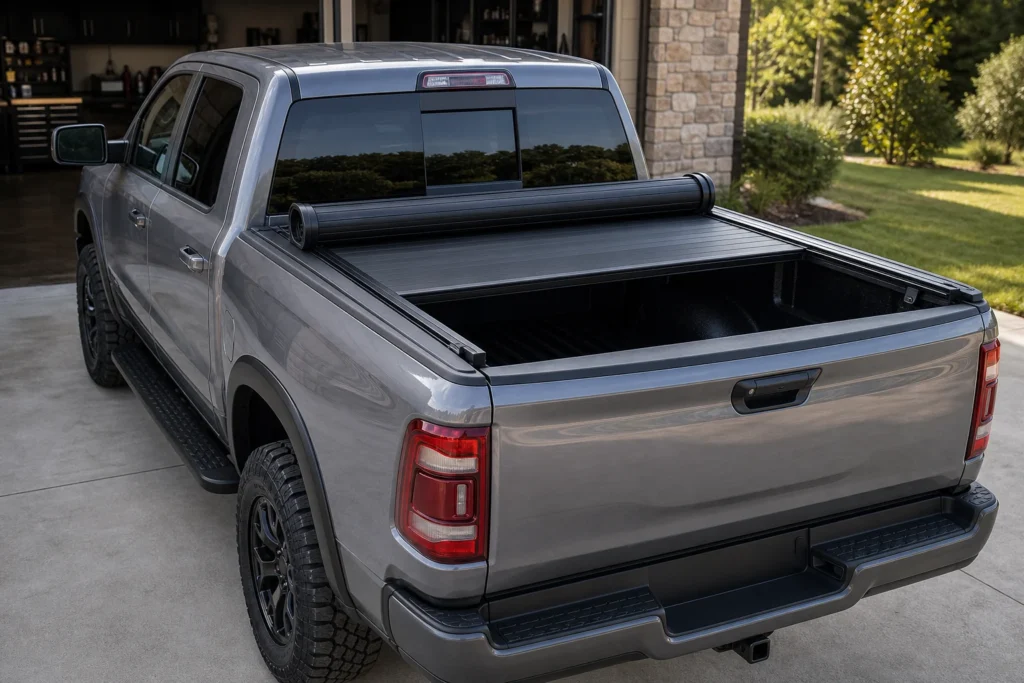
A retractable tonneau cover is a pickup bed cover that slides open and closed along side rails, usually rolling or stacking into a canister near the cab. It is one of the most premium tonneau cover styles because it gives clean operation, strong appearance, and flexible bed access.
The trade-off is complexity. A retractable cover has rails, slats, a canister, drain tubes, latches, and sometimes a motor. That means fitment, installation, drainage, and packaging quality matter more than they do on a basic soft roll-up cover.
Table of Contents
- What is a retractable tonneau cover?
- How does a retractable tonneau cover work?
- What types of retractable tonneau covers are available?
- What are the benefits and drawbacks of retractable covers?
- How is a retractable tonneau cover installed?
- Is a retractable cover better than a folding cover?
- Conclusion: Retractable covers are premium when the fit is right
- Frequently Asked Questions
- References
What is a retractable tonneau cover?
A retractable tonneau cover is a sliding pickup bed cover made from interlocking slats, panels, or a flexible rolling surface. Instead of folding upward or rolling by hand into a soft bundle, the cover retracts into a front canister.
For readers comparing all cover styles, the complete tonneau cover guide shows where retractable covers sit in the two-dimensional construction and opening-mechanism framework and provides a practical decision matrix.
Retractable covers are often chosen for premium pickups, work trucks, overland builds, and customers who want quick access without lifting or removing large panels. Some are manual. Others are electric and open with a switch or remote.
Because the cover hides inside a canister, it can look cleaner than a folded stack of panels. That is a major selling point for buyers who want a tidy bed profile. The buyer should still remember that the canister is a real component inside the bed, not invisible storage.
How does a retractable tonneau cover work?
A retractable tonneau cover slides along rails mounted to the pickup bed sides. When opened, the cover moves toward the cab and stores inside a canister at the front of the bed. When closed, it stretches across the bed and latches near the tailgate.
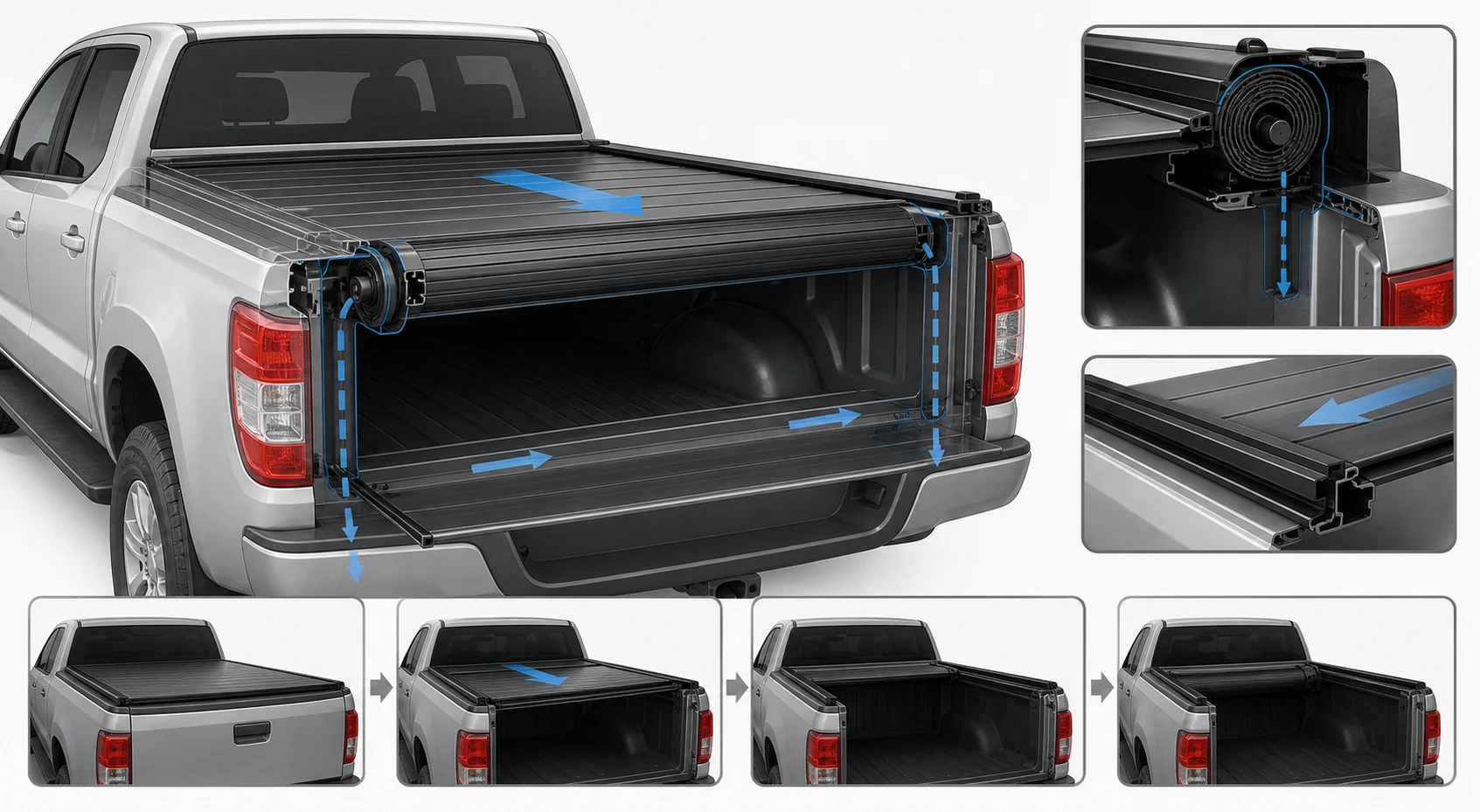
Most designs use aluminum slats or reinforced panels. The rails guide the slats and keep the cover aligned. The canister stores the cover. Drain tubes route water out of the canister area, usually through openings in the bed.
For buyers comparing aluminum slats with polycarbonate or other composite options, the retractable cover material and construction guide explains why the material stack-up, rail fit, seal profile, and test method should appear in the specification.
Smooth operation depends on alignment. If the rails are not parallel, the cover can bind. If the canister is tilted, the slats may rub. If drains are blocked or routed poorly, water can collect where it should not.
Good operation also depends on keeping the rails clean. Dust, leaves, ice, and small debris can make a sliding cover feel rough. In dusty or snowy climates, maintenance guidance should be clear because a retractable cover has more moving contact points than a simple folding cover.
What types of retractable tonneau covers are available?
The main types are manual retractable covers, electric retractable covers, aluminum slat covers, polycarbonate or composite covers, and retractable covers designed for racks or accessory rails.
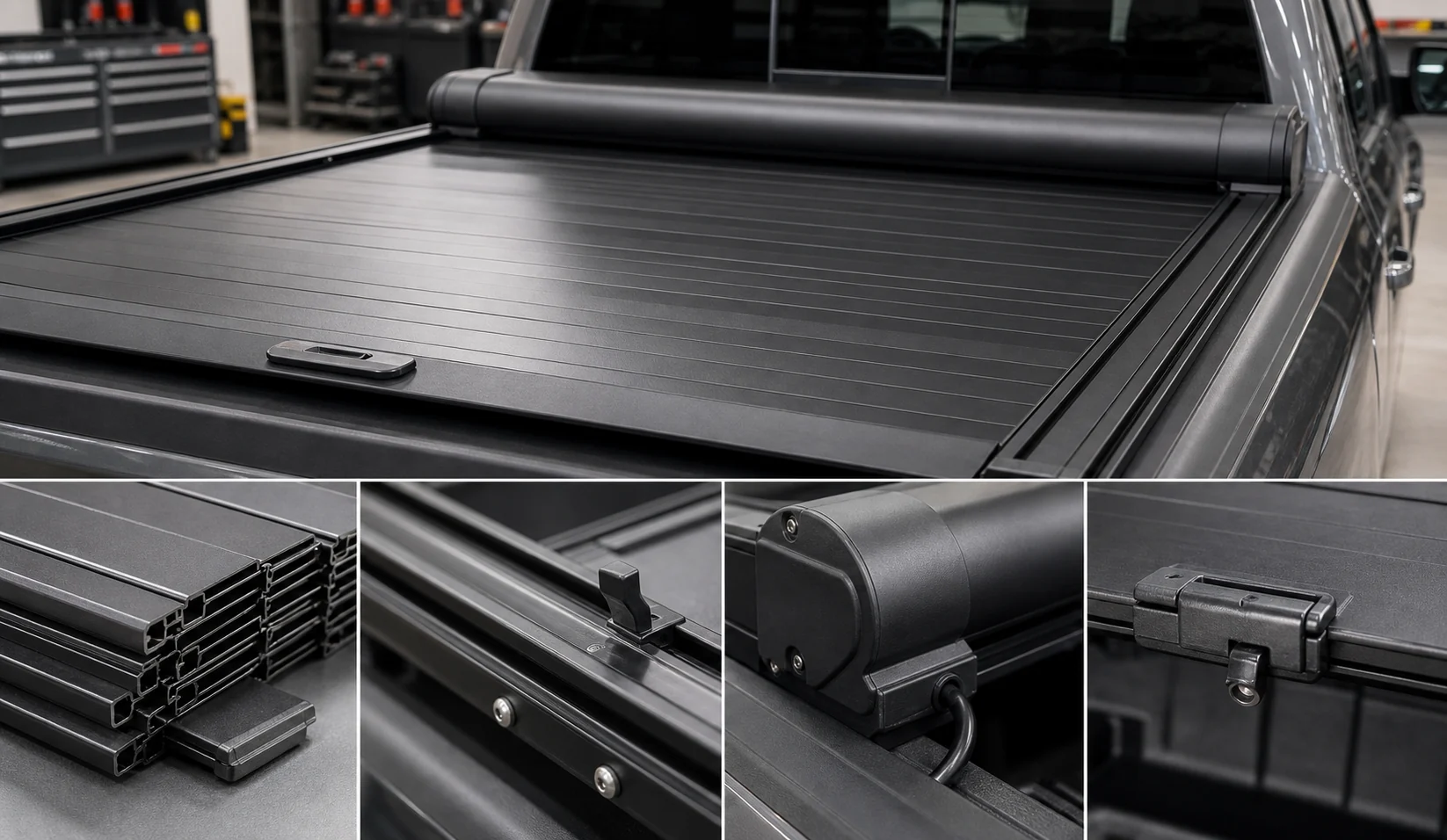
| Type | Best for | Main advantage | Main caution |
|---|---|---|---|
| Manual retractable | Premium access without wiring | Simpler than electric | Needs smooth hand operation |
| Electric retractable | High-end convenience | Opens by switch or remote | More wiring and service needs |
| Aluminum slat | Strength and durability | Rigid and premium feel | Heavier and higher cost |
| Composite slat | Lower weight or specific styling | Can reduce weight | Quality varies by material |
| Rack-compatible | Overland and work setups | Works with crossbars or racks | Fitment must be checked carefully |
Most retractable covers fall into the hard-cover category. If the buyer is still deciding material strength and cost, the related hard vs soft tonneau cover comparison helps clarify the trade-off.
Some retractable covers are designed to work with bed racks, crossbars, or overland accessories. Those versions need careful compatibility checks. The rack may need to mount outside the cover rails, through a special channel, or to a separate bracket system. A normal retractable cover and a rack-compatible retractable cover are not always interchangeable.
What are the benefits and drawbacks of retractable covers?
The benefits of retractable covers are premium appearance, smooth bed access, better security than soft covers, and easy partial opening. The drawbacks are higher price, more moving parts, canister bed-space loss, drainage needs, and more careful installation.
Retractable covers are excellent when the driver wants to open only part of the bed. Many designs can stop at several positions, which is useful for mixed cargo. They also avoid stacking folding panels near the cab.
The canister is the biggest compromise. It uses space at the front of the bed, which can interfere with bulky cargo. On shorter beds, that lost space matters more. Drain tubes also need a clean path, which may require attention during installation.
Electric retractable covers add convenience, but they also add wiring, switches, motors, and possible service issues. For a retail product range, electric versions need especially clear instructions and after-sales parts planning.
Security is another benefit, but it should be described carefully. A hard retractable cover with a locked tailgate can deter casual theft better than a soft cover. It does not make the bed a safe. Customers carrying expensive tools should still think about parking location, cargo tie-downs, and whether valuables should stay in the vehicle overnight.
How is a retractable tonneau cover installed?
A retractable tonneau cover is installed by positioning the canister, attaching side rails, aligning the cover, securing clamps, routing drain tubes, checking latch operation, and testing the slide several times before final tightening.
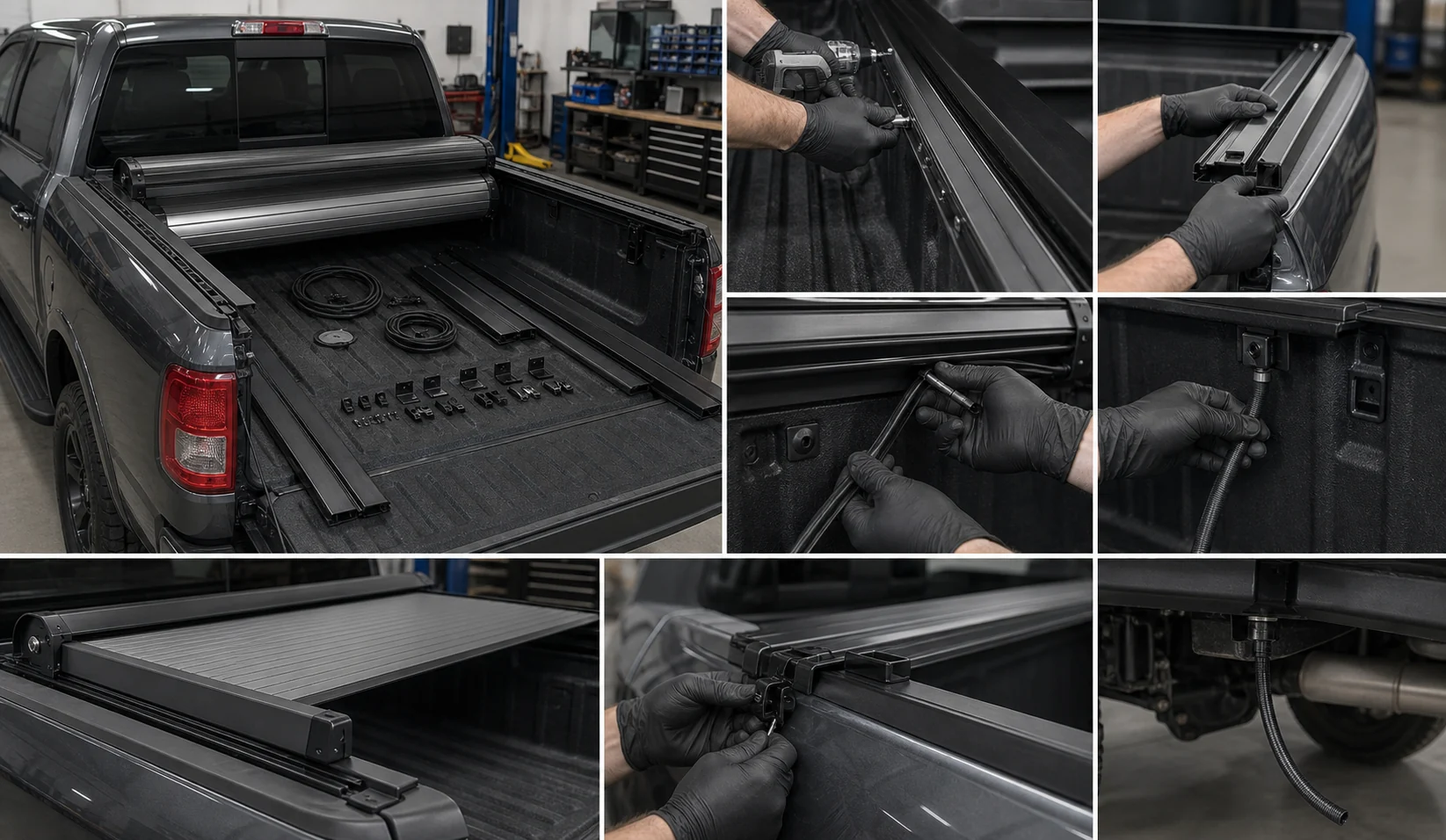
Installation starts with fitment confirmation. The truck bed length, rail shape, bed liner, cargo management system, sports bar, rack, and tailgate design can all affect installation.
The canister should sit squarely near the cab. Rails should be level and parallel. Clamps should hold firmly without damaging the bed. Drain tubes should route downward without kinks. After installation, the cover should slide without heavy force, rubbing, or uneven gaps.
For Yirox Team sample checks, the installation manual is part of the product. If a normal installer cannot understand the sequence, the cover will create unnecessary support issues even if the hardware itself is good.
Drainage deserves special attention. Many retractable covers route water from the canister area through drain tubes. Those tubes should not kink, end in a poor location, or interfere with bed liners. If the drain path is unclear, customers may think the cover leaks when the real problem is routing.
Is a retractable cover better than a folding cover?
A retractable cover is better when the buyer wants premium sliding access, partial opening positions, and a clean low-profile look. A folding cover is better when the buyer wants a simpler system, lower cost, fewer moving parts, and no front canister.
The related tri-fold tonneau cover guide is useful for buyers comparing those two common paths. A tri-fold cover may be easier to install and less expensive. A retractable cover may feel more refined and offer smoother day-to-day access.
Cargo style matters. If the driver often carries tall items at the front of the bed, the retractable canister may be a problem. If the driver dislikes folding panels stacked near the cab, a retractable cover may be worth the cost.
NHTSA's load-securing guidance still applies 1. A retractable cover hides and protects cargo, but heavy items should still be tied down properly.
Compared with a tri-fold cover, a retractable cover can feel more premium in a showroom because the opening motion is smooth and compact. Compared with a soft roll-up cover, it offers a stronger structure and cleaner closed appearance. The right comparison is not only price; it is whether the customer values that sliding function every week.
For product programs, after-sales planning is especially important. Common service items include drain tubes, rail end caps, latch parts, keys, small hardware, and sometimes motor or controller parts for electric models. A retractable cover is expensive enough that customers expect repair support, not only a replacement offer.
That support expectation should be reflected in the manual, carton labels, and spare-parts list.
Conclusion: Retractable covers are premium when the fit is right
A retractable tonneau cover is a premium pickup bed cover for buyers who value smooth access, clean appearance, stronger security than soft covers, and flexible opening positions. It is especially appealing for daily drivers, work trucks, and accessory packages where the cover should feel refined.
The buyer should also respect the complexity. Rails, canister, drains, latches, and slats all need good fitment and careful packaging. A retractable cover is only premium if it slides smoothly, seals reasonably, drains correctly, and arrives undamaged.
If the next step is comparing product options, related pickup tonneau covers can be reviewed by cover type, rail design, canister size, material, fitment, and installation support.
Frequently Asked Questions
Are retractable tonneau covers worth it?
They are worth it for buyers who want premium sliding access, better security than soft covers, and a clean appearance. They may not be worth it if budget and maximum bed space matter most.
Do retractable tonneau covers leak?
They are water-resistant, not completely waterproof. Rails, canister drains, tailgate gaps, and installation quality all affect water control.
Does the canister take up bed space?
Yes. The front canister uses some bed space near the cab. This is one of the main trade-offs compared with folding or roll-up covers.
Are electric retractable covers better than manual ones?
Electric covers are more convenient, but they add wiring, motors, controls, and service complexity. Manual covers are simpler and may be easier to maintain.
Can you install a retractable cover yourself?
Some experienced owners can, but installation requires careful rail alignment, canister placement, clamp setup, and drain routing. Many buyers prefer professional installation.
References
[1] NHTSA. *[Securing Your Load](https://www.nhtsa.gov/road-safety/securing-your-load)*.
[2] RealTruck. *[Types of Tonneau Covers](https://realtruck.com/blog/types-of-tonneau-covers/)*.
[3] Access Cover. *[Tonneau Cover Care and Maintenance](https://www.accesscover.com/support/care-maintenance/)*.