



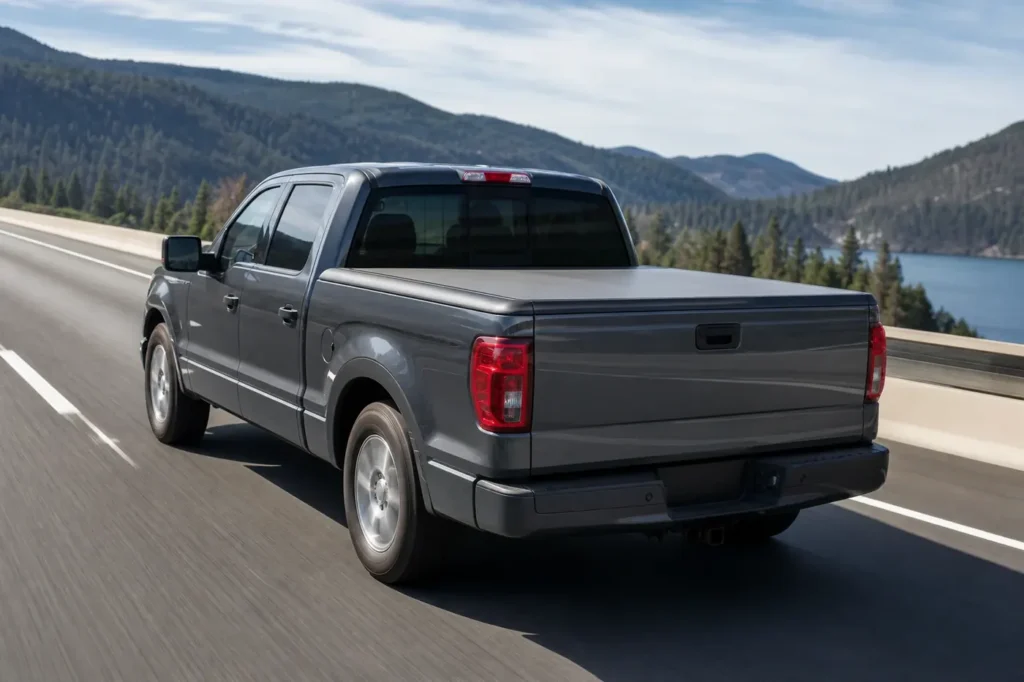
Tonneau covers can improve gas mileage, but the real-world gain is usually modest and not guaranteed on every truck. Research and engineering logic support the idea that changing pickup-bed airflow can reduce drag in some configurations, yet the final fuel result depends on speed, cover shape, weight, truck design, wind, tires, driving style, and how carefully the mileage is measured.
That is the honest answer most buyers need. A tonneau cover may help at highway speeds because aerodynamic drag matters more as speed rises. It should not be bought only as a fuel-saving device, because cargo protection, security, and daily utility are usually the stronger reasons to install one.
This article explains what the research suggests, why online claims vary so much, how different cover types affect the result, and how a pickup owner or accessory buyer can think about mileage claims without falling for exaggerated numbers.
Table of Contents
- Why might a tonneau cover affect gas mileage?
- What does research say about tonneau covers and pickup aerodynamics?
- How much fuel economy improvement should drivers realistically expect?
- Do hard, soft, retractable, and truck cap designs affect mileage differently?
- Why do some drivers see no MPG gain after installing a tonneau cover?
- How can you test MPG changes without fooling yourself?
- Should gas mileage be the main reason to buy a tonneau cover?
- Conclusion: Treat MPG as a possible bonus, not the whole purchase reason
- Frequently Asked Questions
- References
Why might a tonneau cover affect gas mileage?
A tonneau cover might affect gas mileage because it changes airflow over the open pickup bed. At highway speed, aerodynamic drag becomes a meaningful part of the energy a vehicle must overcome, so even small changes to airflow can show up in fuel use.
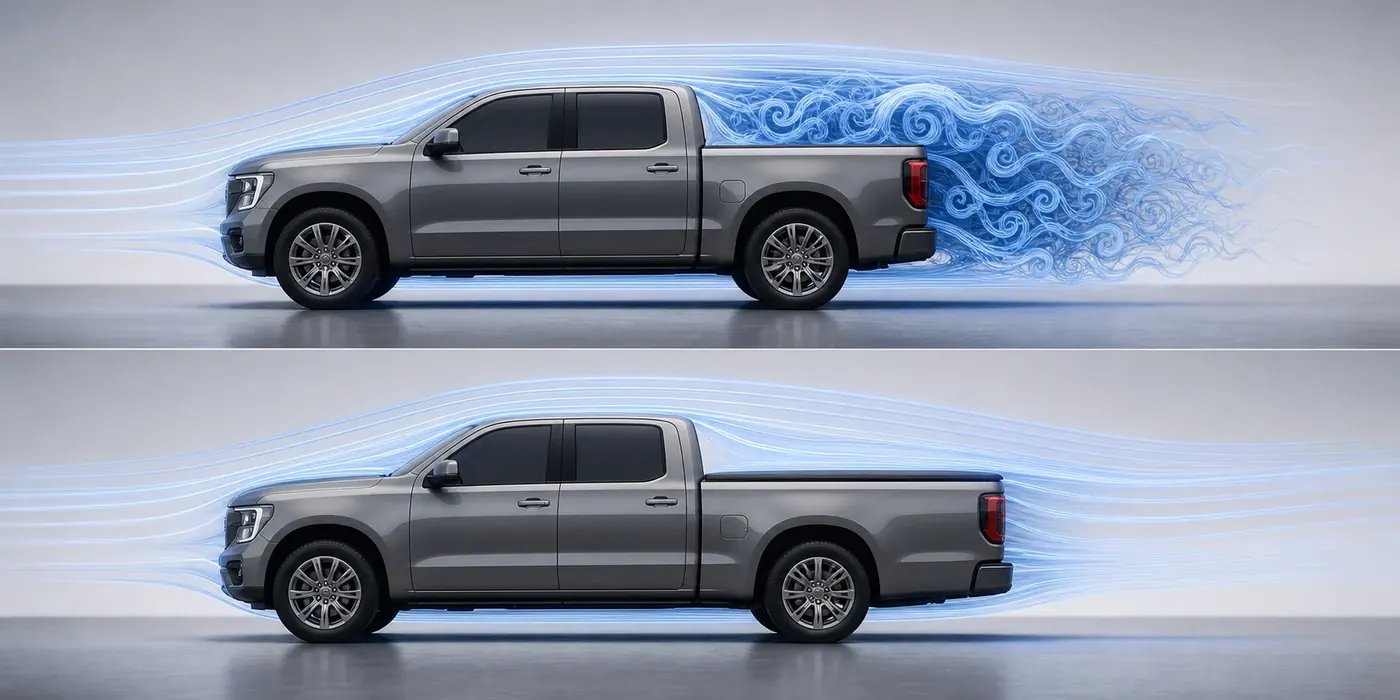
An uncovered pickup bed does not behave like a simple bucket catching air. Airflow separates around the cab and bed, forms a wake, and can create rotating flow inside or behind the bed. The tailgate, bed length, cab shape, ride height, side mirrors, tires, and underbody all affect the result.
A flat tonneau cover changes that flow path. It can reduce exposed bed turbulence and create a smoother surface from the cab toward the tailgate. That can reduce drag on some trucks. But the cover also adds weight, and not every truck’s airflow improves in the same way.
The U.S. Department of Energy explains that aerodynamic drag, or wind resistance, affects fuel economy and becomes especially important at highway speeds 1. The EPA also notes that reducing aerodynamic drag improves fuel economy, particularly at higher speeds 2. Those principles support the possibility of a benefit, but they do not prove a fixed MPG gain for every cover.
Readers who are still sorting out the accessory basics may want the related guide to tonneau cover types and benefits before treating mileage as the main decision.
What does research say about tonneau covers and pickup aerodynamics?
Research generally shows that pickup rear-bed configuration can change aerodynamic drag, but the direction and size of the improvement depend on the exact geometry being tested. A flat tonneau cover can reduce drag in some studies, while other rear treatments may perform differently.
Computational fluid dynamics work on pickup trucks has compared open beds, covered beds, caps, and other rear configurations to understand how drag changes 3. Other academic work on pickup rear shapes also shows that different bed coverings and rear profiles can produce different drag coefficients, which is why blanket claims are risky 4.
The most important lesson is not a single percentage. It is that pickup aerodynamics are configuration-specific. Cab height, bed length, tailgate position, cover height, panel seams, rear edge shape, and even the gap between cab and bed can change the flow.
This is one reason online answers vary. One owner may drive long highway routes and see a small improvement after installing a low flat cover. Another may drive mostly in town and see nothing measurable. A third may install a heavy cover, larger tires, or a rack at the same time, making the data impossible to isolate.
For buyers comparing low covers with taller enclosures, the tonneau cover vs truck cap comparison is useful because a cap changes the vehicle profile much more than a flat cover. That difference matters for cargo space and airflow.
How much fuel economy improvement should drivers realistically expect?
Drivers should expect any fuel economy improvement from a tonneau cover to be small, often difficult to measure, and strongest during steady highway driving. If a cover saves fuel, it is more likely to feel like a modest long-term bonus than a dramatic change at the pump.
Many marketing claims imply that a cover will pay for itself quickly through fuel savings. That is rarely the safest assumption. A driver covering 10,000 highway-heavy miles per year might notice a small change if the cover reduces drag and the route is consistent. A driver using the truck for short trips, stop-and-go traffic, towing, or mixed loads may never see a clean signal.
The physics explains why speed matters. Aerodynamic drag becomes more important as speed increases, while city driving is dominated by acceleration, braking, idling, tires, and traffic. DOE guidance on efficient driving emphasizes that aggressive driving, speeding, and extra drag all affect fuel use 1. A tonneau cover cannot cancel poor driving habits, low tire pressure, roof cargo, oversized tires, or heavy loads.
A practical expectation is this: buy the cover for cargo protection, security, appearance, or bed organization. Treat fuel economy as possible upside. If the MPG gain is the only reason for purchase, the math needs to be checked carefully.
Do hard, soft, retractable, and truck cap designs affect mileage differently?
Yes, different cover designs can affect mileage differently because they vary in shape, weight, surface smoothness, sealing, and how they sit above the bed rails. The most aerodynamic-looking cover is usually low, flat, tight, and free of bulky attachments.
| Cover Design | Mileage-Relevant Strength | Mileage-Relevant Trade-Off |
|---|---|---|
| Soft roll-up cover | Low weight and simple flat coverage | Loose fabric can ripple if tension is poor |
| Hard folding cover | Flatter, more stable surface than many soft covers | More weight and panel seams |
| Retractable cover | Smooth slat surface and adjustable opening | Added canister weight and bed-space loss |
| Truck cap | May reshape the rear profile significantly | Higher weight and taller side area |
Soft roll-up covers are light, which reduces the weight penalty. They can sit fairly flat when tensioned correctly, but loose fabric can ripple at speed and create noise or small airflow disturbances. The related roll-up tonneau cover guide explains the access and tension logic behind this style.
Hard folding covers are heavier but often flatter and more secure. Panel seams may create small steps, but a well-fitted hard cover usually presents a cleaner surface than a sagging soft cover. If choosing between soft and hard products, the hard vs soft tonneau cover guide helps separate daily utility from material claims.
Retractable covers can be sleek, but they may add more weight and include a canister at the front of the bed. The mileage effect depends on whether the smooth top offsets that added mass in the owner’s use pattern. The related retractable tonneau cover guide is helpful for checking canister space, slat construction, and drainage before focusing on MPG.
Truck caps and camper shells change the profile much more dramatically. Some shapes may improve flow, while others add frontal or side area and weight. They should be selected mainly for enclosed cargo height, not because they are assumed to save fuel.
Why do some drivers see no MPG gain after installing a tonneau cover?
Some drivers see no MPG gain because the expected effect is small and easily hidden by normal driving variation. Wind, traffic, tire pressure, fuel blend, route, payload, speed, and driving style can all change MPG more than the cover does.
Fuel economy is noisy data. A headwind can erase a small aerodynamic gain. Winter fuel, cold starts, underinflated tires, roof racks, larger wheels, lift kits, towing, and stop-and-go traffic can shift results. Even pump shutoff variation can change hand-calculated MPG from one fill-up to the next.
Cover weight can also matter. A lightweight vinyl cover adds little mass, while a heavy hard cover or fiberglass lid adds more. At highway speed, aero may matter more than weight, but in city driving and hilly routes the added weight can offset some benefit.
Installation quality is another factor. A cover that sits crooked, flaps, leaks air at loose edges, or carries extra rack hardware may not create the smooth surface the buyer imagined. A good mileage-oriented setup should be low, taut, and clean.
Finally, modern trucks are already shaped by aerodynamic work. Engineers design cab, bed, tailgate, grille shutters, spoilers, and underbody details as a system. Adding one accessory may help, hurt, or do almost nothing depending on that system.
How can you test MPG changes without fooling yourself?
Test MPG changes by comparing similar routes, speeds, loads, tire pressures, weather, and fuel sources over multiple tanks. A single before-and-after fill-up is not enough to prove that a tonneau cover improved gas mileage.
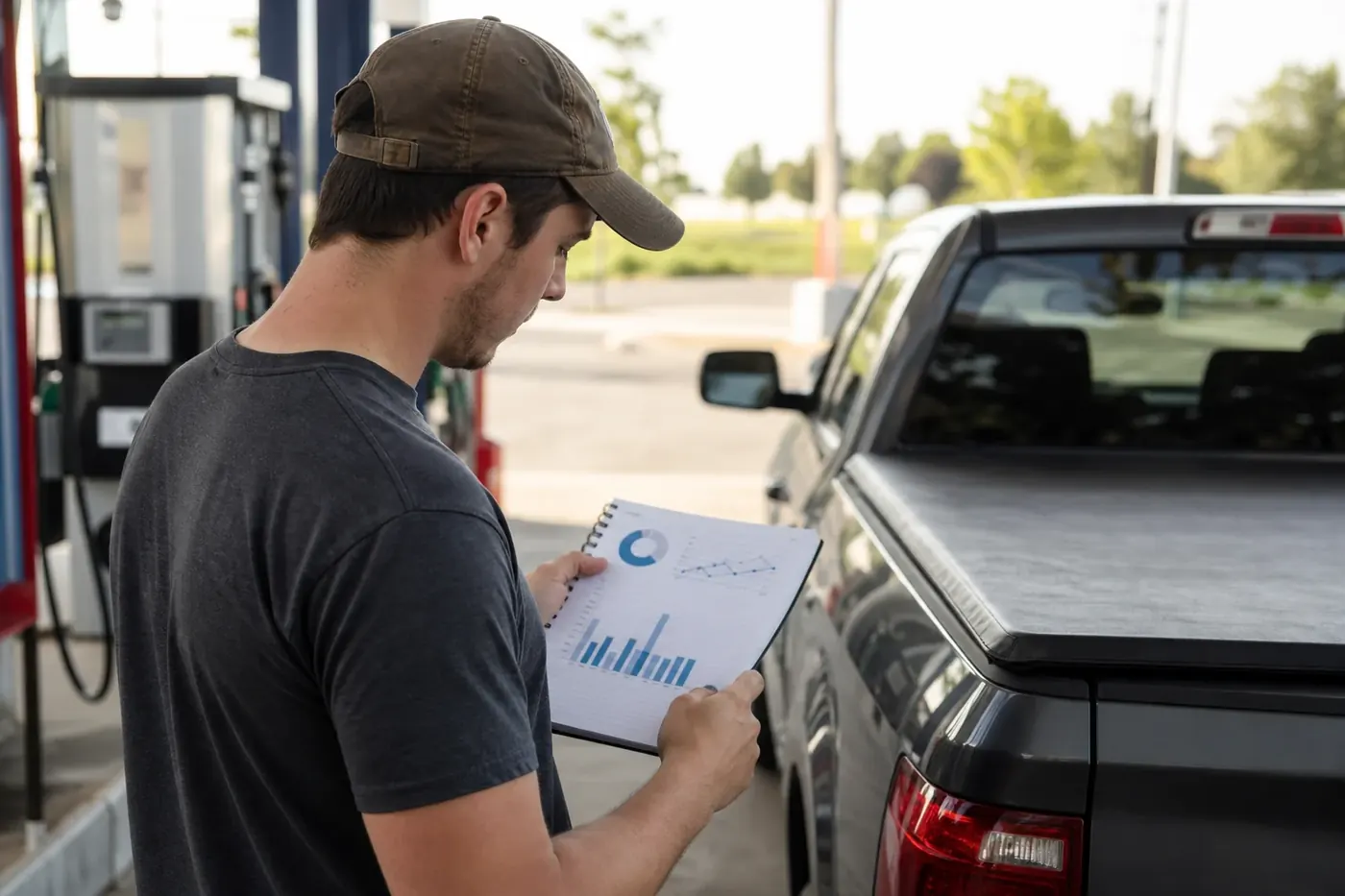
A simple test method is better than guessing:
- Record a baseline: Track at least three tanks before installation on normal routes.
- Keep variables stable: Use similar speed, tire pressure, cargo load, and fuel station when possible.
- Avoid mixed modifications: Do not install tires, racks, lifts, or heavy toolboxes during the same test.
- Separate city and highway use: A cover is more likely to show a result on steady highway trips.
- Use averages: Compare multi-tank averages instead of one best tank.
- Watch weather: Strong wind and temperature swings can distort results.
If the result is within normal variation, call it inconclusive. That is not a failure. It simply means the cover should be valued for the more certain benefits: cargo protection, privacy, security, and convenience.
Should gas mileage be the main reason to buy a tonneau cover?
Gas mileage should usually not be the main reason to buy a tonneau cover. It can be a nice secondary benefit, but the stronger reasons are cargo protection, cleaner bed use, better privacy, improved security, and a finished truck appearance.
A tonneau cover is easier to justify when it solves daily problems. If it keeps work bags dry, hides cargo during errands, protects samples, improves road-trip storage, or makes the truck look complete, then any MPG improvement is extra value. If the only reason is fuel savings, the payback may be slow or uncertain.
For product buyers, this matters in marketing. Mileage claims should be careful, not exaggerated. A responsible product page can say a low-profile cover may help reduce drag under some highway conditions, while avoiding a fixed guarantee unless the specific cover and truck configuration have been tested.
Yirox Team usually recommends positioning tonneau covers around real customer benefits first: fitment, material, sealing, access style, packaging, and batch consistency. For buyers building a product line, the pickup tonneau cover range is a practical next step for discussing cover style, sample evaluation, OEM/ODM needs, and claims that match the actual product.
If you are evaluating tonneau covers for a fleet, vehicle range, or resale program, share the truck models, cover format, driving conditions, material, and order requirements you need to support. We can help you compare suitable configurations rather than relying on a generic mileage claim.
Conclusion: Treat MPG as a possible bonus, not the whole purchase reason
Tonneau covers can improve gas mileage in some situations because they change the airflow over the pickup bed. The strongest chance of benefit is steady highway driving with a low, tight, well-fitted cover. The weakest chance is stop-and-go driving, heavy loads, poor installation, or trucks where the accessory does not improve the aerodynamic system.
The research supports caution. Pickup aerodynamics are real, but they are not simple. Different rear-bed configurations produce different drag results, and real-world fuel economy is affected by many variables outside the cover itself.
For most buyers, the best answer is balanced: a tonneau cover is worth considering for cargo protection, security, privacy, and convenience. If it also saves a small amount of fuel over time, good. Just do not let an exaggerated MPG promise distract from fit, material, hardware quality, and the way the truck is actually used.
Frequently Asked Questions
How much MPG can a tonneau cover add?
There is no guaranteed number. Some drivers report small highway gains, while others see no measurable improvement. The result depends on the truck, cover shape, speed, route, wind, load, and measurement method.
Do tonneau covers help more on the highway or in the city?
They are more likely to help on the highway because aerodynamic drag matters more at higher speeds. In city driving, acceleration, braking, idling, payload, and traffic usually dominate fuel use.
Does a soft tonneau cover save as much gas as a hard cover?
Not always. A soft cover is lighter, but it must stay tight and flat. A hard cover may present a smoother surface but adds more weight. The real result depends on the exact design and installation.
Is driving with the tailgate down better than using a tonneau cover?
For most modern pickups, driving with the tailgate down is not a reliable fuel-saving strategy and can create safety or cargo problems. A properly fitted cover is usually more practical if the goal is protected cargo and a cleaner bed profile.
Will a tonneau cover pay for itself in fuel savings?
Usually, fuel savings alone should not be expected to pay for the cover quickly. The more reliable value comes from cargo protection, privacy, security, and daily utility, with fuel economy treated as possible extra benefit.
References
[1] U.S. Department of Energy. (2026). *Driving More Efficiently*.
[2] U.S. Environmental Protection Agency. (2025). *Advanced Gasoline and Diesel Vehicles*.
[3] ASEE North Central Section. (2011). *A CFD Study of Pickup Truck Aerodynamics*.
[4] Pamukkale University Journal of Engineering Sciences. (2020). *Aerodynamic analysis of pickup truck with different rear configurations*.