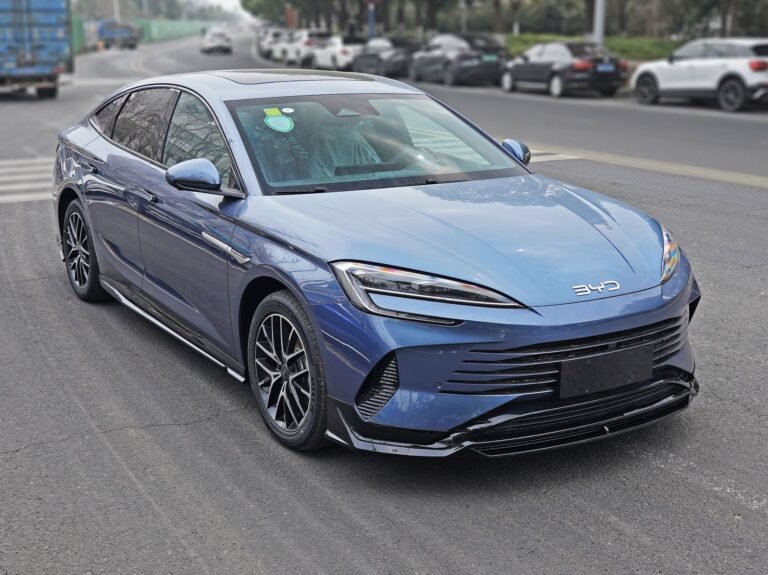




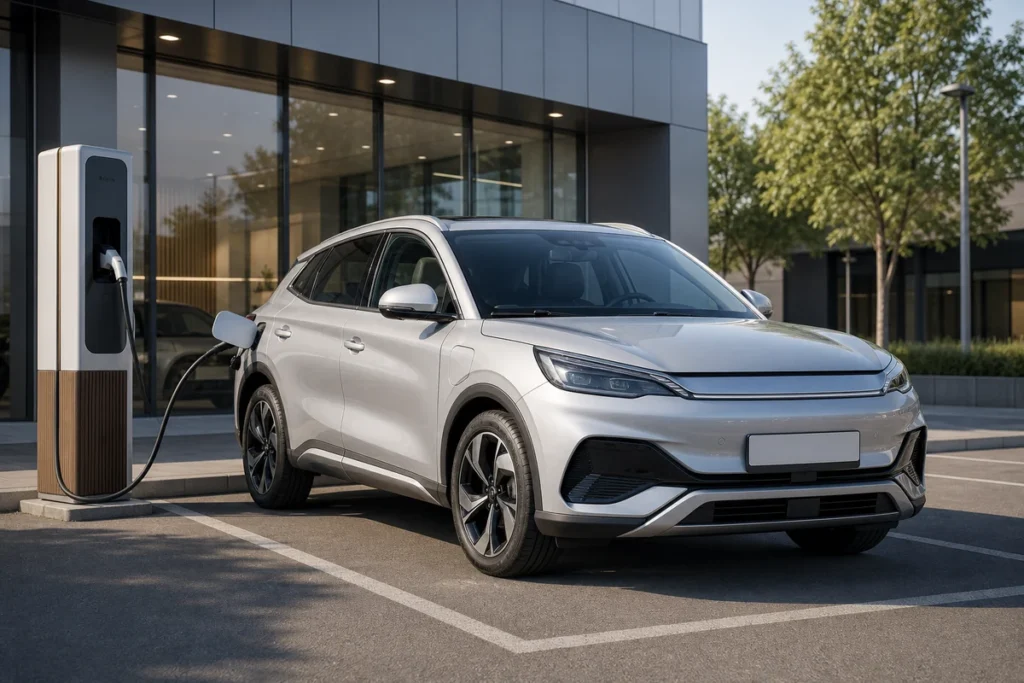
The BYD Atto 3 is a compact battery-electric SUV sold in many markets as a practical family EV, often connected with BYD’s Blade Battery technology and the company’s global new energy vehicle expansion. It is designed for daily commuting, school runs, city driving, and moderate road trips rather than extreme performance or luxury positioning.
For many buyers, Atto 3 is the first BYD model they seriously compare with Tesla, Hyundai, Kia, MG, or Volkswagen electric SUVs. It sits in a popular part of the market: high enough for easy entry and cargo use, compact enough for urban parking, and usually priced to appeal to value-conscious EV buyers.
This guide explains what the Atto 3 is, what features and specs matter, how to think about range and charging, and which accessories make the vehicle easier to live with. It also covers fitment and sourcing checks for distributors building a BYD accessory range.
Table of Contents
- What kind of vehicle is the BYD Atto 3?
- What features make the Atto 3 different from other compact EV SUVs?
- What range and battery specs should buyers know?
- How does Atto 3 charging work?
- Which accessories make sense for a BYD Atto 3?
- What should distributors check before sourcing Atto 3 accessories?
- Conclusion: the Atto 3 works best as a practical everyday EV
- Frequently Asked Questions
- References
What kind of vehicle is the BYD Atto 3?
The BYD Atto 3 is a compact electric crossover SUV, known in some contexts as part of the Yuan Plus family. It is built for everyday EV use, with the body height, rear-seat access, and cargo flexibility buyers expect from a small family SUV.
That positioning explains why the model appears in so many BYD export conversations. It is not the smallest BYD EV, and it is not the largest family vehicle either. It fills the middle: a vehicle that can handle city commuting during the week and family errands on weekends.
If a buyer is still mapping the wider BYD range, the related BYD car models guide helps explain how Atto 3 sits beside Dolphin, Seal, Han, Tang, and other BYD nameplates. That matters because BYD model names can differ by region, while accessories and charging equipment must match the local vehicle.
Atto 3 is usually compared by use case rather than pure spec-sheet bragging rights. Buyers ask whether it has enough range for the school run and commute, whether the boot is usable, whether the cabin is comfortable, and whether charging fits their local infrastructure. Those questions are more useful than asking whether the car is the most advanced EV in the segment.
What features make the Atto 3 different from other compact EV SUVs?
The Atto 3 stands out because it combines BYD’s EV platform experience, Blade Battery messaging, distinctive interior design, and compact SUV practicality. Its appeal is less about one headline feature and more about an overall value package.
Common feature themes include a modern cabin, rotating central touchscreen in many markets, driver-assistance features, heat pump availability in some versions, panoramic roof options, vehicle-to-load support in some markets, and a practical crossover body. Exact equipment varies by country and trim, so buyers should verify the local specification sheet rather than relying on a review from another region.
| Feature area | Why buyers notice it | What to confirm locally |
|---|---|---|
| Battery and platform | BYD’s Blade Battery story builds confidence | Battery size, chemistry, and warranty terms |
| Cabin technology | Large screen and modern EV controls feel current | Software language, app support, navigation, updates |
| SUV practicality | Higher seating and flexible cargo use | Boot shape, rear-seat folding, towing rules |
| Charging | Daily usability depends on local charging | AC rate, DC rate, connector type |
| Accessories | Mats, liners, cable bags, and organizers improve ownership | Exact model year and steering-side fitment |
The design is also part of the ownership experience. Atto 3’s interior has more visual personality than some minimalist EVs, which can be a strength or a drawback depending on the buyer. For accessory suppliers, that means products should look integrated rather than generic. A poorly matched cargo liner or organizer can feel especially obvious in a distinctive cabin.
What range and battery specs should buyers know?
Atto 3 range depends on the market, battery version, wheel and tire specification, driving speed, weather, and test cycle. BYD Europe lists the Atto 3 with Blade Battery technology and DC charging capability up to 88 kW, while country-specific spec sheets may show different range figures and equipment packages 1.
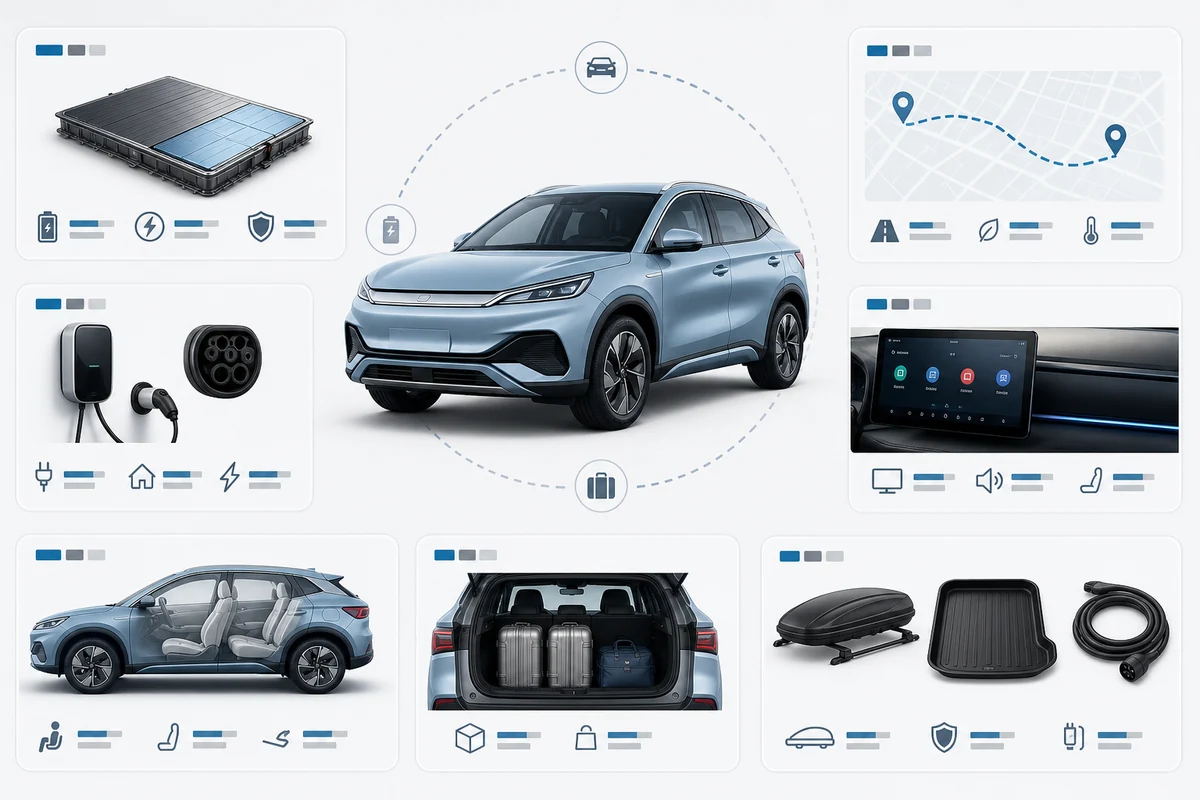
The most useful buyer habit is to separate official range from real driving range. Official WLTP or local test-cycle figures help compare vehicles, but daily results depend on highway speed, temperature, air conditioning, elevation, tire pressure, load, and driving style. A cold motorway trip with passengers and luggage will use more energy than a warm city commute.
Atto 3 is also closely tied to the Blade Battery conversation. For readers comparing battery chemistry, safety claims, and BYD’s LFP approach, the related BYD Blade Battery guide is the deeper next step. In practical terms, buyers should check usable battery capacity, warranty coverage, charging limits, and the service network in their market.
Safety ratings are another important part of the spec picture. Euro NCAP awarded the BYD Atto 3 a five-star rating in 2022 3. That does not mean every local version has identical equipment forever, but it gives buyers a useful safety benchmark when comparing compact EV SUVs.
How does Atto 3 charging work?
Atto 3 charging works like most modern EVs: slower AC charging is used for home or destination charging, while DC fast charging is used for longer trips and faster top-ups. The connector type and charging speed depend on the market version.
In many export markets, buyers will see Type 2 AC and CCS2 DC charging, but this should never be assumed globally. If the reader is still sorting connector language, the guide to EV charging cable connector types explains why a cable that fits one market may not fit another. For charging-speed expectations, the AC vs DC EV charging guide helps separate home charging from public fast charging.
The buyer’s real charging question is not only “how fast can it charge?” It is “where will I charge 80 percent of the time?” A commuter with home charging may rarely need DC fast charging. A driver without private parking may care more about public charging access, cable storage, and charging etiquette.
Charging accessories should be chosen carefully. Cable bags, wall hooks, adapters where legal, and portable charging equipment should match local electrical rules and connector standards. Cheap or unclear charging accessories can create more trouble than they solve, especially when buyers travel across regions with different infrastructure.
Which accessories make sense for a BYD Atto 3?
The best Atto 3 accessories are the ones that protect the cabin, organize charging equipment, and match the exact vehicle version. Floor mats, cargo liners, trunk organizers, charging cable bags, screen protectors, seat-back protection, and sunshades are usually more useful than decorative add-ons.
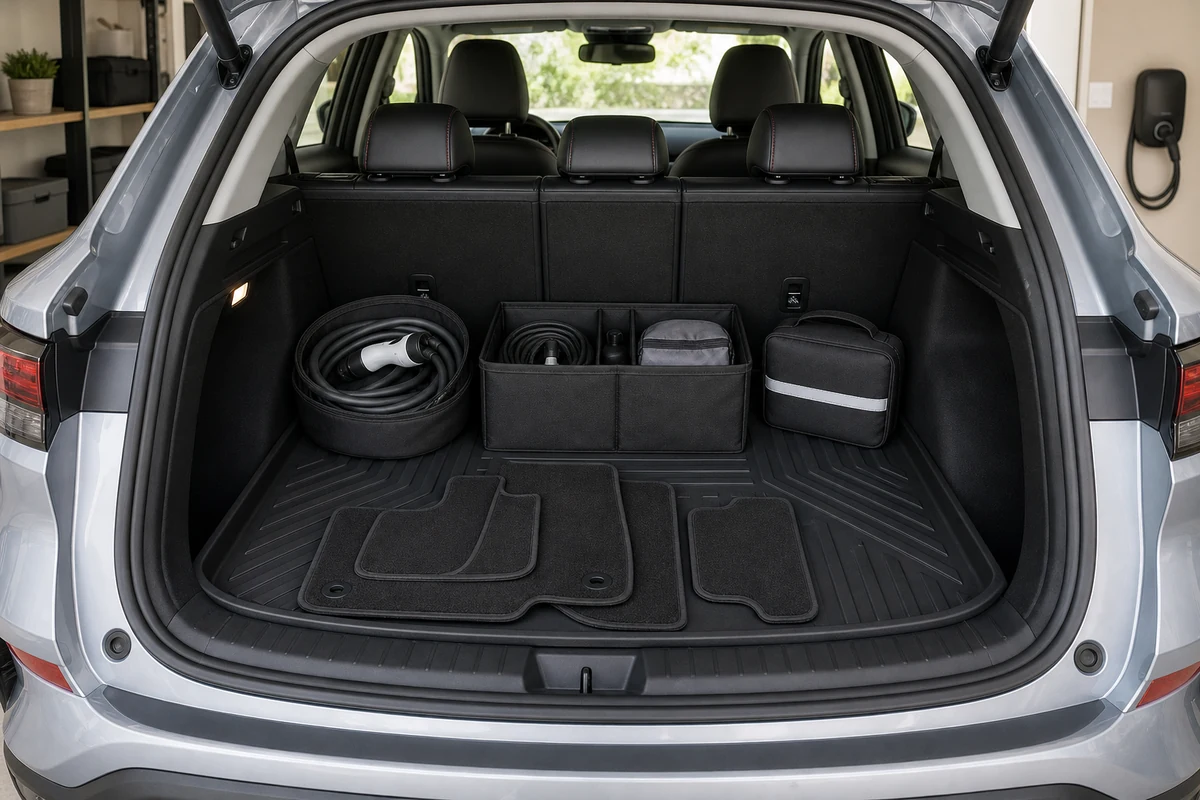
A practical Atto 3 accessory list usually starts here:
- All-weather floor mats: Protect footwells from rain, mud, road salt, dust, and family use.
- Cargo liner: Keeps the boot easy to clean after groceries, strollers, tools, pets, or charging equipment.
- Charging cable storage: Prevents wet or dirty cables from rolling around the trunk.
- Screen and console protection: Reduces scratches in a cabin with high-touch surfaces.
- Organizer trays: Keeps small items from sliding into awkward corners.
- Sunshade or window accessories: Useful in hot markets where cabin heat is a daily issue.
If the next step is building a broader ownership kit, related EV charging accessories can sit beside mats and organizers. The key is fitment discipline. A product made for an Atto 3 in one market may need checking against steering side, production year, trim, cargo floor, and local naming.
What should distributors check before sourcing Atto 3 accessories?
Distributors should check fitment, material behavior, packaging recovery, local naming, and safety clearance before sourcing Atto 3 accessories. A broad BYD accessory range only works if the product listing is clear and the customer receives the part that truly fits their vehicle.
The Yirox Team usually treats Atto 3 accessories as a sample-first category. For mats and liners, the sample should be installed in the real vehicle or a verified fixture. For organizers, the test should include seat movement, cargo cover clearance, latch access, and driving movement. For charging-related products, the product should be checked against local connector standards and certification requirements.
Common sourcing checks include:
| Check | Why it matters |
|---|---|
| Model name match | Atto 3, Yuan Plus, and local naming can confuse listings |
| Left- or right-hand drive | Driver mats, console trays, and some organizers may change |
| Material odor | EV cabins are quiet and sealed, so bad odor causes fast returns |
| Edge recovery | Folded mats and liners must regain shape after shipping |
| Packaging labels | Warehouses need clear front, rear, trunk, and frunk identification |
For buyers building a catalog across BYD, Tesla, and other new energy vehicles, related branded automotive NEV accessories provide a more focused product-category starting point. It is better to cover fewer high-demand models correctly than to list every possible accessory with weak fitment notes.
Conclusion: the Atto 3 works best as a practical everyday EV
The BYD Atto 3 is best understood as a compact electric SUV for normal daily life. It gives buyers the height and practicality of a crossover, the operating style of a modern EV, and the battery story that has made BYD more visible globally.
The smartest buying approach is to match the car to the local use case. Check the exact market specification, realistic range needs, charging connector, service support, and accessory fitment before making a decision. For distributors, the same logic applies: clear fitment, good materials, and honest product descriptions matter more than chasing every accessory trend at once.
Frequently Asked Questions
Is the BYD Atto 3 fully electric?
Yes. The BYD Atto 3 is a battery-electric compact SUV. It does not use a gasoline engine or plug-in hybrid system.
What is the real-world range of a BYD Atto 3?
Real-world range depends on speed, weather, tires, load, driving style, and local battery version. Official range figures are useful for comparison, but buyers should leave a margin for cold weather and highway driving.
Does the BYD Atto 3 use the Blade Battery?
Yes, Atto 3 is commonly associated with BYD’s Blade Battery technology. Exact battery capacity and warranty details should still be checked on the local specification sheet.
What accessories should I buy first for a BYD Atto 3?
Start with all-weather floor mats, a cargo liner, a charging cable bag, a screen protector, and basic organizers. These protect the cabin and solve real daily-use problems before cosmetic upgrades.
Is Atto 3 the same as Yuan Plus?
Atto 3 is closely related to the Yuan Plus name used in China, but fitment and specifications should be checked by local market, model year, steering side, and trim. Accessory sellers should not assume every part is interchangeable.
References
[1] BYD Europe. (2026). *BYD ATTO 3*.
[2] BYD Singapore. (2025). *2025 ATTO 3 Specification Sheet*.
[3] Euro NCAP. (2022). *BYD ATTO 3 Safety Rating*.
[4] International Energy Agency. (2025). *Global EV Outlook 2025*.