


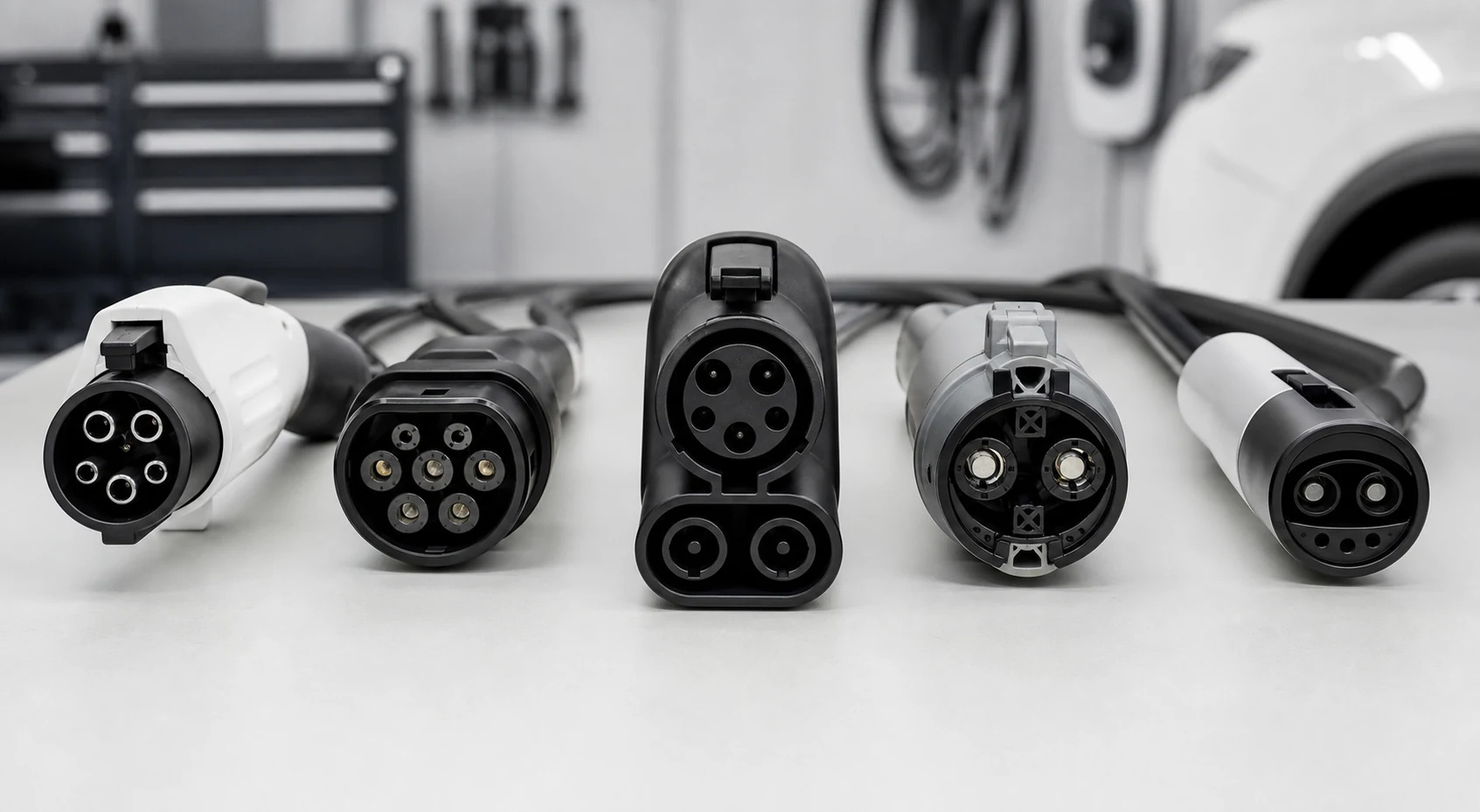
An EV charging cable is the cord and connector assembly that links an electric vehicle to charging equipment, but the right cable is defined by more than plug shape. It must match the vehicle inlet, charger outlet, charging current, AC or DC power flow, local standards, and the way the driver will actually use it.
Table of Contents
- What does an EV charging cable actually do?
- Which 5 EV charging connector types should you know?
- How are AC charging cables different from DC fast charging cables?
- How do you choose the right EV charging cable?
- What cable length and amperage should you pick?
- Can you use an EV charging adapter instead of a new cable?
- What quality details matter before buying EV charging cables in bulk?
- What should retailers and distributors check before ordering EV charging cables?
- Conclusion: Choose the cable by vehicle, charger, and real-world use
- Frequently Asked Questions
- References
What does an EV charging cable actually do?
A cable-only product is not the same as a complete portable EVSE. The portable EV charger guide separates the wall plug, in-cable control box, cable, and vehicle connector and includes three energy calculations plus a supplier verification sheet.
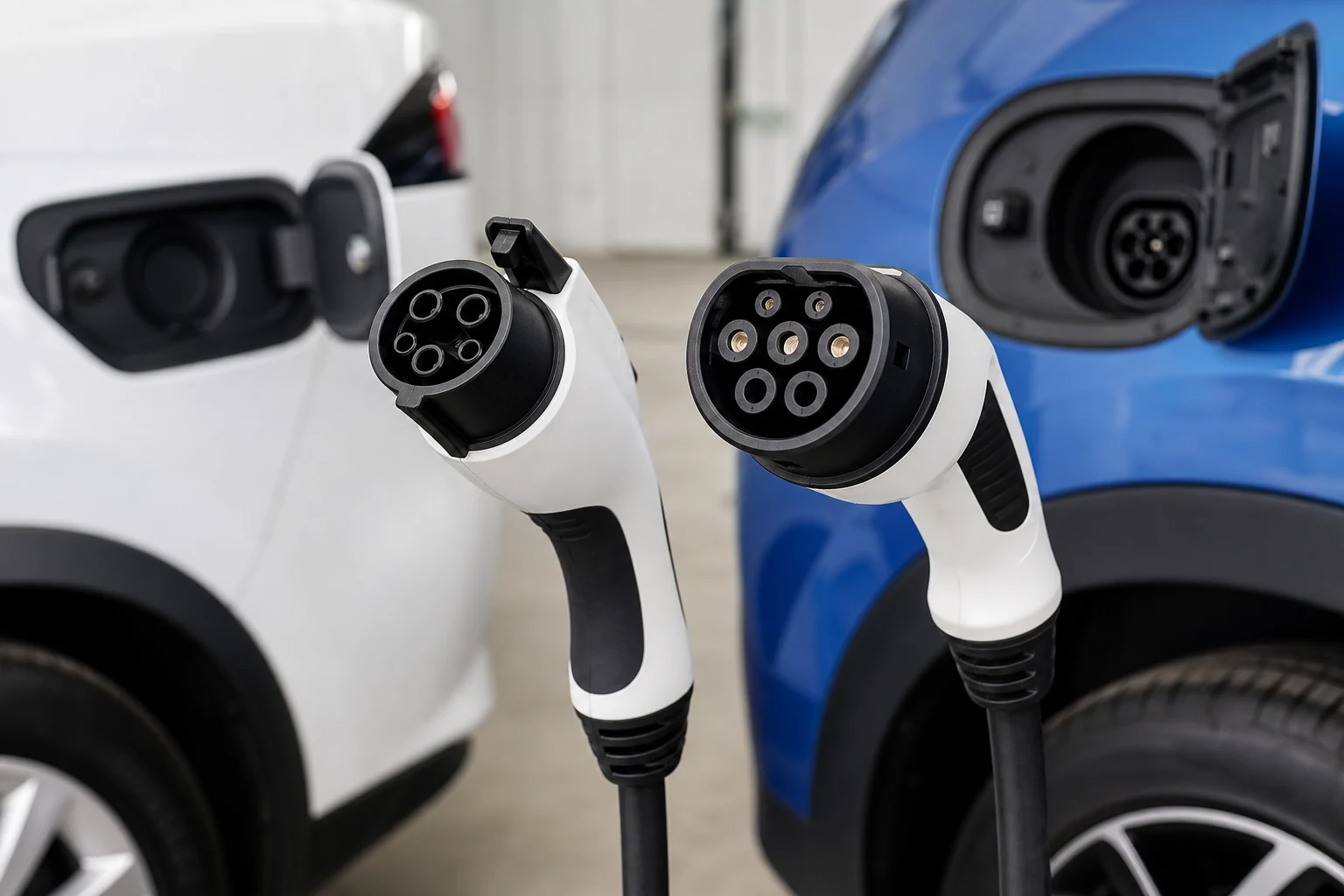
An EV charging cable carries power between the charging equipment and the vehicle while helping both sides confirm that the connection is safe. The connector pins, cable rating, locking design, and control signals all work together before and during charging.
In everyday language, people often call a portable EVSE, wallbox lead, or public charger lead an “EV charging cable.” Technically, the cable is only part of the charging system. Charging equipment controls power delivery, while the vehicle manages battery charging.
For AC charging, the vehicle’s onboard charger converts the supplied AC to DC for its battery. For DC fast charging, the station performs that conversion. Check the exact station connector and vehicle capability before selecting a cable or adapter; the AFDC distinguishes the equipment and connector families.1
This distinction matters for product selection. A detachable Type 2 cable used at a European AC post, a portable Level 1 cordset, and a DC fast charging cable are not interchangeable products.
Which 5 EV charging connector types should you know?
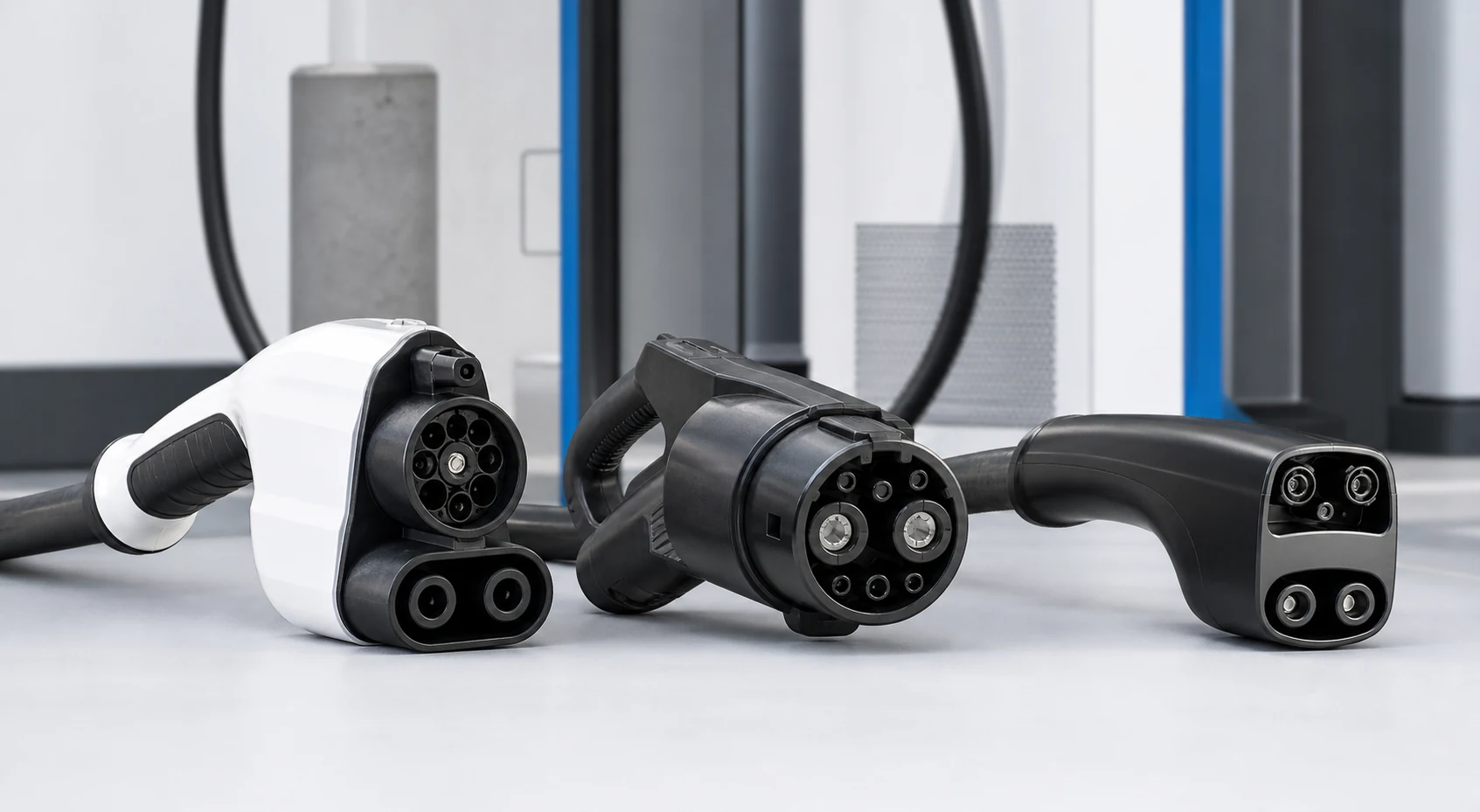
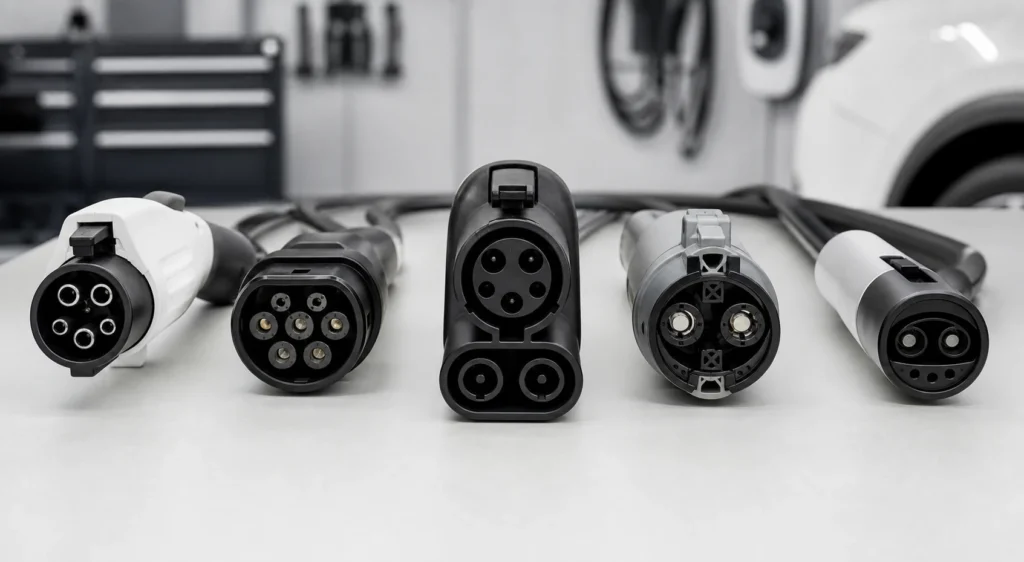
The five connector families to understand are Type 1/J1772, Type 2/Mennekes, CCS, CHAdeMO, and NACS/J3400. Type 1 and Type 2 are mainly AC charging connectors, while CCS, CHAdeMO, and NACS are more closely associated with DC fast charging or combined AC/DC use.
| Connector type | Main charging role | Common market fit | Best-known use case | Main buying caution |
|---|---|---|---|---|
| Type 1 / SAE J1772 | AC charging | North America, Japan, some imported EVs | Home, workplace, and public Level 1/Level 2 charging | Not a DC fast charging connector by itself |
| Type 2 / Mennekes | AC charging | Europe and many IEC-based markets | Home wallboxes and public AC posts | Cable rating and three-phase compatibility matter |
| CCS1 / CCS2 | AC inlet plus DC fast charging pins | CCS1 in North America, CCS2 in Europe and many global markets | Public DC fast charging | Must match CCS version and vehicle capability |
| CHAdeMO | DC fast charging | Legacy Japanese EVs and some older infrastructure | Older Nissan Leaf and similar vehicles | Less future-facing in many new charging networks |
| NACS / SAE J3400 | AC and DC charging through one compact coupler | Tesla and growing North American adoption | Tesla charging and wider North American transition | Adapter and network access rules still matter |
The Alternative Fuels Data Center explains that Level 1 and Level 2 AC charging have historically used the same SAE J1772 connector in the United States, while public DC fast charging may require CCS, CHAdeMO, or NACS depending on the vehicle and station 2. That is a useful mental model: AC cables are often owned and handled by drivers, while many DC fast charging cables are fixed to the charger.
When is Type 1 or J1772 the right connector?
Type 1, commonly called SAE J1772 or the J plug, is the familiar AC charging connector for many non-Tesla EVs in North America. It is widely used for Level 1 and Level 2 charging at homes, workplaces, hotels, parking lots, and public AC charging points.
This connector is easy to misunderstand because it is part of the CCS1 shape. A CCS1 vehicle inlet includes the J1772-style upper section for AC charging, plus two larger lower pins for DC fast charging. A plain J1772 cable can charge through the upper section only.
For buyers, Type 1 products are still important because many vehicles on the road use J1772 for routine charging. Portable chargers, replacement AC cables, adapter kits, wallbox leads, and branded charging accessories may all involve this connector. The key is to specify current rating, plug type on the power-source side, cable length, outdoor suitability, and any market certification requirements clearly.
For a Type 1 vehicle using a Type 2 station socket, compare the Type 1 to Type 2 cable connection and current-rating checks. Identify the station plug separately from the vehicle connector before ordering.
When is Type 2 or Mennekes the better choice?
Type 2, often called Mennekes, is the standard AC connector in Europe and many other IEC-based markets. It is widely used on home wallboxes, public AC charging posts, commercial parking chargers, hotels, apartment buildings, and workplace charging systems.
Type 2 supports single-phase and three-phase AC configurations, but the cable’s wiring and current rating must match the intended use. IEC 62196-2:2025 replaces the 2022 edition and covers standardized AC interface dimensions; its public scope does not establish that an individual product is certified.5 Record the standard edition and actual model on supporting documentation.
For retail and distribution, Type 2 cables are a real accessory category because many public AC chargers in Europe are untethered. Drivers may need to bring their own Type 2-to-Type 2 cable, which creates demand for different lengths, amperage ratings, jacket materials, storage bags, and packaging options.
For a Type 2 car using a Type 2 AC station socket, compare the Type 2 cable phase and current-rating checks. The differences between 7.4, 11 and 22 kW labels matter when moving between single-phase and three-phase charging points.
Why does CCS matter for fast charging?
CCS, or Combined Charging System, matters because it lets one vehicle inlet support AC charging and DC fast charging through a combined connector layout. CCS1 combines a Type 1/J1772-style upper section with two DC pins, while CCS2 combines a Type 2-style upper section with two DC pins.
For drivers, CCS is usually the fast-charging connector they meet at public stations when the vehicle is not using NACS or CHAdeMO. The U.S. Department of Transportation describes CCS as common on vehicles made in North America and Europe, while CHAdeMO is more associated with Japanese-manufactured vehicles 3.
For accessory buyers, CCS is more demanding than a simple AC cable category. High-power DC connector assemblies must handle heat, current, locking, communication, environmental exposure, and repeated use at public chargers. Even when an adapter is involved, compatibility depends on the vehicle, station, charging network, and approved use case.
Is CHAdeMO still relevant?
CHAdeMO is still relevant for some older EVs and charging sites, but it is more of a legacy or specialized fast-charging connector in many markets. It is a DC fast charging system, not a general AC cable for home charging.
The connector is best known through older Japanese EVs, especially earlier Nissan Leaf models. Some charging stations still provide CHAdeMO plugs, and some used-EV owners rely on them. That means it should not be ignored, especially by repair shops, fleet managers, used-EV dealers, and regional accessory sellers who serve vehicles already on the road.
The caution is inventory planning. CHAdeMO-related products may sell well in a specific niche, but they should not automatically be treated as a broad future-facing product line. Before ordering in bulk, check local vehicle population, charging infrastructure, and replacement demand.
Why is NACS or SAE J3400 becoming so important?
NACS/J3400 supports AC single-phase and DC transfer through a compact coupler. SAE’s J3400_202409 revision updates the original December 2023 document. Use the applicable product documentation and revision for the purchase specification rather than treating the historical issue date as a compatibility guarantee.4
The public SAE scope describes coupler requirements for AC or DC transfer.4 It does not authorize every adapter, vehicle, or charging-network combination. Verify the named vehicle, charger, operating mode, and network permissions separately.
Still, the transition is not instant. Vehicle model year, onboard software, charging network permissions, approved adapters, and whether the session is AC or DC all affect compatibility. A NACS-to-J1772 adapter for AC charging is not the same product as a NACS-to-CCS adapter for DC fast charging.
How are AC charging cables different from DC fast charging cables?
AC charging cables are usually used for routine charging at home, work, or destination charging points, while DC fast charging cables are designed for much higher power and are often permanently attached to the charging station. The difference is not only speed; it changes the cable’s construction, handling, safety requirements, and customer category.
Most drivers who “buy an EV cable” are buying an AC charging product. That might be a portable Level 1 cordset, a Level 2 portable charger, or a detachable Type 2 cable for public AC charging. These products are handled often and judged by everyday details such as flexibility, plug feel, labeling, and whether the cable coils neatly.
DC fast charging cables are different. They may carry far more current, may require thermal management, and are part of a larger station-controlled charging system. At highway charging sites, the driver usually handles the connector but does not own the cable. The charging station, network, and vehicle communicate to manage the session.
This is why a buyer should not compare AC and DC cables only by price or connector name. A Type 2 AC cable, a CCS2 fast charging connector assembly, and a NACS adapter each need different specifications, test plans, and after-sales support.
How do you choose the right EV charging cable?
Cable and connector ratings define what the hardware can carry; they do not prove that the building can supply every charger at maximum output. Multi-charger sites should complete an EV charging load management calculation before treating connected charger ratings as simultaneous demand.
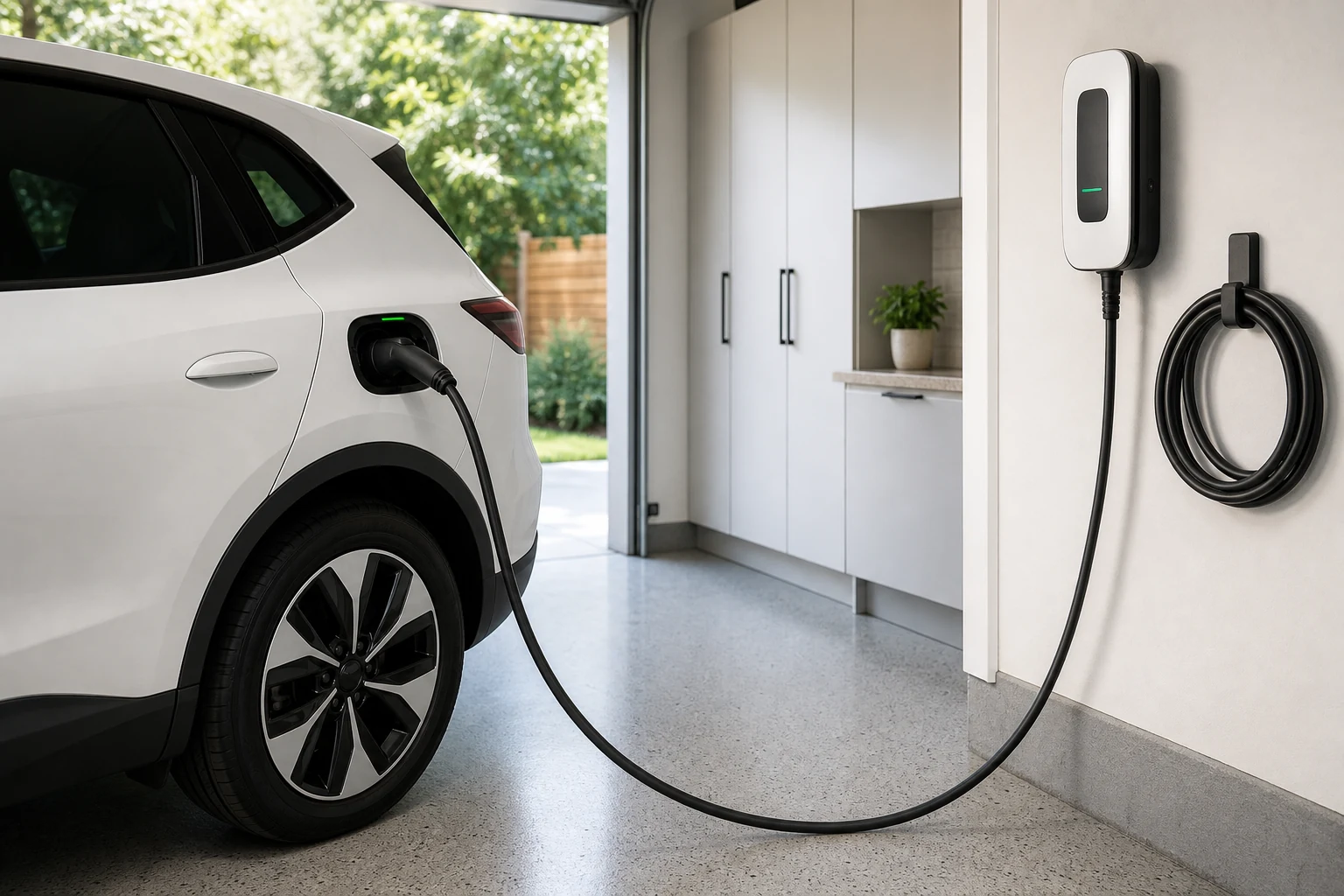
Choose an EV charging cable by matching the vehicle inlet, charger outlet, charging mode, current rating, cable length, outdoor conditions, and market certification needs. If one of those pieces is wrong, the cable may not fit, may charge slower than expected, or may create a safety and returns problem.
For portable EVSE, the cable rating is only one part of the approval decision. The adjustable-current portable EV charger buying and test guide shows how to match the selected current with the pilot limit, plug temperature, cable temperature, connector, and fault-response evidence.
Start with the vehicle and region. A North American non-Tesla EV may use J1772 for AC charging and CCS1 for DC fast charging. A European EV will often use Type 2 for AC and CCS2 for DC. A Tesla or newer North American EV may use NACS/J3400, but adapter requirements can vary by model and charger network.
Then check the charger side. Some AC chargers are tethered, meaning the cable is permanently attached. Others provide only a socket, so the driver needs a separate cable. That difference is especially important in Europe, where bring-your-own Type 2 cables are common at public AC posts.
Use this practical checklist before selecting a product:
- Connector match: Confirm the vehicle-side connector and charger-side connector separately.
- AC or DC use: Do not use an AC adapter or cable for a DC fast charging need.
- Current rating: Match the cable rating to the charger and vehicle capability.
- Cable length: Choose enough reach for real parking positions without making the cable heavy and awkward.
- Outdoor durability: Check jacket material, water resistance, dust resistance, UV exposure, and low-temperature flexibility.
- Certification and labeling: Confirm the marks, manual language, plug type, and documentation needed for the destination market.
- Storage and handling: Consider bag, hook, connector cap, and cable memory.
- Customer support risk: Use clear compatibility wording to prevent wrong orders.
For companies selling branded automotive NEV accessories, the best cable is not only technically correct. It also needs clean packaging, consistent labeling, clear fitment guidance, and a repeatable quality-control process.
Which fields prevent the wrong cable order?
| Order field | Record explicitly |
|---|---|
| Connection direction | Station-side plug and vehicle-side connector, separately |
| Product kind | Detachable AC lead, complete portable EVSE, tethered replacement assembly, or DC assembly |
| Electrical configuration | AC/DC, rated voltage, current per phase, and populated phase conductors |
| Compatibility | Exact vehicle inlet/model and station socket; approved adapter if applicable |
| Use conditions | Cable length, permitted exposure states, temperature range and storage |
| Evidence | Product code, standard edition, matching reports/marks, labels and lot traceability |
A three-phase station does not make a Type 1 vehicle charge on three phases. For a socketed Type 2 AC station and a compatible Type 1 car, specify a purpose-built station-Type-2 to vehicle-Type-1 lead; a Type 2-to-Type 2 cable alone will not fit the vehicle. Keep the two linked cable guides above with this connection record.
What cable length and amperage should you pick?
The best cable length is the shortest length that still reaches the vehicle comfortably in normal parking positions. The best amperage is the rating that matches the charger output, vehicle onboard charger capability, and local electrical rules.
For home use, a cable that is too short becomes annoying quickly. Port locations vary: some vehicles charge from the front, others from the rear quarter panel, and some households park nose-in one day and back-in the next. A slightly longer cable may prevent daily frustration, especially in a shared driveway or two-EV household.
But longer is not always better. Long cables add weight, storage bulk, shipping cost, and handling effort. For consumer products, a mainstream length plus one longer option is often easier to sell than a confusing spread of many lengths.
Amperage should be treated with the same discipline. If a vehicle’s onboard charger cannot use a higher current, an oversized cable may not improve charging speed. If a cable is underrated, it is not acceptable even if the plug fits. A good listing should explain the current rating, voltage range, plug type, and compatible use scenario in plain English.
Can you use an EV charging adapter instead of a new cable?
An adapter can solve specific connector mismatches, but it should never be treated as a universal shortcut. It must match the vehicle, charger, AC or DC charging mode, current and voltage rating, communication behavior, and manufacturer guidance.
Adapters are common because the market is changing. Some drivers need J1772-to-NACS adapters for AC destination charging. Others need approved NACS-to-CCS adapters for DC fast charging access. In Europe and other Type 2 markets, adapters may appear in travel and imported-vehicle situations.
The important point is that AC and DC charging are different systems. Connector shape does not tell the whole story. For sellers, adapter listings need conservative compatibility language, not broad promises.
If a customer asks whether one adapter will work with “all Tesla chargers,” “all CCS chargers,” or “all EVs,” the answer is usually no. Compatibility depends on vehicle support, charger type, network access, approved firmware, and charging level.
What quality details matter before buying EV charging cables in bulk?
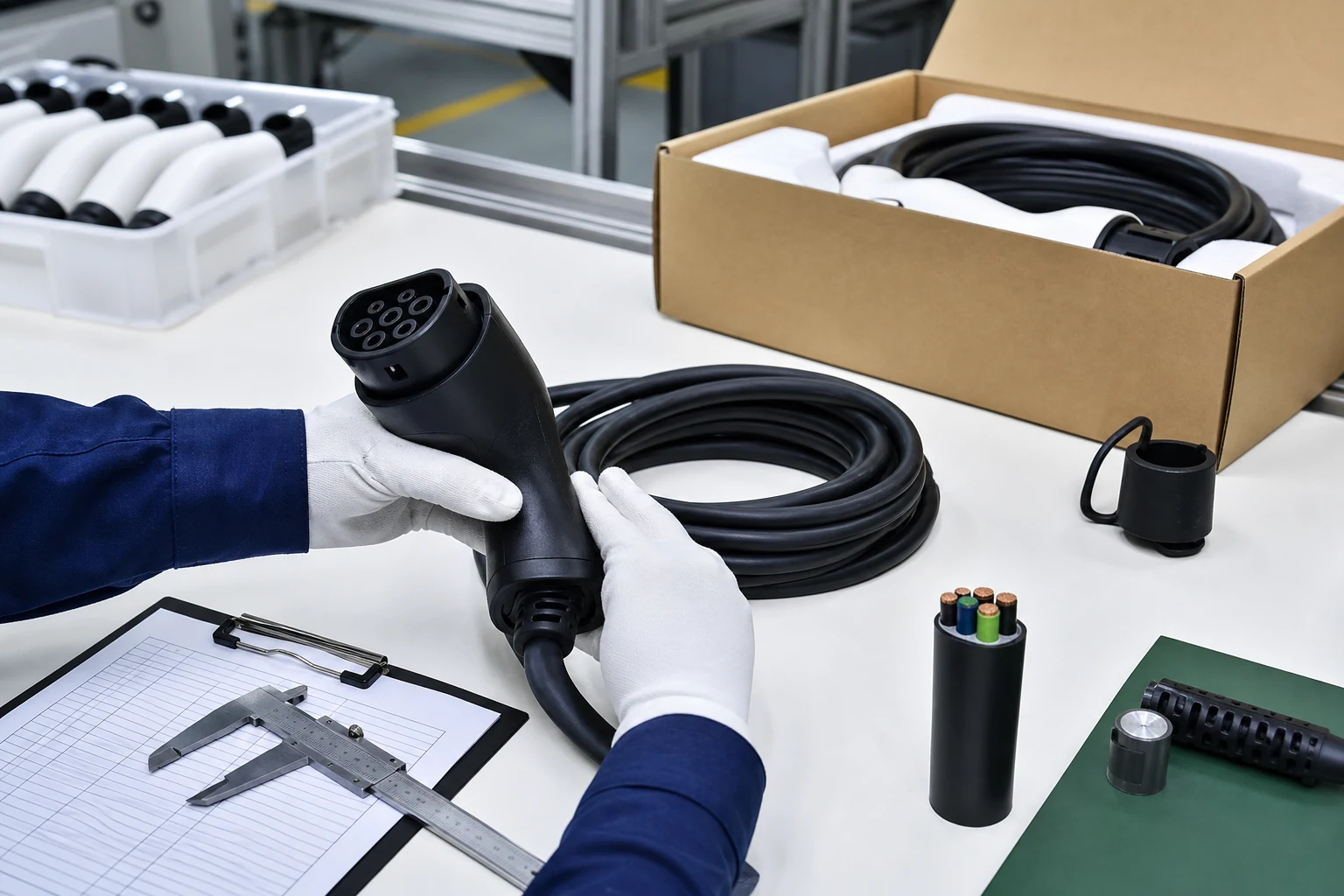
Before buying EV charging cables in bulk, check connector fit, contact quality, jacket material, strain relief, waterproofing, temperature performance, labeling, testing, and packaging consistency. EV charging cables are power products that customers touch frequently, so small quality issues become visible quickly.
Connector fit is the first physical detail. The plug should insert smoothly, lock correctly where applicable, and release without excessive force. The molded shell should feel solid, the pins should be cleanly aligned, and the grip should be easy to handle.
Cable jacket quality is just as important. A cable that feels flexible in a warm office may become stiff in winter. A cable used outdoors may face rain, dust, sunlight, mud, and repeated dragging across concrete. For many markets, a durable jacket and good strain relief are more persuasive than a slightly lower unit cost.
Keep connector-fit, continuity, insulation, marking, and packaging records tied to the exact cable code and lot. Specify the applicable test method and acceptance limits with the product requirements; appearance or a certification logo is not a substitute for matching documentation.
Packaging also deserves attention. Retail buyers need clear connector labels, cable ratings, warning language, and storage instructions. Distributors may need barcodes, carton marks, batch numbers, and private-label artwork.
What should retailers and distributors check before ordering EV charging cables?
Retailers and distributors should confirm the target region, vehicle mix, connector demand, certification requirements, packaging language, after-sales policy, and whether the product fits the rest of their automotive accessory catalog. EV charging cables should be planned around real customer use, not around a generic plug list.
For North America, the transition toward NACS/J3400 changes product planning, but it does not erase existing J1772 and CCS vehicles overnight. For Europe, Type 2 and CCS2 remain central to most everyday cable decisions. For legacy EV communities, CHAdeMO can still create demand, but usually in a narrower product lane.
Think about customer type. A retail driver wants a simple fitment answer. A fleet buyer wants durability and replacement consistency. An installer wants documentation and fewer callbacks. A brand owner wants private-label packaging, stable supply, and clear warranty terms.
For OEM/ODM programs, ask for more than a price sheet. Confirm connector molds, cable jacket options, plug ratings, manual support, logo placement, carton design, sample testing, and production lead time.
Conclusion: Choose the cable by vehicle, charger, and real-world use
An EV charging cable is the visible part of a larger charging system, but choosing one correctly requires a full compatibility check. Type 1/J1772 and Type 2 are mainly AC charging connectors. CCS combines AC inlet compatibility with DC fast charging pins. CHAdeMO remains useful for some legacy fast-charging needs. NACS, standardized through SAE J3400, is becoming a major North American connector for both AC and DC charging.
For drivers, the safest path is to match the vehicle inlet, charging equipment, AC or DC use case, cable rating, and parking layout. For retailers and distributors, the stronger path is to choose products with clear specifications, stable quality control, reliable packaging, and careful compatibility language.
Frequently Asked Questions
1. Is an EV charging cable the same as an EV charger? Not exactly. The cable is the cord and connector assembly, while the charger or EVSE controls power delivery. In casual speech, people often call a portable EVSE an EV charging cable because the cable is the part they handle.
2. What EV charging cable do I need for home charging? You need a cable or portable charger that matches your vehicle inlet, home power supply, and charging current. In North America, many vehicles use J1772 or NACS for AC charging; in Europe, Type 2 is the common AC choice.
3. Can I use a Type 2 cable on a Type 1 car? A Type 2-to-Type 2 lead will not connect directly to a Type 1 vehicle inlet. A purpose-built lead with a Type 2 station plug and a Type 1 vehicle connector can serve a compatible socketed AC station, subject to the vehicle and equipment instructions. It uses the supported single-phase connection and must have the correct current rating. This is not a DC conversion or an extension for a tethered station lead. Check both ends before ordering.
4. Is CCS the same as Type 2? No. CCS2 uses the Type 2 upper connector shape plus two additional DC pins for fast charging. A Type 2 AC cable and a CCS2 DC fast charging connector serve different charging roles.
5. Is CHAdeMO obsolete? CHAdeMO is not gone, but it is more specialized in many markets than it used to be. It still matters for some older Japanese EVs and existing fast-charging stations.
6. Is NACS only for Tesla? No. NACS began as Tesla’s connector design, but SAE J3400 standardization and wider automaker adoption have made it a broader North American connector direction. Compatibility still depends on the vehicle, charger, adapter, and network access.
7. What length EV charging cable is best? Choose the shortest cable that comfortably reaches your vehicle in normal parking positions. Longer cables add flexibility but also add weight, storage bulk, and handling effort.
8. Can I use an extension cord with an EV charging cable? Many safety authorities and charger makers warn against using ordinary extension cords for EV charging. EV charging creates sustained electrical load, so the safer choice is properly installed charging equipment and a cable designed for the job.
9. What is the most important specification for bulk EV cable orders? Connector type is the first filter, but current rating, certification, jacket material, cable length, packaging language, and quality testing are just as important. Bulk buyers should verify the full product specification before approving production.
References
[1] U.S. DOE Alternative Fuels Data Center. “Electric Vehicle Charging Stations: equipment and connector types.”
[2] U.S. DOE Alternative Fuels Data Center. “Electric Vehicles for Consumers.”
[3] U.S. Department of Transportation. “Charger Types and Speeds.”
[4] SAE International. “J3400_202409: North American Charging System for Electric Vehicles, public scope.”
[5] IEC. “IEC 62196-2:2025: AC interface dimensional compatibility, public scope.”