



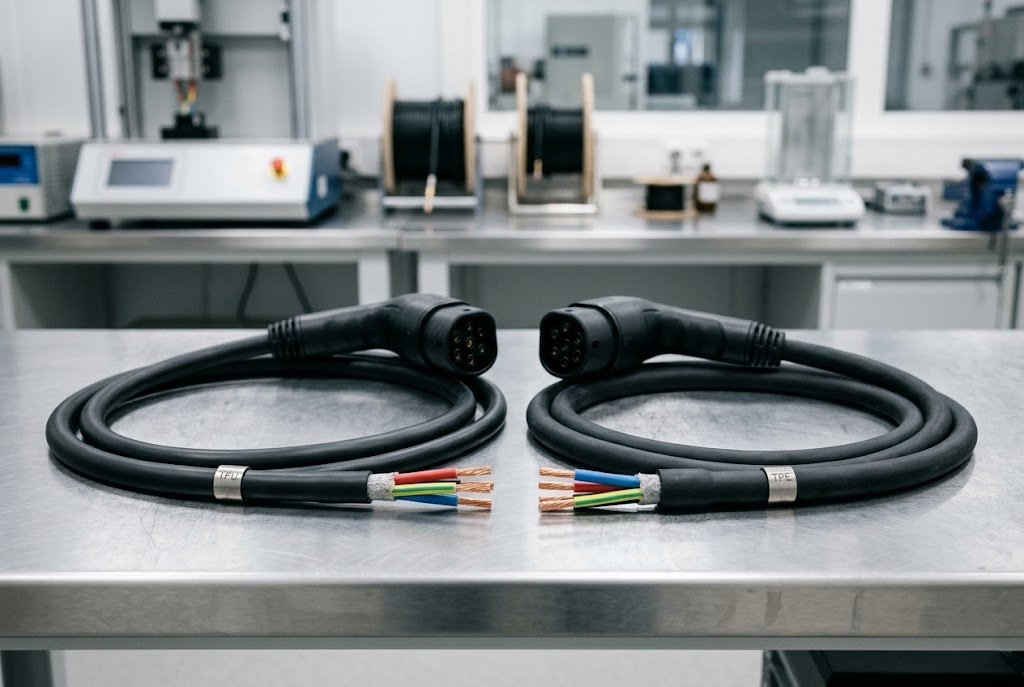
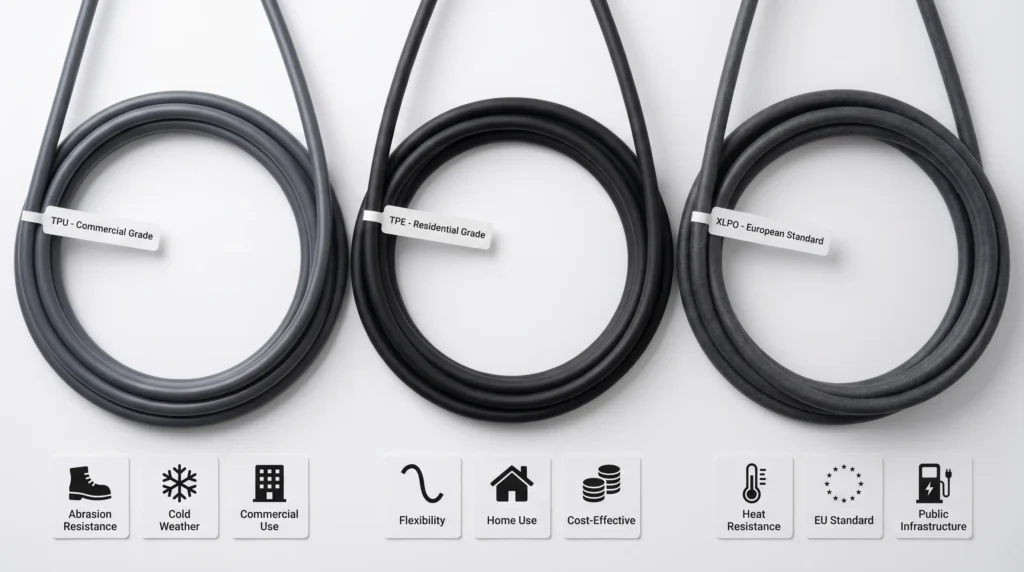
The short answer: If you are sourcing EV charging cables for commercial fleets, public charging stations, or cold-climate regions like Scandinavia and Canada, TPU (Thermoplastic Polyurethane) is the superior choice due to its exceptional abrasion resistance and low-temperature flexibility (-50°C). If you are targeting the residential home-charging market where cost-effectiveness and everyday flexibility are the priorities, TPE (Thermoplastic Elastomer) is a highly capable and economical alternative. For B2B distributors, understanding these material differences is critical to building a profitable, market-specific product portfolio with Yirox Auto Parts.
The global electric vehicle (EV) charging cable market is experiencing explosive growth, projected to surge from USD 1.3 billion in 2023 to USD 3.9 billion by 2030, registering a CAGR of 16.7% [1]. As the market matures, the conversation among B2B buyers—distributors, charge point operators (CPOs), and OEM brands—has shifted from basic connector compatibility to long-term durability and material science.
The outer jacket (sheath) of an EV charging cable is its first line of defense against the elements. It must withstand UV radiation, freezing temperatures, chemical exposure, and the daily physical abuse of being dragged across concrete. In the current manufacturing landscape, two materials dominate the conversation: TPU and TPE.
In this comprehensive guide, we will dissect the technical differences between TPU and TPE, introduce the premium European standard (XLPO), and provide a strategic decision-making matrix to help you choose the right material for your specific target market.
What Are TPU and TPE? A Material Science Overview
Before diving into performance metrics, it is essential to understand what these materials actually are. Both belong to the broader family of thermoplastic elastomers—materials that combine the processing advantages of plastics with the flexibility of rubber.
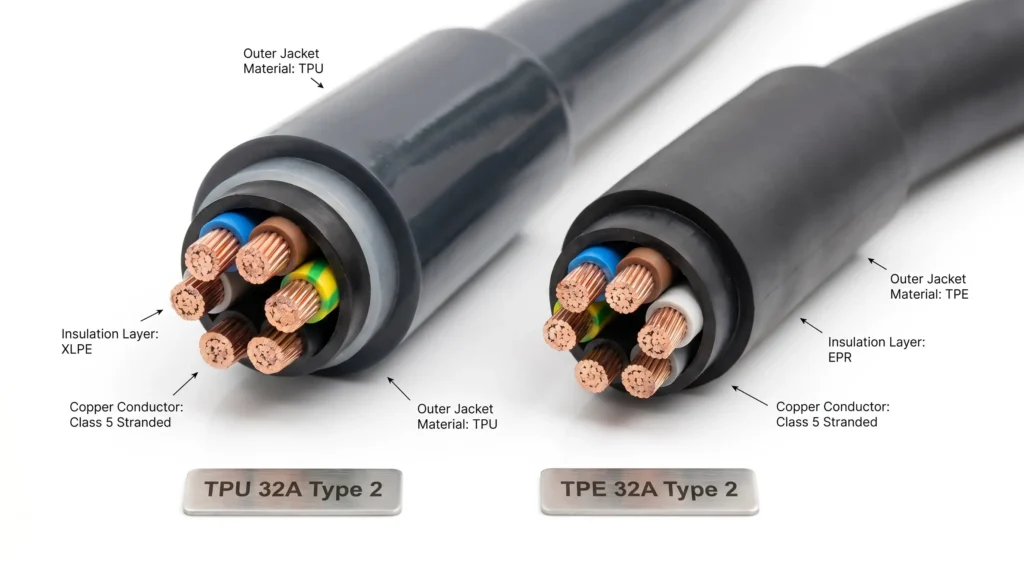
TPE (Thermoplastic Elastomer): Often referred to as thermoplastic rubber, TPE is a physical mix of polymers (usually a plastic and a rubber). It is highly versatile, easy to process, and offers a soft, smooth tactile feel. TPE is widely used in consumer electronics, automotive interiors, and standard EV charging cables. It is known for being cost-effective and highly recyclable [2].
TPU (Thermoplastic Polyurethane): TPU is a specific, high-performance subset of the TPE family. It is a block copolymer consisting of alternating hard and soft segments. This unique molecular structure gives TPU an extraordinary combination of high elasticity and extreme toughness. For EV charging cables, manufacturers typically use polyether-based TPU, which offers superior hydrolysis resistance (protection against water degradation) and low-temperature flexibility compared to standard polyester TPU [3].
Core Performance Showdown: TPU vs. TPE
When evaluating EV charging cables for B2B procurement, you must look beyond the marketing brochures and examine the raw technical data. Here is how TPU and TPE compare across the most critical performance metrics.
1. Abrasion and Tear Resistance (The Durability Factor)
This is the single most important metric for cables used in public or commercial settings. When a cable is repeatedly dragged across rough asphalt or accidentally run over by a vehicle, its tear strength determines whether the internal conductors become dangerously exposed.
- TPU: Considered the industry benchmark for durability. TPU has a tear strength of up to 80 kN/m and exceptional abrasion resistance. It is highly resistant to cuts, punctures, and mechanical wear [3].
- TPE: Offers good abrasion resistance, sufficient for normal residential use, but its tear strength is significantly lower (typically around 30 kN/m). Under heavy commercial use, a TPE jacket will degrade and fray much faster than TPU.
2. Low-Temperature Flexibility (The Cold Weather Factor)
In cold climates, inferior plastics become stiff, brittle, and prone to cracking when uncoiled.
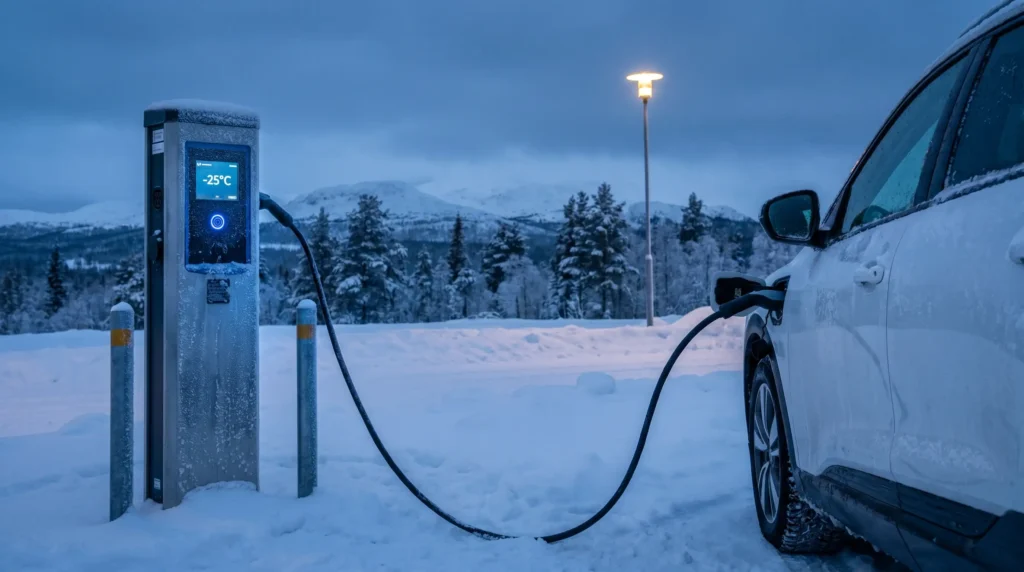
- TPU: Polyether TPU maintains its flexibility and structural integrity at temperatures as low as -50°C, with a brittle temperature of -70°C [3]. This makes it the undisputed champion for Nordic, Canadian, and Russian markets.
- TPE: High-quality TPE performs well down to -40°C, which is adequate for most temperate and moderately cold regions, but it will feel noticeably stiffer than TPU in extreme freezing conditions.
3. Chemical and Oil Resistance
EV cables are frequently exposed to automotive fluids, road salts, and cleaning chemicals.
- TPU: Exhibits excellent resistance to oils, greases, and a wide range of solvents. It does not swell or degrade when exposed to common automotive chemicals.
- TPE: Has moderate oil resistance. Prolonged exposure to harsh chemicals or pooling automotive oils can cause TPE to soften or degrade over time.
4. UV and Weather Resistance
Since charging cables live outdoors, UV degradation is a primary cause of premature failure, leading to discoloration and micro-cracking.
- TPU: Formulated with UV stabilizers, TPU offers outstanding long-term weather resistance. It resists surface aging and hydrolysis (water damage) exceptionally well, ensuring a lifespan of 5 to 10 years even in high-sunlight environments.
- TPE: Also offers good UV resistance, but generally degrades faster than TPU under intense, prolonged sun exposure.
The Premium Alternative: Introducing XLPO
While TPU and TPE dominate the outer jacket conversation, professional B2B buyers should also be aware of XLPO (Cross-linked Polyolefin).
XLPO is primarily used as the inner insulation layer surrounding the copper conductors, but it is sometimes used as an outer jacket in highly specialized applications. XLPO undergoes an irradiation cross-linking process that fundamentally changes its molecular structure, giving it incredible heat resistance (up to 125°C) and excellent electrical insulation properties [3].
The European Premium Standard: In the high-end European market, the gold standard for EV charging cables is a hybrid approach: XLPO for the inner conductor insulation + TPU for the outer jacket. This combination delivers the ultimate balance of electrical safety (XLPO) and mechanical durability (TPU). When sourcing Type 2 to Type 2 EV charging cables for the EU market, this is the specification you should demand.
Technical Data Comparison Table
To summarize the technical differences, here is a comparative data matrix based on industry testing standards [3]:
| Property | Unit | TPE | Polyether TPU | XLPO (Insulation) |
|---|---|---|---|---|
| Tensile Strength | MPa | 10–20 | 25–50 | 10–20 |
| Elongation at Break | % | 300–700 | 500–800 | 150–300 |
| Low Temp Resistance | °C | -40 | -50 | -25 |
| Tear Strength | kN/m | 30 | 80 | 30 |
| Abrasion Resistance | — | Good | Excellent | Excellent |
| Oil Resistance | — | Good | Excellent | Excellent |
| Relative Cost | — | $$ | $$$ | $$$$ |
Strategic Procurement: Matching Material to Market
For distributors and OEM brands, the choice between TPU and TPE should not be based solely on which material is “better” in a laboratory. It must be a strategic business decision based on your target audience, application scenario, and price positioning.
Scenario A: The Commercial Fleet and Public Infrastructure Market
The Winner: TPU
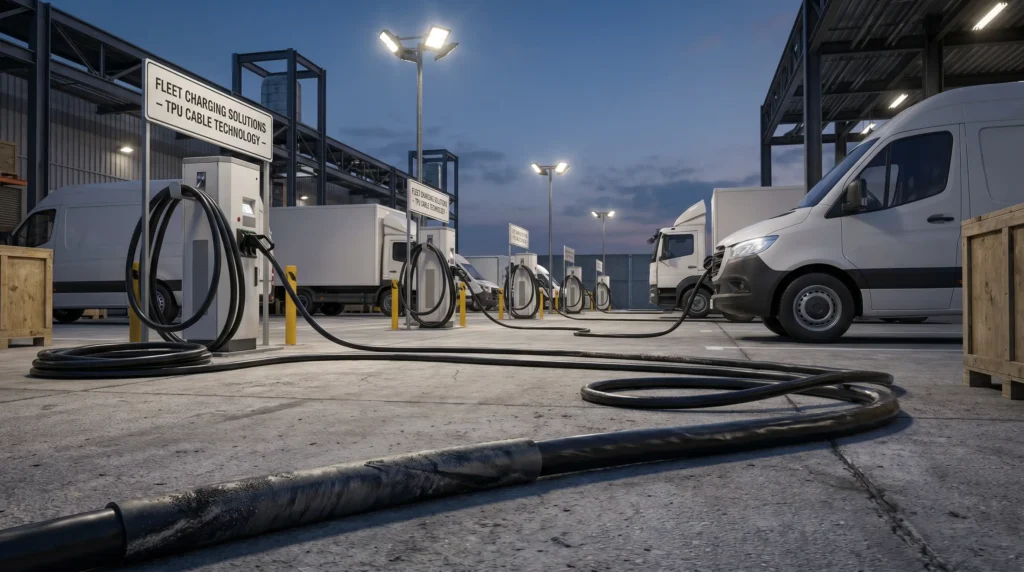
If you are supplying cables to Charge Point Operators (CPOs), logistics fleets, taxi companies, or public municipalities, TPU is the only logical choice.
In these environments, cables are subjected to high-frequency use (often 10+ charging sessions per day). They are dropped, dragged, driven over, and exposed to harsh weather year-round. The superior tear strength and abrasion resistance of TPU significantly reduce the failure rate and replacement frequency. While TPU cables cost roughly 20% to 30% more upfront than TPE, their total cost of ownership (TCO) over a 5-year commercial lifecycle is vastly lower.
Scenario B: The Residential Home Charging Market
The Winner: TPE
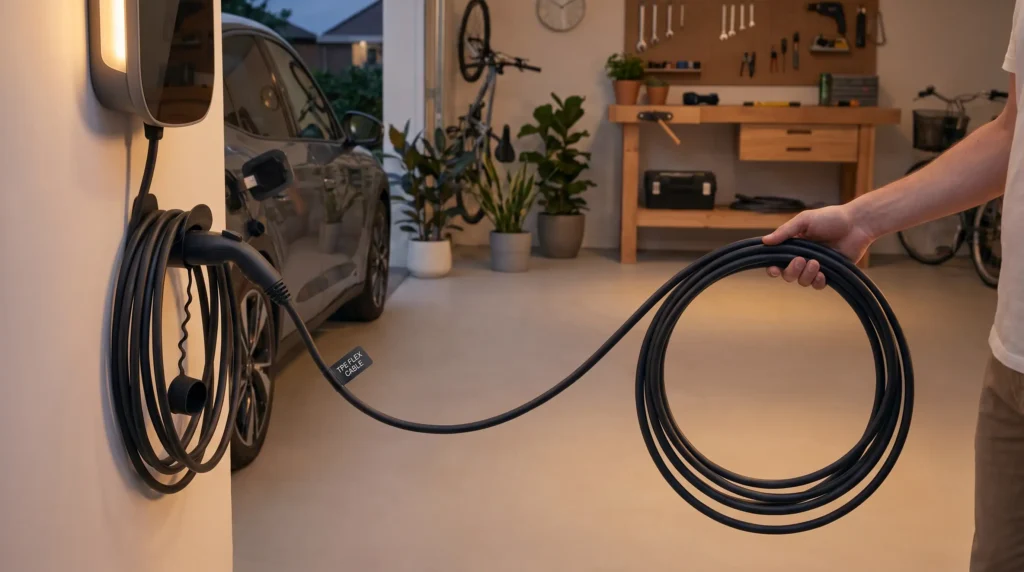
If your primary customers are individual EV owners buying a secondary cable for their home wallbox or a portable EV charger to keep in the trunk, TPE is highly recommended.
Home users typically plug in their vehicles once a day in a controlled environment (a garage or private driveway). The cable is rarely subjected to severe mechanical stress. TPE provides a softer, more premium tactile feel, is easier to coil, and is significantly more cost-effective. For retail distributors, offering a high-quality TPE cable allows you to hit an attractive consumer price point while maintaining healthy profit margins.
Scenario C: Extreme Cold Climate Markets (Scandinavia, Canada, Russia)
The Winner: TPU
If you are distributing into regions where winter temperatures regularly drop below -20°C, TPU is mandatory. The polyether TPU formulation maintains its flexibility down to -50°C. A TPE cable in these conditions will become stiff and difficult to manage, leading to a poor user experience and potential micro-cracking of the jacket over time.
The same material logic carries over to molded charging accessories. Plug holders, connector caps and grips often join a soft, weather-resistant layer to a rigid body. Our guide to two-shot molded parts that combine TPU or TPE with a rigid base explains when that pairing makes sense.
The Sustainability Angle: Recyclability and Environmental Impact
As the EV industry pushes toward a circular economy, the environmental impact of charging accessories is coming under increased scrutiny.
Both TPU and TPE are thermoplastics, meaning they can be melted down and reformed, making them inherently more recyclable than thermoset rubbers (like silicone or cross-linked materials). However, TPE generally has a slight edge in end-of-life recyclability due to its simpler polymer blending process, requiring less energy to reprocess [2].
Conversely, TPU offers superior longevity. Because a TPU cable can outlast a TPE cable by several years in a harsh environment, it reduces the overall volume of manufactured goods and electronic waste. When marketing your products, you can position TPE as the “eco-friendly, highly recyclable” option, and TPU as the “sustainable longevity” option.
How to Source the Right Cables with Yirox Auto Parts
Understanding material science is only half the battle; finding a manufacturing partner capable of executing these specifications consistently is the other half.
At Yirox Auto Parts, we specialize in OEM and ODM manufacturing of EV charging accessories tailored to the specific needs of global B2B distributors. We do not believe in a one-size-fits-all approach. Instead, we offer a consultative manufacturing process:
- Market-Specific Material Selection: Whether you need cost-effective TPE cables for the North American residential market or premium XLPO/TPU hybrid cables for European public infrastructure, we source the exact raw materials required.
- Certified Compliance: All our cable materials undergo rigorous testing to meet CE, TUV Rheinland, and RoHS standards. We provide full documentation, including insulation resistance and low-temperature impact test reports.
- Custom Branding (OEM/ODM): We offer comprehensive OEM/ODM services, allowing you to customize the cable jacket color, print your brand logo directly on the connectors, and design retail-ready packaging.
- Flexible MOQs: We support distributors at every stage of growth, offering tiered MOQs that allow you to test different material SKUs in your market without massive upfront capital risk.
Conclusion
The debate between TPU and TPE is not about which material is universally “better”—it is about which material is right for your specific business model and target audience.
TPU is the heavy-duty, cold-weather champion, essential for commercial infrastructure, fleet operations, and extreme climates. It commands a premium price but delivers unmatched durability. TPE is the versatile, cost-effective challenger, perfect for the residential market where tactile feel and affordability drive purchasing decisions.
By strategically segmenting your product portfolio to include both options—clearly communicating the value proposition of each—you can capture a broader share of the EV charging market.
Ready to build a customized, material-specific EV charging cable portfolio for your brand? Contact the Yirox Auto Parts team today to discuss your technical requirements and request material samples.
Frequently Asked Questions (FAQ)
What is the main difference between TPU and TPE EV charging cables?
TPU (Thermoplastic Polyurethane) is highly durable, offering superior abrasion resistance, tear strength, and extreme cold-weather flexibility (-50°C), making it ideal for commercial and outdoor use. TPE (Thermoplastic Elastomer) is softer, more flexible at room temperature, and more cost-effective, making it ideal for residential home charging.
Which material is better for cold climates like Scandinavia or Canada?
TPU is significantly better for cold climates. Polyether-based TPU maintains its flexibility and does not become brittle at temperatures as low as -50°C. TPE performs adequately down to -40°C but will feel noticeably stiffer than TPU in freezing conditions.
Are TPU cables more expensive than TPE cables?
Yes. Because of the complex manufacturing process and superior raw material properties, TPU-jacketed cables typically cost 20% to 30% more to manufacture than TPE cables. However, for commercial applications, TPU offers a lower total cost of ownership due to its longer lifespan.
What is XLPO, and how does it relate to TPU and TPE?
XLPO (Cross-linked Polyolefin) is a highly heat-resistant material primarily used as the inner insulation layer surrounding the copper conductors inside the cable. The premium standard for European EV cables is an XLPO inner insulation combined with a TPU outer jacket.
Can TPE and TPU cables be recycled?
Yes, both are thermoplastics, meaning they can be melted down and repurposed. TPE is generally considered slightly easier and more energy-efficient to recycle at the end of its life compared to TPU.
Which material should I choose for a portable EV charger?
For a portable EV charger (often kept in the trunk for emergency or travel use), TPE is usually the preferred choice. It is lighter, easier to coil tightly, and more cost-effective for a product that sees occasional rather than high-frequency commercial use.
Do both materials meet CE and TUV certification standards?
Yes. High-quality formulations of both TPU and TPE can pass the rigorous electrical safety, UV resistance, and mechanical testing required for CE and TUV Rheinland certifications. The key is ensuring your manufacturer uses premium-grade raw materials rather than cheap, uncertified blends.
References
[1] MarketsandMarkets. (2023). EV Charging Cable Market Size, Growth Report & Forecast to 2030.
[2] Hexpol TPE. (2024). What is TPE | Thermoplastic Elastomer Materials.
[3] NexwayEV. (2026). Advantages of TPU Sheath Material for EV Charging Cables.
[4] QC Solar. (2026). EV Charging Cable Buying Guide: TPE vs. TPU Jacket Materials – How to Choose?.