


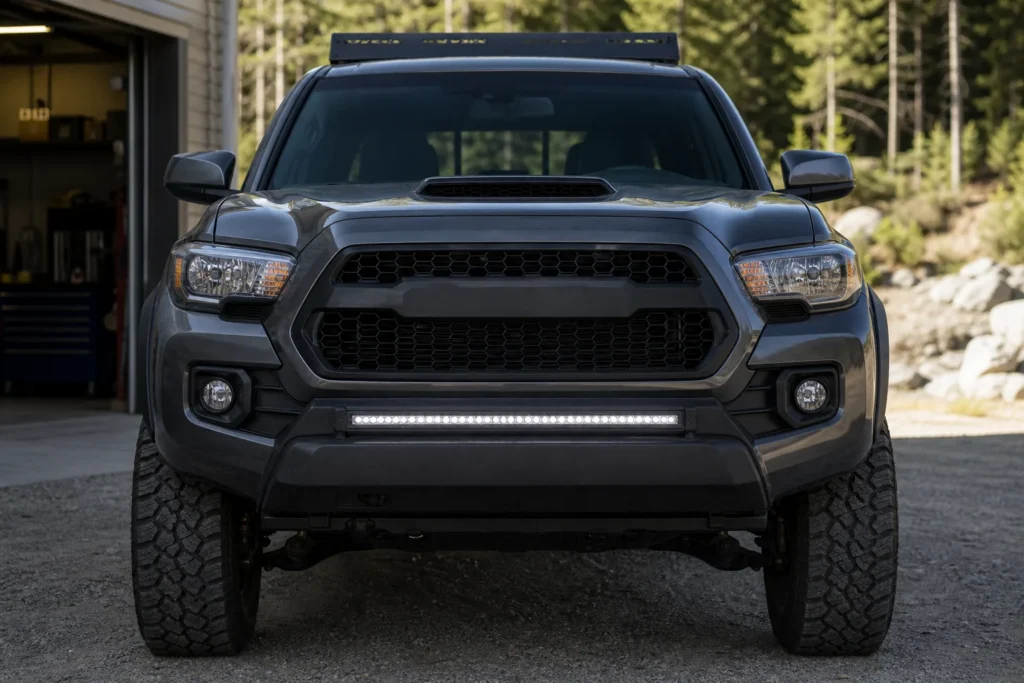
A light bar DRL mode is a low-intensity daytime running light or accent function built into an LED light bar. It usually uses a separate circuit from the main high-output LEDs, so the bar can show a softer white or amber signature during the day while the main off-road beam stays off.
The important point is that DRL mode is not the same as turning on the full light bar at reduced enthusiasm. It should be treated as a separate visibility or styling function with its own wiring, brightness, switching behavior, and legal limits.
Table of Contents
- What does DRL mode mean on an LED light bar?
- How does light bar DRL wiring usually work?
- Is DRL mode the same as low beam or full brightness?
- What colors and styles are common for light bar DRL mode?
- Is a DRL light bar legal on public roads?
- What should buyers check before choosing a DRL light bar?
- Conclusion: Treat DRL mode as a separate function
- Frequently Asked Questions
- References
What does DRL mode mean on an LED light bar?
DRL mode on an LED light bar means the product includes a lower-intensity daytime running light or accent circuit. The DRL may appear as a thin light strip, halo, edge light, amber marker section, or low-power front signature while the main driving LEDs remain off.
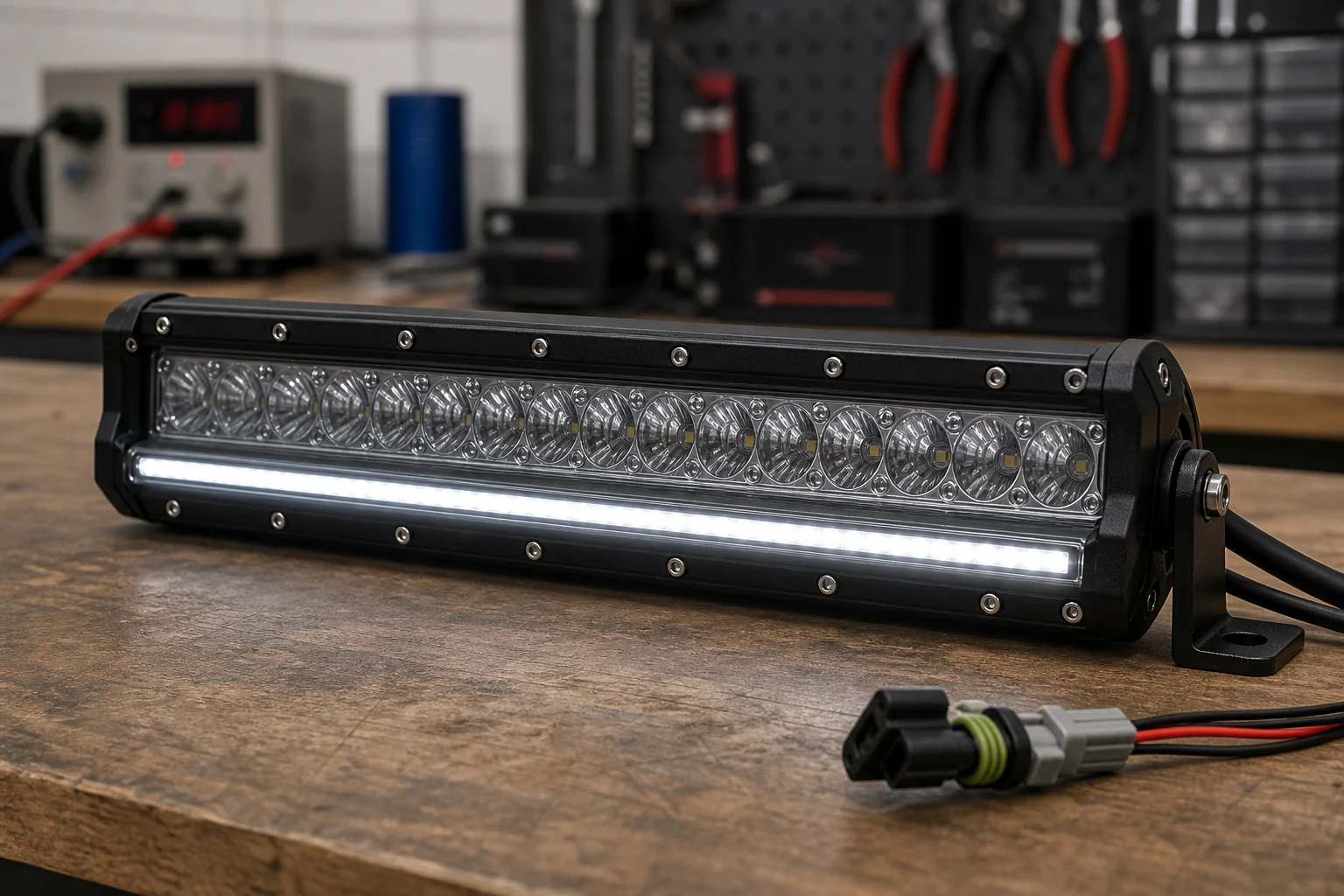
In a regular off-road light bar, the main LEDs are designed to project useful light at night or in low-visibility off-road conditions. In a DRL-style light bar, an additional low-output circuit can make the vehicle more visible from the front or give the installation a cleaner daytime look.
If the reader is still choosing the main product category, the related guide to off-road LED light bars explains how size, beam pattern, mounting position, wiring, sealing, and road-use caution fit together.
SAE J2087 provides requirements and test procedures for daytime running light functions and the lamps that provide them 1. That does not mean every aftermarket light bar with an accent strip is automatically a compliant daytime running lamp; it means DRL is a real lighting function with performance expectations.
How does light bar DRL wiring usually work?
Light bar DRL wiring usually uses separate wires or circuits for the low-intensity DRL accent and the main high-output beam. This lets the installer control the DRL mode independently from the full auxiliary light.
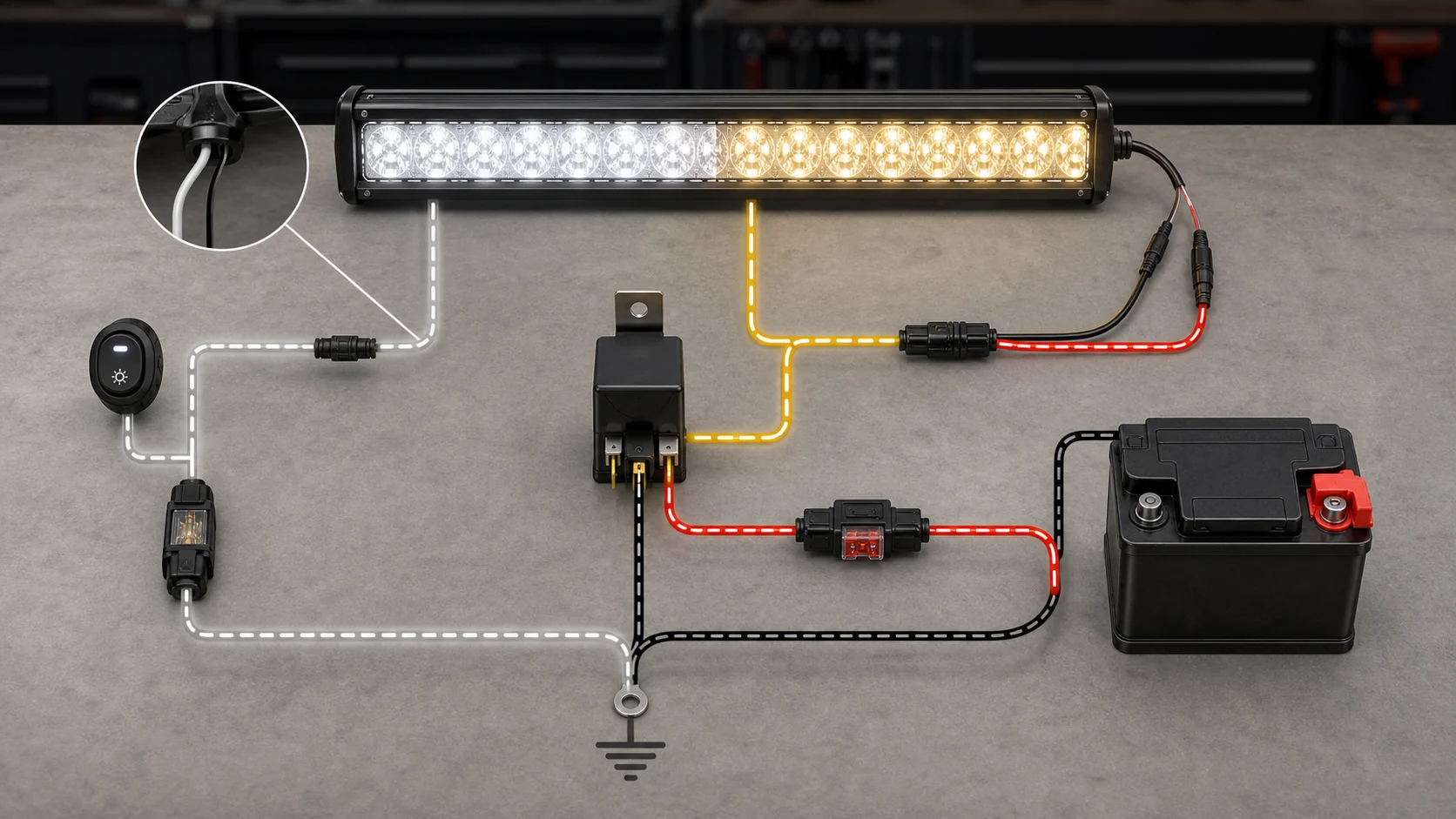
A common layout includes a main positive and ground for the high-output LEDs, plus an additional wire for the DRL or position-light function. Some products also include amber and white accent wires, separate switch inputs, or a controller module.
The wiring plan should match the vehicle and the product instructions. A DRL circuit may be tied to ignition power, an accessory circuit, a switch panel, or a marker/position light circuit depending on the market and intended use. The main beam should still be fused, relayed, and switched correctly.
For buyers planning the electrical side, the related light bar wiring harness guide explains fuses, relays, switches, wire sizing, connectors, and safe harness routing in more detail.
Is DRL mode the same as low beam or full brightness?
DRL mode is not the same as a low beam, fog beam, or full-brightness off-road beam. A true DRL or accent function should be lower intensity and designed for visibility to others, not for lighting a trail at night.
This difference matters because light output can quickly become glare when a forward-facing auxiliary light is used in the wrong mode. A full light bar may produce thousands of lumens and a strong beam pattern; a DRL accent should be much softer. The related guide to LED lumen output explains why total brightness must be separated from usable beam control.
Beam pattern also remains important. The main light bar may be spot, flood, combo, driving, or scene-focused, while the DRL accent may not project a useful beam at all. For the main beam decision, the related guide to spot, flood, and combo beam patterns is the better comparison.
The safe buying question is: what exactly turns on in each mode? A product page should make it clear whether the DRL circuit is a thin accent, a low-output marker, an amber position light, or a reduced-power version of the main LEDs.
What colors and styles are common for light bar DRL mode?
Common DRL light bar styles include white accent strips, amber accent strips, dual-color white/amber accents, edge-lit bars, halo-style accents, and segmented marker-style lights. White is often used for a clean daytime signature, while amber is often used for marker, dust, or styling applications.
| DRL style | Common look | Best use | Main caution |
|---|---|---|---|
| White strip | Clean modern front signature | Daytime styling and visibility | Must not be confused with full beam |
| Amber strip | Marker or off-road accent look | Dusty trails, utility styling | Local color rules vary |
| Dual-color accent | White and amber options | Flexible product ranges | Wiring and switching must be clear |
| Halo or edge light | Decorative outer glow | Retail styling appeal | May add complexity without performance |
| Segmented DRL | Multiple small light zones | Rugged visual identity | Batch consistency is easy to notice |
For distributors and private-label programs, color consistency matters. A batch where one bar has a cooler white DRL and another has a warmer white DRL can look cheap even if the main beam works. The Yirox Team usually checks accent brightness, color match, wire labels, switch behavior, and packaging photos together because DRL mode is partly visual and partly electrical.
It is also worth checking how the DRL looks in real daylight, not only in a dark sample room. A strip that looks sharp indoors may be too weak under sun, while a strip that looks dramatic at night may be too bright for a daytime accent. Side-by-side sample photos under the same exposure help keep catalog images, customer expectations, and delivered goods aligned.
Is a DRL light bar legal on public roads?
A DRL light bar is not automatically legal for public-road use just because it has a DRL mode. Road legality depends on the lamp function, brightness, color, markings, mounting location, aiming, switching behavior, and the rules in the target market.
NHTSA has discussed supplemental lighting under FMVSS No. 108 in terms of whether added lighting impairs required lighting equipment 2. Federal commercial motor vehicle rules also describe auxiliary driving and fog lamps as lamps used with required headlamps, not replacements 3. SAE J581 covers auxiliary upper beam lamps, which is different from simply adding a styling strip to a light bar 4.
For product wording, avoid loose claims such as "street legal" unless the product has the required documentation for the intended market and lamp function. A DRL accent may be acceptable in one installation and not acceptable in another, especially if it is too bright, the wrong color, mounted incorrectly, or wired to operate at the wrong time.
What should buyers check before choosing a DRL light bar?
Buyers should check the DRL circuit design, wire labels, color option, brightness, switching behavior, main beam pattern, IP rating, heat control, bracket fit, and documentation before choosing a DRL light bar.
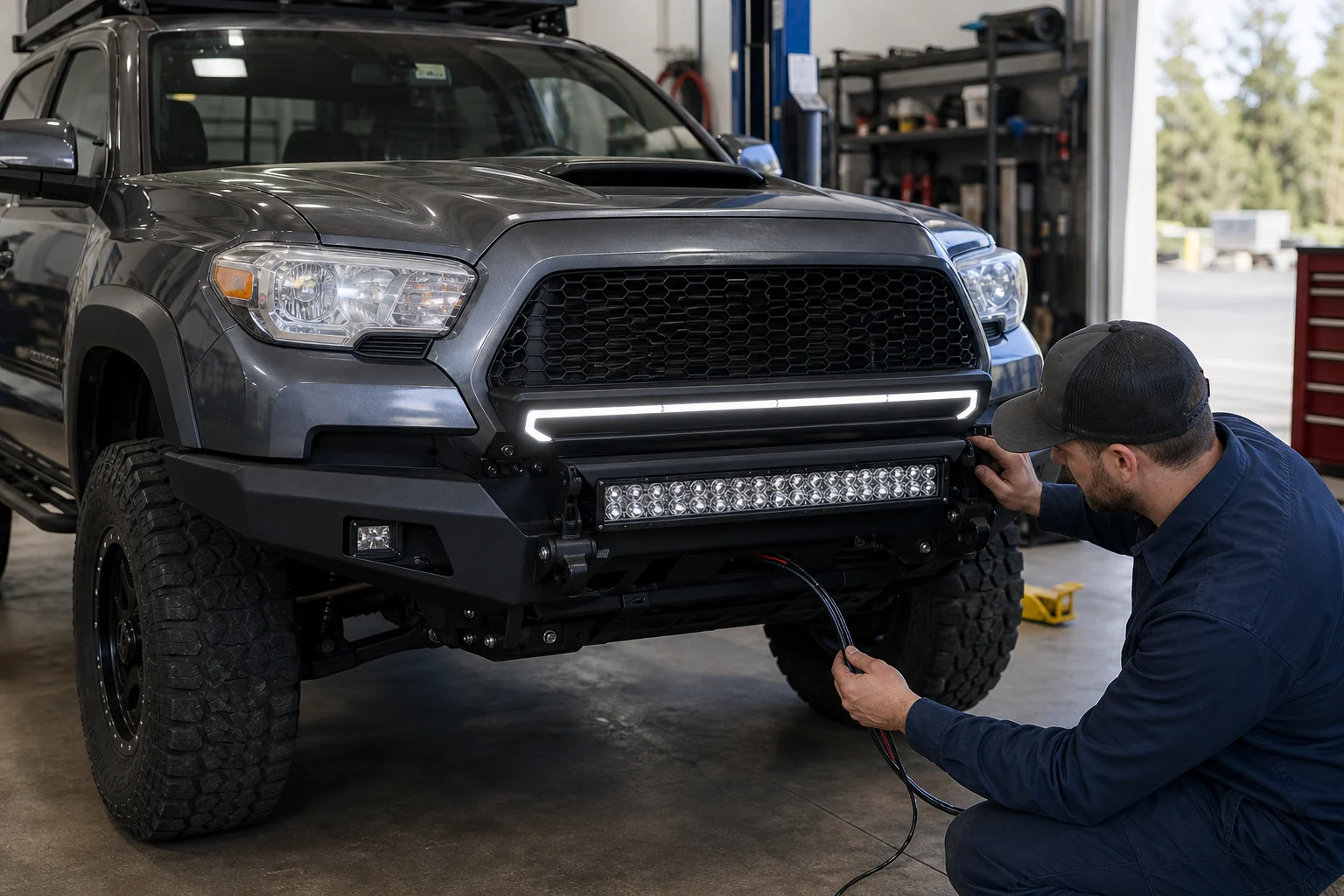
Start by confirming the mode logic. Does the DRL turn on with ignition power, a switch, a marker-light circuit, or a controller? Does it turn off or dim when the main beam turns on? Can white and amber be powered at the same time, and if so, is that intended?
Then inspect the build. DRL light bars often add extra internal wiring, diffusion material, or light pipes. Those parts need sealing, heat resistance, and vibration control. The related guide to IP ratings for LED lights helps buyers read sealing claims alongside real construction details.
Finally, review the whole kit. A good DRL light bar should include clear wire identification, a suitable harness or wiring recommendation, mounting brackets, correct hardware, and packaging that protects the lens and accent strip during shipping.
Conclusion: Treat DRL mode as a separate function
Light bar DRL mode is useful when it is treated as its own function: low-intensity front visibility or styling, separate from the main high-output off-road beam. It can make a product look more modern and flexible, but it also adds wiring, compliance, and quality-control questions.
The best DRL light bar is not the one with the flashiest accent. It is the one with clear mode behavior, controlled brightness, reliable wiring, durable sealing, and honest road-use claims.
If the next step is comparing hardware options, the related off-road LED light bar product range is a practical place to review DRL-style bars alongside beam pattern, housing, harness, bracket, and packaging choices.
Frequently Asked Questions
What does DRL mean on a light bar?
DRL means daytime running light. On a light bar, it usually refers to a low-intensity accent or visibility circuit that operates separately from the main high-output LEDs.
Can I use DRL mode at night?
DRL mode may be visible at night, but it is not a substitute for headlights or a properly aimed driving light. Use the lamp only according to the product instructions and local road rules.
Is amber DRL mode better than white?
Amber can be useful for styling, marker visibility, dust, or certain off-road preferences. White often gives a cleaner daytime look. The better choice depends on market rules, product design, and customer expectations.
Does DRL mode need a separate switch?
Sometimes. Some installers wire DRL mode to ignition or marker-light power, while others use a separate switch or controller. The product wiring diagram should be followed carefully.
Is a light bar with DRL mode street legal?
Not automatically. A DRL accent does not make an off-road light bar compliant for public-road use. Legality depends on the exact lamp function, markings, brightness, color, mounting, aiming, and local regulations.
References
[1] SAE International. (2021). *[SAE J2087: Daytime Running Lamp](https://saemobilus.sae.org/standards/j2087_202102-daytime-running-lamp)*.
[2] NHTSA. (2019). *[FMVSS No. 108 interpretation on supplemental lighting](https://www.nhtsa.gov/interpretations/571108-supplement-beam-boykin-16-0884)*.
[3] Electronic Code of Federal Regulations. (2026). *[49 CFR 393.24 Requirements for head lamps, auxiliary driving lamps and front fog lamps](https://www.ecfr.gov/current/title-49/section-393.24)*.
[4] SAE International. (2020). *[SAE J581: Auxiliary Upper Beam Lamps](https://www.sae.org/standards/content/j581_202009/)*.