



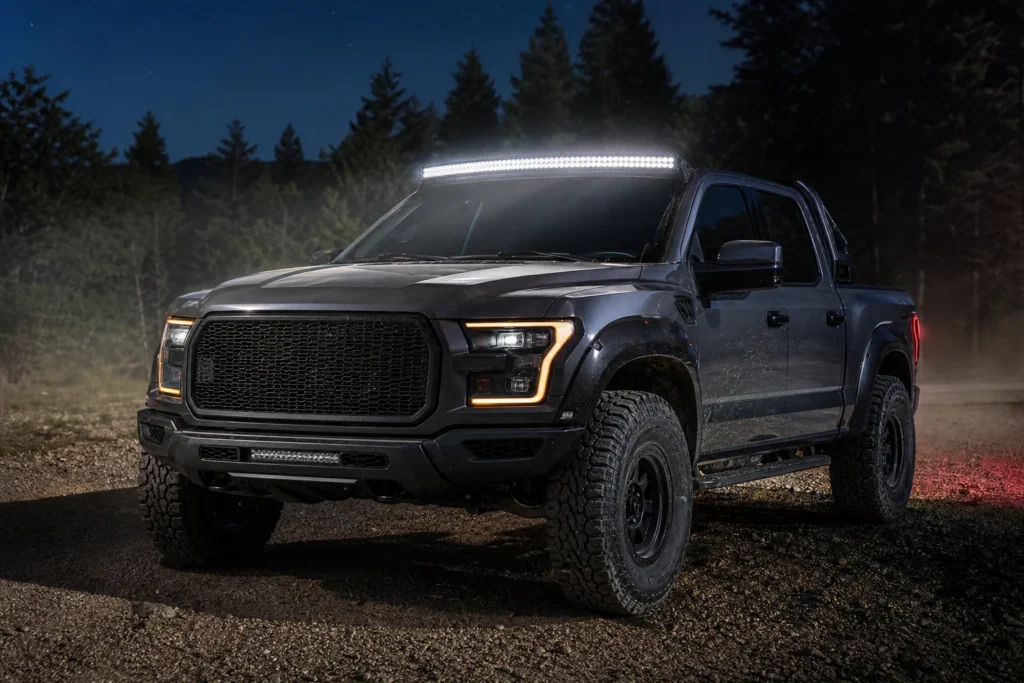
A curved LED light bar is an auxiliary off-road lamp with a slightly arched housing instead of a straight one. The curve helps the bar follow the front shape of many trucks and SUVs and can spread the outer parts of the beam wider, but the real performance still depends on optics, size, mounting height, wiring, and aiming.
Curved bars are popular because they look integrated on roof lines, windshield mounts, bull bars, and wide bumpers. The mistake is assuming that curved always means better. Sometimes it solves a real fitment or side-spread problem; other times a straight bar, pods, or a smaller bumper light is easier to mount and aim.
Table of Contents
- What is a curved LED light bar?
- How is a curved LED light bar different from a straight light bar?
- What are the real benefits of a curved LED light bar?
- What curved LED light bar sizes are most common?
- Where should you mount a curved LED light bar?
- What should buyers check before choosing a curved light bar?
- Conclusion: Use the curve when it solves a fitment or spread problem
- Frequently Asked Questions
- References
What is a curved LED light bar?
A curved LED light bar is a row-style auxiliary lamp built with a bent or arched housing. The center faces forward, while the outer sections angle slightly outward, depending on the radius of the curve and the optic design.
The basic parts are the same as a straight light bar: LED chips, reflectors or lenses, aluminum housing, polycarbonate lens, end caps, brackets, cable exit, and wiring harness. The difference is the shape of the housing and how that shape affects fitment, appearance, and side coverage.
If the reader is still choosing the basic lighting category, the related guide to off-road LED light bars explains the broader system: housing, beam pattern, mounting position, wiring, sealing, and legal caution.
The curve is usually subtle rather than dramatic. A good curved bar should still aim cleanly, sit level on the vehicle, and allow enough adjustment for the beam to land on the road or trail instead of the hood, windshield, or nearby tree line.
That aiming room is especially important after suspension lifts, bumper changes, or roof-rack upgrades.
How is a curved LED light bar different from a straight light bar?
A curved LED light bar differs from a straight bar mainly in shape, vehicle fit, and how the outer LEDs are pointed. A straight bar projects from a flat housing, while a curved bar can follow a bumper, roof, or windshield line more naturally.
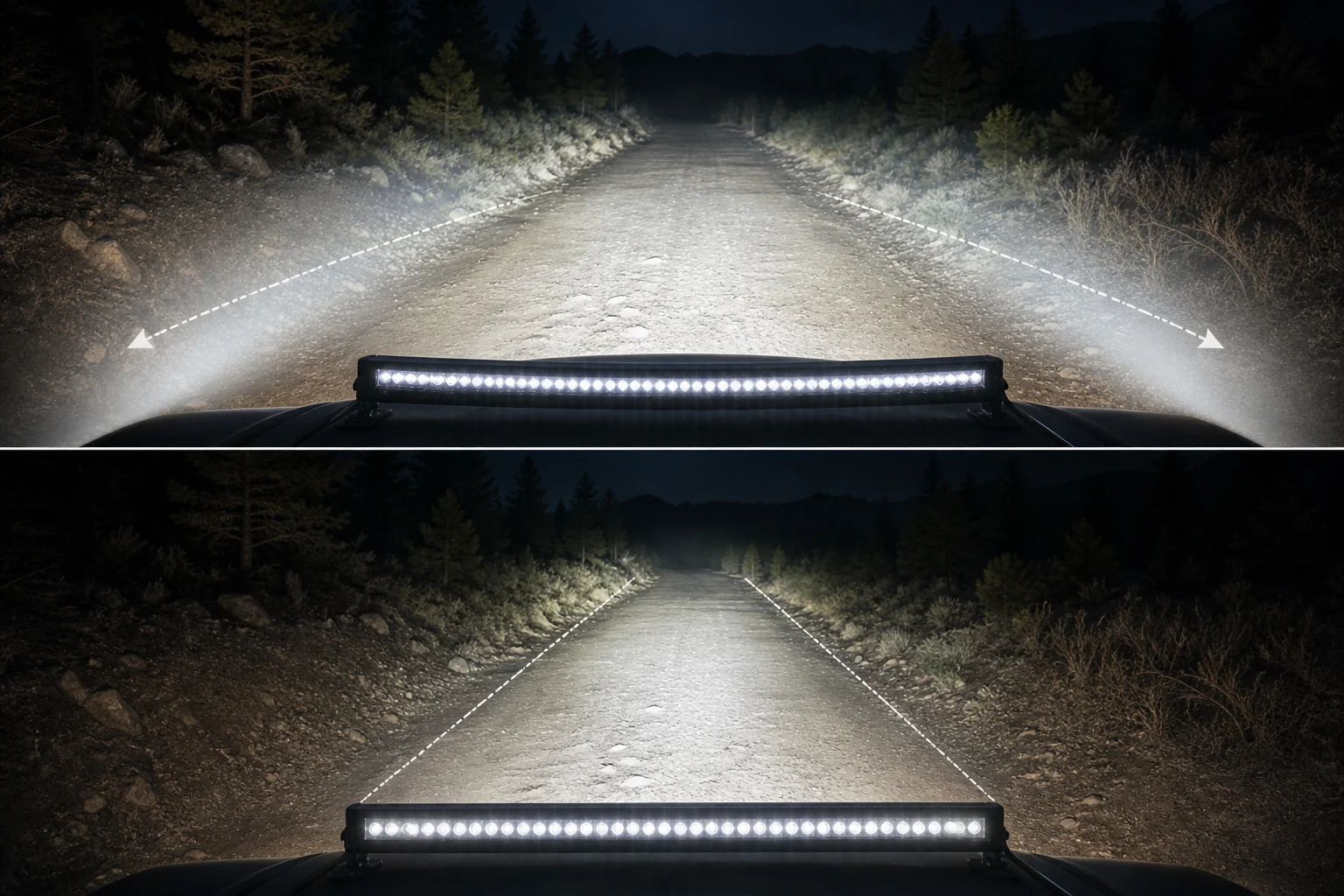
NVA Auto Parts describes the difference between curved and straight bars as mainly appearance during mounting and beam pattern behavior 3. CN360 LED also notes that curved bars can follow vehicle contours and provide broader front lighting spread, while straight bars are often more versatile on flat mounting areas 4.
The curve should not be confused with beam type. A curved bar can still be spot, flood, combo, driving, or scene-focused depending on optics. For readers comparing that part of the decision, the related guide to spot, flood, and combo LED light bar beam patterns is the better next step.
What are the real benefits of a curved LED light bar?
The real benefits of a curved LED light bar are wider visual coverage, a more integrated look on curved vehicle surfaces, and better full-width fitment on some roof and windshield positions. These benefits are useful only when the bar is sized and aimed correctly.
A curved bar can help reduce the feeling that the beam stops sharply at the left and right edges. On a wide roof mount, the outer sections may light trail shoulders, ditches, or camp areas more naturally than a straight bar with the same length. Alibaba's curved-bar guide describes the shape as useful for following vehicle contours and distributing illumination more evenly across terrain 5.
The styling benefit is also real. Many modern trucks and SUVs have rounded front ends, curved windshield lines, and arched roof racks. A curved bar can look less like a flat rail bolted across a rounded vehicle.
Still, the curve does not replace good optics. A poorly designed curved bar can scatter light, create foreground glare, or lose distance. The related guide to LED lumen output explains why total brightness claims should be read alongside beam pattern and usable light.
What curved LED light bar sizes are most common?
Common curved LED light bar sizes include 20-inch, 30-inch, 40-inch, 42-inch, 50-inch, and 52-inch models. Smaller curved bars are usually bumper or grille accessories, while larger curved bars are often used across roof lines, windshield brackets, or wide front racks.
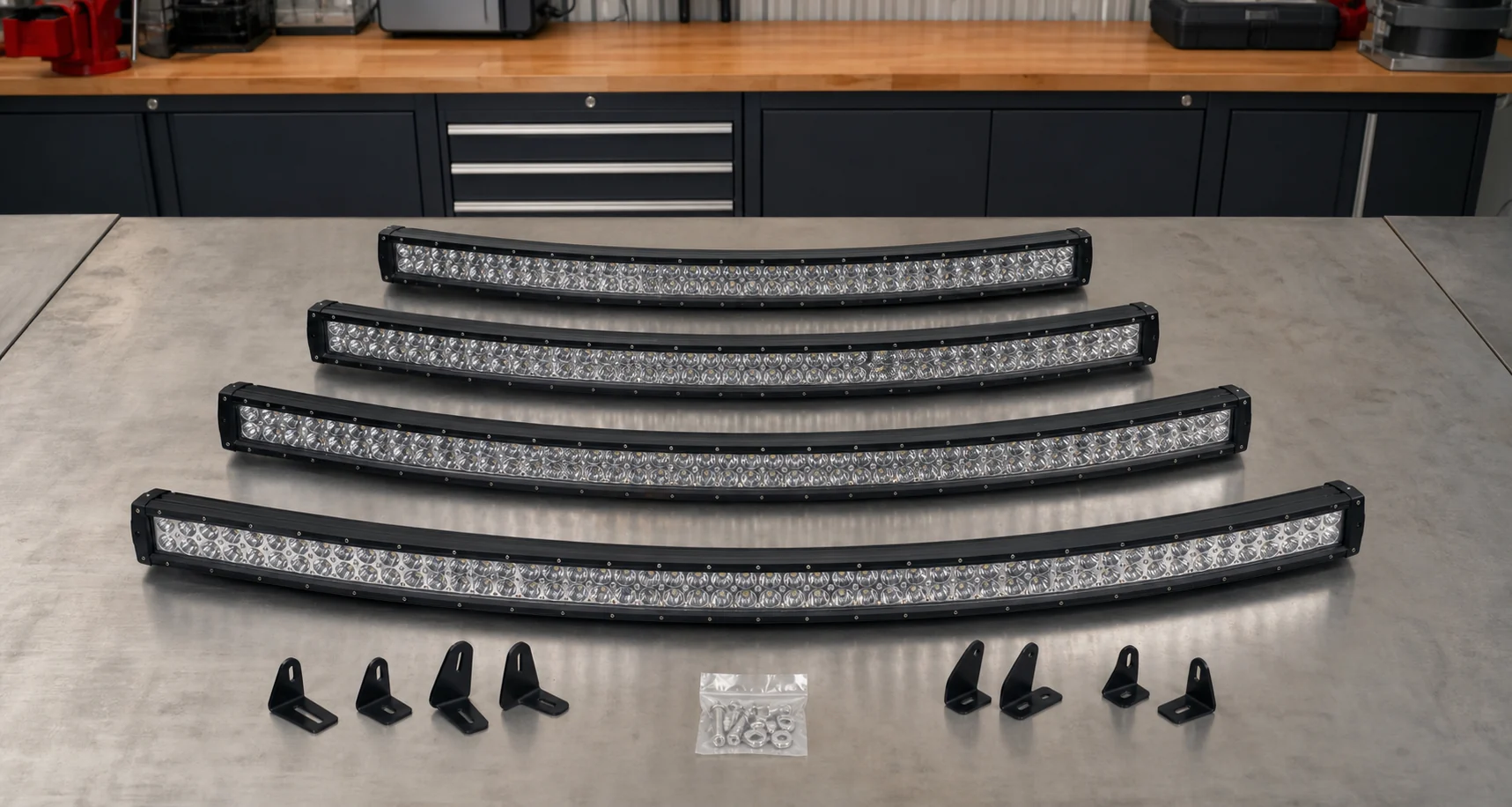
| Curved bar size | Common use | Best fitment question |
|---|---|---|
| 20 inch | Mid bumper, grille, compact trucks | Is there enough width and airflow? |
| 30 inch | Larger bumper or bull bar | Will brackets clear the trim and sensors? |
| 40-42 inch | Roof rack or windshield area | Will the curve match the vehicle line? |
| 50-52 inch | Full-width roof or rack setups | Can the mount handle wind, weight, and glare? |
Row style still matters. A 30-inch single row curved bar and a 30-inch dual row curved bar are not the same product in height, output, current draw, or appearance. The related comparison of single row vs dual row LED light bars helps buyers connect size with housing profile.
Where should you mount a curved LED light bar?
The best mounting positions for a curved LED light bar are usually roof racks, windshield brackets, wide front bumpers, and bull bars where the curved shape matches the vehicle width. The wrong position can create hood glare, wind noise, blocked airflow, or awkward bracket angles.
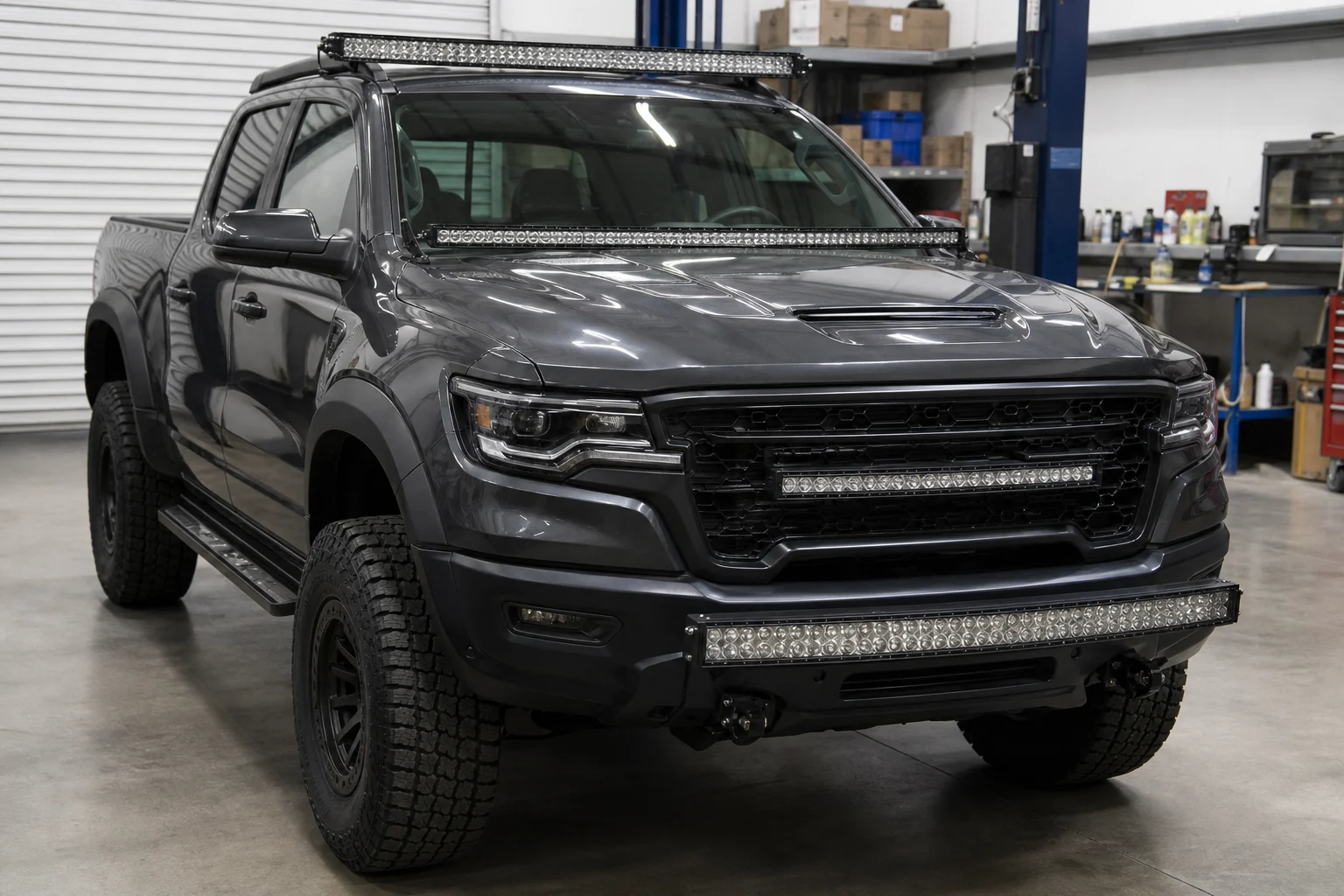
Roof and windshield mounts give the longest sight line, but they can reflect from the hood and windshield if the bar is aimed too low or the beam is too wide. Bumper and bull bar mounts reduce hood glare but may limit beam height and expose the light to impacts, mud, and water.
Grille mounting can look clean, but curved bars are not always ideal inside narrow, flat openings. A straight single row bar may fit better there. The harness route also changes by position, so the related light bar wiring harness guide is useful before finalizing cable length, relay location, switch plan, and fuse rating.
Road use needs care. NHTSA has discussed supplemental lighting in terms of whether it impairs required lighting equipment 1, and federal commercial motor vehicle rules describe auxiliary driving and fog lamps as used with required headlamps rather than as replacements 2. Local rules may also require off-road lights to be covered or switched off on public roads.
What should buyers check before choosing a curved light bar?
Buyers should check curve radius, size, beam pattern, row style, bracket fit, housing depth, wiring load, IP rating, cable exit, lens seal, and packaging before choosing a curved light bar. The product should fit the vehicle and the use case, not just look impressive in a front-view photo.
For Yirox Team sample checks, the practical review starts with fitment. Does the bar follow the intended roof or bumper line? Do the brackets allow aiming? Does the harness reach without stretching? Does the cable exit face a protected direction? Does the carton protect the curved housing during shipment?
Sealing is especially important because curved bars are often mounted high or exposed. Rain, pressure washing, snow, vibration, and cable strain can reveal weak points. The related guide to IP ratings for LED lights helps buyers read waterproof and dustproof claims more carefully.
For distributors and private-label programs, compare approved samples against production batches. A curved housing has more visual geometry than a straight bar, so small bracket, end-cap, or lens inconsistencies are easier for customers to notice.
It is also worth checking packaging around the curve. Long curved housings can be stressed at the ends during shipping if the foam, carton, and bracket pack are not designed well. A product that looks excellent in a sample room can still arrive with rubbed lens edges, bent brackets, or end-cap marks if carton protection is treated as an afterthought.
Conclusion: Use the curve when it solves a fitment or spread problem
A curved LED light bar is best when the shape helps the product fit the vehicle better or spread light more naturally toward the sides. It is not automatically brighter, safer, or more professional than a straight bar.
The right choice comes from the full system: size, row style, beam pattern, mounting position, wiring harness, sealing, bracket strength, and realistic road-use language. A curved 50-inch roof bar may be perfect for one truck and noisy, glaring, or oversized for another.
If the next step is comparing product families, the related off-road LED light bar product range is the natural place to review curved and straight options alongside beam, housing, mounting, and accessory expectations.
Frequently Asked Questions
Is a curved LED light bar better than a straight one?
It is better when the curve improves vehicle fit or side spread. A straight bar may be better for flat bumper openings, easier mounting, and more flexible placement.
Do curved LED light bars shine wider?
They can shine wider because the outer sections angle outward, but the actual spread depends on the optics. A curved housing with poor optics will not outperform a well-designed straight bar.
What size curved LED light bar should I buy?
Choose size by measuring the mounting area first. Compact bumpers may suit 20-30 inches, while roof or windshield mounts often use 40-52 inches.
Can you mount a curved light bar on a bumper?
Yes, if the bumper has enough width, bracket support, airflow clearance, and aiming adjustment. On narrow or flat bumper slots, a straight single row bar may fit better.
Are curved light bars legal on public roads?
Legality depends on local rules, beam pattern, color, mounting, covers, and when the light is used. Off-road bars should be treated as auxiliary lights and used cautiously around public traffic.
References
[1] NHTSA. (2019). *[FMVSS No. 108 interpretation on supplemental lighting](https://www.nhtsa.gov/interpretations/571108-supplement-beam-boykin-16-0884)*.
[2] Electronic Code of Federal Regulations. (2026). *[49 CFR 393.24 Requirements for head lamps, auxiliary driving lamps and front fog lamps](https://www.ecfr.gov/current/title-49/section-393.24)*.
[3] NVA Auto Parts. (2022). *[Difference Between Curved Light Bars and Straight Light Bars](https://www.nvautoparts.com/difference-between-curved-light-bars-and-straight-light-bars/)*.
[4] CN360 LED. (2026). *[A Guide to Different Types of Car Light Bars](https://cn360led.com/blogs/news/a-guide-to-different-types-of-car-light-bars)*.
[5] Alibaba.com. (2026). *[Curved LED Light Bar Guide: How to Choose the Right One](https://carinterior.alibaba.com/buyingguides/curved-led-light-bar-fit%2C-spread-real-use-cases)*.