



A 3-in-1 LED light bar is a multi-function auxiliary lamp that combines three lighting functions in one housing. The exact meaning changes by product: it may mean spot + flood + DRL, white beam + amber beam + strobe, driving light + position light + turn/marker function, or another combination chosen by the manufacturer.
That flexibility is useful, but it also creates confusion. Buyers should not assume that every 3-in-1 light bar has the same functions, wiring, legal status, or off-road performance. The product must be judged by what each mode actually does.
Table of Contents
- What does 3-in-1 mean on an LED light bar?
- What features can a 3-in-1 LED light bar include?
- Where are 3-in-1 LED light bars used?
- How is a 3-in-1 light bar wired?
- Is a 3-in-1 LED light bar better than a standard light bar?
- What should buyers check before choosing a 3-in-1 light bar?
- Conclusion: Choose a 3-in-1 bar for useful functions, not just more modes
- Frequently Asked Questions
- References
What does 3-in-1 mean on an LED light bar?
3-in-1 on an LED light bar means the lamp combines three functions or lighting zones in one product. There is no single universal definition, so the buyer has to read the product specification carefully.
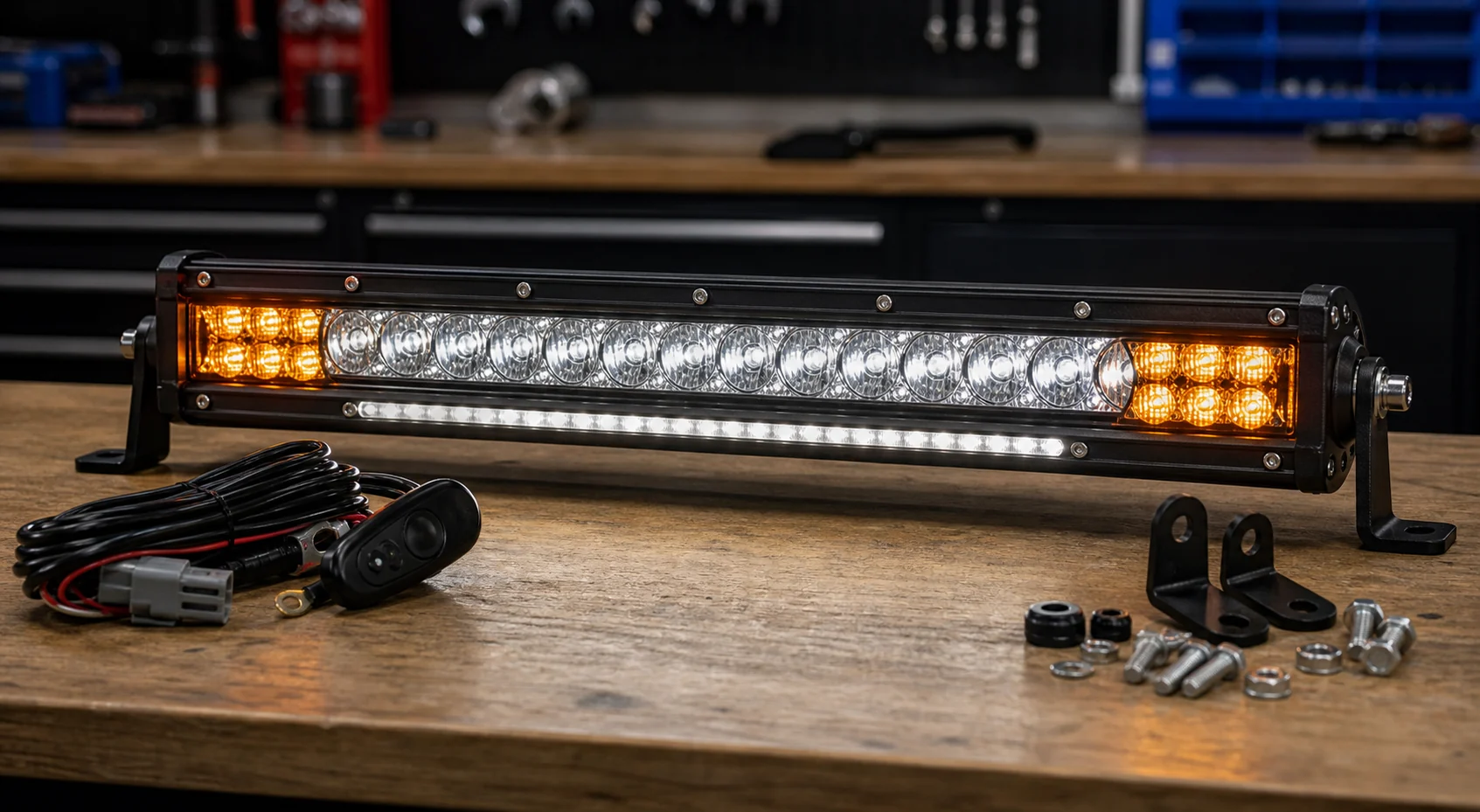
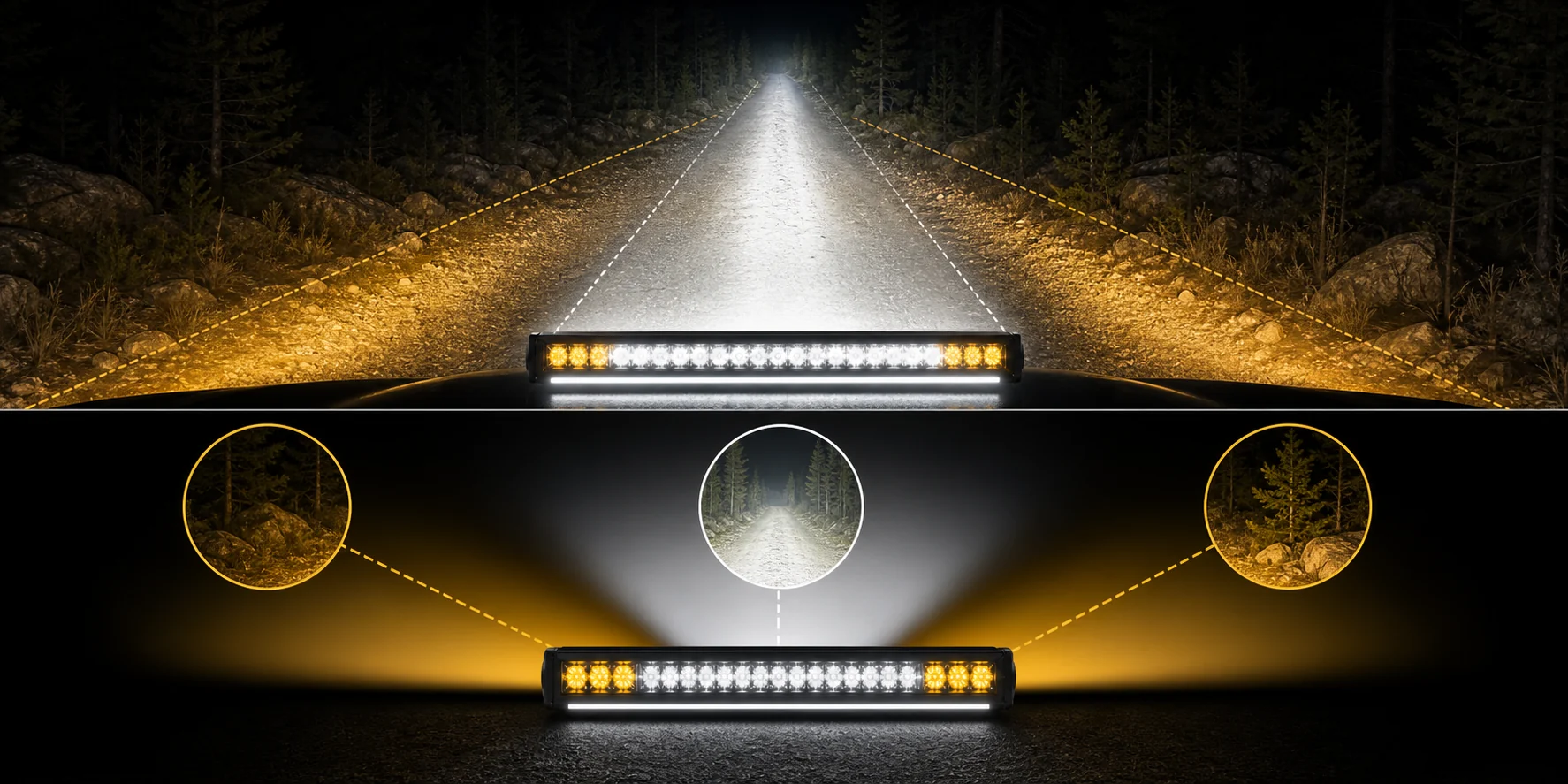
One common design combines a main white driving beam, amber side or marker lighting, and a DRL accent strip. Another combines spot optics, flood optics, and a lower-intensity daytime running light. Some work-vehicle versions may combine driving, scene, and warning functions.
If the reader is still sorting out the basic category, the related guide to off-road LED light bars explains the foundations: housing, beam pattern, mounting position, wiring, sealing, and responsible use.
The name is a marketing shortcut, not a technical standard. A good listing should spell out each mode, each wire or switch input, beam pattern, color, current draw, and intended use.
What features can a 3-in-1 LED light bar include?
A 3-in-1 LED light bar can include driving beam, spot beam, flood beam, DRL mode, amber position light, side scene light, strobe/warning function, or dual-color white/amber lighting. The best combination depends on whether the vehicle is used for trail driving, work, recovery, agriculture, emergency support, or retail styling.
| 3-in-1 combination | What it tries to solve | Best use | Main caution |
|---|---|---|---|
| Spot + flood + DRL | Distance, width, daytime accent | General off-road builds | DRL is not a road-legal guarantee |
| White + amber + DRL | Trail light plus visual signature | Overland and retail styling | Color rules vary by market |
| Driving + scene + warning | Work and utility lighting | Service, farm, recovery vehicles | Warning functions may be regulated |
| Main beam + side fill + marker | Forward and corner coverage | Bumpers and roof racks | Wiring must be clear |
For the main beam, optics still matter more than the number of modes. The related guide to spot, flood, and combo LED light bar beam patterns helps buyers separate real visibility from mode names.
SAE J2087 covers daytime running light functions, while SAE J581 and J583 address auxiliary upper beam lamps and front fog lamps 1 2 3. These references are useful because a multi-function product may touch several lighting ideas, but each function still needs to be understood separately.
Where are 3-in-1 LED light bars used?
3-in-1 LED light bars are used on off-road trucks, SUVs, UTVs, ATVs, work vehicles, farm vehicles, recovery vehicles, trailers, and fleet accessories where one lamp must handle more than one lighting job.
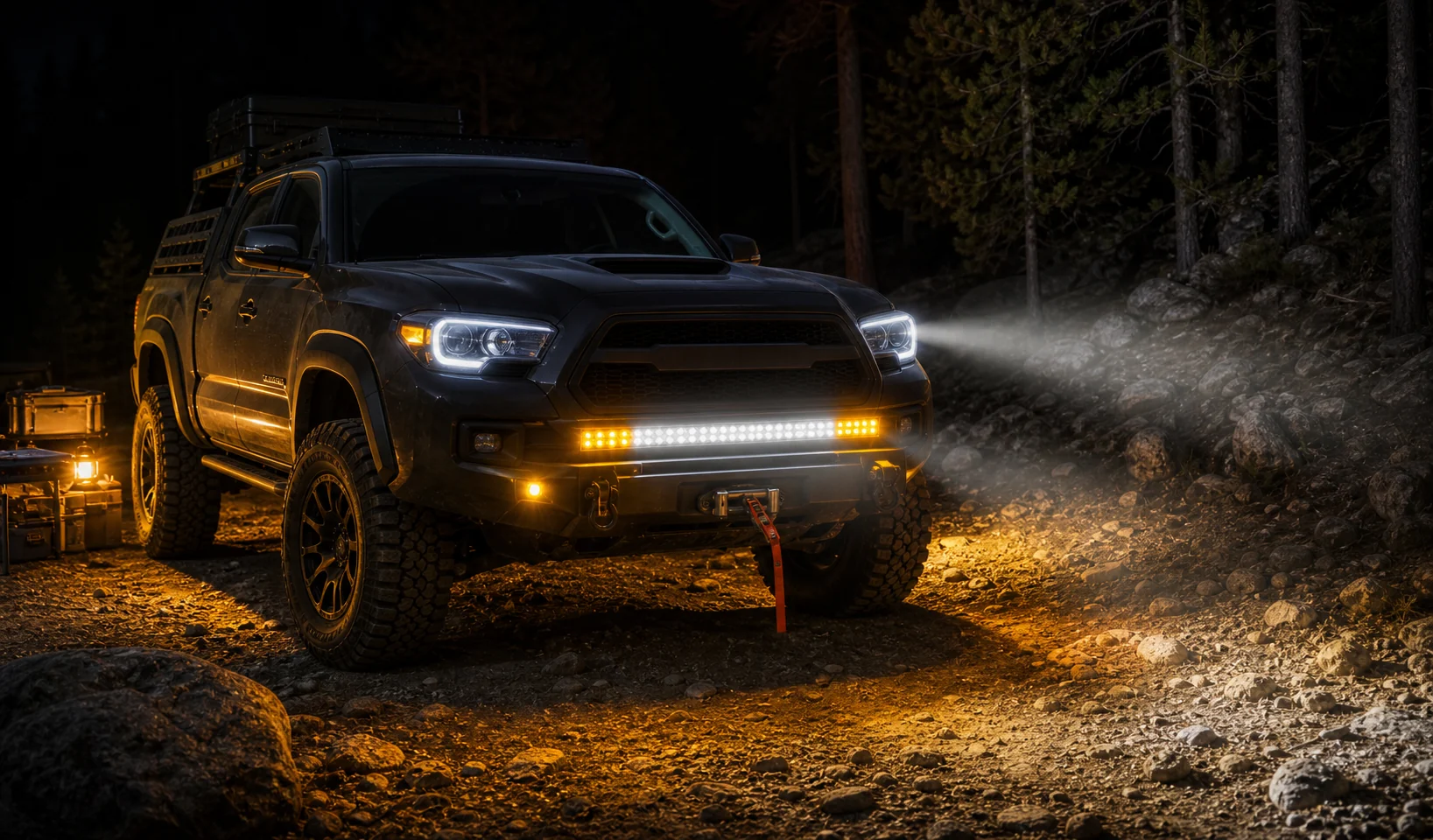
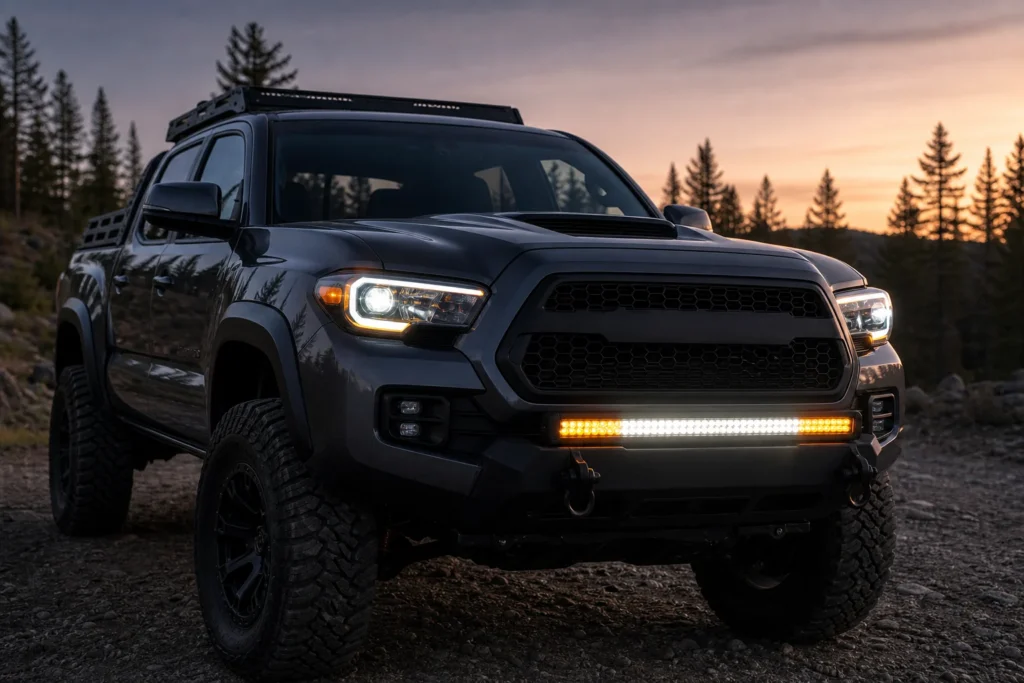
On an off-road truck, the main white beam may help with trail visibility, while amber side sections improve presence in dust or at campsites. On a work vehicle, a softer scene mode may help around equipment while the main beam stays off.
On retail builds, a DRL or amber accent can make the front end look more modern. That is fine as long as buyers understand the difference between styling, marker visibility, and functional trail illumination.
For distributors, the useful question is not "Can we advertise three modes?" It is "Which three modes reduce customer confusion and returns?" A product that combines practical functions with clear wiring labels is usually easier to support than a flashy multi-mode lamp with unclear behavior.
How is a 3-in-1 light bar wired?
A 3-in-1 light bar is usually wired with separate circuits or control inputs for each function. The main beam may need a relay and fuse, while DRL, amber, or scene circuits may use lower-current switched inputs.
Simple versions may have three positive wires plus ground. More complex versions may use a controller, mode-switch harness, separate rocker switches, or a plug designed for a switch panel. Some products remember the last mode, while others reset every time power is removed.
This is where many installation problems start. If wires are not labeled clearly, installers may power two modes together by accident, use an undersized switch, or connect a low-current accent circuit to the wrong feed. The related light bar wiring harness guide is a practical next step for understanding relays, fuses, wire gauge, switches, and harness routing.
For private-label orders, wire color, connector pinout, manual diagrams, and carton labels should match the approved sample. Small inconsistencies create large support problems because multi-function lights are less forgiving than single-mode bars.
Is a 3-in-1 LED light bar better than a standard light bar?
A 3-in-1 LED light bar is better only when the extra functions are useful, reliable, and easy to wire. A standard single-function light bar may be better when the buyer wants simple installation, fewer failure points, lower cost, or one very clean beam pattern.
Multi-function products add value when the functions work together. For example, a bumper bar with main white driving light, amber side accent, and DRL strip can serve a real styling and visibility purpose. A work bar with main beam, scene light, and rear/side output can reduce the number of separate lamps on a vehicle.
The trade-off is complexity. More circuits mean more wires, more switches, more internal parts, more testing steps, and more ways for a listing to overpromise. If the product cannot explain each function clearly, it may create more confusion than value.
What should buyers check before choosing a 3-in-1 light bar?
Buyers should check the three actual functions, beam pattern, mode switching, wire labels, current draw, IP rating, heat control, bracket fit, connector quality, manual clarity, and packaging before choosing a 3-in-1 light bar.
Do not judge by brightness claims alone. The related guide to LED lumen output explains why lumens do not show beam distance, glare, or function quality. A multi-function bar may look impressive in photos but still perform poorly if the optics and wiring are weak.
Sealing also matters because 3-in-1 bars have more internal paths, accent zones, and sometimes more cable exits. The related guide to IP ratings for LED lights helps buyers read IP67, IP68, and IP69K claims alongside construction details.
For the Yirox Team, a practical sample check includes five questions:
- Can each mode be identified without guessing? The manual, wire labels, and switch behavior should agree.
- Does the main beam perform as a real light, not only a display effect? Beam photos and warm-running checks matter.
- Do the accent colors match across samples? DRL and amber zones are visually obvious to customers.
- Is the harness sized for the full load? Multi-mode products can draw more current than expected.
- Will the package protect the lens and brackets? Long light bars can rub or bend during shipping if foam is weak.
NHTSA has discussed supplemental lighting in terms of whether it impairs required lighting equipment 4. That matters for any multi-function light bar that might be marketed near public-road use. Claims should stay tied to the actual certified function and target market.
Conclusion: Choose a 3-in-1 bar for useful functions, not just more modes
A 3-in-1 LED light bar can be a smart product when the three functions solve real needs: forward driving light, side fill, DRL accent, amber visibility, scene lighting, or work support. It is less useful when the modes are unclear, hard to wire, or only added for marketing.
The best choice is the product with clear function definitions, controlled beam patterns, safe wiring, durable sealing, consistent color, and honest road-use language. Buyers should ask what each mode does before asking how many modes the bar has.
If the next step is comparing product families, the related off-road LED light bar product range is a useful place to review beam options, housings, DRL designs, wiring kits, brackets, and packaging expectations together.
Frequently Asked Questions
What are the three functions in a 3-in-1 LED light bar?
They vary by product. Common combinations include spot + flood + DRL, white + amber + DRL, or main beam + scene light + warning function. Always read the specification instead of assuming.
Is a 3-in-1 LED light bar hard to install?
It can be harder than a standard light bar because it may have separate wires or controls for each function. Clear wire labels and a suitable harness make installation much easier.
Can a 3-in-1 light bar replace fog lights?
Not automatically. Fog lamps need a specific beam shape, aim, mounting, and compliance for the target market. A multi-function light bar should not be treated as a legal fog lamp unless it is designed and documented for that function.
Are amber modes useful off-road?
Amber modes can help with visibility, styling, dust, campsite awareness, or work-zone signaling, depending on the design. They still need proper brightness, aim, and local-law awareness.
Does 3-in-1 mean the light bar is brighter?
No. 3-in-1 means multiple functions, not automatically more usable light. Beam pattern, optics, current regulation, heat control, and mounting decide real performance.
References
[1] SAE International. (2021). *[SAE J2087: Daytime Running Lamp](https://saemobilus.sae.org/standards/j2087_202102-daytime-running-lamp)*.
[2] SAE International. (2020). *[SAE J581: Auxiliary Upper Beam Lamps](https://www.sae.org/standards/content/j581_202009/)*.
[3] SAE International. (2020). *[SAE J583: Front Fog Lamp](https://www.sae.org/standards/content/j583_202009/)*.
[4] NHTSA. (2019). *[FMVSS No. 108 interpretation on supplemental lighting](https://www.nhtsa.gov/interpretations/571108-supplement-beam-boykin-16-0884)*.