




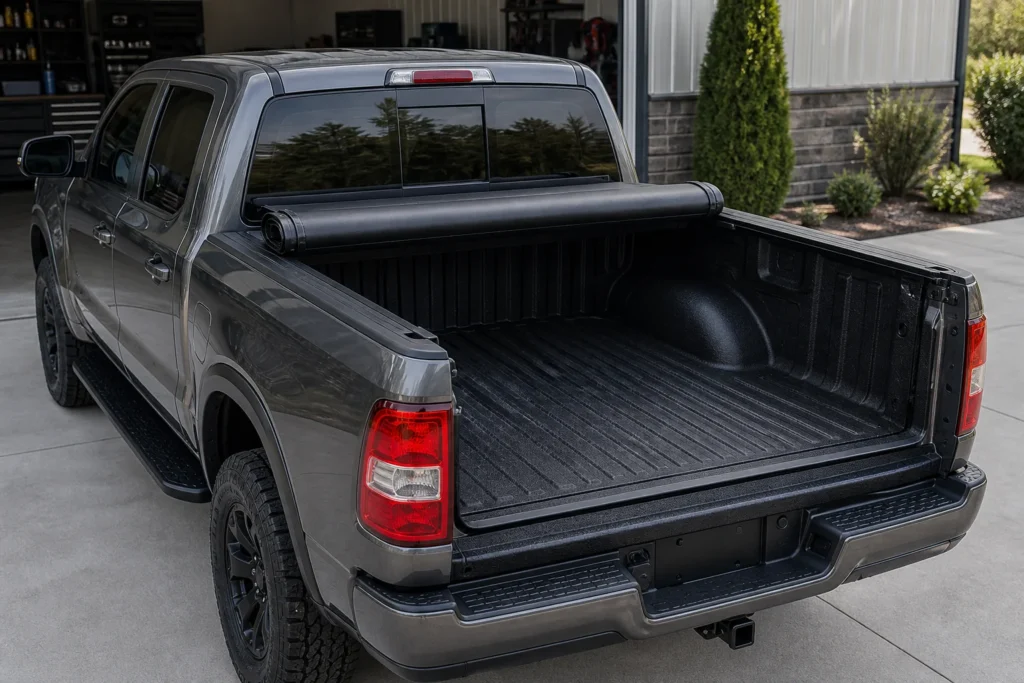
A roll-up tonneau cover is a pickup bed cover that opens by rolling from the tailgate toward the cab. It is one of the simplest ways to protect the bed while keeping quick access to long, tall, or mixed cargo.
Roll-up covers are popular because they are easy to understand. Close the cover when the bed needs privacy and weather resistance. Roll it forward when the truck needs open-bed access. The main decision is whether the buyer needs a soft roll-up cover for value or a hard roll-up cover for more structure and security.
Table of Contents
- What is a roll-up tonneau cover?
- How does a roll-up tonneau cover work?
- What types of roll-up tonneau covers are available?
- What are the benefits of a roll-up tonneau cover?
- Is a roll-up cover better than a folding cover?
- What should buyers check before choosing a roll-up cover?
- Conclusion: Roll-up covers are best when access and simplicity matter
- Frequently Asked Questions
- References
What is a roll-up tonneau cover?
A roll-up tonneau cover is a truck bed cover that rolls into a compact bundle near the cab when opened. Most designs use side rails, a rear latch, tension controls, seals, and straps to hold the rolled cover in place.
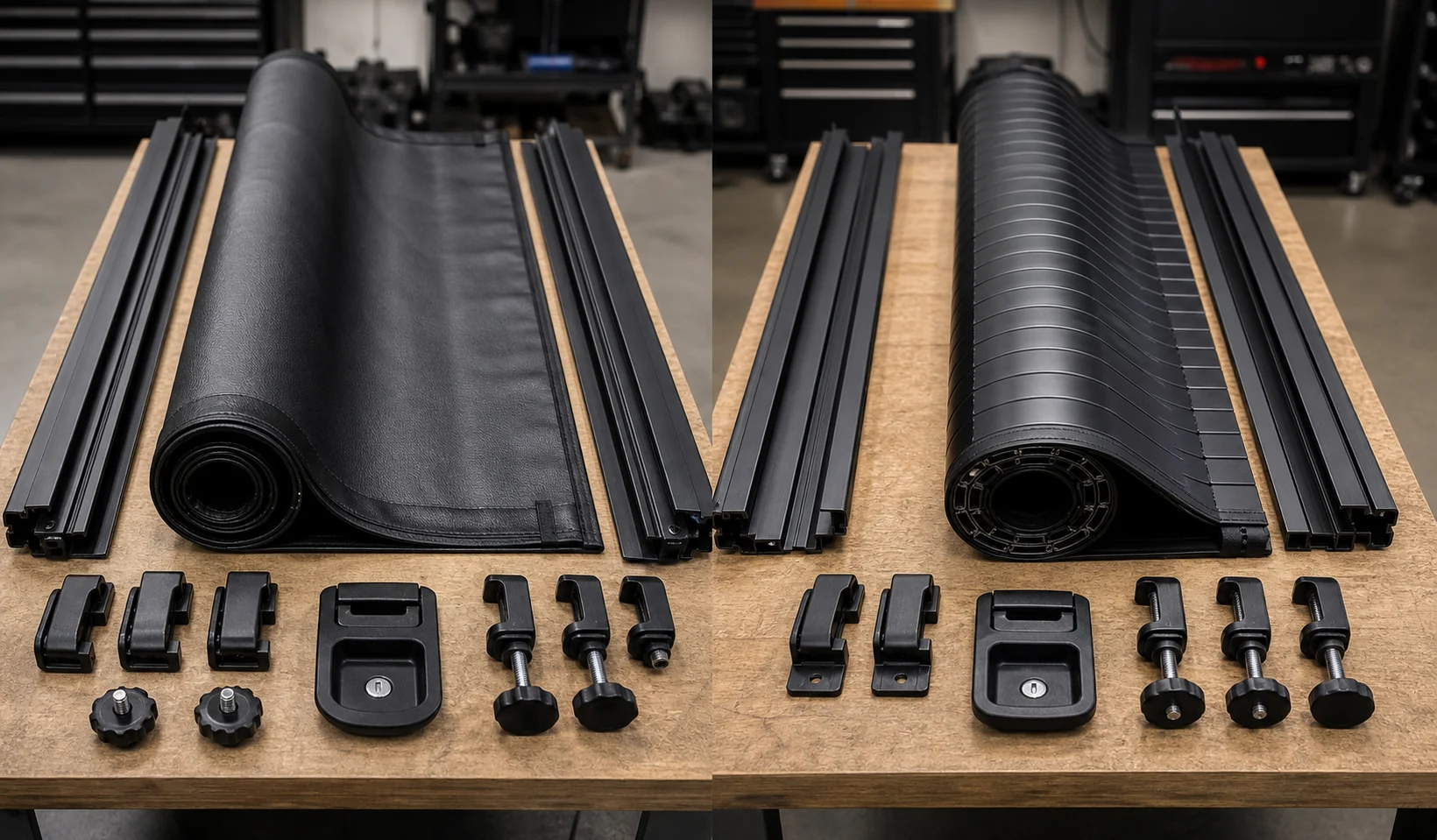
Soft roll-up covers usually use vinyl or coated fabric over a lightweight support system. Hard roll-up covers use connected aluminum or composite slats with a softer outer surface or low-profile top layer. Both styles give more open-bed access than many folding covers.
The what tonneau covers are made of guide explains what to request beyond the style name, including coated-fabric mass, coating adhesion, panel or slat construction, seals, and fitment checks.
If the buyer is still learning the broader category, the complete tonneau cover guide compares roll-up, folding, retractable, and hinged covers across bed access, security, water resistance, installation, weight, rack compatibility, and price.
How does a roll-up tonneau cover work?
A roll-up tonneau cover works by releasing a latch at the tailgate, rolling the cover toward the cab, and securing the roll with straps or clips. When closed, the cover is pulled tight across the bed and latched at the rear.
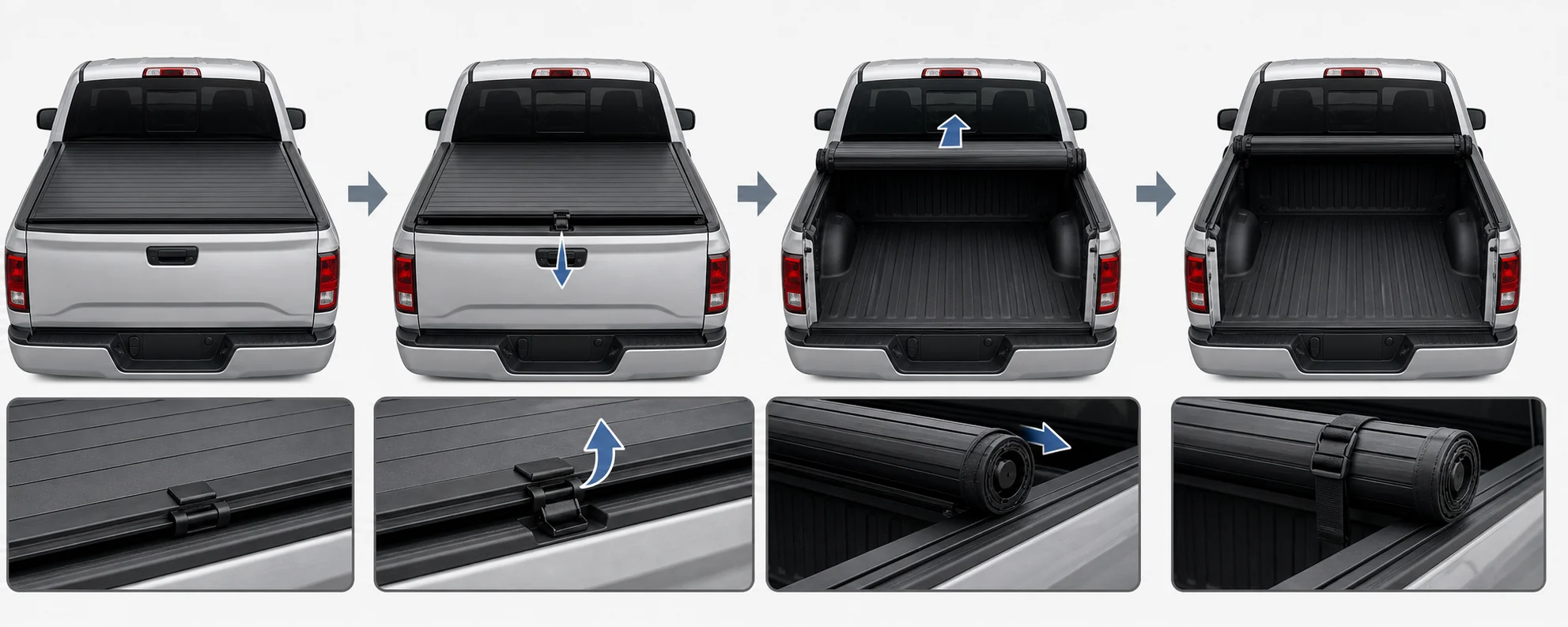
The side rails guide the cover and create the sealing surface. The rear latch keeps the cover closed. The tension system keeps soft material from sagging or flapping. On hard roll-up covers, the slats roll together while still giving the closed cover a more rigid feel.
This simple operation is the biggest selling point. A driver can open the whole bed without lifting heavy panels or giving up front bed space to a canister. The trade-off is that soft roll-up covers usually offer less theft deterrence than hard covers.
The tension system deserves attention because it affects both appearance and performance. If the cover is too loose, it can flap at highway speed and collect water. If it is too tight, the latch may be difficult to close and the material may wear faster around the edges. A good roll-up cover should close with firm, even tension without forcing the tailgate.
What types of roll-up tonneau covers are available?
The two main types are soft roll-up tonneau covers and hard roll-up tonneau covers. Soft versions are lighter and usually cheaper. Hard versions are stronger, more structured, and usually more expensive.
| Type | Best for | Main advantage | Main caution |
|---|---|---|---|
| Soft roll-up | Budget and easy access | Lightweight, simple, usually low cost | Lower security than hard covers |
| Hard roll-up | Better protection with full access | More rigid and cleaner feel | Higher cost and more weight |
| Low-profile roll-up | Clean appearance | Sits closer to bed rails | Fitment must be precise |
| Toolbox-compatible roll-up | Work trucks | Keeps access around a toolbox | More fitment limits |
The related hard vs soft tonneau cover comparison is useful when the buyer is unsure whether lower price or stronger structure matters more.
What are the benefits of a roll-up tonneau cover?
The main benefits are full bed access, simple operation, lighter weight, easy removal, and strong value for daily pickup use. A roll-up cover is a practical choice when the truck often carries different cargo heights.
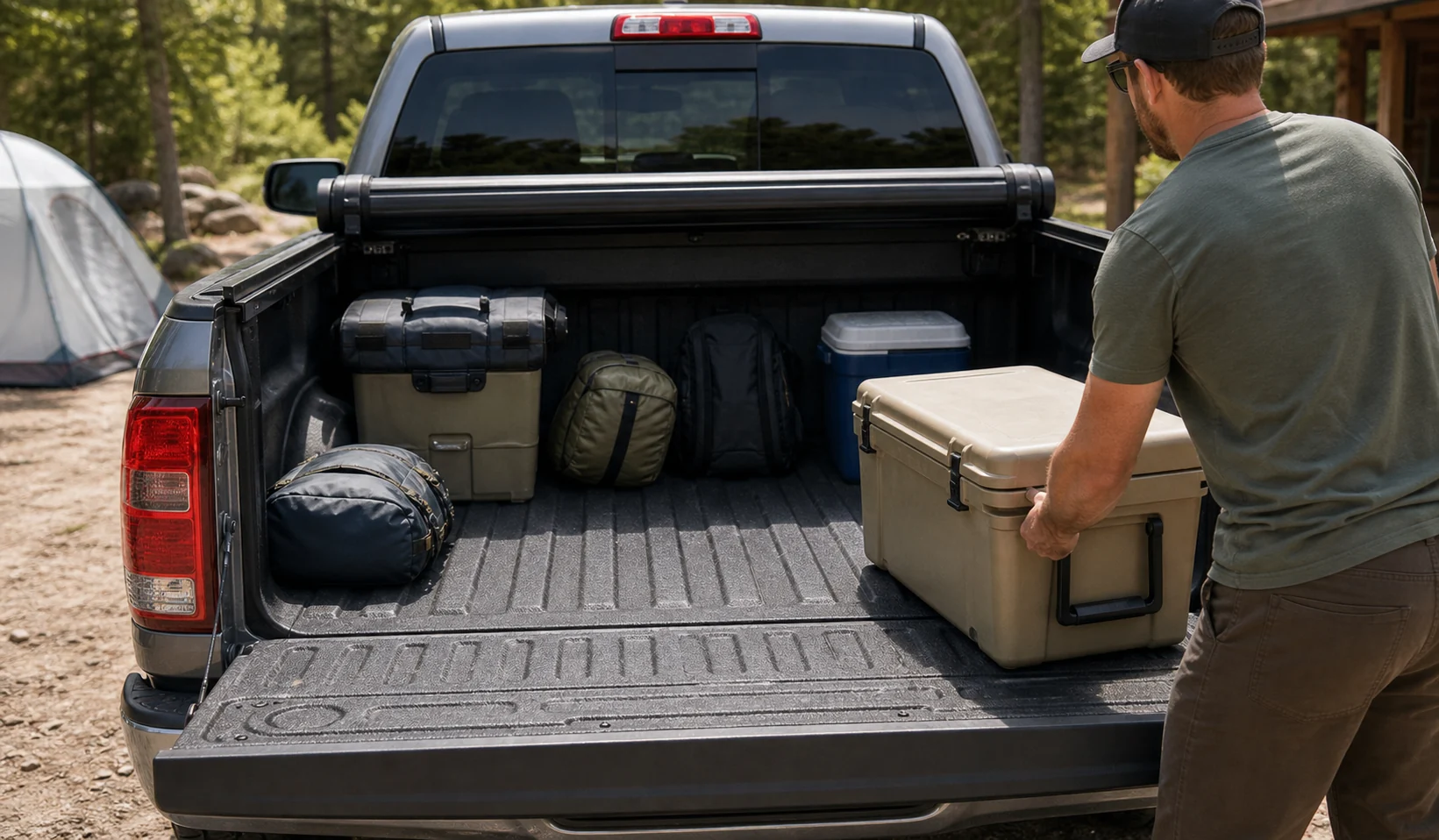
Roll-up covers are especially helpful for drivers who switch between covered cargo and open-bed hauling. Groceries, luggage, tools, camping gear, furniture, sports equipment, and tall boxes can all fit without removing a bulky cover.
Soft roll-up covers also keep packaging and shipping relatively simple compared with large hard panels. That can make them attractive for retail programs. Hard roll-up covers cost more, but they add a more premium feel while still rolling out of the way.
Weather protection is useful but should be described honestly. A roll-up cover can reduce rain, dust, leaves, and sun exposure, but it is usually water-resistant rather than waterproof. Access Cover's care guidance is a helpful reminder that tension, cleaning, and seal maintenance affect long-term performance 3.
Roll-up covers are also attractive for customers who remove their covers seasonally. A soft roll-up system is usually easier to store than a hard folding lid or truck cap. That matters for drivers who use the truck for daily commuting during the week and bulky home-improvement or outdoor cargo on weekends.
Is a roll-up cover better than a folding cover?
A roll-up cover is better when the buyer wants nearly full bed access, lighter handling, and simple storage near the cab. A folding cover is better when the buyer wants panel structure, a more solid feel, or the convenience of opening only one section at a time.
For buyers comparing folding designs, the related tri-fold tonneau cover guide explains how three-panel covers balance access and structure. For buyers who want premium sliding access instead of rolling or folding, the related retractable tonneau cover guide explains the canister and rail trade-offs.
The better choice depends on cargo habits. A driver who often loads tall items may prefer roll-up. A driver who carries tools and wants stronger panels may prefer hard folding or hard roll-up. A driver who wants a premium motion may prefer retractable.
What should buyers check before choosing a roll-up cover?
Buyers should check bed fitment, rail design, latch quality, tension adjustment, seal profile, material thickness, stitching, clamp strength, strap security, and carton protection before choosing a roll-up cover.
For Yirox Team sample checks, tension is one of the first details to review. A soft cover should sit flat without heavy wrinkles or loose edges. A hard roll-up cover should roll smoothly without slats binding or leaving uneven gaps.
The latch should be easy to reach from the tailgate. The straps should hold the rolled cover firmly near the cab. The rails should sit straight, especially on trucks with bed liners, bed caps, or accessory tracks.
Cargo still needs proper restraint. NHTSA reminds drivers to secure loads safely, and a tonneau cover should not be treated as the only thing holding cargo in the bed 1. This is especially important when the cover is open and the truck is carrying tall or loose items.
For wholesale programs, check batch consistency: fabric grain, rail finish, clamp shape, latch feel, stitching, seal length, and hardware bag contents. Roll-up covers look simple, but small changes can affect tension and installation.
Installation instructions should be checked like a product feature. A roll-up cover may seem obvious in a showroom, but the installer still needs to know how far forward the rails sit, how clamps line up, how the latch engages, and how to adjust tension after the first fit. Clear instructions reduce returns that are really installation errors.
Packaging is another practical detail. Rails can bend if the carton is weak, and fabric can crease if the roll is compressed badly. Hardware bags should be separated from the cover surface so clamps and bolts do not rub through the material during shipping. For private-label orders, the carton should protect the product and explain fitment without overloading the customer with small print.
After the first installation, a short retension check is useful. Covers can settle after a few open-close cycles, especially soft vinyl versions. A simple note in the manual can prevent loose-cover complaints.
That small service step can make the cover feel better for years.
Conclusion: Roll-up covers are best when access and simplicity matter
A roll-up tonneau cover is a smart choice for pickup owners who want quick bed access, simple operation, lighter handling, and strong everyday value. It works especially well when the truck carries mixed cargo and the bed often needs to be fully open.
Soft roll-up covers are best for budget and easy handling. Hard roll-up covers are better when the buyer wants more structure and theft deterrence without giving up the roll-open design.
If the next step is comparing pickup bed cover options, related pickup tonneau covers can be reviewed by material, rail fit, latch design, packaging, and daily-use expectations.
Frequently Asked Questions
Are roll-up tonneau covers good?
Yes. Roll-up covers are good for drivers who want simple bed protection and quick access to nearly the full truck bed. They are especially practical for mixed cargo.
Is a hard roll-up cover better than a soft roll-up cover?
A hard roll-up cover is better for structure and theft deterrence. A soft roll-up cover is better for lower cost, lighter weight, and easier handling.
Do roll-up tonneau covers leak?
They are usually water-resistant, not fully waterproof. Rail fit, tension, seals, tailgate gaps, and maintenance affect water control.
Can you drive with a roll-up cover open?
Yes, if the cover is rolled and secured according to the instructions. Loose rolls or straps can damage the cover or create unsafe movement.
Does a roll-up cover give full bed access?
It usually gives very strong bed access because the cover rolls near the cab instead of stacking panels across the bed. Some rail hardware still remains in place.
References
[1] NHTSA. *[Securing Your Load](https://www.nhtsa.gov/road-safety/securing-your-load)*.
[2] RealTruck. *[Types of Tonneau Covers](https://realtruck.com/blog/types-of-tonneau-covers/)*.
[3] Access Cover. *[Tonneau Cover Care and Maintenance](https://www.accesscover.com/support/care-maintenance/)*.
[4] Consumer Reports. *[Pickup Truck Buying Guide](https://www.consumerreports.org/cars/pickup-trucks/buying-guide/)*.