



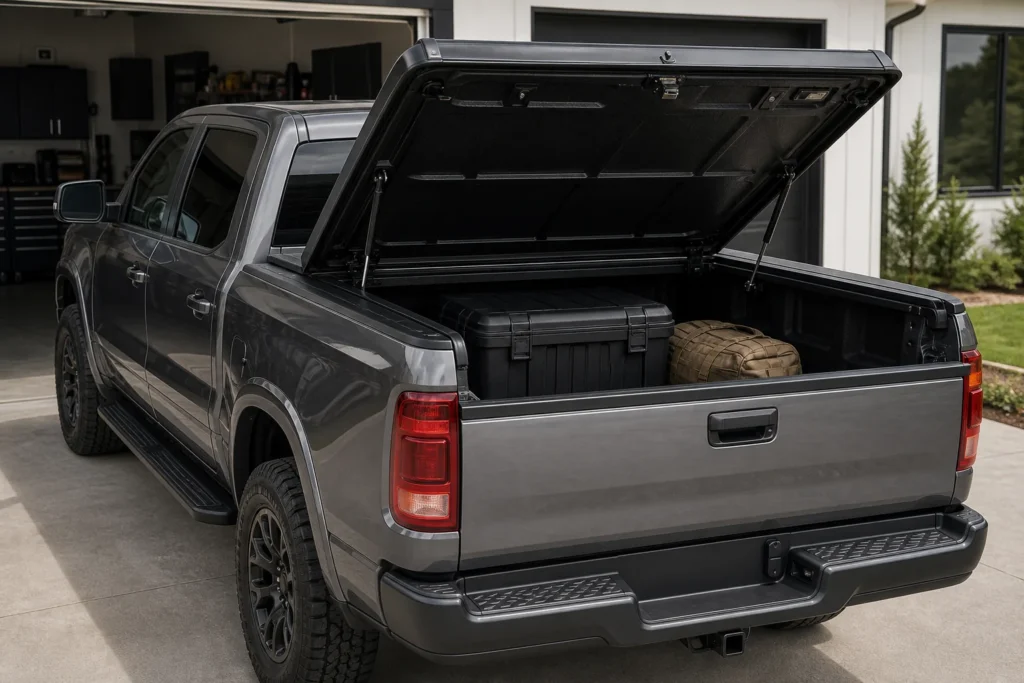
A hinged tonneau cover is a pickup bed cover that opens as one solid lid, usually from the tailgate end with hinges near the cab. It works more like a trunk lid than a folding, rolling, or retractable bed cover.
Hinged covers are best for pickup owners who want a clean finished look, stronger cargo privacy, and simple open-close operation. They are less ideal for drivers who frequently carry tall items because the one-piece lid limits vertical cargo access.
Table of Contents
- What is a hinged tonneau cover?
- How does a hinged tonneau cover work?
- What types of hinged tonneau covers are available?
- What security features does a hinged tonneau cover have?
- What are the best uses for a hinged tonneau cover?
- Is a hinged tonneau cover right for every pickup?
- Conclusion: Hinged covers are best for clean secure cargo
- Frequently Asked Questions
- References
What is a hinged tonneau cover?
A hinged tonneau cover is a one-piece cover, usually hard, that lifts open on hinges and gas struts. It covers the whole pickup bed as a single lid rather than folding into sections or rolling toward the cab.
If the buyer is still comparing the overall category, the complete tonneau cover guide explains how hinged covers compare with roll-up, folding, and retractable mechanisms and includes a fitment inspection sheet.
Many hinged covers are made from fiberglass, ABS, aluminum, or composite material. Some are painted to match the truck. Others use textured black finishes. The best versions look clean, seal reasonably well, and open smoothly with strut support.
The fiberglass, ABS, and composite tonneau cover materials guide compares those constructions by shell, core, frame, seal, weight, and verifiable sample checks rather than treating every hard lid as the same product.
How does a hinged tonneau cover work?
A hinged tonneau cover works by lifting one large lid from the rear of the bed. Hinges near the cab create the pivot point, and gas struts support the cover as it opens and closes.
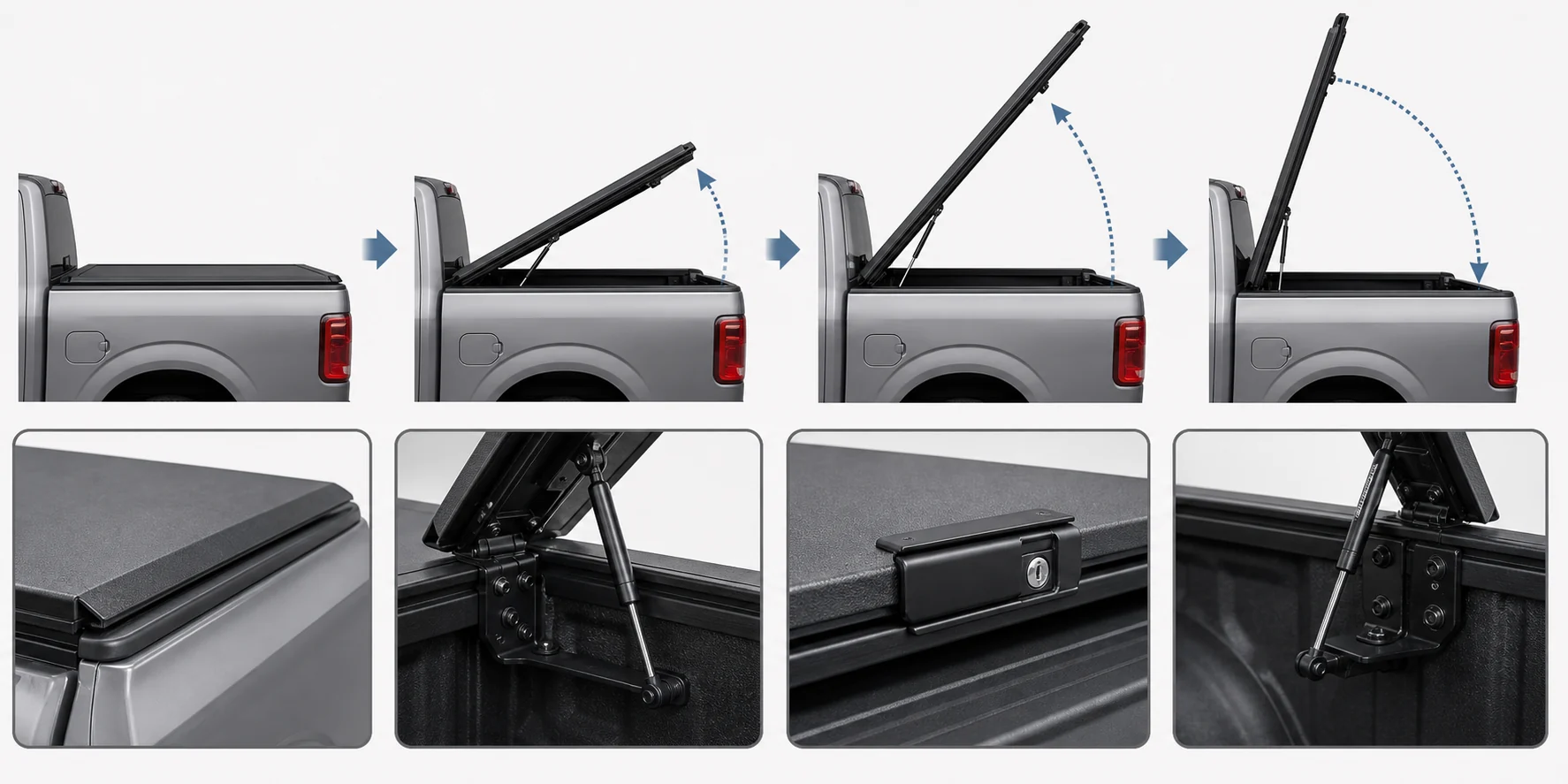
The operation is simple. Unlock the cover if it has a separate lock, release the latch, lift the lid, load cargo, and close it again. Because the lid is one piece, the cover can feel more stable than a soft cover.
The trade-off is cargo height. A hinged cover does not fold away or roll forward. If the cargo is taller than the bed and cover opening allows, the cover may need to be removed or the cargo may not fit.
The opening angle matters more than many buyers expect. A lid that opens high enough makes loading suitcases, toolboxes, and bins easy. A lid with weak struts or limited lift can feel awkward because the user has to work under the cover. In cold weather, low-quality gas struts may also feel weaker, so sample checks should include more than one smooth showroom lift.
What types of hinged tonneau covers are available?
Common hinged tonneau cover types include fiberglass lids, ABS lids, aluminum lids, painted hard lids, textured hard lids, and toolbox-compatible hinged covers. Most are hard covers because the one-piece design depends on structure.
| Hinged cover type | Best for | Main benefit | Main caution |
|---|---|---|---|
| Fiberglass hinged cover | Painted street-truck look | Smooth and premium | Heavy and often pricier |
| ABS or composite lid | Lighter hard-cover option | Lower weight than fiberglass | Quality varies by material |
| Aluminum hinged cover | Utility and durability | Strong and rigid | Surface finish matters |
| Textured black lid | Work trucks and daily use | Hides small marks better | Less paint-matched styling |
| Toolbox-compatible lid | Work setups | Covers bed while keeping toolbox | Fitment is more specific |
The related hard vs soft tonneau cover comparison is useful because hinged covers usually sit on the hard-cover side of the market.
Painted lids need extra care in both sourcing and shipping. A paint-matched cover can look excellent on the truck, but color match, surface waviness, edge finish, and carton protection become more important. Textured black lids are often more forgiving for work trucks because small marks are less obvious.
What security features does a hinged tonneau cover have?
A hinged tonneau cover can include a lock, latch system, reinforced hard lid, perimeter seal, internal release, gas struts, and compatibility with a locking tailgate. These features make it one of the stronger tonneau cover styles for cargo privacy.
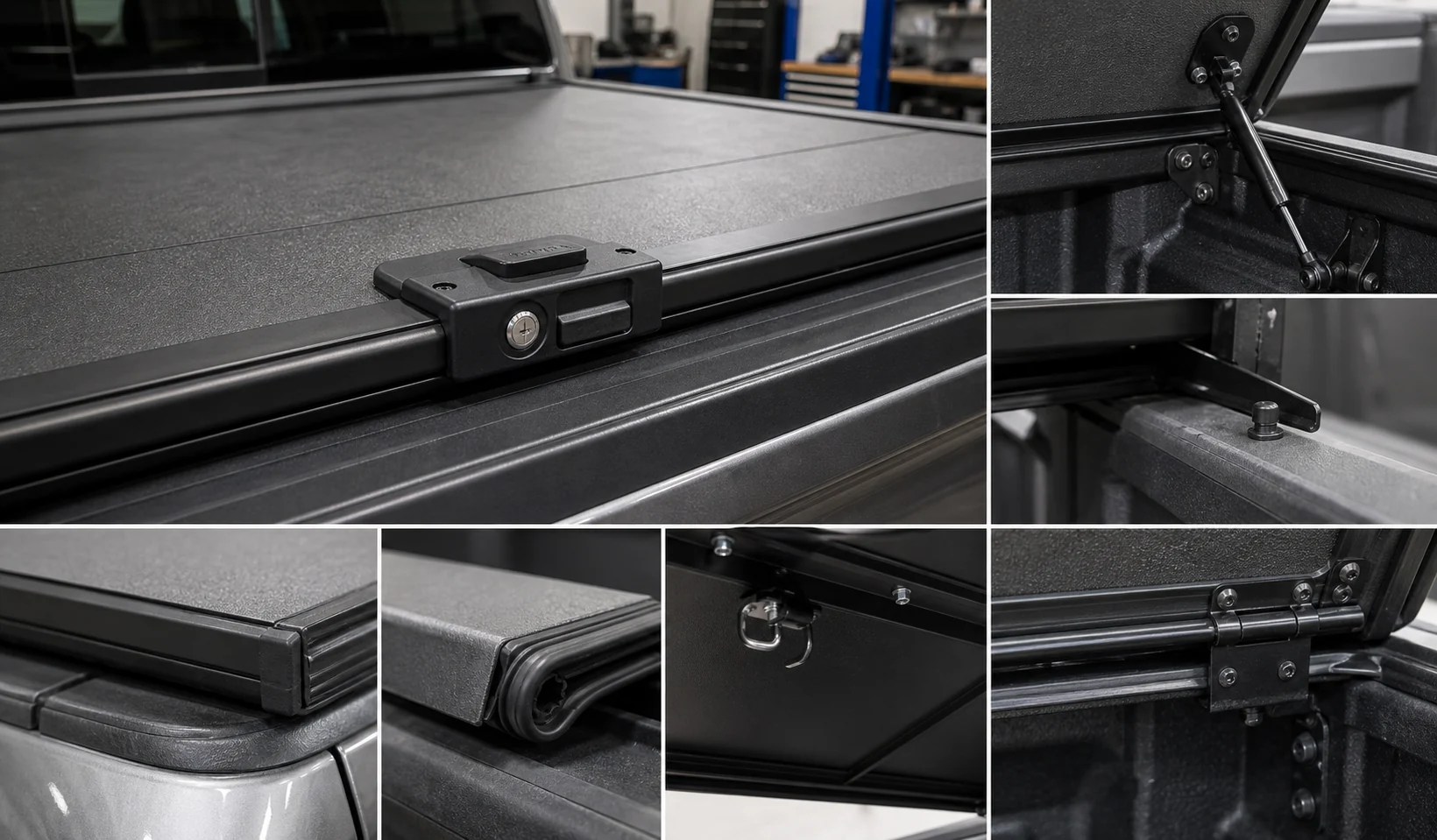
Security should still be described carefully. A hinged hard cover can deter casual theft better than a soft cover, but it does not turn the truck bed into a safe. The cover, tailgate, latch, and lock all need to work together.
The seal system also matters. A one-piece lid has fewer panel joints than a folding cover, which can help weather resistance. However, water can still enter around the tailgate, rails, hinge area, bed caps, or accessory gaps. Access Cover's maintenance guidance is a reminder that cleaning and seal care affect long-term performance 3.
What are the best uses for a hinged tonneau cover?
Hinged tonneau covers are best for daily cargo privacy, luggage, tools, sports gear, show trucks, street trucks, and drivers who rarely carry cargo taller than the bed rails.
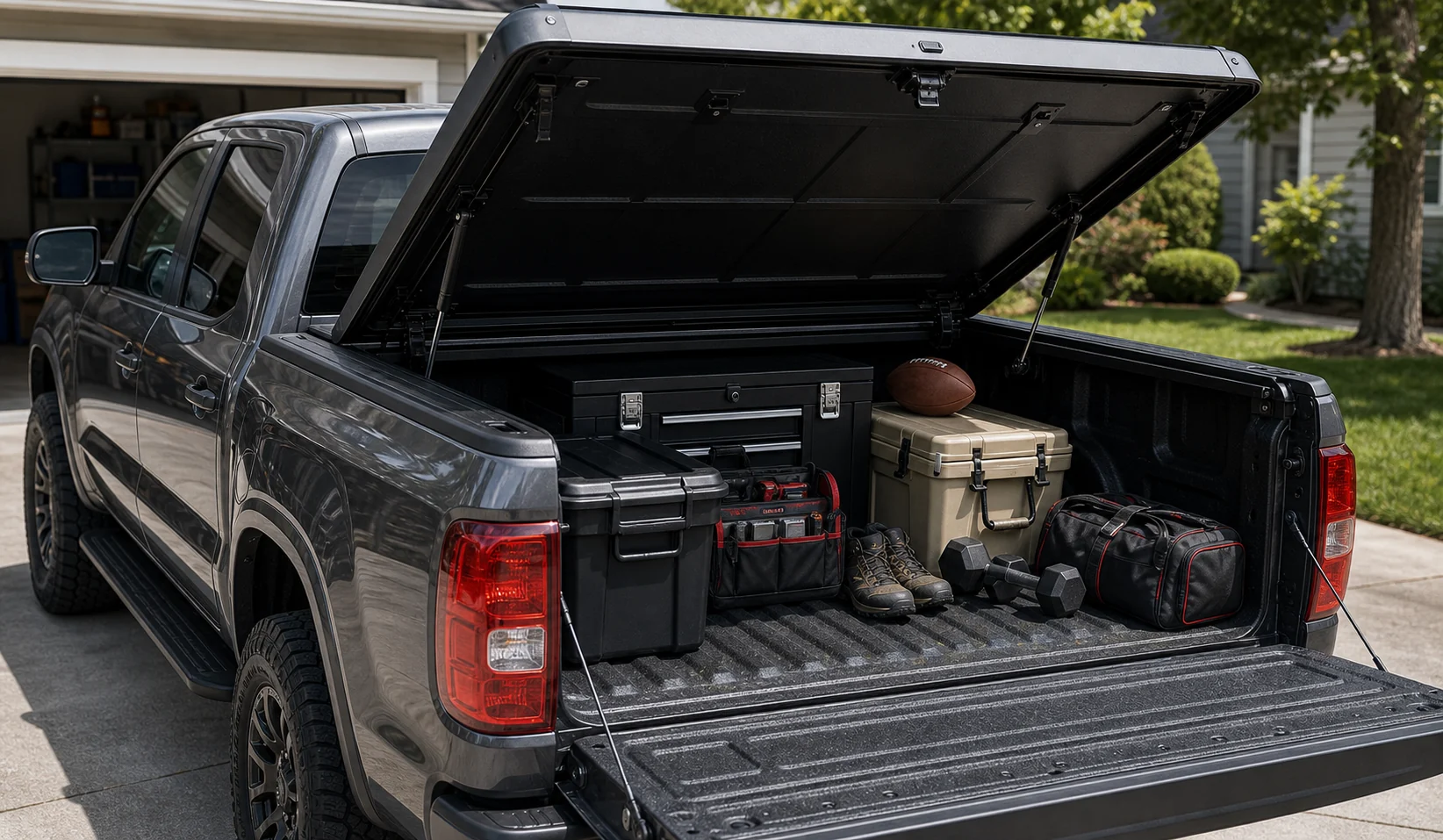
They are popular when the buyer wants a smooth cover that feels like part of the truck. A painted hinged cover can look more integrated than a folding or roll-up cover. A textured utility lid can be a strong option for work trucks.
Compared with a folding cover, a hinged cover is simpler visually but less flexible for tall cargo. For buyers who want sectional access instead, the related tri-fold tonneau cover guide is the better next step.
Is a hinged tonneau cover right for every pickup?
A hinged tonneau cover is not right for every pickup. It is best when the owner values clean styling, secure enclosed storage, and simple lid operation more than full-height cargo flexibility.
If the driver often hauls appliances, bikes, tall boxes, motorcycles, or bulky work materials, a roll-up, tri-fold, or retractable cover may be easier to live with. The related retractable tonneau cover guide explains a premium alternative that opens without lifting a large lid.
Fitment is also important. Hinged covers need correct bed length, rail contact, tailgate clearance, strut geometry, and hinge alignment. A small fitment problem can create rubbing, wind noise, latch trouble, or water entry.
For Yirox Team sample checks, the lid must open smoothly, stay up safely, close evenly, and latch without force. The carton also needs strong corner protection because a one-piece lid is highly visible; scratches, warped edges, or damaged corners are hard for customers to ignore.
The underside should be checked too. Exposed rough edges, weak reinforcement, loose wiring for interior lights, or poorly mounted struts can make a premium-looking lid feel cheap. If the cover includes a lock, the key action should be smooth and repeatable across samples, not just on the first demonstration unit.
Because hinged covers are large, replacement logistics can be painful. It is better to prevent damage than to rely on after-sales replacement. Packaging should protect corners, painted surfaces, hinge brackets, and latch hardware separately. A small dent or rubbed edge can make the entire cover unsellable.
Installers should also check tailgate clearance before the final tightening. If the lid sits too far back, the tailgate may rub the seal or latch poorly. If it sits too far forward, the rear edge may leave a visible gap. A hinged cover looks simple, but small alignment errors are easy to see.
For retail programs, the best after-sales kit includes spare keys, latch hardware, seal strips, strut part numbers, and clear warranty guidance. Since a hinged cover is a premium-looking product, customers expect support that feels organized.
Maintenance is simple but important. Owners should keep the perimeter seal clean, check hinge bolts occasionally, and replace weak struts before the lid becomes difficult or unsafe to hold open. A heavy lid that will not stay up quickly becomes a customer complaint.
Hinged covers also need careful fitment notes for bed liners and sports bars. Accessories that sit near the rail or cab can interfere with the lid arc, hinge brackets, or seal compression. That compatibility check should happen before ordering, not after the cover arrives.
Conclusion: Hinged covers are best for clean secure cargo
A hinged tonneau cover is a strong choice for pickup owners who want a clean one-piece look, better cargo privacy, simple operation, and a more secure hard-lid feel. It is especially good for daily cargo, luggage, tools, sports gear, and street-truck styling.
The main limitation is bed access. A hinged cover does not roll, fold, or slide out of the way, so it is not the best match for frequent tall cargo. Buyers should choose it when protected low-height cargo matters more than maximum open-bed flexibility.
If the next step is comparing pickup bed cover options, related pickup tonneau covers can be reviewed by cover type, material, security, fitment, packaging, and installation support.
Frequently Asked Questions
Is a hinged tonneau cover secure?
It is usually more secure than a soft cover because it uses a hard one-piece lid and can pair with a locking tailgate. It is theft-deterrent, not theft-proof.
Can a hinged tonneau cover be removed?
Many can be removed, but the process may require tools and a second person because the lid can be large and heavy. It is less convenient than rolling or folding a cover open.
Are hinged tonneau covers waterproof?
They are usually water-resistant, not completely waterproof. Perimeter seals help, but tailgate gaps, hinge areas, bed caps, and installation quality still matter.
What is the main disadvantage of a hinged cover?
The main disadvantage is limited tall cargo access. Since the lid opens as one piece, it does not get out of the way like a roll-up or retractable cover.
Are hinged covers good for work trucks?
Yes, if the cargo is usually low enough to fit under the lid and the owner wants better security. For frequent tall cargo, a different cover style may work better.
References
[1] NHTSA. *[Securing Your Load](https://www.nhtsa.gov/road-safety/securing-your-load)*.
[2] RealTruck. *[Types of Tonneau Covers](https://realtruck.com/blog/types-of-tonneau-covers/)*.
[3] Access Cover. *[Tonneau Cover Care and Maintenance](https://www.accesscover.com/support/care-maintenance/)*.
[4] Consumer Reports. *[Pickup Truck Buying Guide](https://www.consumerreports.org/cars/pickup-trucks/buying-guide/)*.