



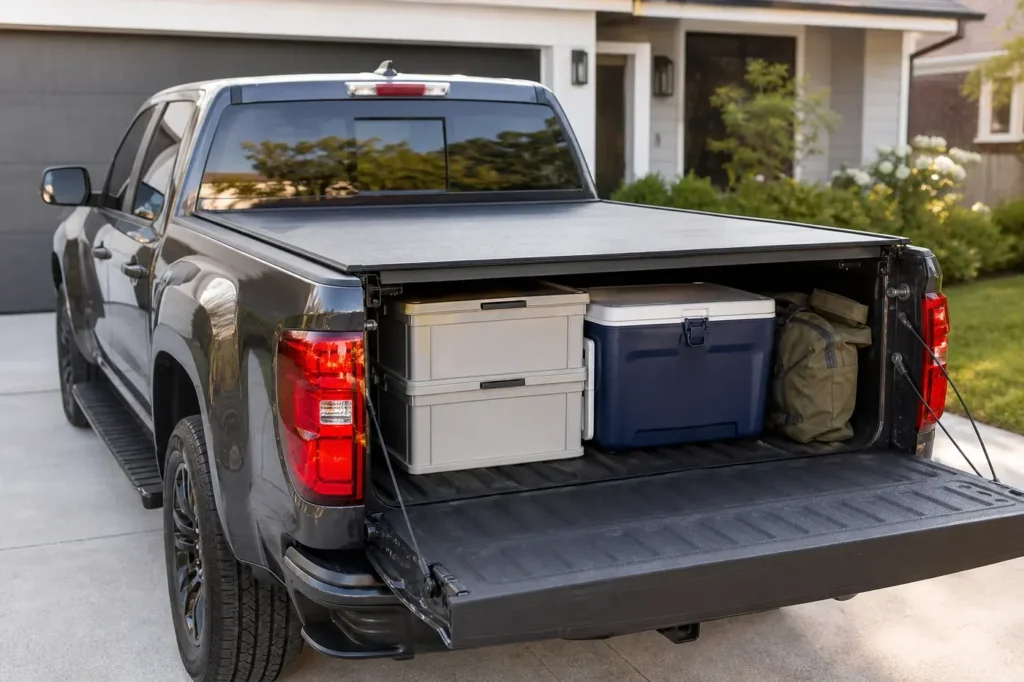
A truck bed cover is an accessory that covers the open cargo bed of a pickup truck to help protect cargo from weather, road grime, wind, and casual theft. In everyday shopping language, “truck bed cover” and “tonneau cover” often mean the same thing, but truck bed cover is the broader phrase and can also include taller caps, shells, and toppers.
That difference matters because many buyers start with a simple question: “I need to cover my pickup bed; what should I buy?” A flat tonneau cover, a folding cover, a retractable cover, a soft roll-up cover, and a full-height truck cap all solve that problem differently.
This guide explains what a truck bed cover does, the main types available, where the word tonneau fits, and how to choose without paying for a feature that does not match the way the truck is used.
Table of Contents
- What does a truck bed cover do?
- Is a truck bed cover the same as a tonneau cover?
- What are the main types of truck bed covers?
- What is a truck bed cover used for in real life?
- How is a tonneau cover different from a truck cap or camper shell?
- How should you choose the right truck bed cover?
- What should distributors and accessory brands check before sourcing covers?
- Conclusion: A cover should fit the truck and the job
- Frequently Asked Questions
- References
What does a truck bed cover do?
A truck bed cover creates a protected top over the pickup bed. It helps keep cargo out of direct rain and sun, reduces cargo movement from wind, hides items from casual view, and gives the truck a cleaner finished profile.
Pickup beds are useful because they are open, but that openness is also the problem. Bags get wet. Tools collect dust. Light cargo can shift or lift at highway speed. A cover gives the owner a way to use the bed more like a trunk while still keeping the truck’s utility.
The exact benefit depends on the cover design. A basic soft cover mainly shields and hides cargo. A hard folding cover adds more theft resistance. A retractable cover gives adjustable access. A truck cap creates a tall enclosed space for camping gear, pets, service equipment, or bulky tools.
If the reader is specifically comparing flat covers, the related guide to what a tonneau cover is is a useful next step because it focuses on low-profile covers rather than the broader truck bed cover category.
Is a truck bed cover the same as a tonneau cover?
In most online stores and everyday conversations, a truck bed cover is usually a tonneau cover. Technically, though, “truck bed cover” is broader, while “tonneau cover” usually refers to a low cover that sits level with or slightly above the bed rails.
This is why search results can feel confusing. A customer may type “truck bed cover” and see roll-up tonneau covers, tri-fold hard covers, retractable covers, hinged lids, truck caps, and camper shells. The first four are normally called tonneau covers. The taller shell-style products are usually called truck caps, toppers, canopies, or camper shells.
The practical difference is height. A tonneau cover keeps the bed low and streamlined. It protects cargo below rail height and sometimes slightly above it, depending on the style. A truck cap adds vertical enclosed space over the bed, usually close to cab height.
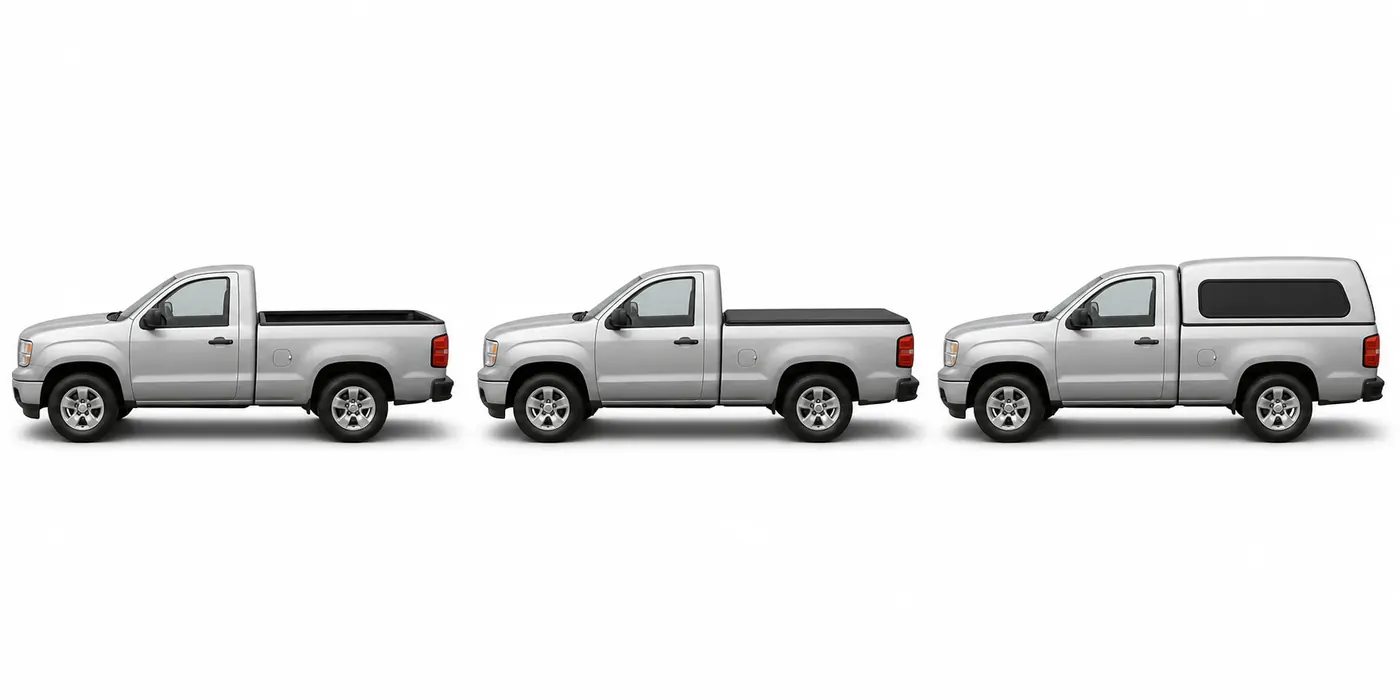
That is why a flat cover is better for drivers who want a clean look and quick access, while a cap is better for users who need enclosed height. For a deeper side-by-side explanation, the tonneau cover vs truck cap comparison helps separate the two buying paths.
What are the main types of truck bed covers?
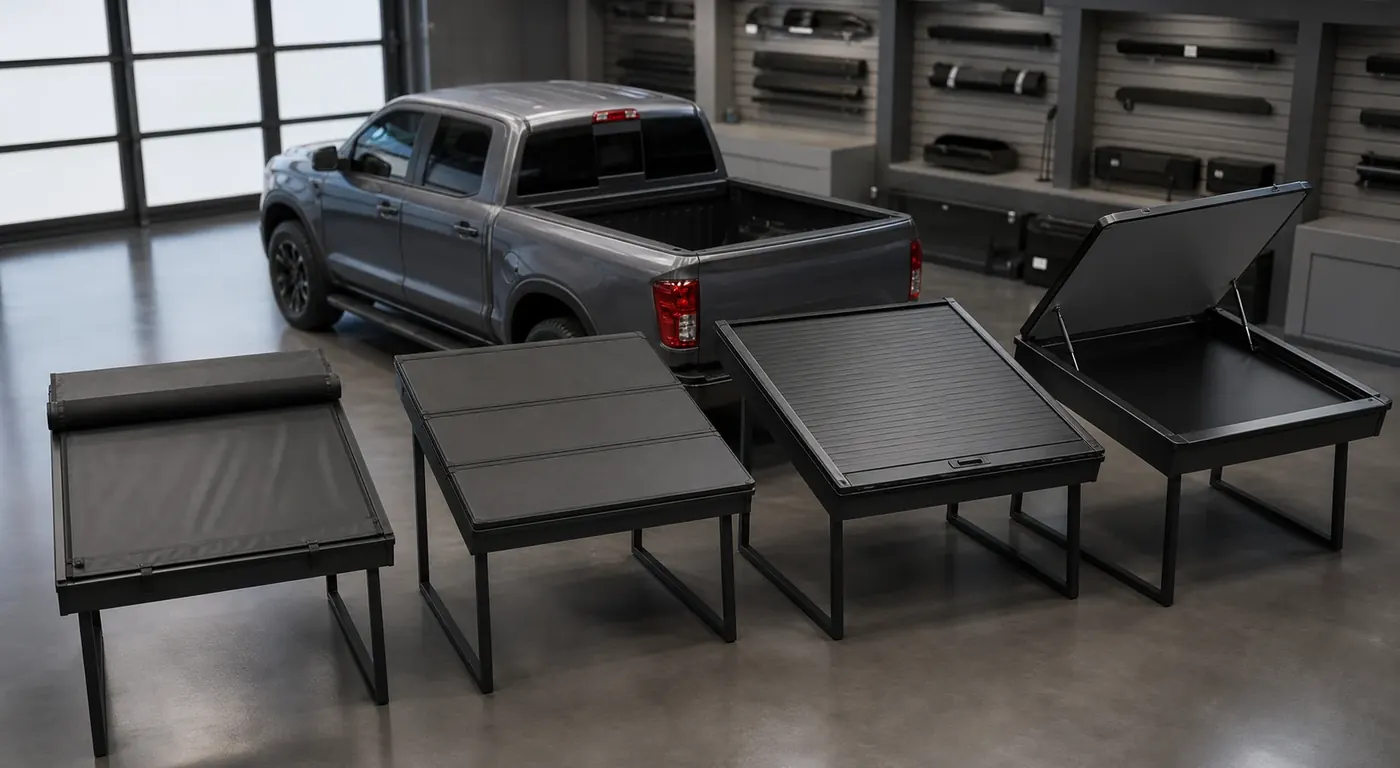
The main truck bed cover types are soft roll-up covers, soft folding covers, hard folding covers, hard roll-up covers, retractable covers, one-piece hinged covers, and truck caps. Each type changes how fast the bed opens, how much security it gives, and how much cargo height remains.
| Type | Best For | Main Trade-Off |
|---|---|---|
| Soft roll-up cover | Low cost, light weight, full bed access | Lower theft resistance |
| Soft folding cover | Easy use and simple installation | Bulkier when folded than roll-up |
| Hard folding cover | Better security and daily convenience | Can block part of the bed or rear window when folded |
| Hard roll-up cover | Stronger surface with roll-up access | Higher cost and more moving parts |
| Retractable cover | Premium access control and clean look | Canister takes front bed space |
| One-piece hinged cover | Smooth look and strong security | Limited tall-cargo access |
| Truck cap or shell | Tall enclosed storage | More weight, cost, and height |
A soft roll-up cover is often the entry point. It stretches across the bed and rolls toward the cab. For readers comparing that simple access pattern, the roll-up tonneau cover guide explains why soft covers remain popular.
Hard tri-fold covers are common because they balance security and convenience. They divide the cover into panels, usually allowing the user to open one-third, two-thirds, or most of the bed. The related tri-fold tonneau cover guide covers those access patterns in more detail.
Retractable covers slide into a canister near the cab. They are often chosen by buyers who want premium operation and adjustable opening positions. The related retractable tonneau cover guide is useful if canister size, slat material, drainage, and lock positions matter.
What is a truck bed cover used for in real life?
A truck bed cover is used to protect everyday cargo, improve privacy, reduce weather exposure, organize work gear, and make a pickup more useful for travel. It is not only an appearance accessory.
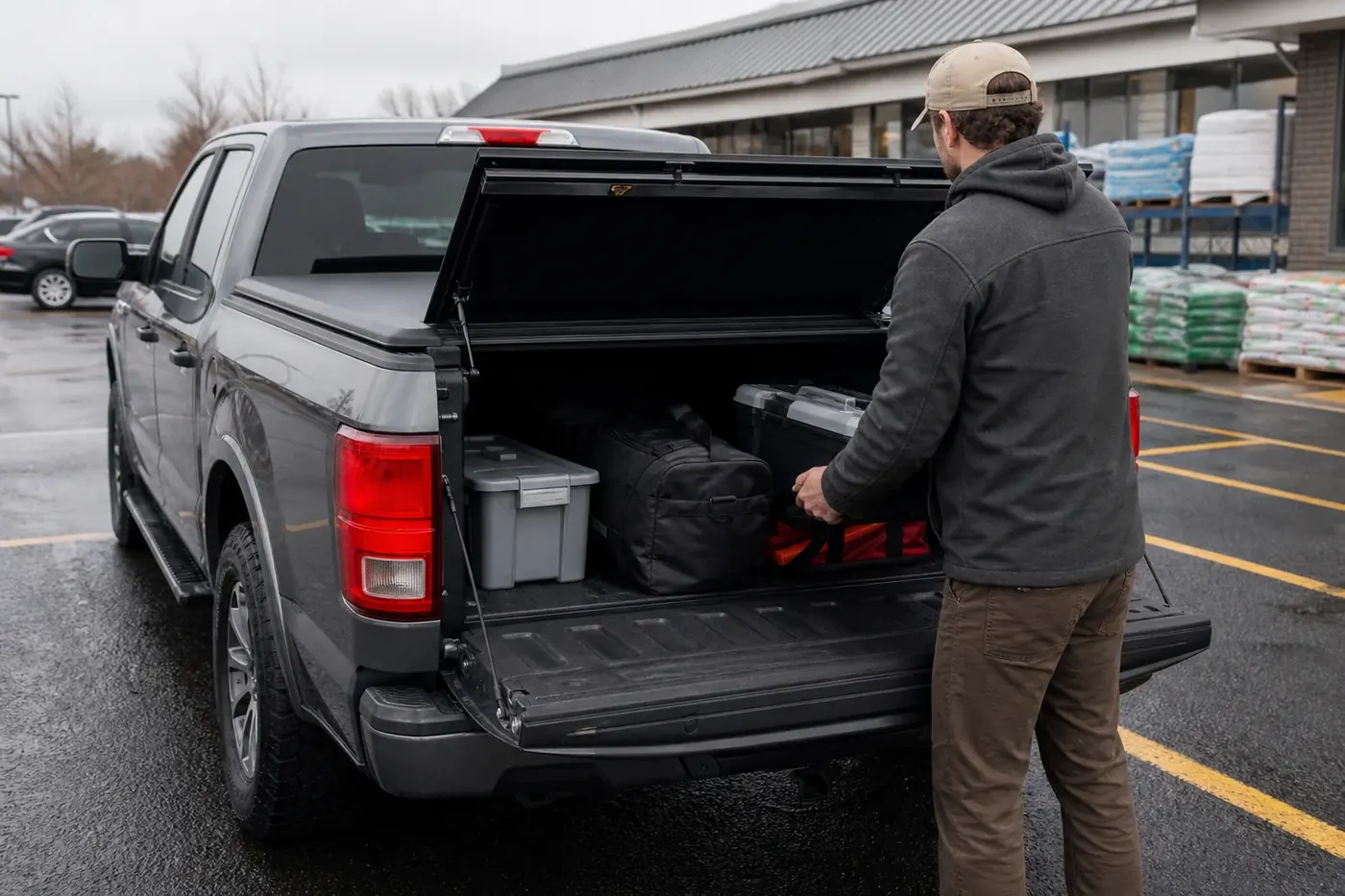
For family use, a cover turns the bed into a better place for suitcases, strollers, sports gear, shopping bags, and camping equipment. For work use, it helps keep tools and materials away from direct rain and reduces casual visibility. For overlanding or weekend trips, it can organize gear under a low, lockable, cleaner surface.
There is a security limit. A soft cover hides cargo, but it is not a safe. A hard cover with a locked tailgate is stronger, but thieves can still attack weak points if the cargo is valuable enough. The cover should be matched to the risk. High-value tools left outside overnight usually deserve a hard cover, strong latch system, and careful parking habits.
Weather protection also depends on expectations. Many covers are water-resistant rather than waterproof. They can handle normal rain well when installed correctly, but pickup beds have tailgate gaps, stake pockets, bed caps, and factory tolerances. A buyer who expects zero water should ask about seals, drainage, and the specific truck model.
How is a tonneau cover different from a truck cap or camper shell?
A tonneau cover is low and covers the bed opening, while a truck cap or camper shell is a taller enclosure that sits above the bed rails. The right choice depends on whether the user needs a low covered bed or a tall enclosed cargo area.
Camper shell references commonly describe these products as rigid canopies or housings mounted on pickup beds, while tonneau covers are flatter bed coverings 3. That distinction is simple, but it affects nearly every buying decision.
A tonneau cover is easier to keep low-profile. It usually has less wind exposure than a tall cap, keeps the truck’s original silhouette, and may be easier to remove or fold depending on style. It is strong for drivers who haul cargo below bed-rail height and want the truck to look clean.
A truck cap is better when cargo is tall, fragile, or used for service work. It can shelter dogs, ladders, camping setups, tool drawers, and stacked bins. But it adds weight and height, changes visibility, affects parking clearance, and usually costs more to ship and install.
The important question is not which product is “better.” It is whether the pickup owner needs vertical space. If not, a tonneau cover is often simpler. If yes, a cap may be the only practical option.
How should you choose the right truck bed cover?
Choose a truck bed cover by starting with cargo height, security needs, opening frequency, climate, budget, and installation tolerance. The cover should make the truck easier to use, not create a new daily frustration.
- Cargo height: If cargo often sits above the bed rails, a flat tonneau cover may not work. Consider a cap or a cover that can open fully.
- Security level: Use soft covers for privacy and light protection. Choose hard covers for tools, electronics, or frequent city parking.
- Access pattern: Roll-up covers give open-bed access. Folding covers are quick but stack panels. Retractable covers are adjustable but use canister space.
- Weather exposure: Rain, snow, dust, and UV should influence material, seals, and drainage design.
- Installation: Some covers are easy clamp-on products. Others require more careful alignment, drain routing, or lifting help.
- Budget: A cheap cover that leaks, flaps, or returns often costs more in the long run than a better-matched mid-range option.
Published buying guides often describe tonneau covers as hard or soft products that enclose the pickup bed for protection, with many style choices such as roll-up, hinged, folding, and retractable 1. Automotive accessory guides also emphasize that cover style changes access and cargo protection 2.
What should distributors and accessory brands check before sourcing covers?
Distributors and accessory brands should check fitment coverage, sample consistency, hardware quality, carton protection, instructions, labeling, and market-specific style preferences before placing larger orders. The product has to survive installation, shipping, and customer expectations.
Fitment is the first risk. Pickup bed dimensions vary by model year, cab style, bed length, rail cap, sports bar, bed liner, and tailgate design. A cover that fits one version of a truck may need different brackets or seals for another. Clean fitment data prevents returns.
Hardware is the second risk. Rails, clamps, hinges, latch cables, drain tubes, and rubber seals should be evaluated as carefully as the panel material. During Yirox Team sample checks, small issues such as inconsistent clamp finish, loose latch feel, or weak carton corner protection often matter more than a dramatic material claim.
Packaging also deserves attention. Hard covers can be dented, scratched, or warped if cartons are weak. Fiberglass lids need surface protection. Retractable covers need canister and rail protection. Instruction sheets should be clear enough for a real installer, not only for the engineer who designed the product.
If the next step is building or expanding a cover range, Yirox’s pickup tonneau covers category is the practical place to start because it keeps the conversation around cover style, sample review, packaging, low-MOQ testing, and OEM/ODM customization.
Conclusion: A cover should fit the truck and the job
A truck bed cover is a practical accessory that protects cargo and makes an open pickup bed easier to use. In most cases, the product people call a truck bed cover is a tonneau cover, but the broader category also includes taller caps and shells.
The best choice depends on how the truck is used. A soft roll-up cover works well for affordable everyday protection. A hard folding cover suits many daily drivers who want better security. A retractable cover gives premium access control. A hinged lid looks clean and secure, while a truck cap adds enclosed height for larger cargo.
For buyers, the smartest move is to choose around real cargo, real weather, and real access habits. For business buyers, the same logic applies at scale: fitment accuracy, hardware consistency, packaging, and sample discipline are what keep a cover program healthy after the first order.
Frequently Asked Questions
What is the best truck bed cover for daily use?
For most daily drivers, a hard folding cover is the easiest balanced choice because it offers better security than soft vinyl while keeping access fairly convenient. A soft roll-up cover is better when low cost and full bed access matter most.
Is a tonneau cover a truck bed cover?
Yes, a tonneau cover is a type of truck bed cover. The term usually means a low cover over the bed, while truck bed cover can also refer more broadly to caps, shells, and other bed enclosures.
Can you drive with a truck bed cover open?
Some covers can be driven partially or fully open if they are secured in the approved position. Always follow the product instructions, because loose panels, straps, or slats can damage the truck or create road hazards.
Do truck bed covers keep water out?
They help keep water out, but most are water-resistant rather than fully waterproof. Seal design, tailgate gaps, bed liner shape, drain routing, and installation quality all affect water control.
What is the easiest truck bed cover to remove?
Many soft roll-up and soft folding covers are the easiest to remove because they are lighter and use simpler clamp systems. One-piece fiberglass lids and some retractable covers are harder to remove because of weight and hardware.
References
[1] Action Trucks. (2025). *Tonneau Cover Buying Guide*.
[2] MotorTrend. (2020). *Choosing a Retractable Tonneau Cover*.
[3] Wikipedia. (2026). *Camper shell*.