




OEM wheel weights require a manufacturer to control the approved product specification, materials, fitment, markings, packaging, testing, documentation, and revision history across repeat orders. Brand owners should judge an OEM program by how reliably those controls are maintained after sample approval, not only by the first production quote.
For a brand owner, OEM is not merely putting a name on a carton. It is an agreement that a defined wheel-weight configuration will be made, checked, packed, identified, and changed in a controlled way. The first quote and sample matter, but the real test is whether the factory can repeat the approved result when volumes, packaging, or staff change.
Table of Contents
- What does OEM mean for wheel weights?
- What must an OEM wheel weight manufacturer control?
- How should product and document control work?
- How should brand owners approve samples and protect repeat orders?
- What production-consistency evidence matters?
- How should packaging and change management be handled?
- What should brand owners check before first production?
- Conclusion: approve the repeatable program, not only the sample
- Frequently Asked Questions
- References
What does OEM mean for wheel weights?
OEM means the manufacturer supplies an agreed wheel-weight program under the brand owner's requirements, with control over the approved product and the information needed to reproduce it. It can cover standard products with branded packaging, product-level modifications, or both, but the scope must be written down.
Start with the product and application decisions, not the logo. The product and application decisions that an OEM brief must lock down help a brand owner define which wheel applications, attachment families, materials, increments, and package types the program actually needs before it asks a manufacturer to take responsibility for them.
| OEM area | Brand-owner requirement | Manufacturer evidence |
|---|---|---|
| Product | Named attachment, material, finish, profile or strip, increments, and application | Identified SKU, sample, drawing, and stated standard or custom elements |
| Quality | Critical checks and acceptance method | Measuring equipment, inspection method, sample record, and nonconformance handling |
| Identity | Brand SKU, labels, lot or batch data, carton contents | Approved label and packing record linked to the order |
| Repeat supply | Revision control and change notification | Written method for preventing or declaring changes |
| Commercial program | MOQ basis, forecast, samples, packaging, and shipment plan | Clear separation of recurring and one-time commitments |
What must an OEM wheel weight manufacturer control?
An OEM manufacturer must control the exact configuration it has agreed to make, the components and process stages that affect it, its inspection and packing method, and the record that links a production lot to the approved version.
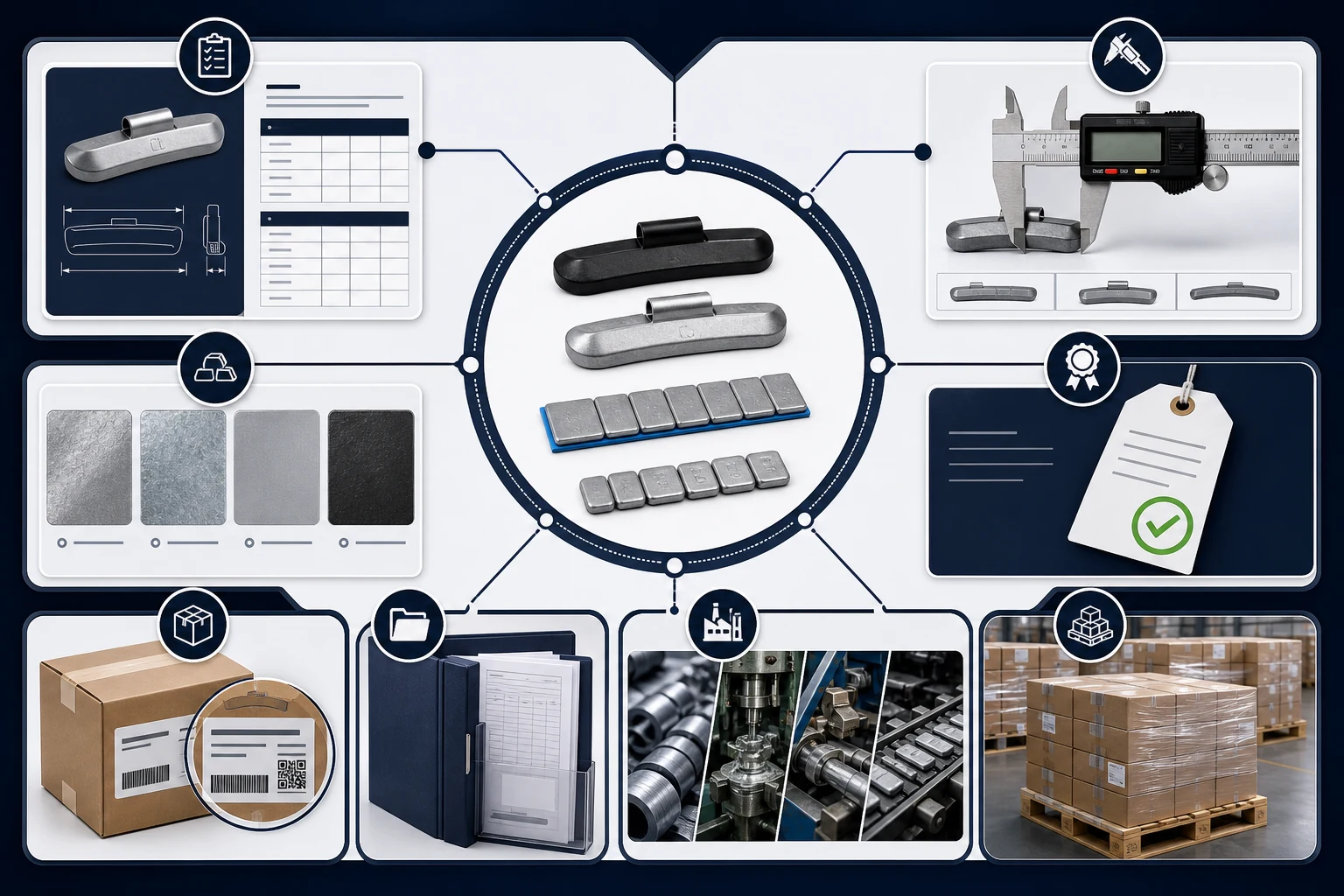
For clip-on products, that can include profile, material, finish, increment, fitment evidence, inspection, and packing. For adhesive products, it can include weight body, coating, strip geometry, tape, liner, segment pattern, storage and application considerations, and carton handling. The initial manufacturer checks before an OEM program is approved give buyers an initial commercial screen; an OEM program then needs proof that the selected factory can keep the quoted configuration stable.
The production and quality-control stages behind repeat OEM supply show why stamping, coating, tape application, measurement, and packing are not isolated factory details. A change at any of those stages can change the product the brand owner receives.
How should product and document control work?
Product and document control should connect the buyer brief, the approved sample, the drawing or configuration record, inspection requirements, packaging version, and order revision. The manufacturer does not need to expose every internal system, but it should be able to identify which record governs the shipped SKU.
When a brand needs a different profile, tape, finish, segment design, or material route, use the product specification and sample path when the OEM program changes the part before treating the item as a normal private-label SKU. The buyer should know which feature is functional, which is optional, which sample represents it, and which revision is accepted.
ISO 9001 includes control of documented information. In an OEM context, the useful practice is simple: the specification and sample approval should not live in unconnected emails while the factory works from another version.1
How should brand owners approve samples and protect repeat orders?
Brand owners should approve identified samples against written acceptance checks, then keep an approval record that defines what may be repeated and how changes must be reviewed. A sample is evidence of a configuration, not permanent approval for an unspecified family of variants.
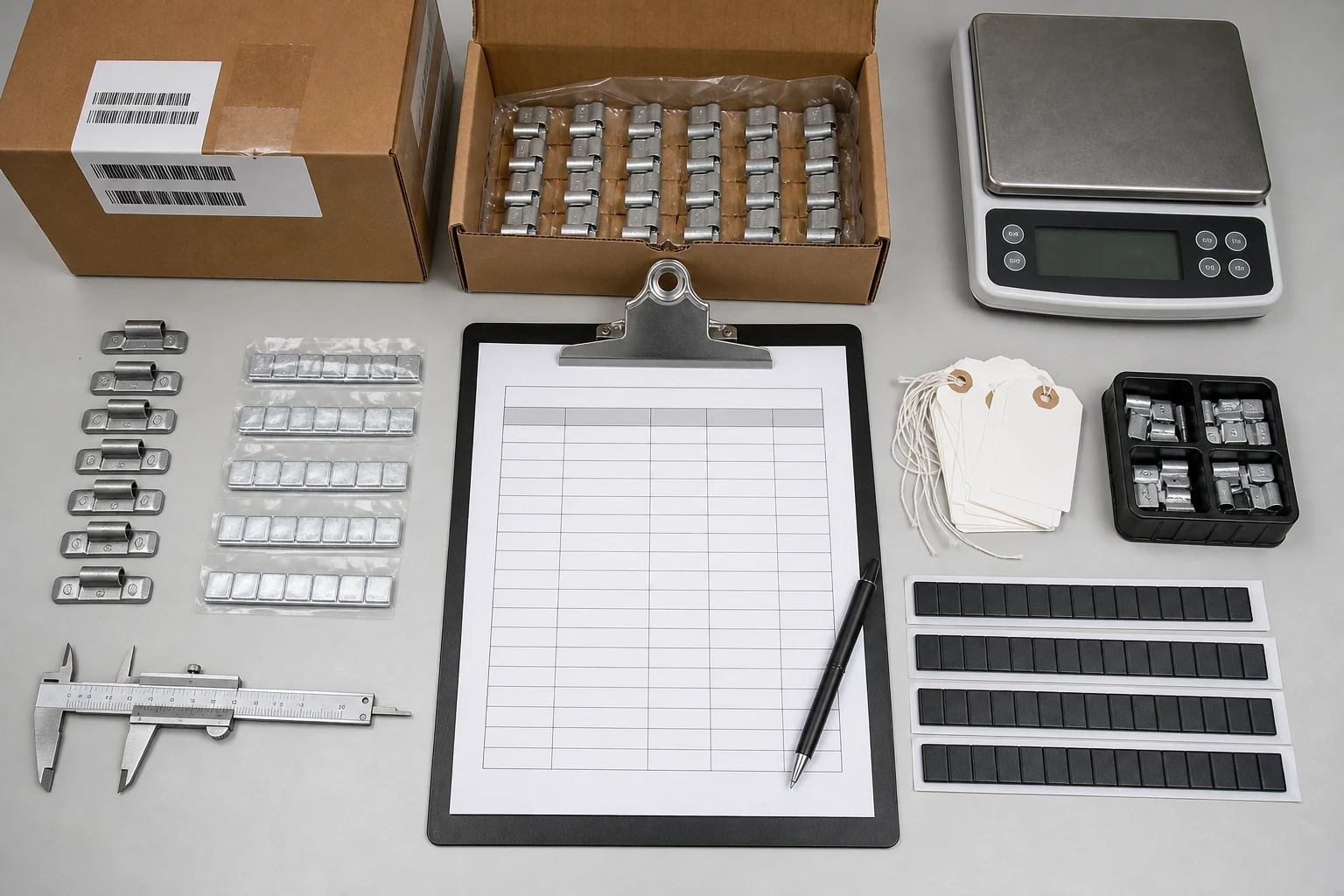
The approval record should name the sample revision, product features, critical measurements, material/finish, relevant tape or clip details, package, label, and testing performed. It should also state whether the sample is a concept, fit sample, packaging proof, or production-intent sample.
For the actual starting point, request clip-on and adhesive sample families for an OEM approval brief that match the intended applications. This enables the brand owner to identify the real gap between an existing product and a change that needs development.
The IATF sub-tier requirements emphasize customer requirement flow-down, change control, and traceability. Applied proportionately, an OEM buyer should expect the factory to know what was approved, how it will recognize the same configuration again, and how it will notify the brand owner before a change reaches production.2
What production-consistency evidence matters?
Useful evidence shows how the factory can make and identify the approved product repeatedly. Generic certificates, polished factory videos, and a low quote may be useful signals, but they do not prove that a particular tape, clip, finish, carton, or inspection rule governs the order.
Ask for evidence proportionate to the program:
- Identified product and packing samples, with a stated revision.
- The process route and outside-supplied components that affect the requested SKU.
- Inspection checks for mass, dimensions, attachment features, finish, and pack counts as relevant.
- Material or product declarations needed for the destination or customer.
- Lot or batch identification at a practical receiving level.
- A nonconformance route and a named process for approving changes.
The goal is not an unrealistic factory audit from a single article. It is to determine whether the supplier can connect its operations to the buyer's approved configuration rather than relying on a generic product claim.
How should packaging and change management be handled?
Packaging and change management should be treated as product controls because they affect correct receipt, traceability, brand presentation, and repeat-order consistency. A correct wheel weight in the wrong carton, with a changed quantity or unapproved label, is still an OEM failure.
Brand owners can use branded packaging and label controls for an OEM range to separate artwork approval from the factory's product-control responsibility. For repeat export programs, carton and pallet controls for repeat OEM shipments help define inner counts, cartons, gross weights, labels, pallets, and SKU mix.
GS1's logistic-label guidance reinforces the operational need to identify handling units. For an OEM wheel-weight order, carton and pallet labels should make the SKU, quantity, and relevant lot or batch field clear enough to receive and investigate the goods.3
Before production, agree:
- The drawing or product configuration revision.
- The sample and test record that forms the approval.
- Inner, outer, and pallet packaging plus label fields.
- The lot or batch identification method.
- The owner and notification route for a material, tape, coating, geometry, label, carton, or process change.
- The process for a claim, corrective action, and next-order confirmation.
What should brand owners check before first production?
Before the first production run, brand owners should check that the approved product, commercial order, packaging record, and inspection plan all refer to the same revision. The practical risk is not only a manufacturing defect. It is that a good sample, a correct purchase order, and a finished carton describe slightly different products.
Use a short release review with the manufacturer:
| Release check | Brand-owner confirmation | Manufacturer confirmation |
|---|---|---|
| Product revision | The purchase order names the approved profile or strip, material, finish, increments, and sample revision | Production uses the same drawing or configuration record |
| Sample boundary | The approved sample is identified as production-intent, conditional, or concept only | Any remaining difference from the sample is stated before production |
| Inspection | Critical features and pack counts have an agreed method and acceptance decision | The responsible inspection point and record are known |
| Packaging | Inner count, carton, labels, pallet plan, and private-label artwork are approved | Packing materials and label version match the released record |
| Traceability | The buyer knows what lot or batch information it needs to receive | Cartons or handling units will carry the agreed identity fields |
| Exceptions | Commercial or technical alternatives are recorded with the buyer's decision | No unapproved alternative is treated as a production default |
This review does not need to be bureaucratic. Its purpose is to catch ordinary disconnects while a correction is still inexpensive: a standard tape versus the tape in the sample, a carton count that differs from the quotation, a label without the required buyer SKU, or a clip profile that was discussed but not written into the order.
The same record should travel into the first shipment review. When the goods arrive, compare the received product, labels, pack counts, lot information, and agreed evidence with the release record. Any issue can then become a precise corrective action instead of a vague argument about what the program was supposed to include.
If you are developing an OEM wheel-weight program, share the vehicle applications, technical specification, validation plan, branding, packaging, and expected volume. We can help you turn those requirements into a manufacturer and sample review brief.
Conclusion: approve the repeatable program, not only the sample
OEM wheel weights require more than a first quote and a branded carton. Brand owners should require control of the product specification, material and fitment details, samples, inspection, documentation, packaging, lot identity, and revision history across repeat orders.
Request an OEM capability and approval-workflow discussion after the product range and application are defined. The right manufacturer will help turn those requirements into an identifiable, testable, and repeatable program.
Frequently Asked Questions
What is the difference between OEM and private-label wheel weights?
Private label primarily concerns branding, labels, cartons, and commercial presentation of an approved product. OEM includes the manufacturer controls needed to reproduce the agreed product, evidence, packaging, and revision across repeat orders. A program can include both.
What should an OEM wheel weight sample approval include?
It should identify the sample revision, attachment type, material, finish, critical dimensions and mass, relevant tape or clip details, packaging, label fields, checks performed, approval result, and the process for later changes.
How can a brand owner verify repeat production?
Ask how the manufacturer links the approved sample and configuration record to the production lot, which checks apply to the order, how packed cartons are identified, and how it controls changes. Review the evidence for the actual quoted SKU rather than relying on generic claims.
Should carton and pallet labels be part of OEM approval?
Yes. They affect receiving, traceability, stock control, and brand consistency. Approve the required label fields and pack counts with the product and make them part of the controlled packaging record.
References
[1] International Organization for Standardization. “ISO 9001:2015 – Quality management systems – Requirements.” 2015.
[2] International Automotive Task Force. “Minimum Automotive Quality Management System Requirements for Sub-Tier Suppliers.” 2017.
[3] GS1. “GS1 Logistic Label Guideline.” n.d.