




Wheel weight pre-shipment inspection verifies that the products being loaded match the approved sample and purchase specification. Buyers should check SKU mix, quantities, weight markings, finish, packaging, carton labels, batch records, and supporting documents before the shipment leaves the factory.
It is the final controlled comparison between what was approved and what is physically ready to load. The inspection is not a substitute for agreeing specifications or conducting product validation earlier; it confirms that cartons, samples, labels, records, and pallets all describe the same order before the goods become much harder to correct.
Table of Contents
- What is a wheel weight pre-shipment inspection?
- What should be agreed before inspection begins?
- How should buyers verify the approved product and SKU mix?
- What should product and appearance checks cover?
- How should buyers verify cartons, labels, batches, and documents?
- What should be checked during palletization and loading?
- How should exceptions be recorded before release?
- Conclusion: Release only what matches the order
- Frequently Asked Questions
- References
What is a wheel weight pre-shipment inspection?
A wheel weight pre-shipment inspection is a documented check of the goods, cartons, records, and loading preparation before dispatch. It asks one practical question: do the actual products waiting to ship match the approved sample, purchase order, packing plan, and agreed acceptance criteria?
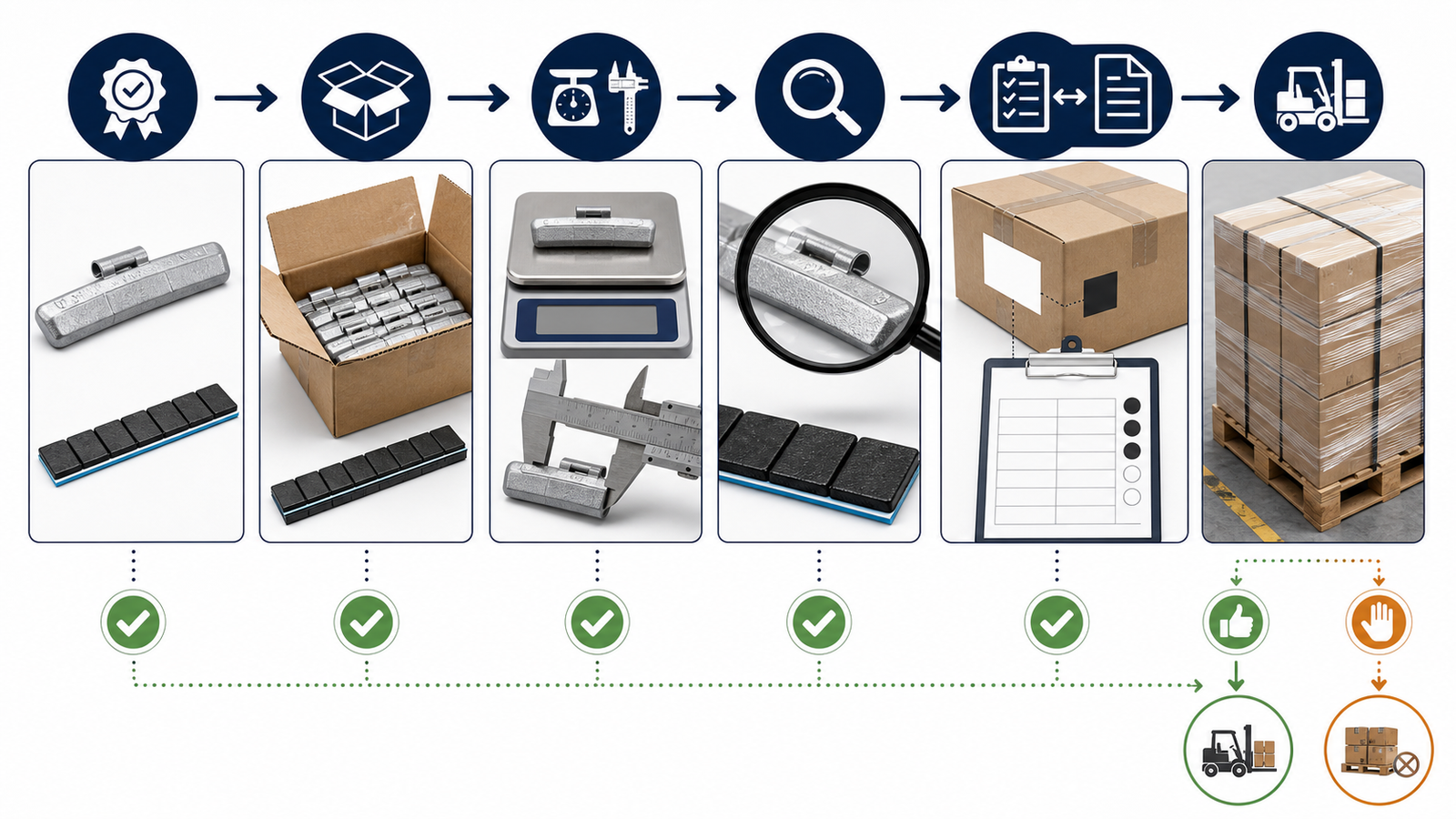
Inspect the product, packing, records, and pallet as one release decision before the shipment is loaded.
The inspection should cover the product as supplied, not only a loose showroom sample. Open representative cartons, identify the SKU and product form, check relevant mass or markings, inspect condition and packaging, compare label and quantity information with the order, and confirm the pallet or loading plan. If a shipment includes different attachment formats, unit systems, or clip profiles, each relevant configuration needs an identifiable check.
Use the wheel weight specification choices to preserve at shipment as the starting point. The specification should state what the inspector is comparing: material, attachment type, unit system, increment range, profile or tape configuration, finish, packaging, and any customer-required documentation. An inspection report cannot fix an order whose product identity was never fully defined.
Pre-shipment inspection is particularly valuable when a buyer is remote, a new supplier is being approved, a range has many similar SKUs, or a correction after loading would be costly. It also creates a factual release record. If an issue appears after delivery, the buyer can see what was inspected, which cartons were sampled, and what evidence was available before dispatch.
What should be agreed before inspection begins?
Before inspection begins, agree the order reference, approved sample or controlled specification, inspection scope, sample plan, acceptance criteria, required photographs, documents, and decision authority. This avoids a late-stage debate about what “checked” or “acceptable” meant after the container is already booked.
Start with a buyer-supplier inspection brief. It should name the purchase order, SKUs, total quantities, carton and inner-pack configurations, intended shipment date, and any special requirements. State whether the inspector checks a specified sample of each SKU, all cartons for label/count confirmation, or another agreed scope. The plan should also distinguish critical product or documentation errors from minor appearance observations.
Sampling should be deliberate. ISO 2859-1:2026 defines a system of acceptance sampling plans for lot-by-lot inspection by attributes and uses AQL to determine sample sizes and acceptance/rejection thresholds.1 Buyers may adopt that standard, another customer method, or a simpler agreed plan, but should not write “AQL inspection” without naming the inspection level, defect definitions, lot basis, and current standard edition that the parties intend to use.
Agree what the inspector may release, hold, or escalate. A missing label, wrong material, wrong attachment format, or unexplained batch mismatch may require an immediate hold even if a statistical sample looks acceptable. A minor carton scuff may have a different response. The release decision should follow the agreed specification, not a last-minute preference for filling a truck.
| Inspection area | What to compare | Evidence before release |
|---|---|---|
| Product and SKU | Approved sample, purchase order, opened carton, and inner pack | Dated product and label photos tied to the selected SKU |
| Quantity and packing | Carton count, inner-pack count, pallet pattern, and packing list | Count record and representative pallet photos |
| Condition | Finish, clips, tape liners, carton integrity, and contamination | Exception photos and the agreed disposition |
| Identification and documents | SKU description, unit format, batch/carton reference, and requested records | Matched label, packing list, and controlled supporting document set |
How should buyers verify the approved product and SKU mix?
Buyers should verify the approved product and SKU mix by comparing representative production samples and opened cartons with the approved sample or specification, purchase order, and packing list. Check both the product identity and the packaging identity; a correct part in the wrong carton can still become a receiving, sale, or installation failure.
For each selected SKU, confirm the attachment format, material where relevant, unit system, increment or nominal range, clip profile or adhesive-strip configuration, finish, and pack quantity. The clip-on and adhesive wheel weight configurations should remain distinct in the inspection record. Do not accept a photograph of generic “wheel weights” as proof that every line item is present and correctly packed.
If the order contains clip-on weights, compare the clip form and relevant wheel application with the approved reference. Buyers can use the clip-profile requirements to make clear why seemingly similar parts should not be merged into one inspection line. A profile variation can change fit, retention, or the buyer’s assortment logic even when the mass marking looks similar.
If the order includes adhesive products, verify strip format, segments, tape and liner condition, and the pack arrangement that protects them. The inspection is not normally a full buyer-side adhesion-validation program, but it should catch damaged liners, contaminated strips, missing segments, or an unapproved tape configuration. The adhesive strip and liner condition should be compared with the approved packed sample, not only an unpacked strip on a bench.
Mass and marking checks should use the agreed product unit. Confirm that a grams-based order is not packed or labeled as an ounce-based range, and that the product markings, inner pack, carton label, and order all agree. Buyers can use the unit and increment information on the order to identify the fields that must remain aligned through packing and loading.
What should product and appearance checks cover?
Product and appearance checks should cover the defined characteristics that could make the supplied wheel weight unacceptable or difficult to install: mass or increment, visible form, clip condition, adhesive condition, coating or finish, burrs, deformation, contamination, and damage caused by packing or handling. The exact rule should come from the approved product specification, not from a universal visual standard.
Inspect parts in representative cartons under consistent lighting and retain photographs of any exception next to an SKU or carton identifier. For coated products, examine visible faces, edges, clips, and interfaces for the finish conditions the buyer actually specified. Do not describe a routine visual check as proof of long-term corrosion resistance; laboratory corrosion evaluation requires its own sample, method, duration, and acceptance criteria.
For clip-on products, confirm that clips are not bent, cracked, loose, or inconsistent with the agreed profile. SAE J1986 provides guidance on balance-weight and rim-flange configurations and includes retention test procedures and minimum performance requirements for applicable passenger-car, light-truck, and multipurpose-vehicle applications.3 A pre-shipment review should verify the approved profile and visible condition; any formal retention requirement should be handled using the relevant agreed test, not improvised during a loading inspection.
For adhesive products, check the tape and liner for contamination, lifting, creasing, tears, edge damage, or packaging pressure marks. Inspect a representative strip without turning the pre-shipment visit into an uncontrolled adhesion test. If the buyer needs application-performance evidence, it should be defined earlier with the intended wheel surface, preparation, pressure, temperature, dwell, and pass/fail rule.
Where a product is already supported by a detailed factory process, use the inspection to confirm that the output matches it. Ask how supplier controls that support repeat orders connect the approved sample, production run, packaging, and shipment. A clear answer is more useful than an unsupported claim that all lots are identical.
Use the approved sample record as the starting reference for each inspection and the production QC checklist to interpret product and packaging findings. The inspector should then reconcile carton and batch identifiers to the traceability record and match the final evidence package to the importer’s document requirements before release.
How should buyers verify cartons, labels, batches, and documents?
Buyers should verify cartons, labels, batches, and documents as one evidence chain. Match the product and quantity in selected cartons to the inner-pack and outer-carton labels, then compare those labels with the packing list, purchase order, and any requested batch or quality record. The goal is to ensure that each document names the goods actually waiting to load.
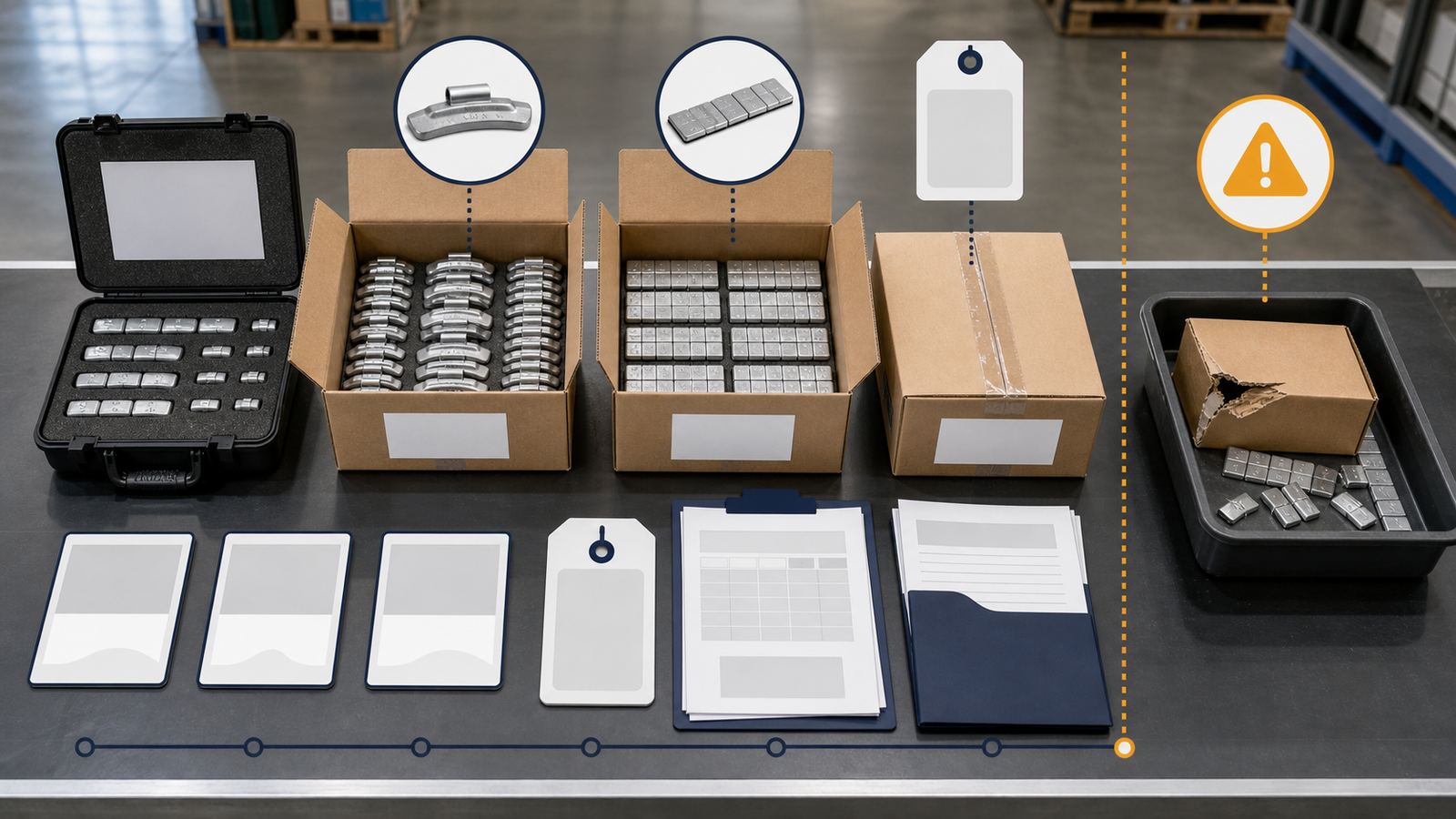
Cross-check product samples, SKU cartons, labels, packing records, and any exception before permitting the goods to move to loading.
Check carton condition, closure, inner-pack protection, label readability, SKU description, unit system, count, customer reference where required, and batch or packing code. Verify that the label and packing list use the same SKU logic and that any batch record covers the stated product. If an inner box has been opened, confirm that it can be resealed or relabeled through an agreed controlled process rather than being returned to stock anonymously.
GS1’s Logistic Label Guideline explains how logistics labels can associate product, date, and batch/lot information, and it notes that batch information relates to the identified trade item.2 Buyers without a GS1 system can apply the same principle: a batch or carton identifier must lead to the SKU and physical stock it describes. Do not accept a generic document that cannot be tied to the shipment line.
Review the document list against the order rather than assuming that a certificate is always required. Depending on the transaction, this may include packing list, commercial invoice draft, carton or pallet count, product specification, material declaration, batch record, inspection report, and customer-requested evidence. The final import-document set remains a destination- and customer-specific verification matter; a pre-shipment inspection should confirm accuracy and consistency, not give legal clearance for every market.
What should be checked during palletization and loading?
During palletization and loading, check that cartons are counted, stable, identified, protected, and consistent with the packing plan before they disappear behind stretch wrap or inside a container. This is the point at which product inspection and logistics handling meet, so a correct carton can still become a delivery issue if it is mixed, crushed, or no longer identifiable.
Verify cartons per pallet, pallet count, outer condition, wrap or straps, corner protection where used, label visibility, and separation of different SKUs. If mixed pallets are allowed, make the mix explicit in the pallet record and ensure the outer identification does not imply that all cartons are the same. Photograph representative pallet labels and the completed pallet pattern before loading.
For high-volume orders, include the planned carton dimensions, gross weight, and pallet configuration in the packing plan. Buyers managing bulk carton and pallet checks can decide before loading whether a pallet can be received, stored, and broken down safely at the destination. This prevents a packing decision made for container fill from creating an unmanageable warehouse problem.
During loading, compare the number of pallets or cartons moved with the released packing list, watch for damaged cartons, and confirm that any held stock remains off the truck. Record container or vehicle information only where the buyer’s process requires it. The useful record is one that can later reconcile what the inspector released with what actually shipped.
How should exceptions be recorded before release?
Exceptions should be recorded against the exact SKU, carton, lot, or pallet affected, with clear photos and a description of the condition against the agreed rule. The first action is containment: segregate the stock, preserve the label and sample, and prevent an unresolved carton from being mixed with released goods.
Classify the issue in practical terms. A wrong SKU, attachment type, material, unit system, missing batch identity, or major quantity mismatch usually affects the order’s identity and needs escalation before release. Damaged packaging, questionable finish, broken adhesive liner, or a clip concern may require a scope review: is one carton affected, or does the evidence point to a wider lot? Do not create a root-cause story from a single photograph; first establish the affected population.
The inspection report should show the sample basis, items checked, observations, photos, documents reviewed, decisions, and remaining actions. If a deviation is accepted, record who authorized it, exactly what is accepted, and which cartons or quantities it covers. If rework or replacement is promised, inspect the corrected goods and update the release record rather than relying on an email assurance.
For the next order, use the evidence to improve the specification, label artwork, packing plan, or sample approval. Request a pre-shipment inspection checklist for the order that begins with the approved product and ends with a documented release or hold decision.
Conclusion: Release only what matches the order
Wheel weight pre-shipment inspection gives buyers a final opportunity to match the approved product, production cartons, labels, quantities, batches, documents, pallets, and loading plan before dispatch. Its value comes from connecting physical goods to the actual order—not from adding a generic inspection form at the last minute.
Before loading, verify the SKU mix, product condition, markings, packaging, labels, batch or carton identity, quantities, and agreed documents. Retain representative photos and the release record, and isolate exceptions until they are resolved. This controlled final check reduces avoidable receiving disputes and makes repeat orders easier to manage.
Frequently Asked Questions
When should a wheel weight pre-shipment inspection occur?
Conduct it when production is complete, packaging and labels are applied, and enough of the order is ready to inspect, but before final loading removes the practical opportunity to correct an issue. The exact timing should be agreed in the purchase order or inspection plan.
Does pre-shipment inspection replace product sample approval?
No. Sample approval defines the target product and acceptance criteria; pre-shipment inspection checks whether the goods ready to ship match that target. Both are needed when a buyer wants consistent repeat orders.
What is the most important document to compare during inspection?
There is no single document. Compare the purchase order, packing list, carton labels, product or SKU specification, and any required batch or quality evidence as one chain. Each should identify the same goods and quantities.
What should happen if an inspector finds a wrong wheel weight SKU in one carton?
Hold that carton and review the related inner packs, cartons, pallet, and packing record to define the affected scope. Correct and re-inspect the stock through an agreed process before release; do not assume the error is isolated without evidence.
References
[1] ISO. “ISO 2859-1:2026: Sampling Procedures for Inspection by Attributes.” 2026.
[2] GS1. “GS1 Logistic Label Guideline.” n.d.
[3] SAE International. “SAE J1986: Balance Weight and Rim Flange Design Specifications, Test Procedures, and Performance Recommendations.” 2025.