


A car wrap is an adhesive vinyl film applied over a vehicle’s painted panels to change color, add graphics, protect selected surfaces, or create a removable branding layer. For Tesla and BYD owners, wraps are popular because EV body shapes are clean, paint choices can be limited, and owners often want a distinctive look without repainting the vehicle.
A wrap is not just a sticker stretched across a car. Good results depend on film quality, paint condition, panel preparation, installation skill, heating technique, edge finishing, and aftercare. A cheap wrap or rushed installation can lift, bubble, scratch, stain, or damage weak paint during removal.
This guide explains car wrap types, benefits, limitations, installation steps, and how Tesla and BYD owners should think about wraps alongside accessories, paint protection, and resale value.
Table of Contents
- What does a car wrap actually do?
- What types of car wraps are available?
- How does a car wrap work during installation?
- Why do Tesla and BYD owners choose wraps?
- How does paint condition affect wrap installation?
- What accessories should be planned with a car wrap?
- What should distributors check before selling wrap related accessories?
- Conclusion: a good wrap is a material and installation decision
- Frequently Asked Questions
- References
What does a car wrap actually do?
A car wrap changes or protects the outer surface of a vehicle by covering painted panels with adhesive film. It can be used for color change, advertising graphics, accent details, roof blackouts, chrome delete, clear protection, or temporary styling.
The biggest advantage over repainting is reversibility. A quality wrap installed over healthy paint can usually be removed later, allowing the owner to return closer to the original finish. That is useful for leased vehicles, resale-conscious EV owners, fleets, ride-hailing cars, and buyers who like changing appearance.
Wraps also let owners choose finishes that paint may not offer easily. Satin, matte, color-shift, textured, carbon-look, brushed metal, and printed graphics are all possible. The tradeoff is lifespan. A wrap is a film exposed to sun, heat, washing, road grime, and edge stress. It needs care and eventually replacement.
For Tesla and BYD owners, the wrap decision often comes with other upgrades. A buyer looking at a color-change wrap may also be thinking about mats, cargo liners, charging cable storage, and interior protection. That is why a related Tesla accessories guide or BYD car models guide can be a useful starting point for the bigger ownership plan.
What types of car wraps are available?
The main car wrap types are color-change vinyl, printed graphics, commercial wraps, clear paint protection film, partial wraps, accent wraps, and specialty finish films. The right type depends on whether the goal is style, branding, protection, or a mix of all three.
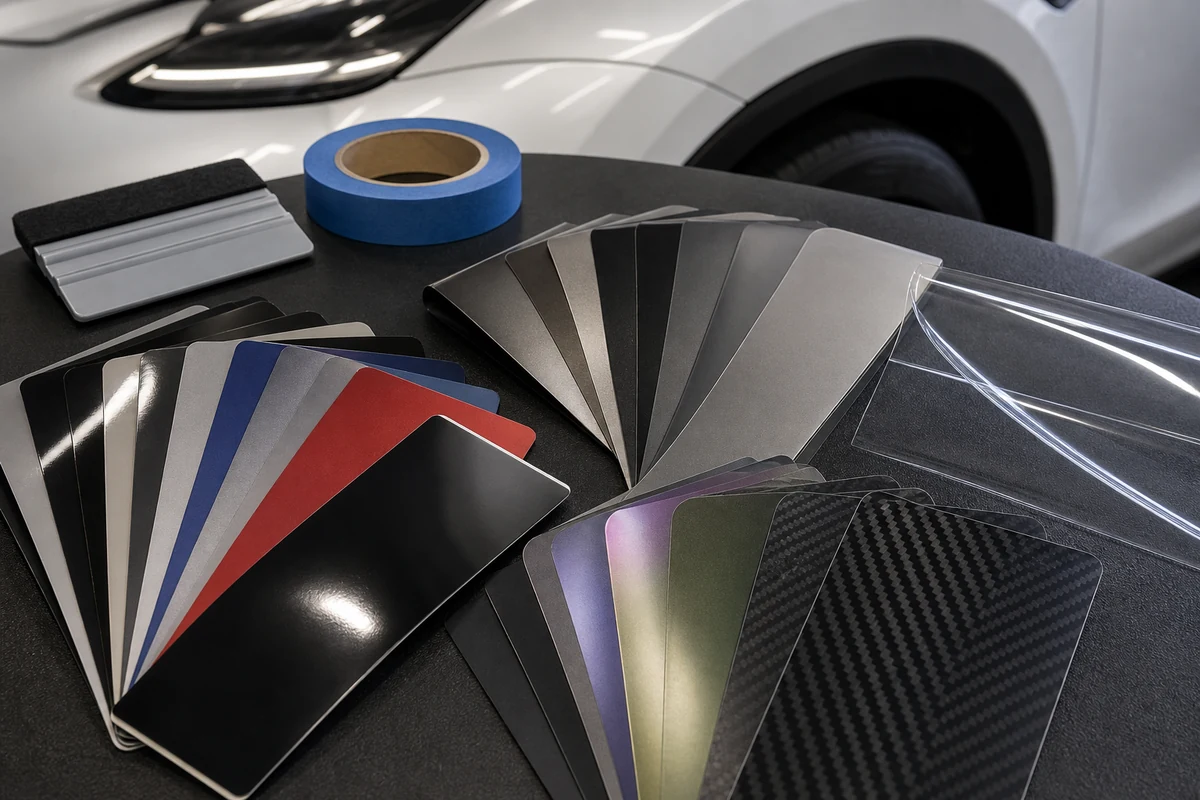
| Wrap type | Best for | Watch out for |
|---|---|---|
| Gloss color-change vinyl | Paint-like color change | Shows scratches and swirls more than matte finishes |
| Satin or matte vinyl | Modern EV styling | Needs careful washing; stains can be harder to correct |
| Color-shift film | High-impact custom look | More expensive and more attention-grabbing |
| Printed wrap | Business branding or custom graphics | Print quality and laminate choice matter |
| Clear protective film | Stone-chip and scratch protection | Usually protects more than it changes appearance |
| Accent wrap | Roof, mirrors, trim, chrome delete | Edge lifting can happen if prep is poor |
Material brands such as 3M and Avery Dennison publish product information for wrap film families, including cast vinyl films used for vehicle wrapping 1, 2. The important buyer lesson is that film type matters. A cheaper decorative film may not stretch, conform, remove, or last like a true vehicle wrap film.
Partial wraps deserve special attention. A roof, hood, pillars, mirror caps, or trim accent can give the owner a custom look without wrapping the entire vehicle. For Tesla and BYD owners who are cautious about cost or resale, a partial wrap may be a smarter first step.
How does a car wrap work during installation?
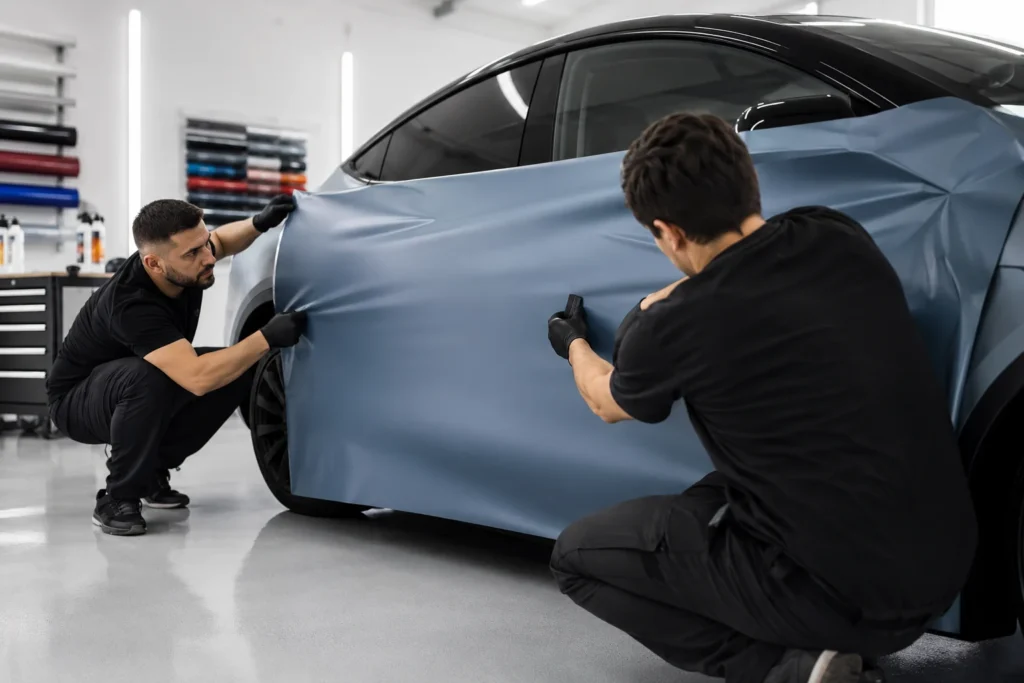
A car wrap works by bonding adhesive vinyl to clean painted panels, then shaping it around curves, edges, handles, lights, and trim with controlled tension, squeegee pressure, and heat. The visible finish depends as much on the installer as on the film.
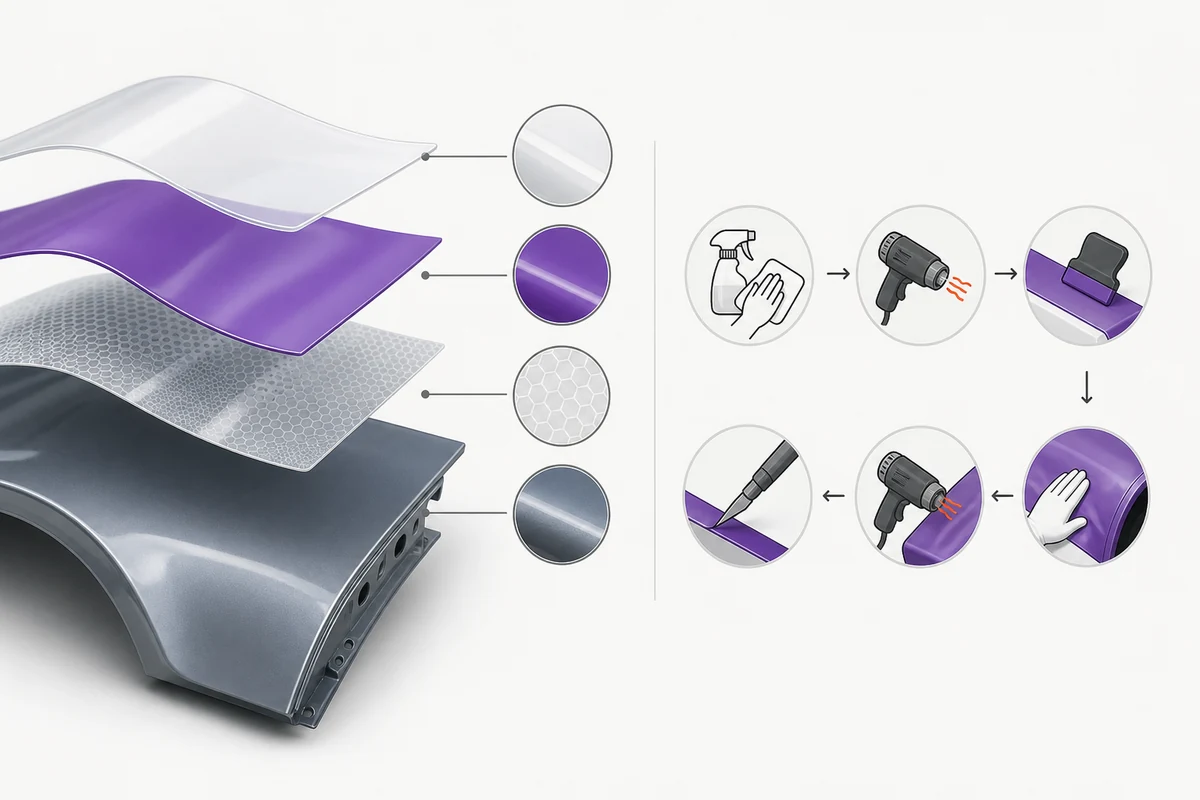
A typical process looks like this:
- Inspection: Check paint quality, dents, chips, repaired panels, contamination, and previous coatings.
- Cleaning: Remove dirt, tar, wax, silicone, and residue that could weaken adhesion.
- Disassembly where needed: Handles, badges, trim, or lights may be removed for cleaner edges.
- Panel application: Film is positioned, squeegeed, stretched carefully, and heated.
- Trimming and edges: Edges are cut, tucked, sealed, and checked for tension.
- Post-heating: High-stretch areas are heated to reduce film memory and lifting risk.
- Final inspection: Bubbles, dirt specks, lifted edges, and cuts are checked before delivery.
The most common failure is rushing prep. Film can hide minor visual differences, but it does not fix bad paint, rough bodywork, deep scratches, rust, peeling clear coat, or poorly repaired panels. Those problems may show through the film or become worse during removal.
Why do Tesla and BYD owners choose wraps?
Tesla and BYD owners choose wraps for color choice, paint protection, brand identity, resale flexibility, fleet consistency, and personal style. EVs often have smooth body panels and simple color palettes, so a wrap can make a vehicle stand out without permanent repainting.
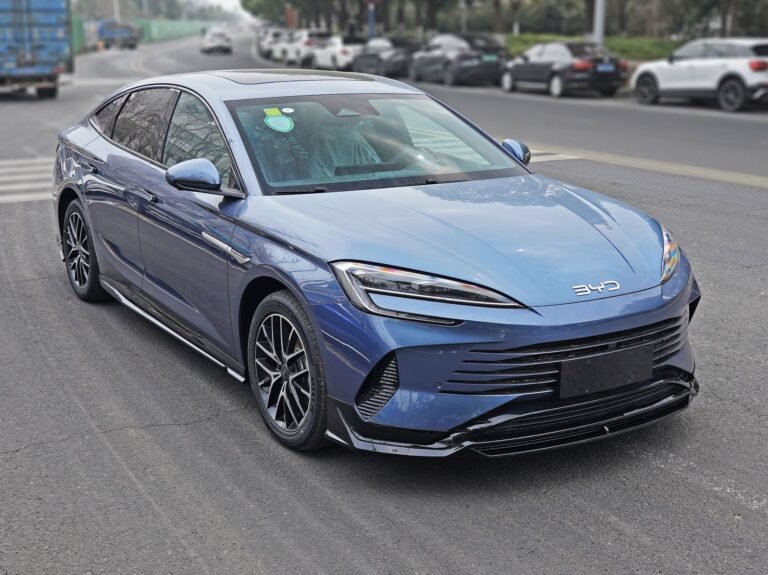
Tesla owners often wrap Model 3 or Model Y vehicles because the factory color range is limited and many cars look similar in parking lots. BYD owners may wrap Atto 3, Seal, Dolphin, or other models to personalize newer vehicles in markets where BYD ownership is growing quickly. If the reader is comparing BYD model families before choosing a wrap style, the related BYD car models guide is the safer next step.
Business users also like wraps because they can create fleet branding. A removable commercial wrap can turn a delivery EV, service vehicle, or demonstrator car into mobile advertising. For lease vehicles, partial branding can sometimes be easier to remove than repainting, though lease terms and local rules should always be checked.
There are limits. Wraps do not make paint immune to damage. They can be cut by careless installation, stained by poor maintenance, or lifted by pressure washing at sharp edges. Owners who expect a wrap to behave like permanent paint may be disappointed.
How does paint condition affect wrap installation?
Paint condition is one of the biggest factors in wrap success because film follows the surface underneath it. A wrap can cover color, but it cannot truly repair chips, peeling clear coat, rust, deep sanding marks, or poor body filler work.
Installers usually reject or warn against wrapping damaged paint because removal may pull weak paint or clear coat away. Fresh repainting can also be a concern if the paint has not cured properly. If the car has been repaired, the owner should tell the installer before the wrap is quoted.
Surface preparation may involve clay, mild polishing, adhesive removal, and careful cleaning. It should not involve random aggressive sanding on finished panels. For readers trying to understand surface preparation materials, the related automotive sandpaper guide explains grit choice and why abrasives must be matched to the job.
Tesla and BYD EVs can have large, smooth panels that reveal installation flaws easily. A small piece of dust under matte film, a stretched corner, or a cut mark near a charging port can stand out. That is why wrap quality is a whole-process decision, not just a film purchase.
What accessories should be planned with a car wrap?
Owners should plan wrap care accessories, interior protection, charging cable storage, and trim-safe cleaning tools alongside the wrap. A beautiful exterior wrap can be spoiled quickly by harsh washing, dragging cables across panels, or letting cargo and tools scratch wrapped edges.
Basic wrap-friendly accessories include pH-neutral wash products, soft microfiber towels, detail spray approved for the film type, edge-safe drying towels, and a place to store charging cables cleanly. For EVs, the charge-port area deserves special care because cable movement and repeated handling can scuff film edges around the port. Related EV charging accessories are worth planning with the wrap so cables, bags, and hooks do not damage fresh film edges.
Interior accessories still matter too. If a Tesla owner is wrapping a Model Y for personal or business use, the related Tesla Model Y floor mat guide is a reminder that exterior style should not distract from practical protection inside the vehicle. A clean, protected cabin supports the same resale logic as a well-kept wrap.
Aftercare should follow film and installer guidance. 3M’s wrap care resources emphasize proper cleaning and care practices for wrapped vehicles 3. Tesla’s own vehicle cleaning guidance is also relevant for EV owners because automatic car washes, high-pressure water, and harsh chemicals can affect exterior surfaces 4.
What should distributors check before selling wrap related accessories?
Distributors should check film compatibility, tool quality, packaging, instruction clarity, and aftercare claims before selling wrap-related accessories. The best product range supports proper installation and maintenance instead of encouraging risky DIY shortcuts.
The Yirox Team usually separates wrap-related products into three groups:
- Installation support: Squeegees, felt edges, magnets, gloves, knife-free tape, and safe trimming tools.
- Care support: Microfiber towels, film-safe cleaners, drying towels, and edge-safe maintenance items.
- Vehicle accessory support: Mats, cargo liners, cable organizers, and trim accessories that protect the rest of the vehicle.
For distributors building a broader EV customization catalog, related branded automotive NEV accessories can sit beside wrap-care products. The catalog should avoid exaggerated claims such as “permanent protection” or “damage-proof paint.” Better claims are specific: easier cleaning, removable styling, selected surface protection, and improved fleet branding when installed correctly.
Packaging matters more than many sellers expect. Squeegee edges should arrive clean and undamaged. Film-care towels should not shed lint. Instructions should explain what not to do, such as pressure washing close to edges, using harsh solvents, or applying film over weak paint. Those small details reduce returns and protect the installer-client relationship.
Conclusion: a good wrap is a material and installation decision
A car wrap is a flexible way to change a Tesla, BYD, or other vehicle’s appearance without repainting it. It can also support fleet branding, partial protection, and personalization. But the final result depends on the condition of the paint, the quality of the film, the skill of the installer, and the owner’s aftercare routine.
For Tesla and BYD owners, the best wrap decision starts with a clear goal. Choose color-change film for style, printed film for branding, clear film for protection, and partial wraps when cost or resale flexibility matters. Then protect the investment with proper washing, careful charging-cable handling, and practical accessories that keep the rest of the vehicle clean and organized.
Frequently Asked Questions
Is a car wrap better than paint?
A car wrap is better when the owner wants a removable color change, graphics, or temporary branding. Paint is better for permanent refinishing or repairing damaged surfaces.
How long does a car wrap last?
Wrap lifespan depends on film quality, installation, sun exposure, washing habits, climate, and storage. Many quality wraps last several years, but harsh conditions and poor care can shorten that.
Can you wrap a Tesla or BYD EV?
Yes, Tesla and BYD vehicles can be wrapped when the paint is healthy and the installer understands the body panels, sensors, charging-port area, and trim. Exact installation details depend on the model.
Does a wrap protect paint from scratches?
Vinyl wraps can help protect against light wear and some surface scuffs, but they are not the same as dedicated paint protection film. Sharp impacts, deep scratches, and poor washing can still damage the wrap or paint.
Can a car wrap damage paint when removed?
A properly installed quality wrap over healthy factory paint is usually removable, but weak paint, poor repairs, old film, excessive heat, or bad removal technique can cause damage. Paint condition should be inspected before installation.
References
[1] 3M. (2026). *3M Wrap Film Series 2080*.
[2] Avery Dennison. (2026). *Supreme Wrapping Film*.
[3] 3M. (2026). *Vehicle Wrap Care Instructions*.
[4] Tesla. (2026). *Vehicle Cleaning*.