



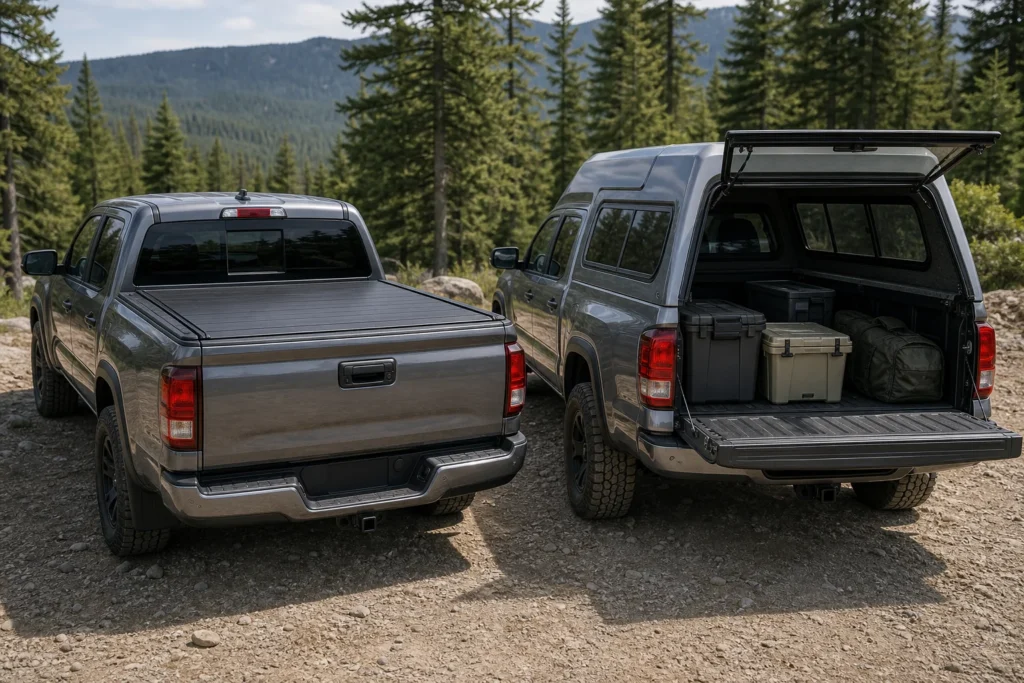
A tonneau cover is a low bed cover that sits over the pickup box, while a truck cap is a full-height shell that encloses the bed like a small cargo compartment. Choose a tonneau cover for low-profile protection and easier open-bed access; choose a truck cap when tall cargo, enclosed storage, or camper-style use matters more.
Both accessories protect the bed, but they change the truck in very different ways. One keeps the pickup looking sleek and open. The other adds height, enclosed volume, windows, a rear hatch, and more permanent cargo space.
Table of Contents
- What is the difference between a tonneau cover and a truck cap?
- Which is better for cargo and daily use?
- Which is better for security and weather protection?
- Which is easier to install remove and live with?
- How should you choose between a tonneau cover and a truck cap?
- What should buyers check before ordering either option?
- Conclusion: Choose low-profile access or full-height enclosure
- Frequently Asked Questions
- References
What is the difference between a tonneau cover and a truck cap?
The main difference is height and enclosure. A tonneau cover sits low over the bed rails. A truck cap, also called a camper shell or truck topper, rises above the bed and creates a taller covered cargo space.
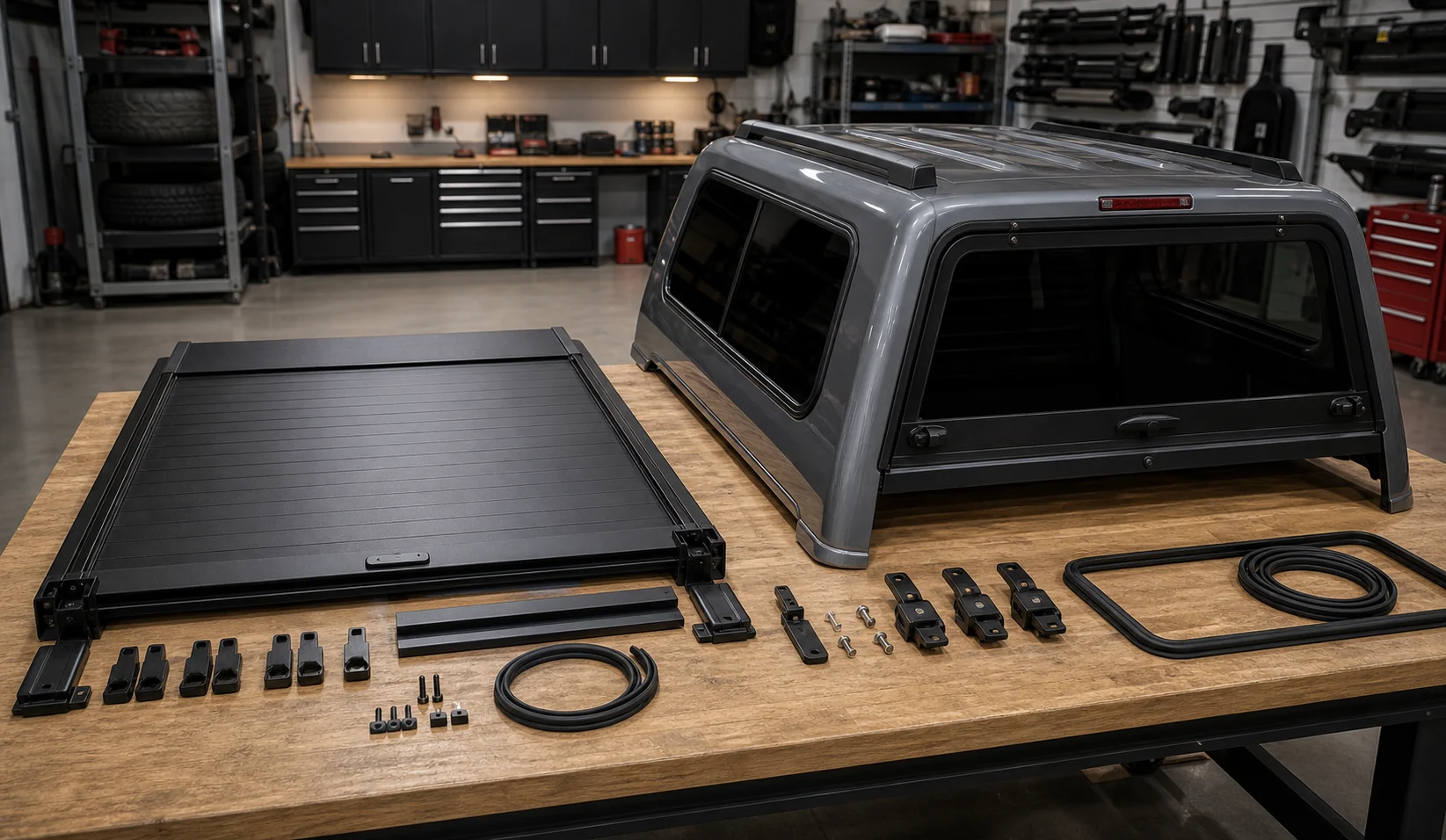
A tonneau cover can combine soft or hard construction with a rolling, folding, retractable, or hinged opening mechanism. It is usually easier to open when the driver needs the pickup bed. If the buyer is still learning the category, the complete tonneau cover guide explains the two dimensions and compares the main configurations.
A truck cap is closer to a removable roof over the bed. It may include side windows, roof racks, interior lighting, rear hatch glass, sliding windows, or work-truck storage features. It changes the vehicle profile more than a tonneau cover does.
That profile change affects more than appearance. A truck cap can change rear visibility, parking clearance, wind noise, and roof-accessory planning. A tonneau cover usually keeps the truck closer to its original height and sight lines, which is one reason many daily drivers prefer it even when a cap offers more cargo volume.
Which is better for cargo and daily use?
A tonneau cover is better for low cargo, quick bed access, and drivers who still want the pickup to feel open. A truck cap is better for taller cargo, enclosed gear, camping setups, pets, tools, and weather-protected storage volume.
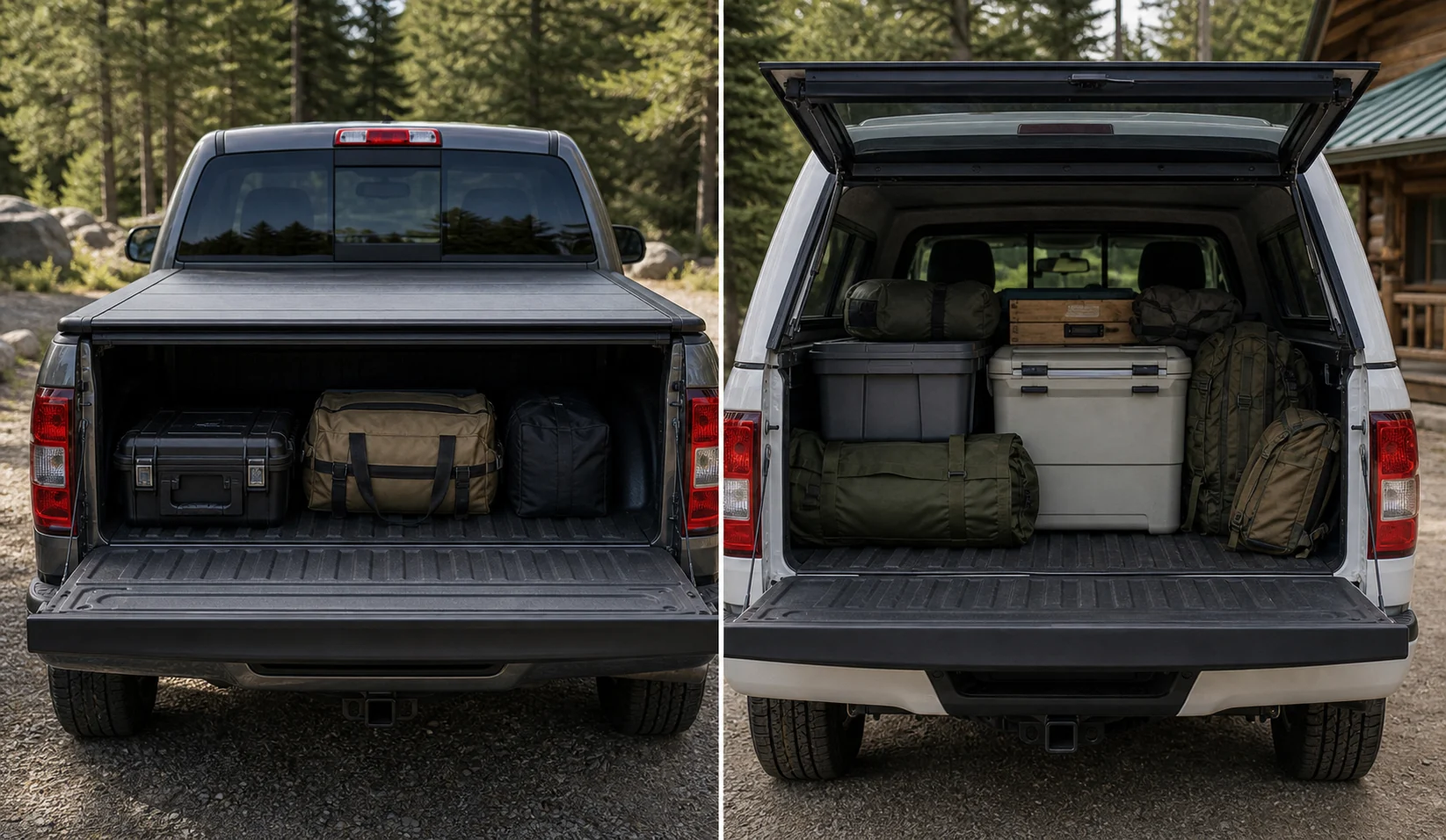
If the driver often loads furniture, tall bins, bikes, camping gear, or stacked tools, a truck cap may be more useful. If the driver hauls mixed cargo and wants the bed open quickly, a tonneau cover may be easier to live with.
Retractable and tri-fold covers are useful middle-ground options. The related retractable tonneau cover guide explains premium sliding access, while the related tri-fold tonneau cover guide explains sectional folding access.
Which is better for security and weather protection?
A truck cap usually provides more enclosed storage volume, while a hard tonneau cover can provide strong low-profile theft deterrence. Weather protection depends on seals, fitment, tailgate gaps, windows, drains, and installation quality.
A truck cap can keep tall cargo out of rain and sun, but it adds windows, hatch seals, roof seams, and mounting points that need to seal well. A tonneau cover has less vertical space, but a hard cover with a locking tailgate can hide cargo and deter casual theft.
Soft tonneau covers are usually less secure than hard tonneau covers and truck caps because the material can be cut. The related hard vs soft tonneau cover comparison explains that trade-off in more detail.
Neither option should be treated as a substitute for proper cargo restraint. NHTSA's load-securing guidance still applies because covered cargo can still shift, especially during hard braking or rough-road driving 1.
Which is easier to install remove and live with?
A tonneau cover is usually easier to install, remove, store, and ship than a truck cap. A truck cap is larger, heavier, harder to store, and often needs more careful alignment or help during installation.
This matters for customers who change setups often. A roll-up or folding tonneau cover can be opened in seconds. Some can be removed by one person. A truck cap may need two or more people, storage space, clamps, wiring disconnection, and care to avoid scratching paint or glass.
Truck caps can also affect visibility, vehicle height, wind noise, parking clearance, and roof rack planning. Tonneau covers usually keep the truck closer to its original profile, although some hard covers and hinged covers still add weight.
For distributors, this difference changes logistics. Tonneau covers can often ship in long cartons. Truck caps are bulky, fragile, and harder to warehouse. Freight damage and fitment mistakes can become expensive quickly.
Removal is another everyday issue. A tonneau cover may be opened, folded, rolled, or removed depending on the style. A truck cap usually needs more planning. If the owner has nowhere to store the cap safely, the truck effectively becomes a capped truck all the time. That is perfect for some users and frustrating for others.
How should you choose between a tonneau cover and a truck cap?
Choose by cargo height, access style, weather need, security expectation, vehicle appearance, removal plans, and storage space. A tonneau cover is the low-profile choice. A truck cap is the enclosed-volume choice.
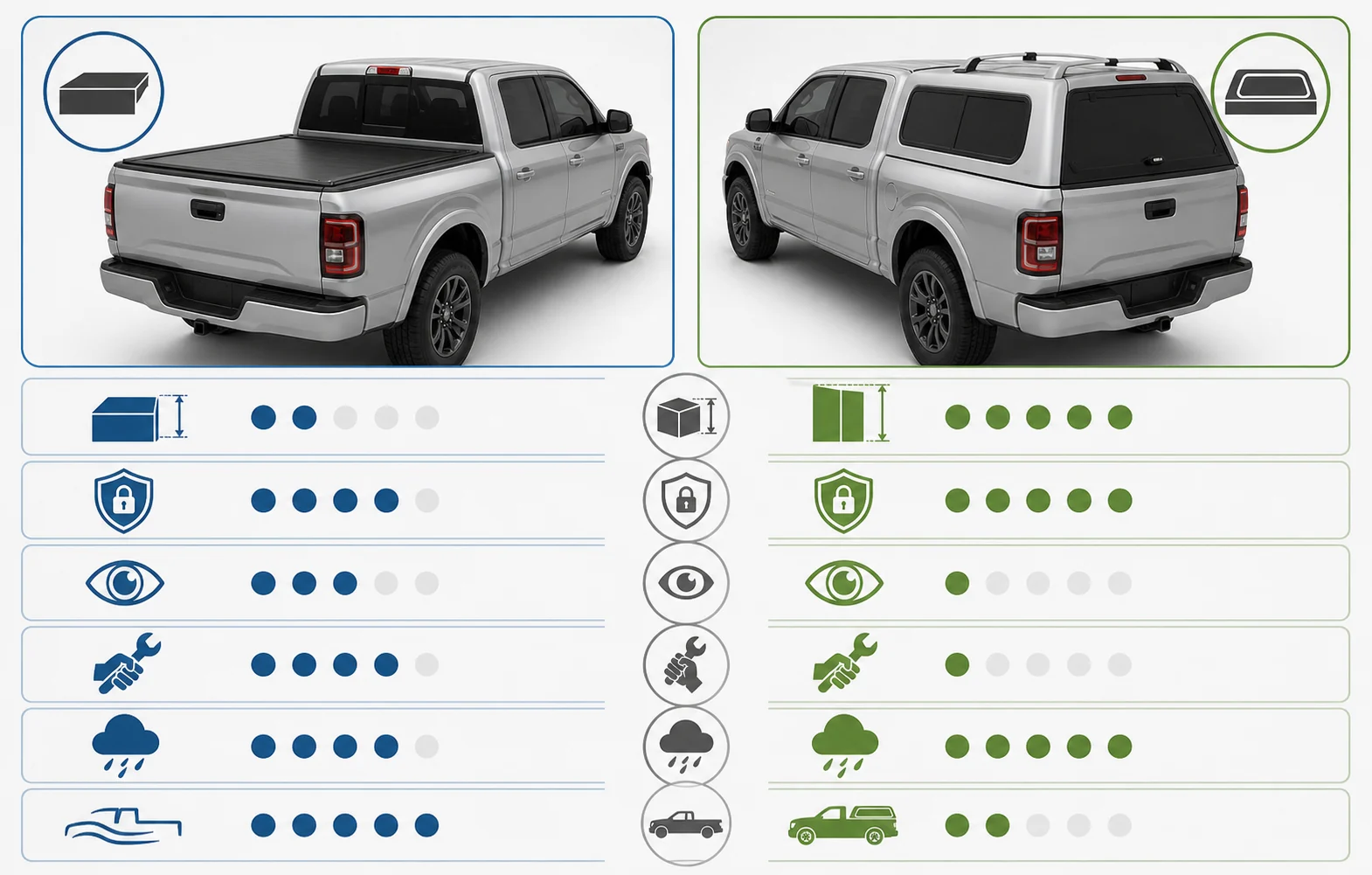
| Priority | Better common choice | Why |
|---|---|---|
| Low-profile appearance | Tonneau cover | Keeps the truck bed line clean |
| Tall protected cargo | Truck cap | Creates more enclosed height |
| Easy removal | Tonneau cover | Usually lighter and simpler |
| Camping or pet space | Truck cap | More interior volume |
| Lower shipping complexity | Tonneau cover | Smaller cartons than caps |
| Quick mixed cargo access | Roll-up, tri-fold, or retractable cover | Opens without removing a shell |
The choice is emotional as well as practical. A tonneau cover keeps the pickup looking like a pickup. A truck cap makes it feel more like a covered utility vehicle. Both can be right.
What should buyers check before ordering either option?
Buyers should check truck make, model, year, bed length, rail shape, tailgate design, bed liner, cargo management system, rack compatibility, seal design, hardware, instructions, and packaging before ordering either option.
For tonneau covers, check rail fit, latches, clamps, seals, panel alignment, drain tubes, and whether the cover blocks bed accessories. For truck caps, check roof height, paint match, window style, rear hatch fit, wiring, clamps, roof load, and glass protection during shipping.
For Yirox Team product checks, the risk profile is different. Tonneau covers need consistent rails, panels, fabric, clamps, and cartons. Truck caps need shell geometry, glass fit, finish quality, seal compression, and much heavier packaging control.
After-sales support also differs. Tonneau cover service parts may include latches, clamps, seals, drain tubes, or hardware bags. Truck cap service parts may include windows, hatch struts, locks, wiring, interior lights, and seal kits.
For Yirox Team product planning, tonneau covers and truck caps should not be treated as the same accessory family from a logistics standpoint. Tonneau covers are easier to range by bed length and cover type. Truck caps need stricter model fitment, shell geometry, glass protection, and sometimes paint or finish coordination. The support cost is very different.
Customer expectations differ too. A tonneau cover buyer often expects practical bed protection and quick access. A truck cap buyer may expect a more complete enclosed cargo solution. If the product page does not make that difference clear, customers may buy the wrong product for their use case.
This is why comparison photos should show real cargo, not only clean exterior styling. A buyer needs to see height, access, visibility, and storage behavior before choosing.
Good comparison content prevents expensive returns.
If you are comparing truck-bed protection options for a vehicle or product program, share the truck models, access needs, weather exposure, material preferences, and order requirements you need to satisfy. We can help you compare suitable options before you commit.
Conclusion: Choose low-profile access or full-height enclosure
A tonneau cover is the better choice when the buyer wants a lower profile, easier access, simpler installation, and flexible pickup-bed use. A truck cap is the better choice when the buyer needs taller enclosed cargo space, camping utility, weather-protected volume, or a work-shell setup.
The right answer depends on how the truck is used most weeks, not on which accessory looks better in one photo. Low cargo and frequent open-bed use point toward a tonneau cover. Tall gear, enclosed storage, and camper-style utility point toward a truck cap.
If the next step is comparing pickup bed cover options, related pickup tonneau covers can be reviewed by material, opening style, fitment, packaging, and customer use case.
Frequently Asked Questions
Is a truck cap better than a tonneau cover?
A truck cap is better for tall enclosed cargo and camper-style use. A tonneau cover is better for low-profile protection, easier removal, and quick access to the pickup bed.
Does a tonneau cover protect cargo as well as a truck cap?
It protects low cargo well, especially if it is a hard cover. A truck cap protects taller cargo and creates more enclosed volume, but it also has windows and seals that need care.
Which is easier to remove?
A tonneau cover is usually easier to remove. A truck cap is larger and heavier and often needs help, storage space, and careful handling.
Which is better for camping?
A truck cap is usually better for camping because it creates taller enclosed space. Some overland users still prefer tonneau covers when they want a lower profile or separate rack system.
Can I use a rack with a tonneau cover or truck cap?
Sometimes. Compatibility depends on the cover or cap design, rail system, rack mounting method, and truck bed. Always check fitment before ordering.
References
[1] NHTSA. *[Securing Your Load](https://www.nhtsa.gov/road-safety/securing-your-load)*.
[2] Consumer Reports. *[Pickup Truck Buying Guide](https://www.consumerreports.org/cars/pickup-trucks/buying-guide/)*.
[3] RealTruck. *[Types of Tonneau Covers](https://realtruck.com/blog/types-of-tonneau-covers/)*.
[4] Access Cover. *[Tonneau Cover Care and Maintenance](https://www.accesscover.com/support/care-maintenance/)*.