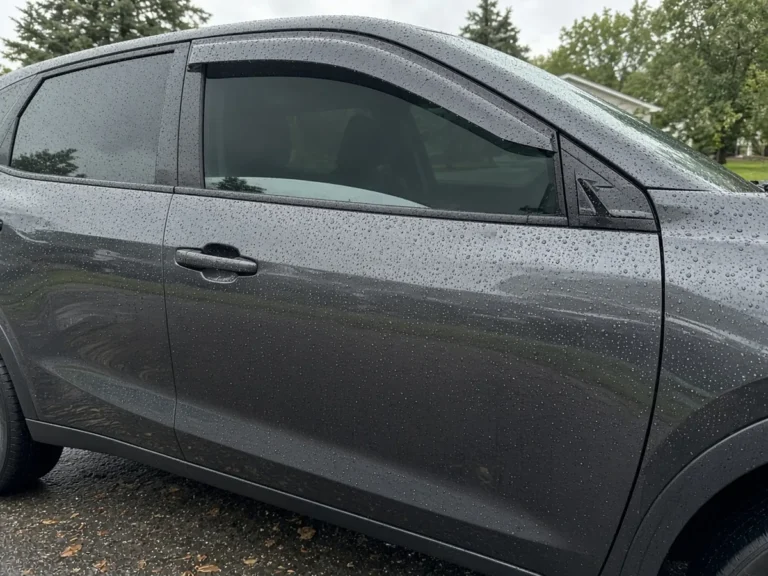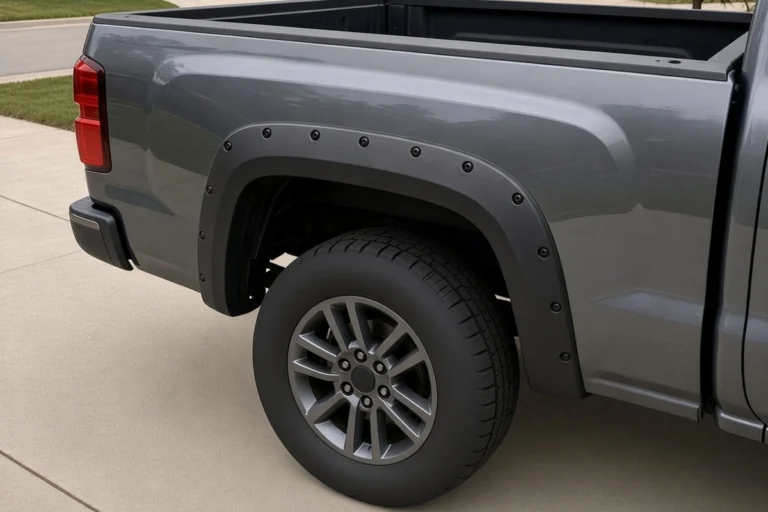




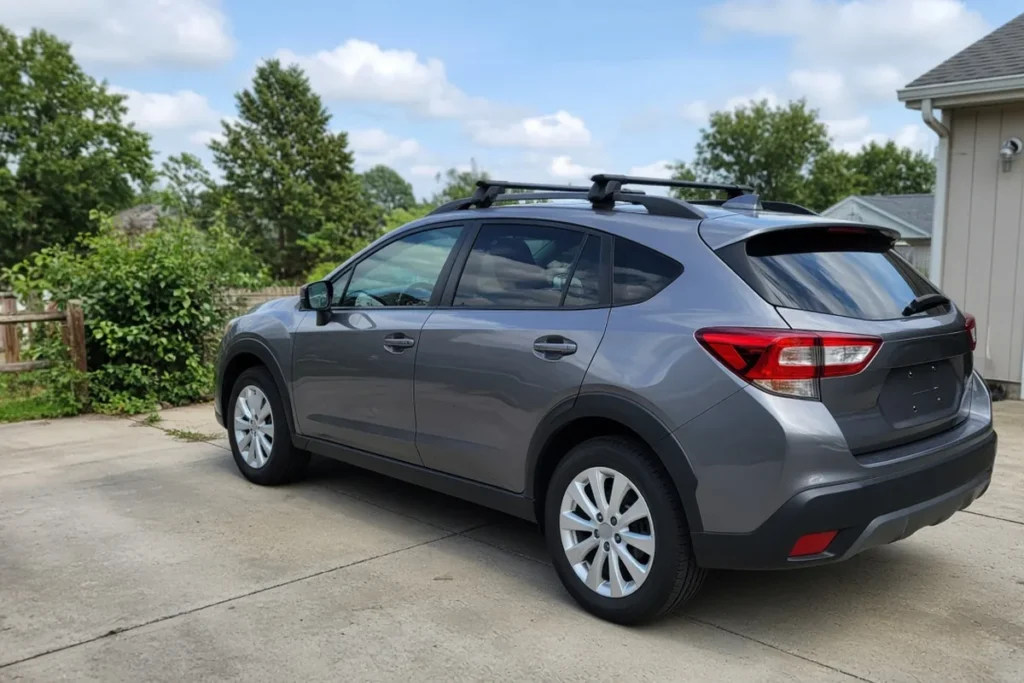
A roof rack is a load-carrying system mounted on a vehicle roof so bulky cargo can travel outside the cabin or bed. The part that holds the load is almost always a pair of cross bars, not the side rails alone. On a pickup, a truck roof rack sits on the cab roof, not on the bed.
Scope: this article explains what a roof rack is, how roof rails and cross bars differ from a complete rack, how truck roof racks differ from bed racks and headache racks, and how to read load ratings and write a specifier checklist. It is not a rooftop-tent buying guide, a cargo-box model review, or a brand ranking.
What is a roof rack, and what parts make up the system?
A roof rack is the hardware that lets you carry cargo on the roof of a car, SUV or pickup cab — luggage, a cargo box, bikes, a kayak, or similar loads — without filling the cabin or the bed. In everyday speech the phrase is used loosely, which is why buyers often order rails when they needed bars, or a cab rack when they needed a bed rack.
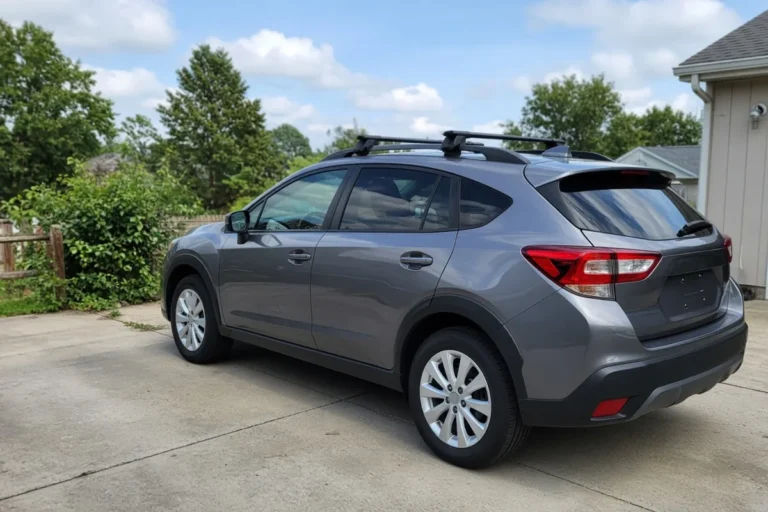
A complete aftermarket roof rack system usually has three pieces that have to match the vehicle. The cross bars (also called load bars or roof bars) run from the driver’s side to the passenger’s side and are the surface the cargo or the accessory actually sits on. The feet or towers connect those bars to the roof, the factory rails, the tracks or the fixed points.
A fit kit (clips, pads or landing hardware) adapts those feet to one vehicle roof. Thule describes that three-part package as the roof rack system, and notes that if you change cars you may only need new feet and a new kit rather than new bars 6.
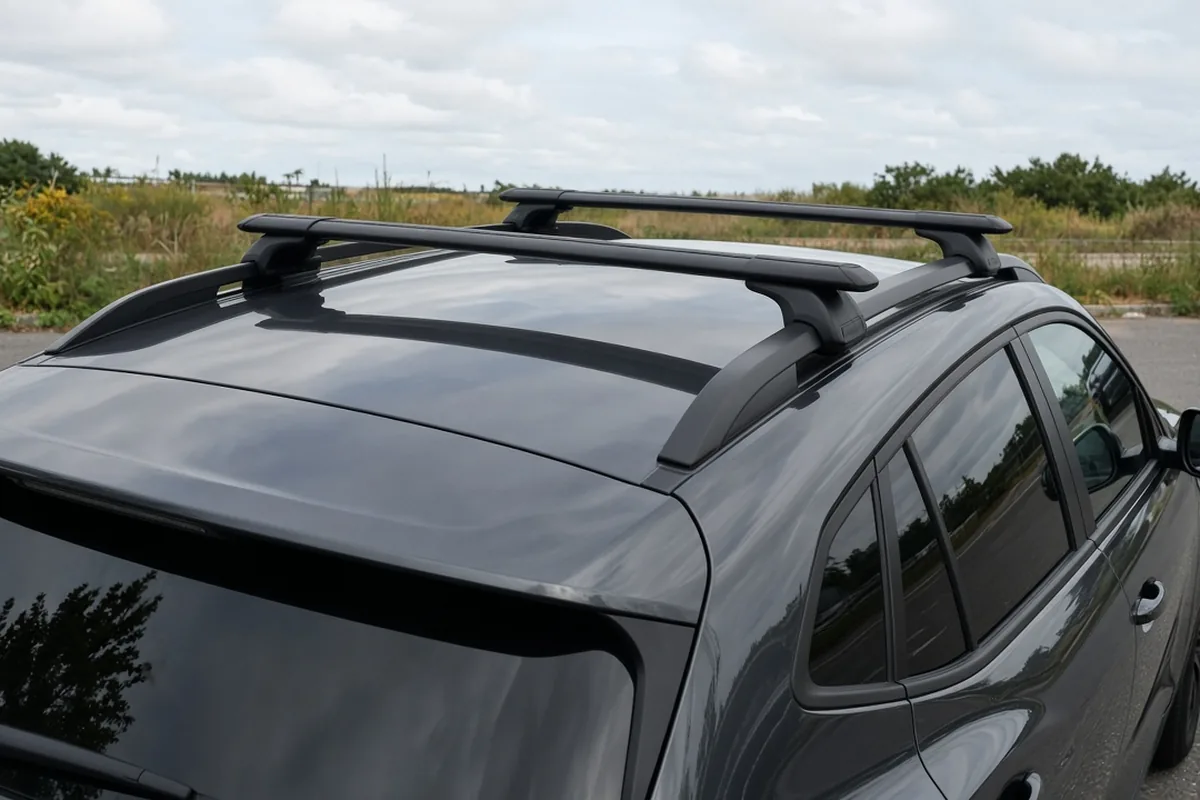
Factory language is not always cleaner. Some owner’s manuals say “roof rack” for the side rails that came on the vehicle, then tell you to add cross bars before you load anything. The Nissan Leaf manual, where a rack is fitted, is explicit: do not put load on the side rails or on the roof; the cross bars have to be installed first 3. Ford gives the same mechanical rule in different words: place loads on crossbars that are affixed to the roof-rack side rails, and never place loads directly on the roof panel, which is not designed to carry a load 2.
Accessories — a cargo box, a basket, a bike tray, a kayak saddle, a ski carrier — usually mount to the cross bars, not to the bare roof. They are part of the load. They are not a substitute for a correctly fitted base system, and they each have their own rating.
What is the difference between roof rails, cross bars and a roof rack?
Roof rails run front to back along the sides of the roof and are usually a mounting foundation, not a cargo deck. Cross bars run side to side and are the bars you actually load. A “roof rack,” in the sense that matters for a purchase order, is the complete system that can carry a load — typically those bars plus the feet or rail clamps that hold them, and sometimes a basket or platform on top.
Raised rails sit on short feet with a gap you can usually get a finger under. Flush or integrated rails sit almost flat to the roof and need a compatible clamp or kit; a raised-rail bar will not automatically fit a flush rail.
Many vehicles have neither. Those bare or “naked” roofs use door-frame clamps, factory fixed points hidden under small covers, or tracks. Older trucks and some utility vehicles still have rain gutters that a gutter-mount foot can grip.
The vocabulary on forums and product pages often collapses all of this into one phrase. That is how a shop ends up with rails and no bars, or with a basket and no way to mount it. A basket or a platform is an accessory or an alternative deck; most baskets still need a base carrier underneath unless the platform is sold as a complete, vehicle-specific rack.
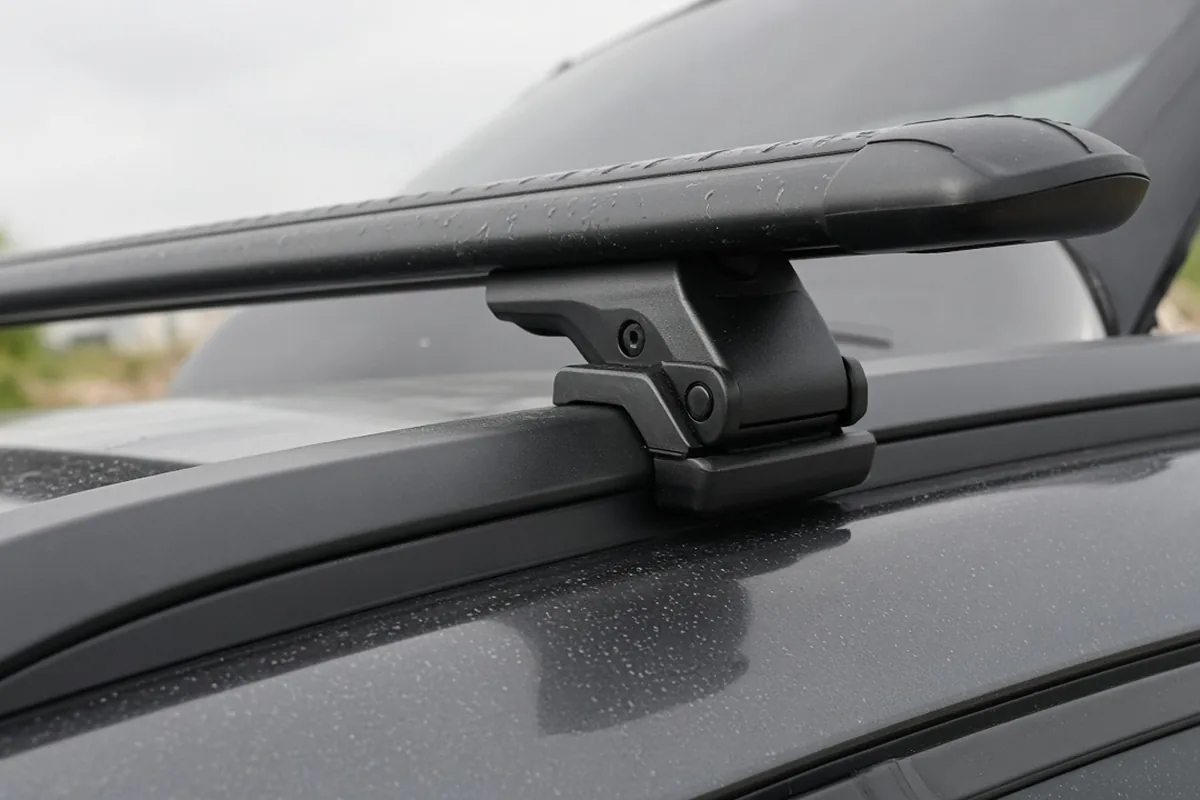
If a listing says “roof rack” and shows only the side rails, treat it as rails until the seller confirms that cross bars, feet and a fit kit are included. If it shows a basket and no bars, ask what the basket mounts to. The purchase decision is not which name sounds more complete. It is which parts actually attach to that roof and which rating governs them.
What is a truck roof rack, and how is it different from a bed rack?
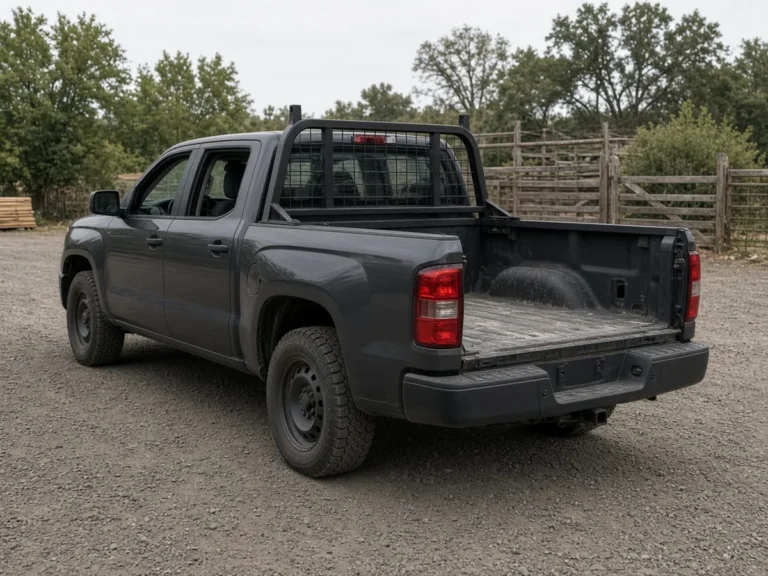
A truck roof rack is a roof rack on the pickup cab — cross bars or a short platform above the cabin — not a rack that stands in the bed. The distinction matters because search results for “truck roof rack” freely mix cab-roof systems, over-bed racks, ladder racks and headache racks, and those parts do not share a load path or a rating.
Many full-size pickups ship with a bare cab roof and no factory side rails. That does not make a bed rack into a roof rack. A truck bed rack mounts to the bed and carries cargo over the box.
A headache rack sits at the front of the bed to help protect the cab rear window; it is not a roof load carrier. You can run a cab roof rack and a bed rack on the same truck, but you still specify them as different lines, with different mounts and different limits.
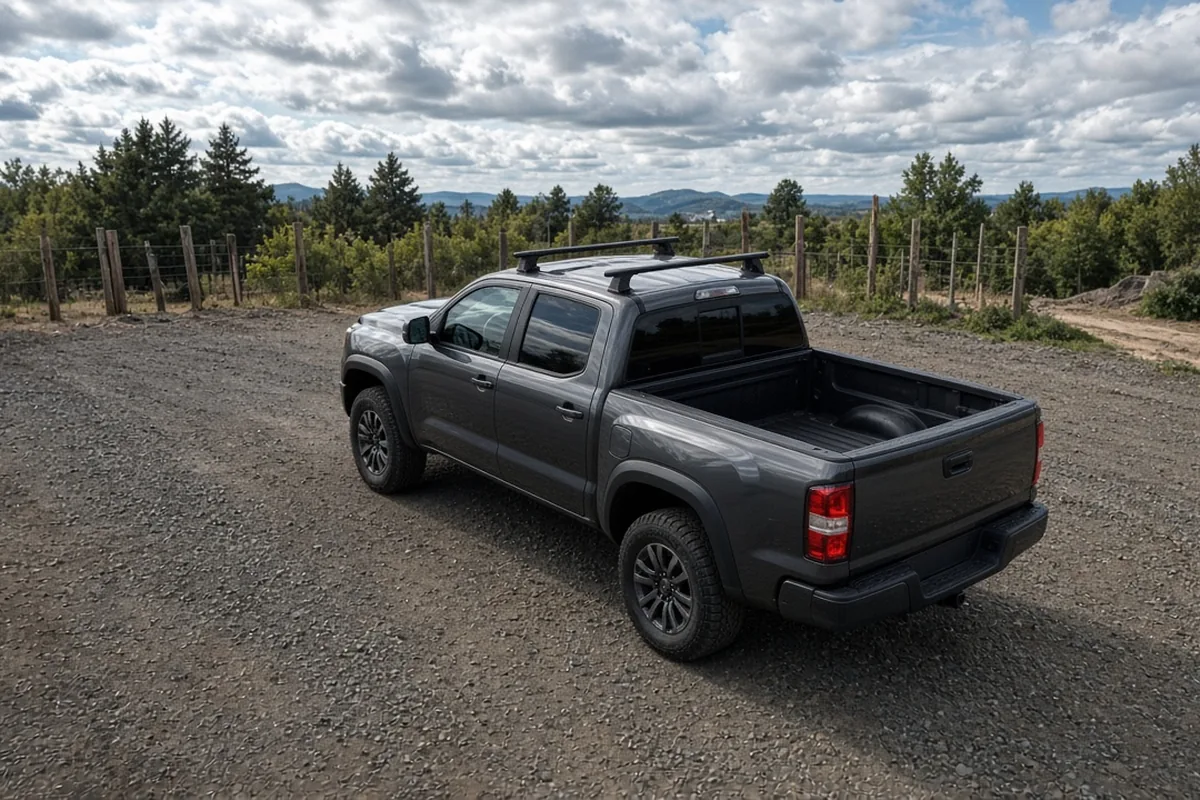
Choose a truck roof rack when the load has to ride above the cab — a kayak that would otherwise consume the bed, a compact cargo box, or a short platform — and when the cab roof has a published rating that can take that system. Choose a bed rack when the load belongs over the box, when you want to keep the cab roof clear, or when the cab has little or no approved roof capacity. A contractor ladder rack that spans the cab and bed is yet another specification; do not assume it uses the same feet or the same number as a set of cab cross bars.
Height is part of the truck decision as well. Anything on the cab roof adds to overall height at the cab, and a bed rack adds height over the box. Measure the taller of the two before you promise garage or shop-door clearance. The roof figure in the owner’s manual still governs what may sit on the cab, even if the bed rack is rated for a much heavier load.
How do roof type and mounting method affect fitment?
Roof racks are not universal: the feet and the fit kit have to match the roof type and usually the year, make, model and cab or roof style. A bar that fits one mid-size SUV will not automatically clamp to a flush-rail crossover, a glass-roof sedan or a crew-cab pickup.
Start with the roof as it is, not with the accessory you hope to bolt on later. Raised rails generally take a raised-rail foot and often need no extra clip. Flush rails need a flush-rail kit.
Bare roofs use either clamps that hook into the door opening or factory threaded points under small covers. Track systems let you slide the bar spread, but the track profile is still vehicle-specific. Gutter mounts belong only on roofs that still have a rain gutter. Mixing those families is a common source of returns.
Bar length, bar profile and bar spread are fitment details, not afterthoughts. The bars have to reach the feet without hanging into a door or a sunroof in a way the maker forbids, and the spread has to leave room for the box, the bike tray or the kayak the buyer actually wants. T-slot or square bars also have to match the accessory clamps.
Tesla, for example, requires a Tesla mounting accessory and a Tesla-approved rack on Model Y; the company says other installations can cause significant damage, and it excludes Model Y L from its own rack fitment 4, 5. That is the same habit a distributor should use on every line: approved mount first, accessory second. The Model Y stocking limits are already summarized in the Model Y accessories guide.
Installation itself follows the rack maker’s sheet and the vehicle manual, not a generic blog sequence. Torque, pad placement, lock-and-tug checks, and any instruction to re-check after a short drive come from those documents. If the roof is a panoramic glass panel, confirm in writing that the vehicle maker allows a rack on that roof before you sell the kit.
How should you read roof-load ratings?
The number that matters is the lowest applicable limit, and it includes the weight of the rack and every accessory, not just the cargo. Thule tells box users to subtract the rack and the box from the vehicle roof limit to see what gear is left, and to use the dynamic (moving) limit when the vehicle will be driven 6. Tesla’s Model Y roof-rack manual states the same arithmetic: maximum roof load equals the weight of the roof rack plus accessory racks plus the load, and you use the lower of that system and the vehicle maker’s maximum 5.
The vehicle figure usually lives in the owner’s manual, often in a “Load Carrying” section. Ford points owners there for the roof-rack load limit, tells them to distribute the load and keep the center of gravity low, and warns that a heavily loaded vehicle may handle differently and needs more stopping distance 2. That vehicle number is a dynamic limit unless the manual says otherwise.
Thule defines dynamic weight as the limit while the vehicle is in motion, and static weight as the capacity when the vehicle is parked, which is the figure people look for when a rooftop tent will have occupants in it. Dynamic limits are lower because the roof also has to deal with bumps, braking and acceleration. For a trip, use the dynamic number 6.
Named examples are illustrations, not a universal chart. The 2025 Nissan Leaf manual, where a roof rack is fitted, gives a service load capacity of 74 kg (163 lb) for the roof side rails and then says not to exceed the crossbars’ own capacity 3. Tesla’s shop listing for the Model Y roof rack states a load rating of 165 lb and notes that the rack fits all Model Y vehicles except Model Y L 5.
Thule says its roof racks are designed to carry up to 75 kg, but that the maximum weight of the system is still determined by the vehicle 6. If a catalog shows a 220 lb bar pair on a car whose roof is limited to 165 lb, the roof wins. If the bars are limited to less than the roof, the bars win.
Two documents are easy to misread as cargo ratings and are not. ISO 11154:2023 is the current international standard for roof load carriers on passenger cars and light commercial vehicles up to a permissible total weight of 3.5 t, and it also covers racks mounted on trailers.
It sets safety-related requirements and test methods that consider weight, centre of gravity and air resistance. Magnetic or suction-foot racks, which attach only by magnetic force or vacuum, are excluded from that document 1. It is a product-performance standard, not a substitute for the vehicle’s published roof limit.
FMVSS No. 216a is a U.S. roof-crush resistance standard. Its stated scope is strength requirements for the passenger compartment roof, and its purpose is to reduce deaths and injuries from the roof crushing into the cabin in a rollover.
The official test procedure even says to remove roof racks or other non-structural components before the test 7. A 216a result is not a license to load a rack beyond the manual, and it is not a number you should print as a cargo rating on a sell sheet.
Thule’s own packing example is useful as arithmetic, not as your vehicle’s limit: if the car’s maximum roof load were 165 lb, the racks weighed 11 lb and the empty box weighed 44 lb, 110 lb would be left for the gear 6. Those three figures are Thule’s example, not a measured vehicle. Replace every term with the numbers from the manual and from the rack and accessory sheets in front of you.
What risks and exceptions should you watch for?
The common failures are loading the wrong surface, exceeding the lowest rating, and leaving cargo free to shift. Ford’s rule not to load the roof panel, and Nissan’s rule not to load the side rails, exist because those surfaces are not the cargo deck 2, 3. A strap over a rail or a box sitting on a sunroof housing is not a workaround.
Unsecured cargo is a safety issue, not only a scuff risk. The Nissan Leaf manual warns that in a sudden stop or a collision, unsecured cargo can cause personal injury, and that a heavy roof load can change stability and handling 3. Ford makes the same handling point and tells drivers to slow down and allow more stopping distance 2. Recheck straps, locks and bar hardware after the first miles, and again on a long trip, following the rack maker’s interval if one is printed.
Height, noise and fuel use are everyday exceptions, not defects in a good rack. A box or a platform can surprise you at a garage beam or a car wash. Bars and accessories add drag and can add wind noise; several makers recommend taking the bars off when you do not need them.
Do not invent a miles-per-gallon penalty. If a buyer cares about range or economy, the honest statement is that a loaded roof changes consumption and that removable bars are there for a reason.
Glass roofs, aftermarket roofs and off-road use are special cases. If the vehicle has a panoramic roof, get the vehicle maker’s position in writing. Do not treat a static tent rating as a highway rating.
Do not treat a magnetic or suction-cup carrier as if it were an ISO 11154 roof load carrier; that standard excludes them 1. And do not assume a U.S. roof-crush standard has already blessed the accessory you are about to sell 7.
What should distributors and importers put in a roof-rack RFQ?
Write the request as a vehicle-specific system, not as a generic “roof rack, 165 lb.” The shop that has to install the parts needs the roof type, the bars, the feet, the fit kit, the accessories and the rating stack in one place. A catalog photo is not a specification.
- Vehicle list: year, make, model, cab or body style, market, and any glass-roof or long-wheelbase variant (the Model Y L exclusion is the pattern, not a one-off) 5.
- Roof type on each vehicle: raised rails, flush rails, bare roof, fixed points, tracks or rain gutters; include a photo of the rail or the mounting points if the buyer is unsure.
- System bill of materials: bar length and profile, foot family, fit-kit part numbers, locks, fairing, and every accessory (box, basket, bike, kayak) that must clamp to those bars.
- Rating stack to print on the pack: vehicle dynamic roof limit (from the owner’s manual), rack-system limit, accessory limit, and the statement that the lowest number governs and that rack and accessory weight count in the total 6, 5.
- Finish and hardware: paint or powder color, corrosion requirement for the destination market, and whether pads, covers and keys are included.
- Installation and service documents: the install sheet in the destination language, a recheck interval if the maker publishes one, and a clear “do not load the roof panel or the bare rails” warning 2, 3.
- Packaging and channel: retail box vs bulk; labeled left/right feet; how the set will be sold (family cargo box, outdoor/overland platform, or contractor cab rack), because those channels do not share the same bar spread, deck style or height expectation.
- Incoming inspection: confirm the kit against the vehicle list, dry-fit one sample, check that clamps match the rail type, and reject a lot that requires drilling the roof when the quote was for a clamp or factory-point kit.
For a distributor or importer, also say what you will not do. Do not print a single capacity across a whole catalog. Do not call a bed rack a truck roof rack. Do not ship a basket as a complete rack unless the base carrier is in the carton.
If the line will be sold next to pickup bed products, keep the roof SKUs and the bed-accessory SKUs on separate sell sheets so a dealer cannot pick the wrong one from a single photo.
Conclusion
A roof rack is a load-carrying system for the roof, and the part that usually holds the cargo is a pair of cross bars on the correct feet or rails. Side rails are a foundation. They are not, by themselves, a place to strap a load.
A truck roof rack lives on the cab roof. A bed rack and a headache rack live on the bed and answer different jobs.
Fitment follows the roof type and the vehicle list, not a claim that bars are universal. The safe working number is the lowest of the vehicle’s dynamic roof limit, the rack system and the accessory, after you subtract the hardware’s own weight. ISO 11154:2023 is the product-performance standard for roof load carriers in its scope. FMVSS 216a is a roof-crush standard and is not a cargo rating.
If you are writing a purchase order, specify the vehicle, the roof type, the bars, the feet, the kit and the rating stack the same way the installer will have to use them. That is the difference between a rack that fits and a box of parts that almost does.
Next step
Yirox can support your pickup exterior and bed accessory programs based on a clear specification you provide. Start from the truck accessories and truck bed accessories categories, then send your vehicle list and specs through the contact form.
Frequently asked questions
What is a roof rack?
It is a load-carrying system mounted on a vehicle roof so bulky cargo can travel outside the cabin or bed. In practice that almost always means cross bars plus the feet, rails or kit that hold them, not the side rails alone.
Do I need roof rails to install a roof rack?
No. Rails help, but bare roofs, factory fixed points, tracks and, on some older vehicles, rain gutters can all accept a matching foot and fit kit. The kit has to be specified for that roof type; a raised-rail clamp will not automatically fit a flush rail or a naked roof.
What is the difference between cross bars and a roof rack?
Cross bars are the side-to-side load bars. A roof rack, in the sense you should specify, is the complete system: those bars plus the feet or rail clamps and any vehicle-specific kit. People often say “roof rack” when they mean only the bars, or only the factory rails.
How much weight can a roof rack hold?
Only as much as the lowest applicable limit allows, after you include the weight of the rack and the accessories. Use the vehicle’s dynamic roof figure from the owner’s manual, then compare it with the rack and accessory ratings. Examples such as the Nissan Leaf’s 74 kg (163 lb) rail service load or Tesla’s 165 lb Model Y rack rating are model-specific, not a universal number 3, 5, 6.
What is a truck roof rack versus a bed rack?
A truck roof rack sits on the cab roof and uses the cab roof’s rating. A bed rack stands over the cargo bed and is a different part, with different mounts. A headache rack at the front of the bed is a third product and is not a roof load carrier.
Are roof racks universal?
No. Feet and fit kits are tied to roof type and usually to a year, make, model and body style. Tesla’s own Model Y rack, for example, requires a Tesla mounting accessory and is not listed for Model Y L 4, 5. Treat “universal” listings as incomplete until the mount and the rating are confirmed for the vehicle list.
References
- International Organization for Standardization, ISO 11154:2023, Road vehicles — Roof load carriers (published 2023-03; Amendment 1:2025). Scope: roof racks on passenger cars and light commercial vehicles up to 3.5 t, and racks mounted on trailers; magnetic or suction-foot racks are excluded. iso.org, ISO 11154:2023.
- Ford Motor Company, “How much weight can I put on my Ford’s roof rack?” Official support article (load limit in the Owner’s Manual “Load Carrying” section; loads on crossbars affixed to side rails; never on the roof panel). ford.com, roof-rack load.
- Nissan, 2025 Nissan Leaf Owner’s Manual, section 6.19.12 “Roof rack (where fitted)” (cross bars required before any cargo; do not load the side rails or the roof; rail service load 74 kg / 163 lb, and do not exceed the crossbars’ capacity; unsecured-cargo and handling warnings). Nissan official manuals, 2025 Leaf roof rack.
- Tesla, Model Y Owner’s Manual, “Vehicle Loading,” Roof Racks (Tesla-approved roof racks with a Tesla mounting accessory; other installations can cause significant damage). tesla.com, Model Y Vehicle Loading.
- Tesla Shop, “Model Y Roof Rack” (load rating 165 lb; compatible with all Model Y vehicles excluding Model Y L). The official Model Y Roof Rack Manual also states: Max Roof Load = weight of roof rack + weight of accessory racks + weight of load, and to use the vehicle maker’s maximum when it is lower. shop.tesla.com, Model Y Roof Rack; Tesla Model Y Roof Rack Manual (PDF).
- Thule, “Everything you need to know about roof racks” (system = load bar + feet + fit kit; designed to carry up to 75 kg, with the vehicle determining the system maximum) and “How to pack safely with a roof box” (vehicle, rack and box limits; remaining cargo = roof limit minus rack and box weight; dynamic vs static; Thule’s 165 / 11 / 44 / 110 figures are an example). thule.com, roof-rack guide; thule.com, pack a roof box safely.
- National Highway Traffic Safety Administration, 49 CFR 571.216a, Federal Motor Vehicle Safety Standard No. 216a, “Roof crush resistance; Upgraded standard” (strength requirements for the passenger compartment roof; purpose is to reduce rollover roof-crush injuries; the test procedure says to remove roof racks or other non-structural components). eCFR, 49 CFR 571.216a.