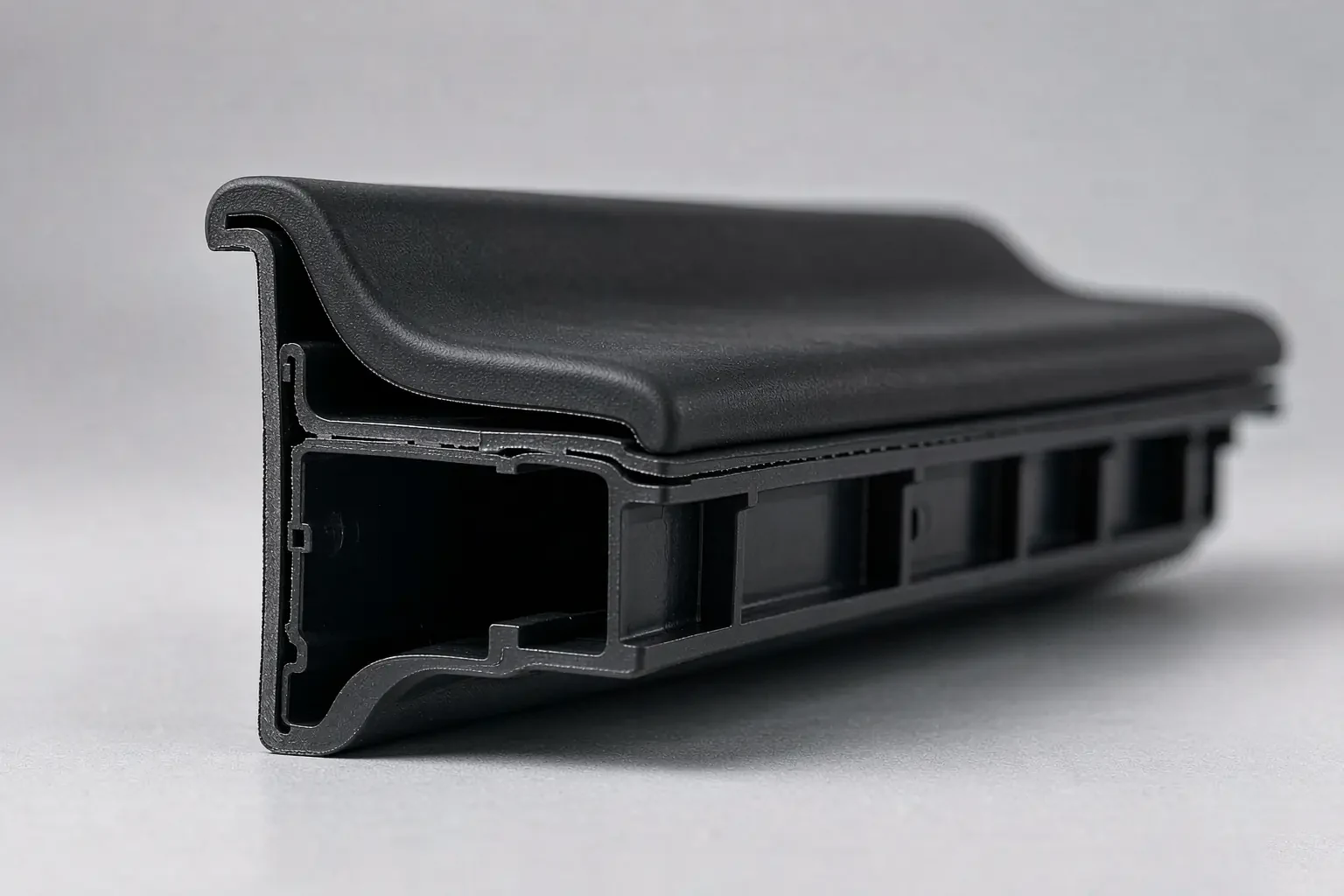
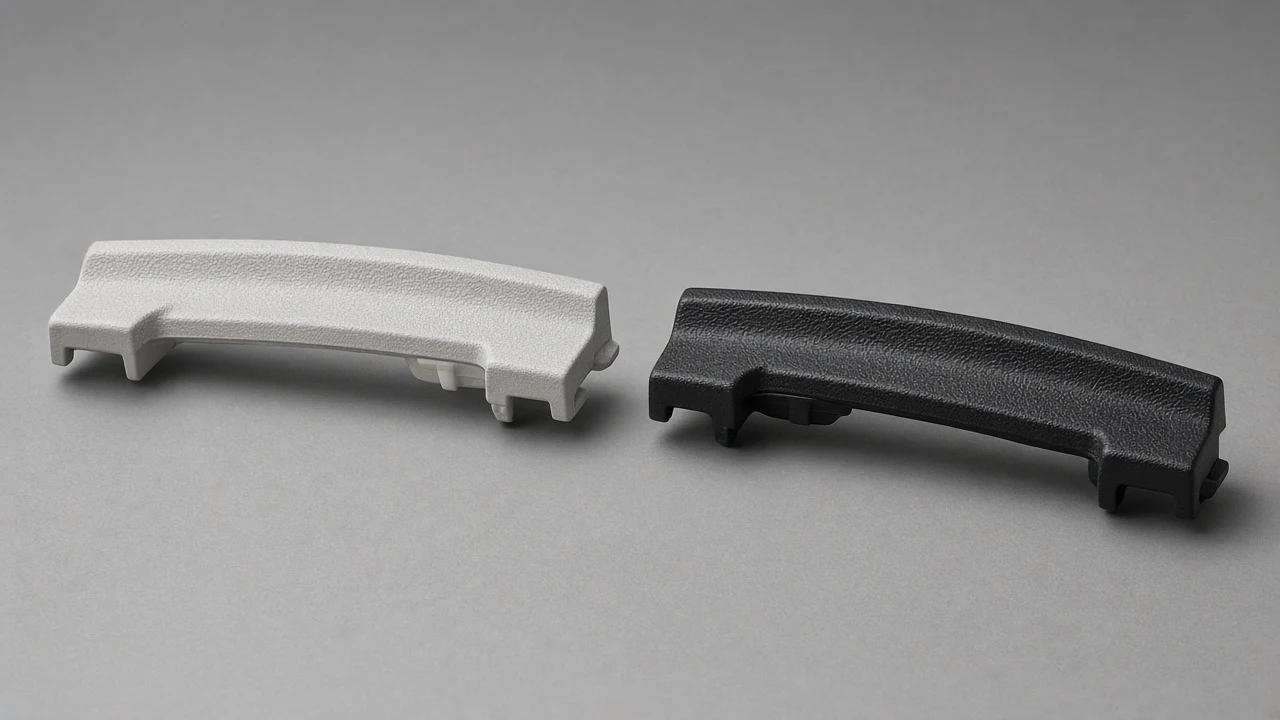
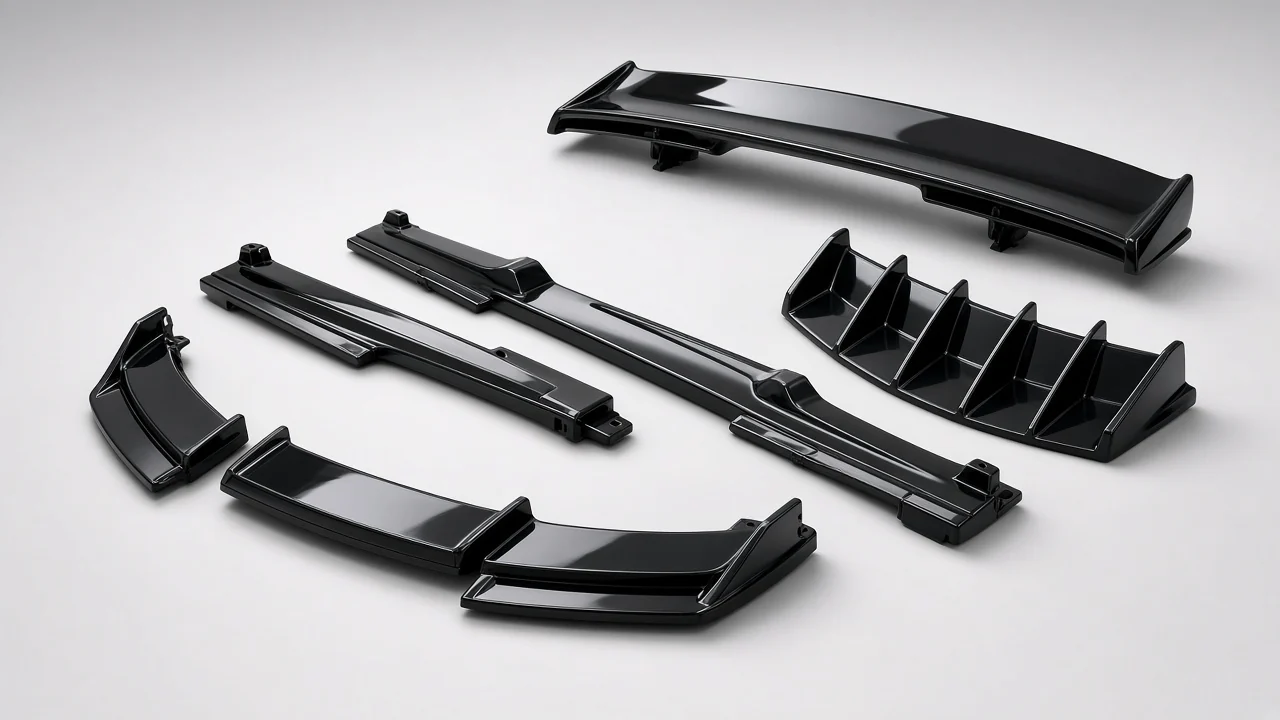
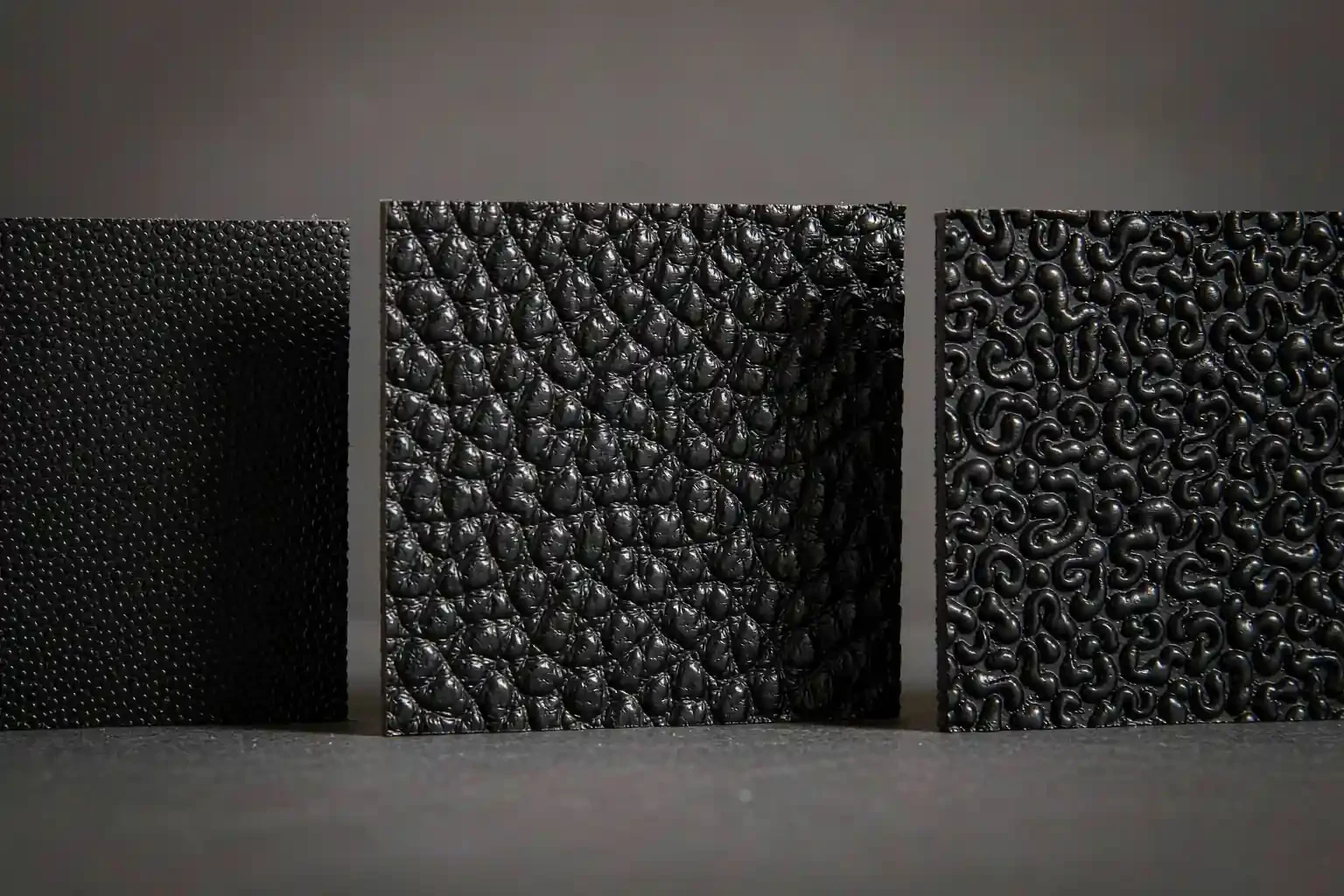
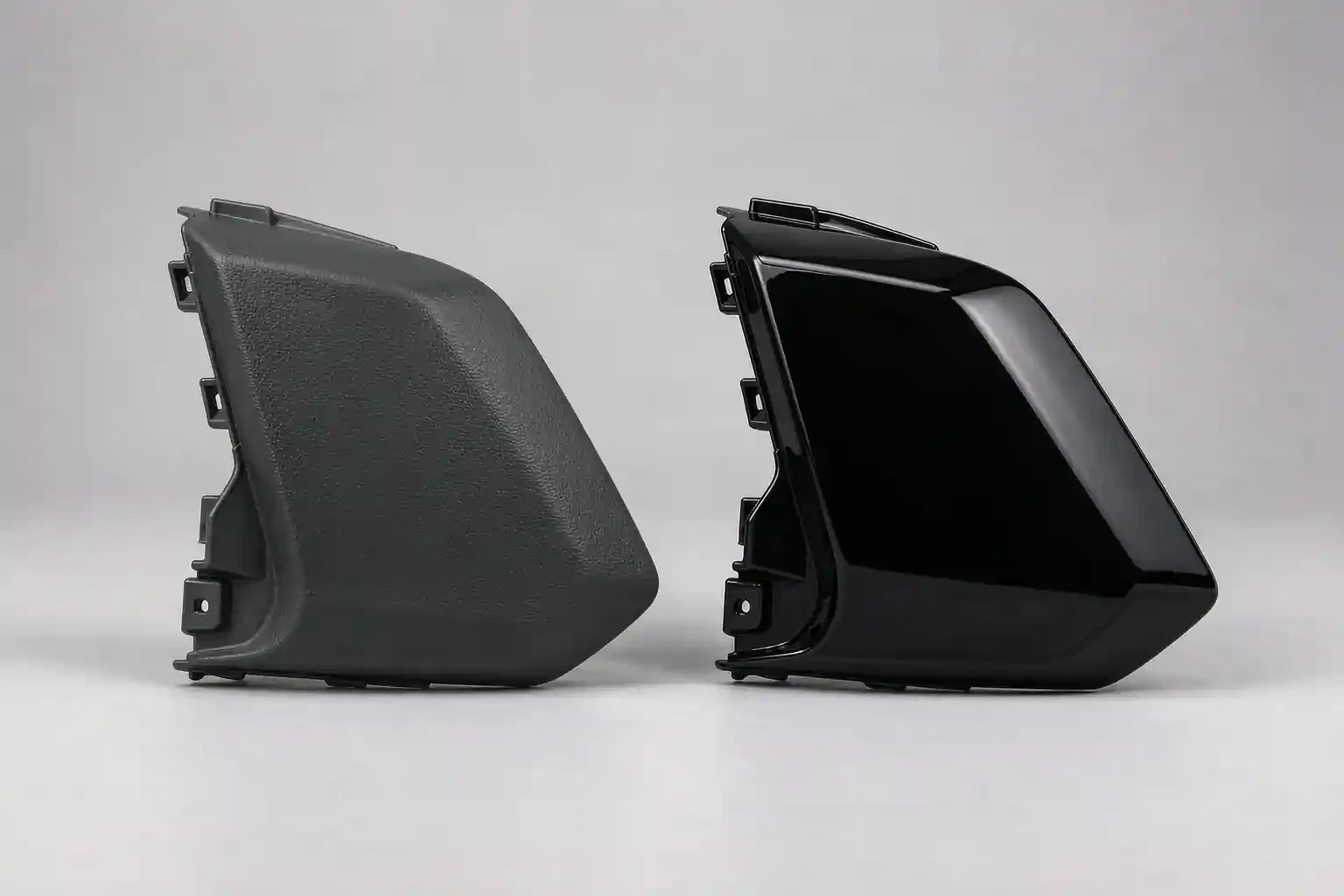
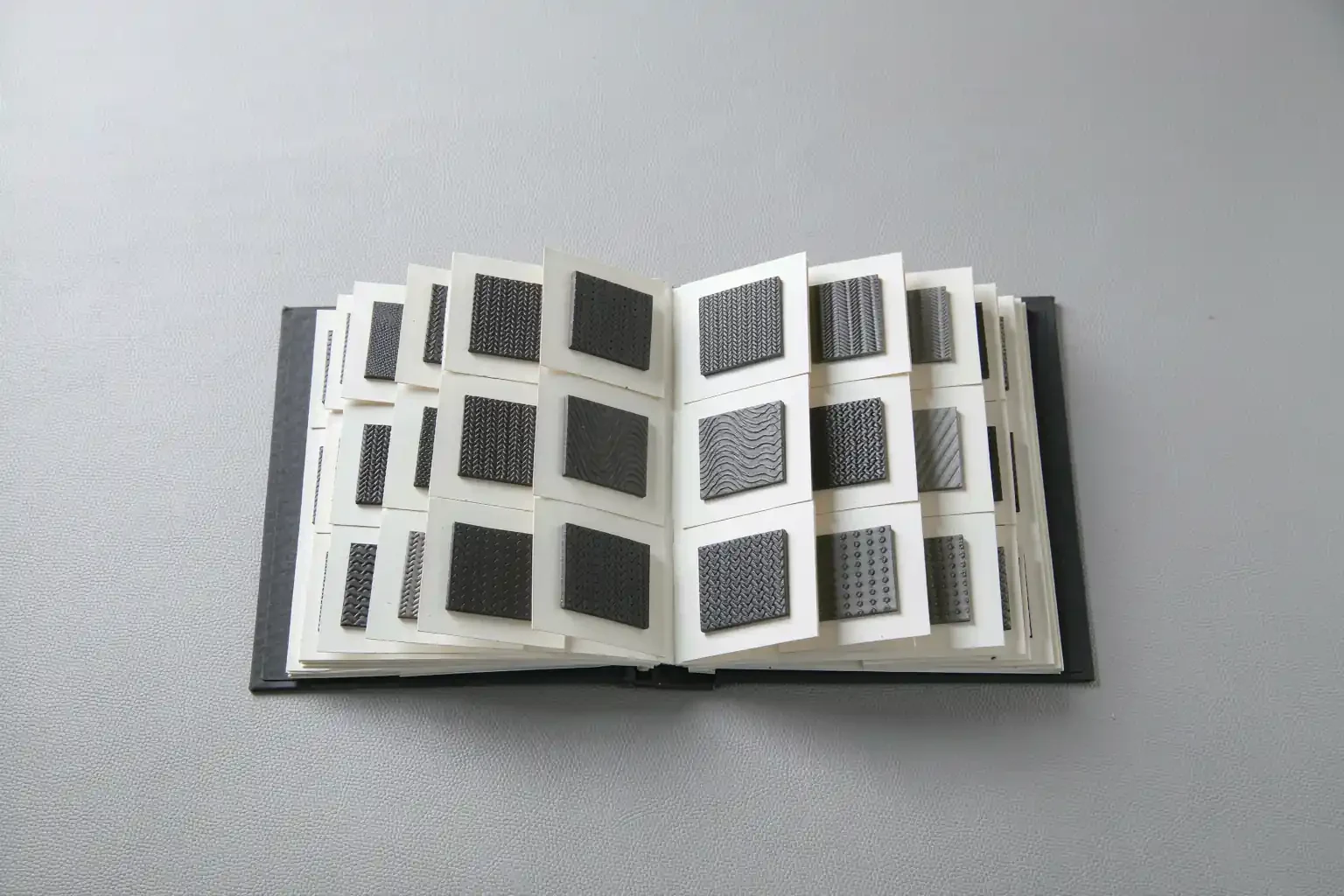
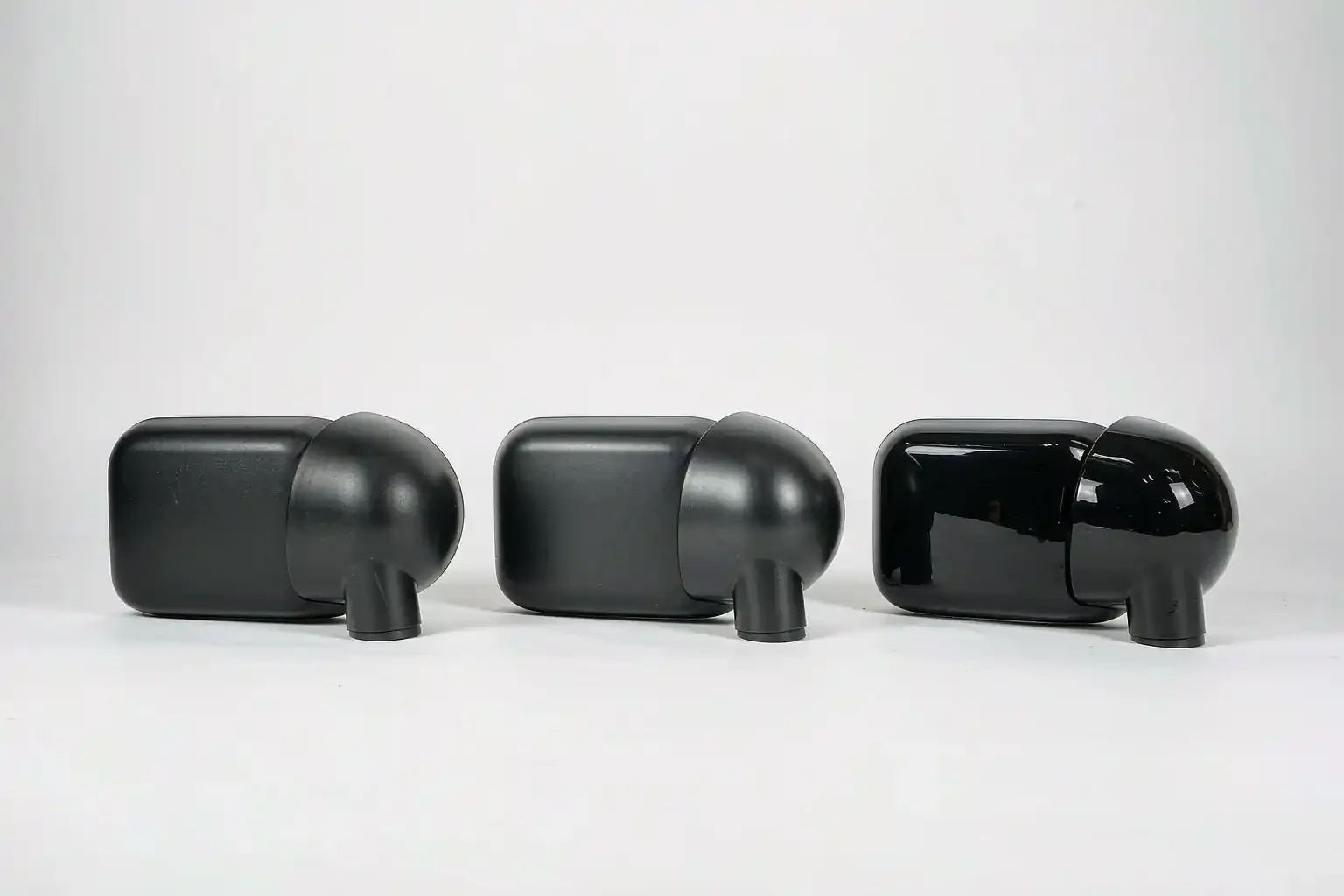
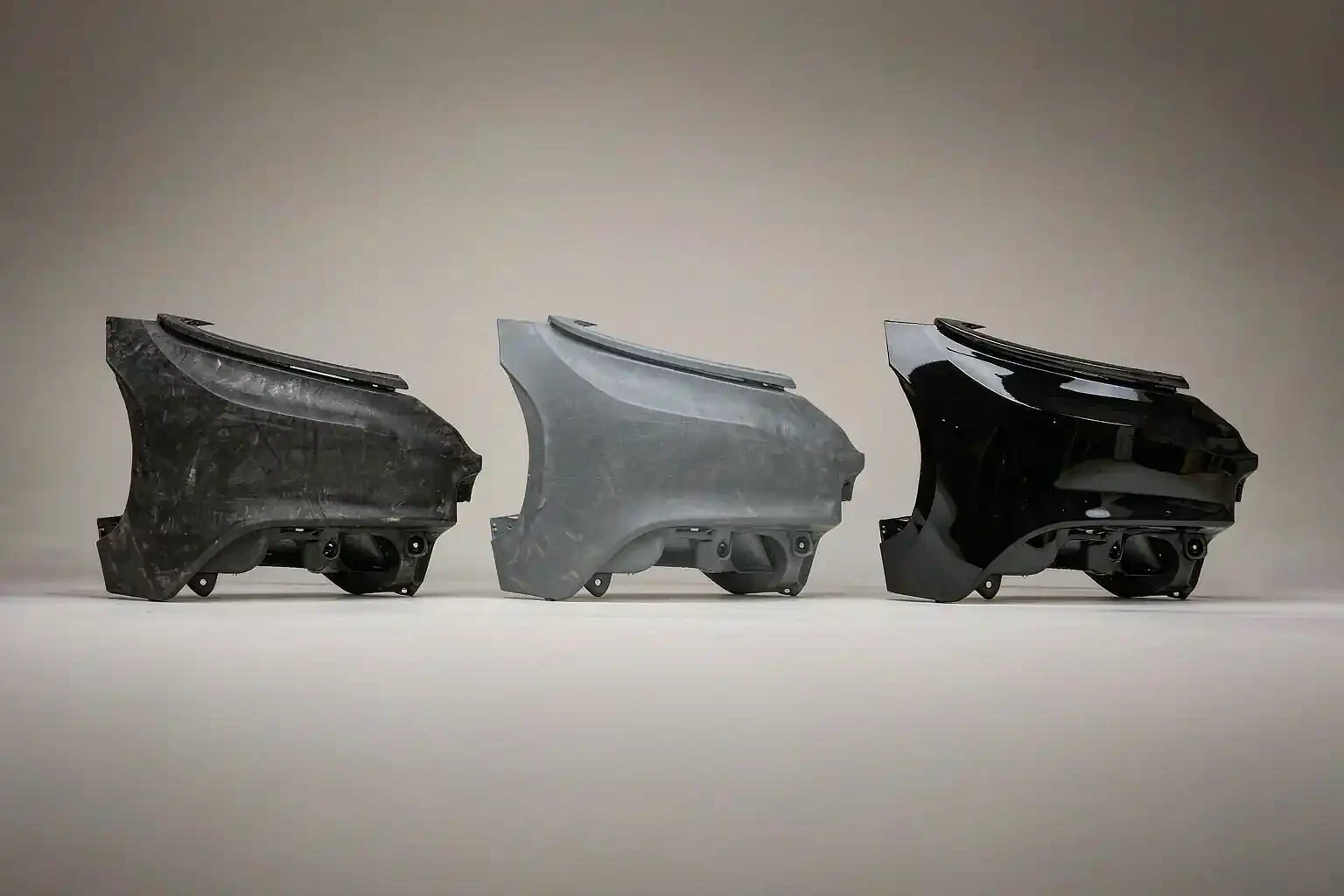
In the ASA vs ABS choice for outdoor parts, ASA plastic looks and molds like ABS but keeps its color and gloss in the sun. Yirox uses UV-stabilized ASA for unpainted, textured exterior parts such as window louvers, pillar trim, grille surrounds and wheel arch trim, molded in black, grey or natural color.

| Item | Details |
|---|---|
| Full name | Acrylonitrile styrene acrylate (ASA) |
| Grade types we use | UV-stabilized ASA in black, grey and natural; ASA for painting |
| Typical parts | Window louvers, pillar and cowl trim, grille surrounds, wheel arch trim, mirror bases, exterior covers |
| Finishes | Molded-in color with mold texture, 3C2B paint, piano black paint |
| Not used for | Chrome plating |
| Order size | Low MOQ on selected items |
ASA is a thermoplastic closely related to ABS. Both use acrylonitrile and styrene, but ASA replaces ABS’s butadiene rubber with an acrylate rubber. Butadiene has double bonds that UV light breaks easily, which is why ABS fades and turns chalky outdoors. Acrylate rubber does not have these double bonds, so ASA keeps its color, gloss and impact strength far longer in sunlight.
Because ASA molds at similar settings to ABS and has similar stiffness, it is the usual choice when an exterior part must stay unpainted. It is widely used for black textured trim, mirror bases, cowl panels and louvers on production vehicles.

The rule of thumb: if the part will be painted or chrome plated, ABS is usually the better value. If the part stays unpainted on the outside of the vehicle, choose ASA.

| Property | ASA | ABS |
|---|---|---|
| UV and weathering resistance unpainted | Excellent | Poor |
| Color and gloss retention | Holds color and gloss | Fades and chalks |
| Impact strength | Good | Good to very good |
| Heat resistance | Similar | Similar |
| Paintability | Good | Very good |
| Chrome plating | Not suitable | Plating-grade ABS |
| Cost | Higher | Lower |
| Best use | Unpainted exterior parts | Painted or plated parts |
Typical published datasheet ranges for injection molding ASA from resin manufacturers’ technical data sheets; not Yirox test results.
| Property | Typical value |
|---|---|
| Density | 1.06–1.08 g/cm³ |
| Tensile strength | 40–50 MPa |
| Flexural modulus | 2.0–2.5 GPa |
| Notched Izod impact (23 °C) | 100–300 J/m |
| Heat deflection temperature (0.45 MPa) | 90–100 °C |
| Mold shrinkage | 0.4–0.7 % |
| Melt temperature | 240–270 °C |
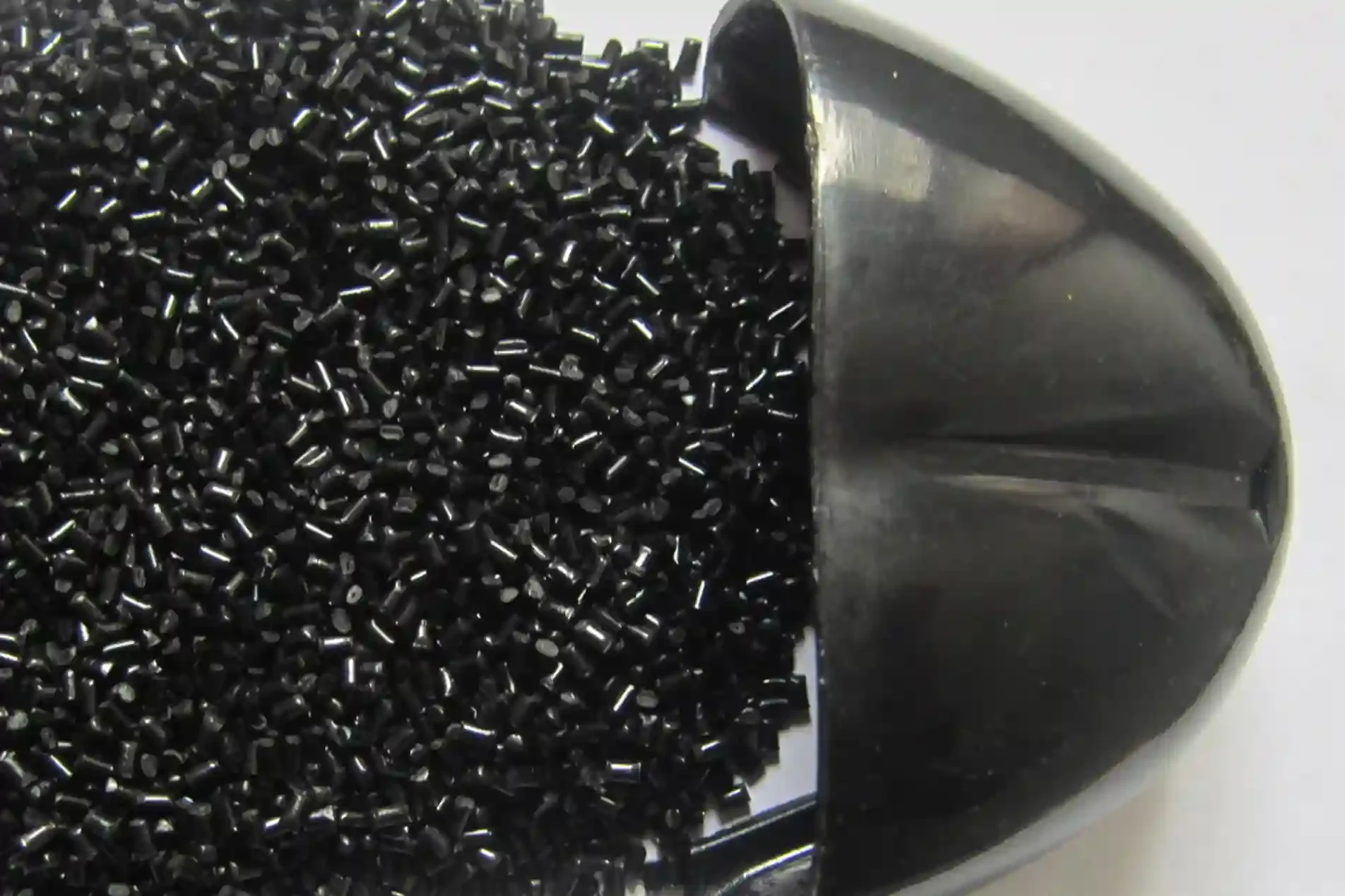
| Drying before molding | 80–85 °C, 2–4 h |
ASA is used for exterior parts because its acrylate rubber resists UV damage. How long a part keeps its look still depends on the grade, color, texture and UV stabilizer package. Black and dark grey grades with carbon black usually perform best.
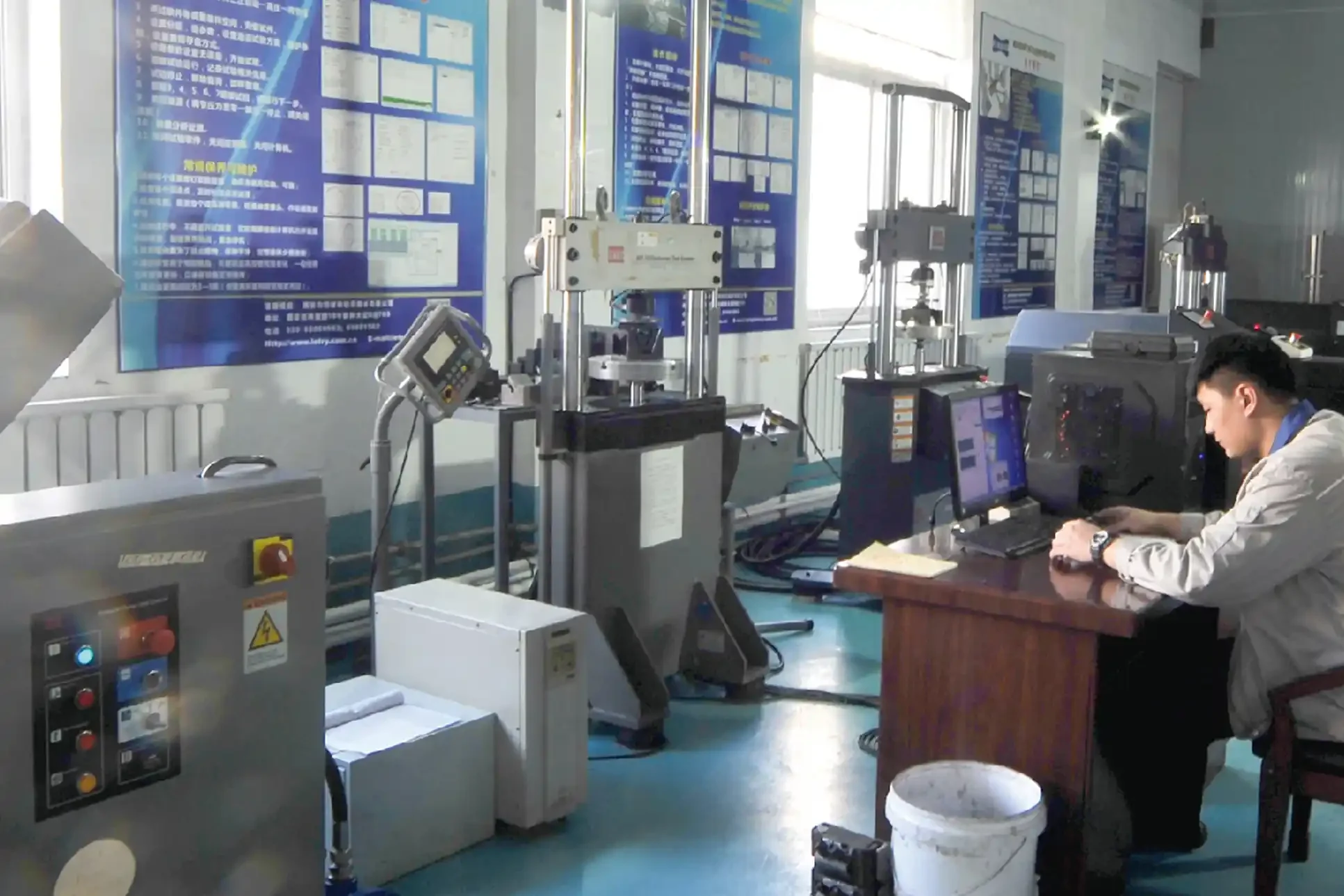
Weathering is checked by accelerated tests such as QUV (500 or 1,000 h) or xenon arc exposure (2,500 kJ/m²), comparing color change and gloss loss before and after. We run these tests through accredited outside labs (SGS, CTI) when your specification requires them.



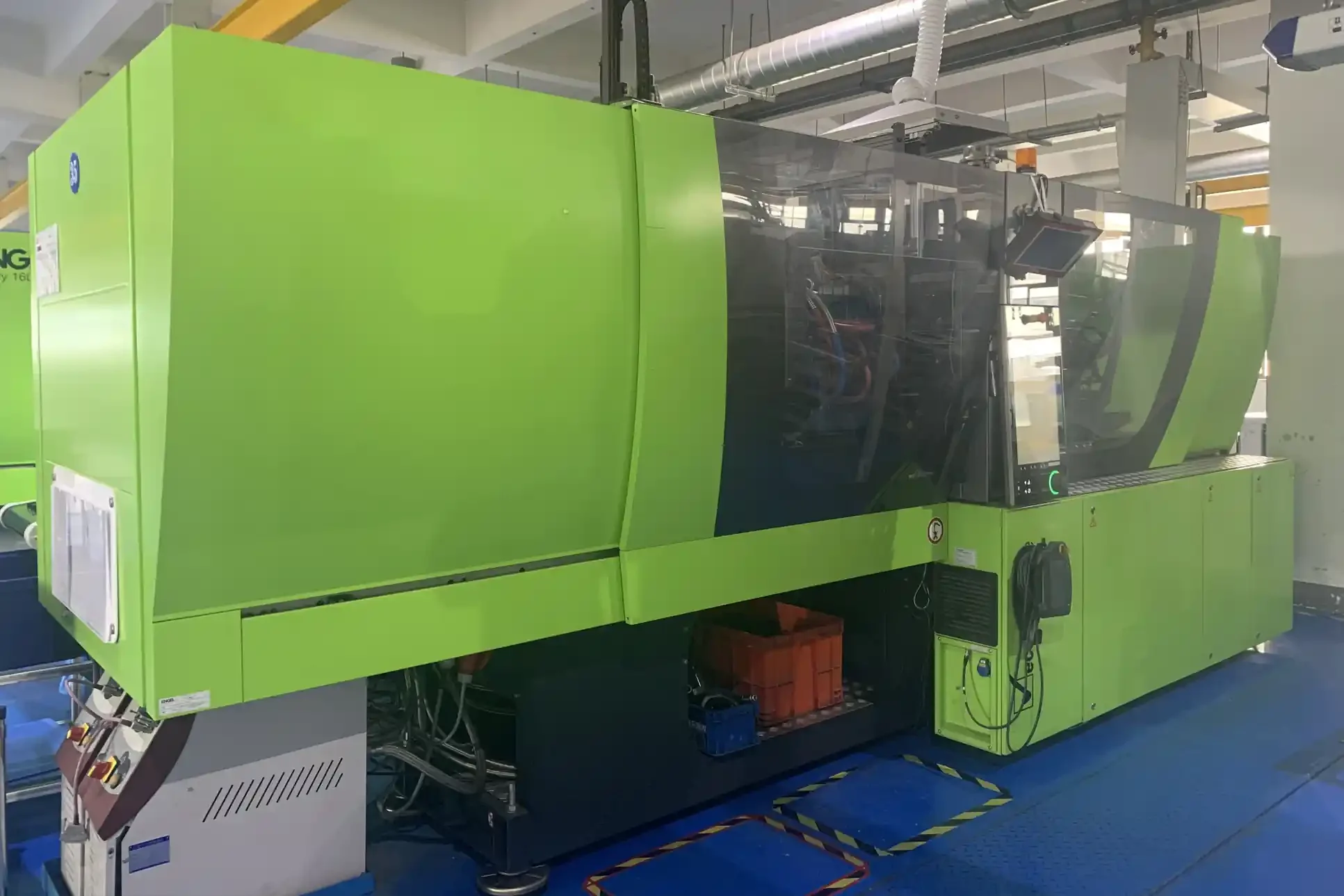
We dry ASA in desiccant dryers and mold it on machines matched to the part size, from small clips to long trim and louver parts. Mold temperature controllers keep the texture gloss even, and finished parts are checked at 60° and 85° with a BYK micro-TRI-gloss meter. Our target for molded-in color parts is 3–8 GU at 60°, and 2–6 GU for grain textures. See mold texture and grain.


ASA (acrylonitrile styrene acrylate) is a thermoplastic similar to ABS that uses an acrylate rubber, which gives much better UV and weathering resistance.
For unpainted parts outdoors, yes. For painted or chrome plated parts, ABS is usually the better value.
Yes. ASA keeps its color and gloss in sunlight far better than ABS. Results still depend on the grade, color and texture.
Yes. ASA paints well, but most buyers choose ASA so the part can stay unpainted.
Not on our line. For chrome we use plating-grade ABS.
We offer low MOQ on selected items. The quantity is confirmed in your quote.
Send your drawing or a sample with the color and texture you need. We will reply with DFM comments and a quote.