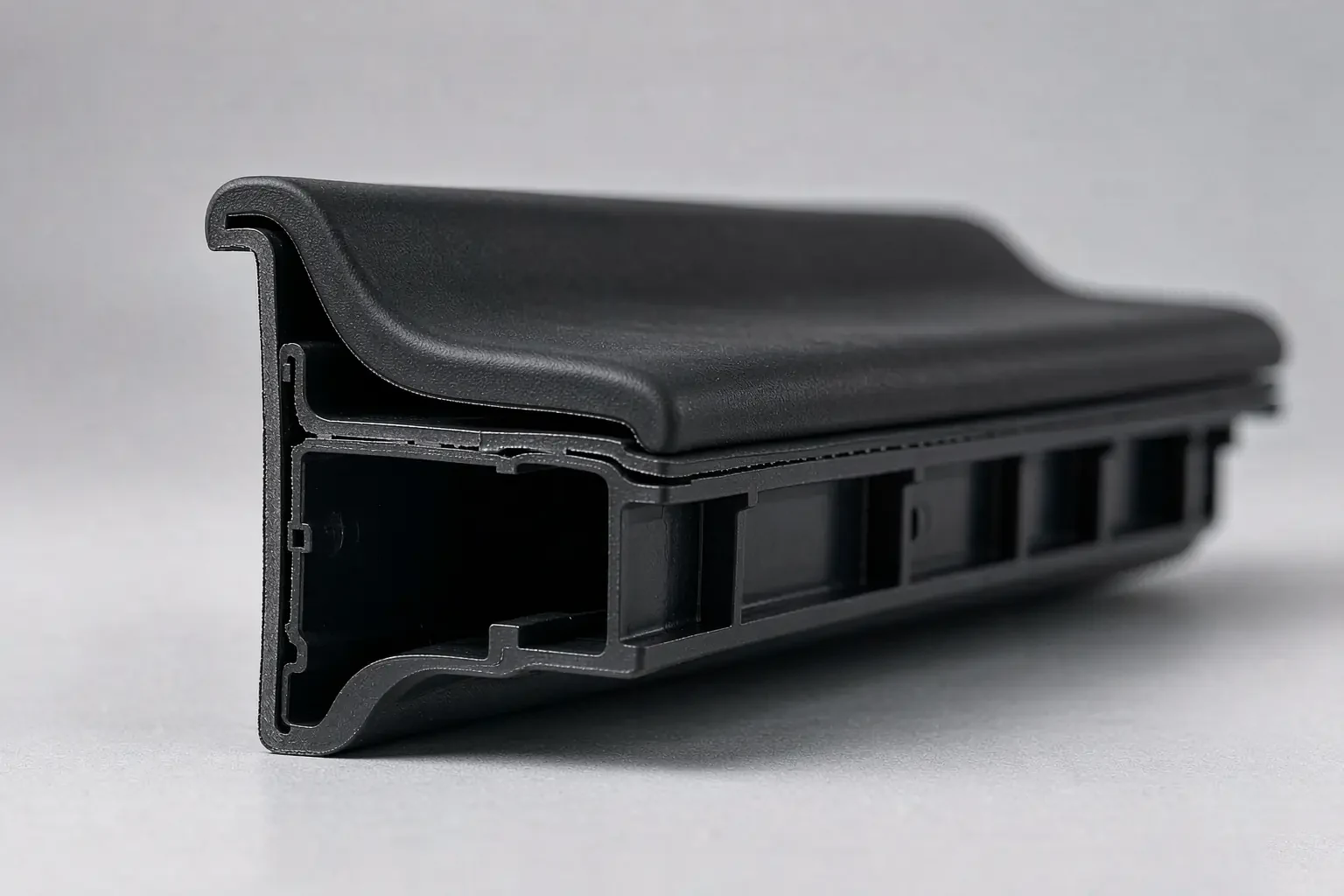
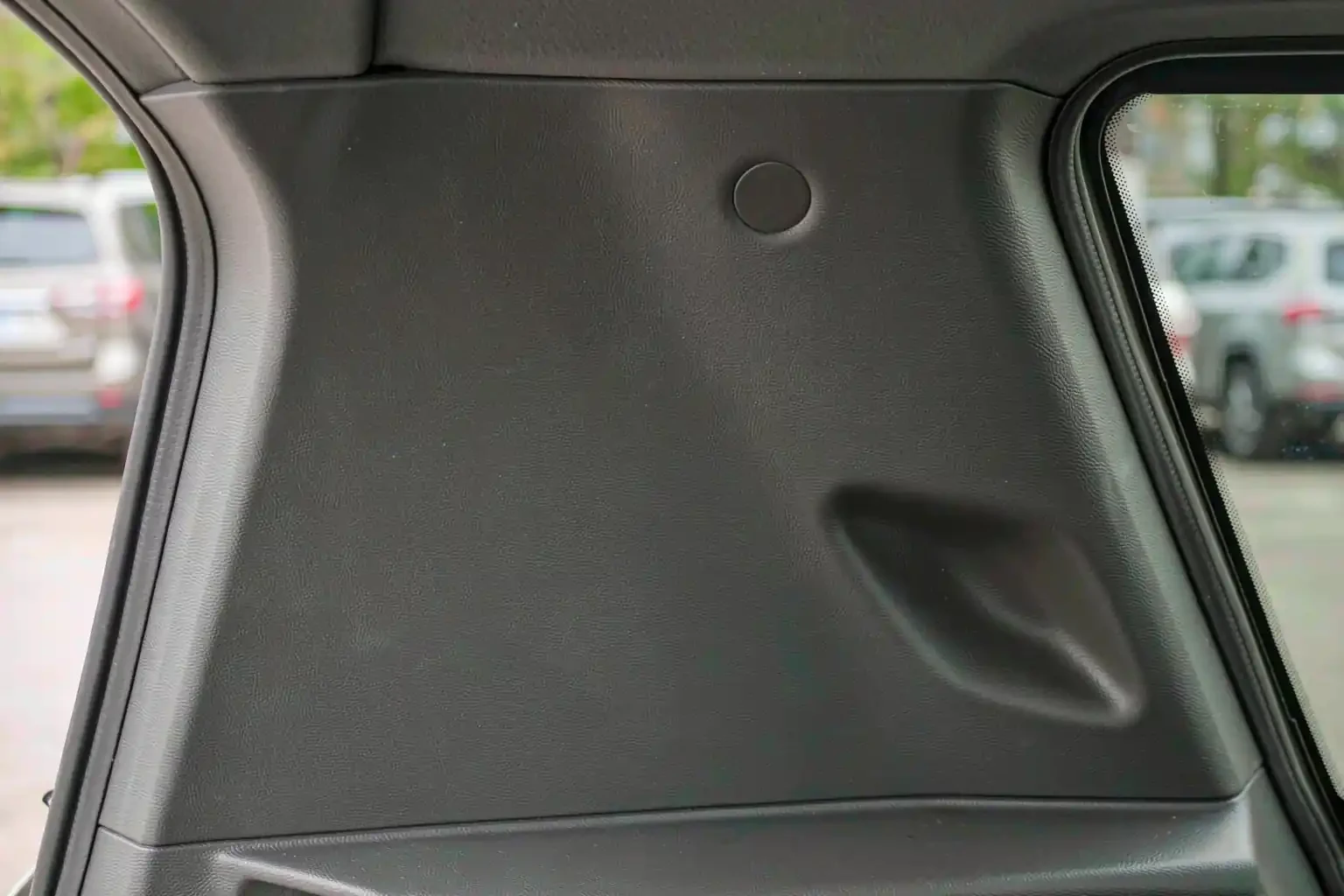
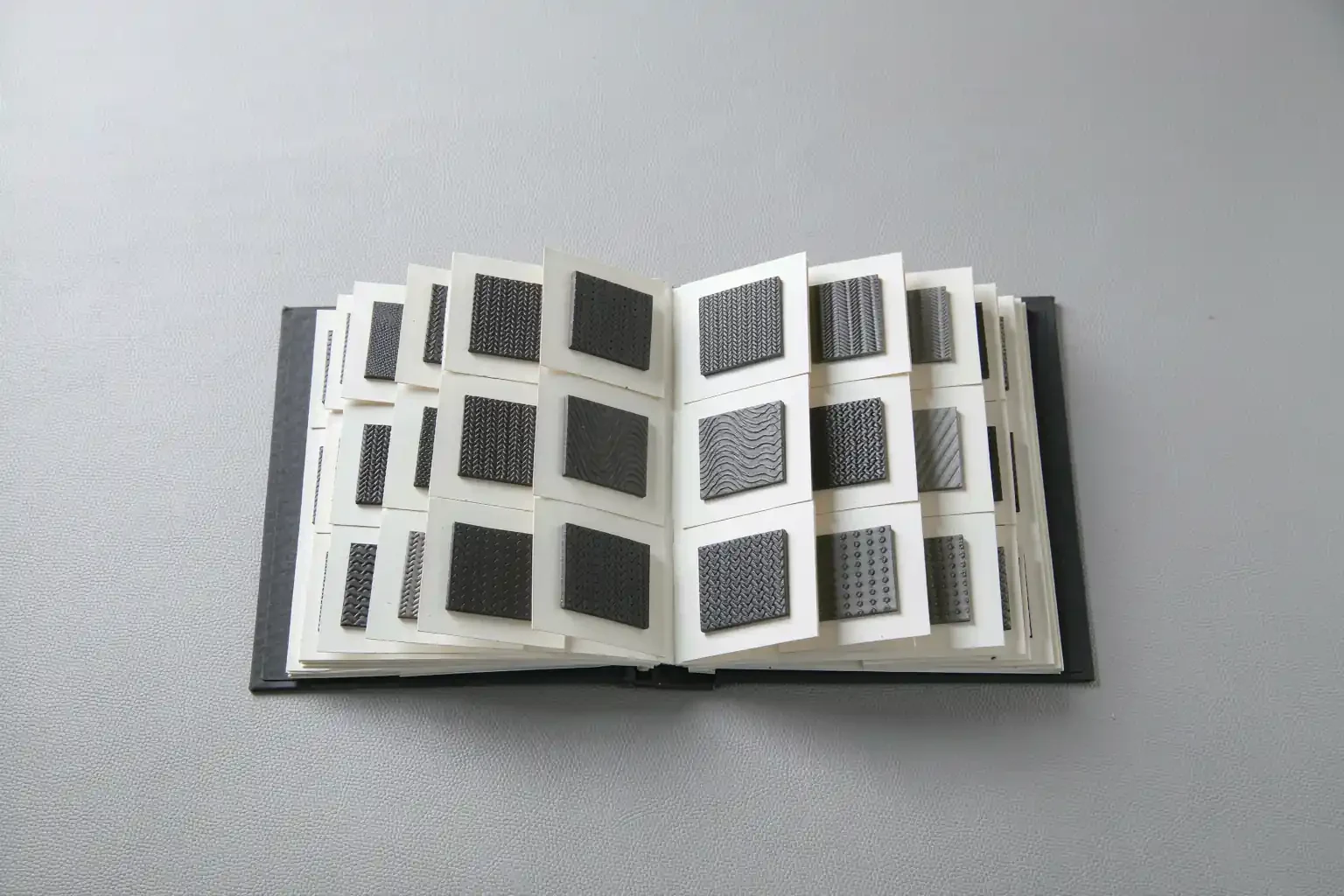
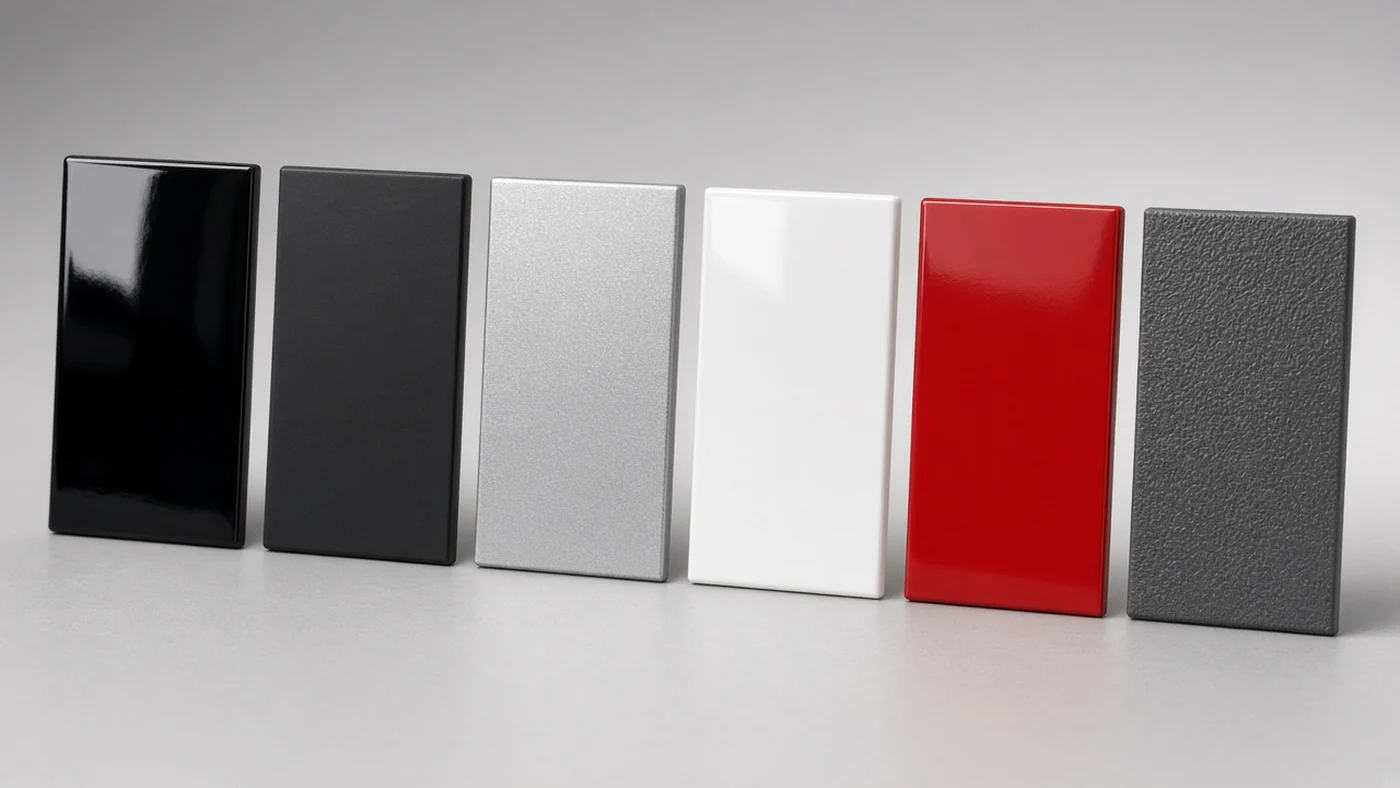
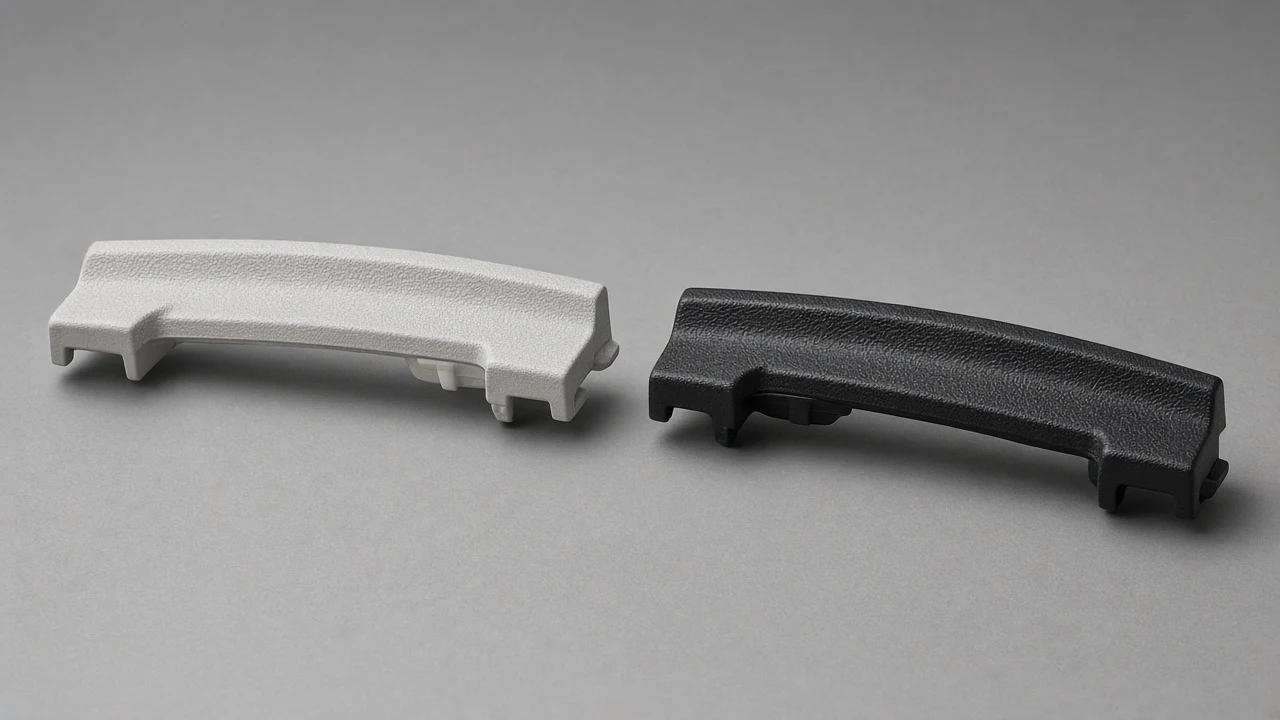
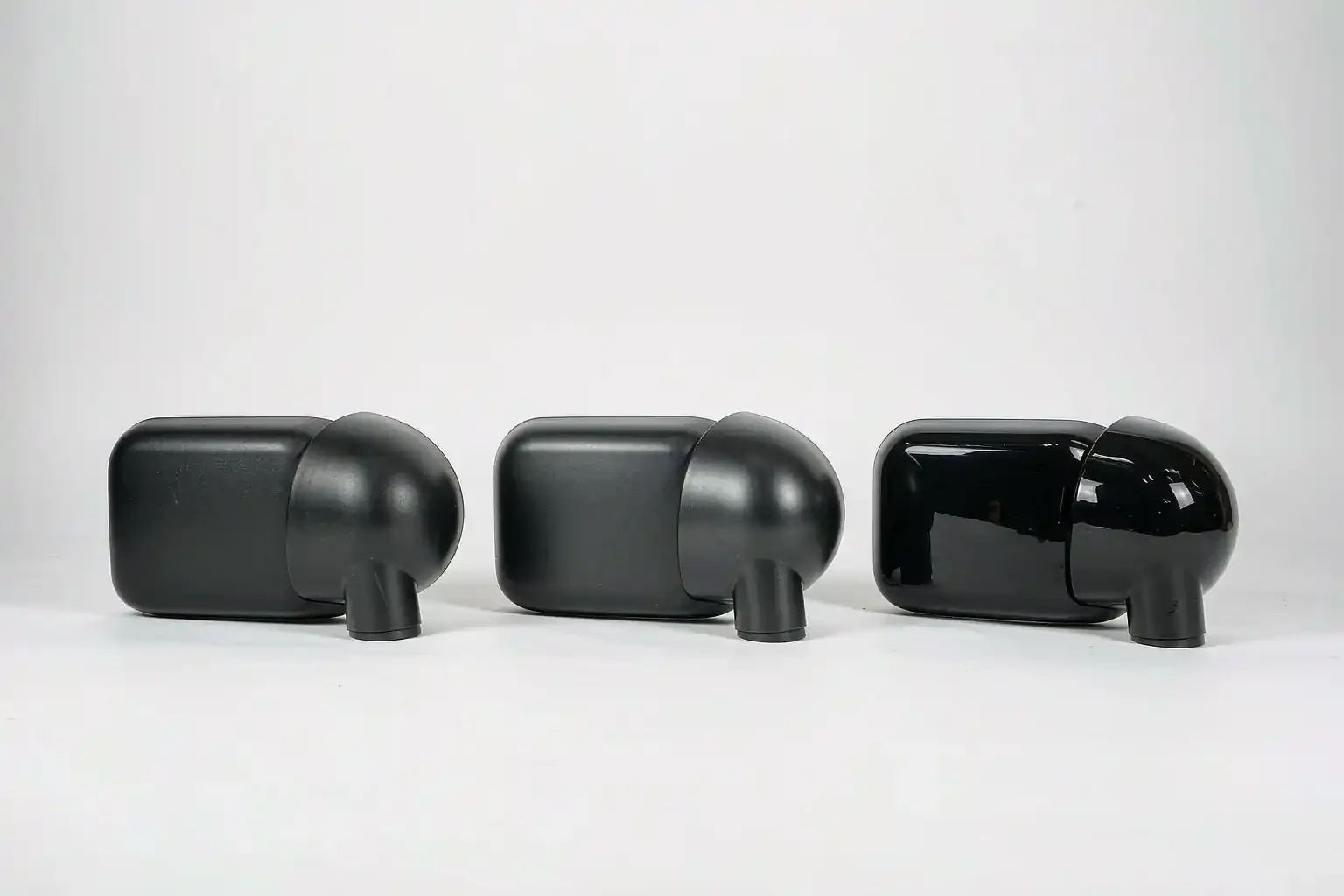
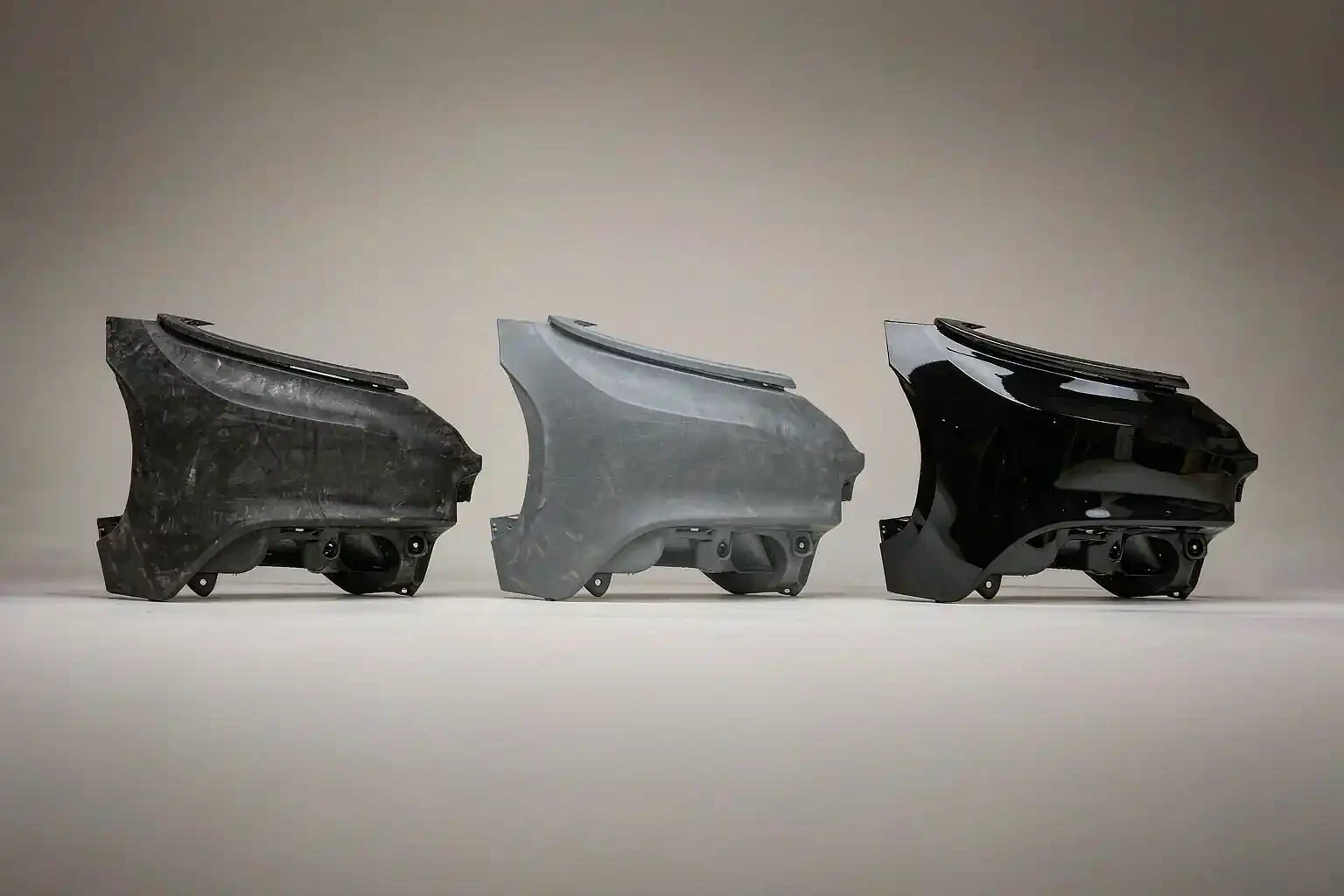
Plastic texture is molded directly into the part by a textured mold surface. Yirox produces textured exterior parts to VDI 3400 and SPI standards and to common grains such as fine sand, leather grain and bead-blast, with standard texture plaques for approval and custom textures from your reference part or drawing.

| Item | Details |
|---|---|
| Standards | VDI 3400 (for example VDI 30–36), SPI A1–D3 |
| Common grains | Fine sand texture, leather grain, bead-blast texture |
| Approval | Standard texture plaques; custom depth and style from a reference part or drawing |
| Gloss targets at 60° | Grain texture 2–6 GU; molded-in color 3–8 GU |
| Materials | ASA, PP, TPO, ABS, PC/ABS |
| Typical parts | Fender flares, wheel arch trim, cladding, louvers, pillar trim, mud flaps, covers |
A plastic texture is a pattern on the surface of a molded part, created by texturing the steel of the mold cavity. Every part molded in that cavity copies the pattern, so the texture is part of the plastic, not a coating. Textures range from a fine matte frost to deep leather or geometric patterns.
Texture has practical benefits as well as looks. It hides flow lines, sink marks and small scratches, gives a low, even gloss, improves grip, and allows an unpainted part to look finished. That is why most unpainted exterior parts, such as fender flares and cladding, are textured.

VDI 3400 grades are set by surface roughness: a higher VDI number means a rougher, more matte surface. SPI grades describe the polish or blast of the mold, from A1 (mirror) to D3 (coarse blast). Many buyers also specify grains by sample, such as a leather grain matched to the vehicle’s existing trim.

| Standard | What it describes | Typical grades | Typical use |
|---|---|---|---|
| VDI 3400 | Spark-eroded (EDM) textures defined by roughness | VDI 12–45; VDI 30–36 common for exterior parts | Matte, even textures |
| SPI A | Diamond-polished finishes | A1–A3 | High-gloss and clear parts |
| SPI B | Paper-polished finishes | B1–B3 | Semi-gloss surfaces |
| SPI C | Stone-polished finishes | C1–C3 | Low-gloss surfaces |
| SPI D | Dry-blasted finishes | D1–D3 | Matte, textured surfaces |

A fine, even matte surface that gives a clean, technical look and low gloss.
An irregular pebble pattern similar to leather, widely used on cladding, flares and covers to match OEM trim.
A uniform matte surface made by blasting the mold with glass or ceramic beads, useful for even, low-gloss parts.

As a guide, allow about 1° of extra draft for every 0.025 mm of texture depth, so the part releases without drag marks.
Thickness changes show as gloss differences on textured faces.
The texture is applied after the mold is cut and trialed, and the depth affects draft.
Approve texture and gloss on a plaque or first sample before the full mold is textured.
For unpainted exterior parts, use ASA, PP or TPO, not standard ABS.
The texture sets the gloss of an unpainted part. Our standard targets are 2–6 GU at 60° for grain textures and 3–8 GU for molded-in color parts, checked with a BYK micro-TRI-gloss meter at 60° and 85°. Gloss also depends on mold temperature and material, which is why we control mold temperature on every machine with 46 mold temperature controllers.


| Point | Molded texture | Painted finish |
|---|---|---|
| Cost | Lower (no paint step) | Higher |
| Scratch visibility | Very low | Higher, especially gloss |
| Color options | Material colors | Any color |
| Peeling | Cannot peel | Depends on adhesion |
| Best for | Flares, cladding, louvers | Styling parts, body color |
You choose a VDI or SPI grade, a grain from our plaques, or send a reference part.
We confirm texture and gloss on a standard plaque or sample.
The mold is cut and trialed in our mold shop before texturing.
The cavity is textured to the approved grade and depth.
Textured samples are molded and checked for gloss and uniformity.
Gloss is checked at 60° and 85° on production batches.

A pattern made in the steel of the mold cavity and copied onto every molded part, such as a leather grain or a fine matte frost.
A standard that defines spark-eroded mold textures by surface roughness. VDI 30–36 is common for exterior parts.
SPI grades describe mold finishes from A1 (diamond polish, mirror) to D3 (coarse dry blast).
Yes. We can make a custom texture depth and style from your reference part or drawing and confirm it on a sample.
As a guide, about 1° extra for every 0.025 mm of texture depth. We confirm the draft in DFM.
We offer low MOQ on selected items. The quantity is confirmed in your quote.
Send your drawing or a reference part and the texture you need. We will reply with DFM comments and a quote.