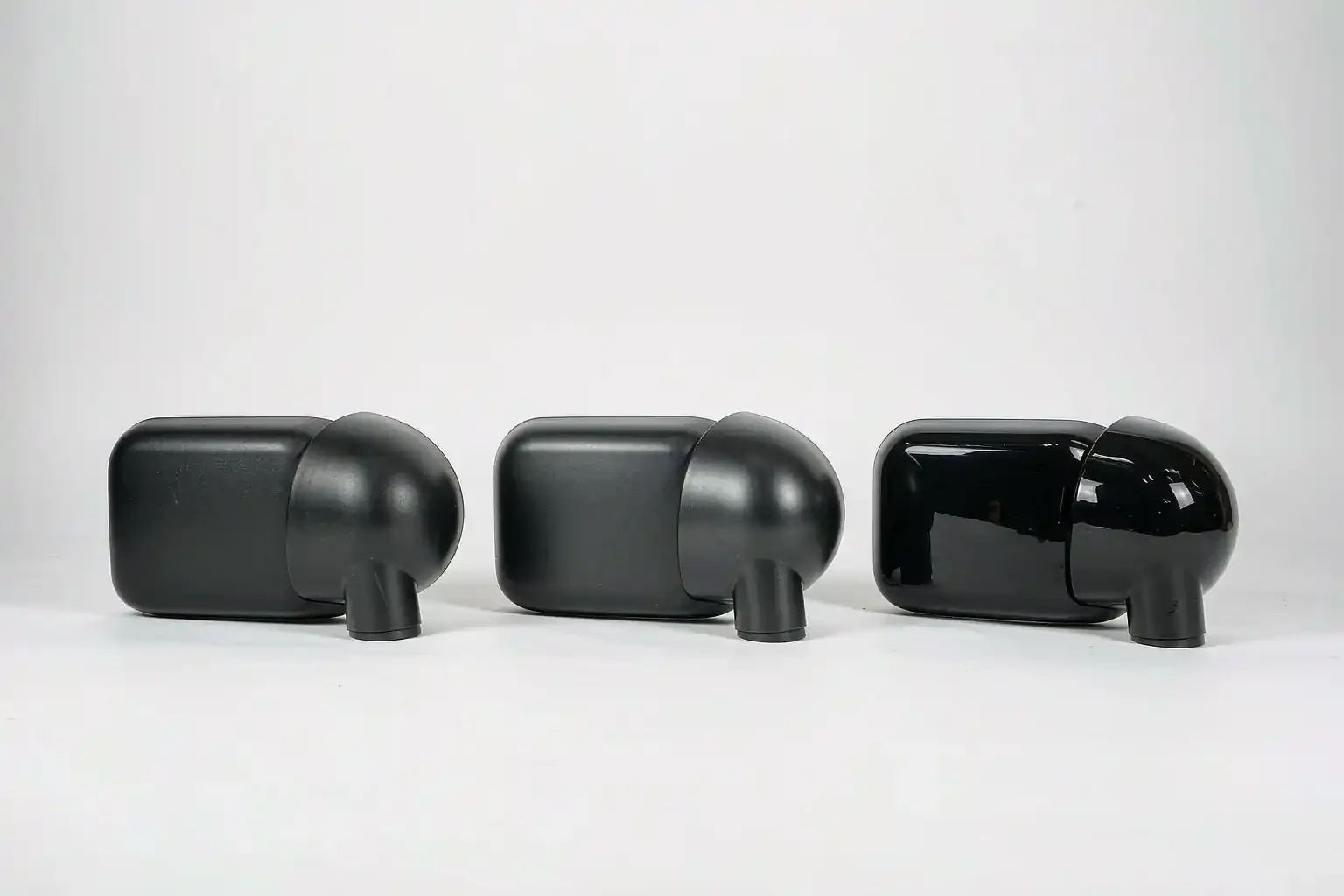
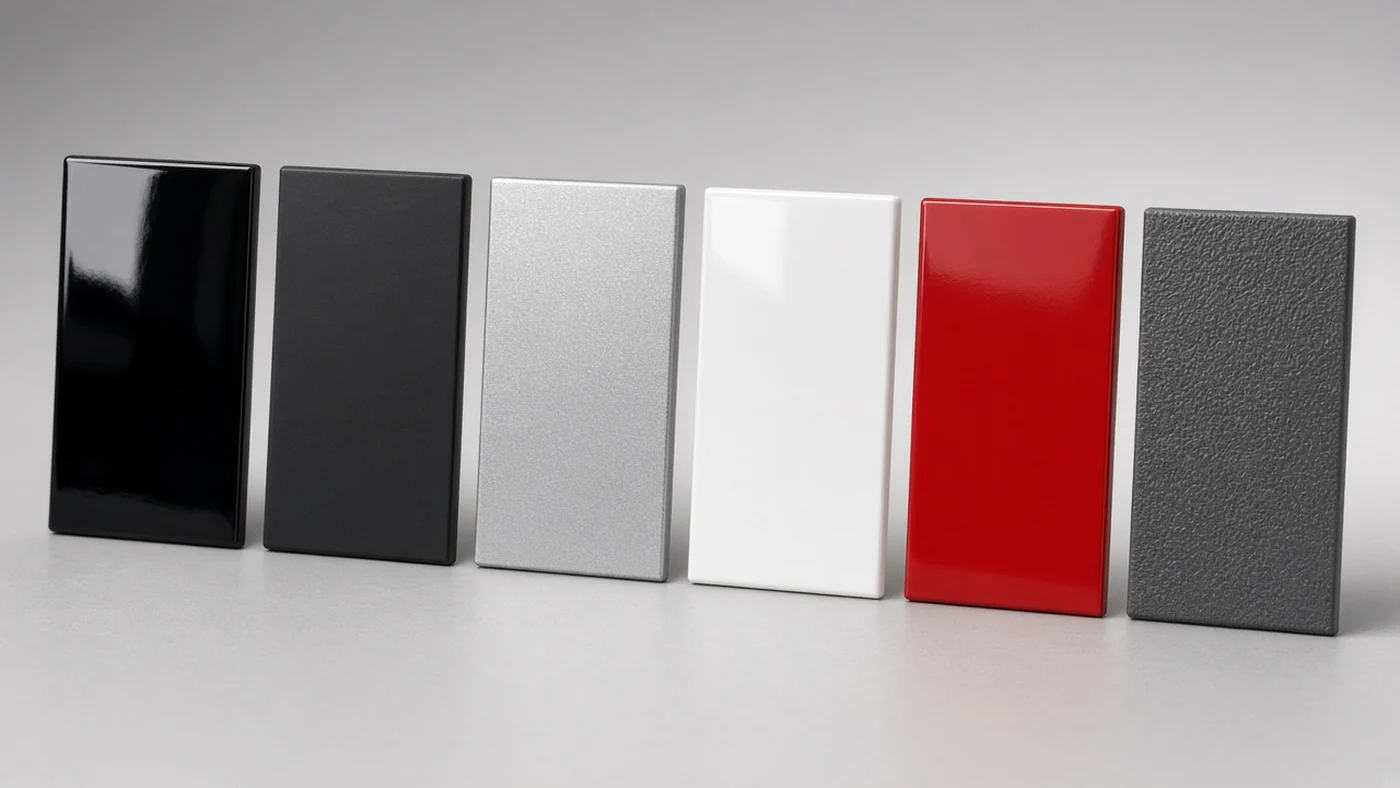
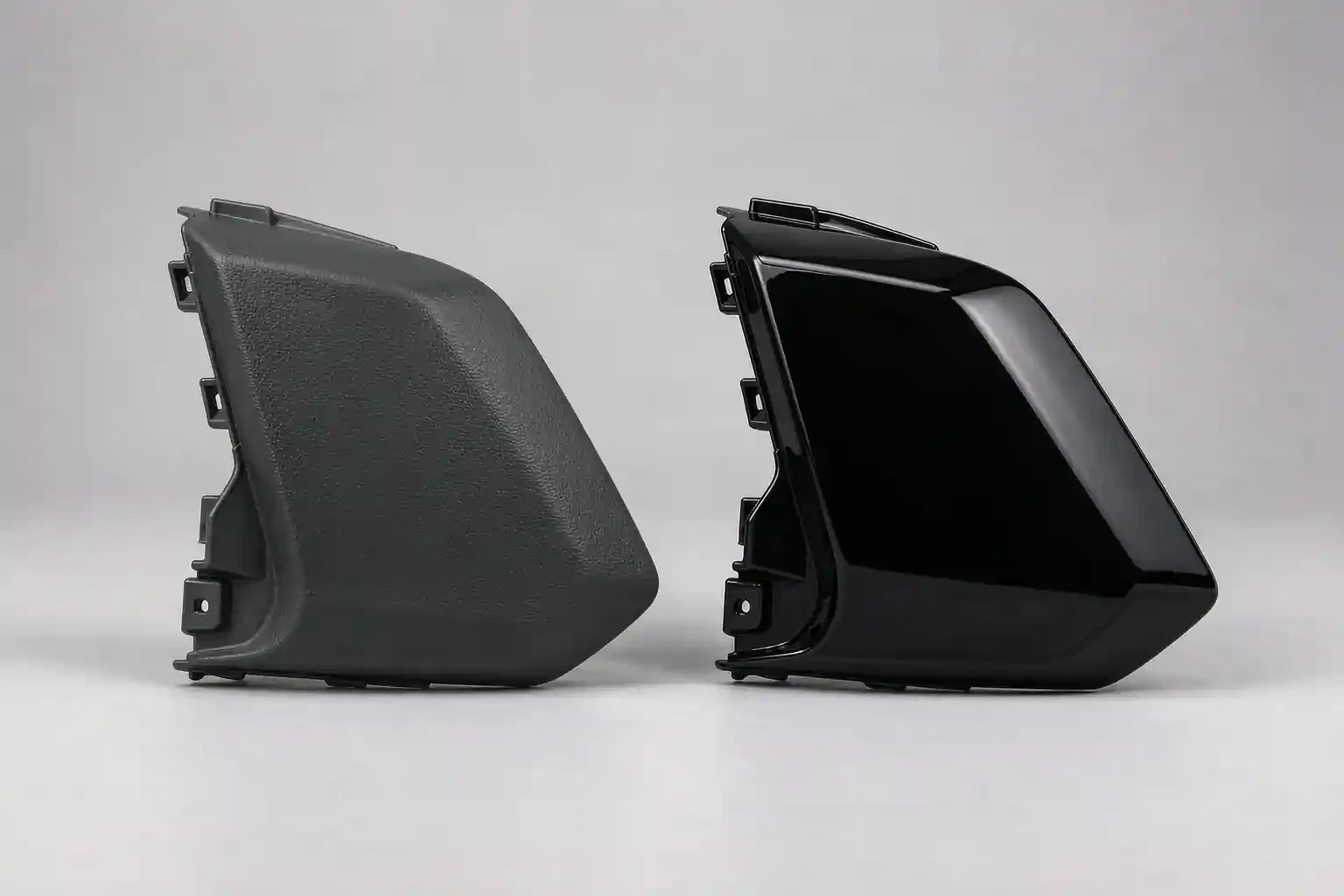
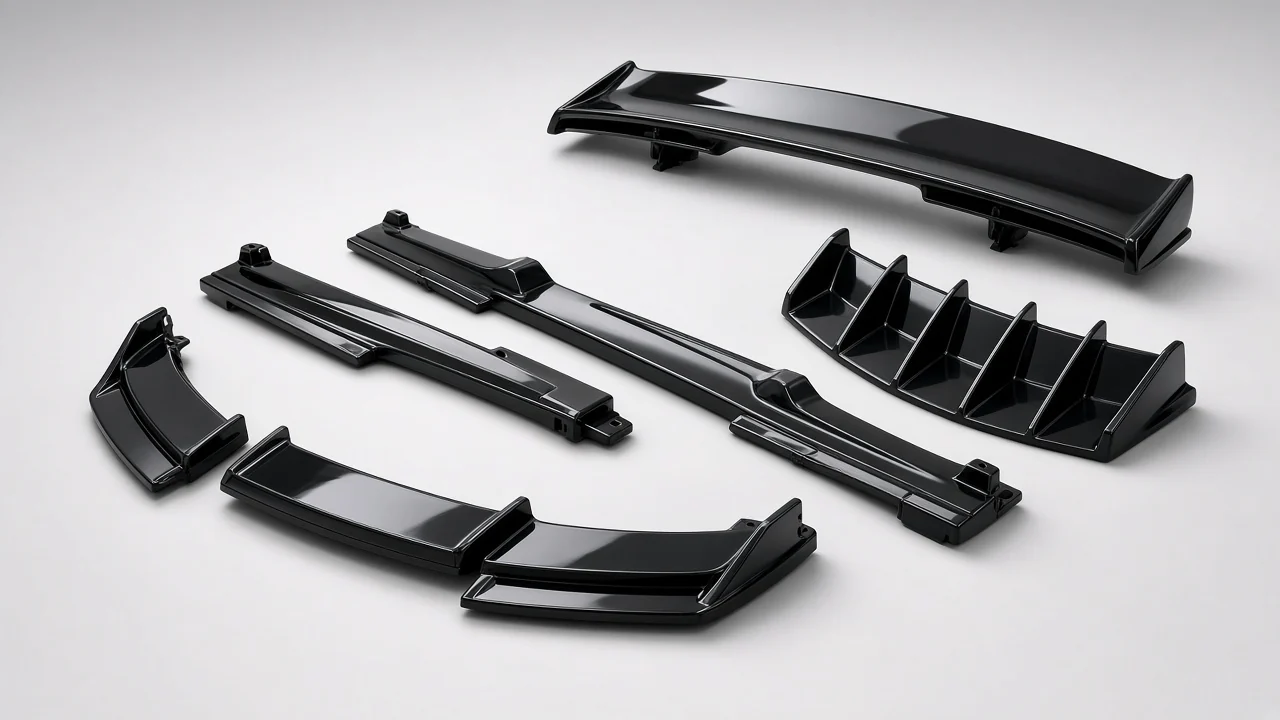
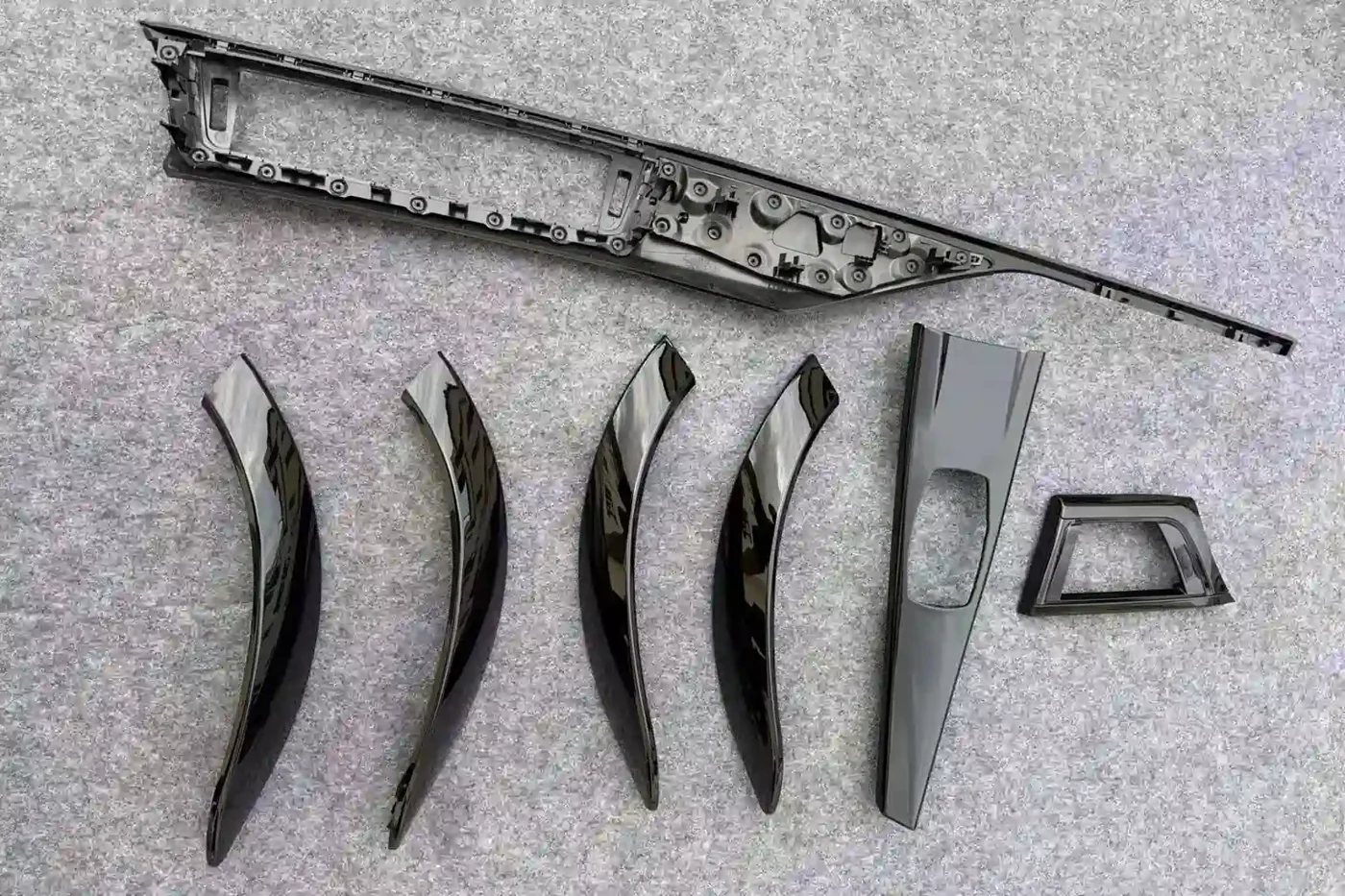
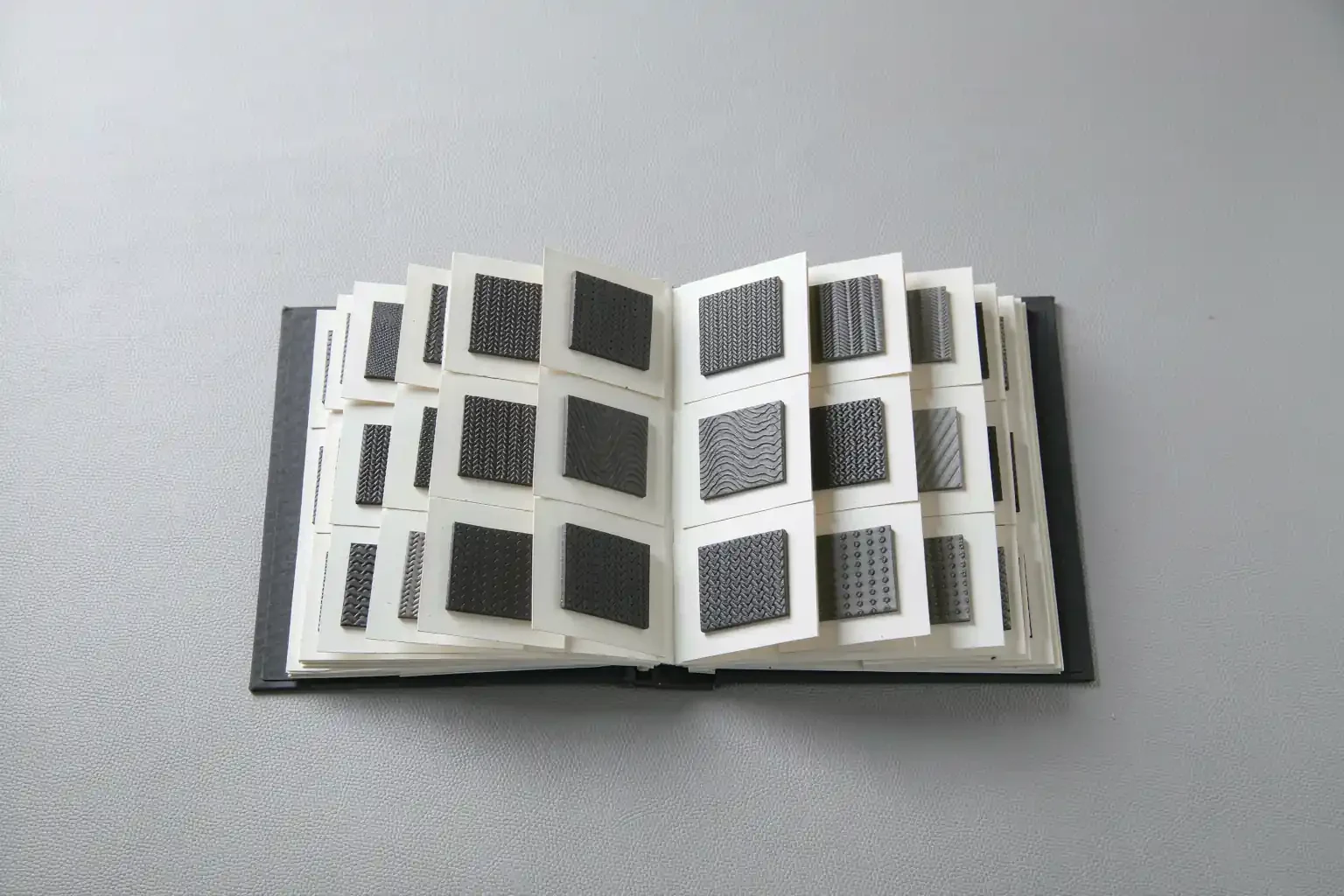
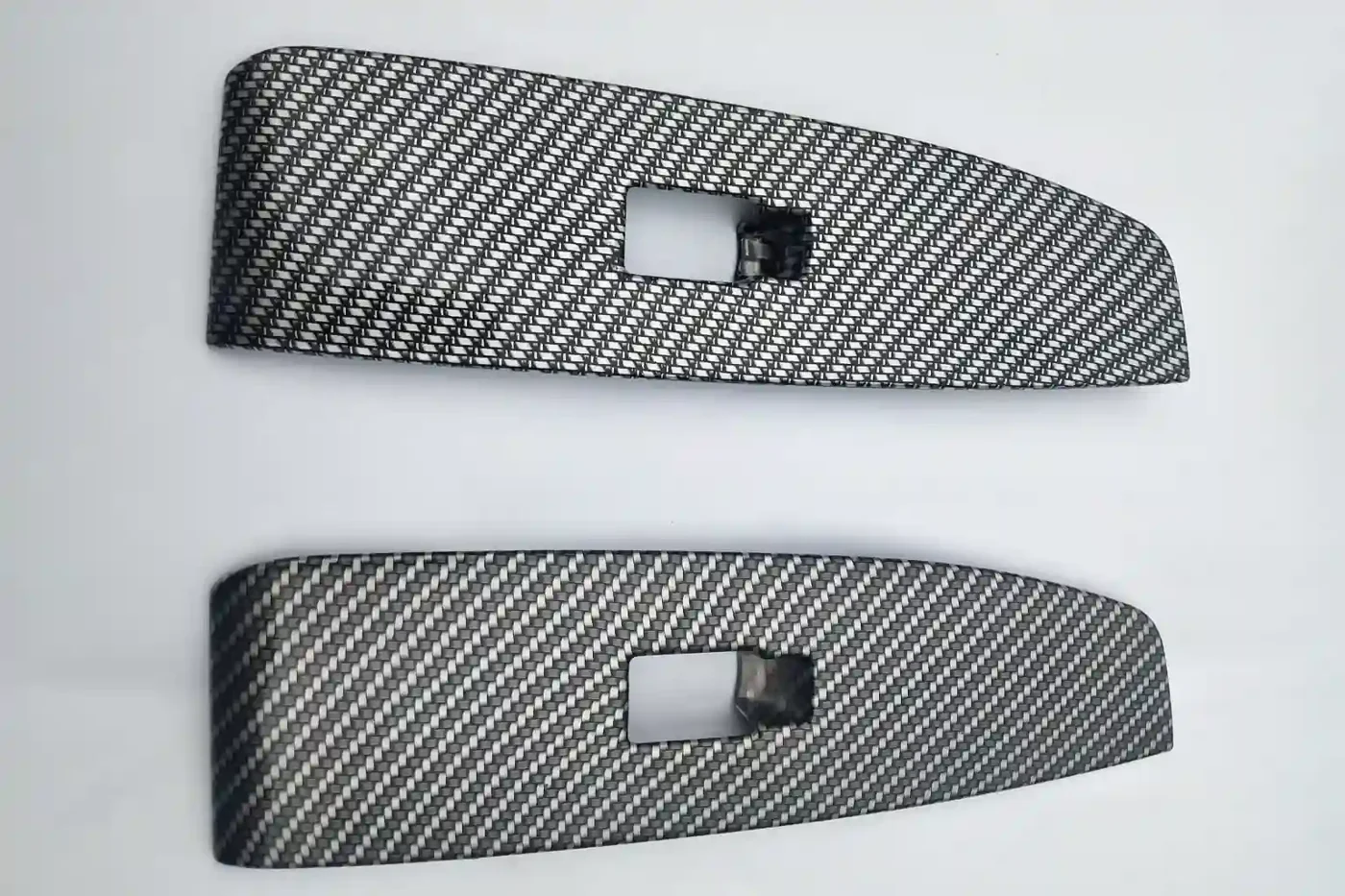
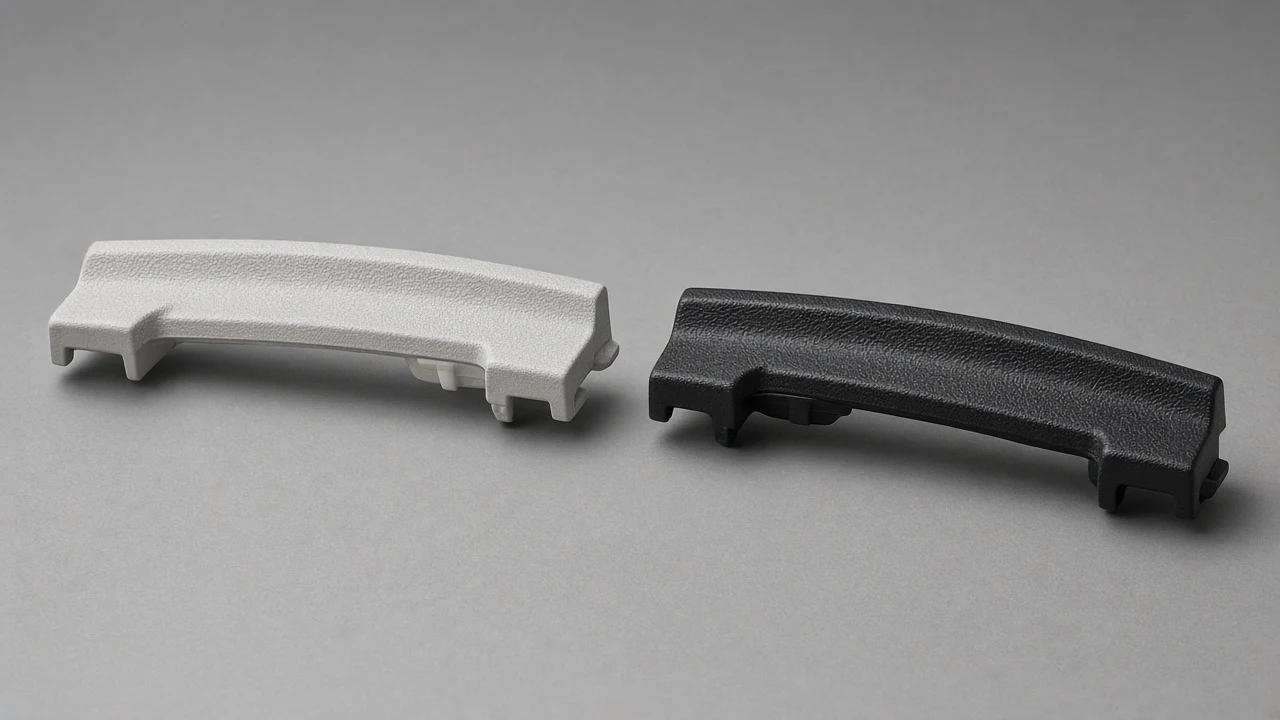
A matte black finish gives exterior parts a flat, modern look that hides small scratches and fingerprints better than gloss. Yirox supplies matte black at 5–15 GU and satin black at 20–40 GU at 60°, either as matte paint in our 3C2B lines or as paint-free molded matte parts.

| Item | Matte black | Satin black |
|---|---|---|
| Gloss at 60° | 5–15 GU | 20–40 GU |
| Extra check | 85° gloss | 60° |
| Painted route | 3C2B with matte or satin clear | 3C2B with satin clear |
| Paint-free route | Molded matte surface or texture | — |
| Materials | ABS, PC/ABS, ASA, PP/TPO with adhesion primer | Same |
| Adhesion | Cross-hatch grade 0–1 | Cross-hatch grade 0–1 |
Matte black is a black surface with very low gloss. Instead of reflecting light like a mirror, a matte surface scatters it in all directions because of fine roughness or matting particles in the clearcoat. The result is a flat, even black with no sharp reflections. Satin black sits between matte and gloss: it has a soft sheen but no mirror effect.


| Point | Matte black | Gloss black |
|---|---|---|
| Look | Flat, technical, sporty | Deep, premium |
| Shows scratches and swirls | Less | More |
| Shows fingerprints | Can show oils; cleans with mild soap | Shows smears |
| Repair | Cannot be polished | Can be polished |
| Gloss at 60° | 5–15 GU | ≥90 GU |
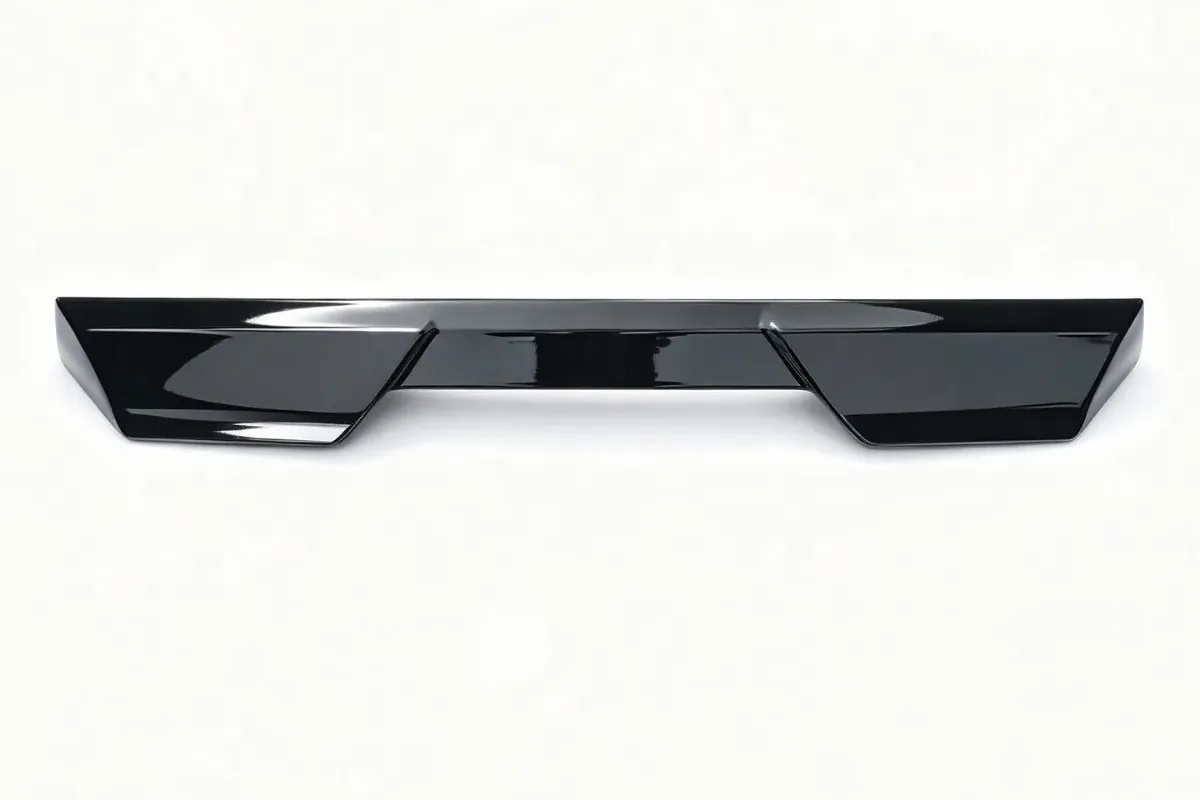
| Best for | Aero parts, louvers, roof spoilers | Mirror caps, grilles, premium trim |

The part is painted in our 3C2B system with a matte or satin clearcoat. This gives the most even look across large parts and on parts that join painted panels, and the matte clear protects the color.
The part is molded with a matte or textured mold surface in a black, UV-stable material such as ASA, PP or TPO. There is no paint step, so cost is lower and the surface cannot peel. The gloss is set by the mold finish; for molded-in color we target 3–8 GU at 60°.
At low gloss, the 60° angle gives small numbers that are hard to separate. That is why we also measure matte parts at 85°, a grazing angle that shows differences in “sheen” that the eye sees at a low viewing angle. We use a BYK micro-TRI-gloss meter at 20°, 60° and 85°. Values measured at different angles cannot be compared.


| Problem | Cause | How we control it |
|---|---|---|
| Uneven gloss (patchy) | Film thickness differences | Automatic L1 rotary line, film checks 35–50 μm |
| Shiny spots | Rubbing or polishing during handling | Packing that protects show surfaces |
| Gloss change between batches | Clearcoat or bake variation | 60° and 85° checks on every batch |
| Color shift | Color coat variation | X-Rite Ci64, ΔE*ab ≤1.0 |

L1 rotary automatic (24 stations) and L2 overhead conveyor.
Spray booths ISO 8, flash-off and oven ISO 7.
60 °C × 10 min pre-bake and 80 °C × 30 min topcoat bake.
BYK micro-TRI-gloss, X-Rite Ci64, BYK 8500 thickness gauge.

A low-gloss black finish that scatters light instead of reflecting it. Our matte black target is 5–15 GU at 60°.
Satin has a soft sheen of 20–40 GU at 60°; matte is flatter at 5–15 GU.
Matte hides fine scratches better and suits sporty parts; gloss looks more premium and can be polished.
Yes. We mold paint-free matte and textured parts in UV-stable materials such as ASA, PP and TPO.
No. Polishing raises the gloss and leaves shiny spots. Clean matte parts with mild soap and water.
We offer low MOQ on selected items. The quantity is confirmed in your quote.
Send your drawing or a sample and the gloss target. We will reply with DFM comments and a quote.