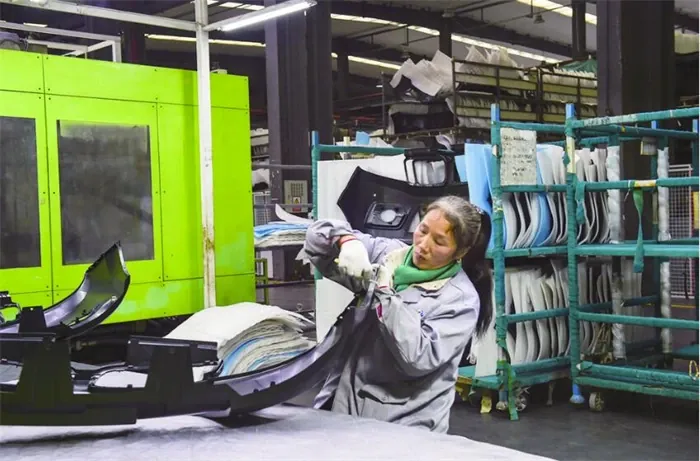
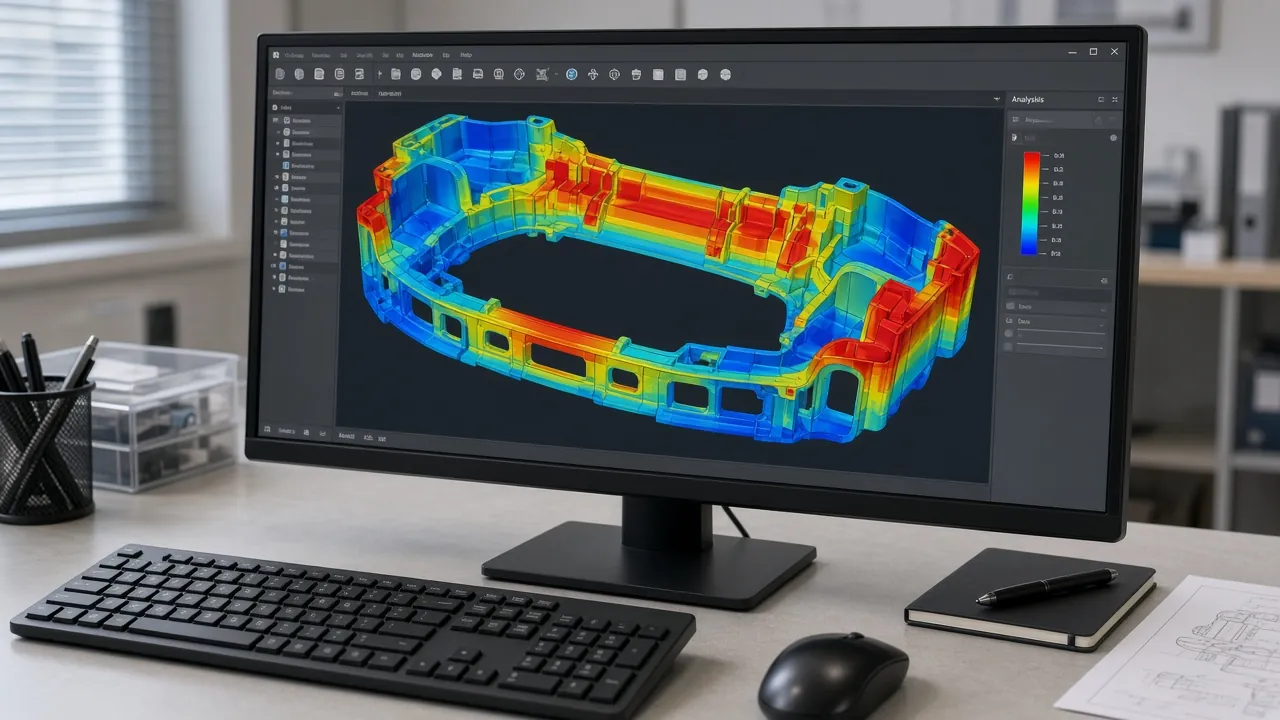
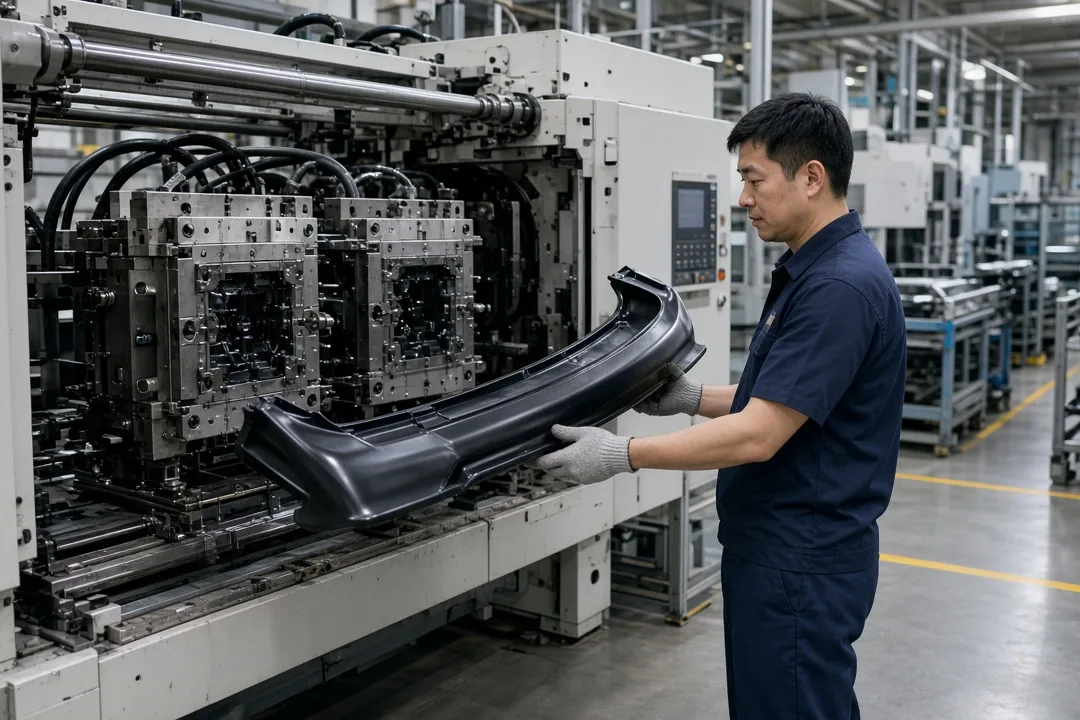
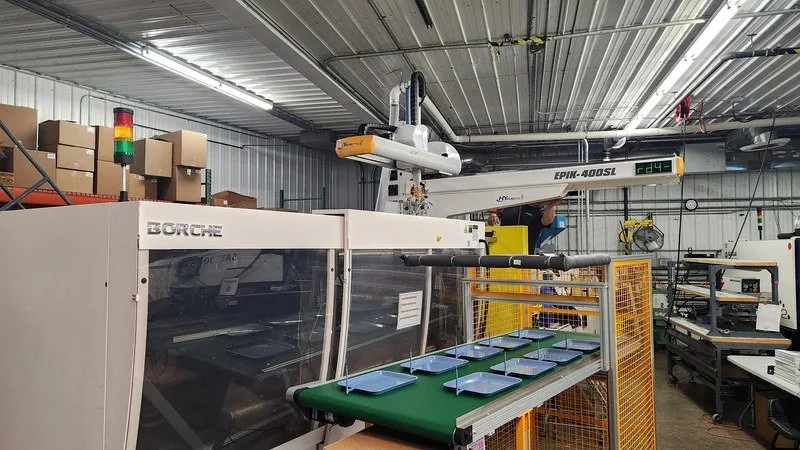
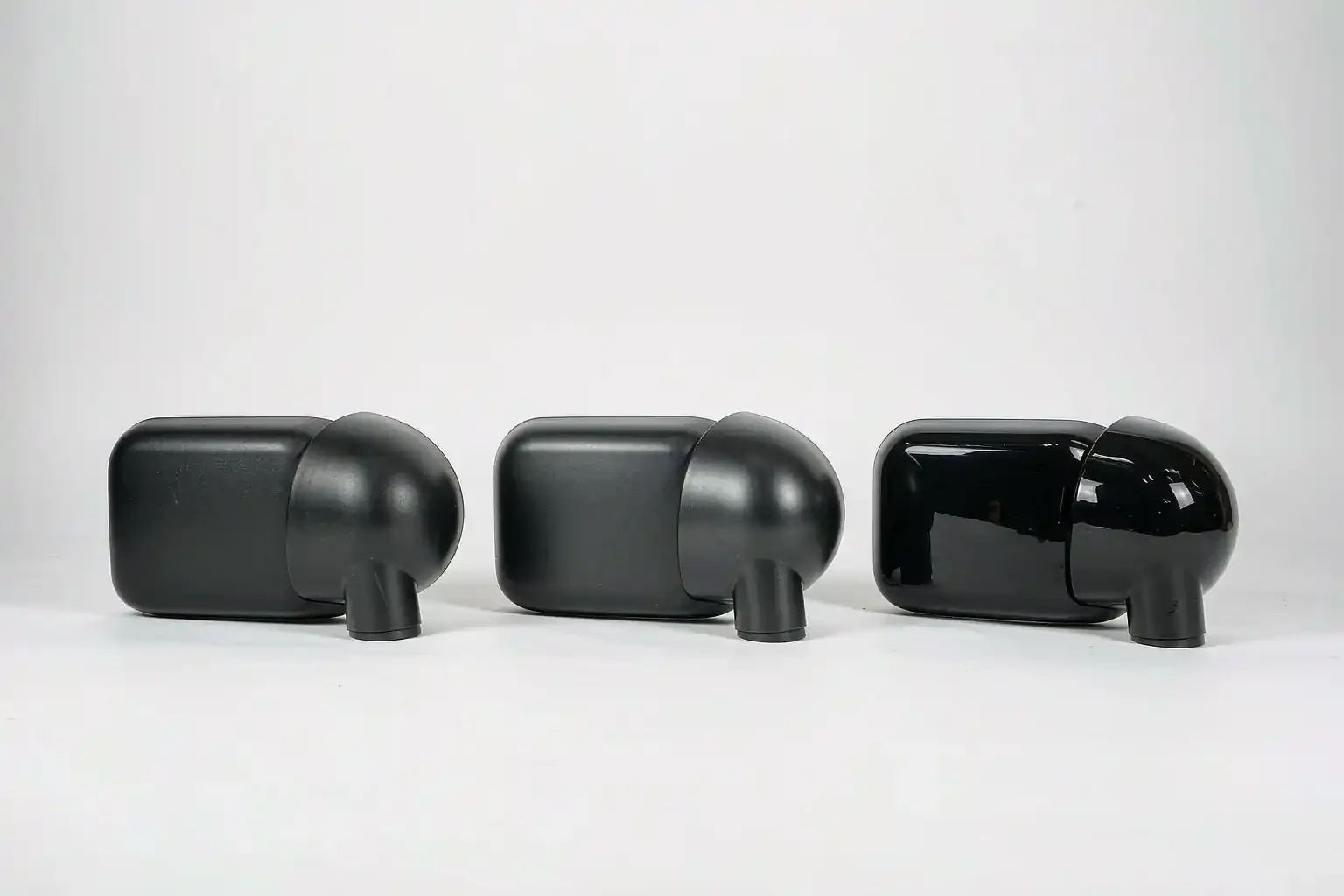
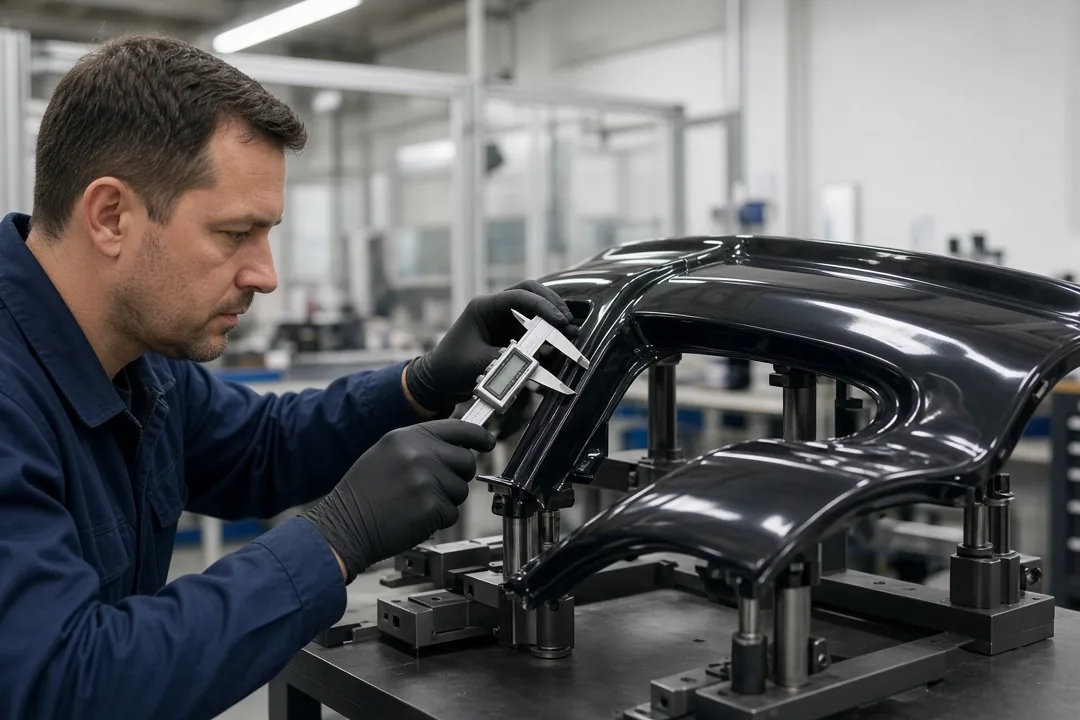
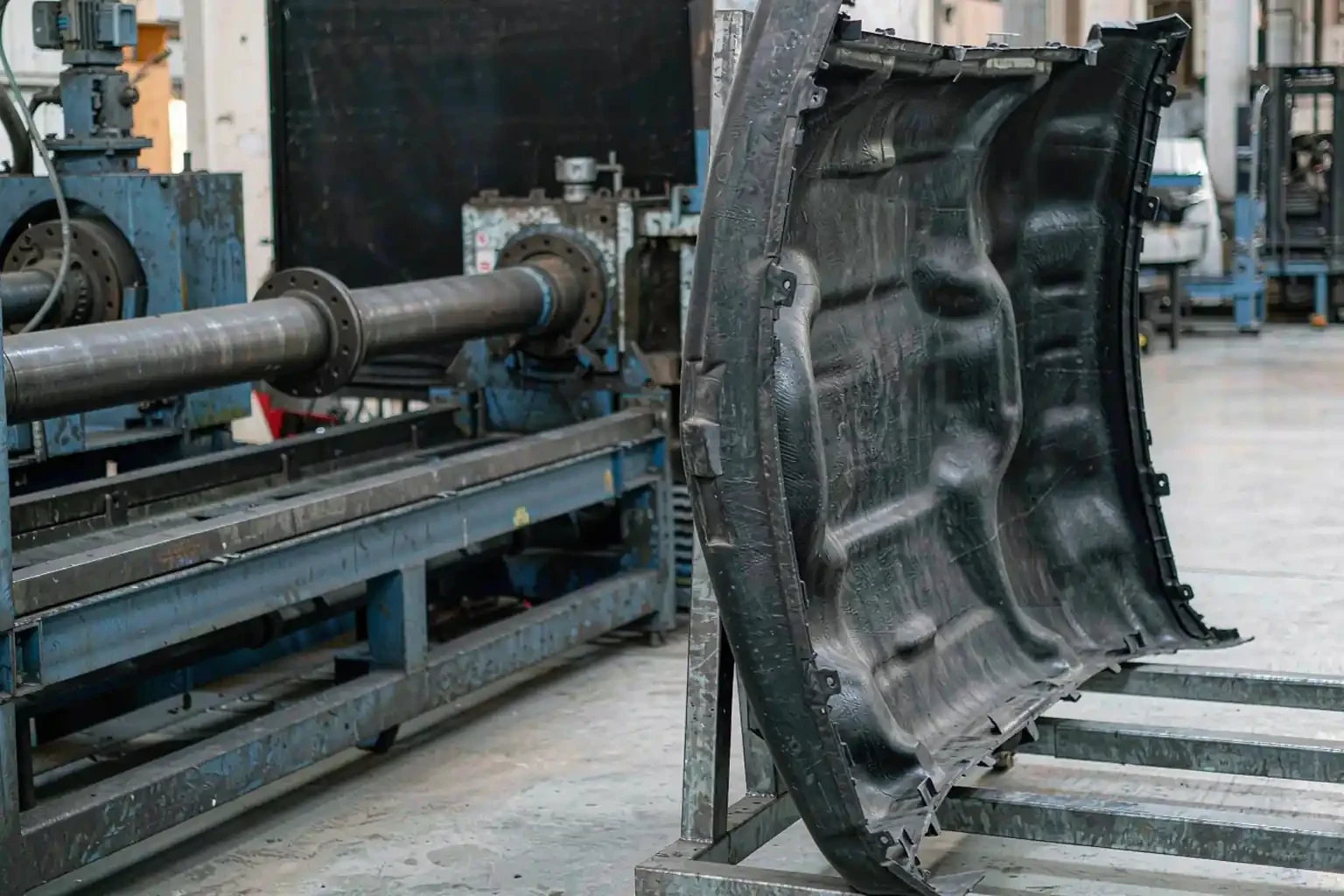
A good exterior part starts with a good mold. Yirox designs and builds injection mold tooling for bumpers, lips, spoilers, trim and wheel center caps, then proves each tool with trial samples until fit, finish and dimensions are approved. You get a DFM report before steel is cut, FAI and CMM data before production, and an NDA before you share a single drawing.
Our molding work focuses on automotive exterior parts and wheel center caps. Typical tooling projects include front lips, rear diffusers, side skirts, spoilers, bumpers, grille surrounds, mirror and window trim, black trim parts, mud flaps and center caps for steel and alloy wheels.
Each has its own tooling priorities: long parts need control of warpage, gloss parts need careful gate placement, and clip-on parts need retention that survives repeat installation.

| Item | What we offer |
|---|---|
| Process | Injection mold tooling, mold trials, tool modification and sample approval for automotive exterior parts and wheel center caps |
| Materials | ABS, PP, modified PP, TPO and ASA |
| Surfaces | Molded-in texture and black trim finishes; gloss black, carbon pattern and primer finishes for painted parts |
| Engineering input | DFM report with comments on wall thickness, draft, gates and parting lines |
| Inspection | First article inspection (FAI) and CMM measurement |
| Documents | PPAP up to Level 3, weathering test reports, recycled-content statements |
| Confidentiality | NDA available before drawing review |
| Lead time | Depends on product and scale; confirmed in your quote |
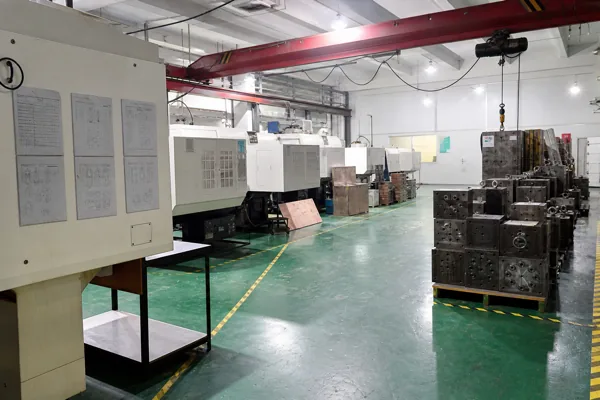
Our approximately 20,000 m² factory in Wuxi runs the full route from tool review to volume molding, so the team that builds your mold is the same team that will run your production parts. That matters for exterior parts, where small changes in a gate or a cooling line show up as visible marks or a gap on the vehicle.
Tooling and sampling lead time depends on product and scale, and is confirmed in your quote.
You have a design or a competitor sample and need a tool that makes it repeatably. We review the design, suggest changes that make it easier to mold, and build the tool to your approved drawing. Solutions for aftermarket brands →
If an existing supplier has stopped production or a tool is worn, we can work from an original part. With 3D scanning and measurement we capture the geometry, then rebuild the tool so the new parts match the parts your customers already know. Solutions for distributors and importers →
A new model year, a revised clip, a different texture or your logo on the part. These changes often need tool modification rather than a new mold, and we will tell you which route fits.
Send a 3D file, a 2D drawing, a physical sample or an original part. We can sign an NDA before you send it. We confirm the vehicle, material, finish and expected quantity.
We send a DFM report that covers wall thickness, draft angles, ribs and bosses, gate and parting-line positions, undercuts and the cosmetic faces. The quote explains the tooling route and what drives its cost.
After you approve the DFM and quote, we build the tool and run the first trial. You receive trial photos and inspection notes.
We correct dimensions, surface and fill issues found in the trial and run again until the part meets the agreed standard.
You receive approved samples for fit and appearance checks. Once you sign off, that sample becomes the reference for production.
Have a part ready for tooling?Send the 3D file or sample and we will reply with a DFM review, tooling plan and sample timeline.
Most problems on a molded exterior part are decided while the mold is still on screen. Before tooling starts, our engineers review four areas with you.

The parting line is where the two halves of the mold meet, and it leaves a fine line on the part. On a front lip or a grille surround, we place it on an edge or a hidden face so it does not cross the area a driver sees. We mark the cosmetic faces on the DFM drawing so you can confirm them before the tool is built.
The gate is where molten plastic enters the cavity. Its position affects fill, weld lines and gloss. On long parts like side skirts and spoilers, the gate location also controls how the part shrinks along its length. We show the proposed gate positions and explain why they are there, so you know where gate marks will be before you see a sample.
Every resin shrinks as it cools, and each grade shrinks by a different amount. PP and modified PP shrink more than ABS, and filled grades shrink differently along and across the flow. The mold is cut larger than the finished part to compensate. Changing the resin grade after the tool is cut can move the part out of tolerance, which is why we lock the material before tooling.
The first trial shot shows how the real tool behaves. We check fill, flash, sink, warpage and dimensions, then correct the tool and run again. Each trial is recorded, so you can see what changed between samples and why.
Tools for your parts are built and maintained in our own mold shop in Wuxi, beside the molding hall, so trial feedback goes straight to the toolmakers who cut the steel.
| Item | In-house capability |
|---|---|
| Mold output | 6–8 molds per month |
| Mold size | Up to 25 t |
| Mold steel | P20 and H13 |
| Mold life | 300,000–500,000 shots |
| Machining | 3-axis machining centers ×4 (800 × 500 × 500 mm, ±0.01 mm), CNC lathes ×2, engraving-milling machines ×2 |
| EDM and grinding | Wire EDM ×2, EDM ×2, surface grinders ×2 |
| Early fit models | SLA 3D printer ×1 |
| Checking fixtures | Built in our fixture shop; gauge R&R (MSA %GRR) ≤10% |
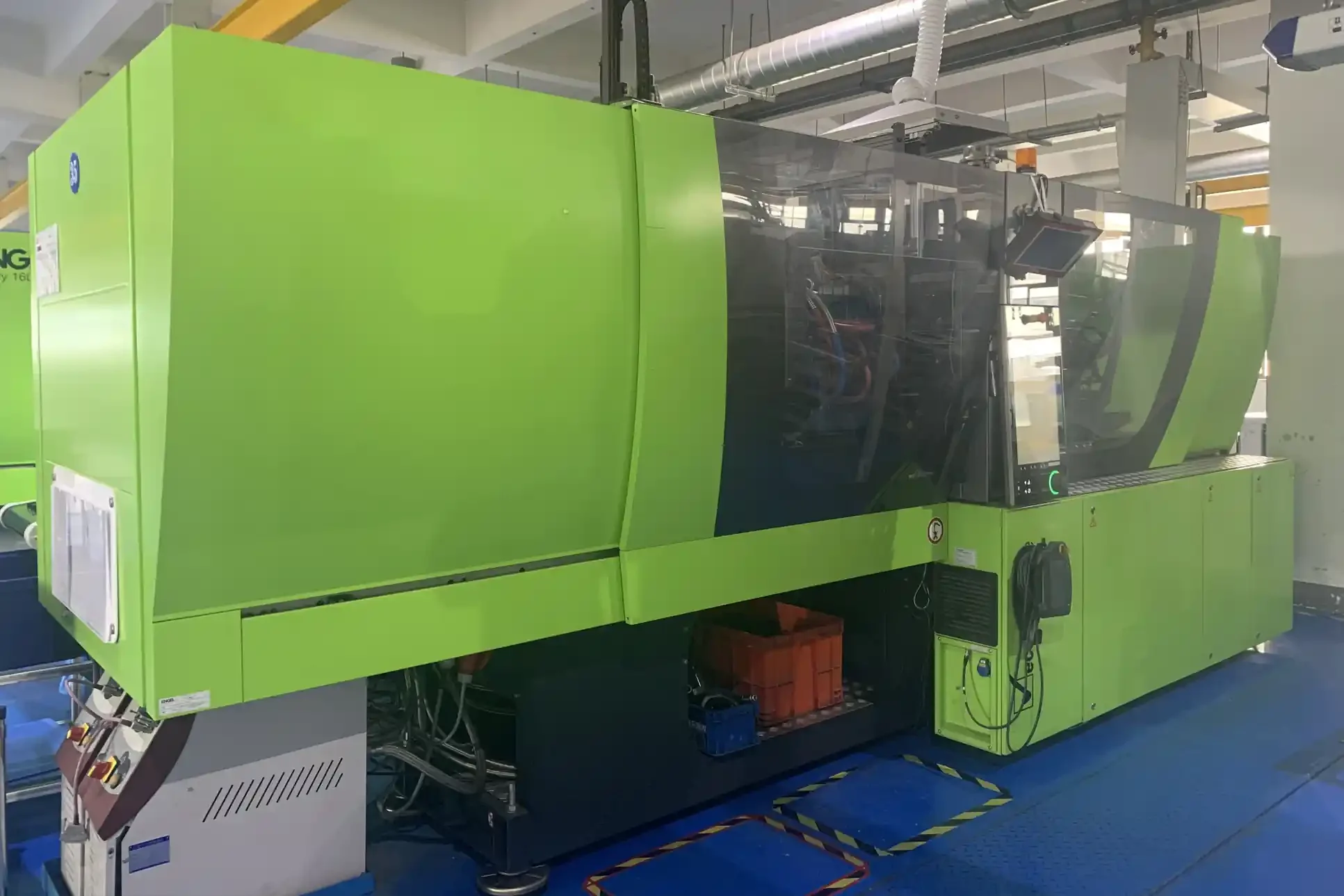
Molding machines from 90 to 2,500 t, two-shot molding and mold flow analysis are covered on our injection molding capability page.
Not every project needs a brand-new mold. The right route depends on the part, your timeline and your volume.

If you already sell a similar part, modifying an existing tool can be faster and cheaper than building a new one. Typical modifications include changing a logo insert, adjusting a clip, moving a mounting hole or updating a texture.
A new tool makes sense when the geometry changes, the part must fit a different vehicle or the old tool is worn. We tell you which route suits your part and what each one changes.
Undercuts, clips, deep ribs and side holes often need slides or lifters in the mold. Each feature adds work to the tool and can add risk to the cycle. During DFM we look for ways to simplify the part without changing how it looks or fits, such as moving a clip direction or adding draft to a wall.
Prototype tooling (sometimes called soft tooling) is built to make a limited number of parts so you can test fit and appearance. Production tooling (hard tooling) is built to run repeat orders with stable dimensions. If you are testing a new design, we can discuss starting with a simpler tool and moving to production tooling once the design is frozen.
ABS injection molding is the most common choice for painted exterior parts, while polypropylene injection molding suits parts that must flex. We help you choose a grade during DFM and keep it fixed for repeat orders. For spoilers, see our comparison of carbon fiber vs ABS vs fiberglass spoilers. Real carbon fiber and fiberglass parts are made through our partner factories.

| Material | Typical exterior uses | What to know |
|---|---|---|
| ABS | Spoilers, lips, grille surrounds, trim, center caps | Stiff, easy to paint, good gloss; dry before molding to avoid silver streaks |
| PP | Mud flaps, liners, flexible trim | Tough and flexible; needs pretreatment if painted |
| Modified PP | Bumpers, larger exterior panels | Filled grades add stiffness; shrinkage depends on grade |
| TPO | Bumper covers, flexible exterior parts | Good impact performance, including in cold weather |
| ASA | Unpainted exterior trim | Good weather and UV resistance for parts left in color |
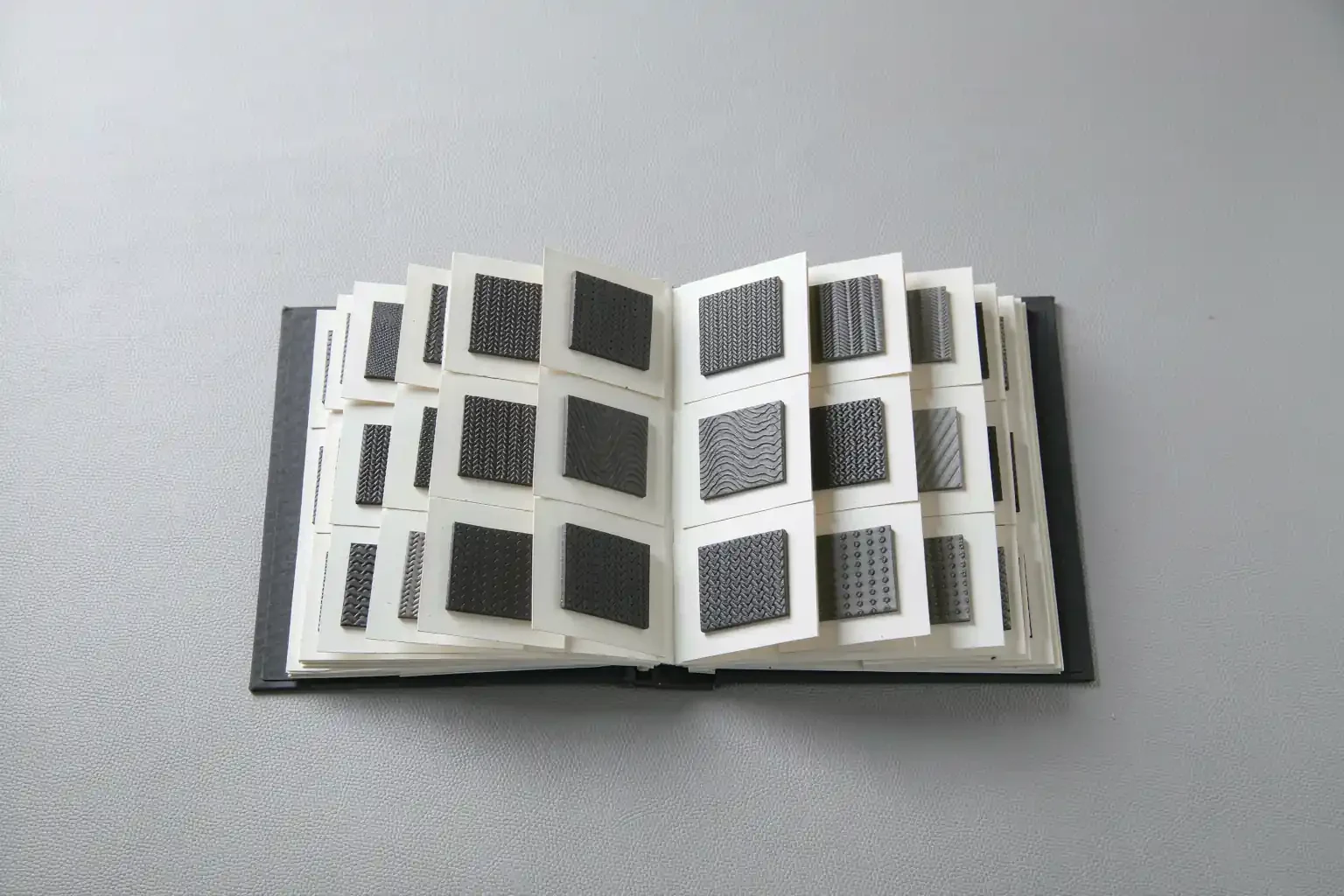
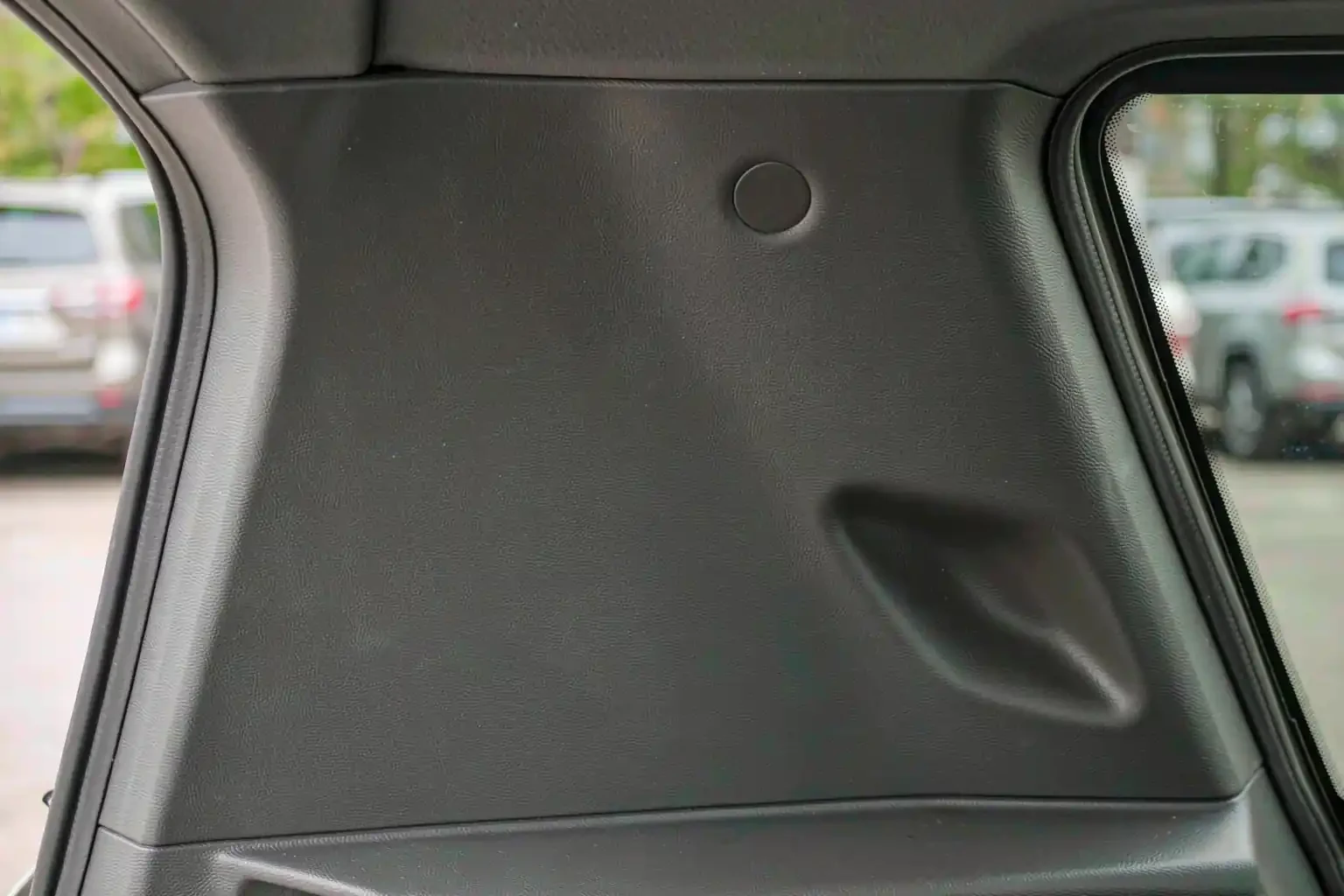
Mold texture is etched or machined into the tool so the part comes out with a grain instead of a plain surface. Textured black trim hides small marks and does not need paint, which suits chrome-delete and black trim programs.
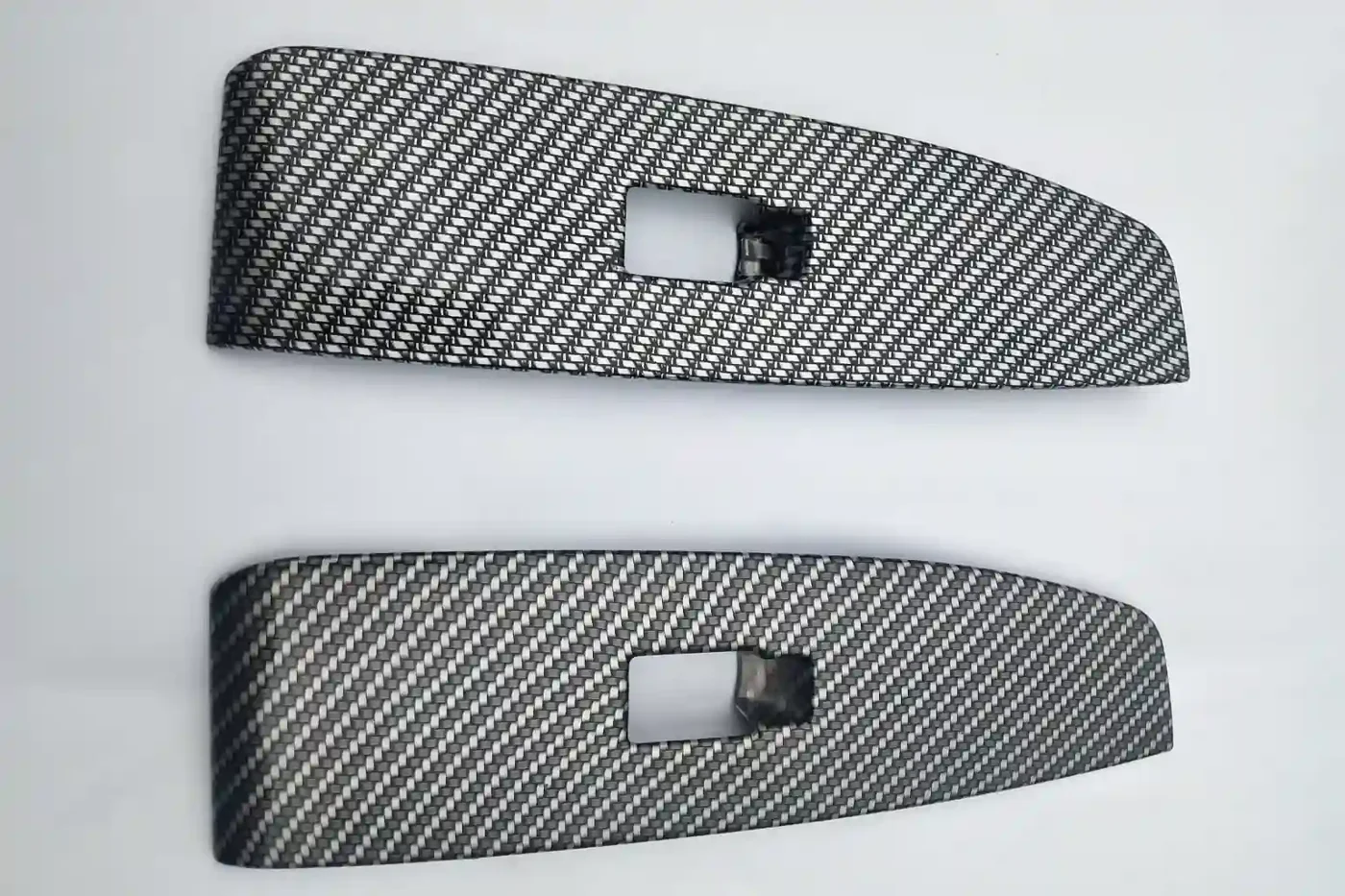
For painted parts we offer gloss black, carbon pattern and primer finishes. Texture depth and draft are linked: deeper texture needs more draft so the part releases cleanly, so we confirm both together. Read more in our chrome delete guide.

Black trim and chrome-delete parts are usually molded with a grain in black material. The texture comes from the tool, so no paint is needed and the finish stays consistent across repeat orders.
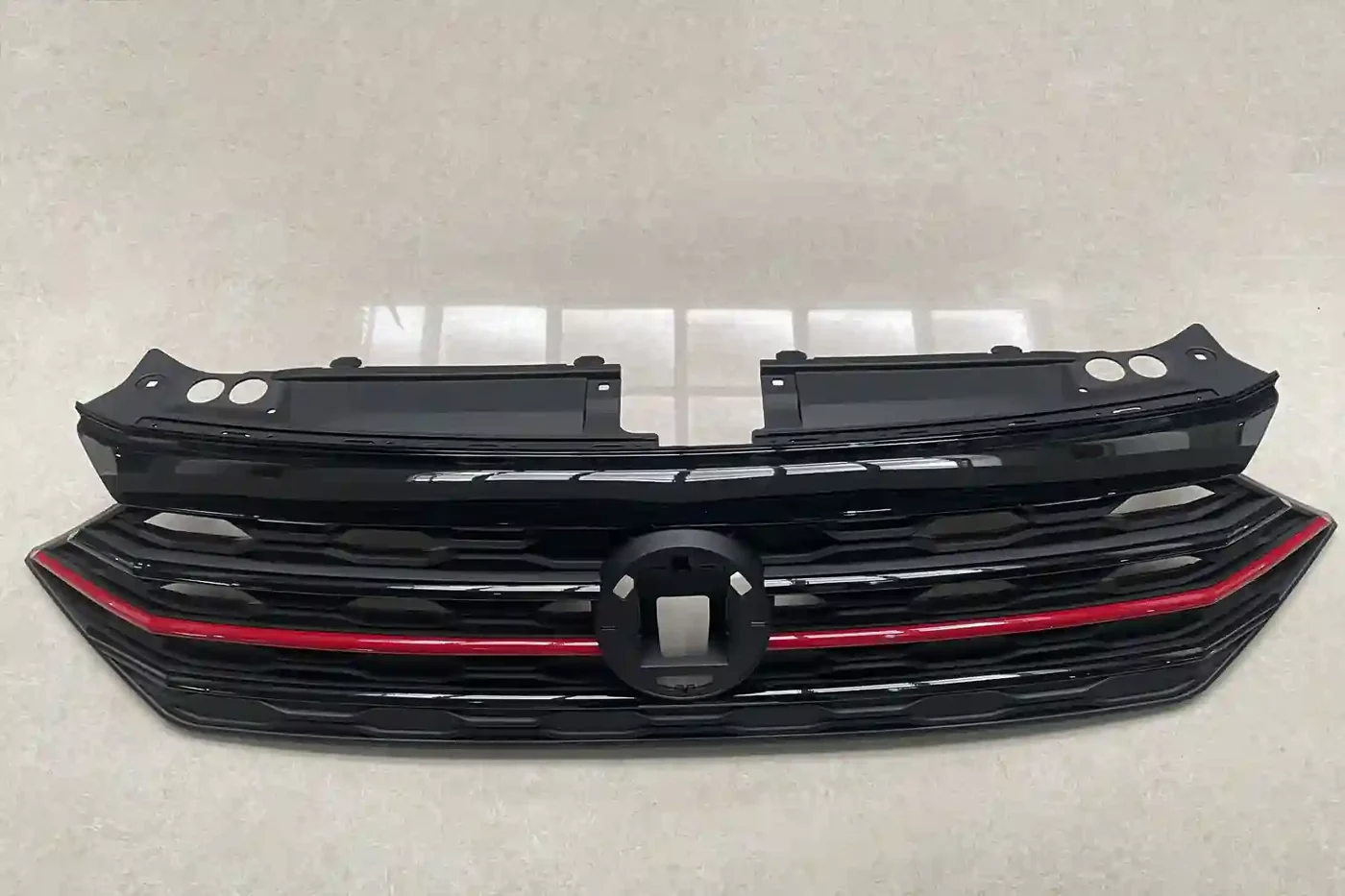
Gloss black is a painted finish for spoilers, lips and other styling parts that should look ready to install out of the box.
Carbon pattern gives an injection-molded part a carbon-fiber look. It is a finish on the molded part, not real carbon fiber; real carbon fiber spoilers are supplied through our partner factories.
Primer parts are supplied ready for paint, so body shops can color-match them to the car.
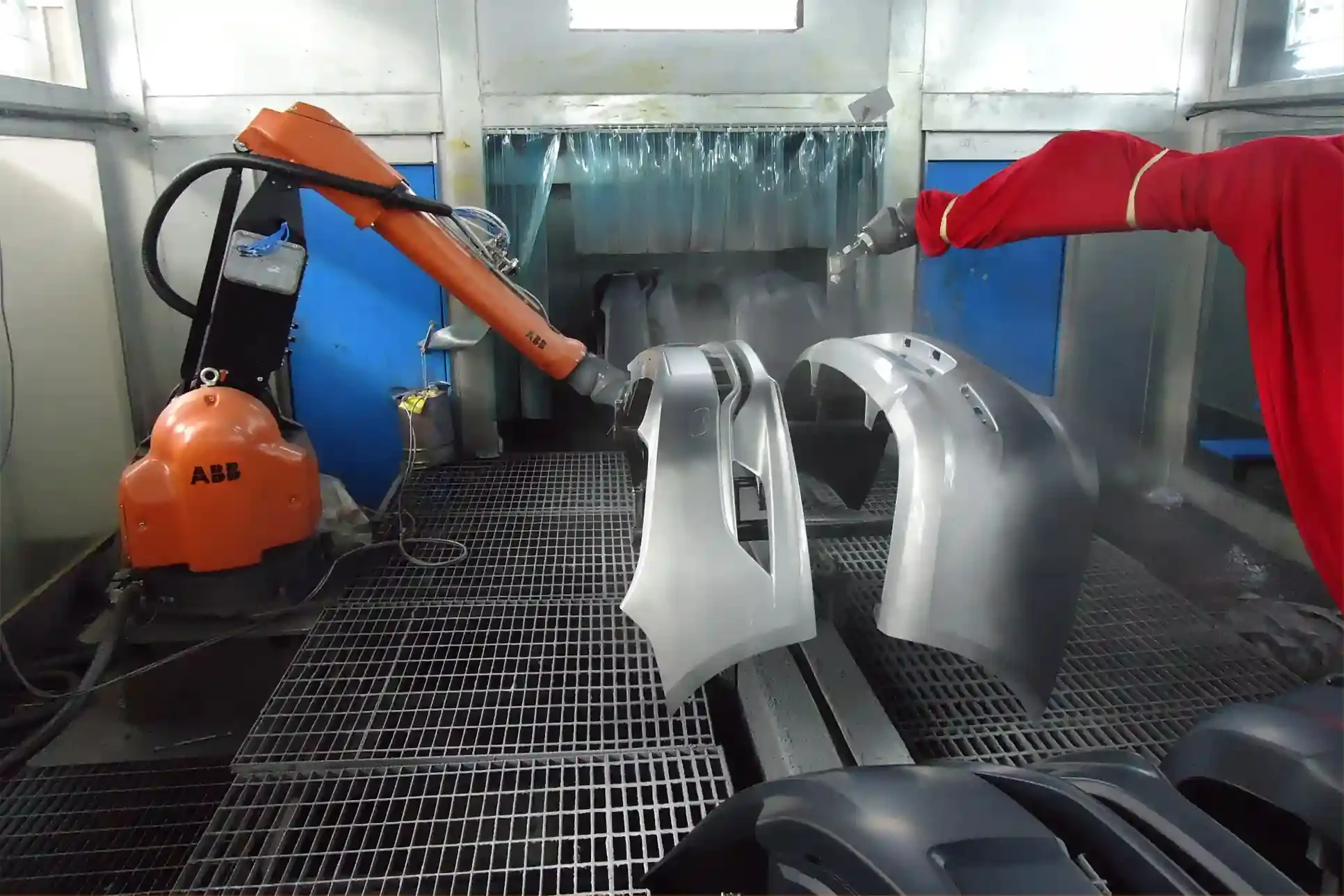
Painted finishes go through surface preparation, priming and painting before inspection. Each finish is approved against a sample before production.
ASA and TPO are used for exterior parts that face sun and weather. Weathering test reports are available, so you can check how a material and finish hold up for your market.

A trial sample shows how the tool is performing. An approved sample is the part you sign off as the standard for production, including color, gloss, texture and fit. We keep the approved sample on file and use it to check later batches.
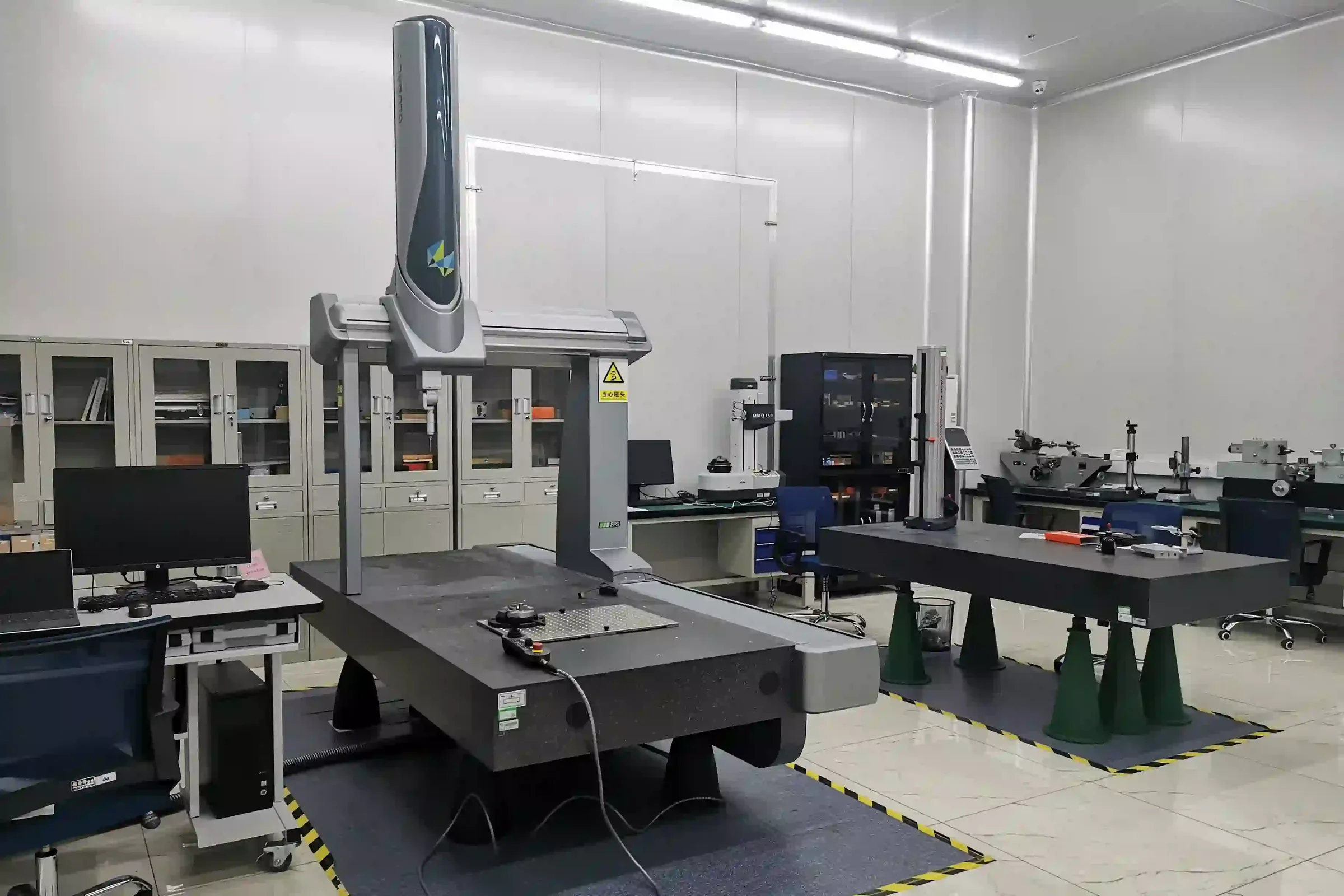
We check key dimensions against your drawing and, for vehicle-specific parts, against the original part or vehicle. CMM measurement gives a full record of critical points.
Cosmetic approval covers gate marks, weld lines, sink, flow lines, gloss and color. Functional approval covers clip retention, mounting, assembly with mating parts and any test you require.
A part is only complete when its clips, screws, tape and brackets are confirmed. We check each accessory against the bill of materials and include it in the approved sample set.
Before sign-off we agree which dimensions are critical on your drawing. These are the standard tolerances we hold on exterior plastic parts.
| Feature | Tolerance |
|---|---|
| General dimensions | ±1.0 mm |
| Critical dimensions | ±0.5 mm |
| Seams and mating gaps | ±0.1 mm |
| Part weight | ±1 g (unit-to-unit variation ≤0.3%) |
Critical dimensions are measured by CMM and recorded in the first article inspection. See quality inspection and CMM.
Want to know what we check before sign-off?Tell us your fitment and finish requirements and we will confirm the checks for your sample.
First article inspection (FAI) confirms that the first parts from a new or modified tool match the drawing and the approved sample. We measure critical dimensions, check appearance and test assembly. CMM (coordinate measuring machine) measurement records key points in three dimensions, which is useful for long parts and parts with several mounting points.
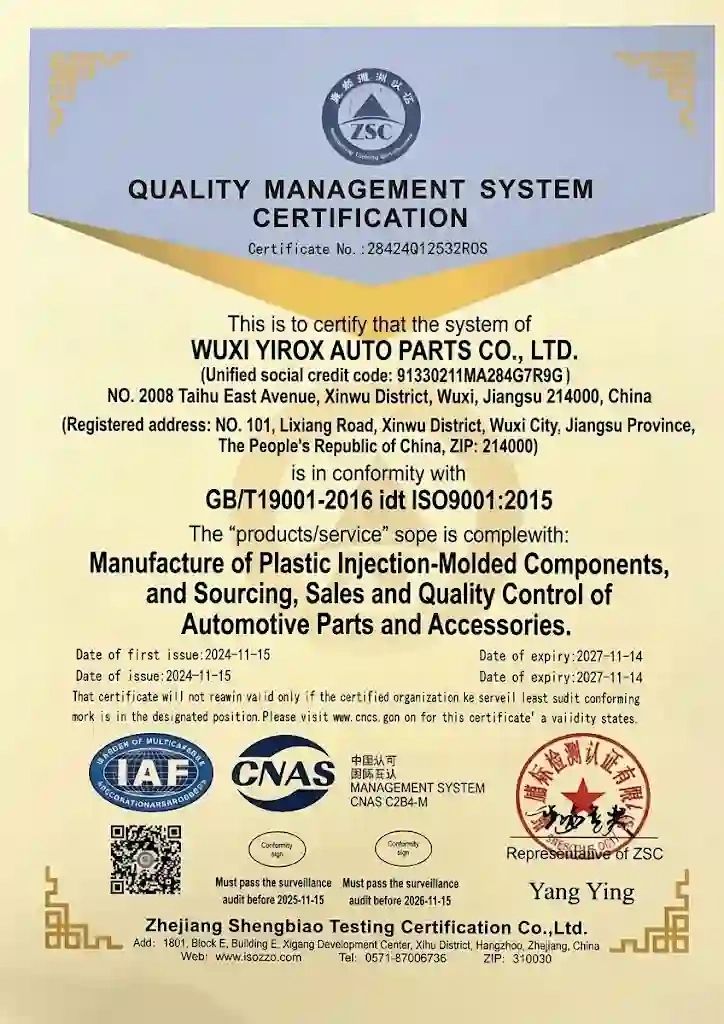
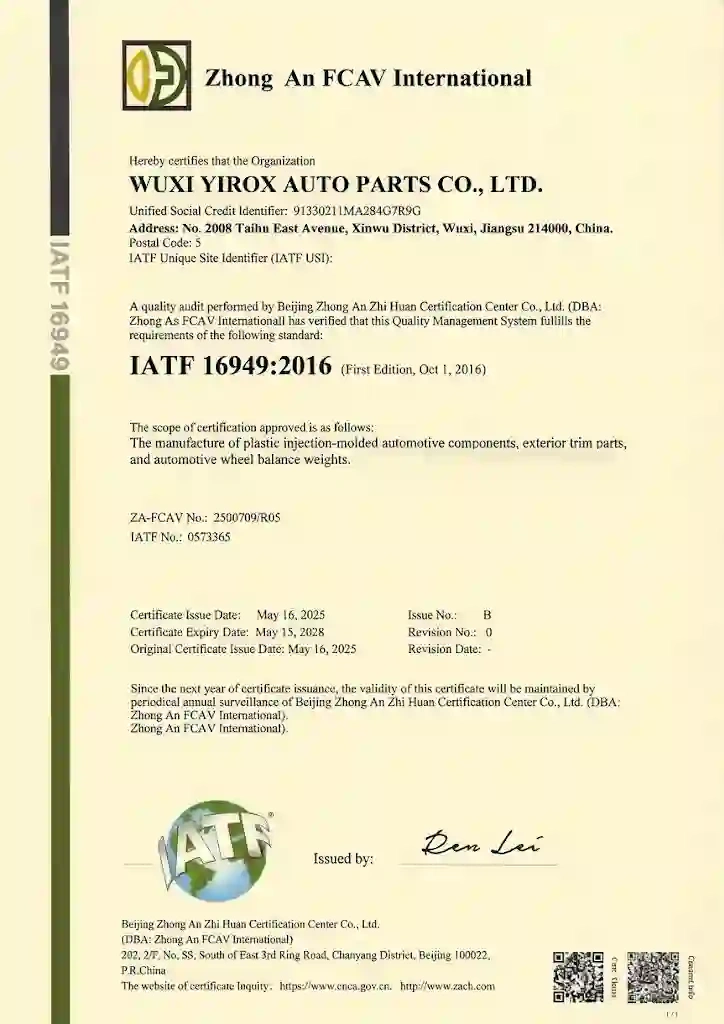
Our quality system is certified to ISO 9001 and IATF 16949, and we can prepare PPAP documentation up to Level 3. See certifications and compliance.

The BOM lists every component that ships with the part: the molded part, clips, screws, tape, brackets and instructions. It is agreed before production so nothing is missing from the box.
We write down what will be checked on each batch, how it is checked and what is acceptable, based on the approved sample and your drawing.
We pack an approved sample in its final packaging and check it for scratching, bending and missing parts before volume packing starts. If you need branded packaging, see private label and packaging.
Many molding defects are easier to prevent in the tool than to fix in production. During DFM and trials we look for these in particular:
Uneven cooling or wall thickness bends spoilers and skirts. Balanced cooling and gate placement keep them straight.
Thick sections shrink more and leave a dip on the show face. We keep ribs and bosses in proportion to the wall.
Where flow fronts meet, a visible line can form. Gate position and flow balance move it away from cosmetic faces.
Worn or poorly fitted steel leaves thin plastic on clips. We check shut-off areas at each trial.
Moisture in ABS and trapped air cause silver streaks and burns. Drying and venting are confirmed before sampling.
Mold ownership is agreed per project and written into the quotation before tooling starts, so both sides know where the tool stands from day one.
Molds wear over time. Flash on clips, worn texture and changing dimensions are early signs. We clean and maintain tools between runs, check repeat orders against the approved sample, and tell you if a tool needs repair before it affects your parts.
Lead time depends on product and scale, and we confirm it in your quote. The main factors are:

The engineers who review your DFM, the toolmakers who build the mold and the molding team that runs your parts work in the same factory in Wuxi. Problems found at trial are fixed by the people who caused them, not passed between companies.
We mold exterior parts and wheel center caps every day, so we know where cosmetic faces, gloss, texture and fit matter most. That focus shapes how we place gates, design clips and approve samples.
ISO 9001 and IATF 16949 certification, PPAP up to Level 3, weathering test reports and recycled-content statements give your quality team the records they need.
Mold ownership is agreed per project, lead time is confirmed in your quote, and we can sign an NDA before you share files.
Buyers on what happened between the first sample and approval.
“The first sample needed an adjustment around the mounting tabs. They documented the issue, explained the correction and sent updated measurements with the next sample. That level of detail made it easier for our team to approve the tooling.”
“Good communication during sampling is worth a lot. We always knew what was being checked, what still needed approval and which changes would affect the schedule. There were no surprises when it came time to move forward.”
Names and companies withheld at the customer’s request.
Lead time depends on product and scale. Part size, cavities, undercuts, texture and the number of trials all affect it. We confirm the timeline in your quote.
Prototype (soft) tooling is built to make a limited number of parts for fit and appearance testing. Production (hard) tooling is built for repeat orders with stable dimensions.
Injection mold cost depends on part size, the number of cavities, undercuts that need slides or lifters, surface texture, material and the number of trials. We quote the mold per part after the DFM review.
At Yirox, mold ownership is agreed per project and written into the quotation before tooling starts.
Yes. We can sign an NDA before you share drawings, 3D files or samples.
Yes. Every new tooling project starts with a DFM report covering wall thickness, draft, gates, parting lines, undercuts and cosmetic faces.
Often, yes. Logo inserts, clip changes, hole positions and texture updates can usually be made on an existing tool. We will tell you if a new tool is the better choice.
First article inspection checks the first parts from a new or modified tool against the drawing and approved sample, covering dimensions, appearance and assembly. We support it with CMM measurement.
Yes. You approve physical samples for fit and appearance before any volume order.
Send a 3D file, drawing or sample and we will reply with a DFM review and tooling quote.