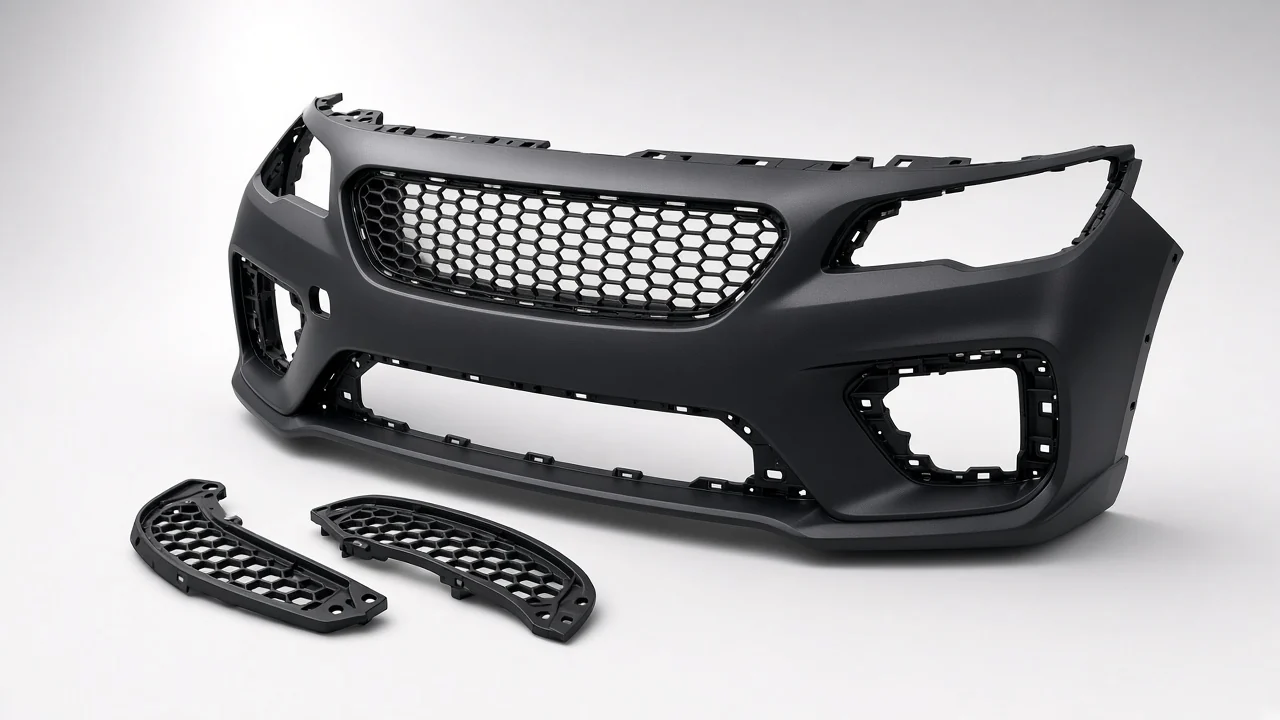
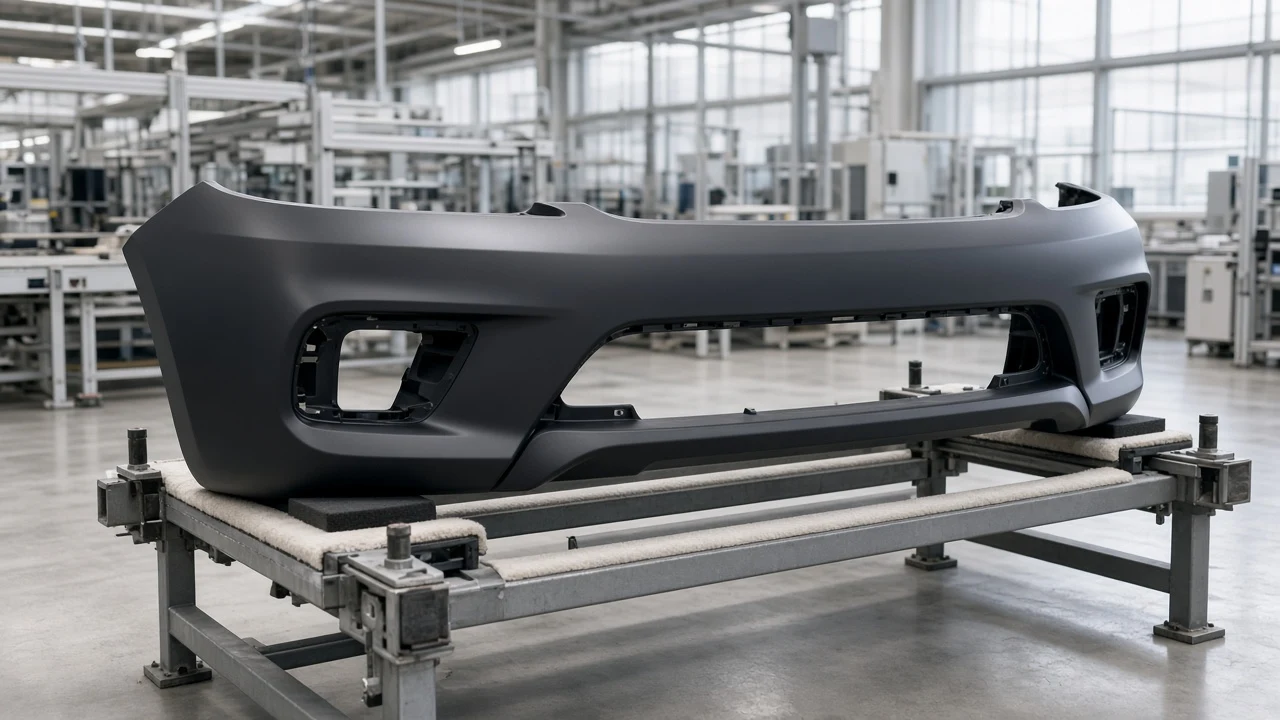
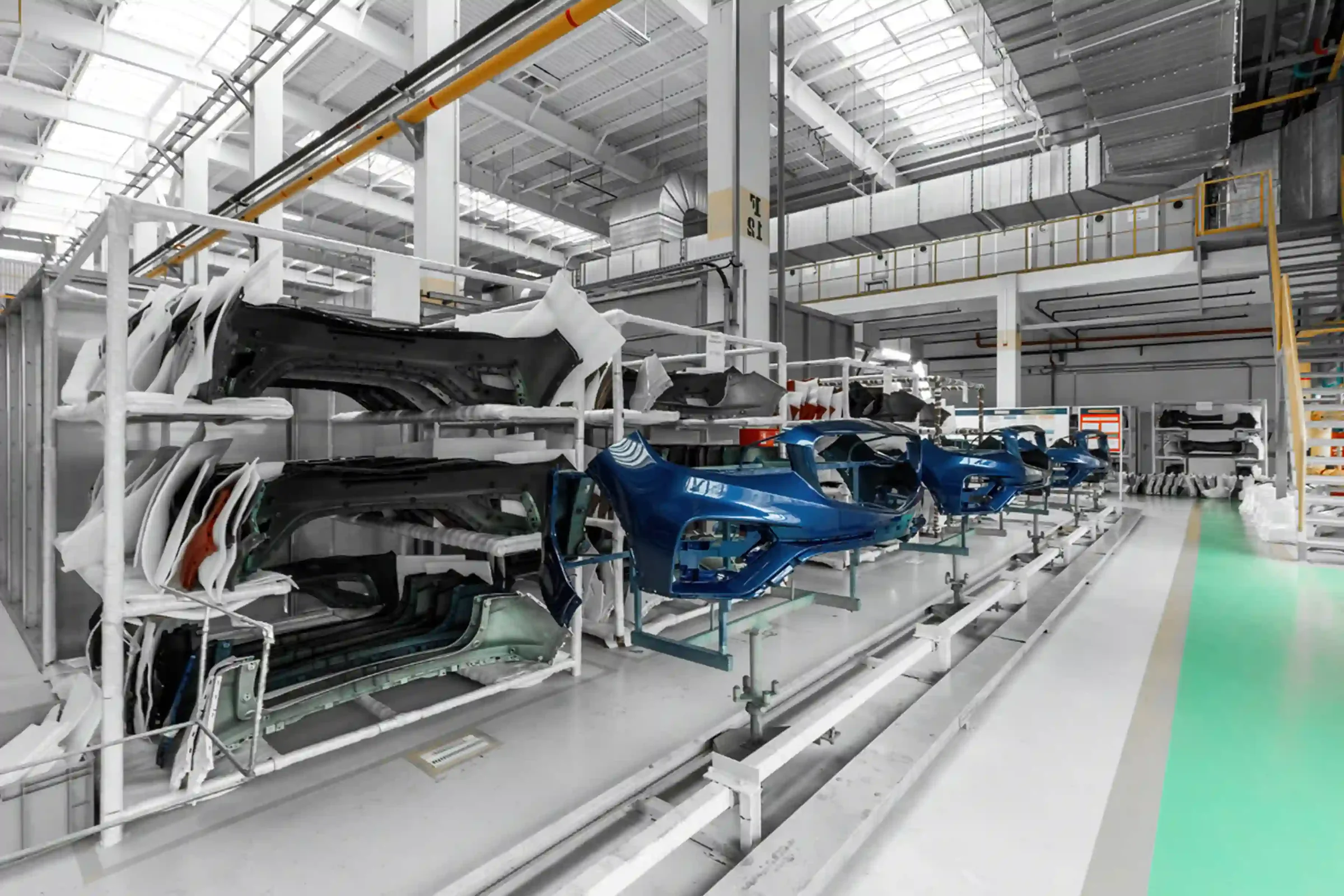
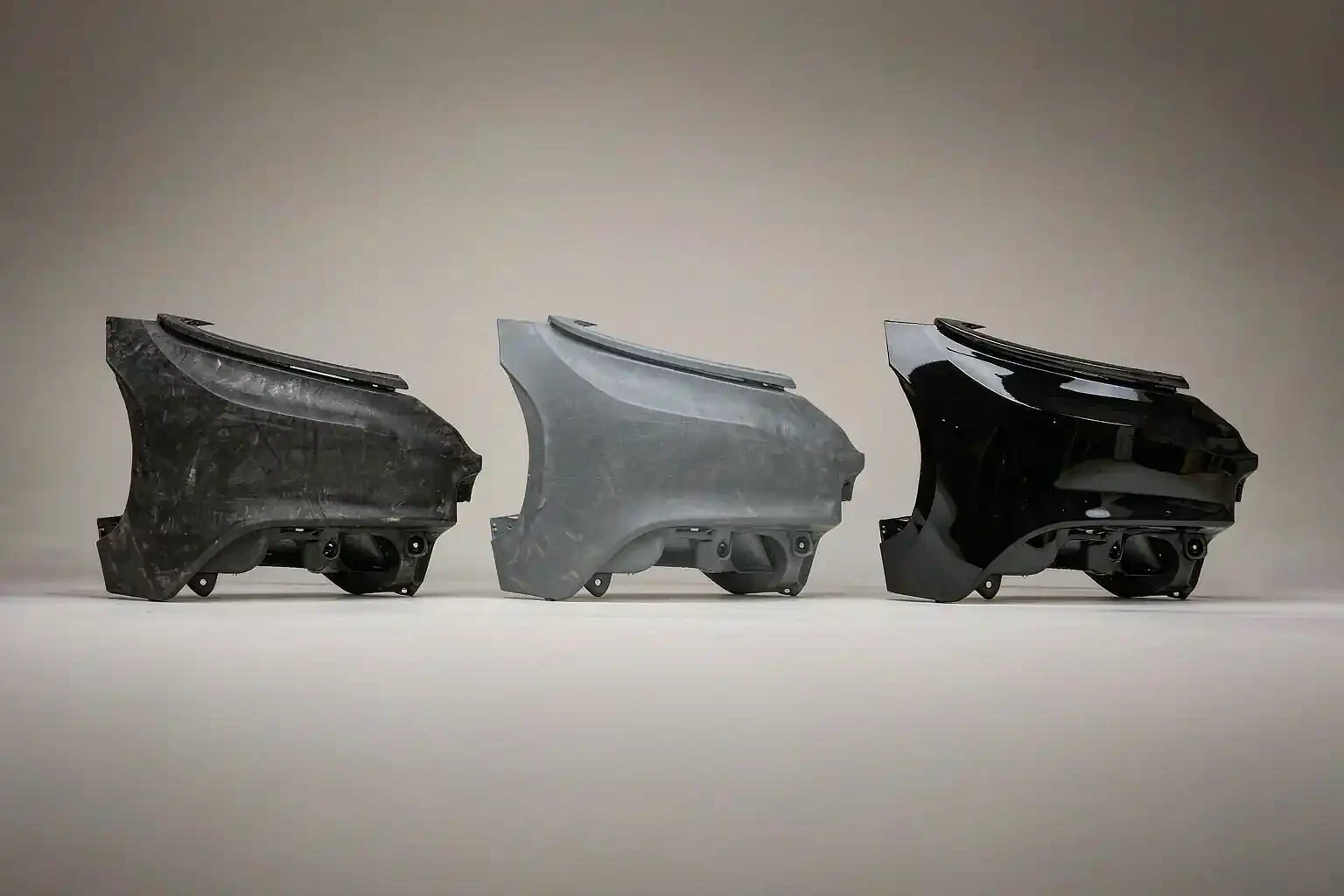
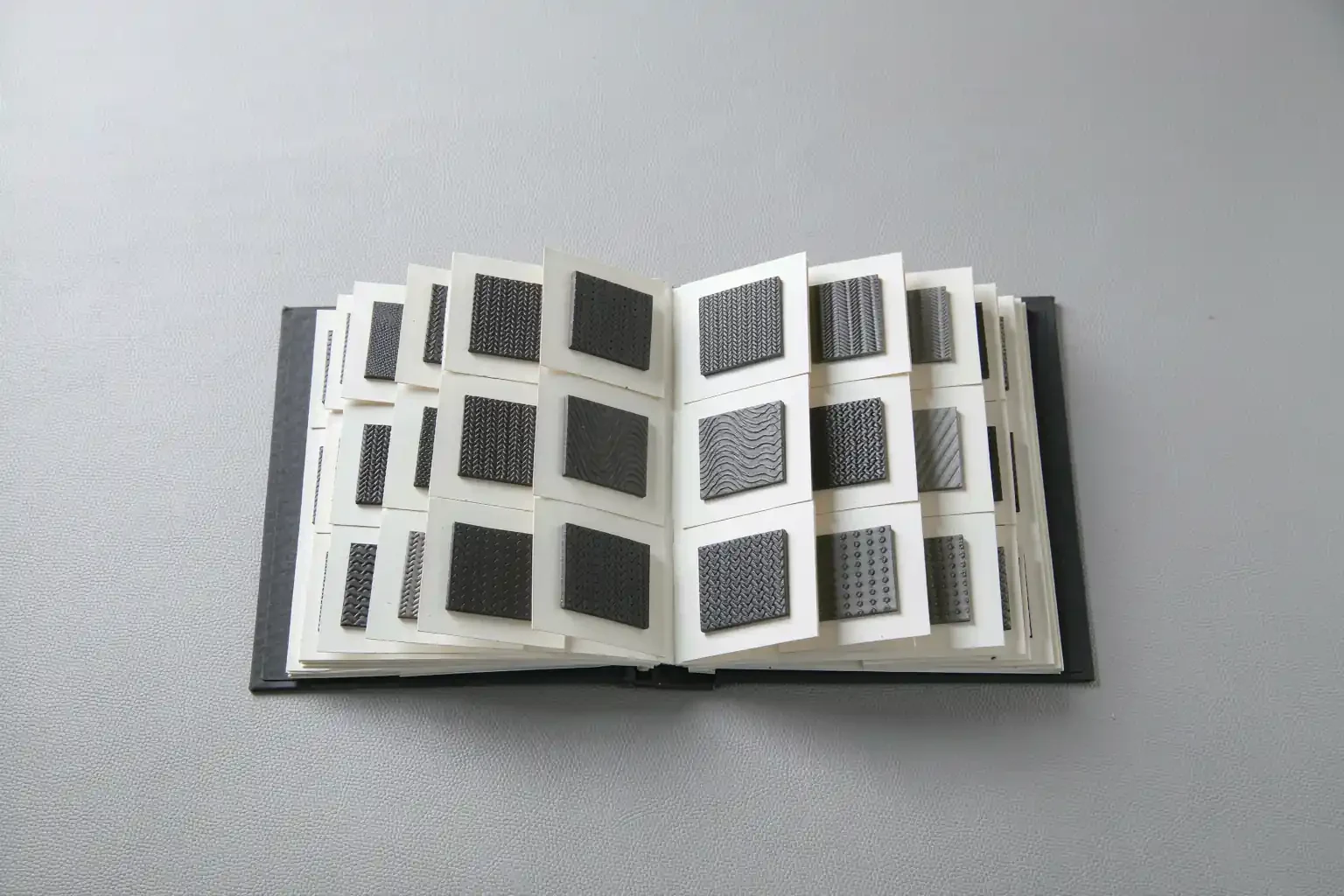
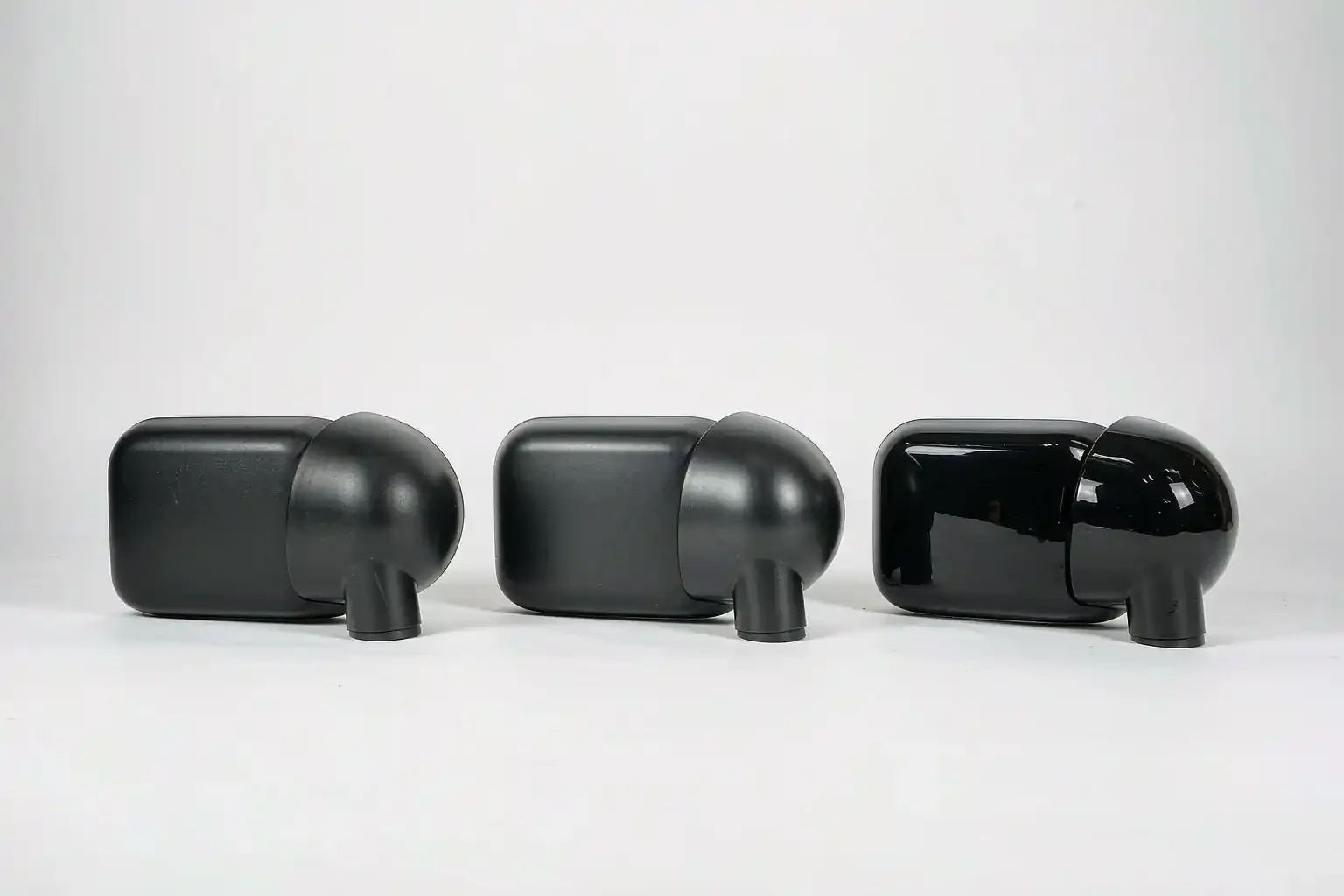
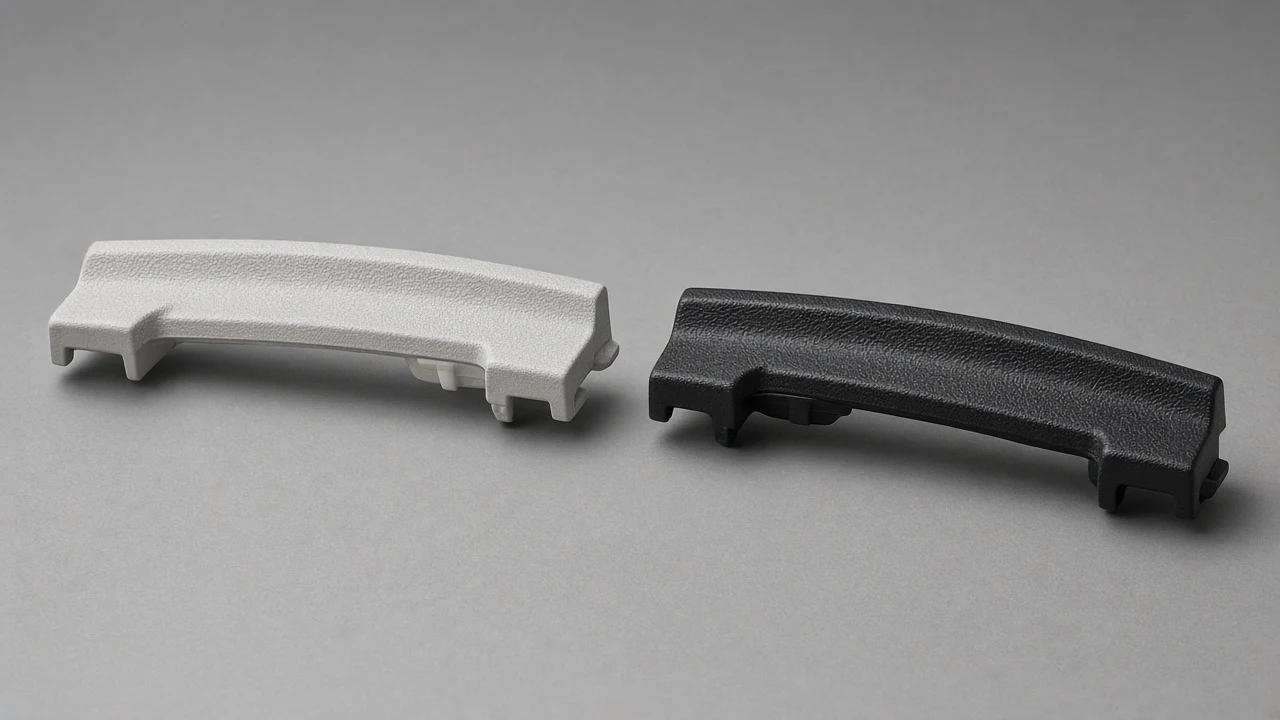
PP plastic and TPO are the materials of most car bumpers. They are tough in the cold, flex on impact and cost less than engineering plastics. Yirox molds talc-filled PP and TPO on machines up to 2,500 t for bumper trim, fender flares, side skirts and mud flaps, supplied in molded-in color, primed or fully painted.

| Item | Details |
|---|---|
| Full names | Polypropylene (PP); thermoplastic polyolefin (TPO) |
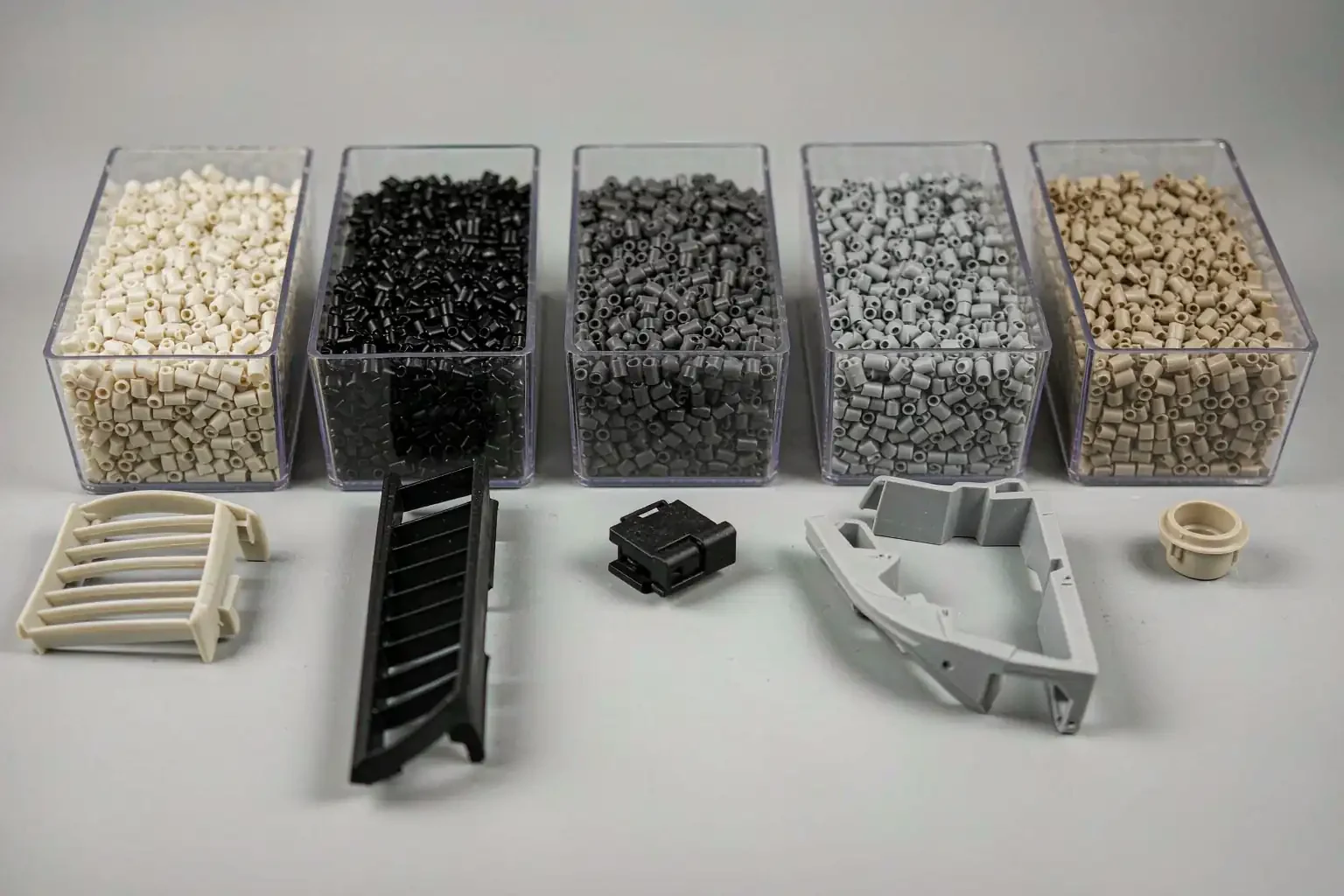
| Grade types we use | Impact-copolymer PP, talc-filled PP, TPO (PP with elastomer), UV-stabilized black and grey grades |
| Typical parts | Bumper trim and covers, fender flares, wheel arch trim, side skirts, mud flaps, bumper guards |
| Finishes | Molded-in color with texture, PP/TPO adhesion primer, full paint (color + clear), water transfer printing after primer |
| Molding | Large parts on 800–2,500 t machines, including 4 two-platen machines |
| Order size | Low MOQ on selected items |
Polypropylene (PP) is a semi-crystalline polyolefin and one of the most used plastics in the world. It has low density, good chemical resistance and good fatigue resistance. Pure PP homopolymer is stiff but brittle in the cold, so exterior parts use impact copolymer PP, which contains a rubber phase, and talc-filled PP, where mineral filler raises stiffness and reduces shrinkage.

TPO (thermoplastic polyolefin) is a blend of polypropylene with an elastomer such as EPDM or a polyolefin elastomer, usually with talc filler. The elastomer gives high impact strength down to −30 °C and below, while the PP and talc give stiffness and dimensional stability. TPO material is the standard choice for painted bumper covers and is also used for unpainted textured flares and cladding.

Typical published datasheet ranges from resin manufacturers’ technical data sheets; not Yirox test results.
| Property | Impact copolymer PP | Talc-filled PP (10–20%) | TPO |
|---|---|---|---|
| Density (g/cm³) | 0.90–0.91 | 0.97–1.05 | 0.95–1.05 |
| Tensile strength (MPa) | 20–30 | 22–30 | 15–25 |
| Flexural modulus (GPa) | 1.0–1.5 | 1.8–2.5 | 0.8–1.8 |
| Notched Izod impact 23 °C (J/m) | 80–500 | 50–300 | 400–no break |
| Heat deflection 0.45 MPa (°C) | 85–100 | 100–125 | 80–100 |
| Mold shrinkage (%) | 1.2–2.0 | 0.8–1.2 | 0.8–1.2 |
| Melt temperature (°C) | 200–250 | 200–250 | 200–240 |
| Need | PP / TPO | ABS |
|---|---|---|
| Low-temperature impact | Excellent | Good |
| Flex without cracking | Excellent | Fair |
| Stiffness and gloss | Lower | Higher |
| Paint adhesion | Needs PP/TPO adhesion primer | Good after cleaning |
| Chrome plating | Not suitable | Plating-grade ABS |
| Shrinkage | Higher (design for it) | Lower |
| Typical parts | Bumpers, flares, mud flaps | Grilles, mirror caps, spoilers |
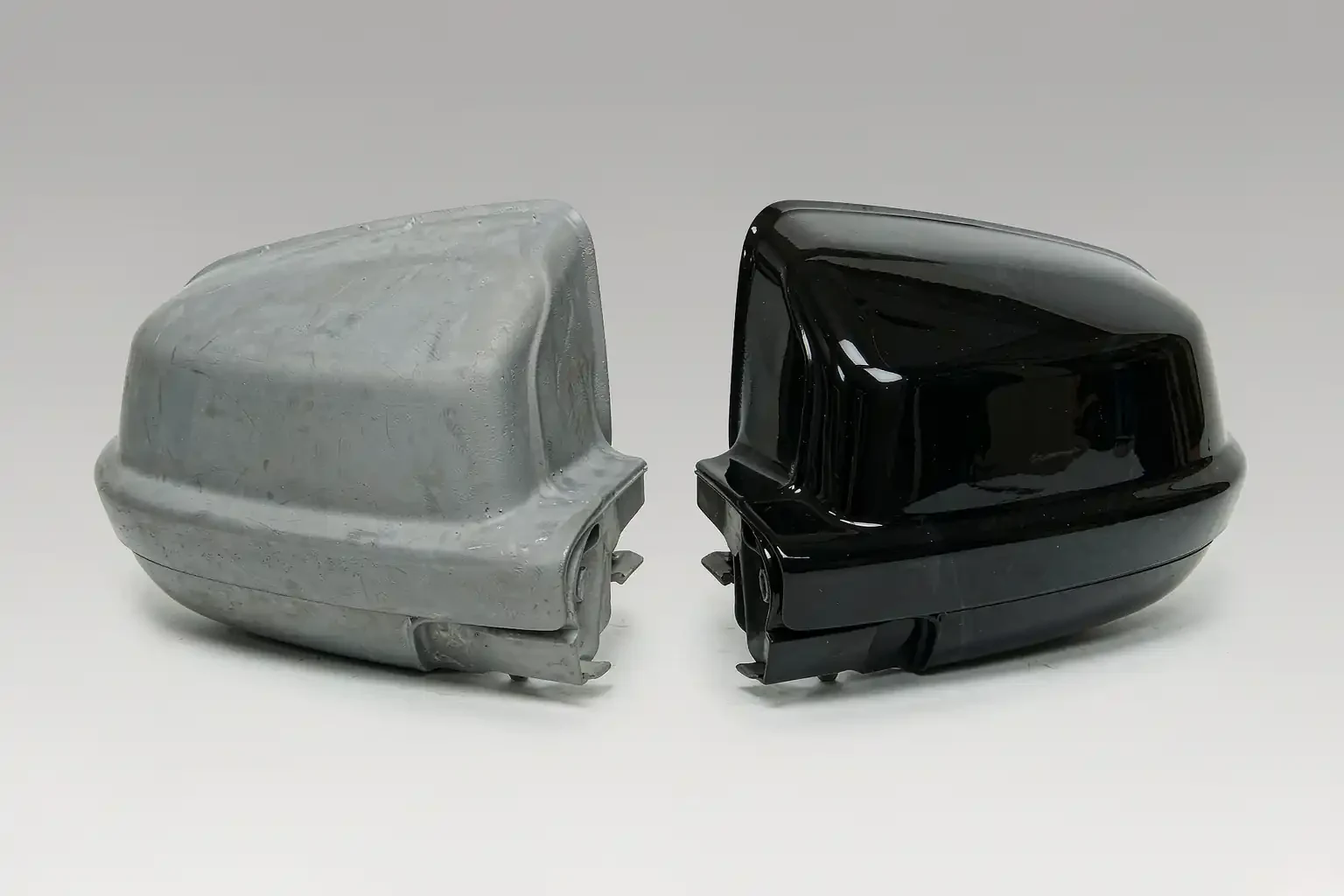
PP and TPO have a low surface energy, so paint does not wet and bond to them on its own. Before painting, our PP and TPO parts go through cleaning and surface preparation, then a PP/TPO-specific adhesion primer that bonds to the polyolefin surface and gives the color coat something to grip.
With the primer, painted PP parts reach the same cross-hatch adhesion grade 0–1 as our ABS parts. Primed parts can also be supplied for the customer to paint or for water transfer printing. See primed, painted and molded-in color parts.


These are made as universal-fit parts and as vehicle-specific parts for pickups such as the Toyota Hilux, Ford Ranger and Isuzu D-MAX.
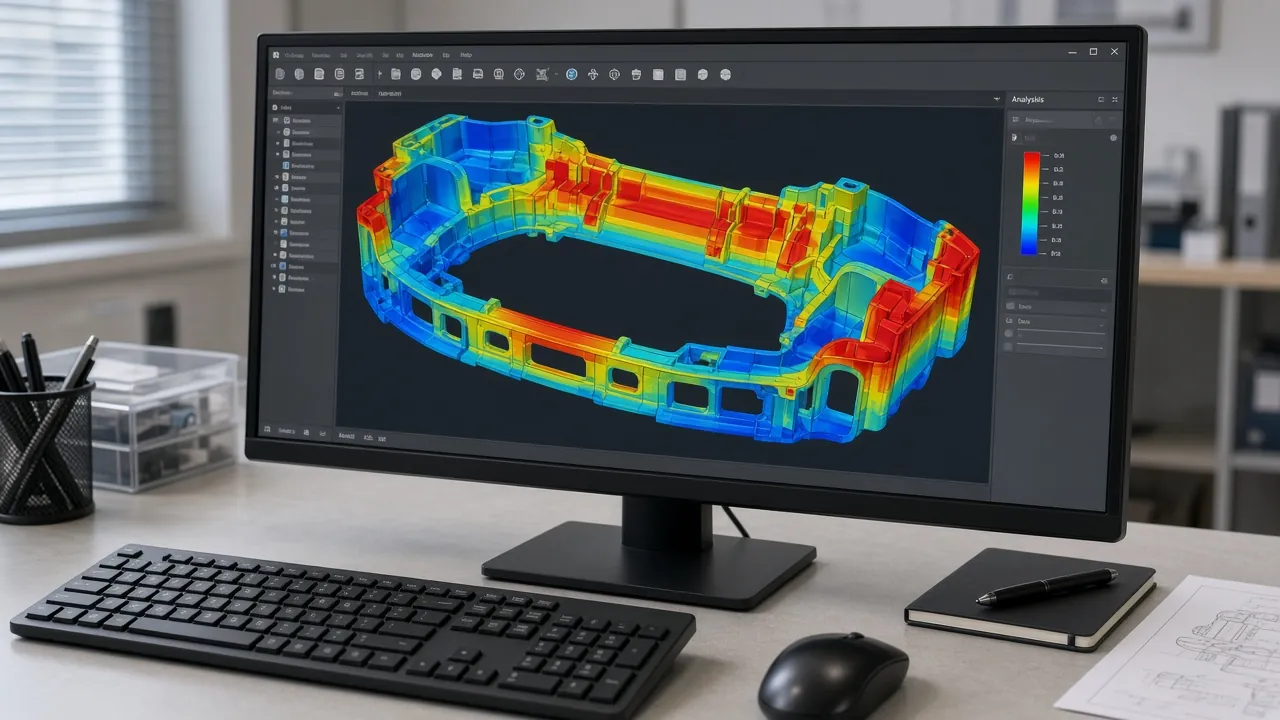
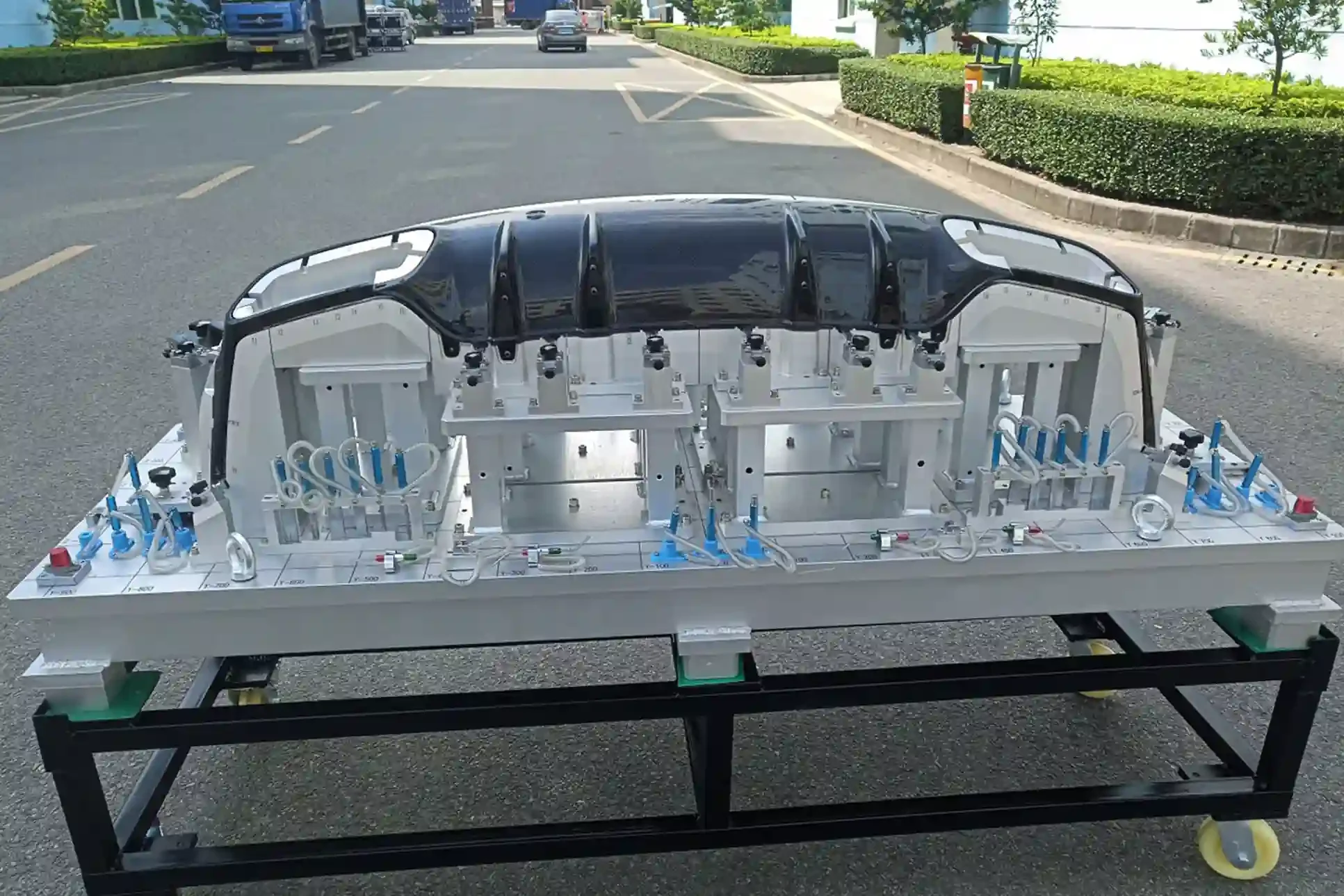
Large PP and TPO parts such as bumper trim are molded on our 1,300–2,500 t two-platen machines, and fender flares and side skirts on 450–800 t machines. Mold flow analysis predicts warpage before the mold is cut, and parts are checked on checking fixtures and our Hexagon CMM (900 × 1,500 × 800 mm). Our general tolerance is ±1.0 mm, ±0.5 mm on critical features.


PP (polypropylene) is a low-density, chemically resistant thermoplastic. Exterior parts use impact copolymer or talc-filled PP grades.
TPO is PP blended with an elastomer, usually with talc. It has much higher impact strength in the cold and is the standard material for bumper covers.
For bumpers and flexible parts, yes. For stiff, glossy, painted or plated styling parts, ABS is better.
Yes, after surface preparation and a PP/TPO-specific adhesion primer.
Yes. We supply PP and TPO parts with adhesion primer, ready for paint or water transfer printing.
We offer low MOQ on selected items. The quantity is confirmed in your quote.
Send your drawing or a sample and tell us the finish. We will reply with DFM comments and a quote.