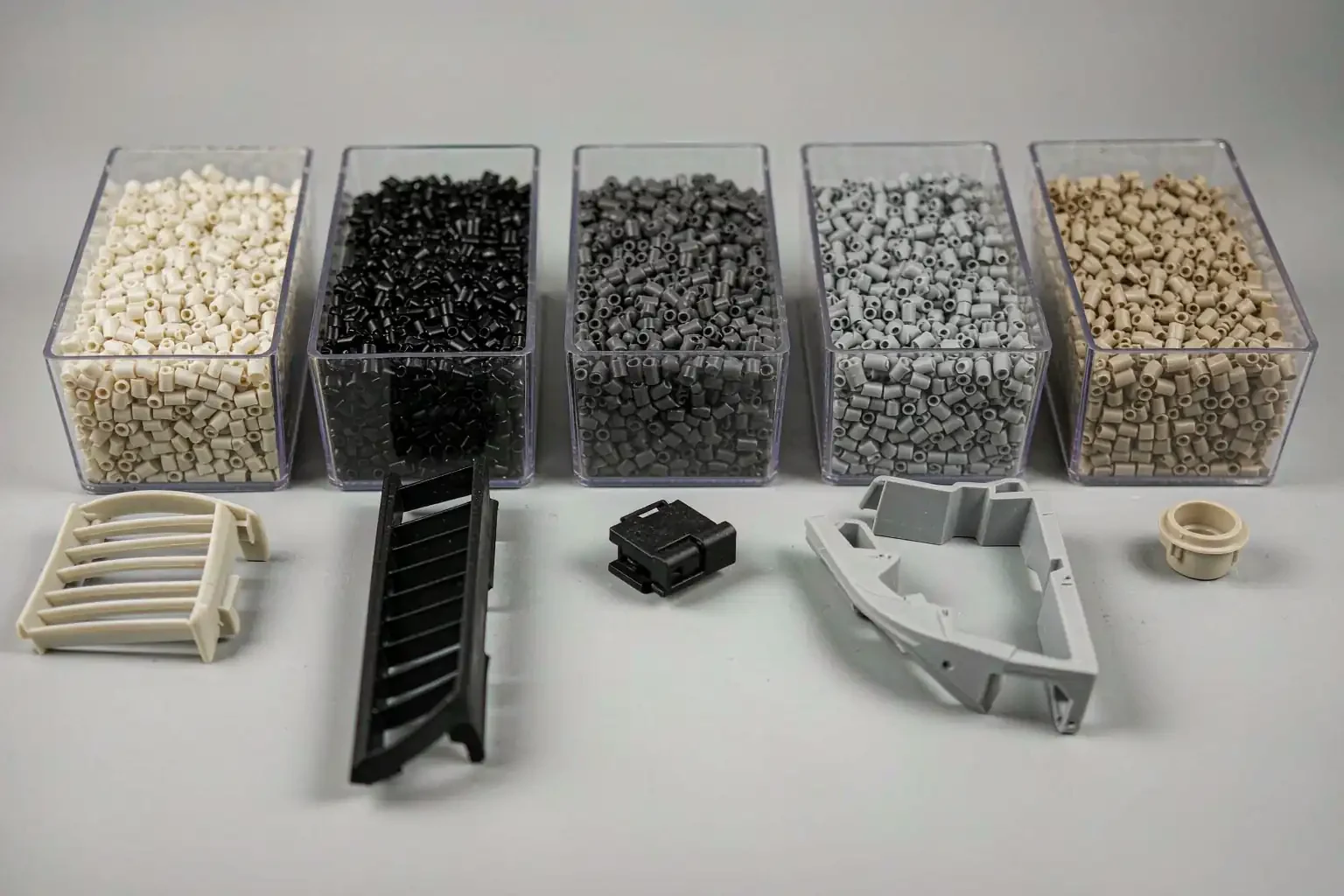
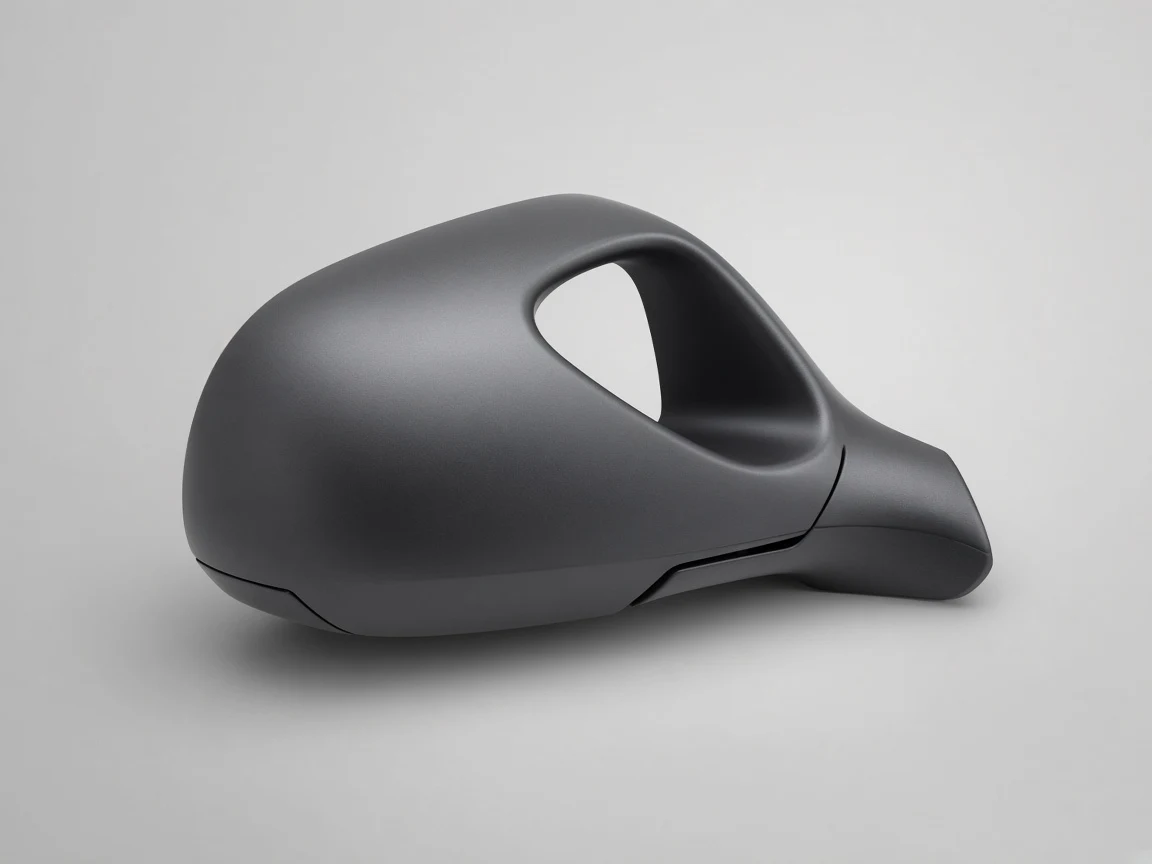
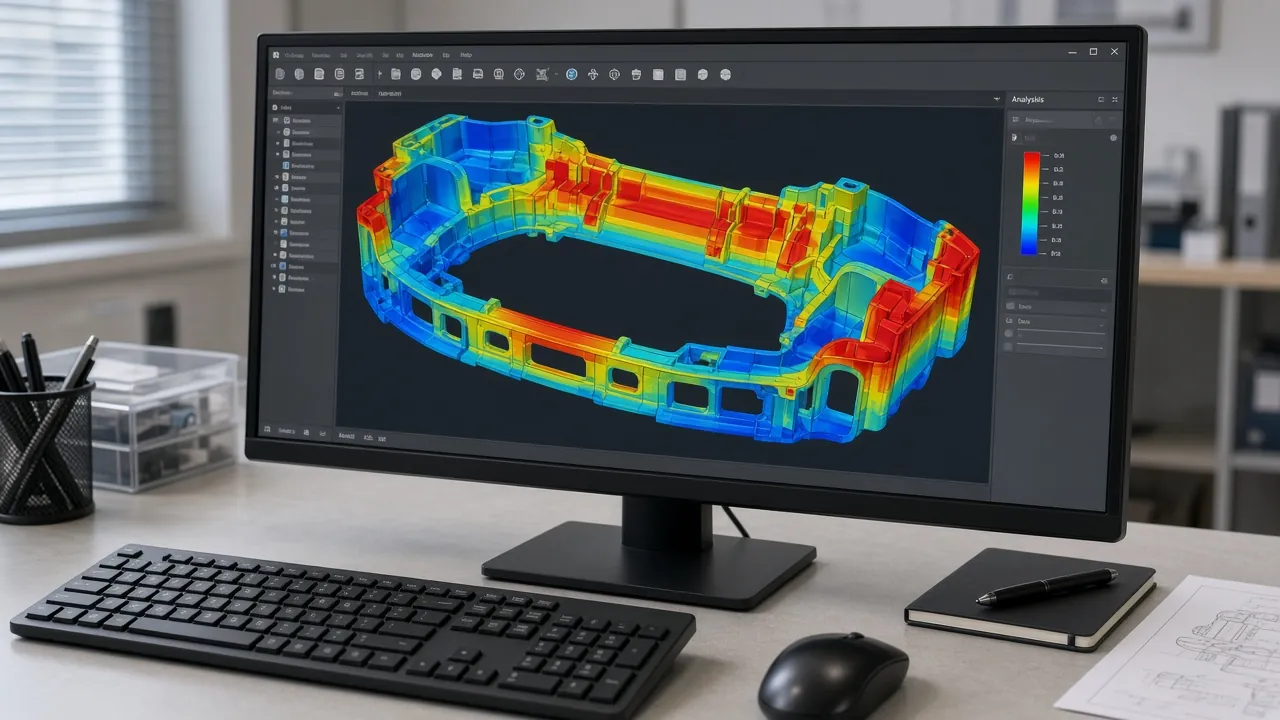
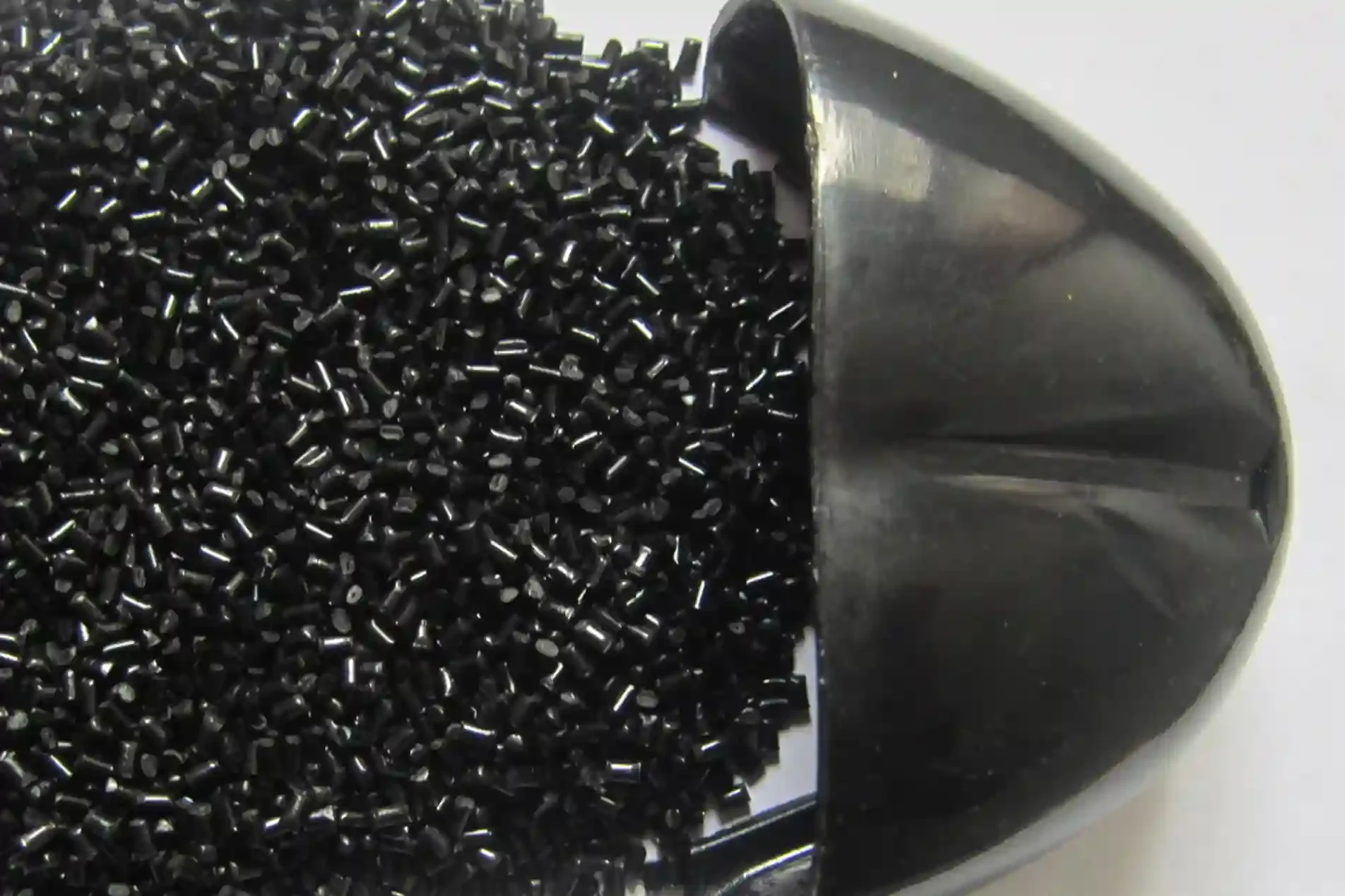
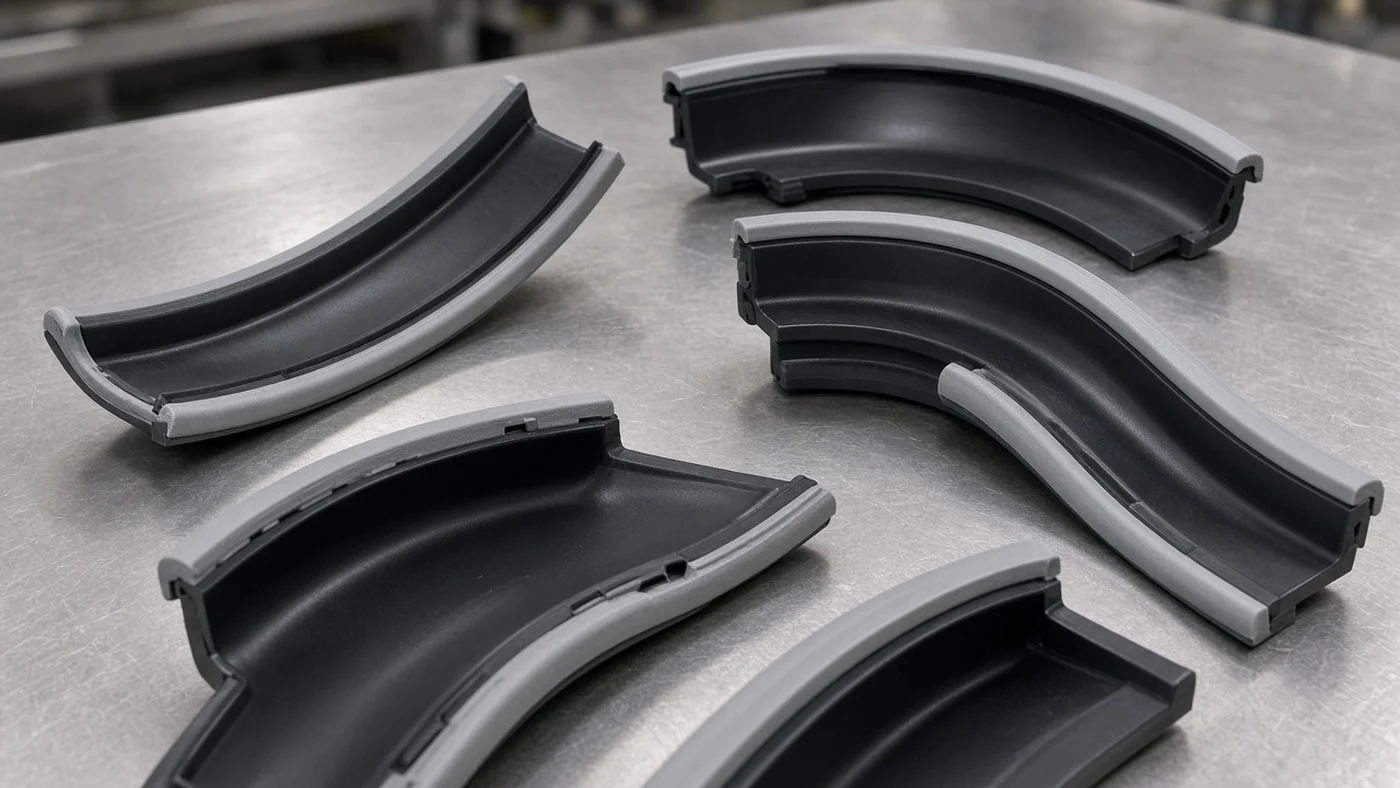
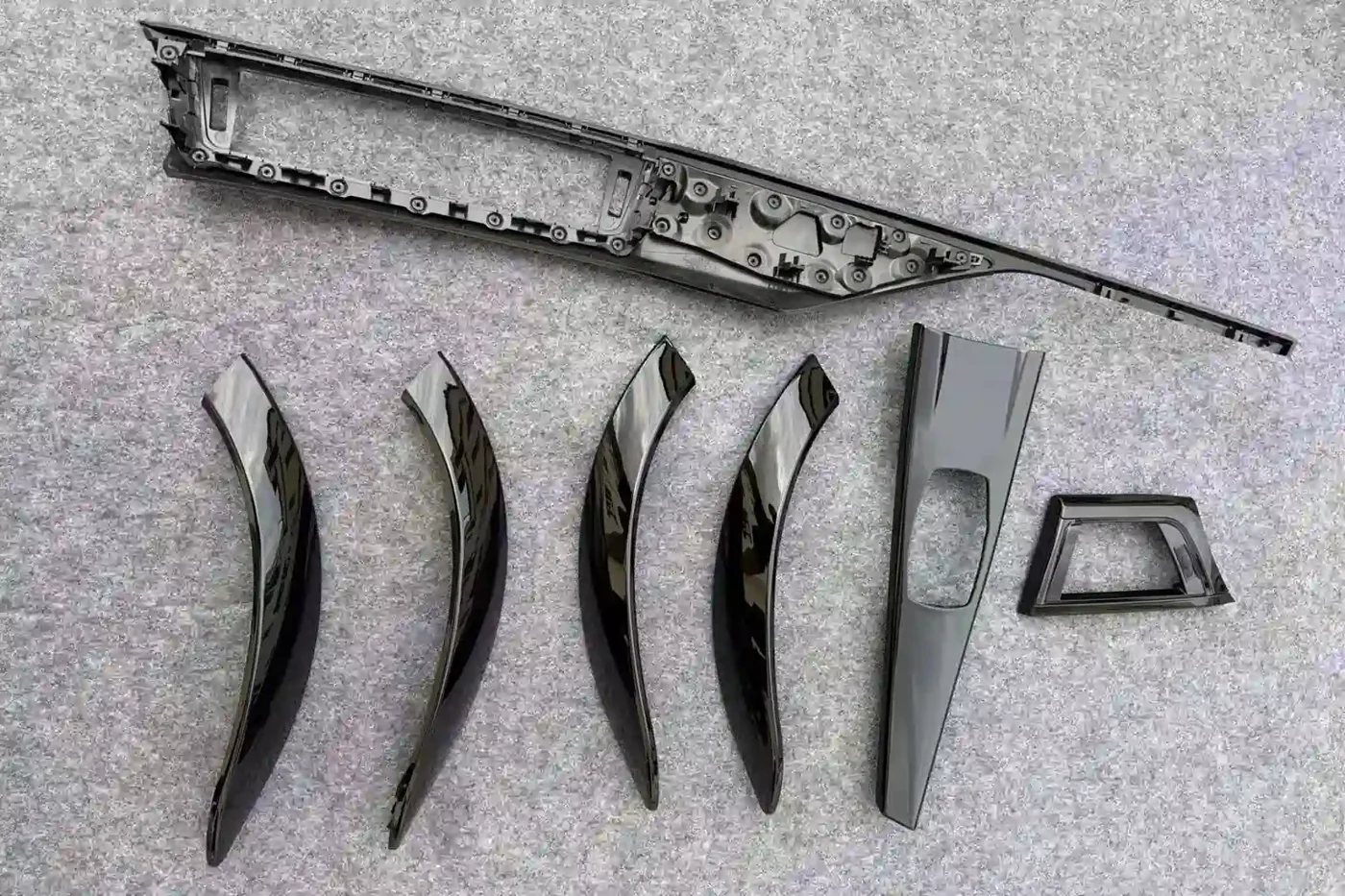
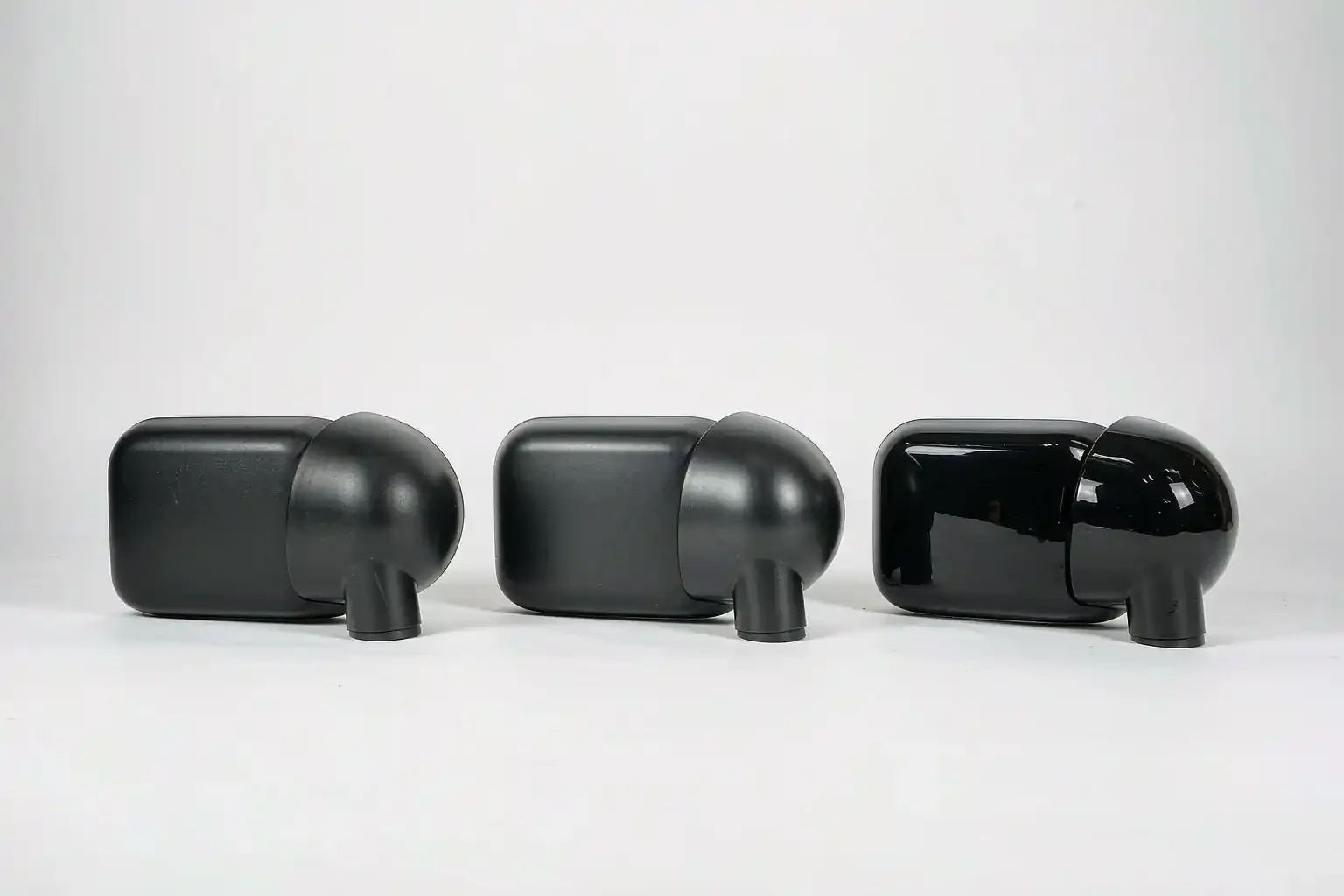
PC/ABS combines the heat resistance and toughness of polycarbonate with the easy molding and surface quality of ABS. Yirox molds PC and PC/ABS for mirror housings, larger trim panels, spoilers and two-shot parts, and paints them in our own 3C2B lines.

| Item | Details |
|---|---|
| Full name | Polycarbonate / acrylonitrile butadiene styrene blend (PC/ABS); polycarbonate (PC) |
| Grade types we use | General-purpose and heat-resistant PC/ABS blends, clear and black PC |
| Typical parts | Mirror housings, door handle covers, larger trim panels, spoilers, EV exterior trim, two-shot parts |
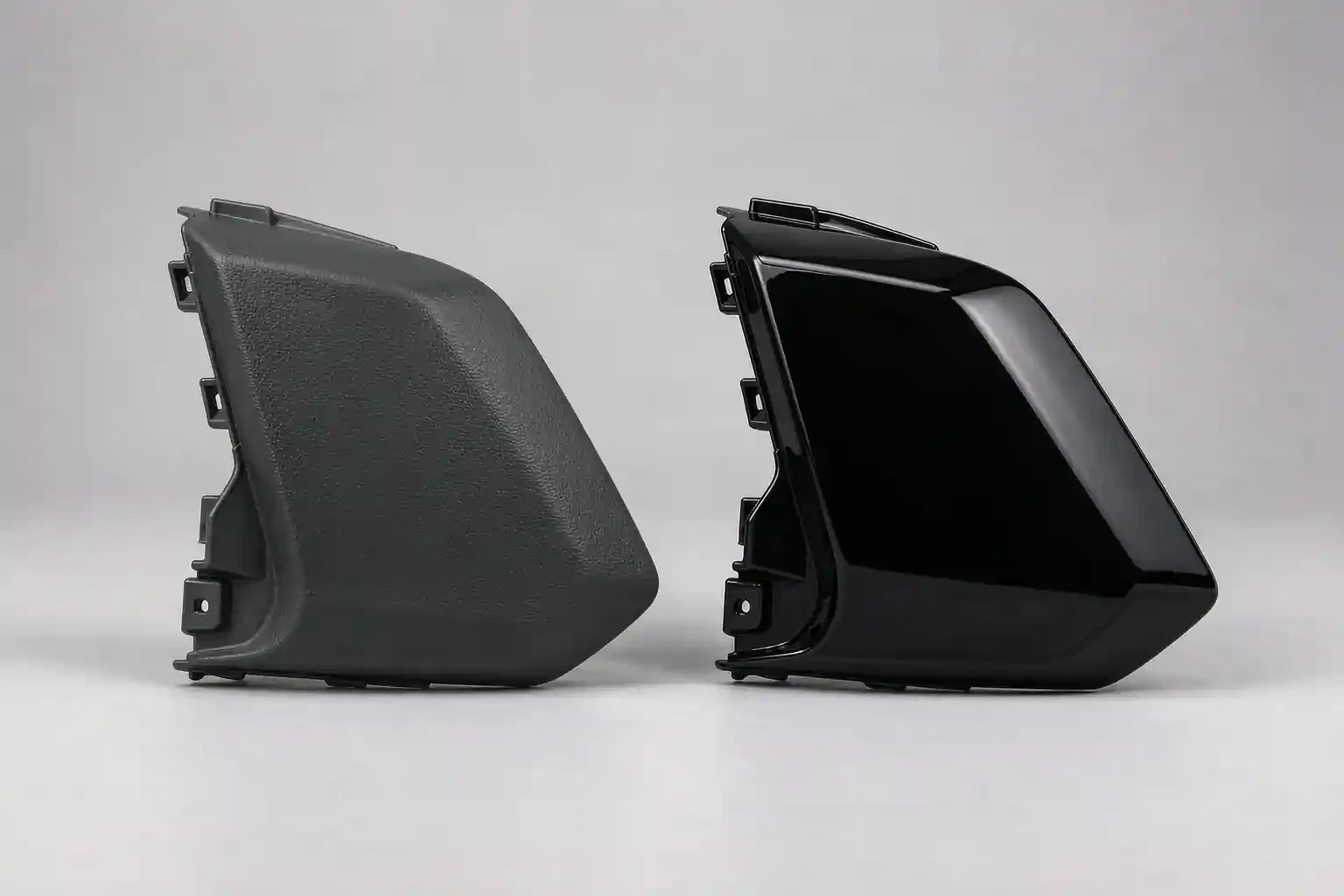
| Finishes | 3C2B gloss paint, piano black, matte black, water transfer carbon look, mold texture |
| Not used for | Chrome plating on our line (ordinary PC/ABS is not suitable) |
| Two-shot | PC/ABS+TPU and PC+PMMA on our two-shot machines |
| Order size | Low MOQ on selected items |
PC/ABS, also written polycarbonate ABS or ABS/PC, is a blend of polycarbonate and ABS. Polycarbonate brings high impact strength, especially at low temperature, and higher heat resistance. ABS lowers the melt viscosity so the blend fills thin walls and long flow paths, and it improves the surface finish and paint adhesion.
The ratio of PC to ABS sets the balance: more PC gives more heat and impact resistance, more ABS gives easier molding and lower cost.
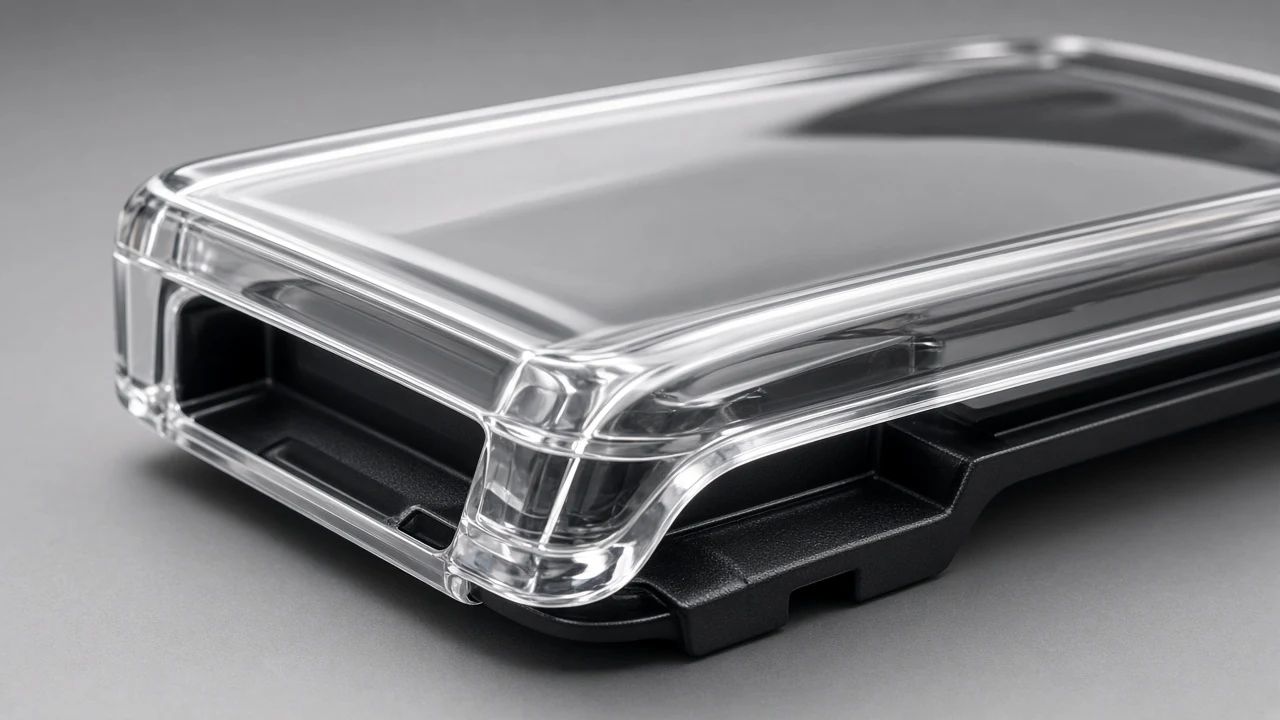
Polycarbonate on its own is a tough, clear plastic. It is used where a part must be transparent or very strong, and it is the clear layer or the rigid base in some two-shot parts. PC is more sensitive to stress cracking from chemicals and needs higher molding temperatures than PC/ABS.

Typical published datasheet ranges from resin manufacturers’ technical data sheets; not Yirox test results.
| Property | PC/ABS (typical) | PC (typical) |
|---|---|---|
| Density | 1.10–1.17 g/cm³ | 1.19–1.21 g/cm³ |
| Tensile strength | 45–60 MPa | 60–70 MPa |
| Notched Izod impact (23 °C) | 400–700 J/m | 600–900 J/m |
| Heat deflection (1.8 MPa) | 95–120 °C | 125–140 °C |
| Mold shrinkage | 0.5–0.7 % | 0.5–0.7 % |
| Melt temperature | 240–280 °C | 280–320 °C |
| Drying before molding | 90–110 °C, 3–4 h | 120 °C, 3–4 h |
In short: choose ABS for cost and plating, PC/ABS when the part is larger, darker or hotter, and PC when the part must be clear or extremely tough.

| Need | ABS | PC/ABS | PC |
|---|---|---|---|
| Cost | Lowest | Medium | Highest |
| Heat resistance | Good | Better | Best |
| Impact at low temperature | Good | Very good | Excellent |
| Ease of molding large thin parts | Very good | Good | Harder |
| Paint finish | Very good | Very good | Good, check solvents |
| Chrome plating (our line) | Plating-grade ABS | Not suitable | Not suitable |
| Clear parts | No | No | Yes |


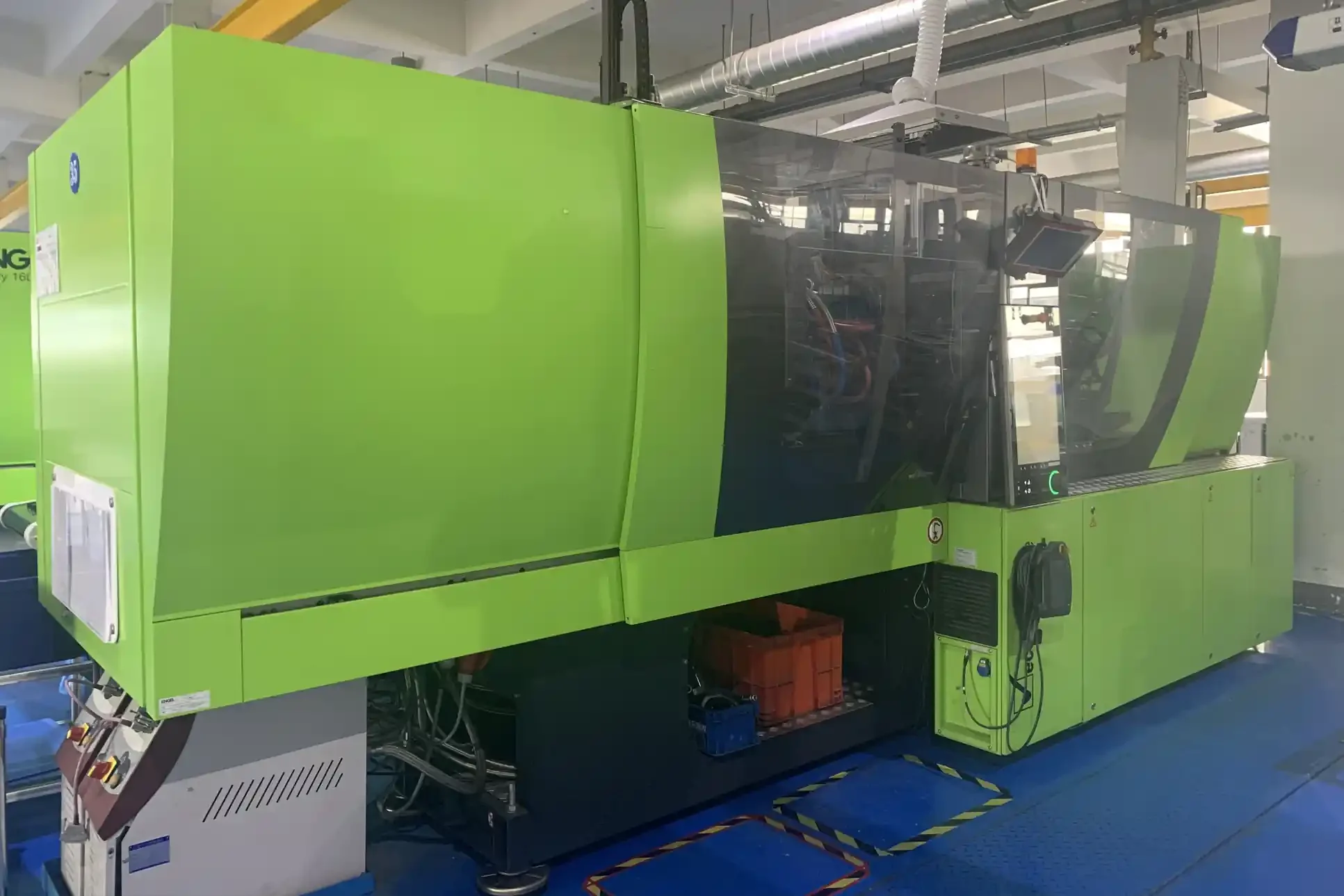
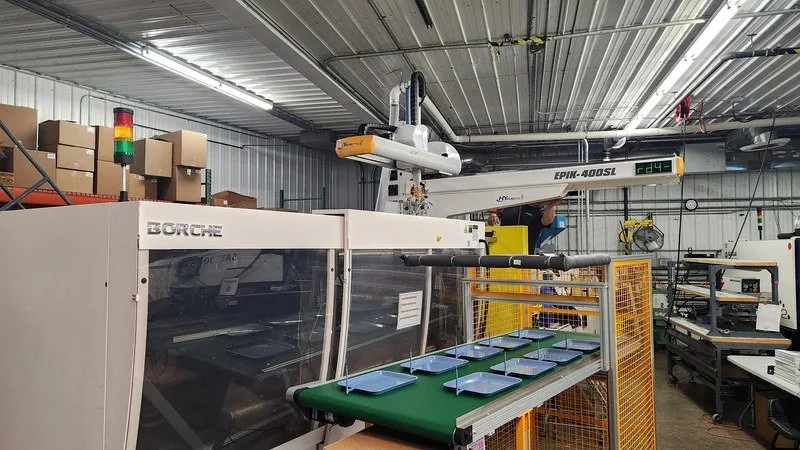
Our 3 two-shot machines (280 t and 380 t rotary-table, 530 t rotary-core) mold two materials in one cycle. With PC we make PC+PMMA parts with a clear top layer over a black base, and with PC/ABS we make PC/ABS+TPU parts with a soft edge on a rigid body. See two-shot materials.

PC/ABS is dried in our 30 desiccant dryers before molding and molded with mold temperature controllers on every machine to control gloss and stress. Parts are inspected for flow lines and sink marks before painting. Painted parts go through our 3C2B system with a total film of 35–50 μm, color ΔE*ab ≤1.0 and cross-hatch adhesion grade 0–1.


PC/ABS is a blend of polycarbonate and ABS. It combines the heat and impact resistance of PC with the easy molding and surface quality of ABS.
For heat and impact resistance, yes. For cost and chrome plating, ABS is better. We recommend based on part size, color and use.
Not on our line. Ordinary PC/ABS is not suitable; we plate plating-grade ABS instead.
Polycarbonate is tougher, more heat resistant and can be clear, but costs more and is harder to mold. ABS is cheaper, easier to mold and can be plated.
No. They are typical published datasheet ranges. Your grade is confirmed in the quote stage.
We offer low MOQ on selected items. The quantity is confirmed in your quote.
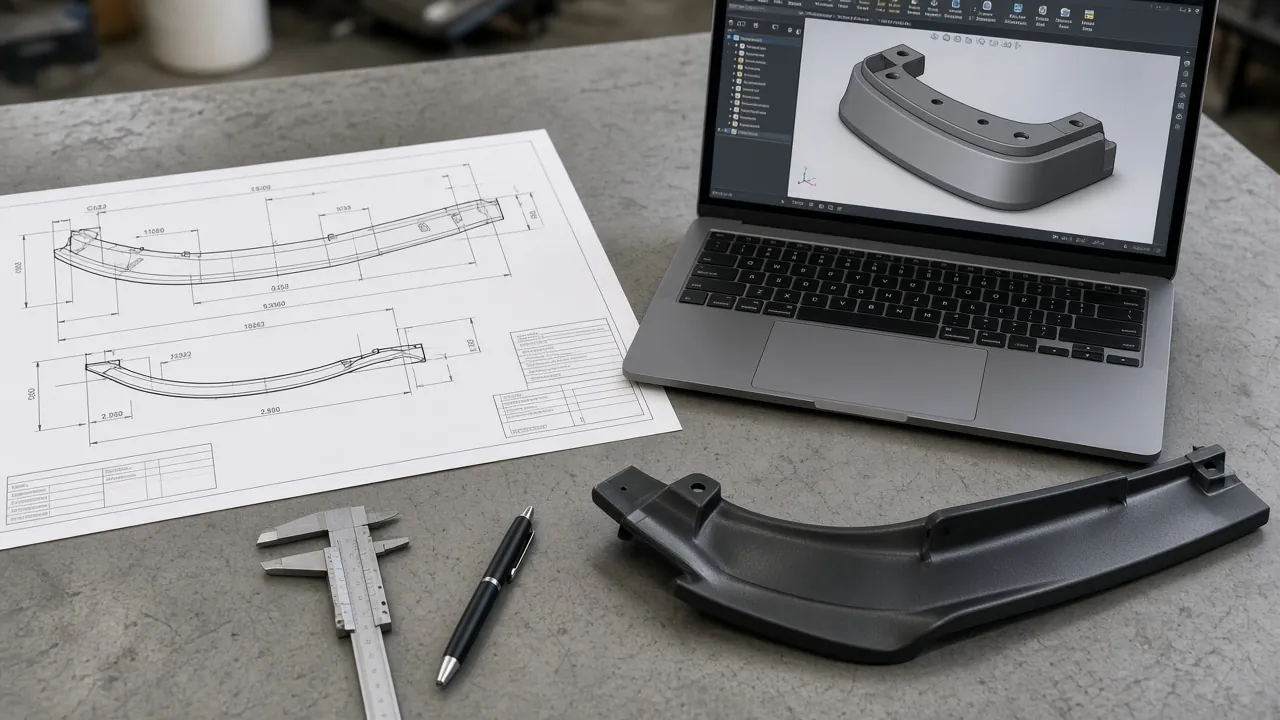
Send your drawing or a sample with the heat and finish requirements. We will reply with a material recommendation and a quote.